 Write to the booksellers
-
Type
Art print (2)
Book (5886)
Magazine (20)
Manuscript (1)
Old papers (1)
Photographs (3)
-
Latest
Last 3 days (1)
Last month (5)
Last week (3)
-
Language
English (10)
French (5898)
German (1)
Greek (1)
Italian (1)
Latin (2)
-
Century
16th (2)
17th (9)
18th (245)
19th (887)
20th (2966)
21st (133)
-
Countries
Belgium (266)
Canada (3)
Côte d'Ivoire (13)
Denmark (1365)
France (3965)
Switzerland (301)
-
Syndicate
ALAC (3)
CLAM (3)
ILAB (4128)
NVVA (139)
SLACES (139)
SLAM (2601)
SNCAO (15)
La mécanique. Exposé historique et critique de son développement traduit sur la quatrième édition allemande par Emile Bertrand avec une introduction de Emile Picard -- Nouvelle édition (1925) AUGMENTEE DE 9 PORTRAITS
P., Hermann, 1925; un volume in 8, broché, couverture imprimée, (légèrement défraîchie), 8pp., 498pp., 9 PORTRAITS
---- Nouvelle édition AUGMENTEE DE NEUF PORTRAITS ---- In Die Mechanik, Mach presented Newtons's mechanical views in considerable detail. He offered generous praise for the clarity of presentation of the Principia along with some of its concepts... Newton's views on absolute time, space and motion were challenged in Die Mechanik on the grounds that they could in no way be related to experimental observations... Einstein on several occasions mentioned that he had drawn inspiration from Mach's Mechanik...". (DSB VIII pp. 595/607) ---- Développement des principes de la statique - Développement des principes de la mécanique - Extension des principes et développement de la mécanique (principes de Newton, le théorème de d'Alembert, le théorème des forces vives, le principe de la moindre action, le théorème de Hamilton...) - Développement formel de la mécanique - Rapports de la mécanique avec d'autres sciences - etc**K4-CAVE/E6(2)-ARB
Photographische Fixierung der durch Projectile in der luft eingeleiteten Vorgänge. [In: Sitzungsberichte der kaiserlichen Akademie der Wissenschaften. Mathematisch-Naturwissenschaftliche Classe, 95. Band, IV und V. Heft. Jahrgang 1887 April und Mai. Z... - [THE MACH NUMBER]
Wien, 1887. 8vo. The entire volume. Uncut and unopened in the orig. printed yellow wrappers, some soiling. Lacks upper part of spine, otherwise no tears, creases or lacks. Pp. 764-780 + one plate. [Entire volume: VIII, (2) pp., pp. 761-1120 + 3 plates, two of which are folded].
First edition of the seminal paper, in which Mach laid the basis for the principles of supersonics, determined the ""sonic boom"", demonstrated an object's speed relative to the speed of sound, now called the ""Mach number"" of an object, and presented the first photograph of a shock wave in front of an object moving at supersonic speed.""Between 1873 and 1893 Mach and various collaborators, including his son Ludwig, devised and perfected optical and photographic techniques to study sound waves and the wave propulsion and gas dynamics of projectiles, meteorites, explosions, and gas jets. Stimulated by the remarks of the Belgian artillerist Henri Melsens, in 1881 Mach undertook to study the flight of projectiles by means of photographic techniques that he had already devised for other experiments in his Prague laboratory. His celebrated 1887 paper on supersonics was published jointly with P. Salcher of the Marine Academy of Fiume (now Rijeka, Yougoslavia) in the ""Sitzungsberichte"" of the Academy of Sciences of Vienna. The experiments described in this classic paper were carried out in Fiume with the support of the Austrian Royal Navy."" (D.S.B., VIII: 597). In this highly influential paper, Mach demonstrates, with the aid of his photograph of a bullet in flight and the shock wave produced by the gas around the tip of it (the first such picture in history), that the angle which the shock wave makes with the direction of its motion is related to the speed of sound and to the speed of the projectile. This angle is called the Mach angle (coined by Ludwig Prandtl in 1907). This discovery turned out to be of ground-breaking character, and in 1929 J. Ackeret suggested to use the term ""Mach number"" for the value of the ratio of the speed of an object to the speed of sound, recognizing the profound effect that this discovery had on aerodynamics for high-speed projectile studies. ""The Mach number was introduced into the literature in English by the late 1930's and since the end of World War II has taken on considerable importance in theoretical and fluid dynamics."" (D.S.B., VIII: 597). Unlike most other units of measure, the number in this case comes after the name of the unit, making the second Mach number not ""2 Mach"", but ""Mach 2"". The ""Mach 2"" thus indicates a velocity of twice the speed of sound. Mach here also determines the effect of an object that travels past the speed of sound, namely the ""sonic boom"". ""By 1885 Mach had worked out the details of supersonic motion, along the way developing high-speed photographic techniques. Most importantly for engineers, Mach Number is the ratio of the speed of sound in the given medium to the speed of the projectile"" his work is essential to modern aerodynamics, and through it the word 'Mach' has bizarrely entered into popular culture as an icon for razors, sound systems, fighter pilots, and high speed fuels."" (Stanford Encyclopaedia of Philosophy).The Austrian physicist and philosopher Ernst Mach was highly influential among his contemporaries and is famous for the impact he had on the Vienna Circle. Though his main contribution to physics lies in his seminal description and photographs of the shock waves and his descriptions of how passing the speed of sound compressed air in front of projectiles, his more general contributions to philosophy and science were also immense. He was an early devotee of an extreme form of positivism, and his passionate ways of expounding his theories and his success as a polemicist and popularizer influenced an entire generation of scientists towards a profound skepticism that even extended into the use of abstract mathematics as an element of physical theories. He was highly critical of physical science and tried to free it from all elements that were not verifiable by sensory experience. ""Ernst Mach (18 Februrary, 1838 - 19 February, 1916), made major contributions to, physics, philosophy, and physiological psychology. In physics, the speed of sound bears his name, as he was the first to systematically study super-sonic motion. He also made important contributions to understanding the Doppler effect. His critique of Newtonian ideas of absolute space and time were an inspiration to the young Einstein, who credited Mach as being the philosophical forerunner of relativity theory. His systematic skepticism of the old physics was similarly important to a generation of young German physicists."" (Stanford Encyclopaedia of Philosophy).
Exposition des découvertes philosophiques de M. Le Chevalier NEWTON. Traduit de l'anglais par M. LAVIROTTE -- PREMIERE EDITION FRANCAISE -- BON EXEMPLAIRE GRAND DE MARGES
P., Durand, 1749, un volume grand in 4 relié en pleine basane, dos orné de fers dorés, tranches rouges (reliure de l'époque), (légères épidermures sur les plats), 57pp., 3pp. non chiffrées, 422pp., (1pp.), 6 PLANCHES DEPLIANTES
---- PREMIERE EDITION FRANCAISE ---- BON EXEMPLAIRE GRAND DE MARGES ---- "Maclaurin was educated at the University of Glasgow and at 19 was made professor of mathematics at Aberdeen. Two years later, he was admitted F.R.S. and made the acquaintance of Newton. In 1722, he went to France and won the prize of the French Academy of Sciences. On the recommandation of Newton, he was elected professor of mathematics in the University of Edinburgh in 1725 and helped form the Royal Society of Edinburgh... The prefixed account of the life and writings of the author is still the chief authority on him. The four books of this work treat : Of the method of proceeding in natural philosophy ; and the various systems of philosophers ; Of the theory of motion, or rational mechanics ; Gravity demonstrated by analysis ; The effects of the general power of gravity deduced synthetically. The last chapter treats of the supreme author and governor of the universe, the True and living god and ends with an argument in favor of a future life, which was dictated by the author but a few hours before his death". (Babson N° 85) ---- - DSB VIII pp. 609/612 - Cajori pp. 228/229 ---- Mémoires sur la vie et les écrits de M. MacLaurin - De la méthode qu'on doit suivre dans l'étude de la philosophie naturelle et des différens systèmes des philosophes - De la théorie du mouvement et des méchaniques rationelles - La gravité démontrée par l'analyse - Les effets de la gravités déduits synthétiquement**80730/8073/ARB4
De Historische Ontwikkeling der Stootwetten van Aristoteles to Huygens. Akademisch Proefschrift.
(Amsterdam, 1959). (8),72 pp., textdiagrams.
La boussole ou histoire d'une pierre et d'une aiguille.
Lausanne, Daniel Lebet, 1885, in-8vo, 214 p. avec qqs. illustrations, reliure en toile orig., tranches dorées, titre doré sur fond rouge et noir avec dessin d'une boussole, petites taches sur le dos, tranchefile fendu, qqs. p. ont des traces de saleté mais dans l'ens., le livre est en bon état,

(SLACES, NVVA)
Phone number : 41 (0)26 3223808
Culture physique et régimes.
P., Susse, sans date (vers 1935), in 8° broché, 347 pages ; très nombreuses illustrations et photographies.
PHOTOS sur DEMANDE. ...................... Photos sur demande ...................

Phone number : 04 77 32 63 69
La grande Loi
Paris, Charpentier , 1933 ; in-12 , broché. 217 pp.EDITION ORIGINALE. Exemplaire sur papier Hollande spécialement imprimé pour Pierre Benoit. Envoi autographe de l’auteur au romancier Pierre Benoit.
La Vie de l'espace [comprenant :] La Quatrième dimension - La Culture des songes - Isolement de l'homme - Jeux de l'espace et du temps.
Paris, Bibliothèque-Charpentier, 1928. Un vol. au format in-12 (188 x 123 mm) de 215 pp., broché.
![La Vie de l'espace [comprenant :] La Quatrième dimension - La Culture des songes - Isolement de l'homme - Jeux de l'espace et du temps.. MAETERLINCK ...](https://static.livre-rare-book.com/pictures/BLS/29050_1_thumb.jpg)
Edition originale tirée sur vélin blanc mat. ''Le problème de la quatrième dimension n'est pas seulement mathématique, c'est un problème qui se mêle à la vie réelle. Sous le prestigieux appareil scientifique qui à première vue le rend inabordable, se cache une simple question de bon sens qui sait tirer parti de faits et d'observations souvent presque inconnus, mais que n'importe qui, une fois qu'il l'a sous les yeux, peut étudier et comprendre avec fruit''. Légères marques d'usage au dos. Du reste, très belle condition.
Nouvelles récréations physiques et mathématiques... par M. Guyot, de la Société littéraire et militaire de Besançon. Troisième édition considérablement augmentée. [2 volumes]
Paris, Chez Gueffier, Libraire-Imprimeur 1786 2 volumes. In-8 20 x 12 cm. Reliures de l’époque veau havane marbré, dos à nerfs encadrés fers dorés, pièces de titre maroquin rouge, XV-375-VII-410 pp., 48 planches hors-texte. Reliures légèrement frottées, intérieur frais.
Bon état d’occasion
LA NATURE SANS FOI NI LOI, LES GRANDS THEMES DE LA PHYSIQUE DU XXe SIECLE
Pierre Belfond. 1988. In-8. Broché. Etat d'usage, Couv. légèrement pliée, Dos satisfaisant, Intérieur acceptable. 219 pages. Tranche salie.. . . . Classification Dewey : 530-Physique
Collection Belfond/Sciences, dir. par Jean Audouze et I. Naddeo-Souriau. Classification Dewey : 530-Physique
"MAGNAN, CLAUDE - JEAN THIBAUD et ANDRÉ MOUSSA - CHARLES HAENNY et ALBERT ROSENBERG - FRANCIS PERRIN - GUIDO BECK et PETER HAVAS.
Reference : 49286
(1939)
Sur la cassure des noyaux éléments plus légers que l'uranium, sous le bombardement des neutrons. (+) Sur la rupture des noyaux d'uranium sous l'action des neutrons et la libération d'énergie qui en résulte. (+) Émission de neutrons lors de la... - [THE ATOM BOMB AND NUCLEAR ENERGY.]
(Paris, Gauthier-Villars), 1939. 4to. No wrappers. In: ""Comptes Rendus hebdomadaires des Séances de L'Academie des Sciences"", tome 208, No 10, 12, 18, 20 a. 21. Pp. (5 Entire issues offered). The papers: pp. 742-744, 744-746, 898-900,1394-96,1573-1575 a. 1643-1645. Disbound.
First printing of 5 importent papers containing substantial contributions to the development and understanding of the fission process in the crucial year 1939, the results leading to the creation the atomic bomb and nuclear energy production. Among the papers here are Francis Perrin's landmark paper: ""Calcul relatif aux conditions éventuelles de transmutation en chaine de l'uranium."" (in 2 parts).Nuclear fission of heavy elements was discovered on December 17, 1938 by Otto Hahn and his assistant Fritz Strassmann, and explained theoretically in January 1939 by Lise Meitner and her nephew Otto Robert Frisch. The Group at College de France, headed by Joliot and Perrin, worked in the month after January intensively with the uranium processes and succeeded in establishing the possibility of nuclear chain reactions and nuclear energy production.""The remaining piece of the fission/atomic bomb concept was provided in 1939 by Francis Perrin who introduced the concept of the critical mass of uranium required to produce a self-sustaining release of energy. His theories were extended by Rudolf Peierls at Birmingham University and the resulting calculations were of considerable importance in the development of the atomic bomb. Perrin's group in Paris continued their studies and demonstrated that a chain reaction could be sustained in a uranium-water mixture (the water being used to slow down the neutrons) provided external neutrons were injected into the system. They also demonstrated the idea of introducing neutron-absorbing material to limit the multiplication of neutrons and thus control the nuclear reaction (which is the basis for the operation of a nuclear power station).""
LE VOL DES OISEAUX ET LE VOL DES AVIONS
Services Techniques de l'Aéronautique. 1931. In-4. Broché. Etat d'usage, Couv. défraîchie, Dos abîmé, Intérieur frais. 298 pages. Illustré de nombreux graphiques, tableaux, dessins, photo-gravures en noir et blanc dans et hors texte. Etiquette de code sur le dos. Tampons de bibliothèque sur le 1er plat et en page de titre. Dos muet.. . . . Classification Dewey : 530-Physique
Rare. Bulletin technique n° 74, Juin 1931. Leçons faites au Collège de France pendant l'année scolaiee 1929-1930. Les appareils pour la mesure des qualités aérodynamiques intéressant le vol. Anatomie de l'oiseau. Les effets du coup d'aile. Le vol sans moteur... Classification Dewey : 530-Physique
RESISTANCE A L'AVANCEMENT ET PUISSANCE DES POISSONS
Services Techniques de l'Aéronautique. 1930. In-4. Broché. Etat d'usage, Tâchée, Dos frotté, Intérieur frais. 107 pages. Illustré de nombreux graphiques, tableaux, dessins, photo-gravures en noir et blanc dans et hors texte. Etiquette de code sur le dos. Tampons de bibliothèque sur le 1er plat et en page de titre. Dos muet.. . . . Classification Dewey : 530-Physique
Bulletin technique n° 71, Oct. 1930. Expériences sur les plans. Chronométrage. Propulsion. Vistesse limite. Examen d'un cas concret. Loi de chute. Dispositif cinématographique. Résistance et puissance... Classification Dewey : 530-Physique
LE MAGICIEN AMATEUR. Tours de physique amusante faciles pour tous. Deuxième série
Paris Henri Gautier, éditeur 1897 in 8 (24x16,5) 1 volume broché, couverture rempliée illustrée en couleurs, XI et 329 pages avec 74 figures dans le texte. Bel exemplaire ( Photographies sur demande / We can send pictures of this book on simple request )
Très bon
Mémoire sur l'état actuel des lignes isocliniques et isodynamiques dans la Grande-Bretagne, la Hollande, la Belgique et la France
Bruxelles, Académie royale (impr.par Hayez) 1858 47pp.+ 1 carte hors-texte dépliante, Mémoire présenté à la classe des sciences le 8 novembre 1856, publié dans et extrait de "Mémoires couronnés et mémoires des savants étrangers, publiés par l'Académie Royale des sciences, des lettres et des beaux-arts de Belgique" Tome XXIX (29, 1856-1858), in-4, non coupé
LE PROBLEME DE PHYSIQUE ELEMENTAIRE. (PRINCIPES ET EXEMPLES DE SOLUTIONS). TOME 1 A L'USAGE DES ELEVES DE SECONDE C ET D
VUIBERT. NON DATE. In-8. Broché. Etat d'usage, 1er plat abîmé, Dos abîmé, Intérieur acceptable. 130 pages. Nombreuses figures en noir et blanc dans le texte. Une déchirure sur le 1er plat. Des petits manques en dos.. . . . Classification Dewey : 530-Physique
Classification Dewey : 530-Physique
LE PROBLEME DE PHYSIQUE (PRINCIPES ET EXEMPLES DE SOLUTIONS), TOME II
Vuibert. 1921. In-8. Broché. Etat d'usage, Couv. légèrement passée, Dos abîmé, Intérieur acceptable. 232 pages. Illustré de nombreux schémas en noir et blanc dans le texte. Quelques annotations au crayon dans le texte.. . . . Classification Dewey : 530-Physique
8e édition. A l'usage des éléves de 1re C et D et des candidats à la 1re partie du Baccalauréat. Classification Dewey : 530-Physique
Le problème de physique élémentaire (principes et exemples de solution). Tome III, à l'usage des élèves de Mathématiques A et B et des candidats à la seconde partie du baccalauréat
Vuibert. 1921. In-8. Broché. Bon état, Couv. convenable, Dos satisfaisant, Intérieur bon état. 226 pp. -1 PHOTO DISPONIBLE.. . . . Classification Dewey : 530-Physique
Classification Dewey : 530-Physique
Le problème de physique élémentaire, principes et exemples de solutions (3 tomes en 1 volumes).
Charleroi (Belgique), Librairie de la Bourse/Paris, Librairie Vuibert, 1931-1934-1937. 14 x 22, 3 tomes en 1 volumes, 130 + 232 + 226 pages, reliure dos/coins toilés, bon état.
Le probléme de physique élémentaire (principes et exemples de solutions). Tome 2, à l'usage des éléves de Première C et D et des candidats à la première partie du baccalauréat
Vuibert. 1921. In-8. Broché. Bon état, Couv. convenable, Dos satisfaisant, Intérieur bon état. 232 pp. - Mors légèrement fendu en tête du 1er plat (1 cm.), dos légèrement frotté - 1 PHOTO DISPONIBLE.. . . . Classification Dewey : 530-Physique
Classification Dewey : 530-Physique
Stimulated Optical Radiation in Ruby. - [THE FIRST OPERATING LASER]
London, Macmillan, 1960. Royal8vo. Bound in full cloth with two black leather title label to spine. In ""Nature"", Vol. 187, 1960.
First printing of this fundamental paper in the history of the laser, which described the first operating laser. The paper ""might be considered the most important per word of any of the wonderful papers in Nature over the past century"" (Garwin. A century of Nature. P. 107).""Maiman made the first laser operate on 16 may 1960 at the Hughes Research Laboratory in California, by shining a high-power flash lamp on a ruby rod with silver-coated surfaces. He promptly submitted a short report on the work (Stimulated Optical Radiation in Ruby) to the journal Physical Review Letters, but the editors turned it down."" (Ibid.). Maiman turned to Nature where the paper was better received and published on 6 August. It was turned down by Physical Review Letters because Maiman in June 1960 had submitted a paper with a similar topic (Optical and Microwave-Optical Experiments in Ruby). ""While lasers quickly caught the public imagination, perhaps for their similarity to the 'heat rays' of science fiction, practical applications took years to develop. A young physicist named Irnee D'Haenens, while working with Maiman on the ruby laser, joked that the device was 'a solution looking for a problem,' and the line lingered in the laser community for many years"" (Britannica).The development of the laser was essentially built upon the insights discovered by Albert Einstein in 1917 in his ""Zur Quantentheorie der Strahlung"". Einstein had shown theoretically that stimulated emission of electromagnetic radiation, a re-derivation of Max Planck's law of radiation, would make an atom or molecule to fall to a lower energy state and emit more waves. The development of the laser is not only of seminal importance in itself, it is also a testament to a period in which many of the achievements within theoretical physics reached in the early part of the 20th century went from being theoretical to applied. Gedeon 92.
Stimulated Optical Radiation in Ruby (+) Optical and Microwave-Optical Experiments in Ruby. - [THE FIRST OPERATING LASER]
London, Macmillan, 1960" (New York), American physical Society, 1960. [Stimulated Optical Radiation in Ruby:] Lex8vo. As extracted from Nature. Fine and clean. Pp. 493-4 (one leaf). [Optical and Microwave-Optical Experiments in Ruby:] Lex8vo. Entire issue of ""Physical Review Letters, Volume 4, Number 11, June, 1960"" in the original blue/green wrappers. A very nice and clean copy. [Maiman:] Pp.564-66. [Entire issue: Pp. 555-598].
![Stimulated Optical Radiation in Ruby (+) Optical and Microwave-Optical Experiments in Ruby. - [THE FIRST OPERATING LASER]. MAIMAN, T. H.](https://static.livre-rare-book.com/pictures/LLX/44913_1_thumb.jpg)
![Stimulated Optical Radiation in Ruby (+) Optical and Microwave-Optical Experiments in Ruby. - [THE FIRST OPERATING LASER]. MAIMAN, T. H.](https://static.livre-rare-book.com/pictures/LLX/44913_2_thumb.jpg)
![Stimulated Optical Radiation in Ruby (+) Optical and Microwave-Optical Experiments in Ruby. - [THE FIRST OPERATING LASER]. MAIMAN, T. H.](https://static.livre-rare-book.com/pictures/LLX/44913_3_thumb.jpg)
First printing of these two fundamental papers in the history of the laser, which described the first operating laser. ""[Stimulated Optical Radiation in Ruby] might be considered the most important per word of any of the wonderful papers in Nature over the past century"" (Garwin. A century of Nature. P. 107).""Maiman made the first laser operate on 16 may 1960 at the Hughes Research Laboratory in California, by shining a high-power flash lamp on a ruby rod with silver-coated surfaces. He promptly submitted a short report on the work (Stimulated Optical Radiation in Ruby) to the journal Physical Review Letters, but the editors turned it down."" (Ibid.). Maiman turned to Nature where the paper was better received and published on 6 August. It was turned down by Physical Review Letters because Maiman in June 1960 had submitted a paper with a similar topic (Optical and Microwave-Optical Experiments in Ruby). ""While lasers quickly caught the public imagination, perhaps for their similarity to the 'heat rays' of science fiction, practical applications took years to develop. A young physicist named Irnee D'Haenens, while working with Maiman on the ruby laser, joked that the device was 'a solution looking for a problem,' and the line lingered in the laser community for many years"" (Britannica).The development of the laser was essentially built upon the insights discovered by Albert Einstein in 1917 in his ""Zur Quantentheorie der Strahlung"". Einstein had shown theoretically that stimulated emission of electromagnetic radiation, a re-derivation of Max Planck's law of radiation, would make an atom or molecule to fall to a lower energy state and emit more waves. The development of the laser is not only of seminal importance in itself, it is also a testament to a period in which many of the achievements within theoretical physics reached in the early part of the 20th century went from being theoretical to applied.
Dissertation sur La Glace, ou Explication physique de la formation de la Glace, & de ses divers phénomènes.
Paris, L'Imprimerie Royale, 1749. Small 8vo. Contemp. full calf. Richly gilt back. Triple gilt lineborder on covers. Upper compartment of back repaired. Leather along fronthinge cracking, but holding and cover not loose. Spine rubbed. All edges gilt. Engraved frontispiece. XXIX,(10),384,XX pp. and 5 folded engraved plates.
Mairan was member of the Academie Des Sciences from 1719 and he served as its secretary from 1741 to 1743. ""He was an importent and sometimes controversial figure in the scientific community of his day. Working in the decades during which Newtonian ideas were becoming known in France, Mairan incorporated some of them in his theories"" but he remained basically Cartesian."" (DSB). He made importent studies on Aurora Borealis.His work here on ice, liquids, fluids and evaporations, was inspired by his experiences of the slowness of which ice melts and that it melts faster mixed with differents salts in freezing mixtures. It incorporates details of quantitative experiments, and treats the effects of cold on many substances. In comparison with the first edition from 1717, this edition is considerably enlarged and augmented by a section on the thermometres of George Martine and it is the first illustrated edition. - Poggendorff II: p. 17 - Duveen: p. 386 - Neville II: p. 129.
Dissertation sur la GLACE, ou explication physique de la formation de la Glace, et de ses divers phénomènes.
Imprimerie Royale Paris 1749 1 vol. In-12 de XXIX 5 ff.n.ch. (table des chapitres) 384 pp. XX (table des matières), plein veau marbré de l'époque, dos lisse orné, pièce de titre en maroquin, triple filet doré en encadrement sur les plats armoriés, tranches dorées.
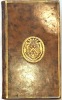

Première édition illustrée d'un frontispice et de 5 planches repliées (Brunet, 4298). "Meilleure édition de cette dissertation étudiant le phénomène de cristallisation, c’est à dire le passage de l’état liquide à l’état solide. Il l’explique par les principes du cartésianisme", avec en préface, un discours de l'auteur prononcé à l'assemblée des Sciences en 1748. Exemplaire aux armes du Duc d'AUMONT (Franche-Comté), Pair de France, Chevalier du Saint-Esprit, Lieutenant général, Gouverneur de la ville et du château de Compiègne, de Boulogne et du Boulonnais et grand Bailli de Montreuil et du Chauny (O.-H.-R., pl. 364). Très bel exemplaire d'une fraicheur remarquable.
Traite physique et historique de l’Aurore Boreale. Suite des Mémoires de l'Academie Royale des Sciences. Année M. DCCXXXI.
Paris, L'Imprimerie Royale, 1733. 4to. No wrappers. (8),281 pp. and 15 folded engraved plates. A few minor brownspots. Clean and fine.
First edition of this monumental work on the Northern Lights, being the first general treatise on the subject. Mairan disputes the explanation that the Northern Lights are caused by volcanic exhalations and suggest instead that the cause derives from the sun's atmosphere. (Parkinson, Breakthroughs, 1733). - Darmstaedter, 1733 M.

