 Write to the booksellers
-
Type
Art print (2)
Book (5877)
Magazine (20)
Manuscript (1)
Old papers (1)
Photographs (3)
-
Latest
Last 24h (1)
Last 3 days (1)
Last month (34)
Last week (4)
-
Language
English (10)
French (5889)
German (1)
Greek (1)
Italian (1)
Latin (2)
-
Century
16th (2)
17th (9)
18th (246)
19th (886)
20th (2972)
21st (132)
-
Countries
Belgium (264)
Canada (3)
Côte d'Ivoire (13)
Denmark (1369)
France (3954)
Switzerland (301)
-
Syndicate
ALAC (3)
CLAM (3)
ILAB (4123)
NVVA (139)
SLACES (139)
SLAM (2592)
SNCAO (15)
PHYSIQUE - CLASSES DE PREMIERE A, A', B
VUIBERT. 1928. In-12. Cartonné. Etat d'usage, Coins frottés, Dos satisfaisant, Papier jauni. 469 pages augmentées de nombreuses illustrations en noir et blanc dans le texte -. . . . Classification Dewey : 530-Physique
Classification Dewey : 530-Physique
COURS DE PHYSIQUE GENERALE - EN 2 VOLUMES / TOME I : UNITES, GRAVITATION, ELECTRICITE ET MAGNETISME - IONS ET ELECTRONS, SYMETRIE / TOME II : THERMODYNAMIQUE ET ETUDE DE L'ENERGIE RAYONNANTE / TROISIEME EDITION.
LIBRAIRIE SCIENTIFIQUE A. HERMANN ET FILS. 1939-1928. In-4. Broché. Etat d'usage, Tâchée, Coiffe en pied abîmée, Intérieur acceptable. 776 + 513 pages illustrées de nombreuses figures dans le texte et nombreuses planches hors texte.. . . . Classification Dewey : 530-Physique
Classification Dewey : 530-Physique
COURS DE PHYSIQUE GENERALE / TOME TROISIEME : MOUVEMENTS VIBRATOIRES, ACOUSTIQUE, OPTIQUE PHYSIQUE, ONDES ELECTROMAGNETIQUES, ELECTRO-OPTIQUE - EFFETS OPTIQUES DU MOUVEMENT / TROISIEME EDITION.
HERMANN. 1932. In-8. Broché. Etat passable, Livré sans Couverture, Dos abîmé, Intérieur acceptable. 808 pages illustrées de nombreuses figures - Manque 1er plat.. . . . Classification Dewey : 530-Physique
Classification Dewey : 530-Physique
"Cours de physique générale; tome second : Thermodynamique et étude de l'énergie rayonnante"
Paris, Librairie Scientifique J. Hermann, 1922. 16 x 25, 415 pp., 146 figures, 4 planches, reliure dos/coins toile rouge, couverture conservée, bon état (sauf nombreux soulignages aux crayons de couleurs).
2e édition, entièrement refondue.
Cours de Physique générale à l'usage des candidats au Certificat de Physique générale, au Diplome d'Ingénieur-électricien et à l'Agrégation des Sciences Physiques. Troisième édition, entièrement refondue.
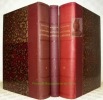
P., Hermann, 1939-1928-1932, 2 forts volumes grand in 8°, les tomes I et II brochés, le Tome III relié d'une modeste demi-toile rouge amateur ; quelques rousseurs ; couvertures un peu fanées, la reliure est passé. Bon exemplaire de travail.
Tome premier : Unités. gravitation. Electricité et magnétisme. Ions et électrons. Symétries. Avec 421 figures dans le texte et 11 planches hors-texte. XV-777 pages.Tome second : Thermodynamique et étude de l'énergie rayonnante. Avec 143 figures dans le texte et quatre planches hors-texte. 513 pages.Tome troisième : Mouvements vibratoires. Acoustique. Optique physique. Ondes électromagnétiques. Electro-optique. Effets optiques du mouvement. Avec 455 figures dans le texte et trois planches hors-texte. 806 pages. ...................... Photos sur demande ...................


Phone number : 04 77 32 63 69
Cours de physique générale à l’usage des candidats au certificat de physique générale, au diplôme d’ingénieur-électricien et l’agrégation des sciences physiques. Deuxième édition, entièrement refondue. 3 Volumes. I: Unités C. G. S et M. T. S. Gravitation, Electricité et Magnétisme Ions et Electrons, Symétries. Avec 408 figures dans le texte et 3 planches hors texte. II: Thermodynamique et étude de l’Energie rayonnante. Avec 146 figures dans le texte et 4 planches hors texte. III: Mouvements vibratoires, Acoustique, Optique physique, Ondes électromagnétiques, électro-optique, effets optiques du mouvement. Avec 418 figures dans le texte et 3 planches hors texte.
Paris, Librairie Scientifiques J. Hermann 1921-1923, 245x160mm, 749 + 415 + 712pages, demi-percaline.
Pour un paiement via PayPal, veuillez nous en faire la demande et nous vous enverrons une facture PayPal
Cours de physique générale à l'usage des candidats au certificat de physique générale, au diplome d'ingénieur électricien et à l'agfrégation des sciences physiques
Hermann Paris Hermann 1928 - 1939, 3 forts volumes grands In-8 brochés, XV + 776 + 513 + 806 pages. Tome I = UNITES. GRAVITATIONS. ELECTRICITE ET MAGNETISME. IONS ET ELECTRONS. SYMETRIES. Avec 421 figures dans le texte et 11 planches hors texte. Tome II = THERMODYNAMIQUE ET ETUDE DE L'ENERGIE RAYONNANTE. Avec 143 figures dans le texte et 4 planches en hors texte. Tome III = MOUVEMENTS VIBRATOIRES. ACOUSTIQUE. OPTIQUE. PHYSIQUE. ONDES ELECTROMAGNETIQUES. ELECTRO-OPTIQUE. EFFETS OPTIQUES DU MOUVEMENT. Avec 455 figures dans le texte et trois planches hors texte. Parfait état.
Toutes les expéditions sont faites en suivi au-dessus de 25 euros. Expédition quotidienne pour les envois simples, suivis, recommandés ou Colissimo.
PHYSIQUE, CLASSE DE 1re
De Gigord. 1929. In-8. Relié. Etat d'usage, Coins frottés, Dos frotté, Intérieur bon état. 386 pages. Illustré de nombreuses gravures en noir et blanc dans le texte.. . . . Classification Dewey : 530-Physique
2e édition. Programme du 3 juin 1925. Classification Dewey : 530-Physique
PHYSIQUE, CLASSE DE PHILOSOPHIE
De Gigord. 1934. In-12. Relié. Bon état, Couv. convenable, Dos satisfaisant, Intérieur bon état. 268 pages. Illustré de nombreuses gravures en noir et blanc dans le texte. Annotations en page de garde et au dos du 2e plat.. . . . Classification Dewey : 530-Physique
3e édition refondue. Programme d'avril 1931. Classification Dewey : 530-Physique
PHYSIQUE - CLASSE DE PREMIERE
J. DE GIGORD -3° EDITION. 1934. In-12. Cartonnage d'éditeurs. Etat d'usage, Coins frottés, Mors fendus, Intérieur frais. 404 pages. Nombreuses illustrations en noir et blanc dans le texte.. . . . Classification Dewey : 530-Physique
Classification Dewey : 530-Physique
Physique. Classe de seconde.
Couverture rigide. Cartonnage de l'éditeur. 300 pages. Papier bruni.
Livre. Programme du 30 avril 1931. Editions J. de Gigord, 1933.
Physique. Classe de seconde.
Couverture rigide. Cartonnage de l'éditeur. 370 pages. Légèrement défraîchi.
Livre. Programme de 1925. Editions J. de Gigord, 1929.
PHYSIQUE DU BREVET ELEMENTAIRE, LES 3 ANNEES
De Gigord. 1932. In-12. Relié. Etat d'usage, Plats abîmés, Dos frotté, Quelques rousseurs. 510 pages. Dos et plats se détachant. Page de garde déchirée avec partie supérieure manquante. Page de titre déchirée. Dernière page (Table) trouée.. . . . Classification Dewey : 530-Physique
4e édition. Classification Dewey : 530-Physique
Sciences Physiques - 2 volumes - 1ère et 2ème année.
Gigord J. de. 1939. In-12. Relié toilé. Bon état, Couv. partiel. décollorée, Dos satisfaisant, Intérieur frais. 2 tomes. Tome 1 : 122 pp. Tome 2 : 209 pp.. . . . Classification Dewey : 530-Physique
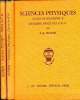
2 volumes Classification Dewey : 530-Physique
SCIENCES PHYSIQUES, CLASSE DE 4e B ET 2e ANNEE DES E.P.S.
De Gigord. 1939. In-12. Relié. Etat d'usage, Couv. légèrement passée, Dos satisfaisant, Intérieur acceptable. 209 pages. Illustré de nombreux dessins en noir et blanc dans le texte. Quelques galeries de vers en tout début d'ouvrage, sans altération de la lecture.. . . . Classification Dewey : 530-Physique
Programme d'avril 1938. Classification Dewey : 530-Physique
SCIENCES PHYSIQUES, CLASSE DE 5e B ET 1re ANNEE DES EPS
J. de Gigord. 1939. In-12. Relié. Bon état, Couv. convenable, Dos satisfaisant, Intérieur frais. 122 pages. Illustré de nombreux schémas en noir et blanc dans le texte.. . . . Classification Dewey : 530-Physique
2e édition. Programme du 14 avril 1938. Classification Dewey : 530-Physique
PROBLEMES DE PHYSIQUE ET CHIMIE AVEC SOLUTIONS POUR LE BREVET ELEMENTAIRE (PROGRAMME DE 1920)
De Gigord. 1926. In-12. Relié. Bon état, Couv. légèrement passée, Dos frotté, Intérieur bon état. 117 pages. Dos muet. Tampon de librairie en page de titre.. . . . Classification Dewey : 530-Physique
Classification Dewey : 530-Physique
Rayonnement et mesures thermiques. 1ère partie, transfert de chaleur par rayonnement par Olmer. 2e partie, mesures par Bory.
P., CDU, Sedes, sans date (vers 1960), 2 brochures in 4°, 88 et 65 pages.
Institut des sciences et techniques nucléaires. PHOTOS SUR DEMANDE. ...................... Photos sur demande ...................
Phone number : 04 77 32 63 69
Transfert de chaleur par conductibilité 1ère partie, régiments permanents par Olmer 2e partie, problèmes transitoires par Cordier.
P., CDU, Sedes, 1961, 2 brochures in 4°, 234 pages.
Institut National des Sciences et Techniques Nucléaires. PHOTOS SUR DEMANDE. ...................... Photos sur demande ...................
Phone number : 04 77 32 63 69
Transfert d'énergie par rayonnement thermique.
P., CDU, 1963-1964, 2 brochures in 4°, 148-16 et V pages.
Les cours de Sorbonne. PHOTOS SUR DEMANDE. ...................... Photos sur demande ...................
Phone number : 04 77 32 63 69
Comprendre la mécanique quantique
EDP Sciences. 2000. In-8. Broché. Bon état, Couv. convenable, Dos satisfaisant, Intérieur frais. 272 pages.. . . . Classification Dewey : 530-Physique
Classification Dewey : 530-Physique
Physics in Industry: Proceedings of the International Conference Held in Dublin, March 9-13, 1976.
Oxford New York: Pergamon, 1976. Orig. full cloth. 595 pp.
TRAITE D ATHEOLOGIE. PHYSIQUE DE LA METAPHYSIQUE.
GRASSET.. 2005. In-8. Broché. Bon état, Couv. convenable, Dos satisfaisant, Intérieur frais. 281 pages. Couverture souple illustrée en couleurs.. . . . Classification Dewey : 530-Physique
Classification Dewey : 530-Physique
La dépendance statistique. Chaines et familles de chaines discontinues -- EDITION ORIGINALE
P., Hermann, 1937, un volume in 8, broché, couverture imprimée, 47pp.
---- EDITION OIGINALE ---- BEL EXEMPLAIRE**8858/O7AR
Über die Strahlung der freien Elektronen im Coulombfeld.
Berlin, Springer, 1929. 8vo. Bound in contemporary half cloth with gilt lettering, In ""Zeitschrift für Physik"", Band 55, 1929. Entire issue offered. Two stamps to title page, otherwise fine. Pp. 725-737. [Entire volume: VI, 821 pp].
First appearance of Oppenheimer's paper on the radiation of free electrons in the Coulomb field.Oppenheimer is primarily known for his role as the scientific director of the Manhattan Project and is often referred to as the father of the atomic bomb. In 1947, Oppenheimer accepted an offer from to take up the directorship of the Institute for Advanced Study in Princeton, New Jersey, where he held Einstein's old position of Senior Professor of Theoretical Physics.

