 Write to the booksellers
-
Type
Art print (2)
Book (5874)
Magazine (20)
Manuscript (1)
Old papers (1)
Photographs (3)
-
Latest
Last 3 days (2)
Last month (34)
Last week (3)
-
Language
English (10)
French (5886)
German (1)
Greek (1)
Italian (1)
Latin (2)
-
Century
16th (2)
17th (9)
18th (246)
19th (886)
20th (2970)
21st (132)
-
Countries
Belgium (264)
Canada (3)
Côte d'Ivoire (13)
Denmark (1369)
France (3951)
Switzerland (301)
-
Syndicate
ALAC (3)
CLAM (3)
ILAB (4121)
NVVA (139)
SLACES (139)
SLAM (2590)
SNCAO (15)
Recherches physiques sur le FEU.
Jombert Paris 1780 1 vol. In-8 broché de 2 ff.n.ch., 202 pp. 1 f. n.ch., couverture muette papier coquille (non rogné, grandes marges).
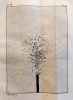
Edition originale (Poggendorff II, 39 - Duveen, 388 - Waller, 11396). Ouvrage orné de 7 planches gravées repliées. "Médecin de formation, l'auteur se plonge dans des travaux scientifiques dans les années 1778-1780. Il publie alors une série de textes qui montrent la diversité de ses connaissances; la Lumière, l'électricité et enfin le feu y sont traités. Il présenta ses expériences dans les milieux académiques qui refusèrent, sous l'influence de Condorcet, de s'associer sous quelque forme que ce fût à ses travaux. S'opposant à la doctrine du « feu élémentaire ». Marat affirme que l'explication des phénomènes qu'il donne n'est tirée que des lois de la mécanique rationnelle : fidèle description du protocole expérimental utilisant le microscope solaire, qui est à la base de toutes ses recherches scientifiques". Bon exemplaire de cet intéressant ouvrage sur la théorie mécanique de la Chaleur (Jean-Pierre Poirier : "Marat homme de science", p. 191).
Recherches physiques sur le feu [relié à la suite] Mémoire sur l'électricité médicale, couronné le 6 août 1783, par l'Académie Royale des Sciences, Belles-Lettres & Arts de Rouen.
Paris, chez Cl. Antoine Jombert, fils aîné, libraire du Roi pour le génie & l'artillerie [et] chez N.-T. Méquignon, 1780 [et] 1784. 2 ouvrages reliés en un volume in-8 de [4]-202-[2] et 8-111 pages, plein veau moucheté brun, dos à nerfs orné de filets et fleurons dorés, pièce de titre noire, roulette dorée sur les coupes, tranches marbrées, deux coins un poil frottés.
![Recherches physiques sur le feu [relié à la suite] Mémoire sur l'électricité médicale, couronné le 6 août 1783, par l'Académie Royale des Sciences, ...](https://static.livre-rare-book.com/pictures/KUA/8736_1_thumb.jpg)
![Recherches physiques sur le feu [relié à la suite] Mémoire sur l'électricité médicale, couronné le 6 août 1783, par l'Académie Royale des Sciences, ...](https://static.livre-rare-book.com/pictures/KUA/8736_2_thumb.jpg)
Les "Recherches physiques sur le feu" sont illustrées de 7 planches hors-texte dépliantes. Éditions originales des deux publications. Dans le premier opuscule, Marat, alors docteur en médecine et médecin des Gardes du corps du comte d'Artois, étudie la théorie mécanique de la chaleur. Dans le second ouvrage, il répond à la question suivante: Jusqu'à quel point et à quelles conditions peut-on compter dans le traitement des maladies, sur le magnétisme et l'électricité, tant négative que positive? Un des premiers ouvrages consacrés à l'électrothérapie. Benjamin Franklin visita Marat lors de son séjour en France. De toute rareté. Trace d'humidité (!) sur le faux-titre et dans une moindre mesure sur la p. de titre du volume sur le feu. Deux ex-libris XXe sur la première garde. Poggendorff II, 39; Duveen, 388; Waller, 11396 pour le premier texte, Wheeler Gift, n° 524; Blake, p. 286 pour le second.
COURS DE PHYSIQUE. TOME 1. OPTIQUE GEOMETRIQUE.
Masson.. 1955.. In-8. Broché. A relier, Couv. légèrement passée, Dos abîmé, Intérieur acceptable. 407 pages. 1ère de couverture en couleurs. Nombreux schémas en noir et blanc, dans le texte. Ecriture au stylo sur la 1ère de couverture. Scotch sur le dos de sur la page de faux titre. 1ère de couverture déchirée.. . . . Classification Dewey : 530-Physique
Préface de J. Cabannes. J. Faivre - Dupaigre et J. Lamirand. Classification Dewey : 530-Physique
Cours de physique expérimentale, dans lequel les éléments de cette science sont mis à la portée des commençants. Troisième édition, revue, corrigée et augmentée.
Genève - Paris, A. Cherbuliez 1841, 210x130mm, VII - 451pages, cartonnage. Papier marbré, étiquette de titre au dos.
6 planches dépl., Pour un paiement via PayPal, veuillez nous en faire la demande et nous vous enverrons une facture PayPal
Conversations on Natural Philosophy in which the Elements of that Science are familiarly explained, and adapted to the Comprehension of Young Pupils. Illustrated with Plates. Seventh Edition.
London, Longman, Rees, Orme.., 1833. Small 8vo. Contemp. full calf. A bit rubbed. X,(2),439 pp. and 23 engraved plates.
La physique moderne et ses théories - Collection idées n°77.
Gallimard. 1968. In-12. Broché. Etat d'usage, Couv. convenable, Dos satisfaisant, Papier jauni. 250 pages.. . . . Classification Dewey : 530-Physique
Traduit de l'allemand par Serge Bricianer - Collection idées n°77. Classification Dewey : 530-Physique
Über Becquerelstrahlen und radio-aktive Substanzen. Sammlung: Moderne ärztliche Bibliothek. Heft 7. -
Berlin, Leonhard Simion Nf., 1902, in-8vo, 30 S., mit 3 Abbild, unbeschnitten, Bibliot.-Stempel a.d. Titel und Vorderdeckel, Original-Broschüre.
Die Entdeckung der Becquerelstrahlen. / Die radioaktive Stoffe. / Charakterisierung der Becquerelstrahlen. / Chemische wirkungen. / Elektrische Erscheinungen. / Phosphorescenz-Erscheinungen. / Wärmewirkungen. / Physiologische Wirkungen. / Die Emanation. / Die radioaktive Substanz der Luft. / Theorie der Radioaktivität. / Der Verfasser, Willy Marckwald, war der Entdecker von Ionium.

(SLACES, NVVA)
Phone number : 41 (0)26 3223808
Au-dela de l'espace et du temps - La nouvelle physique - essais
LE POMMIER. 2003. In-8. Broché. Etat d'usage, Couv. convenable, Dos plié, Quelques rousseurs. 358 pages. . . . Classification Dewey : 530-Physique
Classification Dewey : 530-Physique
"MARCONI, GUGLIELMO. - MARCONI'S ""MAGGIE"" - THE MAGNETIC DETECTOR - WIRELESS TELEGRAPHY
Reference : 41880
(1902)
""Note on a Magnetic Detector of Electrical Waves, which can be employed as a receiver for Space Telegraphy."" (+) ""A Note on the Effect of Daylight upon the Propagation of Electromagnetic Impulses over Long Distances."" (2 papers).
(London, Taylor and Francis, 1902). No wrappers, as extracted from ""Proceedings of the Royal Society of London."", Vol. LXX. Pp. 341-344 a. pp. 344-347.
First printing of these two importent papers on wireless telegraphy, describing the inventions which made it possible to make the first wireless transmissions across the Atlantic in 1901. Maconi's apparatus was built on a magnetic detector invented by Rutherford, and was called Marconi's ""Maggie"". A powerfull transmitter was built at Poldu, Cornwall, England, and a large receiving antenna placed at Cape Cod, Massachusetts. Marconi succeeded to receive (on Dec. 12) three code dots, signifying the letter ""S"". ""Already well known, Marconi, et twenty-seven, became world famous overnight.""(DSB).Marconi and K.F. Brown were jointly awarded the Nobel Price in 1909 ""in recognition of their services in the development of wireless telegraphy.""
Notions de Résistance des Matériaux. Essais. Calculs. Statique Graphique. Vérifications expérimentales.
P., Delagrave (Collection Professionnelle de l'Ouvrier), 1928, in 4°, cartonnage de l'éditeur, 98 pages ; 100 figures et 2 planches ; texte sur deux colonnes ; défauts d'usage au cartonnage.
PHOTOS sur DEMANDE. ...................... Photos sur demande ...................

Phone number : 04 77 32 63 69
Waveguide handbook Collection radiation laboratory series Vol. 10 Sommaire: transmission lines; Microwave networks; Four-terminal structures; Composite structures...
McGraw - Hill book company. 1951. In-8. Relié. Très bon état, Couv. convenable, Dos satisfaisant, Intérieur frais. 428 pages augmentées de quelques figures en noir et blanc dans texte.. . . . Classification Dewey : 530-Physique
Etiquette sur coiffe en pied. Tampon bibliothèque. Collection radiation laboratory series Vol. 10. Texte écrit en anglais. Sommaire: transmission lines; Microwave networks; Four-terminal structures; Composite structures...2 photos disponibles. Classification Dewey : 530-Physique
Leçons de physique à l'usage de l'enseignement secondaire des jeunes filles et des aspirantes au Brevet supérieur
Vuibert et Nony. 1908. In-12. Cartonnage d'éditeurs. Etat d'usage, Coins frottés, Dos satisfaisant, Quelques rousseurs. 351 pp., coiffes frottées, 8 planches de photographies noir et blanc, 1 planche couleur - 1 PHOTO DISPONIBLE.. . . . Classification Dewey : 530-Physique
Classification Dewey : 530-Physique
LECONS DE PHYSIQUE, 2 TOMES (PESANTEUR, CHALEUR / ACOUSTIQUE, OPTIQUE, MAGNETISME ET ELECTRICITE), A L'USAGE DES ELEVES DE 3e, 4e, 5e ANNEES DE L'ENSEIGNEMENT SECONDAIRE DES JEUNES FILLES ET DES ASPIRANTES AU BREVET SUPERIEUR
Vuibert et Nony. 1905-1908. In-12. Relié. Bon état, Couv. convenable, Dos satisfaisant, Intérieur acceptable. 282 pages pour le tome I et 351 pages pour le tome II. Illustrés de nombreuses gravures en noir et blanc dans le texte, et de photo-gravures en noir et blanc sur planches en fin de tome II. Annotations en pages de garde (ex-libris). Annotations dans le texte (ouvrage de travail).. . . . Classification Dewey : 530-Physique
5e et 8e éditions. Classification Dewey : 530-Physique
Histoire des sciences mathématiques et physiques -- EDITION ORIGINALE -- BEL EXEMPLAIRE -- 12 VOLUMES (COMPLETE SET)
P., Gauthier-Villars, 1883/1888, 12 VOLUMES in 8, reliés en demi-chagrin marron, couvertures conservées (reliures de l'époque). Edition originale - Rare -
---- EDITION ORIGINALE ---- BEL EXEMPLAIRE ---- "Géomètre français, (1819/1891), élève de l'Ecole polytechnique, puis de l'Ecole de Metz, Maximilien Marie fut nommé, en 1863, répétiteur de mécanique à l'Ecole polytechnique, puis examinateur d'admission. On lui doit : Théorie des fonctions de variables imaginaires (1874/1876), Histoire des sciences mathématiques et physiques (1883/1888)...". (Larousse du XXe siècle) ---- De Thalès à Diophante - De Diophante à Viète - De Viète à Descartes - De Descartes à Huyghens - De Huyghens à Newton - De Newton à Euler - D'Euler à Lagrange - De Lagrange à Laplace - De Laplace à Fourier - De Fourier à Arago - D'Arago à Abel et aux géomètres contemporains ---- Cajori pp. 294, 43, 162**3526/M6DE.M6AR
Tijd, ruimte, relativiteit
Antwerpen, De Nederlandsche Boekhandel 1945 86pp.met 14 figuren, gecart., in de reeks "De Seizoenen" nr.55
Leçons de physique, jeunes filles, 2è année.
Delagrave.. 1912. In-12. Cartonnage d'éditeurs. Bon état, Tâchée, Dos satisfaisant, Intérieur frais. 290 pages, dessins et gravures ,oir & blanc in texte.. . . . Classification Dewey : 530-Physique
Bibliothèque des écoles primaires supérieures et des écoles professionnelles. Classification Dewey : 530-Physique
L'OPTIQUE
HACHETTE Bibliothèque des Merveilles. 1890. In-12. Broché. Etat passable, Couv. défraîchie, Dos abîmé, Intérieur acceptable. 298 pages, illustrées de nombreuses gravures noir et blanc dans le texte, et d'une planche tirée en couleur par de Neuville et Jahandier. Quelques pages non coupées. Mouillures à l'intérieur de l'ouvrage, n'altérant pas la lecture. 1er plat se détachant. Petits manques sur le dos, et petites déchirures sur les plats.. . . . Classification Dewey : 530-Physique
4ème édition. Classification Dewey : 530-Physique
L'OPTIQUE.
LIBRAIRIE HACHETTE ET CIE. 1874. In-12. Relié. Etat d'usage, Couv. défraîchie, Dos satisfaisant, Mouillures. 298 pages augmentées de nombreuses figures en noir et blanc dans et hors texte - Frontipsice en couleur - Traces legeres de mouillure en coins inferieurs (en fin de volume) - Tranches rosées.. . . . Classification Dewey : 530-Physique
"3e EDITION // COLLECTION ""BIBLIOTHEQUE DES MERVEILLES. / 68 VIGNETTES SUR BOIS A. JAHANDIER et A DE NEUVILLE. Classification Dewey : 530-Physique"
L'optique
Paris, Hachette 1874 298pp., illustré de 68 vignettes sur bois et d'une planche en couleurs, 3e édition, reliure cart. (plats marbrés, dos en cuir avec titre doré), 18cm., cachet sur la page de titre, rousseurs mais le texte est toujours bien lisible, dans la série "Bibliothèque des merveilles", bon état, W101086
L'optique - Collection Bibliothèque des merveilles.
Hachette et cie. 1874. In-12. Broché. Etat passable, Tâchée, Dos abîmé, Fortes mouillures. renfort papier recouvrant le dos - une planche tirée en couleur en frontispice - nombreuses vignettes sur bois dans et hors texte - fortes mouillures à l'intérieur du livre ne gênant pas la lecture.. . . . Classification Dewey : 530-Physique
Collection Bibliothèque des merveilles - 3e édition revue par M.Privat Deschanel - planche tirée en couleur par A.de Neuville et Jahandier. Classification Dewey : 530-Physique
OEUVRES de M. MARIOTTE de l'Académie Royale des sciences comprenant tous les traitez de cet auteur, tant ceux qui avaient déjà parus séparément que ceux qui n'avaient pas encore été publiés
La Haye, Neaulme, 1740, un fort volume in 4 relié en pleine basane marbrée, dos orné de fers dorés, tranches rouges (reliure de l'époque), (habiles restaurations à la coiffe et sur les plats), (5), 320pp., (2), pp., 321/701, (1pp.), (17), 26 PLANCHES DEPLIANTES
---- Nouvelle édition REVUE, CORRIGEE et AUGMENTEE (DU TRAITE DU MOUVEMENT DU PENDULE QUI NE FIGURAIT PAS DANS LA PREMIERE EDITION DES OEUVRES) ---- BON EXEMPLAIRE ---- "Oeuvres de Mariotte, 2 vols in one, contains all of Mariotte's published works and one unpublished paper". (DSB IX pp. 114/122) ---- "Mariotte's interests were broad : mechanics, physics, optics (in a letter to Huygens from Dijon in 1668 he speaks about the discovery of the blind spots in the eye), plant physiology (his earliest communication to the Academy in 1667 was on that topic) and meteorology. In 1676, fifteen years after Boyle, he rediscovered "Boyle's law" but made some important qualifications. He noticed that air expands with rising temperature and contracts with falling ; the inverse relationship between temperature and pressure holds only if the temperature is constant". (Bibliotheca Mechanica p. 216) ---- Traité de la percussion ou choc des corps, dans lequel les principales règles du mouvement sont expliquées et démontrées par leurs véritables causes. Nouvelle édition revue et augmentée de plusieurs propositions touchant l'accélération du mouvement des corps qui tombent - Essais de physique ou mémoires pour servir à la science des choses naturelles : Premier essai : De la végétation des plantes. Second essai : De la nature de l'air. Troisième essai : Du chaud et du froid. Quatrième essai : De la nature des couleurs - Traitement du mouvement des eaux et des autres corps fluides divisé en cinq parties ; imprimé sur la plus nouvelle et la meilleure édition, augmentée et corrigée de nouveau - Règles pour les jets d'eau - Nouvelle découverte touchant la vue, contenue en plusieurs lettres. Nouvelle édition revue et corrigée - Traité du nivellement, avec la description de quelques niveaux nouvellement inventés ; imprimé sur la dernière et la plus complète édition, augmentée et corrigée de nouveau - Traité du mouvement des pendules ; imprimé pour la première fois sur le manuscrit original de l'auteur écrit à Mr. Huygens - Expériences touchant les couleurs et la congélation de l'eau - Essai de logique, contenant les principes des sciences et la manière de s'en servir pour faire de bons raisonnemens, divisé en deux parties**3539/J1
Oeuvres de M. Mariotte, de l'Académie Royale des Sciences ; Comprenant tous les Traitez de cet Auteur, tant ceux qui avoient déjà paru séparément, que ceux qui n'avoient pas encore été publiés ; Imprimées sur les Exemplaires les plus exacts & les plus complets.
A La Haye, chez Jean Neaulme, 1740. 2 tomes en 2 vol. in-4 de (10)-320 pp. et (4)-321 à 701-(35) pp., 26 planches dépliantes, veau marbré, dos orné à nerfs, pièce de titre en maroquin rouge et de tomaison en maroquin citron, tranches rouges (reliure de l'époque).
Deuxième et dernière édition collective, la plus complète, des Oeuvres d'Edme Mariotte (ca 1620 – Paris, 12 mai 1684), publiée vingt-trois ans après la première (Leyde, Pieter van der Aa, 1717). L'édition de 1740 reprend l'ensemble des textes déjà publiés et y ajoute un texte inédit : « These two volumes contain most of Mariotte's published papers, together with the previously unpublished Traité du mouvement des pendules ».Membre fondateur de l'Académie royale des sciences de Paris (1666), Mariotte est l'une des grandes figures de la physique expérimentale européenne du XVIIe siècle. On lui doit : la découverte de la tache aveugle de l'oeil (1660) ; la formulation indépendante de la loi de compressibilité des gaz (1676), dite loi de Boyle-Mariotte, qu'il énonce dans son Traité de la nature de l'air : « à température constante, le volume d'un gaz varie à l'inverse de la pression » ; la conception des premières conduites forcées en fer pour les fontaines de Versailles ; et le Traité du mouvement des eaux (1686), où il jette les bases de l'hydrodynamique moderne que Bernoulli développera en 1738.Tome I : Traité de la percussion ou Choc des corps (1673), Essais de physique : De la végétation des plantes ; De la nature de l'air ; Du chaud et du froid ; De la nature des couleurs.Tome II : Traité du mouvement des eaux et des autres corps fluides, Règles pour les jets d'eau, Nouvelle découverte touchant la vue, Traité du nivellement, Traité du mouvement des pendules (inédit, dont Huygens avait le manuscrit), Expériences touchant les couleurs et la congélation de l'eau, Essai de logique (1678).Dictionary of Scientific Biography ; Bibliotheca Mechanica, pp. 217-218. Bel exemplaire.
Traité du mouvement des eaux et des autres corps fluides. Divisés en V parties. Mis en lumière par les soins de M. de La Hire.
Paris, Michallet, 1686. In-12, plein veau époque, dos à nerfs orné de fleurons et de filets dorés, titre doré, tranches jaspées, coupes ornées de roulettes dorées. Faux-titre, titre, 5 ff non chiffrés, 1 f blanc, 408 pp, 10 ff non chiffrés. Edition originale posthume contenant de nombreuses figures in-texte. Ex-libris armorié contrecollé sur le contreplat supérieur. Epidermures sur les plats, manque la coiffe inférieure, travail de ver dans la marge inférieure.
Optokinetics a treatise on the motions of lights
The John J. Corbette press. 1982. In-8. Relié. Bon état, Couv. convenable, Dos satisfaisant, Intérieur frais. 198 pages.. . . . Classification Dewey : 530-Physique
Etiquette sur coiffe en pied. Tampon bibliothèque. Texte écrit en anglais. Classification Dewey : 530-Physique
ELEMENTS USUELS DE SCIENCES PHYSIQUES ET NATURELLES - COURS MOYEN ET SUPERIEUR
GARNIER FRERES. Non daté. In-12. Cartonné. Bon état, Couv. convenable, Dos satisfaisant, Intérieur frais. 432 pages augmentées de nombreuses illustrations en noir et blanc dans et hors texte - NON DATE. . . . Classification Dewey : 530-Physique
41 E EDITION - 100 LECONS / 100 RESUMES / 400 DEVOIRS / 480 FIGURES Classification Dewey : 530-Physique

