 Write to the booksellers
-
Type
Art print (2)
Book (5888)
Magazine (20)
Manuscript (1)
Old papers (1)
Photographs (3)
-
Latest
Last 24h (13)
Last month (39)
Last week (2)
-
Language
English (10)
French (5900)
German (1)
Greek (1)
Italian (1)
Latin (2)
-
Century
16th (2)
17th (9)
18th (246)
19th (886)
20th (2964)
21st (133)
-
Countries
Belgium (277)
Canada (3)
Côte d'Ivoire (13)
Denmark (1369)
France (3952)
Switzerland (301)
-
Syndicate
ALAC (3)
CLAM (3)
ILAB (4120)
NVVA (139)
SLACES (139)
SLAM (2589)
SNCAO (15)
The Interpretation of X-Ray Diffraction Photographs.
London, Macmillan, 1951. Orig. full cloth, binding slightly soiled. 258 pp. with 231 figures and 10 tables.
Théorie des parachutes: étude, construction et essais d'un parachute hydraulique autocompresseur.
Liège/Paris, Revue Universelle des Mines, 1901. 16 x 24, 54 pp., 12 figures, broché, bon état (couverture défraîchie).
"Envoi de l'auteur; extrait de la Revue Universelle des Mines, 45e année, 1901."
A Mathematical Inquiry into the Causes, Laws, and principal Phaenomena of heat, Gases, Gravitation, &c. (3 Parts).
London, Baldwin, Cradock, and Joy, 1821. Contemp. Hcalf. Minor scratches to spine. In: ""Annals of Philosophy"" or, Magazine of Chemistry, Mineralogy, Mechanics, Natural History... By Thomas Thomson."", New series Vol. I. VIII,479 pp. a. 7 engraved plates. (Entire volumes offered). Herapath's papers: pp. 273-293, 340-351 a. 401-416.
First printing of these contoversial papers where Herapath revived the kinetic theory of gases. His theory was more or less neglected by the scientific community at his time. The kinetic theory remained dormant and forgotten after Euler's and Bernouilli's work ""until 1816, when Herapath proposed a theory which is essential Bernoulli's. Unfortunately he chose to define temperature as being proportional to the momentum rather than the kinetic energy of molecules. Herapath was the first to show, more or less, that kinetic theory can provide simple explanations for the changes of state, diffusion, and the propagation of sound.""(Trousdell ""Essayas in the History of Mechanics"", pp. 283 ff.).
On the Physical Properties of Gases. (To Dr. Thomsen) (+) A Mathematical Inquiry into the Causes, Laws, and principal Phaenomena of heat, Gases, Gravitation, &c. (3 Parts).
London, Baldwin, Cradock, and Joy, 1816 a. 1821. Bound in 2 uniform contemp. moiré boards. Light wear along edges and a fes smaller scratches. In: ""Annals of Philosophy"" or, Magazine of Chemistry, Mineralogy, Mechanics, Natural History... By Thomas Thomson."", Vol. VIII and New series Vol. I. VIII,479 pp. a. 9 engraved plates, VIII,479 pp. a. 7 engraved plates. (Entire volumes offered). Herapath's papers: pp. 56-60 (1816) a. pp. 273-293, 340-351 a. 401-416.
First printing of these contoversial papers where Herapath revived the kinetic theory of gases. His theory was more or less neglected by the scientific community at his time. The kinetic theory remained dormant and forgotten after Euler's and Bernouilli's work ""until 1816, when Herapath proposed a theory which is essential Bernoulli's. Unfortunately he chose to define temperature as being proportional to the momentum rather than the kinetic energy of molecules. Herapath was the first to show, more or less, that kinetic theory can provide simple explanations for the changes of state, diffusion, and the propagation of sound.""(Trousdell ""Essayas in the History of Mechanics"", pp. 283 ff.).Euler, Bernoulli, Herapath and Waterston may be considered the principal scientists who prior to 1850 attempted a more or less complete mathematical treatment of gases, based on a set of molecular postulates. (Jamie Wisniak).""Having published a preliminary notice of his theory in the Annals of Philosophy in 1816, Herapath submitted a detailed account to the Royal Society in 1820. Davy, who was elected to the presidency of the Society in November of that year, was primarily responsible for the fate of the paper. Although Davy was already known as an advocate of the qualitative idea that heat is molecular motion, he found Herapath’s quantitative development too speculative and complicated"" he rejected the hypothesis of an absolute temperature implying an ""absolute zero"" of cold. Having been told that his paper would not be accepted for publication in the Philosophical Transactions, Herapath withdrew it and published it instead in the Annals of Philosophy in 1821. Five years later he launched an attack on Davy in the Times of London, accusing him of circulating unfounded criticisms of his experimental work, which prevented its publication. Although Davy ignored a series of letters and challenges published in the Times, Herapath later claimed Davy’s resignation from the presidency of the Royal Society (1827) as a victory for himself.""(DSB).
SUR L'AUTOXYDATION DE COMPLEXES ORGANO-METALLIQUES
Facultés Catholiques, Lille. 1938. In-8. Broché. Etat d'usage, 2ème plat abîmé, Dos satisfaisant, Intérieur acceptable. 94 pages. Etiquette de code sur le 1er plat. Tampons et annotations de bibliothèque sur le 1er plat et en page de titre.. . . . Classification Dewey : 530-Physique
Mémoires et travaux des Facultés catholiques de Lille, Fasc. XLVII. Classification Dewey : 530-Physique
Über die Grundlagen physikalischer Aussagen in den älteren und den modernen Theorien.
Berlin, Offentliches Leben, 1937. 8vo. In the original wrappers. With repair to lower part and lower right corner bended, otherwise a very nice and clean copy. [Hermann:] Pp. 309-398. [Entire issue: Pp. 273-504, (3) + frontispeice depicting Jakob Friedrich Fries.].
First printing of Hermann's publication on the historical development and foundation of physics. Today she if famous for her pioneering work with respect to the interpretation of quantum theory, the present paper being her most extensive on the philosophical aspects of the development of research in physics.Attempts to interpret and understand what was then new and very puzzling physics were of great contemporary importance when Grete Hermann entered the field, and her work in physics was mainly related to the interpretation of quantum mechanics. More specifically, her main work in physics was on the philosophical foundations of quantum mechanics, the significance of modern physics for the theory of knowledge, and causality in physics. She was one of the active early contributors to the historic debates on causality in quantum mechanics, and on the completeness of quantum mechanics and its description of reality.Hermann's work during the 1930s reveals the influence of her background in the neo-Kantian school, yet it also owes much to the way in which Heisenberg and Weizsäcker had interpreted Bohr's doctrine of the indispensability of classical concepts in the description of experience.Heisenberg has written that Grete Hermann came to Leipzig for the purpose of challenging the philosophical basis of atomic physics. Heisenberg devoted an entire chapter of his book ""Physics and Beyond: Encounters and Conversations"" to a reconstruction of discussions that he had on quantum mechanics and Kantian philosophy with Grete Hermann and Carl Friedrich von Weizsäcker.
Über die Grundlagen physikalischer Aussagen in den älteren und den modernen Theorien.
Berlin, Offentliches Leben, 1937. 8vo. Offprint in the original wrappers. Wrappers with minor miscolouring and top left corner of front wrapper slightly bended, otherwise a very nice and clean copy. 90 pp.
First printing of Hermann's publication on the historical development and foundation of physics. Today she if famous for her pioneering work with respect to the interpretation of quantum theory, the present paper being her most extensive on the philosophical aspects of the development of research in physics.Attempts to interpret and understand what was then new and very puzzling physics were of great contemporary importance when Grete Hermann entered the field, and her work in physics was mainly related to the interpretation of quantum mechanics. More specifically, her main work in physics was on the philosophical foundations of quantum mechanics, the significance of modern physics for the theory of knowledge, and causality in physics. She was one of the active early contributors to the historic debates on causality in quantum mechanics, and on the completeness of quantum mechanics and its description of reality.Hermann's work during the 1930s reveals the influence of her background in the neo-Kantian school, yet it also owes much to the way in which Heisenberg and Weizsäcker had interpreted Bohr's doctrine of the indispensability of classical concepts in the description of experience.Heisenberg has written that Grete Hermann came to Leipzig for the purpose of challenging the philosophical basis of atomic physics. Heisenberg devoted an entire chapter of his book ""Physics and Beyond: Encounters and Conversations"" to a reconstruction of discussions that he had on quantum mechanics and Kantian philosophy with Grete Hermann and Carl Friedrich von Weizsäcker.
Lie groups for physicists.
New-York, Benjamin, 1966, in 8° relié pleine toile noire de l'éditeur, 193 pages.
PHOTOS SUR DEMANDE. ...................... Photos sur demande ...................


Phone number : 04 77 32 63 69
Spiritalium liber. A Federico Commandino Urbinate, ex Graeco, nuper in Latinum conversis. Cum Privilegio Gregorij XIII. Pont. Max. - [THE FOUNDATION OF HYDRAULICS]
Urbini, (D. Frisolini), 1575. Small 4to. Fine recent full vellum in old style with written title on back. Titlepage + 80 leaves (title unnumb. + F 1-80 with 4 leaves misnumb., e.g. F70 instead of 80). The dedicationleaf (unnumb.) after title missing. Text complete, fine and clean with broad margins. One large initial in woodcut and 89 large textillustrations in woodcut.
First edition of Heron's main work, being his first publication. The work stimulated and contributed substantially to the interest in pneumatics that arose suddenly in the late 16th century and led to the work of Toricelli and Boyle. The ""Pneumatics"" was not published in Greek until 1693. It is one of the major sources to our knowledge of the techniques and mechanics of Antiquity, and the many hydraulic and mechanical inventions by Hero are here depicted for the first time in print. The work includes studies of pneumatics and mechanics and include 89 illustrations of different inventions, such as siphons, fountains, engines, an account of a small stationary steam-engine (which is of the form now known as Avery's patent, the double-force pump etc., which ""by the union of (compressed) air, earth, fire, and water, and the concurrence of...elementary principles..., supply the most pressing wants of the human life, (or) produce amazement and alarm."" The book describes many gadgets and magical tricks and includes the first suggestion of a steam engine (see f. 52). - Sarton, Introduction...Vol. I pp. 208 ff. - Adams H:369 - Poggendorff I: 1084.
Les applications du calcul opérationnel - Collection école normale supérieure publications des laboratoires physique n°VI.
Masson et cie. 1944. In-8. Broché. Etat d'usage, Couv. convenable, Dos satisfaisant, Papier jauni. 91 pages - quelques figures en noir et blanc dans le texte.. . . . Classification Dewey : 530-Physique
Collection école normale supérieure publications des laboratoires physique n°VI. Classification Dewey : 530-Physique
Anweisung zum physikalischen Experimentiren und zur wohlfeilen Anfertigung eines kleinen physikalischen Apparates.
Berlin Rücker, 1834, kl. in-8vo, X + 129 S. Mit 3 gefalteten Kupfertafeln, stockfleckig. kleiner hs. Besitzvermerk 1835 auf Vorsatz, Pappband der Zeit. Leichte Gebrauchsspuren.
Das Bändchen beschreibt Experimente aus allen Gebieten der Physik.
(SLACES, NVVA)
Phone number : 41 (0)26 3223808
Elektrotechnik. Einführung in die Starkstromtechnik. Band 1 bis 4. ‘Sammlung Göschen’, 196, 197, 198, 657.
Berlin und Leipzig, Walter de Gruyter, 1933, kl. in-8°, Original-Leinenbände.
1) Die physikalischen Grundlagen. 6., neu bearb. Aufl. / 2) Die Gleichstromtechnik. 6. neubearb. Aufl. / 3) Die Wechselstromtechnik. Generatoren, Transformatoren und Umformer... 5., neubearb. Aufl. / 4) Die Erzeugung und Verteilung der elektrischen Energie.Mit res. 88, 134, 153 und 9 Figuren im Text und 4 mal 16 Bild-Tafeln.
(SLACES, NVVA)
Phone number : 41 (0)26 3223808
PHYSICAL GEOGRAPHY
In 8° (220x 120 mm) Relié percal éditeur Carte dépliante couleurs, VII-441 pp Bon état P2-3C
TRAITE DE LA LUMIERE
2 VOLUMES
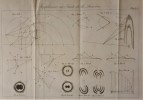
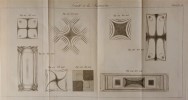
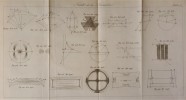
Traité de la lumière traduit de l'anglais avec notes de MM. Verhulst et A. Quetelet. Supplément au traité de la lumière de Sir J.F.W. Herschel par A. Quetelet. Sur la persistance des impressions de la rétine. Sur les couleurs accidentelles en supplément au Traité de la lumière pp. 471/525. 2 volumes In 8° ( 220 x 130 mm) 508 pp et 620 pp Illustrés de 16 planches dépliantes Relié demi cuir, un dos manquant sur le 1er Tome Treatise on light translated from English with notes by MM. Verhulst and A. Quetelet. Supplement to the Treaty of Light by Sir J.F.W. Herschel by A. Quetelet. On the persistence of impressions of the retina. On accidental colors in addition to the Treaty of Light pp. 471/525. 2 volumes In 8 ° (220 x 130 mm) 508 pp and 620 pp Illustrated with 16 folding plates Bound in half leather, a back missing on the 1st volume
On certain remarkable Instances of deviation from Newton's Scale in the Tints developed by Crystals, with one Axis of Double Refraction, on exposure to Polarized Light.
London, Taylor and Francis, 1833. 4to. As extracted, in ""Transactions of the Cambridge Philosophical Society"", volume 4. Fine and clean. Pp. (21)-87.
First edition.
Traité de la Lumière. Traduit de L'Anglois avec Notes par P.-F. Verhulst et A. Quetelet. Tome Premier (of 2).
Paris, De Malher et Cie, 1829. Nice contemp. hcalf. Richly gilt spines. (8),508 pp. a. 10 folded engraved plates.
First French edition and the first in bookform.
On the action of crystallized bodies on homogenous light, and on the causes of the derivation from newton's scale in the tints which many of them develope on exposure to a polarized ray. Read december 23, 1819.
London, W. Bulmer and Co., 1820. 4to. No wrappers as extracted from ""Philosophical Transactions"" 1820 - Part I. Pp. 45-100 a. 1 engraved plate.
First printing of one of herschel's importent investigations on polarization and the wave theory of light. He designed a new instrument to project the colored rings onto a screen about three inches behind the analyzer. This method allowed Herschel to examine the details of the tints.
"HERSCHEL, J.F.W. (JOHN FREDERICK WILLIAM). - THE ""HERSCHEL CONDITION"" INTRODUCED.
Reference : 46100
(1821)
On the aberration of compound lenses and object-glasses. Read March 22, 1821.
London, W. Bulmer and W. Nicol, 1821. 4to. No wrappers as extracted from ""Philosophical Transactions"" 1821 - Part I. With titlepage to Part I. Pp. 222-267 a. 1 engraved plate. Verso of titlepage with 2 stamps.
First appearance of this importent paper in optical theory in which Herschel described how to free lenses from the aberration for two axis points, one of which is infinitely distant. It is known as Herschel's condition. ""Sir John Herschel gave the condition which must be satisfied in order that a symmetrical optical system, free from spherical aberration for two conjugate axial points, may also be free from spherical aberration for two neighbouring and conjugate points upon the axis of the system" but Herschel's condition applies only to first order aberration, i.e. to aberration depending upon the cube of the inclination of the ray to the axis. Abbe shewed, later, that this condition could be included in a wider result, viz. that the spherical aberration, supposed zero, is stationary for axial variations provided that the incident and emergent rays for two conjugate axial points, associated with modified magnification m, satisfy the relation. (G.C. Stewart)
On the Origin of Force. - [PRESENTATION-COPY - INSCRIBED FOR TYNDALL]
(London: Alexander Strahan and Company, 1868). 8vo. Without wrappers (as issued). Offprint, seperatly paginated, from ""Fortnightly Review 1"", Pp. 435-42. Author's presentation inscription to top of front wrapper: ""Prof Tyndall / With the author's / kind Compliments"". Soiling to front wrappers and nicks throughout, not affecting text. Internally clean. Pp. 8.
![On the Origin of Force. - [PRESENTATION-COPY - INSCRIBED FOR TYNDALL]. "[HERSCHEL, JOHN].](https://static.livre-rare-book.com/pictures/LLX/47912_1_thumb.jpg)
First edition, offprint, with the author's presentation inscription to Professor John Tyndall - the father of the Greenhouse Effect, heat radiation and global climate research - of this important paper, in which Herschel promotes the role of the devine in the natural order. Herschel, now famous for originating the use of the Julian day system in astronomy, naming seven moons of Saturn and four moons of Uranus, his investigation in colour blindness and the chemical power of ultraviolet rays, did much to promote the public understanding of science . The present paper constitutes one of his most widely read and popular works. ""During his life John was immensely celebrated, his name epitomizing science to the public, much as that of Einstein did in the next century."" (DSB)Though intended for a popular audience ""On the Origin of Force"" is one of the most important sources for understanding Herschel's general approach to science. A contemporary review of the paper states: ""The article is well worth reading for those who wish to realise the enormous benefit which has been rendered to science by banishing the indefinite uee of the word force and by introducing the term energy, restricting the use of force to the meaning attached to it by Newton. Sir John Herschel still speaks of the ""conservation of force"" (as did likewise Helmholtz, who, however, very early introduces the term Arheitskraft, power to do work, thus removing all ambiguity).Herschel and Tyndall corresponded throughout their mature lives and they shared an overall view on God's place in science. ""In the only case in which we are admitted into any personal knowledge of the origin of force, we find it connected (possibly by intermediate links untraceable by our faculties, but yet indubitably connected) with volition, and by inevitable consequence with motive, with intellect, and with all the attributes of mind in which-and not in the possession of arms, legs, brains, and viscera-personality consists."" (Herschel, rrom the present paper). Tyndall agreed in stating that: ""An inscrutable power of which we know no more than job did, when he said, 'Can man by searching find this power out?'. (Tyndall's ""Belfast Address"").
"HERSCHEL, JOHN W.F. - FLOURESCENCE DISCOVERED IN QUININE SOLUTION
Reference : 42918
(1845)
Amorfota (Greek), No. I-II.- On a Case of Superficial Colour presented by homogenous liquid internally colourless. Received January 28, 1845, - Read February 13, 1845. - II. Onthe Epipolic Dispersion of Light, being a Supplement to a paper entitled, ""...
(London, Richard and John E. Taylor, 1845). 4to. No wrappers as extracted from ""Philosophical Transactions"" 1845 - Part I. Pp 143-145 . pp. 147-153. Clean and fine.
First appearance of these highly influential papers as Herschel here reported the first observation of the fluorescence of a quinine solution in sunlight. - In a footnote to the report Herschel points out that he was writing from memory, having carried out the experiment more than twenty years before. Nevertheless, his reminiscence was enough to spark further exploration, eventually resulting in the modern understanding of fluorescence. In fact, even today, quinine is one of the most commonly utilized fluorophores for spectroscopy, enjoyed by many for the strange, but beautiful fluorescence that was first observed, but unable to be unexplained, by Herschel.
Descriptive Catalogue of a Collection of William Herschel Papers presented to the Royal Astronomical Society by the Late Sir W. J. Herschel, Bart. (Drawn up by J. L. E. Dreyer).
[No place], 1918. 8vo. In the original printed wrappers. Offprint from ""Monthly Notices of the Royal Astronomical Society"", Vol. LXXVIII, No. 8. Fine and clean. Pp. 547-554.
Offprint of a collection of William Herschel Papers presented to the Royal Astronomical Society
On the Proper Motion of the Sun and Solar System. - [DISCOVERY OF THE MOVEMENT OF THE SUN - PMM 227]
London, Lockyer Davis and Peter Elmsly, 1783. 4to. In recent marbled paper wrappers. Extracted from ""Philosophical Transactions"", vol. 73. Including title-page of volume. A few leaves reinforced in margin. (3), iv, (247)-284 pp. + three folded plates.
![On the Proper Motion of the Sun and Solar System. - [DISCOVERY OF THE MOVEMENT OF THE SUN - PMM 227]. "HERSCHEL, WILLIAM.](https://static.livre-rare-book.com/pictures/LLX/56994_1_thumb.jpg)
![On the Proper Motion of the Sun and Solar System. - [DISCOVERY OF THE MOVEMENT OF THE SUN - PMM 227]. "HERSCHEL, WILLIAM.](https://static.livre-rare-book.com/pictures/LLX/56994_2_thumb.jpg)
![On the Proper Motion of the Sun and Solar System. - [DISCOVERY OF THE MOVEMENT OF THE SUN - PMM 227]. "HERSCHEL, WILLIAM.](https://static.livre-rare-book.com/pictures/LLX/56994_3_thumb.jpg)
First appearance of Herschel's famous paper in which he documented his discovery of the movement of the sun and of the entire solar system with it. ""Between 1780 and 1821 Sir Herschel produced some seventy papers, mostly published in the Philosophical Transactions of the Royal Society. These were the results of his astronomical observations which have earned him the title of 'Farther of sidereal astronomy'. The present paper is one of the most important in the series."" (PMM 227)""Herschel analyzed the individual motions of a small number of stars, showing that most of their observed motions were actually the result of the movement of our solar system through space."" (Norman).PMM 227 Norman 1059
On the Ring of Saturn, and the Rotation of the fifth Satellite upon its Axis. Read December 15, 1791 (+) Miscellaneous Observations. Account of a Comet. Read December 22, 1791.
London, Peter Elmsly, 1792. 4to. In recent marbled paper wrappers. Extracted from ""Philosophical Transactions"". Including title-page of volume. Leaves reinforced in margin. (2), iii-vi, (2), 28 pp. + 1 folded plate.
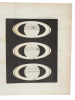
First edition of Herschel's important paper on his observations of the rings of Saturn. ""Saturn exercised a special fascination for Herschel, and between 1789 and 1808 he devoted seven papers and part of an eighth to the planet, its ring, and its satellites.On 19 August 1787 Herschel suspected he had found a sixth and previously unknown satellite, but he was not able to confirm this until 28 August 1789, when his forty-foot telescope came into commission. A few days later he found a seventh satellite. For some months he carefully tracked the satellites, establishing for Mimas and Enceladus periods within seconds of the modern values, and giving evidence to show that Iapetus rotates in its period of revolution.He also made careful observations of the rings, which he believed to be solid. As the earth happened to be in the plane of the ring structure at the time, he compared the thickness of the ring when seen edge-on with the diameter of Jupiter's satellites"" and although his estimate exceeds modern values, his method showed that the thickness did not exceed a few hundred miles."" (DSB)
Additional Observations tending to investigate the Symptoms of the variable Emission of the Light and Heat of the Sun with Trials to set aside darkening Glasses, by transmitting the Solar Rays through Liquids" and a few remarks to remove Objections t...
(London, W. Bulmer and Co., 1801). 4to. No wrappers as extracted from ""Philosophical Transactions"" 1801 - Part II. Pp. 354-362 a. 1 engraved plate. The plates depicts the experimental apparatus.
First appearance of Herschel's paper on emission of the Light and Heat of the SunTogether with this paper is: Thomas Andrew Knight, ""Account of some Experiments onthe Ascent of the Sap in Trees."", pp. 333-352 a. 4 engraved folded plates.
Ueber die Gleichgewicht schwimmender elastischer Platten.
Leipzig, Johann Ambrosius Barth, 1884. Without wrappers as issued in ""Annalen der Physik und Chemie. Hrsg.von G. Wiedemann."", Neue Folge Band XXII, No 7. With halftitle to vol. 24. (Entire issue 7) Pp. 305-464 a. 3 folded lithographed plates. Hertz's paper: pp. 449-455. Clean and fine. Halftitle with a small stamp.
First appearance of an importent paper on the THEORY OF ELASTICITY.""At the beginning of 1883, Hertz again became interested in a problem of elasticity. Now it was the question of bending of an infinite plate floating in water and normally loaded at one point. He found that the plate deflects downward under the load but at a certain distance from the load deflection become negative. Then, at an increased distance, they again become positive, and so on. Thusthe surface is wavy, and the high of the waves rapidly diminishes with increase of the distance from the load. He arrived, in this way, at the paradoxical conclusion that a plate, heavier than water, can be made to flow by loading it at the center, The explanation is that due to bending the plate aquires the form of a shell and can press out more water than is equivalent to its own weight.""(Timoshenko ""History of the Strenght of Material"" p.349).

