 Write to the booksellers
-
Type
Book (432)
Magazine (4)
-
Language
English (1)
French (433)
Italian (2)
-
Century
16th (1)
17th (3)
18th (7)
19th (28)
20th (237)
21st (51)
-
Countries
Belgium (79)
Canada (2)
Denmark (6)
France (318)
Switzerland (31)
-
Syndicate
ALAC (2)
ILAB (184)
NVVA (14)
SLACES (14)
SLAM (162)
Proofs and Refutations: The Logic of Mathematical Discovery
Cambridge University Press 1976 188 pages 14x1 8x21cm. 1976. Broché. 188 pages.
Bon état exlibris intérieur propre trace d'étiquette sur le dernier plat bonne tenue
Le Secret Des Nombres. 2ème Édition Revue Et Augmentée 1997
Albin michel 1998 287 pages 14 6cm x 22 5cm x 2 3cm. 1998. broché. 287 pages. Le livre 'Le secret des nombres' d'André Jouette propose des jeux énigmes et curiosités mathématiques accessibles à tous sans connaissance préalable requise. Il explore l'arithmétique ordinaire rappelle des formules utiles et présente des problèmes inattendus avec leurs solutions
Très bon état
Logique de Port-Royal
Hachette. 1854. In-12. Broché. Bon état, Tâchée, Mors fendus, Quelques rousseurs. 381 pages.. . . . Classification Dewey : 160-Logique
Suivie des trois fragments de Pascal sur l'autorité en matière de philosophie, l'esprit géométrique et l'art de persuader. Classification Dewey : 160-Logique
Logique de Port-Royal, précédée d'une notice sur les travaux philosophiques d'Antoine Arnauld et accompagnée de notes
L. Hachette et Cie. 1869. In-12. Broché. Etat passable, Plats abîmés, Dos fané, Intérieur acceptable. 396 pages. Premier plat désolidarisé, second plat déchiré.. . . . Classification Dewey : 160-Logique
Nouvelle édition. Classification Dewey : 160-Logique
Traité de logique formelle - 3e édition conforme à la première.
Librairie philosophique J.Vrin. 1973. In-8. Broché. Etat d'usage, Tâchée, Dos satisfaisant, Papier jauni. 316 pages - déchirures sur les contre plats.. . . . Classification Dewey : 160-Logique
Sommaire : Définitions et généralités sur la logique formelle - théorie générale du concept et du terme - théorie générale du jugement et de la proposition - théorie de l'inférence en général théorie de la déduction immédiate - syllogistique - théorie du syllogisme catégorique - théorie des syllogismes conjonctifs et des syllogismes spéciaux - théorie des syllogismes modaux - théorie du syllogisme démonstratif le problème formel de l'induction la valeur du syllogisme - la logistique et l'algèbre logique. Classification Dewey : 160-Logique
Mélanges de logique d'Emm. Kant
Paris, Ladrange 1862 viii + 474 [ii] pp., 23cm., br.orig., quelques rousseurs sinon en bel état, F80535
Logique de Kant
Paris, Ladrange 1862 248pp. + 32pp.catalogue d'éditeur, 2e édition française, 23cm., br.orig. avec petit manque de papier au dos, rousseurs (texte toujours bien lisible), pour la plupart non coupé, bon état, texte en français, F80485
TESTS D'INTELLIGENCE - POUR MESURER ET DEVELOPPER SA CAPACITE DE RAISONNEMENT - LES TESTS ET LEURS RESULTATS.
MARABOUT. 2004. In-18. Broché. Bon état, Couv. convenable, Dos satisfaisant, Intérieur frais. 63 pages - Nombreuses figures en noir et blanc.. . . . Classification Dewey : 160-Logique
Classification Dewey : 160-Logique
Frege an Introduction to the Founder Modern Analytic Philosophy: An Introduction to the Founder of Modern Analytic Philosophy
WB 2000 240 pages 13 8x21 6x0 8cm. 2000. Broché. 240 pages.
proche du neuf
Metaphor: Its Cognitive Force and Linguistic Structure (Clarendon Library of Logic and Philosophy)
Oxford University Press USA 1990 372 pages 13 82x1 96x21 46cm. 1990. Broché. 372 pages.

Très Bon Etat de conservation intérieur propre bonne tenue
LES TESTS DE LOGIQUE / POUR APPRENDRE A SE CONNAITRE ET A SE DEPASSER ...
MARABOUT. 1992. In-12. Broché. Etat d'usage, Couv. convenable, Dos satisfaisant, Intérieur acceptable. 146 pages illustrées de quelques figures dans le texte - Quelques annotations sur la 1ere page et soulignements dans le texte.. . . . Classification Dewey : 160-Logique
Classification Dewey : 160-Logique
LOGIQUE MATHEMATIQUE
JACQUES GABAY 2000 3x24x17cm. 2000. Broché.
proche du très bon état intérieur propre bonne tenue dos un peu ridé
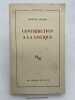
Contribution à la logique
Les Éditions de Minuit Les Éditions de Minuit, 1977. Collection Arguments. In-8 broché de 150 pages. Bon état
Toutes les expéditions sont faites en suivi au-dessus de 25 euros. Expédition quotidienne pour les envois simples, suivis, recommandés ou Colissimo.
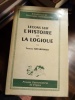
Leçons sur l'histoire de la logique
Paris, Presses Universitaires de France, "Bibliothèque de philosophie contemporaine", 1964, 13,5 x 22, 388 pages cousues sous couverture imprimée.
Très bon état.
Pour Descartes. Le processus logique de la pensée confuse.
P., Albin Michel (Collection "Meta"),1982, in 8° broché, 145 pages ; rares annotations au crayon.
PHOTOS sur DEMANDE. Fermeture du 1er au 23 Août


Phone number : 04 77 32 63 69
Logic and the philosophy of language
Cambridge, Cambridge University Press 1993 viii + 531pp., 23cm., in the series "The Cambridge translations of medieval philosophical texts" vol.1, previous owner's name on first page, softcover, VG, ISBN 0-521-28063-X, [English translation]
"KRIPKE, SAUL A. - KRIPKE MODELS FOR MODAL LOGIC ""POSSIBLE WORLD SEMANTICS""
Reference : 46888
(1959)
A Completeness Theorem in Modal Logic. [In: The Journal of Symbolic Logic. Edited by Alonza Church, Leon Henkin, S.C. Kleene, Alice A. Lezerowitz & Alfons Borgers. Volume 24, Number 1, March 1959].
(No place), The Association for Symbolic Logic, 1959. 8vo. Wrappers blank with printed title on spine. Entire issue No. 1 of vol. 24, offered. Fine and clean.
The seminal first printing of Kripke's debut article, which provided the basis for his logic and for the model theory for modal logic in general. The work constitutes the very beginning of Kripke Semantics (often called possible world semantics). Kripke's works in general are rare in fist editions. Many of them remain unpublished and are only known in privately circulated manuscripts.The American philosopher Saul A. Kripke (born 1940) is an exceedingly important logician and philosopher of language and one of the most powerful and influential thinkers of analytic and Anglo-American philosophy. He is considered the greatest living philosopher and perhaps the greatest since Wittgenstein. In 2001 he was awarded the Schock Prize in Logic and Philosophy, which is considered the philosopical equivalent of the Nobel Prize.Kripke, who grew up in Omaha in a religious Jewish family, was somewhat of a prodigy child. During grammar school he got intimately acquainted with and mastered to perfection algebra, geometry and calculus, and very early on he took up philosophy, which later became his career. Still a teenager, in high school, he wrote a work that was to change the face of philosophical logic forever, namely the groundbreaking paper ""A Completeness Theorem for Modal Logic"", which was printed a few years later, in 1959, in the Journal of Symbolic Logic, while he was in his first year at Harvard University. This seminal debut work proposed what later came to be known as Kripke models for modal logic. The story goes that the paper earned a letter from the department of mathematics urging Kripke to apply for a job there, to which he is said to have written an answer explaining ""My mother said that I should finish high school and go to college first.""In 1962 he graduated from Harvard University, where he remained until 1968, first as a member of the Harvard Society of Fellows and then as a lecturer. During these years he developed the logical theories founded in the ""Completeness Theorem"" further and made seminal contributions to the field of logic and semantics. Kripke Semantics is a formal semantics for non-classical logic systems that Kripke began developing in his teenage years, first published something on in 1959 (the present work) and further developed in the 60'ies and. The development of Kripke Semantics was no less than a breakthrough in the making of non-classical logics, of which no model theory existed before Kripke's. With this work, Kripke laid the foundation for proving completeness theorems for modal logic, and for identifying the weakest normal modal logic, which is now named K after him.
Kurzgefasste Logik und Psychologie
Kopenhagen/ Leipzig, Frimodts Verlag/ Reisland 1890 xii + 389pp., 22cm., "Nach der zweiten Auflage des Originals unter Mitwirkung des Verfassers ins Deutsche übersetzt von F. Bendixen", softcover, good condition, F120679
Echos du sensible - Une logique de l'homéopathie - Collection voyages philosophiques.
Atelier Alpha Bleue. 1988. In-8. Broché. Etat d'usage, 2ème plat abîmé, Dos plié, Intérieur frais. 298 pages - couverture contrepliée - déchirure sur le 2eme plat.. . . . Classification Dewey : 160-Logique
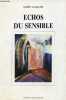
Collection voyages philosophiques. Classification Dewey : 160-Logique
Manuel d'analyse grammaticale et logique
Librairie Classique Eugène Belin In-8, reliure vert tabac texte sérigraphié en creux en blanc, 126 pages, l'ensemble, frais et bien intègre, coins piquants.
Bon Etat Mise à jour du Samedi 27 Juin 2026. Paiement PayPal immédiat, Mondial Relay pour : France, Allemagne, Autriche, Belgique, Espagne, Italie, Portugal, Luxembourg, Pays-Bas, Pologne (Communiquer votre point ou locker si connu). Une participation supplémentaire peut être demandée pour les colis lourds hors France où les envois compris entre 5 et 25 kg sont dégressifs : 2 à 4 kilogrammes - 7.99 / 5 à 10 kg - 15.99 / 15 -25 kg - 25.99. Certaines de nos collections ( Vian, Céline, Camus (...) peuvent être expédiées en Franco de port. Pour linternational hors Europe (Suisse, Canada, Japon, Etats-Unis, les frais dexpéditions peuvent varier selon le poids (mise à jour : 1 juin 2026).
LES TESTS DE SELECTION DEVOILES - 1 - POUR CONNAITRE ET PASSER AVEC SUCCES LES TESTS DE SELECTION DU PERSONNEL - POUR DEJOUER LES PIEGES DE LA GRAPHOLOGIE
EDITIONS L' ECRIT. 1995. In-8. Broché. Bon état, Couv. convenable, Dos satisfaisant, Intérieur frais. 177 pages - nombreuses illustrations en noir et blanc dans et hors texte.. . . . Classification Dewey : 160-Logique
Classification Dewey : 160-Logique
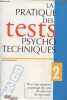
La pratique des tests psychotechniques Tome 2 - Pour vous entraîner au passage des tests de sélection personnel
L'écrit. 2006. In-8. Broché. Etat d'usage, Couv. convenable, Dos satisfaisant, Intérieur acceptable. 155 pages. Nombreux schémas en noir et blanc dans et hors texte. Annotations au crayon dans le texte, la page de faux titre et le premier contre-plat. . . . Classification Dewey : 160-Logique
Classification Dewey : 160-Logique
Il pensiero sulla logica. Orientamenti recenti di filosofia della logica in ambito analitico (Dialoghi di filosofia)
Lateran University Press 2006 101 pages 16 8x1 2x23 6cm. 2006. Broché. 101 pages.
Très bon état bonne tenue intérieur propre
L'anthropologie Logique De Quine: L'apprentissage De L'obvie (Bibliotheque D'histoire De La Philosophie)
Librarie Philosophique J. Vrin 1992 288 pages 13 6x2 4x20 8cm. 1992. perfect. 288 pages.
Bon état couverture défraîchie intérieur propre
Laurent Cesalli, Leone Gazziero, Charles H. Manekin, Shahid Rahman, Tony Street, Michele Trizio (eds)
Reference : 64287
Fallacies in the Arabic, Byzantine, Hebrew and Latin Traditions
, Brepols, 2024 Paperback, 269 pages, Size:170 x 240 mm, Language: English. ISBN 9782503608198.
Summary Bad arguments have never been in short supply. The scholarly interest they have elicited in recent years, on the other hand, is quite exceptional. Fallacy studies have become a well established and flourishing field of argumentation theory. Without notable exception, the ever-growing literature on argumentative failures suffer from a conspicuous lack of interest in Mediaeval fallacy theory - arguably the most creative stage in the whole history of argumentation theories. The standard story is that after Aristotle got off to a tentative start, the study of fallacies laid dormant until people at Port Royal and John Locke revived it in spectacular fashion. «Fallacies in the Arabic, Byzantine, Hebrew and Latin Traditions» will show that this narrative is misleading, if not altogether false. Free of boundaries or limitations imposed by differences in discipline, language and culture, the volume will provide ample and unambiguous record of the exegetical proficiency, technical expertise and argumentative savoir-faire typically displayed by mediaeval logicians jurists and theologians on issues whose complexity we underestimate to some extent - such as the problem of defining what a fallacy is or the pitfalls of linguistic expression. Working its way from the inside out within each mediaeval tradition and comparing mediaeval findings and lessons to contemporary views and trends, the volume will show where the potential for novelty and the rightful place of mediaeval theories of fallacies lies within contemporary argumentation studies. TABLE OF CONTENTS Laurent CESALLI, Leone GAZZIERO, Charles MANEKIN, Shahid RAHMAN, Tony STREET and Michele TRIZIO, « Fallacies in the Arabic, Byzantine, Hebrew and Latin Traditions. Introduction » Latin Tradition Sten EBBESEN, « Are the Fallacies Topoi? » Costantino MARMO, « The Fallacia Consequentis between Term Logic and Sentence Logic in its Medieval Reception » Leone GAZZIERO, « ?Qui imperitus est vestrum, primus calculum omittat?. Aristotelis Sophistici Elenchi 1 in the Boethian Tradition » Irene CAIAZZO, « Theology, Fallacious Reasoning and Heresy on the Borders of the Twelfth and Thirteenth Centuries. Some Remarks on the Fallaciae in theologia and Amalricians » Byzantine Tradition Melpomeni VOGIATZI, « Byzantine Treatments of Fallacy. The Reception of Aristotle's Account » Arabic Tradition Shahid RAHMAN and Walter Edward YOUNG, « Outside the Logic of Necessity. Deontic Puzzles and 'Breaking' Compound Causal Properties in Islamic Legal Theory and Dialectic » Hassan REZAKHANY, « A Forgotten Mereological Paradox » Jewish Tradition Charles H. MANEKIN, « Fallacies and Biblical Exegesis - The Case of Joseph ibn Kaspi » Yehuda HALPER, « Are Zeno's Paradoxes of Motion Fallacies? Evidence from the Hebrew Aristotelian Logical Tradition » Aviram RAVITSKY, « Fallacies in Rabbinical Thought, in Medieval Jewish Philosophy, and in the Treatise on Talmudic Methodology by Abraham Elijah Cohen » Index nominum Index rerum

