 Write to the booksellers
-
Type
Autograph (20)
Book (18576)
Magazine (13)
Manuscript (6)
Photographs (4)
-
Latest
Last 24h (1)
Last month (33)
Last week (2)
-
Language
English (41)
French (18568)
German (2)
Japanese (1)
Latin (2)
Polish (1)
Portuguese (1)
Russian (1)
Spanish (1)
Swedish (1)
-
Century
16th (5)
17th (35)
18th (293)
19th (3723)
20th (11098)
21st (1435)
-
Countries
Belgium (395)
Côte d'Ivoire (38)
Denmark (1337)
France (16697)
Switzerland (152)
-
Syndicate
CLAM (8)
ILAB (16681)
NVVA (27)
SLACES (27)
SLAM (15309)
SNCAO (12)
Calcul, cours préparatoire - Cahier n°2
Hachette. 1965. In-8. Broché. Etat d'usage, Couv. partiel. décollorée, Dos fané, Intérieur acceptable. 32 pages. Nombreuses marques de crayons.. . . . Classification Dewey : 372.7-Livre scolaire : mathématiques
Classification Dewey : 372.7-Livre scolaire : mathématiques


LES MATHEMATIQUE DU BEPC. TOME II: GEOMETRIE.
BORDAS.. 1956. In-16. Broché. Bon état, Couv. légèrement passée, Dos satisfaisant, Intérieur acceptable. 272 pages.. . . . Classification Dewey : 372.7-Livre scolaire : mathématiques
Classification Dewey : 372.7-Livre scolaire : mathématiques
LES MATHEMATIQUES DU BEPC, 2 TOMES (ALGEBRE / GEOMETRIE)
Bordas. 1956. In-12. Broché. Etat d'usage, Tâchée, Coiffe en pied abîmée, Intérieur acceptable. 256 + 272 pages. Illustrés de nombreuses figures en noir et blanc dans le texte. Annotations en pages de titre (ex-libris). Annotations dans le texte (ouvrages de travail).. . . . Classification Dewey : 372.7-Livre scolaire : mathématiques
Collection des Guides pratiques, sous la dir. de H. Bordas. Classification Dewey : 372.7-Livre scolaire : mathématiques
LES MATHEMATIQUES DU BEPC, 3e, 2 TOMES (ARITHMETIQUE, ALGEBRE / GEOMETRIE)
Bordas. 1970. In-12. Broché. Etat d'usage, Couv. légèrement passée, Dos satisfaisant, Intérieur frais. 256 + 288 pages. Illustrés de nombreuses figures en noir et blanc dans le texte. Tranche du tome II tachée.. . . . Classification Dewey : 372.7-Livre scolaire : mathématiques
GPB, Collection des Guides pratiques Bordas, 375, 376, sous la dir. de H. Bordas. Classification Dewey : 372.7-Livre scolaire : mathématiques
LES MATHEMATIQUES DU BEPC, 3e, TOME I, ARITHMETIQUE, ALGEBRE
Bordas. 1964. In-12. Broché. Etat d'usage, Couv. défraîchie, Dos satisfaisant, Mouillures. 256 pages. Illustré de nombreuses figures en noir et blanc dans le texte.. . . . Classification Dewey : 372.7-Livre scolaire : mathématiques
GPB, Collection des Guides pratiques Bordas, 75, sous la dir. de H. Bordas. Classification Dewey : 372.7-Livre scolaire : mathématiques
LES MATHEMATIQUES DU BEPC, II, GEOMETRIE
Bordas. 1965. In-12. Broché. Bon état, Couv. convenable, Dos fané, Intérieur bon état. 288 pages.. . . . Classification Dewey : 372.7-Livre scolaire : mathématiques
Collection des Guides pratiques Bordas (GPB 76), sous la dir. de H. Bordas. R. Ardré, prof. au lycée Chaptal. Classification Dewey : 372.7-Livre scolaire : mathématiques
LES MATHEMATIQUES DU BEPC, TOME I, ALGEBRE
Bordas. 1956. In-12. Broché. Etat d'usage, Couv. légèrement passée, Dos frotté, Intérieur acceptable. 256 pages. Illustré de nombreuses figures en noir et blanc dans le texte.. . . . Classification Dewey : 372.7-Livre scolaire : mathématiques
Collection des Guides pratiques, sous la dir. de H. Bordas. Classification Dewey : 372.7-Livre scolaire : mathématiques
LES MATHEMATIQUES DU BEPC, TOME II, GEOMETRIE
Bordas. 1956. In-12. Broché. Bon état, Couv. légèrement passée, Dos satisfaisant, Intérieur acceptable. 272 pages. Illustré de nombreuses figures en noir et blanc dans le texte. Tampon sur le 2e plat (Hommage de l'éditeur).. . . . Classification Dewey : 372.7-Livre scolaire : mathématiques
Collection des Guides pratiques, sous la dir. de H. Bordas. Classification Dewey : 372.7-Livre scolaire : mathématiques
LES MATHEMATIQUES DU BEPC, TROISIEME DES LYCEES, I, ARITHMETIQUE-ALGEBRE
Bordas. 1963. In-12. Broché. Etat passable, 1er plat abîmé, Dos abîmé, Mouillures. 256 pages. Dos et premier plat se détachant.. . . . Classification Dewey : 372.7-Livre scolaire : mathématiques
Collection des Guides pratiques Bordas (GPB 75), sous la direction de H. Bordas. R. Ardré, prof. au lycée Chaptal. Classification Dewey : 372.7-Livre scolaire : mathématiques
MATHEMATIQUES DU BEPC / E 2 VOLUMES : TOME I : ALGEBRE + TOME II : GEOMETRIE.
BORDAS. 1956. In-12. Broché. Etat d'usage, Tâchée, Dos satisfaisant, Intérieur frais. 256 + 272 pages - nombreuses figures en noir et blanc dans le texte - 1 annotation sur chacun des plats. . . . Classification Dewey : 372.7-Livre scolaire : mathématiques
Classification Dewey : 372.7-Livre scolaire : mathématiques
Mathématiques du B.E.P.C. Tome I : Algèbre
Bordas éditeur. Non daté. In-12. Broché. Etat d'usage, Couv. défraîchie, Dos satisfaisant, Intérieur frais. 256 pages. Illustré de nombreuses figures en noir et blanc dans le texte.. . . . Classification Dewey : 372.7-Livre scolaire : mathématiques
Classification Dewey : 372.7-Livre scolaire : mathématiques
Mathématiques II Géométrie B.E.P.C. (lycées)
Bordas. 1962. In-12. Broché. Bon état, Couv. légèrement passée, Dos plié, Intérieur frais. 288 pages augmentées de nombreuses illustrations en noir et blanc dans le texte. Marque à l'encre sur le premier plat.. . . . Classification Dewey : 372.7-Livre scolaire : mathématiques
Classification Dewey : 372.7-Livre scolaire : mathématiques
ANNALES CORRIGEES - L'ESSENTIEL POUR REUSSIR! - BEP 2006 - SECTEURS TERTIAIRES - MATHEMATIQUES - LES SUJETS DU BEP 2005 - TOUS LES CORRIGES,CLAIRS ET COMPLETS - LES GRANDS THEMES DU PROGRAMME
VUIBERT. 2005. In-8. Broché. Bon état, Couv. convenable, Dos satisfaisant, Intérieur frais. 125 pages.. . . . Classification Dewey : 372.7-Livre scolaire : mathématiques
Classification Dewey : 372.7-Livre scolaire : mathématiques
Essai sur une manière de représenter les quantités imaginaires dans les constructions géométriques
Librairie Scientifique et Technique Albert Blanchard, 1971, gr. in-8 br. (17 x 24,5), XIX-126 p., nouveau tirage de la 2e édition, préface par M.J. Hoüel, introduction de M.J. Itard, fig. in-t., bon état.
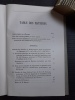
Voir le sommaire sur photos jointes.
"MATH - TERMINALE ES / RESUMES DE COURS - EXERCICES ET CONTROLES CORRIGES / COLLECTION ""CONTROLE CONTINU."
ELLIPSES. 2004. In-4. Broché. Bon état, Couv. convenable, Dos satisfaisant, Intérieur frais. 251 pages illustées de quelques figures dans le texte - Quelques annotations sur la page de titre et dans le texte au crayon a papier.. . . . Classification Dewey : 372.7-Livre scolaire : mathématiques
Collection dirigée par Pascal CLAVIER. Classification Dewey : 372.7-Livre scolaire : mathématiques
Plaidoyer pour l'avenir - Collection Questions d'actualit.
Calmann Lvy. 1962. In-12. Broch. Etat d'usage, Couv. lgrement passe, Dos satisfaisant, Papier jauni. 254 pages.. . . . Classification Dewey : 500-SCIENCES DE LA NATURE ET MATHEMATIQUES
Collection Questions d'actualit.
ETAT RECAPITULATIFS DES RETENUES - ETAT TRIMESTRIEL - NOMBREUSES NOTES
***. non daté. In-4. En feuillets. Bon état, Couv. convenable, Dos satisfaisant, Intérieur frais. Non paginé, environ 50 pages de divers documents : Etats récaputilatif des retenues exercées à différents titres sur la solde des hommes des troupes ou assimilés du cadre des agents de service de l'air (vierge) Etat trimestriel pour servir au payment des soldes de MM. les officiers sous-officiers et caporaux-chefs à solde mensuelle (vierge) ; Etat trimestriel pour servir au payement de la solde et du traitement des caporaux, soldats et assimilés (vierge) ; notes sur les fonctions de l'adjudant chef de compagni, mitrailleuse Hetchkiss modèle 1914, fusil mitrailleur modèle 1924, diverses notes de services, programme CAC 2° partie, .... . . . Classification Dewey : 372.7-Livre scolaire : mathématiques
Classification Dewey : 372.7-Livre scolaire : mathématiques
programmer en turbo pascal. Une approche du pascal
Edité par LI, Genève ,1986, in-8 de 221 pages ,broché ,Bon état , .Isbn : 2882230001.(2 photos du livre sur mon site https://www.vieuxlivre.fr) .Les frais de port pour la France sont offerts à partir de 25 euros d'achat (Mondial relay ). (colissimo suivi +6,90 ).
Travaux pratiques de Mathématiques. 6e. Cycle d'observation. Cahier de l'élève. (Vierge).
Couverture souple. Broché. 64 pages. 21 x 26 cm.
Livre. Editions Magnard (Collection : Redécouvertes), 1961.
Travaux pratiques de mathémathoique, arithmétique
Magnard. 1961. In-8. Broché. Bon état, Couv. convenable, Dos satisfaisant, Intérieur frais. 76p, couverture lègérement tachée.. . . . Classification Dewey : 510-Mathématiques
Collection : Redécouverte, cycle d'observation pour la 5 ème Classification Dewey : 510-Mathématiques
TRAVAUX PRATIQUES DE MATHEMATIQUE - GEOMETRIE - 5°
MAGNARD. 1967. In-8. Broché. Etat d'usage, Couv. défraîchie, Dos satisfaisant, Intérieur acceptable. 64 pages. Exercices effectués.. . . . Classification Dewey : 372.7-Livre scolaire : mathématiques
Redécouverte, collection dirigée par P. Dedron. Cycle d'observation. Classification Dewey : 372.7-Livre scolaire : mathématiques
TRAVAUX PRATIQUES DE MATHEMATIQUES - ARITHMETIQUE - CYCLE D'OBSERVATION - 5°
MAGNARD. 1963. In-4. Broché. Bon état, Couv. convenable, Dos satisfaisant, Intérieur frais. 48 pages. Livre vierge.. . . . Classification Dewey : 372.7-Livre scolaire : mathématiques
Redécouverte, collection dirigée par P. Dedron. Classification Dewey : 372.7-Livre scolaire : mathématiques
TRAVAUX PRATIQUES DE MATHEMATIQUES - CYCLE D'OBSERVATION - 6°
MAGNARD. 1963. In-4. Broché. Bon état, Couv. convenable, Dos satisfaisant, Intérieur frais. 64 pages. Livre vierge.. . . . Classification Dewey : 372.7-Livre scolaire : mathématiques
Redécouverte, collection dirigée par P. Dedron. Classification Dewey : 372.7-Livre scolaire : mathématiques
TRAVAUX PRATIQUES DE MATHEMATIQUES - GEOMETRIE - CYCLE D'OBSERVATION - 5°
MAGNARD. 1964. In-4. Broché. Bon état, Couv. convenable, Dos satisfaisant, Intérieur frais. 64 pages. Livre vierge.. . . . Classification Dewey : 372.7-Livre scolaire : mathématiques
Redécouverte, collection dirigée par P. Dedron. Classification Dewey : 372.7-Livre scolaire : mathématiques
"Travaux pratiques de mathématiques Classe de 6ème (Collection ""Redécouverte"")"
Magnard. 1960. In-4. Broché. A relier, Couv. défraîchie, Agraffes rouillées, Pliures. 64 pages. Nombreuses figures en noir et blanc. Mouillures. Quelques rousseurs. Papier légèrement jauni. Couverture désolidarisée.. . . . Classification Dewey : 372.7-Livre scolaire : mathématiques
"Collection ""Redécouverte"". Classification Dewey : 372.7-Livre scolaire : mathématiques"

