 Write to the booksellers
-
Type
Autograph (20)
Book (18891)
Magazine (13)
Manuscript (6)
Maps (1)
Photographs (4)
-
Latest
Last 24h (2)
Last month (16)
Last week (3)
-
Language
English (41)
French (18883)
German (2)
Japanese (1)
Latin (2)
Polish (1)
Portuguese (1)
Russian (1)
Spanish (1)
Swedish (2)
-
Century
16th (5)
17th (36)
18th (295)
19th (3727)
20th (11039)
21st (1389)
-
Countries
Belgium (391)
Côte d'Ivoire (19)
Denmark (1333)
France (17040)
Switzerland (152)
-
Syndicate
CLAM (7)
ILAB (16575)
NVVA (27)
SLACES (27)
SLAM (15208)
SNCAO (12)
NATHAN MAGIQUE - AVEC UN ECRAN MAGIQUE / Rébus enigmes labyrinthes etc...
FERNAND NATHAN. 1978. In-8. Broché. Etat d'usage, Couv. convenable, Dos satisfaisant, Intérieur frais. 63 pages - Nombeux dessins en noir et blanc in texte - Rousseurs sur les contre-plats .. . . . Classification Dewey : 372.7-Livre scolaire : mathématiques
Classification Dewey : 372.7-Livre scolaire : mathématiques
Equations intégrales et applications à certains problèmes de la physique mathématique - Mémorial des sciences mathématiques fascicule CI et CII.
Gauthier-Villars. 1941. In-8. Broché. Bon état, Couv. convenable, Dos satisfaisant, Intérieur acceptable. 149 pages.. . . . Classification Dewey : 510-Mathématiques
Classification Dewey : 510-Mathématiques
Précis de calcul matriciel et de calcul opérationnel.
P., PUF, 1954, in 8° broché, VIII-222 pages.
PHOTOS sur DEMANDE. ...................... Photos sur demande ...................


Phone number : 04 77 32 63 69
Le calcul symbolique d'Heaviside et ses applications à l'électrotechnique. Conférence faite à la section de radioélectricité de l'Ecole Supérieure d'Electricité. [ Edition originale ]
1 brochure in-8, Gauthier-Villars, Paris, 1938, 29 pp.
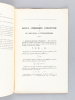
Bon état. Oliver Heaviside (1850-1925), ingénieur télégraphiste britannique, a inventé des méthodes opérationnelles afin de résoudre certains problèmes posés par l'étude des phénomènes électriques transitoires.
Rezolvarea ecuatiilor operationale neliniare in spatii Banach
Editura Academiei Republicii Socialiste România Broché 1969 In-8 (17,3 x 23,8 cm), broché, 298 pages, texte en roumain ; bords des plats légèrement frottés, plats défraîchis, ex-libris, assez bon état général. Livraison a domicile (La Poste) ou en Mondial Relay sur simple demande.
Le calcul a l'examen d'entrée en 6e - 300 problèmes classés par chapitre dans l'ordre du programme cours moyen classes de 7e des lycées collèges et cours complémentaires - Les mémentos du C.M. - Collection l'essentiel.
Imprimerie du commerce. non daté. In-8. Broché. Etat d'usage, Couv. convenable, Dos satisfaisant, Papier jauni. 31 pages agrafées.. . . . Classification Dewey : 372.7-Livre scolaire : mathématiques
Collection l'essentiel. Classification Dewey : 372.7-Livre scolaire : mathématiques
Le calcul à l'examen d'entrée en 6e 300 problèmes classés par chapitre dans l'ordre du programme - Cours moyen classes de 7e des lycées collèges et cours complémentaires - Les mementos du CM - Collection l'essentiel.
Imprimerie du commerce. non daté. In-8. Broché. Etat d'usage, Tâchée, Agraffes rouillées, Papier jauni. 31 pages agrafées.. . . . Classification Dewey : 372.7-Livre scolaire : mathématiques
Classification Dewey : 372.7-Livre scolaire : mathématiques
Mon Mémento de Calcul - Cours de fin d'études primaires préparation au certificat d'études - Collection l'essentiel.
Imp.Guillot - Clermont. non daté. In-8. Broché. Etat d'usage, Couv. légèrement passée, Agraffes rouillées, Papier jauni. 64 pages agrafées.. . . . Classification Dewey : 372.7-Livre scolaire : mathématiques
Collection l'essentiel. Classification Dewey : 372.7-Livre scolaire : mathématiques
PREMIER ELEMENTS DE GEOMETRIE
LIBRAIRIE DELALAIN. non daté. In-12. Cartonnage d'éditeurs. Bon état, Tâchée, Dos satisfaisant, Intérieur frais. 223 pages. Etiquette sur le premier plat.. . . . Classification Dewey : 372.7-Livre scolaire : mathématiques
Classification Dewey : 372.7-Livre scolaire : mathématiques
New Frontiers in Fibonacci Trading: Charting Techniques Strategies & Simple Applications
Marketplace Books Inc 2003 256 pages 15x23x3cm. 2003. Cartonné jaquette. 256 pages.
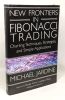
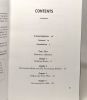
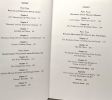
livre en très bon état intérieur frais jaquette défraîchie
JARDY JACQUELINE, JARDY JACKY, SOUMY J.-G.
Reference : RO60025812
(1990)
ISBN : 2200011318
VIVRE LES MATHEMATIQUES, FICHIER CE1
Armand Colin. 1990. In-4. Broché. Bon état, Couv. convenable, Dos satisfaisant, Intérieur frais. 124 pages. Couverture illustrée en couleur. Illustré de nombreux dessins en couleur.. . . . Classification Dewey : 372.7-Livre scolaire : mathématiques
5e tirage. Sous la dir. de L. Corrieu. Illustrations de Daniel Fort. Couverture de Jacques Lerouge. Classification Dewey : 372.7-Livre scolaire : mathématiques
MATHEMATIQUE MODERNE / FICHES D'INITIATION.
HACHETTE CLASSIQUE. 1970. In-8. En feuillets. Bon état, Couv. convenable, Dos satisfaisant, Intérieur frais. 158 pages illustrées de nombreuses figures - Couverture illustrée en couleur - Sous pochette plastique transparente.. . . . Classification Dewey : 372.7-Livre scolaire : mathématiques
Classification Dewey : 372.7-Livre scolaire : mathématiques
MATHEMATIQUES 6e
Bordas. 1991. In-8. Broché. Bon état, Couv. convenable, Dos satisfaisant, Intérieur frais. 95 pages.. . . . Classification Dewey : 372.7-Livre scolaire : mathématiques
Coll. Entraînement collèges. Entraînement par les exercices. Classification Dewey : 372.7-Livre scolaire : mathématiques
Soutien 5e mathematiques - exercices et corriges
PEDAGOGIE MODERNE. 1984. In-4. Broché. Etat d'usage, Couv. convenable, Dos satisfaisant, Quelques rousseurs. 95 PAGES illustrées de dessins en monochrome bleu - divers tampons de bibliotheque, ne gênant pas la lecture. . . . Classification Dewey : 372.7-Livre scolaire : mathématiques
Classification Dewey : 372.7-Livre scolaire : mathématiques
EXONATHAN. MATHEMATIQUES. QUATRIEME. 900 EXERCICES GRADUES, DONT 150 AVEC REPONSES OU CORRIGES DETAILLES. RAPPELS DE COURS.
NATHAN. 1991. In-8. Broché. Etat d'usage, Couv. légèrement pliée, Dos satisfaisant, Intérieur acceptable. 198 pages. Premier plat illustré en couleurs. Quelques schémas en noir et bleu dans le texte.. . . . Classification Dewey : 372.7-Livre scolaire : mathématiques
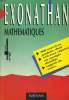
Classification Dewey : 372.7-Livre scolaire : mathématiques
Jauberteau François, Rollin Yann et Tapie Samuel
Reference : RO40050557
(2019)
ISBN : 2856299059
Mémoires de la société mathématique de France N°161 Discrete geometry and isotropic surfaces Nouvelle série 2019 Sommaire: Dreaming of the smooth setting; Discrete analysis; perturbation theory for isotropic meshes; Fixed point theorem ...
Société mathématique de France. 2019. In-8. Broché. Très bon état, Couv. convenable, Dos satisfaisant, Intérieur frais. 99 pages.. . . . Classification Dewey : 510-Mathématiques
texte écrit en anglais. Sommaire: Dreaming of the smooth setting; Discrete analysis; perturbation theory for isotropic meshes; Fixed point theorem ... Classification Dewey : 510-Mathématiques
TRAITE DE GEOMETRIE DESCRIPTIVE / PREMIERE PARTIE : LA LIGNE DROITE, LE PLAN, LES POLYEDRES. Répondant a la Première partie du programme des connaissances exigées pour l admission a l École Centrale et a l enseignement des classes de mathématiques ...
DELAGRAVE CH.. 1881. In-12. Relié demi-cuir. Etat d'usage, Couv. convenable, Dos satisfaisant, Intérieur frais. VII + 263 pages + 12 planches en noir et blancdepliantes - Dos a 4 nerfs - Plats et contre-plats jaspés - Auteur, titre , filet et tomaison dorés.. . . . Classification Dewey : 510-Mathématiques
NOTA : Répondant a la Première partie du programme des connaissances exigées pour l admission a l École Centrale et a l enseignement des classes de mathématiques Élémentaire. Renfermant en oputre Les principes de la construction des ombres, la persepective cavaliere, les projections corées. Classification Dewey : 510-Mathématiques
Comment résoudre les problèmes de géométrie élémentaire. Méthodes - Solutions - Exemples.
Paris, Fernand Nathan, 1931.
1 vol. br. de 214 pages.
Cours de Mathématiques Générales. TOME II : Calcul différentiel et Calcul Intégral.
CHEZ L'AUTEUR. 1929. In-8. Broché. Etat d'usage, Couv. défraîchie, Coiffe en pied abîmée, Intérieur bon état. 259 pages. Déchirure sur le 1er plat. Coiffe de tête abîmée. Texte en écriture manuscrite.. . . . Classification Dewey : 372.7-Livre scolaire : mathématiques
Ecoles Nationales D'Arts & Métier. Classification Dewey : 372.7-Livre scolaire : mathématiques
Vers l'apprentissage des mathématiques nouveau départ pour les enfants de 4 à 7 ans - Cahiers de pédagogie moderne n°37 collection Bourrelier - 4e édition.
Armand Colin. 1968. In-8. Broché. Etat d'usage, Couv. légèrement passée, Dos satisfaisant, Intérieur frais. 175 pages - petite annotation sur la page de titre - en supplément les mathématiques à l'école maternelle par Claude et Anne Marie Gillie fascicule paginé de 17 à 32 - rousseurs sur les plats.. . . . Classification Dewey : 372.7-Livre scolaire : mathématiques
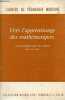
Cahiers de pédagogie moderne n°37 collection Bourrelier - 4e édition. Classification Dewey : 372.7-Livre scolaire : mathématiques
COURS D'ALGEBRE A L'USAGE DES CANDIDATS AUX ECOLES D'ARTS ET METIERS / 3E EDITION.
VUIBERT. 1937. In-8. Broché. Etat d'usage, Couv. légèrement passée, Dos satisfaisant, Intérieur acceptable. 542 pages - coins frottés - quelques figures en noir et blanc dans le texte - petite déchirure en pied sur le 2ème plat - étiquette collée sur le 2ème plat.. . . . Classification Dewey : 372.7-Livre scolaire : mathématiques
Classification Dewey : 372.7-Livre scolaire : mathématiques
J. BARTHELEMY - G. BLAQUIERE - J.L. BOURSIN
Reference : RO60047563
(1983)
ISBN : 2711713547
MATHS - TERM A1 B - COLLECTION RACINE - COURS DE MATHEMATIQUES
VUIBERT. 1983. In-4. Broché. Bon état, Couv. convenable, Dos satisfaisant, Intérieur frais. 255 pages. Etiquette sur la 1er de couverture.. . . . Classification Dewey : 372.7-Livre scolaire : mathématiques
Classification Dewey : 372.7-Livre scolaire : mathématiques
Cours de Mathématiques Tome II : Fonctions analytiques équations différentielles et aux dérivées partielles calcul symbolique fonctions harmoniques calcul des variations abaques algèbre de boole
Masson et cie 1964 in8. 1964. Cartonné.
bas du dos et pages tachées d'une mouilure intérieur propre par ailleurs
ELEMENTS DE CALCUL DES PROBABILITES THEORIQUE ET APPLIQUE.
MASSON ET CIE. 1962. In-8. Broché. Bon état, Couv. convenable, Dos satisfaisant, Intérieur frais. 219 pages - quelques figures en noir et blanc dans le texte.. . . . Classification Dewey : 510-Mathématiques
Classification Dewey : 510-Mathématiques
Bredif mathématique maître 6e.
Hachette. 1969. In-8. En feuillets. Bon état, Couv. convenable, Dos satisfaisant, Intérieur frais. Pochette contenant 375 pages en feuillets.. . . . Classification Dewey : 372.7-Livre scolaire : mathématiques
Classification Dewey : 372.7-Livre scolaire : mathématiques

