 Write to the booksellers
-
Type
Artists book (4)
Autograph (38)
Book (15566)
Disk (17)
Drawings (1)
Engraving (7)
Magazine (140)
Manuscript (7)
Music sheets (9)
New book (1)
Photographs (131)
Postcards (17)
Posters (3)
Public sale (2)
-
Latest
Last 24h (11)
Last 3 days (7)
Last month (201)
Last week (110)
-
Language
Chinese (1)
Czech (1)
Dutch (20)
English (31)
French (15846)
German (17)
Italian (19)
Latin (2)
Russian (4)
Spanish (2)
-
Century
16th (15)
17th (12)
18th (163)
19th (1141)
20th (7383)
21st (1026)
-
Countries
Belgium (1054)
Canada (35)
China (3)
Côte d'Ivoire (70)
Denmark (63)
France (13009)
Germany (6)
Greece (7)
Italy (1)
Switzerland (1693)
United Kingdom (1)
United States of America (1)
-
Syndicate
ALAC (35)
CLAM (34)
CLAQ (30)
CNE (9)
ILAB (7318)
NVVA (455)
SLACES (455)
SLAM (6362)
SNCAO (177)
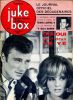
Juke Box n° 86 du 1° Décembre 1963 - "Oui oui pour deux yéyé" Johnny Hallyday & Sylvie Vartan - Buddy Holly - Edith Piaf - Richard Anthony - Robert Cogoi - Trini Lopez - Claude François - Jacky Delmone - Ned Miller - Adamo
Editeur à Malines (Belgique) - Mensuel au format 21,5 x 30 de 32 pages - Couverture photo noir et blanc de Johnny & Sylvie - Très bon état
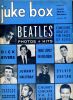
Juke Box n° 89 du 1° Mars 1964 - The Beatles (Photos + Hits) - Johnny Hallyday - Dick Rivers - Trini Lopez - Sylvie Vartan- Charles Aznavour
Editeur à Malines (Belgique) - Mensuel au format 21,5 x 30 de 32 pages - Couverture photo en noir et blanc de Johnny Hallyday - Dick Rivers - Trini Lopez - Sylvie Vartan- Charles Aznavour - Très bon état
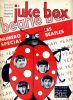
Juke Box n° 90 du 1° Avril 1964 - Numéro spécial Beatles
Editeur à Malines (Belgique) - Mensuel au format 21,5 x 30 de 32 pages - Couverture en couleurs des Beatles - Très bon état
Juke Box n° 91 du 1° Mai 1964 - Elvis Presley - The Beatles (6 pages) - Johnny Hallyday - Adamo
Editeur à Malines (Belgique) - Mensuel au format 21,5 x 30 de 40 pages - Couverture photo en noir et blanc de Elvis Presley - Johnny Hallyday et Adamo - Très bon état
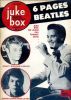
Juke Box n° 92 du 1° Juin 1964 - Liverpool et les Beatles - Sylvie Vartan - Claude François - Dick Rivers - Sheila
Editeur à Malines (Belgique) - Mensuel au format 21,5 x 30 de 40 pages - Couverture photo en noir et blanc de Sylvie Vartan - Claude François - Dick Rivers - Sheila - Très bon état
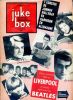
Juke Box n° 93 du 1° Juillet 1964 - The Beatles - Adamo - Gigliola Cinquetti
Editeur à Malines (Belgique) - Mensuel au format 21,5 x 30 de 40 pages - Couverture photo en noir et blanc des Beatles - Adamo et Gigliola Cinquetti - Très bon état
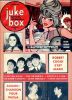
Juke Box n° 94 du 1° Août 1964 - The Beatles sur votre petit écran - Adamo et Bobby Solo
Editeur à Malines (Belgique) - Mensuel au format 21,5 x 30 de 30 pages - Couverture photo en noir et blanc des Beatles - Adamo et Bobby Solo - Très bon état
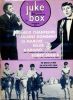
Juke Box n° 96 du 1° Octobre 1964 - The Rolling Stones
Editeur à Malines (Belgique) - Mensuel au format 21,5 x 30 de 40 pages - Couverture photo noir et blanc des Rolling Stones - Très bon état
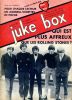
Jukebox Magazine - Hors-Série : L'argus du disque : Les 33 tours 30 cm français - Vol. 1 - Plus de 1000 33 tours des années 50/60 répertoriés de A à K.
1993 Hors série - 1993 - In-4, broché, couverture illustrée - Revue mensuelle illustrée - 90 pages - Nombreuses reproductions photographiques des pochettes en N&B

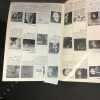
Bon état - Couverture très légèrement frottée Bon état
Jukebox Magazine - Hors-Série : L'argus du disque : Les 33 tours 30 cm français - Vol. 2 - Plus de 1000 33 tours des années 50/60 répertoriés de L à Z.
1995 Hors série - 1995 - In-4, broché, couverture illustrée - Revue mensuelle illustrée - 82 pages - Nombreuses reproductions photographiques des pochettes en N&B
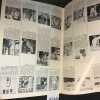
Bon état - Couverture très légèrement frottée Bon état
Jukebox Magazine - Hors-Série : L'argus du disque : Les super 45 tours étrangers - 2500 EP des années 50/60 répertoriés de A à Z.
1995 Hors série - 1995 - 2e édition - In-4, broché, couverture illustrée - Revue mensuelle illustrée - sans pagination - Nombreuses reproductions photographiques des pochettes en N&B
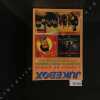
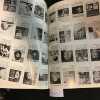
Bon état - Couverture très légèrement frottée Bon état
Jukebox Magazine - Hors-Série : L'argus du disque : Les super 45 tours français - Plus de 2500 EP des années 60 répertoriés de A à Z.
1996 Hors série - 1996 - 3e édition - In-4, broché, couverture illustrée - Revue mensuelle illustrée - sans pagination - Nombreuses reproductions photographiques des pochettes en N&B
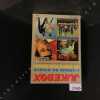
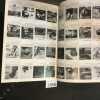
Bon état - Couverture légèrement frottée Bon état
Jukebox Magazine - Hors-Série : L'argus du disque : Les 33 tours 30 cm étrangers - Vol,1 - Plus de 1400 33 tours des années 50/60 répertoriés de A à K.
1994 Hors série - 1994 - In-4, broché, couverture illustrée - Revue mensuelle illustrée - sans pagination - Nombreuses reproductions photographiques des pochettes en N&B
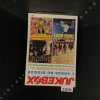
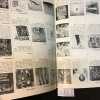
Bon état - Couverture légèrement frottée Bon état
Jukebox Magazine N° 164 : Gainsbourg 10 ans déjà - Pochettes sexy de B.B. à Mylène - Waylon Jennings - Le R&B anglais 14 - Rock progressif (2) - Cap'tain Michel Group - Fantomes
2001 N°164 - Avril 2001 - In-4, broché, couverture illustrée - Revue mensuelle illustrée - 82 pages - Nombreuses photographie en couleurs et N&B in texte
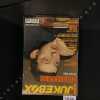
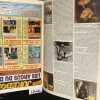
Bon état - Couverture très légèrement frottée Bon état
La mùsica àrabe y su influencia en la española
2000, pre-textos, mùsica, in-8 broché de 236 pages, La mùsica àrabe y su influencia en la española, por Julan Ribera y Tarrago, revision, prologo y semblenza biografica de Emilio Garcia Gomez, ouvrage en espagnol | Etat : bon état (Ref.: ref88593)
pre-textos
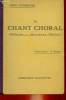
LE CHANT CHORAL : METHODE - MORCEAUX CHOISIS
HACHETTE. NON DATE. In-8. Cartonnage d'éditeurs. Bon état, Couv. convenable, Dos satisfaisant, Intérieur frais. 118 pages. Nombreuses partitions.. . . . Classification Dewey : 780-Musique
Classification Dewey : 780-Musique


LE CHANT CHORAL méthode morceaux choisis - cours supérieur - 2e édition
HACHETTE ET CIE. 1912. In-8. Cartonné. Bon état, Tâchée, Dos satisfaisant, Intérieur frais. 248 pages.. . . . Classification Dewey : 780-Musique
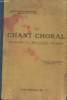
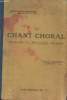
A l'usage des écoles primaires supérieures des lycées et collèges de garçons et de filles et des sociétés chorales Classification Dewey : 780-Musique
El vie est bell' ! Les "concerts" de Jules Mousseron
Somogy Somogy, 2005. In-12 broché, 111 pages. Très bon état.
Toutes les expéditions sont faites en suivi au-dessus de 25 euros. Expédition quotidienne pour les envois simples, suivis, recommandés ou Colissimo.
LA MUSICA ARABE MEDIEVAL Y SU INFLUENCIA EN LA ESPANOLA VOL. I-SERIE G
VOLUNTAD/COLECCION DE MANUALES HISPANIA. 1927. In-12. Cartonnage d'éditeurs. Etat d'usage, Couv. convenable, Dos fané, Intérieur frais. 355 pages. Texte en espagnol. Ouvrage de bibliothèque avec étiquette au dos et bandeau sur la page de titre.. . . . Classification Dewey : 780-Musique
Classification Dewey : 780-Musique
Julie Anne Sadie, Sadie Stanley
Reference : 73318
(2005)
ISBN : 0300107501 9780300107500
Calling on the Composer - A Guide to European Composer Houses and Museums
Yale University Press 2005 In-4 relié 23,6 cm sur 15,6. 256 pages. Bon état d’occasion.
Bon état d’occasion
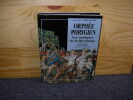
ORPHEE PHRYGIEN . Les musiques de la révolution
format moyen, cartonné. Jaquette illustrée. 230 pages. Illustrations n/b. Préface de jean Mongredien. Bon état. Une expédition par Mondial Relay vous sera proposée 1989 revue VIBRATIONS
TECHNIQUE de la MUSIQUE
Un ouvrage de 424 pages, format 145 x 230 mm, illustré de 153 figures dans le texte, broché, publié en 1926, Impr. A. Rey (Lyon), bon état, peu courant
Au sommaire : Production, propagation, perception des sons musicaux ; Utilisation des sons musicaux
Phone number : 04 74 33 45 19
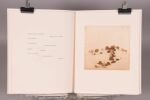
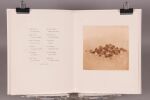
Approches.
Saint Clément de Rivière, éditions Fata Morgana, 1981. Un volume in-4 (32 x 25 cm) en feuilles sous couverture, chemise et emboîtage déditeur. Tirage à 75 exemplaires sur vélin dArches bien complet des 5 eaux-fortes originales. Chemise et emboîtages légèrement solarisés, sinon très bel état.

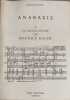
Anabasis : à la rencontre de Maurice Racol
Paul Tacussel 1990 96 pages IN4. 1990. broché. 96 pages. Cet ouvrage rédigé par Juliette Racol et publié par Paul Tacussel en 1990 est un hommage au musicien et poète Maurice Racol (1908-1988). Il rassemble un choix de textes de Maurice Racol ainsi que divers témoignages explorant son œuvre musicale et poétique avec une attention particulière portée à sa création inspirée par l'Antiquité grecque
Bon état
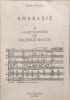
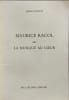
Maurice Racol ou la musique au cœur - Numéroté - tirage de tête
PAUL TACUSSEL EDITEUR 1990 96 pages IN4. 1990. broché. 96 pages.
couverture légèrement usagée intérieur propre

