 Write to the booksellers
-
Type
Book (237)
Magazine (22)
Maps (2)
-
Language
English (1)
French (260)
-
Century
18th (2)
19th (7)
20th (118)
21st (23)
-
Countries
Belgium (46)
France (192)
Greece (2)
Switzerland (21)
-
Syndicate
ILAB (106)
NVVA (1)
SLACES (1)
SLAM (98)
LES BALKANS
Un ouvrage de 156 pages, format 280 x 215 mm, illustré + cartes, relié cartonnage couleurs, publié en 1965, Life, Collection "Autour du Monde"
Découverte de la région des Balkans
Phone number : 04 74 33 45 19
Anti-Jewish Greek Texts in Late Medieval Crete. The Case of Manouel Savios and Angelos Gregorios
, Brepols, 2026 Paperback, Pages: 184, Size:170 x 240 mm, Language: English. ISBN 9789603711124.
Summary The present study explores Greek anti-Jewish writings in Venetian Crete within a framework of Christian-Jewish coexistence. Although Jews were economically and socially integrated, they encountered stereotypes and episodic violence grounded in inherited religious prejudice. Unlike Byzantium, Crete produced no systematic anti-Jewish polemic; hostile views surfaced sporadically in vernacular and didactic texts. Ecclesiastical conflicts among Orthodox, Catholics, and unionists eclipsed Jewish participation. In such a limited circulation of manuscripts of anti-Jewish content in late Venetian Crete, the texts of Manouel Savios and Angelos Gregorios constitute an exception. TABLE OF CONTENTS Preface List of Abbreviations Introduction I. Hemanuelis Savii disputatio contra Iudaeos (MS Lond. Add. 34060) 1. The manuscript 2. The scribe 3. The author 4. The treatise 5. The text II . Angeli Gregorii Iudaeorum quaestiones et rationes (MS ludwig XV 2) 1. The manuscript 2. The scribe 3. The author 4. The treatise 5. The text Appendix 1. Anonymous' Dialogus Adversus Iudaeos (MS Lambeth Palace 2794) 2. Archival documents 3. Tables of MSS Bibliography Indices 1. Index of Mss cited 2. Index of names
Scythians and Greeks on the Western Black Sea. The Coinage of the Kings of Scythia Minor in Dobruja, 218/212-110 BCE
, Brepols, 2023 Hardback, viii + 228 pages, Size:216 x 280 mm, Illustrations:201 b/w, 17 tables b/w., Language: English. ISBN 9780897224062.
Summary The Scythians have fascinated investigators since the time of Herodotus. This study examines the bronze and silver coinage of the kingdom of Scythia Minor in Dobruja at the mouth of the Danube River, a Scythian successor state that emerged in the second century BCE after the breakup of Scythia Magna. It is based on a corpus of over 1,500 coins, more than ever before, and draws upon scholarship in nine languages, including hard-to-find sources from Bulgaria, Romania, USSR, Ukraine, and Russia. The much-debated chronology of the six kings of Scythia Minor (Kanites, Tanousas, Charaspes, Ailis, Sariakes, and Akrosas) is determined through literary evidence, inscriptions, die linkage, shared monograms, coin hoards, and counterstamps. Metrological analysis distinguishes four denominations, plus the alterations and debasements of the weight standard during the troubled reigns of Ailis and Sariakes. Fifteen counterstamps that appear on Scythian coins are attributed to the local Greek poleis of Callatis, Tomis, Istros, and Dionysopolis. An inventory of four hoards and 47 findspots of single coins identifies the mint site, Dionysopolis. The volume concludes with a catalog of 63 major coin types and 15 counterstamps, plus bibliography and index. TABLE OF CONTENTS Acknowledgements Introduction Scythia Magna and Dobruja Literary and Epigraphic Sources for the Kingdom of Scythia Minor in Dobruja Earlier Studies of the Coins of Scythia Minor Ethnic Identification and Chronology of the Kings of Scythia Minor Coin Types, Legends, and Magistrates' Monograms Metrology, Weight Standard, Denominations, and Die Orientation Countermarks on Scythian Coins The Geographic Pattern of the Circulation of Scythian Coins The Mint Location: Dionysopolis Conclusion Catalog of Coins and Countermarks Appendix: List of Magistrates' Monograms and Mintmarks Abbreviations Ancient Sources Inscriptions Papyri Auction Catalogs and Electronic Sales Bibliography Index
Byzantine Attica. An Archaeology of Settlement and Landscape (4th-12th Centuries)
, Brepols, 2024 Paperback, 664 pages, Size:178 x 254 mm, Illustrations:90 b/w, 106 col., 11 maps color, Language: English. ISBN 9782503611204.
Summary Attica, the region which surrounds Athens (Greece) is a key area for understanding the transformation of the ancient Roman world to its Medieval successor in the eastern Mediterranean. Located at a crossroads for land and maritime communications, being well populated, carrying a thorough administrative organization and a heavy cultural and religious tradition, the region participated in the broader historic evolutions from the 4th to the 12th centuries. Moreover, Attica stands out in contemporary historic and archaeological research due to its very intensive field research, starting in the 19th century and culminating since the 1960s, through rescue excavation and systematic studies. The outcome of this multi-faceted research on field and monuments which concerns the 4th to 12th centuries forms the backbone of the present volume. Stepping beyond this compilation, however, this study proceeds into being a synthesis of evidence on settlement patterns, road communications, defensive works, religious activities and burial habits. These topics are underpinned by aspects which belong to the longue durée, geography and the natural environment, which are considered as crucial to the understanding of the Byzantine history. In short, the present book covers as many aspects of the studied area as possible, aiming to show the potential of regional studies for the history and archaeology of Late Antiquity and Byzantium. TABLE OF CONTENTS Preface Foreword & Acknowledgements Introduction Part I: Byzantine Attica: the geography, the history and earlier studies Chapter I - Attica: a landscape surrounded by the sea General geography of Attica Natural environment and resources Chapter II - Attica in Byzantine history 'Attica' as a region in Byzantine sources The history and administrative status of Byzantine Attica Historical sources on Byzantine Attica Chapter III - Byzantine Attica: earlier research Archaeological excavations of Early and Middle Byzantine Attica Studies on Byzantine churches in Attica Field surveys and Byzantine finds Research on the topography of Byzantine Attica Toponyms in Byzantine Attica Chapter IV - Land routes and maritime communication in Byzantine Attica Introduction The evidence of the 'Tabula Peutingeriana' Land routes: topographic and archaeological evidence Byzantine Megarid: a forgotten hub of interregional communications Ports and anchorages in Byzantine Attica Part II: Byzantine Attica: the archaeology of human activity Chapter V - Attica in the Late Roman & Early Byzantine period (4th to mid-7th c.) Settlements in all shapes and sizes Economy Defensive structures in all shapes and sizes Religious buildings Chapter VI - Attica in the 'Transitional period', mid-7th to 9th centuries The 'Transional Period' ('Dark Ages'): state of research The problem of the textual sources Attica and the 'Slavic question' Settlements in the Transitional Period A note on the evidence Chapter VII - Attica in the middle byzantine period, 10th to 12th centuries Settlements in all shapes and sizes Burial spaces Settlement economy Landed properties of the Metropolis of Athens in Attica The emergence and flourishing of monasteries The monastic economy Chapter VIII - Discussion and concluding remarks Attica in Byzantine times: an overview Attica: fragmented regions, different geographies? Byzantine Attica in perspective Part III: Byzantine Attica: an inventory of sites Chapter IX - Early and Middle Byzantine sites in Attica, 4th-12th c. Appendix From the ancient Attic ' demoi' to the Late Roman 'choria' A list of Attic ' demoi' relevant to this book Churches and monasteries in Attica List of colour maps List of figures & colour plates Notes Bibliography Index Colour plates
E. MALNOUX, C.H. HAMEL, J; de CLERZAC, G. PREVELAKIS, G. DILLINGER, Y. GAYET, Comte de PARIS et autres auteurs
Reference : LFA-126712969
(1995)
La REVUE UNIVERSELLE des FAITS et des IDEES n° 179 (Novembre 1994-janvier 1995)
Revue fondée en 1920 par Jacques Bainville : 64 pages, format 235 x 160 mm, bon état
Revue d'opinion (actualité française et internationale, arts et lettres, notes de lecture, etc.). Au sommaire de ce numéro (entre autres) : La course à l'Elysée ; Anatomie des élections européennes de 1994 ; L'Armée, SAMU du monde ; Pax Balkanica ? ; La société française entre morale et antimorale ; La Slovaquie dans l'histoire européenne ; entretien avec Mgr le Comte de Paris
Phone number : 04 74 33 45 19
Ethno-Psychologie - suite à la Revue de Psychologie des Peuples - Publication du Centre Universitaire de Psychologie des Peuples- ethnologieSommaire : Amérique du Sud : Le culte de Maria Lionza ( Pierre Dauguet ) - Caractères généraux de la conquête ottomane dans les Balkans / Conséquences linguistiques de l'occupation turque dans les Balkans : les turcismes en serbo-croate, bulgare et grec ( Jacques Rollet )
1978 1 vol in-8 broché - 61 pages - 33ème année - N° 2 - Avril - Juin 1978
Bon état de conservation
Les Etats Balkaniques. Etude comparée politique, sociale, économique et financière.
ROUSSEAU & Cie.. 1930. In-8. Broché. Etat d'usage, Couv. légèrement passée, Dos fané, Intérieur acceptable. 399 pages. Accompagné d'une carte de visite de l'auteur. Ouvrage de bibliothèque : dos renforcé par une bande papier, code sur la coiffe en-tête et tampons sur la page de titre.. . . . Classification Dewey : 949.6-Balkans
Classification Dewey : 949.6-Balkans


F. LEDWIDGE - N. GONTHIER - E. BARNAVI - Fr.-X. EMMANUELLI - P. SWIGGERS - C. DOUXCHAMPS-LEFEVRE - Fr. MELONIO - G. BOUCHET - G. CASTELLAN
Reference : 27237
Revue historique - N° 549Sommaire : Relations de famille dans la correspondance de Gerson -Délinquantes ou victimes, les femmes dans la société lyonnaise du XV - Mouvements révolutionnaires dans l'europe moderne - La vie politique en Provence et en Comtat Venaissin du XVII è au début XIX è - Pré-histoire et histoire de l'Encyclopédie - Un magazine de la cour de france au début du règne de louis XVI Tocqueville et l arestauration du pouvoir temporel du pape (juin-octobre 1849) - La traction hippomobile dans les transports publics parisiens (1855/1914) - Facteur religieux et identité nationale dans les Balkans aux XIX è & XX è siècles
PARIS, P.U.F. - Fondée en 1878 par Gabriel Monod, publiée avec le concours du CNRS et de la 6e section de l'Ecole des Hautes Etudes.- Revue historique N° 549, Janvier-mars 1984 - In-8, 15,5 x24 cm - Broché - 247 pages - comme neuf - Envoi rapide et soigné
La Revue historique, est une revue dhistoire française créée en 1876 par le protestant Gabriel Monod et le catholique Gustave Fagniez. Cette nouvelle revue s'inscrit en réaction contre La Revue des Questions historiques créée dix ans plus tôt et qui traduisait la pensée d'une droite ultramontaine et légitimiste. La Revue historique ne se réclame d'aucune religion, d'aucun parti, d'aucune doctrineÉditée à Paris par les Presses universitaires de France Conformément à nos conditions générales de vente :Les frais de port sont affichés à titre indicatif. Il se peut que nous devions vous contacter pour vous informer du coût de laffranchissement supplémentaire en fonction du poids et du nombre de livres, surtout pour les envois internationaux Cependant vu l'augmentation des tarifs postaux à l'internationale, nous pouvons expédier les ouvrages en point relais MONDIAL RELAY pour les pays suivants : Allemagne, Autriche, Belgique, Espagne, Italie, Luxembourg, Pays-Bas, Pologne, et Portugal. Merci de nous indiquer en retour le point relais choisi ainsi que votre numéro de téléphone mobile & adresse Courriel pour assurer le suivi du colis.N'hésitez pas à nous interroger.In accordance with our general terms and conditions of sale:Shipping costs are displayed for informational purposes only. We may need to contact you to inform you of the additional postage costs depending on the weight and number of books, especially for international shipments.However, given the increase in international postal rates, we can ship books via Mondial Relay to the following countries: Germany, Austria, Belgium, Spain, Italy, Luxembourg, Netherlands, Poland, and Portugal. Please provide us with your chosen Mondial Relay point, as well as your mobile phone number and email address to ensure package tracking.Please feel free to contact us with any questions
De la succession d'Autriche Essai sur le Régime des Pays Autrichiens avant, pendant et après la Guerre
Berger-Levrault 1918, in-12 broché, V-273 p. (plats de couverture et dos un peu défraîchis, sinon bon état) Peu fréquent recueil de deux études, où l'auteur s'efforça de reconnaître et de suivre le sentiment national de trois peuples, les Polonais, les Tchèques et les Yougoslaves.
Le Monténégro contemporain.
Paris, E. Plon et Cie, 1876. Fort in-12, rel. moderne bradel (signée Laurenchet), pleine-toile enduite rouge vif, pièce de titre en chagrin rouge, titre doré, couv. cons.; 504 pp., 1 carte dépl. au front., 10 gravures h.-t. sous serpente, tables. Première édition. Qq. soulignements au crayon.
Toile piquée au dos, mouillure angulaire sur qq. pp. , piqûres et rousseurs éparses, bon ex. - Frais de port : -France 7,15 € -U.E. 9 € -Monde (z B : 14 €) (z C : 24 €)
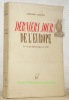
Derniers jours de l’Europe. Un voyage diplomatique en 1939.
Fribourg - Paris, Egloff - LUF 1946, 225x140mm, 252pages, broché. Bon état.
Pour un paiement via PayPal, veuillez nous en faire la demande et nous vous enverrons une facture PayPal
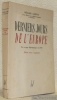
Derniers jours de l’Europe. Un voyage diplomatique en 1939. Edition revue et augmentée.
Fribourg - Paris, Egloff - LUF 1947, 205x140mm, 319pages, broché. Bon état.
Pour un paiement via PayPal, veuillez nous en faire la demande et nous vous enverrons une facture PayPal
Fin de siècle dans les Balkans.
JACOB Odile. Mai 2001. In-8. Broché. Bon état, Couv. convenable, Dos satisfaisant, Intérieur frais. 264 pages.. . . . Classification Dewey : 949.6-Balkans
Analyses et Chroniques. Classification Dewey : 949.6-Balkans
Le discours balkanique. Des mots et des hommes
Fayard Paris, Fayard, 2004. In-8 broché de 479 pages. Très bon état

Toutes les expéditions sont faites en suivi au-dessus de 25 euros. Expédition quotidienne pour les envois simples, suivis, recommandés ou Colissimo.
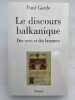
Le discours balkanique. Des mots et des hommes
Fayard Fayard, 2004. In-8 broché de 479 pages. Cartes hors-texte. Quelques pages légèrement écornées. Bon état
Toutes les expéditions sont faites en suivi au-dessus de 25 euros. Expédition quotidienne pour les envois simples, suivis, recommandés ou Colissimo.
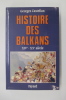
HISTOIRE DES BALKANS. XIVe - XXe siècle.
1993 / 532 pages. Broché. Editions Fayard.
Très bon état.
HISTOIRE DES BALKANS. XIVe - XXe siècle.
1993 / 526 pages. Broché. Editions Fayard.
Bel état malgré le dos insolé.
LE MODE DES BALKANS, Poudrière ou zone de paix ?
VUIBERT / THEMATHEQUE HISTOIRE. 1994. In-8. Broché. Bon état, Couv. convenable, Dos satisfaisant, Intérieur frais. 213 pages. 2 cartes en noir et blanc dans le texte.. . . . Classification Dewey : 949.6-Balkans
Classification Dewey : 949.6-Balkans
Famagusta. Vol. II: History and Society
, Brepols, 2021 Hardback, 912 pages, Size:156 x 234 mm, Illustrations:115 col., 13 tables b/w., 3 maps b/w, Languages: English, French. ISBN 9782503590417.
Summary This is the second of two volumes on the history and archaeology of the port city of Famagusta in Cyprus from the beginning of the island's Frankish rule in 1191 to the Ottoman conquest in 1571. The first volume, entitled Art and Architecture and edited by Annemarie Weyl Carr, was published in this series in 2014. The volume provides a comprehensive survey of the four-century history of Famagusta under Frankish, Genoese, and Venetian rule down to the Ottoman siege and conquest, supplemented by an account of the image of the medieval and Renaissance city in retrospect. Based on original research and often using unpublished sources, fourteen acknowledged specialists study Famagusta's political, social, economic, and ecclesiastical history from a multi- and interdisciplinary approach that involves aspects such as institutional continuities and discontinuities, military and spatial organisation, religious and cultural exchanges, gender roles, and the city's image in travelogues, literature and art. Such an approach allows a better understanding of the evolution of the ethnically and religiously diverse Famagustian society from a rich commercial centre under the Lusignans to an enclave under the Genoese and a military outpost under the Venetians. TABLE OF CONTENTS Preface Gilles Grivaud, Introduction Part I. Frankish Famagusta 1191-1373/4 Peter W. Edbury, Famagusta and the Lusignan Kingdom of Cyprus, 1192-1374 Jean Richard, Famagouste dans les institutions du royaume de Chypre et la question du bailliage royal David Jacoby, The Economy of Frankish Famagusta, 1191-1373 Part II. Genoese Famagusta 1373/74-1464 Catherine Otten-Froux, Famagouste sous la domination génoise (1374-1464) Laura Balletto, Économie et commerce à Chypre pendant la période génoise Svetlana Bliznyuk, Famagusta on Guard Part III. Frankish and Genoese Famagusta Alexander Beihammer, La population de Famagouste (XIIIe-XVe siècle) Michel Balard, Syrian Christian Communities in Medieval Famagusta Chris Schabel, The Ecclesiastical History of Lusignan and Genoese Famagusta Part IV. Venetian Famagusta 1474-1571 Gilles Grivaud, Martiale et marcienne, Famagouste entre 1474-1571 Part V. Medieval and Renaissance Famagusta Panos Leventis, Fragmentation and Unity Angel Nicolaou-Konnari, Women in Medieval Famagusta Part VI. Medieval and Renaissance Famagusta in Retrospect Lucie Bonato, Famagouste dans la littérature des voyageurs français Rita Severis, Famagusta?: With Pencils, Brush, and Palette Maps and Illustrations List of Abbreviations Bibliography Index List of Contributors
Gisèle Clément, Isabelle Fabre, Gilles Polizzi, Fanch Thoraval (eds)
Reference : 65131
Poésie et musique à l'âge de l'Ars subtilior. Autour du manuscrit Torino, BNU, J.II.9
, Brepols, 2021 Paperback, 256 pages, Size:190 x 290 mm, Illustrations:12 col., 7 tables b/w., 20 musical examples, Language(s):French, English. ISBN 9782503596211.
Summary Remarquable par son exceptionnelle qualité - que l'on considère son ampleur, la variété de ses pièces, la complexité de son agencement ou la richesse de son ornementation -, le manuscrit Torino, BNU, J.II.9 constitue un « monument » poético-musical qui, à bien des égards, reste intriguant. Si son lien avec Janus de Lusignan, roi de Chypre durant le premier tiers du XVe siècle, a été souligné de longue date - et plus récemment remis en question -, de nombreuses inconnues demeurent quant à son objet réel, son contexte de production et sa relation aux traditions continentales. Tandis que celles-ci relèvent autant de l'histoire de la musique que de l'histoire littéraire ou politique, seule la musicologie a jusqu'à ce jour tenté d'y répondre. Prenant acte de cette lacune, le projet scientifique et artistique Une voix plurielle. Approche performative des pratiques musicales et littéraires dans les milieux curiaux et cléricaux en Chypre vers 1430 a voulu, au cours de son colloque conclusif organisé à Montpellier en 2015 sur le thème Poésie et musique à l'âge de l'Ars subtilior. Autour du manuscrit Torino, BNU, J.II.9, réunir des spécialistes de tous domaines. Sans chercher à proposer une interprétation définitive du manuscrit J.II.9, les contributions réunies dans ces actes ambitionnent d'en éclairer certains aspects : d'abord son environnement historique caractérisé par d'importantes circulations d'hommes et d'idées ; ensuite les poétiques du recueil qui témoignent de la continuité d'un héritage ; enfin les fondements de son répertoire où l'on décèle des enjeux à la fois politiques, religieux et arithmologiques. TABLE OF CONTENTS Illustrations Exemples musicaux Tableaux Abréviations Introduction Gisèle Clément, Isabelle Fabre, Gilles Polizzi et Fañch Thoraval L'environnement historique : circulations, cultures, milieux Résonances humanistes à la cour de Nicosie (1411-1423) Gilles Grivaud La rhétorique humaniste au service des élites chypriotes dans l'Italie septentrionale de la première moitié du XVe siècle Clémence Revest Dans le sillage de Charlotte de Bourbon (1386/1390-1422) : contacts et relations entre le royaume de Chypre et la France Philippe Trélat King Janus of Cyprus and the Great Schism Apostolos G. Kouroupakis Les Lusignan de Chypre à l'époque du premier humanisme français : le cardinal Hugues et la bibliothèque d'Anne et Louis de Savoie 67 Evelien Chayes Les poétiques du recueil : tradition, héritages, modèles « A paines puis congnoistre joye d'ire » : de Gace Brulé au recueil de Chypre Isabelle Fabre Memories of the mainland in the Songs of the Cyprus codex Yolanda Plumley Les rondeaux du codex de Chypre, entre tradition et innovation Christelle Chaillou-Amadieu Raison contre Fortune: ordering and structure in the first ballade gathering of the manuscript Torino J.II.9 Virginia Newes (?) Les fondements du répertoire : politique, religion, arithmologie Dévotion, liturgie, performativité : « religion royale » et « géographie religieuse » dans les motets du manuscrit Turin J.II.9 et les offices du Saint-Sépulcre Fañch Thoraval La « liturgie chypriote » et la tradition liturgique hiérosolymitaine Fedon Nicolaou Proportions et structures dans les pièces profanes du manuscrit de Chypre Cécile Beaupain Trasgressione e pentimento di David (Paris, Bibliothèque Sainte-Geneviève, ms. 3354). Un oratorio volgare de Pietro de Nores, mis en musique par Bartolomeo Grassi et dédié à Louis XIII Angel Nicolaou-Konnari et Kenneth Owen Smith Bibliographie Manuscrits et archives Études, ressources et documents imprimés Index Index des incipits Index des noms Index des lieux
Les outils dans les Balkans du moyen-âge à nos jours ( 2 volumes )
Ecole des hautes études en sciences sociales et maisonneuve et larose 1986
Très bon état 2 ouvrages toilés sous emboitage, tome 1; nomenclature et formes, comprenant la liste des lieux de conservation des outils balkans, les dictionnaires de la bulgarie roumanie, yougoslavie grèce, accompagné de 5 cartes hors texte et index, 379 pages, tome 2; ne comprenant que les planches des outils balkans, bulgarie, roumanie, yougoslavie, grèce, 1032 pages, format: 25 x 19 cm, poids: 3.400kg - largeur/hauteur : x cm - poids : g - nombre de pages : p. - langue :
Globe Couverture : L'U.R.S.S. cette inconnueL'U.R.S.S. a voulu s'adapter aux exigences de la vie moderne - Une économie qui se crée, c'est un nouveau pays qui nait - L'année 1944, année de la victoire et du souvenir - L'U.R.S.S., grande puissance mondiale - Un seul but : la victoire, un seul moyen : la guerre totale - Les Balkans, pays d'amitiés traditionnelles franco-Russes - Paradis soviétique ou enfer bolchevik ? (Paul Farinès) - L'alliance franco-soviétique, gage de la paix ! - Nouvelle carte du monde
n° 20 et 21 - 5 avril 1945 - in-4 broché - revue illustrée - 12 pages
bon état
Two Vagabonds in the Balkans
John Lane The Bodley Head Limited, London 1925 - SIGNED by both authors! The observations and stories of this book are based on the authors' travels. Color and B&W plates as well as drawings are scattered throughout the text. Small pencil on front & back pastedowns and prelims. Blue cloth covered boards are good; Edges of text block are dusty. Inside pages are tanned, yet free of marks. 236 pp + 4 pp of ads. 6.25 x 9.75 inches."Two Vagabonds in the Balkans" is an account of their journey through Bosnia, Herzegovina and Montenegro, and gives a vivid and unforgettable picture of that little-known and picturesque part of Europe. The illustrations are as racy and as full of humour as the text.’ Contents : I. Paris To Sarajevo II. Sarajevo III. First Bosnian Explorations IV. A Digression Upon Travelling V. Upon A Bosnian Farm VI. A Mountain Walk VII. In A Moslem Village VIII. Pochades Ix. Konjic X. Mostar XI. Capljina XII. Korcula.
cartonnage bleu bon etat,rousseurs eparses, Envoi autographe des auteurs. Remise de 20% pour toutes commandes supérieures à 200 €
L'Alliance Balkanique.
HACHETTE et Cie. 1915. In-12. Broché. Etat passable, Couv. défraîchie, Dos abîmé, Intérieur acceptable. 254 pages. Quelques planches de carte en noir et blanc et fac-similé. Ouvrage de bibliothèque : étiquette de code sur la coiffe en-tête et tampons sur la page de titre et dans quelques marges. Charnières fendues, manques sur le dos et la coiffe en pied.. . . . Classification Dewey : 949.6-Balkans
Classification Dewey : 949.6-Balkans
Archäologische Untersuchungen im Stadtgebiet von Antiochia am Orontes I. Antike und mittelalterliche Stadtmauersysteme
, Brepols, 2024 Hardback, 2 vols, 566 pages, Size:240 x 330 mm, Illustrations:124 b/w, 707 col., 14 tables b/w., 5 maps b/w, 28 maps color, 66 colour fold-out maps in a separate folder, Language: German. ISBN 9782503601229.
Summary Kaum eine der zahlreichen antiken und mittelalterlichen Schriftquellen versäumt es, die Befestigungssysteme Antiochias zu erwähnen. Die imposante Anlage der über die beiden Stadtberge und entlang des Orontes verlaufenden Mauern wurde, so beiläufig die Autoren über sie berichten, stets als Garant für den Fortbestand der Metropole betrachtet. Tatsächlich blieben die Befestigungsanlagen weit über das Ende der antiken Stadt hinaus auch für das islamische, byzantinische und kreuzfahrerzeitliche Antiochia maßgebend und bestimmten bis in die Neuzeit die Organisation des städtischen Raumes. Ungeachtet ihrer Bedeutung für die Rekonstruktion der wechselhaften Stadtgeschichte blieben die auf einer Länge von rund dreizehn Kilometern erhaltenen Befestigungssysteme Antiochias bislang weitgehend unbeachtet. Im ersten Band der deutsch-türkischen Unternehmung in Antiochia werden die römischen Fortifikationen auf den beiden Stadtbergen, Silpios und Staurin, sowie in der Ebene erstmals monographisch vorgelegt. Dies geschieht auf der Grundlage von umfangreichen Bauaufnahmen, einer detaillierten Fotodokumentation und unter Berücksichtigung von unpublizierten Grabungsberichten aus dem Princeton University Antioch Archive. Den topographischen Rahmen für das Verständnis der Stadtmauersysteme bildet der neue Stadtplan, der hier erstmals vorgelegt wird. TABLE OF CONTENTS Abbildungsverzeichnis Einleitung Gunnar Brands und Ulrich Weferling 1. Das Befestigungssystem von Antiochia am Orontes: Eine baugeschichtliche Studie zu den Stadtmauern einer bedeutenden antiken Metropole Christiane Brasse 2. Stadtmauern und Stadttore der Befestigung in der Ebene: Schriftquellen, Reisebeschreibungen, Archäologische Überlieferung Gunnar Brands - Ulrich Weferling 3. Die Stadttore Antiocheias in den historiographischen und literarischen Quellen Klaus-Peter Todt 4. Die Zitadelle von Antiochia Thomas Biller und Timm Radt 5. Die Zitadelle von Antiocheia am Oront?s/Antakya: Die byzantinischen, kreuzfahrerzeitlichen und ?orientalischen? (syrischen, arabischen und armenischen) Quellen: Analyse und Kommentar Klaus-Peter Todt und Bernd Andreas Vest Bibliografie Abbildungsnachweis Index Tafeln

