 Write to the booksellers
-
Type
Book (3034)
Drawings (1)
Engraving (3)
Magazine (16)
-
Latest
Last month (48)
Last week (5)
-
Language
Dutch (862)
English (14)
French (2170)
Italian (1)
Latin (7)
-
Century
16th (11)
17th (11)
18th (9)
19th (221)
20th (1002)
21st (95)
-
Countries
Belgium (2797)
Denmark (1)
France (250)
Switzerland (5)
United Kingdom (1)
-
Syndicate
CLAM (950)
ILAB (982)
SLAM (30)
SNCAO (3)
Finsterwalders -Slag om Engeland-Deurne 1940
, Bonte, 2024 Hardcover, 208 blz - z/w afbeeldingen - 20x25 cm oblong. nieuwstaat. ISBN 9789464777000.
Onder de naam Finsterwalders gaat een bont allegaartje van Luftwaffepersoneel schuil dat in de periode 1940-41 de luchthaven van Antwerpen - Deurne als thuisbasis had. Van hieruit schreven ze met hun Dornier 17-bommenwerpers mee geschiedenis in wat later als de Slag om Engeland zou genoteerd worden. Ze boekten successen en leden zware verliezen. Dit is hun verhaal.
Schoonselhof, een hommage
Schoten 1993 Deus ex Machina vzw Soft cover
Langue: néerlandais. Schoonselhof, un hommage couverture souple, 96 pages avec de nombreuses illustrations / photos en noir et blanc exemplaire n° 350 et signé par les auteurs 200 mm x 130 mm, en bon état

Antwerpen 1900 Schilderijen en tekeningen 1880-1914
Lier 1986 koninklijk museum voor schone kunsten Soft cover
Langue: néerlandais. Anvers 1900 Peintures et dessins 1880-1914 catalogue d'exposition broché, 210 mm x 210 mm, avec de nombreuses photos et illustrations en couleur et en noir et blanc, en bon état [Cette description peut avoir été traduite par une IA.]
De Keizerskapel te Antwerpen
Antwerpen 1994 Antwerp European University Hardcover Fine 1st Edition
Langue: néerlandais. La Chapelle de l'Empereur avec quelques esquisses des annuaires de son ancien propriétaire, le métier de tondeur à sec. 33x25 cm, 370 pp. Richement illustré en noir et blanc et en couleur. Relié, lin gris avec impression argentée. Très bon état [éditeur : Anvers European University 1994] Relié, lin gris avec impression argentée, couverture en papier illustrée en couleur, 25 x 33 cm., 370 pp. +2, illustration en couleur étendue. r. 3350 g. [Anvers, Belgique]
De Keizerskapel te Antwerpen
Antwerpen 1994 Antwerp European University Hardcover Fine 1st Edition
Langue: néerlandais. La Chapelle Impériale avec quelques esquisses des annuaires de son ancien propriétaire, le métier de tondeur à sec. 33x25 cm, 370 pp. Richement illustré en noir et blanc et en couleur. Relié, toile grise avec impression argentée. Très bon état [éditeur : Anvers European University 1994] Relié, toile grise avec impression argentée, couverture illustrée en couleur, 25 x 33 cm., 370 pp. +2, illustration en couleur étendue. r. 3350 g. [Anvers, Belgique]
Keizerskapel Antwerpen
Antwerpen 1994 Antwerp European University Hardcover Fine 1st Edition
Langue: néerlandais. La Chapelle Impériale avec quelques esquisses des annuaires de son ancien propriétaire, le métier de tondeur à sec. 33x25 cm, 370 pp. Richement illustré en noir et blanc et en couleur. Relié, lin gris avec impression argentée. Très bon état [éditeur : Anvers European University 1994] Relié, lin gris avec impression argentée, couverture illustrée en couleur, 25 x 33 cm., 370 pp. +2, illustration en couleur étendue. À l'avant du livre se trouve une photo en couleur de l'ancien propriétaire du livre, dans un choeur. 3350 g. [Anvers, Belgique] [Cette description peut avoir été traduite par une IA.]
Po mes
Anvers, Ca Ira, 1933 Plaquette in-8, agraf e, couverture rempli e, 36 pages. Edition originale. Un des 100 exemplaires sur papier Featherweight. Num ro 10. 19.5 x 16 cm
1 de 100 exemplaires numerotes. tirage limite. N 10
Sinfonietta voor koper, - Jef Van Hoof,
Antwerpen - Antwerp, De Crans, 1968 Gebonden in half lederen linnen band, met opdruk in gouden belettering. 14 / 45 pagina's. in-folio-formaat.
noten werden geschreven door Alex Welleman, beperkte oplage van 200 exemplaren.
griffiekamer van de Brabantse munt te Antwerpen
Bruxelles / Antwerpen, Jennes, Michel, 1973 Oorspronkelijk uitgevers omslag, pag. 135-144.
revue belge XCIX 1973
Marianne Van Vyve
, Fonds Mercator/ Mercatorfonds, 2025 Hardback, 220 pages, Dimensions 280 x 230 mm, Language(s) English ed. ** binnenkort leverbaar** ISBN 9789462303911.
Marianne Van Vyve (1943-1991) was a Belgian painter who lived and worked in her hometown of Antwerp. Never affiliated to any particular group, she mainly followed her own artistic inclination, often against the prevailing trends of the time. She chronicled her emotional landscape through her art, in the quiet of her successive studios. This book explores her intriguing work, examining the influence of her academic training on her formative years and outlining her evolution as a painter.
Antwerp 1477 - 1559 From the Battle of Nancy to the Treaty of Cateau Cambrésis
London 1916 Methuen & Co Ltd Hardcover 1st Edition
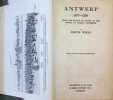
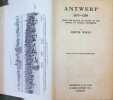
Reliure originale en toile verte de l'éditeur, 23 x 15 cm, XVII + 359 (31 adv.) pp. avec un plan et huit illustrations, anglais, 1ère édition, Illustrations, état du livre : Bon [Cette description peut avoir été traduite par une IA.]
WILLEM ELSSCHOT EN PAUL VAN OSTAIJEN MO(NU)MENTEN WILFRIED PAS (gesigneerd door Wilfried Pas)
, Amsterdam / Antwerpen, Vlaams Cultureel Centrum de Brakke Grond / De Zwarte Panter, 1996, 1996 Gebonden, witte kartonomslag met opdruk op front, geillustreerde stofomslag ( ook binnenin! ), gedecoreerde binnenplatten, foto - frontispice, 165 x 245mm., 80pp., geillustreerd in kleur en z/w.
Uitgegeven bij de tentoonstelling mo(NU)menten - een tweeluik -. Toont het werk dat voorafging aan de realisatie van de beelden Elsschot en Van Ostaijen. In goede staat.
Madonna der Sinjoren
Antwerpen 1945 Standaard Boekhandel Hardcover
Langue: néerlandais. Madonna des Seigneurs couverture rigide, reliure en lin noir avec dos bleu avec impression dorée et impression bleue sur le devant du titre, 263 pages avec illustrations en noir et blanc 200 mm x 140 mm, en bon état
Madonna der Sinjoren
Antwerpen 1945 standaard-boekhandel Hardcover No Jacket 1st Edition
Langue: néerlandais. Madonna des Seigneurs. 19,5x13,5 cm, 264 pp. Relié, toile. Quelques illustrations en noir et blanc. Très bon état.
Madonna der Sinjoren
Antwerpen 1945 standaard-boekhandel Soft cover No Jacket 1st Edition
Langue: néerlandais. Madonna des Seigneurs. 19,5x13,5 cm, 264 pp. Quelques illustrations en noir et blanc. Très bon état.
Dag-Register van de provisoire representanten van het vry ende souvereyn volk van Antwerpen.
Antwerpen, C.H. De Vos, 1793 Gebonden, contemporaine blinde halflederen band, rug met zes nerven, 204pp. (coll. compl.), 22x26cm., boekblok in goede staat, voor- en achterplat nagegenog volledig los van de rug. Zeldzaam!!.
Ex bibliotheca Th. de Jonghe.
Hugo Heyrman monografie
Gent, Snoeck Publishers , 2008 Hardback, 300x240mm, 224p, rijkelijk geillustreerd. ISBN 9789053496855.
Kunstenaar Hugo Heyrman positioneert zich binnen de kunstwereld op een uniek niveau. Wanneer we zijn kunstenaarschap van ruim veertig jaar overzien, worden we geconfronteerd met een oeuvre dat bestendig een pioniersfunctie vervulde. Te beginnen vanaf de jaren zestig, wanneer hij samen met Panamarenko performances, acties en conceptuele kunst introduceerde. Het waren, trendsettend voor die tijd, artistieke projecten (voor een autovrije binnenstad bijvoorbeeld) die kaderden in ecologische kritiek. Of wanneer hij begin jaren zeventig de toon aangaf met videokunst. Sommigen zullen zijn naam verbinden aan de eerste digitale experimenten in kunstland, en misschien zelfs niet weten dat hij zich in al deze diverse media toch als schilder blijft beschouwen. Zelfs in zijn schilderspalet van het eerste uur herkennen we die filmische zoomfunctie, waarmee een hele generatie Vlaamse schilders in de jaren negentig school heeft gemaakt. En wanneer hij vandaag zowel in de academische wereld met scherpe analyses over synesthesie, als in het booming alternatieve webwereldje van jonge digitale kunstenaars wereldfaam geniet, zal niemand daarachter die altijd aanwezige schildersintuitie vermoeden. Vanuit een transparant artistiek denken bespeelt hij consequent de mogelijkheden van diverse media om steeds opnieuw gestalte te geven aan wat de essentie is van representatie: de abstractie van elke representatie. Deze publicatie geeft inzicht in de ontwikkeling van een artistieke visie. Het oeuvre van Dr. Hugo Heyrman maakt een statement over de poetica van de schilderkunst, over een waarnemend denken en over het in vraag stellen van de waarheid van beelden.
Jo Gisekin, Ronald Op de Beeck, Jacques Claes, Wim Strecker, Jos Dobbeleeers, Rudi Mannaerts, Madeleine Manderyck
Reference : 030507
(2010)
Madonna en heiligenbeelden in de Antwerpse binnenstad
Antwerpen 2010 Voor Kruis en Beeld vzw, BAI Soft cover 1st Edition
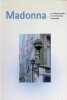
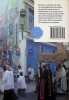
Broché: Très bon, 24 x 16 cm, 272 pp., néerlandais, 1ère édition, illustrations, état du livre: Très bon Dans le centre d'Anvers, plus de 160 statues de Marie (Madonna) et des dizaines d'autres statues de saints ornent les façades et les coins de rue. Ces statues sont profondément ancrées dans l'histoire de la ville, puisque Marie est la sainte patronne officielle d'Anvers depuis 1124. [Cette description peut avoir été traduite par une IA.]
Hun kleine Bevrijding
Brussel 1984 Elsevier Soft cover No Jacket
Langue: néerlandais. Leur petite Libération. 22x16 cm, 95 pp. Richement illustré avec des photos en noir et blanc. Bon état.
H VN nieuw zuid Antwerpen
, Brutem, 2024 softcover, 77 pages, Illustrated. text in English. ISBN 9789152778920.
Zweeds minimalisme H VN is een ontwerp van de Zweedse architect Johannes Norlander. Het is zijn eerste ontwerp buiten de eigen landsgrenzen. Het gebouw werd opgeleverd in 2021 en telt 56 appartementen. In H VN's design process, the Scheldt River played an important role. The building is 90 meters long and was constructed to be very transparent. Norlander wanted to create a building without a back, in which all facades are the same. H VN stretches between north and south, providing perfect sun conditions. All apartments will receive sunlight at all hours of the day. This is something that Norlander considers very important as an architect. By the way, all the concrete in this building is cast on site. That has a very big impact on the look of the building because it gives it a very quality look. You can really see and feel the craftsmanship.
Boerentoren Verhaal van een icoon, Antwerpen
, Hannibal, 2024 Hardcover, 36 x 25,2 cm, 352 pages illustraties, Nederlandstalige editie ISBN 9789464666076.
De Boerentoren en zijn intrigerende geschiedenis onthuld in nieuwe verhalen en ongeziene beelden Sinds 1931 is de Boerentoren een majestueuze blikvanger aan de skyline van Antwerpen. Als eerste wolkenkrabber van Europa is hij veel meer dan een gebouw: hij staat symbool voor innovatie, durf en trots. Zijn rijke geschiedenis maakt hem eveneens tot een stille getuige van de vele historische gebeurtenissen die niet alleen Antwerpen maar ook Vlaanderen en Belgi hebben gevormd. Dit prachtig ge llustreerde boek richt de schijnwerpers op de Boerentoren. Geschiedkundig auteur Johan Op de Beeck schetst het Antwerpen van v r de bouw, terwijl de publiekshistorici van Geheugen Collectief de veelzijdige geschiedenis van het architectuuricoon blootleggen op basis van nieuw archiefmateriaal. Stadsgids Tanguy Ottomer en anderen voegen daar persoonlijke anekdotes aan toe van mensen die in de Boerentoren hebben gewoond en gewerkt. Samen met nooit eerder gepubliceerde foto?s brengen deze verhalen het bouwwerk in al zijn glorie tot leven. Laat je meevoeren op een tijdreis door de geschiedenis van de Boerentoren, een architecturaal meesterwerk dat bijna een eeuw lang fascineert en inspireert
Farmers' Tower Story of an Icon Antwerp
, Hannibal, 2024 Hardcover, 36 x 25,2 cm, 352 pages illustrated , English edition . ISBN 9789464666076.
The Farmers' Tower and its intriguing history revealed in new stories and images never seen before Since 1931, the Farmers? Tower has served as a majestic landmark on Antwerp?s skyline. As Europe?s very first skyscraper, it is much more than a building: it symbolises innovation, daring and pride. Its rich history also makes it a silent witness to many historical events that have shaped not only Antwerp but Flanders and Belgium too. This beautifully illustrated book puts the Farmers? Tower in the spotlight. Historical writer Johan Op de Beeck conjures up a picture of Antwerp before the Tower was built, while Geheugen Collectief?s public historians uncover the multifaceted history of this architectural icon based on new archive material. City guide Tanguy Ottomer and others add a personal touch with anecdotes from people who lived and worked in the Farmers? Tower. Along with photographs that have never been published before, these stories bring the building to life in all its glory. Journey back in time through the history of the Farmers? Tower, an architectural masterpiece that has fascinated and inspired for almost a century..
Fred Bervoets, Printwork 1990-2010
, Lannoo, 2011 Bound in cloth. gebonden in linnen, 279pp.260 x 310 rijkelijk geillustreerd, een must ! ISBN 9789020997316.
The first complete survey of Bervoets' unique pictorial chart, from 1990 until now spent on the leading painter of the Antwerp art collective The Black Panther is considered one of Belgium's foremost painters. Since the early nineties is Bervoets' work a remarkable austerity, which expresses itself in monumental etchings. Carried out in Bervoets invented by a 'wrong' etching technique, which he directly with the acid on the plates 'paints' and then etching be painted.
Portraits After Existing Prototypes Corpus Rubenianum Ludwig Burchard part XIX.- 4
, Brepols - Harvey Miller, 2016 Hardcover with dusjacket.340 p., 130 b/w ill. + 100 colour ill., 180 x 265 mm, Languages: English. ISBN 9781909400580.
Rubens was mesmerised by faces. He studied physiognomy, the pseudo-science that began making headway in the sixteenth century, which postulated that a person?s character could be read from their facial features. He made geometrical analyses of the faces of ancient emperors and heroes. He invested a great deal of time in detailed anatomical studies, sometimes based on nature, and equally often on antique busts and coins. At times it seems as though the master wanted to know and understand every nook and cranny of the human face. To this end he studied man himself and the way in which the ancients dealt with nature. His best portrait copies, thus, are not strictly copies but rather studies in which art history, craftsmanship, literature and theory merge into an emulation of art and nature. They are works in which the artist was looking for what ultimately captivated him the most: man in all of his myriad facets, and the perspectives art afforded to better understand man.
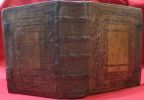
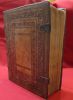
VERA FRATERNITAS declamada confratribus SODALITATUM S. Rosarii Dominicani, S. Scapularis Carmelitani, S. Zonae Augustinianae, S. Funiculi Franciscani. Pro Congegrationibus Menstruis Sodalium Praedictorum. Opus Morale, complectens materias omnium Vitutum & vitiorum, hominibus quorumlibet statuum applicabiles. Cum Indicibus copiossimis. Auctore F. Henrico Ionghen, Ordinis FF. Minorum, Provinciae Germaniae Inferioris, S. Theol. Lectore Iubilato.
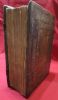
Antverpiæ (Anvers), Apud Petrum Bellerum (Pierre Bellere) sub signo Calcci Auri,1662, 1 volume in-8 de 230x175x65 mm environ, 1f.blanc, 12 ff. (titre en et noir avec vignette, Benevolo Lectori, Syllabus Thematum,facultas, privilegium), 778 pages, 34 ff. (index scripturarum, index rerum notabilium), reliure en veau brun sur ais de bois, plats biseautés avec encadrements de frises fleuries, et 2 fermoirs en métal (reste seulement la partie fixe des fermoirs), dos muet à 4 nerfs. Reliure restaurée, importante trace de d'humidité dans la marge interne de la 691 à 778 et sur les 34 ff. de l'index, avec perte de texte par endroits ( en particulier dans l'index). Texte en latin.
Jonghen, Henri (H. Ionghen), ordre des Frères mineurs, devenu prédicateur célèbre. Merci de nous contacter à l'avance si vous souhaitez consulter une référence au sein de notre librairie.

