 Write to the booksellers
-
Type
Any type (1)
Autograph (2)
Book (22614)
Engraving (4)
Magazine (252)
Manuscript (1)
Maps (12)
Music sheets (60)
Old papers (4)
Photographs (28)
Posters (2)
-
Latest
Last 24h (2)
Last 3 days (16)
Last month (209)
Last week (1)
-
Language
Dutch (54)
English (7)
French (22906)
German (12)
Latin (1)
-
Century
16th (4)
17th (34)
18th (167)
19th (2476)
20th (8463)
21st (656)
-
Countries
Belgium (18219)
Brazil (1)
Canada (7)
Côte d'Ivoire (135)
Denmark (5)
France (4234)
Greece (1)
Netherlands (3)
Switzerland (375)
-
Syndicate
ALAC (6)
CLAM (107)
CNE (2)
ILAB (1962)
NVVA (134)
SLACES (134)
SLAM (1706)
SNCAO (65)
Brueg(H)el Phenomenon, Paintings by Pieter Bruegel the Elder and Pieter Brueghel the Younger with a Special Focus on Technique and Copying Practice.
, Brepols, 2012 Paperback, 3 volume set in cardboard box, 1061 pp., 230 x 290 mm, Languages: English, As new (signed and dedication by both authors on first page) ISBN 9782930054148.
The fascination exerted by the works of the illustrious Pieter Bruegel the Elder in the decades following his death in 1569 is matched only by the intense interest they generate today. At the end of the sixteenth century and in the first half of the seventeenth, the most ambitious art collectors fought over the few paintings by the master that were still on the market. This setting was the catalyst for the appearance of copies and pastiches ? and even deliberate forgeries. It was then that the elder son of Pieter Bruegel, known as Pieter Brueghel the Younger (whose name is spelled ?Brueghel? here, conforming to the signature that he adopted during the initial phase of his career) emerged as a legitimate successor, producing astonishingly faithful replicas of his father?s paintings. This was all the more surprising given that they were often made after works that were by then dispersed in diverse and sometimes inaccessible private collections. Operating within the context of a sizeable workshop, Brueghel supplied the market with hundreds of copies of variable quality according to demand. This enterprise merited re-evaluation from a technical point of view: how were such vast numbers of copies produced in practice? This three-volume book explores the intriguing Brueg[H]el phenomenon through the two artists? painting practices. The technical aspects of their works are investigated in a detective-like manner and are strikingly elucidated with a wealth of colour illustrations. The reader will come to understand the accomplished practitioner behind the genius that is Bruegel the Elder and the working procedures of his foremost emulator?s workshop. Furthermore, Brueghel the Younger?s exceptional qualities as a painter are singled out from those of his workshop production. The book also reveals fresh discoveries on the father?s creative process through the study of his son?s copies.
Quelques mots sur la gravure au millésime de 1418
Bruxelles, A.Van Dale 1846 18pp.+ 7 planches gravées, 29cm., br.orig., peu de rousseurs, S86364
Het onderwijs te Turnhout vóór 1830
Turnhout, van Mierlo-Proost 1934 342pp., 25cm., in de reeks "Geschiedkundige studiën" nr.1, orig. omslag, 25cm., goede staat, B59611
De Onze Lieve Vrouwkapellekens te Gent
Gent, Vereeniging Gent aan Maria 1924 32pp., 21cm., geïll. omslag, 3 stempeltjes, B101428
Gent, stad van Maria
Gent, In eigen beheer 1911 116pp., 25cm., originele omslag, stempeltje, goede staat, zeldzaam, B104443
Het Gentsche volksleven. Gebruiken en plechtigheden naar datum gerangschikt. Folkloristische schets
Gent, Snoeck-Cools 1924 136 + [5] pp., genummerd exemplaar: no.301, 22cm., gebroch., enkele roestplekjes, stempeltje, verder in goede staat, B89226
La cathédrale de Saint Bavon.
Gand, Abbé Gab. Célis, s.d. (ca 1950). 14 x 21, 32 pp., quelques illustrations en N/B, broché, bon état.
Nood zoekt troost - volksdevotie te Gent 1866-1941
Destelbergen, Debruyne 1941 95pp.geïll.+ enkele buitentekstills., 24cm., orig.omslag, etiketje op rug, goed, B53986
Orationes panegyricae, nunc post varias in Gallia & Belgio factas impressiones bono & commodo eloquentiae studiosorum in Germania recusae. (Relié à la suite:) Nicolai Caussini e societate Jesu Angelus pacis. Iuxta exemplar in Gallia Parisiis impressum.
Coloniae Agrippinae (Köln), apud Joannem Wilhelmum Friessem, Anno MDCLXXIIII., (1674), kl. in-8vo, gestoch. Frontispiz-Titel + 3 Bl. + 454 S. + 1 Bl. + 2 weisse Bl.; + 47 S., mit Schmutztitel «Nicolai Caussini ... Angelus Pacis ...»), gebräunt und stockfleckig, Lederband auf Bünden, dekor. goldgepr. Umrahmung und Fleurons auf den Deckeln, kl. Fehlstelle an Kapitel, Deckeln, ohne Schnürchen. Sehr gutes Exemplar.
Dritte Ausgabe, erweitert mit dem angehängten kleineren Werk von Nicolaus Caussinus (1607-1651). Die 1. und 2. Ausgaben von «Orationes panegyricae» erschienen 1639 und 1641, die Erstausgabe von «Angelus pacis» erschien 1650. Louis Cellot unterrichtete Humane Wissenschaften und Retorik in La Flèche und andere Schulen, er erklärte die Heilige Schrift während 7 Jahre, er wurde Rektor in Rouen und in La Flèche. De Backer-S. II/948ff., Nr. 6 und II/902ff., Nr. 24.

(SLACES, NVVA)
Phone number : 41 (0)26 3223808
Notice sur la famille Cels [dans: Recueil généalogique, fascs.3-6]
Gendbrugge, s.n. 1937 58pp., dans la série "Receuil généalogique" fascs.3-6 (supplément à la revue mensuelle "Le Parchemin"), tirage limité à 100 exemplaires ; ceci est un exemplaire non-numéroté, 27cm., br.orig., texte frais, bon état, B119610
Le retable de la chapelle Saint-Hubert à Ciney.
Ciney (Belgique), Imprimerie Epece, 1969. 16 x 22, 12 pp., quelques illustrations en N/B, broché, très bon état.
tirage à part de la Société Royale d'Archéologie de Bruxelles, année 1969, N° 23.
"Lijn, kleur, volume/Trait, couleur, volume; tentoonstelling der geselkteerde werken/exposition des uvres sélectionnées."
Bruxelles, Crédit Communal de Belgique, 1972. 17 x 21, sans pagination, très nombreuses illustrations en N/B, broché, bon état.
Bilingue, français/néerlandais.
"Les accords du Lambermont et du Lombard; approfondissement du fédéralisme ou erreur d'aiguillage ?; actes du colloque du 22 février 2002. Collection de la Faculté de Droit de l'Université Libre de Bruxelles."
Bruxelles, Bruylant, 2003. 16 x 24, 537 pp., broché, très bon état (sauf coin inférieur droit légèrement plié).
centre de la gravure et de l'image imprimée de la communauté francaise de Belgique.
Reference : 22269
FEERIE POUR UN AUTRE LIVRE
Catalogue. Céations dans le domaine de l'art et du livre dans la communauté française de Belgique. Entre 1985 et 2000. musée royale de Mariemont. 14 mai 20 aout 2000. Grand format, couverture souple. 271 pages. Illustrations couleurs. Bon état. Une expédition par Mondial Relay pourra vous être proposée 2000
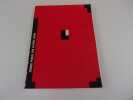
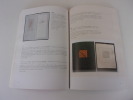
"Etat démographique de la Wallonie et éléments pour une politique de population; Rapport Poliwa. Département de Démographie."
Louvain, Université Catholique de Louvain, 1997. "16 x 24, 422 pp., 72 tableaux, 59 graphiques, avec le décalque, broché, bon état (couverture défraîchie; cachets bibliothèque)."
"contient le calque : carte de la Belgique administrative; cartes et graphiques dessinés par Sophie De Vos."
Inventaire des instruments scientifiques historiques conservé en Belgique (2 volumes).
Bruxelles Centre National d'Histoire des Sciences, 1959. 21 x 29, 2 volumes, 135 + xvii-108, broché, très bon état (cachet d'ex-propriétaire dans chaque volume).
Impression polycopiée : 1 seule face imprimée.
Vita venerabilis servi Dei Joannis Berchmans e Societate Jesu (italice scripta a p.Virgilio Cepario, latine reddita a p.Hermanno Hugone)
Lovanii, Fonteyn 1853 xix + 392pp.+ frontispice (portrait) & table généalogique dépliante, reliure cart.avec dos en cuir (titre doré), feuilles de garde marbrées, cachet, qqs.rousseurs, bon état, texte en latin, [editio tertia recognita et emendata, cui ampla Appendix accessit]
"La politique hospitalière en Belgique (Documents-CEPESS; 9e année - 1970 - N° 4), publication bimestrielle."
Bruxelles, Centre d'Etudes Politiques, Economiques et Sociales, 1970. 15 x 24, 134 pp., broché, très bon état.
"Les Centres Publics d'Aide Sociale (Documents-CEPESS; 15e année - 1976 - N° 3-4), publication bimestrielle."
Bruxelles, Centre d'Etudes Politiques, Economiques et Sociales, 1976. 15 x 24, 147 pp., broché, très bon état.
"Annales du Cercle Archéologique de Mons; tables des vingt premiers volumes (1857-1887)."
Mons, Dequesne-Masquillier, 1888. 15 x 23, 248 pp., reliure skivertex noir, tranches mouchetées, couverture conservée (1 cachet ex-bibliothèque de séminaire).
"L'histoire à travers monnaies et médailles; quinze années d'activités du Cercle d'Etudes Numismatiques; exposition organisée à la Bibliothèque Royale Albert 1er au Cabinet des médailles, du 14 mars au 26 avril 1980."
Bruxelles, Bibliothèque Royale Albert 1er, 1980. 18 x 25, 105 pp., 15 planches en N/B, broché, très bon état.
Description de quelques cristaux de calcite belges
Bruxelles, Hayez 1886 48pp. + 6 planches hors-texte, publié dans et extrait (et donc sans brochure) des "Mémoires couronnés et autres mémoires publiés par l'Académie Royale des Sciences, des Lettres et des Beaux-Arts de Belgique. collection in-8" Tome XXXVIII (38), texte frais et en bon état, B116699
Constant Permeke, de Engelse jaren 1914-1919
, Borgerhoff & Lamberigts, 2026 paperback, 128 pag. met prachtige illustraties, 28cm. nieuw. ISBN 9789493499904.
Constant Permekes artistieke parcours ontwikkelde zich veelbelovend. Maar de oorlog gooide roet in het eten. In juli 1914 ging Belgi over tot een algemene mobilisatie. Constant Permeke werd opgeroepen als soldaat en streed mee in de verdediging van de Antwerpse fortengordel in augustus. Hij raakte zwaargewond aan zijn been door een obusscherf. De oorlog was voorbij voor Permeke. Nog voor de val van Antwerpen op 9 oktober werden alle gewonde soldaten via Antwerpen naar Oostende overgebracht en vervolgens naar Engeland. Zijn hoogzwangere vrouw en zijn moeder reisden hem achterna. Van oktober 1914 tot april 1919 verbleef Permeke in Engeland. Vier keer verhuisde hij, telkens naar kleine afgelegen dorpjes. Het weerhield hem niet om gedreven te experimenteren en te blijven zoeken naar vernieuwing. Hij schilderde meestal op groot formaat met olieverf op doek, de verf dik en ruw uitgestreken met borstel en paletmes. Het kleurenpalet is bijzonder intens. Samen met de ruwe toets en de ongewone kadrering geeft het de schilderijen een heel apart karakter. In die jaren van isolement ontstonden de kiemen voor een heel persoonlijk artistiek traject, ge nspireerd door het modernisme en het humanisme. De tentoonstelling en het boek willen een overzicht brengen van de artistieke evolutie die Permeke doorliep tijdens die vijf cruciale jaren in zijn jonge leven als kunstenaar. Het toont ook werk van landgenoten die tevens in Engeland verbleven tijdens de Eerste Wereldoorlog, zoals Edgard Tytgat, George Minne, L on de Smet en Gustave Van de Woestijne, van wie ook werk voorkomt in expo en boek.
Constant Permeke, les ann es anglaises 1914-1919
, Borgerhoff & Lamberigts, 2026 softcover, 128 pages avec de superbes illustrations, 28 cm. Neuf. ISBN 9789493499928.
Le parcours artistique de Constant Permeke se d veloppait de mani re tr s prometteuse ? jusqu? ce que la guerre vienne tout bouleverser. En juillet 1914, la Belgique d cr ta une mobilisation g n rale. Constant Permeke fut appel sous les drapeaux et participa la d fense de la ceinture fortifi e d?Anvers en ao t. Il fut gri vement bless la jambe par un clat d?obus. Pour Permeke, la guerre tait termin e. Avant m me la chute d?Anvers, le 9 octobre, tous les soldats bless s furent vacu s d?Anvers vers Ostende, puis vers l?Angleterre. Sa femme, alors tr s enceinte, et sa m re le rejoignirent. D?octobre 1914 avril 1919, Permeke s journa en Angleterre. Il d m nagea quatre fois, chaque fois vers de petits villages isol s. Cela ne l?emp cha pas d?exp rimenter avec ardeur et de poursuivre sa qu te de renouveau. Il peignait principalement sur de grands formats, l?huile sur toile, appliquant la peinture de mani re paisse et rugueuse, au pinceau et au couteau. La palette chromatique est particuli rement intense. Combin e la touche brute et au cadrage inhabituel, elle conf re aux tableaux un caract re tout fait particulier. Pendant ces ann es d?isolement naquirent les germes d?une trajectoire artistique profond ment personnelle, inspir e par le modernisme et l?humanisme. L?exposition et le livre entendent offrir un aper u de l? volution artistique parcourue par Permeke durant ces cinq ann es cruciales de sa jeunesse d?artiste. Ils pr sentent galement des ?uvres de compatriotes ayant eux aussi s journ en Angleterre pendant la Premi re Guerre mondiale ? tels qu?Edgard Tytgat, George Minne, L on De Smet et Gustave Van de Woestijne ? dont des ?uvres figurent galement dans l?exposition et le catalogue.
Constant Permeke, the English Years 1914-1919.
, Borgerhoff & Lamberigts, 2026 Paperback, 128 pages with beautiful illustrations, 28 cm. New. ISBN 9789493499911.
Constant Permeke?s artistic trajectory was developing very promisingly ? until the war disrupted everything. In July 1914, Belgium announced a general mobilization. Constant Permeke was called up as a soldier and took part in the defense of the Antwerp fortress ring in August. He was severely wounded in the leg by a shell splinter. The war was over for Permeke. Even before the fall of Antwerp on 9 October, all wounded soldiers were transferred from Antwerp to Ostend and then on to England. His heavily pregnant wife and his mother traveled after him. From October 1914 to April 1919, Permeke stayed in England. He moved four times, each time to small, remote villages. This did not stop him from driven experimentation and seeking innovation. He mostly painted in large formats with oil on canvas, applying the paint thickly and roughly with brush and palette knife. The color palette is strikingly intense. Combined with the rough brushwork and unusual framing, it gives the paintings a very distinctive character. In these years of isolation, the seeds were planted for a highly personal artistic path, inspired by modernism and humanism. The exhibition and the book aim to provide an overview of the artistic evolution Permeke underwent during those five crucial years in his young life as an artist. It also presents work by fellow countrymen who likewise stayed in England during the First World War ? such as Edgard Tytgat, George Minne, L on de Smet, and Gustave Van de Woestijne ? whose works also appear in the exhibition and the book.

