 Write to the booksellers
-
Type
Art print (1)
Book (6729)
Disk (1)
Engraving (72)
Magazine (370)
Maps (409)
Music sheets (1)
Old papers (1)
Photographs (11)
Posters (1)
-
Latest
Last 24h (1)
Last 3 days (7)
Last month (204)
Last week (2)
-
Language
Dutch (9)
English (3)
French (7580)
Italian (1)
Latin (1)
Portuguese (1)
Spanish (1)
-
Century
16th (49)
17th (103)
18th (261)
19th (700)
20th (2317)
21st (584)
-
Countries
Belgium (1021)
Canada (4)
China (2)
Côte d'Ivoire (2)
France (6164)
Netherlands (1)
Switzerland (402)
-
Syndicate
ALAC (4)
CLAM (15)
CLAQ (1)
ILAB (3069)
NVVA (284)
SLACES (284)
SLAM (2751)
La potence ou la pitié. L'Europe et les pauvres du Moyen Âge à nos jours
Paris, Gallimard, "Bibliothèque des histoires", 1987, 14 x 22,5, 330 pages cousues sous couverture imprimée. Traduit du polonais par Joanna Arnold-Moricet.

Ständische Vertretungen in Europa im 17. und 18. Jahrhundert
Vandenhoeck & Ruprecht Broché 1969 In-4 (17,2 x 25,1 cm), broché, 437 pages, texte en allemand ; pliures au dos, quelques pâles rousseurs aux plats, assez bon état. Livraison a domicile (La Poste) ou en Mondial Relay sur simple demande.

Ständische Vertretungen in Europa im 17. Und 18. Jahrhundert
Göttingen, Vandenhoeck & Ruprecht 1969 437pp., in the series "Veröffentlichungen des Max-Planck-Instituts für Geschichte" vol.27 [Studies presented to the international commission for the history of representative institutions" vol.37], softcover, good condition, G54794
L'émergence d'un droit constitutionnel pour l'Europe. Modes de formation et sources d'inspiration de la constitution des communautés et de l'Union Européenne
Bruxelles, Université de Bruxelles 1997 425pp., 24cm., br.orig., dans la série "Etudes Européennes", ISBN 2-8004-1179-1, bon état, J79420
Charles et Zita : Derniers souverains D'Autriche-Hongrie
Paris France Loisirs 1999 In 8 Préface de Monseigneur l'Archiduc Rodolphe d'Autriche . Roman Historique . Histoire , Europe . - 624 p. , 750 gr.

Couverture rigide Très Bon État . Jaquette Idem 1ère Édition
L'Europe des princes éclairés 1763-1780
Editions Gérard Monfort, Saint-Pierre-de-Salerne, 1982. In-8, broché, 295 pp. Introduction - I. Souverains et gouvernements. - II. Etat et société. - III. Les impératifs de la sécurité et du pouvoir. - IV. La recherche de la sécurité : le modèle allemand. - V. Les bases du pouvoir en Europe ...
Avec une carte en double page.Traduit de l'anglais par José Fleury. --- Plus d'informations sur le site archivesdunord.com
L'Europe des princes éclairés, 1763-1789. Collection : L'histoire sans frontières.
Paris, Fayard, 1966. 15 x 22, 295 pp., broché, bon état (couverture défraîchie).
[LUXEMBOURG] Diekirch, Grand-Duché de Luxembourg. Berceau et centre du tourisme luxembourgeois. Société Nationale des Chemins de Fer Luxembourgeois.
Diekirch, Syndicat d'Initiative, [vers 1950]. 985 x 600 mm.
Belle affiche publicitaire, dessinée par Roger Gerson pour la Société Nationale des Chemins de Fer Luxembourgeois, créée en 1946. Elle a été imprimée par Huss à Luxembourg, et publiée par le syndicat d'initiative de la ville luxembourgeoise de Diekirch. Elle est illustrée en son centre d'un grande vue panoramique de la ville de Diekirch, épousant les contours du Luxembourg. Tout autour, sur un fond rouge, se trouvent des personnages illustrant les activités du pays, ainsi qu'une pinte de bière portant le nom de Diekirch. C'est au XIXe siècle que la ville de Diekirch est devenue le berceau du tourisme luxembourgeois, grâce à l'hôtelier Alexis Heck (1830-1908), considéré comme le père du tourisme luxembourgeois, et propriétaire du Grand Hôtel des Ardennes, construit en 1810. En 1949, le Ministère de l’Éducation nationale installa la première et unique école hôtelière du Grand-Duché à Diekirch. Roger Gerson (1913-1966) est un artiste peintre luxembourgeois, dont les œuvres sont omniprésentes dans la culture du pays, mais aussi dans la vie quotidienne des habitants de Diekirch, ville située au nord-est du Luxembourg, où il est né. Il a réalisé des dessins, des affiches, des portraits, des illustrations et des paysages luxembourgeois. Très bon exemplaire non entoilé. Marques de pliure. Maison de la Culture de Diekirch, Exposition Roger Gerson 1913-1966, 7-15 décembre 2013 (affiche illustrée p. 11).
![[LUXEMBOURG] Diekirch, Grand-Duché de Luxembourg. Berceau et centre du tourisme luxembourgeois. Société Nationale des Chemins de Fer Luxembourgeois.. ...](https://static.livre-rare-book.com/pictures/LBW/lbw-8666_1.jpg?w=830&h=600)
![[LUXEMBOURG] Diekirch, Grand-Duché de Luxembourg. Berceau et centre du tourisme luxembourgeois. Société Nationale des Chemins de Fer Luxembourgeois.. ...](https://static.livre-rare-book.com/pictures/LBW/lbw-8666_1_thumb.jpg)
Gustave-Adolphe, roi de Suède, et son époque.
Bourg, Imprimerie de J.-M. Villefranche, 1880-1890. 5 vol. in-8, demi-percaline verte à coins, dos lisse, pièce de titre en percaline bleu et de tomaison en percaline rouge (reliure de l'époque).
Quatrième édition, revue et corrigée après la mort de l'auteur par le Dr. Onno Klopp ( Stuttgart, chez Adolph Krabb. 1863). Traduit traduit par MM. Paul Siegwart et L. de Tricaud. La meilleure édition et la plus plus complète.
La Céramique -2. La Faïence en Europe
Flammarion In-8, broché, 63 pages, 85 illustrations ainsi que 4 planches ht en couleurs.Bel exemplaire
Bon Etat Mise à jour du Samedi 27 Juin 2026. Paiement PayPal immédiat, Mondial Relay pour : France, Allemagne, Autriche, Belgique, Espagne, Italie, Portugal, Luxembourg, Pays-Bas, Pologne (Communiquer votre point ou locker si connu). Une participation supplémentaire peut être demandée pour les colis lourds hors France où les envois compris entre 5 et 25 kg sont dégressifs : 2 à 4 kilogrammes - 7.99 / 5 à 10 kg - 15.99 / 15 -25 kg - 25.99. Certaines de nos collections ( Vian, Céline, Camus (...) peuvent être expédiées en Franco de port. Pour linternational hors Europe (Suisse, Canada, Japon, Etats-Unis, les frais dexpéditions peuvent varier selon le poids (mise à jour : 1 juin 2026).
History of Renaissance Art (painting - sculpture - architecture) throughout Europe.
New York, Harry N. Abrams, 1973, in-4to, 460 p., rich. ill., orig. cloth, with DJ.

(SLACES, NVVA)
Phone number : 41 (0)26 3223808
Isabelle d'este: UNE EBLOUISSANTE ET TUMULTUEUSE PRINCESSE DE LA RENAISSANCE
PYGMALION 2002 309 pages 15 5x2x24cm. 2002. Broché. 309 pages.
Très bon état
Isabelle d'este: UNE EBLOUISSANTE ET TUMULTUEUSE PRINCESSE DE LA RENAISSANCE
PYGMALION 2002 316 pages 15 5x2x24cm. 2002. Broché. 316 pages. Une éblouissante et tumultueuse princesse de la Renaissance
Histoire des plantes de l'Europe, ou élémens de botanique pratique...
Lyon, Amable Leroy, an VI (1798) ; 2 tomes, in-16 ; cartonnage lilas d'époque, étiquette imprimée au dos ; Tome I : (8), XXXII, 446 pp., (2) (Errata) et (4) pp. in-4 pliées : Systema a corollae figura et 524 figures gravées sur bois ; Tome II : (4), XVI, 482 pp., 154 et 132 figures gravées sur bois (en tout 810) et 3 planches hors-texte dont 1 dépliante.
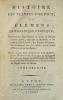
EDITION ORIGINALE. Né et mort à Lyon, Jean-Emmanuel Gilibert (1741-1814) fut à la fois médecin, botaniste célèbre, philosophe, pédagogue et homme politique. Comme scientifique, il fut formé par Boissier de Sauvages à l'école des observations rigoureuses et méthodiques, ce qui lui permit de participer utilement aux expériences de Mesmer à Lyon et d'admettre l'existence du fluide magnétique. Révolutionnaire lucide, franc-maçon militant, il fut élu maire de Lyon en 1793, mais, après le siège de Lyon, il tenta de se suicider puis vécut dans la clandestinité pendant un an et demi. A son retour, il reprit ses activités scientifiques, préserva des bibliothèques, des collections et du matériel pédagogique de proscrits, organisa un jardin botanique et contribua très activement à la création de l'Ecole Centrale du Rhône ; il a laissé de nombreux ouvrages aujourd'hui encore estimés.Les cartonnages sont défraichis avec des usures aux coins et coiffes, la couleur est passé mais ils sont bien solides et absolument manipulables ; petite galerie de ver à deux endroits, en marge de quelques cahiers du Tome I avec une très petite atteinte insignifiante au texte, sinon bon exemplaire de cet ouvrage tout à fait intéressant.
Les Prisonniers de Cabrera. Mémoires d'un conscrit de 1808. Recueillis et publiés par Ph. Gille. Deuxième édition
Paris, Victor Havard, 1892 in-12, 298 pp., 1 vue en couleurs, demi-toile verte (reliure de l'époque). Dos décoloré. Coins usés. Manque à la coiffe supérieure. Qqs rousseurs. Charnières internes fendues. Cachet (annulé).
Tulard, 626. "Ce fourrier d'une unité de voltigeurs a confié ses souvenirs de captivité à son fils le critique Philippe Gille". - - VENTE PAR CORRESPONDANCE UNIQUEMENT - LIEN DE PAIEMENT, NOUS CONSULTER.
Les Prisonniers de Cabrera. Mémoires d'un conscrit de 1808. Recueillis et publiés par Ph. Gille. Deuxième édition
Paris, Victor Havard, 1892 in-12, 298 pp., 1 vue en couleurs, demi-chagrin brun, dos à nerfs orné de guirlandes dorées, couverture conservée (reliure postérieure). Rousseurs.
Tulard, 626. "Ce fourrier d'une unité de voltigeurs a confié ses souvenirs de captivité à son fils le critique Philippe Gille". - - VENTE PAR CORRESPONDANCE UNIQUEMENT - LIEN DE PAIEMENT, NOUS CONSULTER.
Les Prisonniers de Cabrera. Mémoires d'un conscrit de 1808. Recueillis et publiés par Ph. Gille. Troisième édition
Paris, Victor Havard, 1892 in-12, 298 pp., 1 vue en couleurs, demi-percaline bordeaux, dos orné d'un fleuron doré (reliure de l'époque). Papier jauni. Annotations au crayon dans les marges. Cachet Mortemer.
Tulard, 626. "Ce fourrier d'une unité de voltigeurs a confié ses souvenirs de captivité à son fils le critique Philippe Gille". - - VENTE PAR CORRESPONDANCE UNIQUEMENT - LIEN DE PAIEMENT, NOUS CONSULTER.
Les Prisonniers de Cabrera. Mémoires d'un conscrit de 1808. Recueillis et publiés par Ph. Gille. Deuxième édition
Paris, Victor Havard, 1892 in-12, 298 pp., 1 vue en couleurs, demi-basane aubergine, dos lisse, filets dorés (reliure de l'époque). Dos passé. Coupes un peu usées. Envoi dont le nom du destinataire a été gratté.
Tulard, 626. "Ce fourrier d'une unité de voltigeurs a confié ses souvenirs de captivité à son fils le critique Philippe Gille". - - VENTE PAR CORRESPONDANCE UNIQUEMENT - LIEN DE PAIEMENT, NOUS CONSULTER.
Les Prisonniers de Cabrera. Mémoires d'un conscrit de 1808. Recueillis et publiés par Ph. Gille. Deuxième édition
Paris, Victor Havard, 1892 in-12, 298 pp., 1 vue en couleurs, demi-chagrin vert, dos à nerfs orné, couverture conservée (reliure postérieure). Papier bruni. Dos passé.
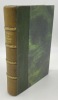
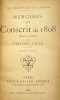
Tulard, 626. "Ce fourrier d'une unité de voltigeurs a confié ses souvenirs de captivité à son fils le critique Philippe Gille". - - VENTE PAR CORRESPONDANCE UNIQUEMENT - LIEN DE PAIEMENT, NOUS CONSULTER.
Les Prisonniers de Cabrera. Mémoires d'un conscrit de 1808. Recueillis et publiés par Ph. Gille. Deuxième édition
Paris, Victor Havard, 1892 in-12, 298 pp., 1 vue en couleurs, percaline grenat maroquiné (reliure postérieure). Papier bruni. Dos et mors un peu frottés.
Tulard, 626. "Ce fourrier d'une unité de voltigeurs a confié ses souvenirs de captivité à son fils le critique Philippe Gille". - - VENTE PAR CORRESPONDANCE UNIQUEMENT - LIEN DE PAIEMENT, NOUS CONSULTER.
Les Prisonniers de Cabrera. Mémoires d'un conscrit de 1808. Recueillis et publiés par Ph. Gille. Deuxième édition
Paris, Victor Havard, 1892 in-12, 298 pp., 1 vue en couleurs, demi-chagrin bleu nuit, dos à nerfs, couv. cons. (reliure postérieure).
Tulard, 626. "Ce fourrier d'une unité de voltigeurs a confié ses souvenirs de captivité à son fils le critique Philippe Gille". - - VENTE PAR CORRESPONDANCE UNIQUEMENT - LIEN DE PAIEMENT, NOUS CONSULTER.
Histoire artistique des ordres mendiants - Etude sur l'art religieux en Europe du XIIIe au XVIIe siècles
Paris, Laurens 1912 [viii +] 376pp.+ 12 planches en phototypie, br.(réparé), 25cm., intérieur en bel état
Par mets et par vins. Voyages et gastronomie en Europe (16e - 18e siècle) suivi d'une série de recettes anciennes
Coll. "Bibliothèque historique", Paris, éd. Payot, 3 octobre 1985, EDITION ORIGINALE, in-8, cartonnage souple, couv. ill. coul. éd., 235 - (5) pp., bibliographie, notes, table des matières, "Autrefois, voyager entraînait bien des risques. Mais l'étape, elle non plus, n'était pas de tout repos et le voyageur pouvait passer sans transition de ripailles en gargotes. Certains de ces voyageurs, français, allemands, anglais ou italiens, nous ont laissé le récit de leurs périples où ils décrivent ce qui les avait frappés en terre étrangère, réservant quelques lignes, voire un chapitre entier, aux tribulations des étapes et aux repas qui y avaient été servis. Ces notations sur l'alimentation n'étaient pas toujours des plus amènes, car chacun avait son goût dans l'Europe d'alors, et les Français plus que les autres. Les récits de ces voyageurs nous renseignent sur les moeurs alimentaires, les pratiques sociales et les goûts des mangeurs de leur temps. Philippe Gillet achève son voyage". Pas courant Très bon état
Histoire de la Suisse.
Paris, P.U.F. , collection Que sais-je ? numéro 140, 1964, in-12 broché, 128 pp. Epuisé. Bon état.
La Réforme et le livre. L’Europe de l’imprimé (1517-v.1570). Histoire.
Paris, Les Editions du Cerf, 1990, in-8vo, 531 p., ill. n./b., brochure originale.
(SLACES, NVVA)
Phone number : 41 (0)26 3223808

