 Write to the booksellers
-
Type
Art print (1)
Book (6705)
Disk (1)
Engraving (72)
Magazine (370)
Maps (409)
Music sheets (1)
Old papers (1)
Photographs (11)
Posters (1)
-
Latest
Last 24h (7)
Last 3 days (1)
Last month (204)
Last week (2)
-
Language
Dutch (9)
English (3)
French (7556)
Italian (1)
Latin (1)
Portuguese (1)
Spanish (1)
-
Century
16th (49)
17th (103)
18th (261)
19th (690)
20th (2296)
21st (587)
-
Countries
Belgium (1021)
Canada (4)
China (2)
Côte d'Ivoire (2)
France (6140)
Netherlands (1)
Switzerland (402)
-
Syndicate
ALAC (4)
CLAM (15)
CLAQ (1)
ILAB (3069)
NVVA (284)
SLACES (284)
SLAM (2751)
Histoire du continent européen de 1850 à la fin du XXe siècle.
1998 Paris, Grand Livre du Mois, 1998, grand in 8°, reliure souple illustrée de l'éditeur, 571 pages.
...................... Photos sur demande ...................


Phone number : 04 77 32 63 69
Histoire du continent européen, de 1850 à la fin du XXe siècle.
Seuil Seuil, 1998, 563 p., broché, avec un envoi des auteurs, coins des plats cornés, une gommette sur le second plat, bon état pour le reste et intérieur propre.
Merci de nous contacter à l'avance si vous souhaitez consulter une référence au sein de notre librairie.
Histoire du continent européen, de 1850 à la fin du XXe siècle.
Seuil Seuil, 1998, 563 p., broché, bon état.
Merci de nous contacter à l'avance si vous souhaitez consulter une référence au sein de notre librairie.
Questions italiennes. Voyage. Histoire. Politique
Paris, Lévy Frères, 1860 in-12, XXI-400 pp., demi-veau caramel, dos à nerfs orné de filets dorés (reliure de l'époque). Qqs rousseurs éparses. Envoi à M. Mercier de Lacombe.
- - VENTE PAR CORRESPONDANCE UNIQUEMENT - LIEN DE PAIEMENT, NOUS CONSULTER.
[COPENHAGUE] La Bourse et le Palais de Christiansborg à Copenhague.
[1842-1856]. 312 x 404 mm.
Belle vue de la ville de Copenhague, dessinée par Auguste Mayer et lithographiée en deux tons par Benoist, issue des Voyages en Scandinavie, en Laponie, au Spitzberg, et aux Îles Féroé. Bel exemplaire.
![[COPENHAGUE] La Bourse et le Palais de Christiansborg à Copenhague.. GAIMARD (Joseph-Paul) & MAYER (Auguste).](https://static.livre-rare-book.com/pictures/LBW/lbw-4934_1.jpg?w=830&h=600)
![[COPENHAGUE] La Bourse et le Palais de Christiansborg à Copenhague.. GAIMARD (Joseph-Paul) & MAYER (Auguste).](https://static.livre-rare-book.com/pictures/LBW/lbw-4934_1_thumb.jpg)
[STOCKHOLM] Stockholm. 1ère vue en panorama, prise sur le Melar.
[1842-1856]. 312 x 400 mm.
Belle vue de la ville de Stockholm, dessinée par Auguste Mayer et lithographiée en deux tons par Benoist, issue des Voyages en Scandinavie, en Laponie, au Spitzberg, et aux Îles Féroé. Bel exemplaire.
![[STOCKHOLM] Stockholm. 1ère vue en panorama, prise sur le Melar.. GAIMARD (Joseph-Paul);MAYER (Auguste).](https://static.livre-rare-book.com/pictures/LBW/lbw-4883_1.jpg?w=830&h=600)
![[STOCKHOLM] Stockholm. 1ère vue en panorama, prise sur le Melar.. GAIMARD (Joseph-Paul);MAYER (Auguste).](https://static.livre-rare-book.com/pictures/LBW/lbw-4883_1_thumb.jpg)
Alla periferia dell'impero. Il Regno di Napoli nel periodo spagnolo (secc. XVI-XVII) (Biblioteca di cultura storica Band 201)
Einaudi 1997 450 pages 53x610x406cm. 1997. Cartonné jaquette. 450 pages.
très bon état de conservation intérieur propre bonne tenue avec sa jaquette ex-libris sur la page titre
Giorgio Morandi
Tate 2001 144 pages 23 4x1 2x23 4cm. 2001. Broché. 144 pages.
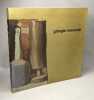
Très bon état de conservation intérieur propre bonne tenue
Angleterre - Collection L'Univers pittoresque ou Histoie et description de tous les peuples, de leurs religions, moeurs, coutumes, industries, & c.
Firmin Didot frères, 1842 - in-8 abondamment ill. ac 3 cartes dépliantes, 136 planches (non rogné)Tomes I, II, III jusquà la famille Hanovre
(ét. d'usage défraîchi)ouvrage très abondamment ill., plaisant en cartonnages d'ép.
Angleterre, Ecosse, Irlande . Tome quatrième
P, F Didot 1844 , in8 1/2 chagrin rouge, dos richement orné, 574pp Contient l' Ecosse et l' Irlande. 51 gravures hors texte. Coiffe supérieure légèrement frottée. Cachet. Langue: Français
Le Refuge italien de Genève aux XVIe et XVIIe siècles.
Genève, Georg, 1881 in-12, 191 pp., broché. Dos abîmé.
- - VENTE PAR CORRESPONDANCE UNIQUEMENT - LIEN DE PAIEMENT, NOUS CONSULTER.
Nouvelles pages d'histoire exacte, soit le procès de Pierre Ameaux. conseiller d'état, capitaine de l'artillerie et gouverneur des munitions de guerre de la République de Genève, et ses incidents (procès du ministre Henri de La Mare, etc), 1546. Extrait pour la première fois des documents et des pièces officielles de l'époque
Genève, 1863 in-4, 116 pp., broché, couverture muette. Dos factice.
- - VENTE PAR CORRESPONDANCE UNIQUEMENT - LIEN DE PAIEMENT, NOUS CONSULTER.
Quelques pages d'histoire exacte. soit Les Procès criminels intentés à Genève, en 1547, pour haute trahison contre No. Ami Perrin, ancien sindic, conseiller et capitaine-général de la République, et contre son accusateur No. Laurent Maigret dit le Magnifique, réfugié français, du Conseil des LX et de celui des CC (agent secret et espion du Roi de France, à Genève et auprès des ligues suisses)
Genève, s.n., 1862 in-4, 135 pp., coupure de presse contenant une nécrologie sur l'auteur contrecollée sur les premières gardes, toile chagrinée noire, dos lisse orné de filets dorés, encadrement de double filet à froid sur les plats, tranches mouchetées (reliure de l'époque). Manque au dos, coins abîmés.
Rare. Fils de Jacques-Augustin Galiffe, John-Barthélémy Galiffe (1818-1890) fut un historien spécialisé dans l'histoire genevoise. Il occupa la chaire d'histoire nationale à l'Académie de Genève de 1861 à 1865, mais ses travaux sont peu connus en-dehors du canton lui-même.Geisendorf, 3416. - - VENTE PAR CORRESPONDANCE UNIQUEMENT - LIEN DE PAIEMENT, NOUS CONSULTER.
Les Pièces du procès de Galilée. Précédées d'un avant-propos. Ouvrage dédié à S.G. Mgr de La Tour d'Auvergne, archevêque de Bourges, par Henri de l'Epinois
Rome-Paris, Victor Palmé, 1877 in-8, [4]-XXIV-143 pp., avec 3 fac-similés dépliants hors-texte, broché. Dos défraîchi.
Précieuse publication effectuée d'après les pièces conservées aux Archives du Vatican. Elles n'avaient réintégré que depuis peu (transféré de Rome à Paris sous Napoléon avec le reste des Archives pontificales, il ne fut restitué - et de très mauvaise grâce - qu'en 1846, à la suite d'itératives réclamations). Copié un peu à la hâte sous la direction du célèbre Père Theiner, le dossier connut une première publication en juillet 1867 dans la Revue des questions historiques, mais il faut préférer la version sous forme de livre qui intègre les corrections devenues nécessaires. Il s'agit évidemment de la source primaire sur le fameux procès de 1633, autour duquel continuent de se propager légendes et contre-vérités, surtout quand on ignore le droit canonique et qu'on veut à tout prix en donner une lecture idéologique. - - VENTE PAR CORRESPONDANCE UNIQUEMENT - LIEN DE PAIEMENT, NOUS CONSULTER.
L'ARCHITECTURE RELIGIEUSE EN HONGRIE DU XIè AU XIIIè SIECLE
P Leroux 1929, in4 br,300pp 161 illustrations,3 cartes, 1 tableau dépliant Langue: Français
Gabio antica città di Sabina. scoperta ove è ora Torri ovvero le grotte di Torri. Discorso in cui si ragiona ancora de SS. martiri Getulio, e Giacinto con varie notizie di alcuni luoghi circonvicini
Rome, Ottavio Puccinelli, 1757 in-4, XVI-196 pp., avec une carte dépliante, index, vélin rigide, dos lisse, pièce de titre crème, tranches mouchetées de rouge (reliure de l'époque). Bon exemplaire.
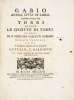
Unique édition de cette tentative de localiser l'antique cité de Gabii, appartenant à la Ligue Latine, et où, selon la légende, auraient été élevés Romulus et Rémus. Malheureusement, son identification avec la ville de Torri en Sabine fut largement controuvée (on la situe maintenant au km 2 de la Via Prenestina nova, vers l'Anio.)Paolo Filippo (en religion Pierluigi) Galletti (1724-1790) entra dans la Congrégation du Mont-Cassin en 1772 et fut bibliothécaire de l'abbaye de Sainte-Marie de Florence. - - VENTE PAR CORRESPONDANCE UNIQUEMENT - LIEN DE PAIEMENT, NOUS CONSULTER.

Biographie des ministres français. depuis juillet 1789 jusqu'à ce jour. Édition faite sur celle de Paris, corrigée et augmentée de 28 articles nouveaux et de notes, par plusieurs hommes de lettres, belges et étrangers
Bruxelles, H. Tarlier & Grignon, 1826 in-8, [4]-VIII-316 pp., bradel demi-toile chataîgne, dos lisse orné d'un fleuron doré (reliure postérieure). Nombreuses rousseurs.
- - VENTE PAR CORRESPONDANCE UNIQUEMENT - LIEN DE PAIEMENT, NOUS CONSULTER.
Les Armées françaises en Italie. 1494-1849
Paris, Librairie nouvelle, A. Bourdilliat, 1859 in-12, [2] ff. n. ch., 423 pp., demi-chagrin vert, dos à nerfs orné de filets à froid et de fleurons dorés, double filet à froid sur les plats (reliure de l'époque).
Conspectus de toutes les opérations menées par la France dans la Péninsule, composé à l'occasion de la récente intervention de Napoléon III dans le conflit austro-sarde.Napoléon Gallois (1815-1874), fils de Léonard Gallois, fut un publiciste profondément nourri d'idées libérales et du culte de l'Empereur ; ses écrits sont fort nombreux. - - VENTE PAR CORRESPONDANCE UNIQUEMENT - LIEN DE PAIEMENT, NOUS CONSULTER.
Les Fondements du XXIe siècle : Réflexions pour un renouveau européen (2 volumes)
Editions Roudil Broché 1992 Deux volumes in-8 (18 x 24 cm), brochés, 1288 pages (pagination continue sur les 2 tomes) ; quelques petits froissements et marques d'usage sur les plats, un coin corné, par ailleurs bon état général. Livraison a domicile (La Poste) ou en Mondial Relay sur simple demande.
[FLORENCE] Veduta del Duomo di Firenze.
circa 1830 114 x 190 mm.
Belle estampe gravée à l'aquatinte figurant le Dôme de Florence, issue des Viaggi in Italia de Francesco Gandini. Bel exemplaire.
[FLORENCE] Veduta della piazza della SS. Annunziata in Firenze.
circa 1830 113 x 189 mm.
Belle estampe gravée à l'aquatinte figurant la place de la basilique Santissima Annunziata, issue des Viaggi in Italia de Francesco Gandini. Bel exemplaire.
[FLORENCE] Veduta della piazza di S. Trinità in Firenze.
circa 1830 113 x 189 mm.
Belle estampe gravée à l'aquatinte figurant la place de la Sainte Trinité à Florence, issue des Viaggi in Italia de Francesco Gandini. Bel exemplaire.
[FLORENCE] Veduta del ponte S. Trinità in Firenze.
circa 1830 114 x 191 mm.
Belle estampe gravée à l'aquatinte figurant le pont de la Sainte Trinité à Florence, issue des Viaggi in Italia de Francesco Gandini. Bel exemplaire.
[FLORENCE] Veduta generale della città di Firenze.
circa 1830 121 x 194 mm.
Belle estampe gravée à l'aquatinte figurant une vue générale de Florence, issue des Viaggi in Italia de Francesco Gandini. Mouillure claire dans le coin inférieur gauche.
![[FLORENCE] Veduta generale della città di Firenze.. GANDINI (Francesco);](https://static.livre-rare-book.com/pictures/LBW/imglbw02e49_1.jpg?w=830&h=600)
![[FLORENCE] Veduta generale della città di Firenze.. GANDINI (Francesco);](https://static.livre-rare-book.com/pictures/LBW/imglbw02e49_1_thumb.jpg)

