Write to the booksellers
-
Type
Autographs (3)
Books (26319)
Engravings (8)
Magazines (130)
Maps (19)
Music sheets (41)
Old papers (5)
Photographs (8)
Postcards (3)
Posters (1)
Public sales (1)
-
Latest
Last 24h (157)
Last 3 days (18)
Last month (324)
Last week (2620)
-
Language
Czech (1)
Dutch (1)
English (23)
French (26506)
German (3)
Italian (1)
Latin (1)
Spanish (2)
-
Century
15th (1)
16th (8)
17th (78)
18th (514)
19th (4181)
20th (11032)
21st (1561)
-
Countries
Belgium (403)
Canada (42)
Côte d’Ivoire (14)
Denmark (754)
France (21055)
Germany (206)
Greece (4)
Italy (1)
Netherlands (3)
Switzerland (4056)
-
Syndicate
ALAC (42)
CLAM (5)
CLAQ (36)
CNE (17)
ILAB (13738)
NVVA (313)
SLACES (310)
SLAM (12515)
SNCAO (9)
Voyages en Afrique et en Amérique au 18è siècle, par un capitaine de vaisseau natif de Gand
Alost, J. Van Branteghem, s.d. (vers 1890). Plaquette in/8 brochée, couverture imprimée, 27 pages. Manques à la couverture fragile.
Opuscule publié au bénéfice de l’oeuvre antiesclavagiste instituée en Belgique. P. I. Lievin Van Alstein (1733 Gand - 1793) était un capitaine négrier naturalisé français. Sa carrière maritime s’étend de 1751 à 1784, au total onze campagnes dont quatre qu’il organisa et commanda. À sa mort on dit que sa fortune est considérable.
Guide des pays de Loire
Ouest France. 1978. In-8. Relié. Bon état, Couv. convenable, Dos satisfaisant, Intérieur frais. 332 pages augmentées de nombreuses photos en noir et blanc dans et hors texte.. . . . Classification Dewey : 910.4-Voyages

Classification Dewey : 910.4-Voyages


Anecdotes et portraits, suivis de Un Voyage en Russie et de Maximes sur un art de vivre
Livre club du libraire Cartonné sous rhodoïd 1964 In-8 (13,8 x 20,5 cm), cartonné sous rhodoïd, 267 pages ; petites déchirures avec et sans manque sur les bords du rhodoïd, intérieur légèrement bruni, par ailleurs bon état. Livraison a domicile (La Poste) ou en Mondial Relay sur simple demande.
Biofeedback
1979 - broché - Editions Denoël - Collection Présence du futur, N° 289 - 1979 - In-12 (format poche) broché - 218 pages

Bon état - Légers plis au dos
Яблоня / Yablonya [Apple Tree] (Russian edition)
Moscou. Leningrad. La maison d'édition d'État de la littérature. 1955. 168 p. Couverture: Couverture souple; Format: Petit format. — 1955. 168 pp. Language: Russian. Condition: good. Defects: tears. The photos show the actual copy offered. Ships from Ukraine by Nova Post with tracking after receipt of payment (bank transfer or PayPal); delivery time 12–28 business days including customs clearance. Shipping for this book (up to 1 kg): Netherlands €24.70, Belgium €29.60, Germany €19.90, France €29.10, Austria €29.10, Switzerland €46.00; other countries on request. The exact amount is confirmed when we accept your order. The parcel is sent from outside the EU/UK/Switzerland. Import VAT on books (e.g. Netherlands 9 %, Germany 7 %, Belgium 6 %, France 5.5 %, Switzerland 2.6 %, UK 0 %) and a customs handling fee of the carrier may be charged to the buyer on delivery; they are not included in the price. Consumers in the EU have the statutory 14-day right of withdrawal (see the seller terms). If the book does not match the description or is damaged in transit, please contact us right after receipt.
Israël Guides Marcus Sommaire: La Terre de l'émotion promise, un pays nourri d'histoire, L'état d'Israël, Une terre de religions, Le centre d'Israël, vers la mer Morte, Le Néguev...
Editions marcus. 1999. In-12. Broché. Bon état, Couv. convenable, Dos satisfaisant, Intérieur frais. 92 pages augmentées de quelques gravures en noir et blanc dans texte.. . . . Classification Dewey : 910-Géographie générale. Voyages
Sommaire: La Terre de l'émotion promise, un pays nourri d'histoire, L'état d'Israël, Une terre de religions, Le centre d'Israël, vers la mer Morte, Le Néguev... Classification Dewey : 910-Géographie générale. Voyages
Voyage au bout du rêve ; La vie privée d'une infirmière
HARLEQUIN 1995 collection Série blanche. 1995. L'ouvrage regroupe deux romans sentimentaux de la collection Harlequin Série Blanche : 'Voyage au bout du rêve' de Lilian Darcy et 'La Vie privée d'une infirmière' de Josie Metcalfe. Le second récit suit Lauren une infirmière qui croit reconnaître un ancien patient parmi les passagers d'un avion à destination de l'Espagne


Bom estado
Carta Geografica e Postale del Regno Lombardo-Veneto compilata sulle migliori Carte generali e provinciali esistenti designata dal Geometra, Rettificatore Domenico Lillie, Incisa sotto la direzione dell I. R… Giovanni Brenna, da Guiseppe Pezze.
Milan, Genevresi, 1855. Carte de 46 x 30 cm pliée et toilée sous étui avec pièce de titre imprimée.
[LOMBARDIE-VENETIE (Royaume de)]
L’illustration Année 1860
L’illustration Année 1860 Tomes XXXV et Tome XXXVI en un volume in folio demi-cuir vert titre filets dorés. (Poids plus de 4kg) Tome XXXV faux titre, titre illustré Janvier à Juin n° 880 du 7 janvier au n° 905 du 30 juin.. Chaque numéro de 16 pages, texte sur trois colonnes. 428 pages illustrées, dont humour par CHAM et BERTALL complet de la table alphabétique des articles et de la table alphabétique des gravures, contenus dans le tome XXXV Tome XXXVI faux-titre, titre illustré du n°906 du 7 juillet au n° 31 du 29 décembre 448 pages illustrées, dont humour. Complet de la table alphabétique des articles et de la table alphabétique des gravures, contenus dans le Tome XXXVI .Articles sur la Chine pages 18 42 159 196 262 283 362 409 411 427. Au tome XXXV, page 15 : Une ascension au Mont Blanc, avec illustrations d’après une photo de BISSON Frères La vallée de Chamouni ; Tome XXXVI, pages 177 180/181 napoléon et l’Impératrice en Savoie. Illustrations/ mer de glace etc. Couverture frottée avec un manque coiffe supérieure gauche renforcée ; Une déchirure réparée page 295 au tome XXXVI. Bon état intérieur, très nombreuses gravures par les meilleurs artistes .


Revue l'Illustration - actualités - politique - voyages - artsvol 11 - Mars 1848 à Août 1848
1 vol in-4 - 1848 ( du samedi 4 mars 1848 au samedi 26 août 1848 ) - demi basane brun foncé - filets dorés
Bon exemplaire sans traces de pliure de livraison mais avec des traces de pliures sir les pages de garde - reliure bien compacte - coins inférieurs légèrement écrasés
Le Voyage du Parnasse.
A Rotterdam, chez Fristch & Bohm, 1716. In-12 de (4)-317-(1) pp., veau glacé, dos orné à nerfs, double filet doré sur les plats, pièce d'armes au centre, tranches dorées (reliure de l'époque).


Édition originale. Voyage allégorique dans la République des lettres ; satire, en prose et en vers, visant La Motte, Saurin et Fontenelle.Bel exemplaire aux armes de Paulin Pronde de Guermantes (1650-1723), conseiller secrétaire du roi, président de la Chambre des comptes de Paris.Olivier-Hermal-Roton, planche 1951, fer n°2.
Descriptio orbis & omnium ejus rerumpublicarum. In qua praecipua omnium regnorum & rerumpublicarum. Ordine & methodice pertractantur quorum seriem versa oftendit pagina.
Amsterdam, Jacob de Zetter, 1669. 8°. (16), 1156, (12) p. With engr. title by Johann de Meurs. Contemp. vellum.

Rare edition of 1669 of this very popular description of the world by L. de Linda (1625-1660). After it appeared first in 1655, it was soon re-published and also translated into German and Italian. Particularly in Italy it gained fame proofed by four editions published between 1656 and 1674. The text is largely taken from Pierre d'Avity's "Les empires, royaumes, estats ... et principautez du monde", and the last chapter on "Indiae occidentalis" is from Johann de Laet's "Nieuwe wereld". - Waterstained and soiled on margins at the beginning and the end, few quires lightly browned, short wormholes between p. 923 and 960 on head of inner margin (not affecting text), endpapers heavily soiled and stained.
Le Monde vu de haut. D'Amérique en Chine par le cercle polaire. Avec 2 photographies et 20 cartes établies par Charles Lindbergh. Adaptation de l’anglais par Hervé Lauwick. Collection La Fayette.
Paris, Librairie Plon, Les Petits-Fils de Plon et Nourrit 1936, 180x115mm, frontispice, 267pages, broché. Bon état.

avec la carte dépliante en fin de l’ouvrage, Pour un paiement via PayPal, veuillez nous en faire la demande et nous vous enverrons une facture PayPal. Envoi groupé : les frais de port sont calculés sur le poids total de la commande ; chaque livre supplémentaire coûte donc beaucoup moins cher à expédier. Commandez plusieurs livres et économisez sur le port ! Combined shipping: postage is charged on the total weight of your order, so each additional book ships at a reduced rate. Order several books from us and save on postage ! Envois Europe : Droits et taxes inclus - aucun frais à la livraison Shipments to Europe: Duties and taxes included - no delivery charges.
Шахматы на Руси / Shakhmaty na Rusi [Chess in Russ] (Russian edition)
Académie des sciences de l'URSS. Série 'De l'histoire de la culture mondiale'. Deuxième édition, complétée et révisée. Moscou Science 1975. 208 p. Couverture: Couverture souple; Format: Format standard. L'histoire des échecs de la Russie antique recèle de nombreux mystères. D'où vient ce jeu en Russie - de l'Est ou de l'Ouest? Quand est-il apparu pour la première fois parmi les Slaves de l'Est? À quoi ressemblaient les anciennes figures d'échecs russes? Le livre du candidat aux sciences historiques I.M. Linder répond à ces questions et à bien d'autres. La deuxième édition de l'œuvre, publiée 11 ans après la première, a été considérablement remaniée et complétée par les matériaux des dernières découvertes archéologiques. La typologie des échecs XI-XVII siècles, développée pour la première fois par l'auteur, est présentée différemment des problèmes d'origine des échecs, ainsi que des questions de la relation entre la culture des échecs de la Russie et des États slaves voisins. Le matériel illustratif a été mis à jour et élargi. Poids du livre 170 gr. — Moscow: Nauka, 1975. 208 pp. 2nd edition. Language: Russian. Condition: good. Defects: rubbing (cover, edges). The photos show the actual copy offered. Ships from Ukraine by Nova Post with tracking after receipt of payment (bank transfer or PayPal); delivery time 12–28 business days including customs clearance. Shipping for this book (up to 1 kg): Netherlands €24.70, Belgium €29.60, Germany €19.90, France €29.10, Austria €29.10, Switzerland €46.00; other countries on request. The exact amount is confirmed when we accept your order. The parcel is sent from outside the EU/UK/Switzerland. Import VAT on books (e.g. Netherlands 9 %, Germany 7 %, Belgium 6 %, France 5.5 %, Switzerland 2.6 %, UK 0 %) and a customs handling fee of the carrier may be charged to the buyer on delivery; they are not included in the price. Consumers in the EU have the statutory 14-day right of withdrawal (see the seller terms). If the book does not match the description or is damaged in transit, please contact us right after receipt.
У истоков Шахматной культуры / Linder I.M. Aux origines de la culture d'échecs / U istokov Shakhmatnoy kultury [At the origins of chess culture] (Russian edition)
Avant-propos de l'ancien champion du monde d'échecs V. Smyslov. Conception de V. Semenov. Moscou Connaissance. 1967. 352 p. Il. Reliure solide, Format ordinaire. Le livre montre les nombreux fils liés au développement et aux succès de l'art soviétique des échecs avec son passé lointain et glorieux. Le livre sera utile à tous ceux qui apprécient les échecs et s'intéressent à leur histoire. — Moscow: Znanie, 1967. 352 pp. Language: Russian. Condition: very good. Defects: dedication. Further condition notes by the seller (original wording, transliterated): 'Yest darstvennaya predydushchego vladeltsa'. The photos show the actual copy offered. Ships from Ukraine by Nova Post with tracking after receipt of payment (bank transfer or PayPal); delivery time 12–28 business days including customs clearance. Shipping for this book (up to 1 kg): Netherlands €24.70, Belgium €29.60, Germany €19.90, France €29.10, Austria €29.10, Switzerland €46.00; other countries on request. The exact amount is confirmed when we accept your order. The parcel is sent from outside the EU/UK/Switzerland. Import VAT on books (e.g. Netherlands 9 %, Germany 7 %, Belgium 6 %, France 5.5 %, Switzerland 2.6 %, UK 0 %) and a customs handling fee of the carrier may be charged to the buyer on delivery; they are not included in the price. Consumers in the EU have the statutory 14-day right of withdrawal (see the seller terms). If the book does not match the description or is damaged in transit, please contact us right after receipt.
Шахматы на Руси / Linder I. M. échecs en Russie / Shakhmaty na Rusi [Chess in Russ] (Russian edition)
À l'heure actuelle, il est inutile de prouver que les échecs ne sont pas seulement un jeu, mais une région de la culture du peuple. Et pourtant, la culture des échecs reste l'une des pages les moins étudiées de l'histoire ancienne de notre pays. C'est peut-être pour cette raison que l'art des échecs n'a pas été abordé dans le livre de B.D. Grekov 'Culture de Kiev Ruoi' (1944), ni dans l'histoire en deux volumes de la culture de l'ancienne Russie (1948-1951), ni enfin dans l'histoire en plusieurs volumes de l'art russe (1953-1959). Cependant, l'inclusion dans l'histoire de la culture de l'ancienne Russie d'une section spéciale consacrée aux échecs rendrait ces travaux plus complets et révélerait un autre aspect extrêmement intéressant de la vie du peuple. Le simple fait que les échecs se soient répandus en Russie il y a plus de mille ans, qu'ils occupent depuis et pendant de nombreuses générations l'esprit et l'imagination des gens de toutes les couches de la société, mérite un examen attentif et des recherches. — Language: Russian. Condition: not graded in detail, please see the photos. The photos show the actual copy offered. Ships from Ukraine by Nova Post with tracking after receipt of payment (bank transfer or PayPal); delivery time 12–28 business days including customs clearance. We ship to all 214 countries served by Nova Post. Shipping for this book (up to 1 kg): Germany €19.60, France €28.60, Netherlands €24.30, Belgium €29.10, Austria €28.60, Switzerland €45.20, United Kingdom €28.60, USA €19.40; other countries €11.20–€45.20. The exact amount is confirmed when we accept your order. The parcel is sent from outside the EU/UK/Switzerland. Import VAT on books (e.g. Netherlands 9 %, Germany 7 %, Belgium 6 %, France 5.5 %, Switzerland 2.6 %, UK 0 %) and a customs handling fee of the carrier may be charged to the buyer on delivery; they are not included in the price. Consumers in the EU have the statutory 14-day right of withdrawal (see the seller terms). If the book does not match the description or is damaged in transit, please contact us right after receipt.
Шахматы на Руси / Shakhmaty na Rusi [Chess in Russ] (Russian edition)
Édition 2, complétée et retravaillée. Série: De l'histoire de la culture mondiale. Moscou Science. 1975. 208 p. il. La reliure molle. le format habituel. Ce travail est la première expérience de l'étude complexe de l'histoire ancienne des échecs en Russie. En plus des données sur les nouvelles découvertes archéologiques dans le livre, il y a aussi des publications de sources écrites. L'auteur a utilisé le fichier de l'ancienne langue russe (XIII-XVII siècles) de l'Institut de la langue russe de l'Académie des sciences de l'URSS, des manuscrits anciens et des livres conservés à la Chambre des armes de Moscou, la bibliothèque d'État de l'URSS. Lénine à Moscou, la bibliothèque publique d'Etat de Moscou E. Saltykova-Chedrine à Leningrad, a pris connaissance d'un certain nombre de sources dans les archives d'Etat central des actes anciens à Moscou. — Moscow: Nauka, 1975. 208 pp. Language: Russian. Condition: good. The photos show the actual copy offered. Ships from Ukraine by Nova Post with tracking after receipt of payment (bank transfer or PayPal); delivery time 12–28 business days including customs clearance. Shipping for this book (up to 1 kg): Netherlands €24.70, Belgium €29.60, Germany €19.90, France €29.10, Austria €29.10, Switzerland €46.00; other countries on request. The exact amount is confirmed when we accept your order. The parcel is sent from outside the EU/UK/Switzerland. Import VAT on books (e.g. Netherlands 9 %, Germany 7 %, Belgium 6 %, France 5.5 %, Switzerland 2.6 %, UK 0 %) and a customs handling fee of the carrier may be charged to the buyer on delivery; they are not included in the price. Consumers in the EU have the statutory 14-day right of withdrawal (see the seller terms). If the book does not match the description or is damaged in transit, please contact us right after receipt.
La chasse prehistorique. Paléolithique - mésolithique - néolithique - age des métaux.
1950 480 p., 143 figs, 24 pls, paperbound.
La France en Afrique
Paris, Direction du Musée des Familles, 1846. In-8, VIII-302 p., demi-percaline gaufrée (rousseurs).


* Voir photographie(s) / See picture(s). * Membre du SLAM et de la LILA / ILAB Member. La librairie est ouverte du lundi au vendredi de 14h à 19h. Merci de nous prévenir avant de passer,certains de nos livres étant entreposés dans une réserve.
Nouvelle - Zélande terre des Maoris.
Paris, Laffont, 1972 ; in-8°, broché, couverture rempliée noire illustrée en couleurs et imprimée en vert ; 299pp.,1p.nch.;
6 feuillets hors texte d'illustrations photographiques en noir, carte à l'intérieur du 1er plat de la couverture et dans le texte.
Skånska Resa, På Höga Öfwerhetens Befallning Förrättad År 1749. Med Rön och Anmärkningar Uti Oeconomien, Naturalier, Antiquiteter, Seder, Lefnads-sätt. Med Tilhörige Figurer.
Stockholm, Lars salvius, 1751. 8vo. In contemporary half calf with four raised bands and gilt lettering to spine. Ex-libris (Thore Virgin) pasted on to pasted down front end-paper and ""Thore Virgin / Stockholm d. 7. dec. 1912."" to upper outer corner of front free end-paper. Title-page with marginal browning, otherwise a fine copy. (10), XIV, 434, (34) pp. + 1 folded map and 6 plates.
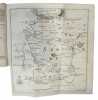
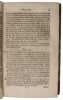
First edition, second issue, here in an interesting interim state with “Gödselen” on p. 26 (indicating the second issue) but with p. 25 misspelled as “52” not called for in neither first nor second issue. “Linnaeus’ research work during his mature years began with trips to various Swedish provinces. By order of the parliament, which wanted an inventory of all the natural resources of the country, during three summers in the 1740’s Linnaeus traveled through selected areas to describe them and to search for dyestuffs, minerals, clay, and other economically useful substances. His reports of these expeditions were published as Ölandska och gothländska resa (1745), Västgöta resa (1747), and Skånska resa (1751), all written in Swedish. Nothing escaped his attention on his travels on horseback—plants and insects, runic stones and other ancient remnants, farmers working in the fields and meadows, the changes in the weather. His prose style was simple and strong, sometimes rising to lyrical outbursts or spiced with effective similes.” (DSB) ""Baron C. Hårleman, who had borne the expenses of Linnaeus's expedition to Skåne, had the chance to see the proofs to at least the beginning of the SKÅNSKA RESA. There he read (on p. 26) with indignation that Linnaeus gave his blessing to the old Swedish custom of cleaning the ground by setting fire to the stubble (""svedjande"" - a practice that he himself had condemned in print). Linnaeus decided to have a new version printed in which the offended passage would be replaced by some innocuos observation on manure (""Gödselen""). A fold was therefore printed as part of the final sheet of the book with an article on ""Gödselen"" instead of the article on ""Svedjor"". The binder was supposed to cancel the fold with the article on ""Svedjor"" and replace it with the inner fold from the final sheet. In very few copies this was not done."" (Björck & Börjesson Cat. 512). Hulth P. 81.Soulsby 210
Skånska Resa, På Höga Öfwerhetens Befallning Förrättad År 1749. Med Rön och Anmärkningar Uti Oeconomien, Naturalier, Antiquiteter, Seder, Lefnads-sätt. Med Tilhörige Figurer.
Stockholm, Lars salvius, 1751. 8vo. In contemporary half calf with gilt lettering and ornamentation to spine forming 6 compartments. Ex-libris (Thorild Wulff) pasted on to pasted down front end-paper. Leather on spine and hinges a bit brittle, lower 4 cm of front hinge split, otherwise a fine copy. (10), XIV, 434, (34) pp. + 1 folded map and 6 plates.
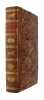
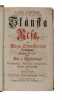
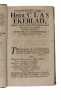
First edition, second issue, with “Gödselen” on p. 26 (indicating the second issue). “Linnaeus’ research work during his mature years began with trips to various Swedish provinces. By order of the parliament, which wanted an inventory of all the natural resources of the country, during three summers in the 1740’s Linnaeus traveled through selected areas to describe them and to search for dyestuffs, minerals, clay, and other economically useful substances. His reports of these expeditions were published as Ölandska och gothländska resa (1745), Västgöta resa (1747), and Skånska resa (1751), all written in Swedish. Nothing escaped his attention on his travels on horseback—plants and insects, runic stones and other ancient remnants, farmers working in the fields and meadows, the changes in the weather. His prose style was simple and strong, sometimes rising to lyrical outbursts or spiced with effective similes.” (DSB)""Baron C. Hårleman, who had borne the expenses of Linnaeus's expedition to Skåne, had the chance to see the proofs to at least the beginning of the SKÅNSKA RESA. There he read (on p. 26) with indignation that Linnaeus gave his blessing to the old Swedish custom of cleaning the ground by setting fire to the stubble (""svedjande"" - a practice that he himself had condemned in print). Linnaeus decided to have a new version printed in which the offended passage would be replaced by some innocuos observation on manure (""Gödselen""). A fold was therefore printed as part of the final sheet of the book with an article on ""Gödselen"" instead of the article on ""Svedjor"". The binder was supposed to cancel the fold with the article on ""Svedjor"" and replace it with the inner fold from the final sheet. In very few copies this was not done."" (Björck & Börjesson Cat. 512). Hulth P. 81.Soulsby 210
Skånska Resa, På Höga Öfwerhetens Befallning Förrättad År 1749. Med Rön och Anmärkningar Uti Oeconomien, Naturalier, Antiquiteter, Seder, Lefnads-sätt. Med Tilhörige Figurer.
Stockholm, Lars Salvius, 1751. 8vo. In contemporary half calf with gilt lettering and ornamentation to spine forming 6 compartments. Ex-libris (Romare) pasted on to pasted down front end-paper. Corner bumped and boards with scratches. Internally brownpotted. (10), XIV, 434, (34) pp. + 1 folded map and 6 plates and numerous woodcuts in text.
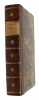
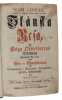
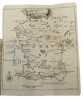
First edition, second issue, with “Gödselen” on p. 26 (indicating the second issue). The present work not only describes his botanical observations but also includes reflections on the region's natural history, culture, and landscape. “Linnaeus’ research work during his mature years began with trips to various Swedish provinces. By order of the parliament, which wanted an inventory of all the natural resources of the country, during three summers in the 1740’s Linnaeus traveled through selected areas to describe them and to search for dyestuffs, minerals, clay, and other economically useful substances. His reports of these expeditions were published as Ölandska och gothländska resa (1745), Västgöta resa (1747), and Skånska resa (1751), all written in Swedish. Nothing escaped his attention on his travels on horseback—plants and insects, runic stones and other ancient remnants, farmers working in the fields and meadows, the changes in the weather. His prose style was simple and strong, sometimes rising to lyrical outbursts or spiced with effective similes.” (DSB)""Baron C. Hårleman, who had borne the expenses of Linnaeus's expedition to Skåne, had the chance to see the proofs to at least the beginning of the SKÅNSKA RESA. There he read (on p. 26) with indignation that Linnaeus gave his blessing to the old Swedish custom of cleaning the ground by setting fire to the stubble (""svedjande"" - a practice that he himself had condemned in print). Linnaeus decided to have a new version printed in which the offended passage would be replaced by some innocuos observation on manure (""Gödselen""). A fold was therefore printed as part of the final sheet of the book with an article on ""Gödselen"" instead of the article on ""Svedjor"". The binder was supposed to cancel the fold with the article on ""Svedjor"" and replace it with the inner fold from the final sheet. In very few copies this was not done."" (Björck & Börjesson Cat. 512). Hulth P. 81.Soulsby 210
Linnés Dalaresa, Iter Dalecarlicum, jämte Utlandsresan, Iter ad exteros, och Bergslagsresan, Iter ad Fodinas.
Stockholm, Hugo Gebers, 1953. Large8vo. In a very nice contemporary (original?) full green calf with crowned super ex-libris to front board. Gilt lettering to spine and gilt ornamentation to boards. Inner gilt dentelles. All edges gilt. Light wear to spine ends and hinges, a nice copy. XVI, 432 pp. + 3 folded maps and 16 plates (on 8 leaves).
Öländska och gothländska resa på riksens högloflige ständers befallning förrättad åhr 1741. Med anmarkningar uti oeconomien, natural-historien, antiquiteter &c. med atskillige figurer (Olandska och Gothlåndska resa). - [LINNÉ'S TRAVELS ON GOTLAND AND ÖLAND]
Stockholm & Upsala, Gottfried Kiesewetter, 1745. 8vo. In contemporary half calf with five raised bands. Wear to extremities. Parts of marbled paper to boards worn off and leather to lower compartment on spine missing. Previous owners names to pasted down front end-paper and leaf with dedication. Internally with light occassional brownspotting, but generally a good copy. (14), 344, (30) pp. + 2 maps and 1 plate.
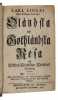
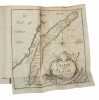
First edition of Linné’s famous account of his travels to Gotland and Öland in which his observations of the flora, fauna, and geological features of the two Swedish islands in the Baltic Sea was first presented. Ten days after Linné was appointed Professor at University of Uppsala, he began his expedition to the island provinces of Öland and Gotland with six students from the university to look for plants useful in medicine. First they travelled to Öland and stayed there until late June, when they sailed to Visby in Gotland. Linné and the students stayed on Gotland for about a month, and then returned to Uppsala. During this expedition, they found 100 previously unrecorded plants. Like his ‘Flora Lapponica’ it contained both zoological and botanical observations as well as observations concerning the culture in Öland and Gotland. Soulsby 202Hulth 44