 Write to the booksellers
-
Type
Book (457)
Disk (1)
Magazine (22)
Music sheets (1)
-
Language
French (477)
Italian (1)
Latin (2)
Russian (1)
-
Century
16th (12)
17th (6)
18th (11)
19th (31)
20th (193)
21st (21)
-
Countries
Belgium (61)
Canada (2)
Denmark (17)
France (343)
Greece (1)
Netherlands (1)
Switzerland (54)
United Kingdom (1)
United States of America (1)
-
Syndicate
ALAC (2)
ILAB (169)
NVVA (12)
SLACES (12)
SLAM (128)
HISTOIRE D' ALLEMAGNE depuis les temps les plus reculés jusqu' à l' année 1838 traduit de l' allemand sur la onzième édition par A. Guinefolle
Paris Debécourt , Delloye , Hachette , Bonnotte 1838 2 vol. in - 8 ( 21,5 x 13,5 cm ) ( poids : 1,3 kg ) Fx. t. , t. , 651 (1) pp. + fx. t. , t. , 707 pp. . Divisé en sept époques , avec Préface du traducteur , Introduction , Errata in fine du vol. I , une Table des matières par vol. . Demi-basane havane . Au dos , nom de l' auteur , titre , tomaison et filets dorés , fers et filets à froid . Plats papier coulé à dominante havane . Gardes papier dominoté vert . Bon état . Rares rousseurs claires . Une mouillure à la Table du vol. I , une mouillure marginale claire aux premiers ff. du vol. II .
Heinrich Friedrich Theodor KOHLRAUSCH ( Landolfshausen 1780 - Hanovre 1867 ) , pédagogue et historien allemand . Professeur , il fut nommé Oberschulrat (directeur des écoles) par le gouvernement de Hanovre et introduisit des réformes privilégiant notamment l' histoire . Son " Histoire d' Allemagne depuis les temps les plus reculés " connut de nombreuses éditions . Dans sa Préface , le traducteur écrit : " L' ouvrage de Kohlrausch est sans contredit le meilleur en ce genre qui ait paru en Allemagne (... ) il est plein de recherches , de science , de clarté , d' intérêt et de nouveauté " .
DE FUNCTIE VAN HET SOLA FIDE.
, Maaseik, J.J. Romen & zonen Roermond, 1961., Gebrocheerd, 150 + 240mm, 135pp. IN PRIMA STAAT ! met stellingen
In de Lutherse belijdenis geschriften. Academisch proefschrift ter verkrijging van de graad van doctor in de godgeleerdheid aan de Katholieke universiteit te Nijmwegen. Op gezag van de rector magnificus Dr. J.H. Terlingen, hoogleraar in de faculteit der letteren, volgens het besluit van de faculteit der godgeleerdheid.In het openbaar te verdedigen op vrijdag 15 december 1961 des namiddags te 4 uur.
Die italienischen literarischen Gegner Luthers
Freiburg im Breisgau, Herder 1912 xv + 714pp., 23cm., text in gotic german, in the series "Erlauterungen und Erganzungen zu Janssens Geschichte des deutschen Volkes herausgegeben von Ludwig Pastor" Band VIII, few stamps, else VG
Opera Omnia a patribus Min. Capuccinis provinciae Venetae e textu originali nunc primum in lucem edita.. Vol.II : Lutheranismi Hypotyposis, pars III: Hypotyposis Polycarpi Laiseri
Patavii [Padua], Ex officina typographica seminarii 1933 Volume II-3 of the critical edition of Lawrence of Brindisi's complete works (1928-1956, 15 vols.), xiv + 436pp.+ frontispiece and 2 plates out of text, 30cm., original softcover, text in Latin, small stamp on title page, pages still uncut, text is clean and bright, good condition, weight: 1.3kg., R119830
Opera Omnia a patribus Min. Capuccinis provinciae Venetae e textu originali nunc primum in lucem edita.. Vol.II : Lutheranismi Hypotyposis, pars II: Hypotyposis Ecclesiae et Doctrinae Lutheranae
Patavii [Padua], Ex officina typographica seminarii 1931 Volume II-2 of the critical edition of Lawrence of Brindisi's complete works (1928-1956, 15 vols.), xviii + 534pp.+ frontispiece and 1 plate out of text, 30cm., original softcover, text in Latin, small stamp on title page, most pages still uncut, text is clean and bright, good condition, weight: 1.5kg., R119832
Martin Luther King
Seuil 2015 In-8 broché 24,1 cm sur 15,4. 384 pages. Bon état d’occasion.
Bon état d’occasion
Les noces de Luther ou la monachopornomachie.
Liseux 1893 Isidore Liseux, 1893, 120 p., demi-reliure, exemplaire numéroté 73/200, cuir et bords des plats frottés, intérieur propre.
Merci de nous contacter à l'avance si vous souhaitez consulter une référence au sein de notre librairie.
Les noces de Luther ou la monachopornomachie.
Liseux 1893 Paris, Isidore Liseux, 1893, XX-120 p., broché, environ 205x135mm, bilingue français-latin, exemplaire numéroté 161/200, des défauts sur la couverture (un peu frottée par endroits, haut du dos émoussés avec petit manque de papier et un accroc restauré, bas du dos légèrement émoussé, dos en partie décollé), page de garde insolée et piquée, sinon intérieur propre.
Merci de nous contacter à l'avance si vous souhaitez consulter une référence au sein de notre librairie.
Justi Lipsi Epistolarum centuria duae ; quarum prior innovata, altera nova. Hic juncta est eiusdem Institutio Epistolica.
Lyon, Q. Hug. A Porta, Fratres de Gabiano (Excudebat Guichardus Jullieron anno 1592), 1592 ; in-8 (164), plein vélin ivoire à recouvrements de l'époque ; (8), 312, (7) index, (1 bl.) ; 34 pp., (1) p., (1 bl.), 2 ff. blancs.
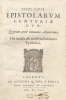
Baudrier, VII-226-227 (les 8 pp. d'index font partie des feuillets liminaires, ici ils sont à la fin. Philologue et humaniste allemand, il suivit les cours de droit de l'illustre Marc-Antoine Muret à Rome, puis revint à Louvain pour y enseigner et voyagea. Converti au lutheranisme, il enseigna à Iena puis Leyde où il abandonna la confession d'Augsbourg pour la religion réformée.Mêlé aux polémiques soulevées par son ouvrage sur la religion unique et la répression des sectaires, il se retira de Hollande, envoya sa démission de l'Université de Leyde et se convertit publiquement au catholicisme et, malgré des offres brillantes qui affluaient de toute l'Europe, il choisit l'Université de Louvain.Sa correspondance, qui était fort étendue et qui concerne de nombreux savants de l'époque, présente un vif intérêt. Le siège du Conseil de l'Union Européenne à Bruxelles porte son nom. Deux minuscules cernes à quelques feuillets et brunissure en haut du second plat de reliure, sinon bel exemplaire en bonne reliure d'époque.


Propos de table.
Bordeaux, Michel Vetiner, 1950 ; in-4, 124 pp., broché, chemise, emboîtage. 52 bois originaux de Claude Durrens. Bon état.
Madame Butterfly d'apr¿s John L. Long et David Belasco drame lyrique en 3 actes de MM. L. Illica et Giacosa. Traduction franºaise de M. Paul Ferrier
G. Ricordi Broch D'occasion tat correct 01/01/1906 71 pages
LA FIN DE LUTHER D' APRES LES DERNIERES RECHERCHES HISTORIQUE.
, Paris/ Bruxelles, V. Retaux/ Societe Belge de Librairie, 1897., Broche, couverture originale en vert, dos endommage, frontispice de Luc Granach, 14,5x23,5cm, 71pp, illustre n/b.
Orne de deux portraits. Premieres remeurs. Sources et documents Protestants et Catholiques. La vetrite. Ecrivains competents qui ont admis les faits enonces par Bozio et Sedulius. Etat mental de Luther pendant ses dernieres anees. Recherches historiques recentes.
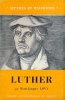
Luther
Puf Paris, PUF, 1964. In-12 broché de 226 pages non coupées. Collection Mythes et religions. Très bon état
Toutes les expéditions sont faites en suivi au-dessus de 25 euros. Expédition quotidienne pour les envois simples, suivis, recommandés ou Colissimo.
Luther. Mythes et Religions.
Paris, Presses Universitaires de France, 1964 12 x 19, 226 pp., broché, bon état
UN DESTIN : MARTIN LUTHER
Un ouvrage de 218 pages, format 145 x 230 mm, broché, publié en 1945, Presses Universitaires de France (avec référence de bibliothèque)
Phone number : 04 74 33 45 19
Artickel Concilion
Les articles de Smalkalde rédigés par Luther en 1536 en vue du concile de Mantoue. “Schmalkaldic Articles are one of the confessions of faith of Lutheranism”. Luther, M. Artickel so da hetten sollen aufs Concilion zu Mantua oder wo es würde seyn, überantwortet werden, von unsers teils wegen. Und was wir annemen oder geben Kündren oder nicht. Fr. M. Luther. Wittemberg, durch H. Lufft, 1538. In-4 de (32) ff. Demi-vélin, dos lisse, pièce de titre de maroquin brun en long. Reliure du XXe siècle. 191 x 151 mm. Rare édition originale des «articles de Smalkalde» rédigés par Luther en 1536 et qui offrent une synthèse de sa doctrine. Graesse, Trésor de livres rares, 306. Les attaques de Luther contre la papauté sont réitérés et virulents. En 1535, de guerre lasse, le pape Paul III propose de réunir un concile. Les protestants de la ligue de Smalkalde réunis en assemblée posent quand même des exigences pour y participer. Ce concile est convoqué à Mantoue pour le mois de mai 1537. Aussitôt Luther compose ce qu’on dénommera plus tard les articles de Smalkalde où il expose les points essentiels de sa doctrine. Le concile sera reporté et n’aura lieu qu’en 1545 dans la ville de Trente. «In 1534 Alessandro Farnese was elected as Pope Paul III with a clear message of internal church reform. To further this mission and to respond to the rise of Protestantism, he called for an ecumenical church council to meet at the Italian city of Mantua in 1537. Given the importance of this council for Christian unity and the future of reformed forms of worship, the elector of Saxony asked Luther to prepare an official statement of doctrine that would both represent his views and indicate where negociation might be possible. Luther agreed, and, with some imput from his Wittenberg colleagues, carefully laid out what he saw as the central pillars of Christian teaching. Yet these doctrinal statements, or articles, were never presented at the council – which was delayed a number of times, finally meeting in Trent beginning in 1545. Instead, they were discussed at a general meeting of the Protestant Schmalkaldic League, although even here the collected princes and theologians declined to affirm them, due mostly to concerns that they were too exclusionary and divisive, especially the statements on the Eucharist and papacy. Luther then published the articles in 1538, adding a preface but leaving their structure and content otherwise intact... As these articles offered a clear and comprehensive summary of Luther’s doctrine, they would be extremely important as a Lutheran confession of faith, and in 1580 would be incorporated into the authoritative collection of fundamental Lutheran documents known as the ‘Book of Concord’…” (The Essential Luther, 23). “Schmalkaldic Articles are one of the confessions of faith of Lutheranism, written by Martin Luther in 1536. The articles were prepared as the result of a bull issued by Pope Paul III calling for a general council of the Roman Catholic Church to deal with the Reformation movement. (The council was actually postponed several times until it met in Trent in 1545.) John Frederick I, Lutheran elector of Saxony, wished to determine what issues could be negotiated with the Roman Catholics and what could not be compromised. He asked Luther to review earlier statements of faith by the reformers to determine what was absolutely essential to the faith. After Luther prepared the articles, he invited several reformers to Wittenberg to discuss them, and after some minor changes eight theologians signed them. They were then sent to the elector in January 1537. In February 1537 the Protestant secular heads of state who were members of the Schmalkaldic League met with several theologians at Schmalkalden to decide how to deal with a council of the Roman Catholic Church. Luther became ill and could not attend, but John Frederick I presented Luther’s articles to the gathering. Because of Luther’s somewhat controversial doctrine of the Lord’s Supper, Philipp Melanchthon urged that the Augsburg Confession and its Apology, previously presented to Emperor Charles V, adequately presented the reformer’s faith and that additional statements should not be added. This decision was adopted, and the Schmalkaldic Articles were not officially accepted. They were, however, circulated and read, and 44 theologians signed them as an expression of their personal faith. Subsequently they were included in the Book of Concord (1580). The Schmalkaldic Articles are divided into three sections. The first discusses the unity of God, the Trinity, the Incarnation, and Christ, and on these subjects Luther believed there was no real controversy between Roman Catholics and Protestants. The second section dealt with Christ and justification by faith. According to Luther, “On this article rests all that we teach and practice against the pope, the devil, and the world.” This section also discusses the mass, monastic orders, and the papacy. The third section discusses 15 articles that could be considered by Roman Catholics and Protestants. It includes such subjects as sin, the Law, repentance, the sacraments, confession, the ministry, and a definition of the church”.
CONFERENCE ENTRE LUTHER ET LE DIABLE RACONTEE PAR LUTHER LUI MEME.
LE SEL DE LA TERRE. 2010. In-8. Broché. Bon état, Couv. convenable, Dos satisfaisant, Intérieur frais. 38 pages agrafées .. . . . Classification Dewey : 215-Science et religion
Classification Dewey : 215-Science et religion
La Conférence entre Luther et le Diable au sujet de la messe.-
Traduction nouvelle en regard du texte latin par Isidore LISEUX. Avec les Remarques et Annotations des Abbés de CORDEMOY et LENGLET-DUFRESNOY. Frontispice gravé à l'eau-forte par J. AMIOT. Paris. Isidore Liseux. 1875. In-12 (99 x 151mm) broché, couverture à rabats en vélin, imprimée en rouge et noir, VIII, 91, (2) pages. Couverture insolée, bel état intérieur. Peu courant.
Voir Caillet, 6880.
La conférence entre Luther et le diable au sujet de la messe
ESR ESR, 2011. In-12 broché de 91 pages. Traces de scotch au verso de la couverture sinon bon état
![La conférence entre Luther et le diable au sujet de la messe. LUTHER ]](https://static.livre-rare-book.com/pictures/MAS/179467_1_thumb.jpg)
Toutes les expéditions sont faites en suivi au-dessus de 25 euros. Expédition quotidienne pour les envois simples, suivis, recommandés ou Colissimo.
LES GRANDS ECRITS REFORMATEURS
Paris, Editions Montaigne, Collection bilingue des classiques allemands, 1955, in-12 broché, 317 pp, contient le texte original et la traduction, nom en page de garde. Coins légèrement frottés, sinon couverture en bon état, intérieur en très bon état
LES GRANDS ECRITS REFORMATEURS - COLLECTION BILINGUE DES CLASSIQUES ETRANGER.
AUBIER. 1944. In-12. Broché. Bon état, Couv. convenable, Dos satisfaisant, Intérieur frais. 317 pages. Texte en français avec traduction en allemand en regard;. . . . Classification Dewey : 410-Linguistique
Classification Dewey : 410-Linguistique
LES GRANDS ECRITS REFORMATEURS. Édition bilingue
A la noblesse chretienne de la nation allemande. La liberte du chretien. Petit format. Couverture souple.317 pages. Texte allemand et français face à face. Bon état. Une expédition par Mondial Relay vous sera proposée Aubier Montaigne. Coll bilingue
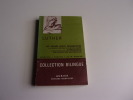
LES GRANDS ESPRITS REFORMATEURS - A LA NOBLESSE CHRETIENNE DE LA NATION ALLEMANDE - LA LIBERTE DU CHRETIEN
AUBIER. 1944. In-12. Broché. Bon état, Couv. convenable, Dos satisfaisant, Non coupé. 317 pages. Texte allemand, traduction francaise en regard. Légères rousseurs sur le 1er plat.. . . . Classification Dewey : 830-Littératures des langues germaniques
Introduction, traduction et notes de Maurice GRAVIER. Classification Dewey : 830-Littératures des langues germaniques

