 Write to the booksellers
-
Type
Artists book (1)
Autograph (4)
Book (9863)
Magazine (15)
-
Latest
Last 24h (1)
Last 3 days (63)
Last month (32)
Last week (20)
-
Language
Dutch (6)
English (1)
French (9872)
Italian (4)
-
Century
16th (2)
17th (3)
18th (9)
19th (173)
20th (1008)
21st (169)
-
Countries
Belgium (652)
Canada (13)
Côte d'Ivoire (10)
France (9164)
Switzerland (44)
-
Syndicate
ALAC (13)
CLAM (11)
CLAQ (3)
ILAB (339)
NVVA (17)
SLACES (17)
SLAM (287)
SNCAO (7)
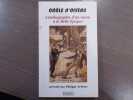
DROLE D'OISEAU. Autobiographie d'un voyou à la Belle Epoque.
Imago Paris 1998 In-8 ( 230 X 140 mm ) de 158 pages, broché sous couverture illustrée. Couverture tachée. Bon exemplaire.
Alastair. Illustrator of Decadence.
London, Thames and Hudson, 1979. In-4 broché, couverture illustrée. Avec 96 illustrations, certaines en couleurs.
Belle documentation.

Berthon & Grasset
Academy Editions Denoël, Londres & Paris 1978 In-8, broché couv. illustrée, illustrations en noir et en couleurs, 144 pp. Etat moyen d’ocasion intérieur bon, couv. abîmée.
Traduit de l’anglais par Alice Bellony-Rewald. Dans cette première étude importante à être publiée sur Berthon et Grasset, Victor Arwas donne un compte rendu détaillé et animé de leur vie et oeuvre et évalue leurs réalisations artistiques. Bon état d’occasion
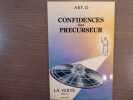
Confidences d'un Précurseur.
Repro Nice 1993 In-8 ( 215 X 140 mm ) de 77 pages, broché sous couverture illustrée. Très bel exemplaire. µµ
Energies Sacrées. Les Runes.
Guy Trédaniel - Editions De La Maisnie Paris 1991 In-4 ( 240 X 170 mn ) de 366 pages, broché sous couverture illustrée. Illustrations dans hors-texte. Bel exemplaire.
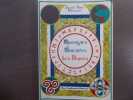
MYTHES, CONTES et LEGENDES
Un ouvrage de 75 pages, format 140 x 190 mm, broché, publié en 1951, Editions du Psyché (Paris), bon état
Suivi de "Le Symbolisme du dragon"
Phone number : 04 74 33 45 19
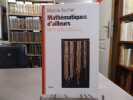
MATHEMATIQUES D'AILLEURS. Nombres, formes et jeux dans les sociétés traditionnelles.
Editions Du Seuil Paris 1998 In-8 ( 240 X 150 mm ) de 280 pages, broché sous couverture illustrée en couleurs. Très bel exemplaire.
Gender in Gandharan Art. Representations and Interactions in the Buddhist Context (1st - 4th centuries CE)
, Brepols, 2025 Hardback, Pages: 149, Size:216 x 280 mm, Illustrations:107 col., 2 tables b/w., 2 maps color, Language: English. ISBN 9782503609515.
Summary Gandh?ran art developed around the first century BCE till the fourth century CE in parts of present-day Afghanistan and Pakistan and has been the focus of intense scholarly debates in both Classical and South Asian Studies for many decades. In this book, Ashwini Lakshminarayanan offers, for the first time, a specialized study on gender using Gandh?ran visual culture and convincingly proposes new readings that go beyond Eurocentric and postcolonial interpretations. This book sets the stage with a detailed overview of the local context of Gandh?ran art by analysing the gendered use of space, and the gender and roles of Buddhist donors. At its core, the book gives prominence to stone reliefs and statues from ancient Gandh?ra and examines how male and female bodies are represented, how they interact, and how gender ideals and values were embedded in art. With an important comparative overview of the Gandh?ran artistic production and new illustrations, this work is indispensable for all those interested in the study of gender in ancient art, the interaction between Graeco-Roman and Indic cultures, and the development of the early Buddhist artistic tradition in South and Central Asia that also shaped Buddhist visual culture eastwards in China. TABLE OF CONTENTS Introduction Chapter 1: Gandh?ra, Gender and the Study of Buddhism Chapter 2: Political Context Chapter 3: Gandh?ran Buddhist Sites Chapter 4: Gender and Donors in Gandh?ran Buddhism Chapter 5: Gandh?ran Visual Language for Drapery and Semi-Nudity Chapter 6: Meaning and Identity of Figures Chapter 7: Romantic Interludes in the Wedding of Siddh?rtha Chapter 8: Violent Interactions in the Conversion of A?gulim?la Chapter 9: Visualising the Cityscape with Women Epilogue: Finding a Narrative on Gender Bibliography
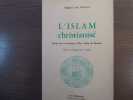
Etude sur le Soufisme à travers les oeuvres d'Ibn'Arabî de Murcie. L'ISLAM christianisé.
Guy Tredaniel Paris 1982 In-8 ( 240 X 155 mm ) de 380 pages, broché sous couverture imprimée. Bon exemplaire.
Giants in the Medieval City
, Brepols, 2024 Hardback, 272 pages, Size:225 x 280 mm, Illustrations:110 col., Language: English. ISBN 9782503607689.
Summary The visual landscape north of the Alps between the 14th and 16th centuries was shaped by colossal representations of epic and mythological giants, reincarnated and cast as Christian heroes. In contexts religious or lay, private or public, giants dominated urban spaces but also rural ones. They were painted on church facades and stood tall as sculptures in town squares. Rather than portraying specific characters from particular texts, the figures embodied the notion of ?the gigantic? as it appeared in contemporary writings: superhuman creatures from foreign lands and liminal geographies, often associated with supernatural powers, magic, hypermasculinity, and, concomitantly, matriarchy. Since the naming and identity of these giants do not always correlate--thus destabilizing the images' semiotics--the gap could be filled by fabricated memories of the ancient world. Hence, imagery of giants bridged mythological, biblical, and contemporary times, while producing novel political metaphors. This book explores the role and function of the vision and the experience of the gigantic. Executed ?out of scale? and communicating ideas about excess, giants were experienced as physically and ethically abject and, at the same time, as magnificent, apotropaic, and redemptive; as such they came to embody the very notion of the medieval sublime. TABLE OF CONTENTS Introduction: Toward a Global Genealogy of Giants Assaf Pinkus Chapter 1: Being a Giant: Geographies and Temporalities Assaf Pinkus Chapter 2: Out of Scale: Experiencing the Gigantic Assaf Pinkus Chapter 3: A Giant in the City: The Protective Roland Assaf Pinkus and Noeit Williger Aviam Chapter 4: Chaos and Order in the Cities: Roland and his Companions Orly Amit Chapter 5: Giants of London Michal Ozeri Chapter 6: The Gigantic as the Late Medieval Sublime: St. Christopher in the Alps Epilogue: More Good then Evil Notes - Bibliography - Index
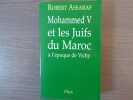
Mohammed V et les juifs du Maroc à l'époque de Vichy.
Plon France 1997 In-8 ( 225 X 140 mm ) de 280 pages, broché sous couverture imprimée. Bel exemplaire.
Des anges et des hommes, de la nuit des temps au troisième millénaire
Chêne Dos carré collé 1996 In-4°(19,5 x 26,5 cm), dos carré collé avec couverture rempliée et illustrée en couleurs, 192 pp., importante iconographie en couleurs et en noir et blanc in-texte ; dos plié, bon état. Livraison a domicile (La Poste) ou en Mondial Relay sur simple demande.



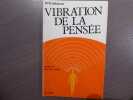
Vibration de la Pensée. La loi d'attraction dans le monde de la pensée.
Astra Paris 1984 In-8 ( 210 X 130 mm ) de 101 pages, broché sous couverture illustrée. Bel exemplaire.
Atlantis N° 339 - Mystique et mathématiques
N° 339 de Juillet / août 1985 - In-8, revue brochée et illustrée
Bon état
Atlantis N°374 - Reims en perte d’énergie ? Son architecture sacrée - Les rites antiques du sacre des rois - Le cérémonial et sa valeur initiatique - Son symbolisme traditionnel et universel
N° 374 de Eté 1993 - in-8 broché - revue illustrée - 96 pages
bon état
Crosses et spirales, Aspects archéologiques et symboliques ; De l'harmonie naturelle à l'harmonie spirituelle - Publication de l'association Culturelle Atlantis Vincennes - 1983
1552 agrafé, bon état, 155 x240, 43 gr, 70 pages, N° 326, fondateur Paul Le Cour, 56 ème année, illustrations N&B, des annotations au crayon -
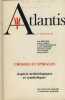
Au sommaire des articles de : Guy Béatrice, Pierre Carnac, F. Dupuy-Pacherand, Lucien Gérardin, Raymond Lautié, Jean Phaure, Denise Védy - L'Association Atlantis réunit les amis de Paul Le cour, fondateur de la première société d'études atlantéennes et de la revue Atlantis. Elle constitue un centre d'étude des traditions occidentales en vue de rechercher, par les voies de l'archéologie scientifique et traditionnelle et par le symbolisme, la Tradition primitive, origine des civilisations, pour permettre une rénovation spirituelle et morale de l'humanité notamment basée sur un idéal esthétique. L'Association à pour but de continuer par tous les moyens à sa disposition, l'oeuvre créée par Paul Le Cour.
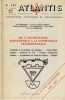
De l'archéologie scientifique a la symbolique traditionnelle - Publication de l'association culturelle Atlantis - Vincennes 1976
1602 Livret agraphé, bon état , 160 x240, 96 gr, 61 pages, N° 287, fondateur Paul Le Cour, 49 ème année, illustrations N&B, Textes et illustrations inédits. - Atlantide et tectonique des plaques, labyrinthes d'église, histoire de l'O, grottes d'initiation cathare, symbolisme de l'oeuf de Paques, Orphée -
L'Association Atlantis réunit les amis de Paul Le cour, fondateur de la première société d'études atlantéennes et de la revue Atlantis. Elle constitue un centre d'étude des traditions occidentales en vue de rechercher, par les voies de l'archéologie scientifique et traditionnelle et par le symbolisme, la Tradition primitive, origine des civilisations, pour permettre une rénovation spirituelle et morale de l'humanité notamment basée sur un idéal esthétique. L'Association à pour but de continuer par tous les moyens à sa disposition, l'oeuvre créée par Paul Le Cour.
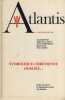
Symbolique chrétienne oubliée...- Publication de l'association Culturelle Atlantis Vincennes - 1983
1552 Agrafé, bon état, 155 x240, 82 gr, 59 pages, N° 327, fondateur Paul Le Cour, 54 ème année, illustrations N&B - les articles sont de : Guy Béatrice, Régis de La Haye, Henri Durrenbach, Maurice Gé, Elise Léjard -
L'Association Atlantis réunit les amis de Paul Le cour, fondateur de la première société d'études atlantéennes et de la revue Atlantis. Elle constitue un centre d'étude des traditions occidentales en vue de rechercher, par les voies de l'archéologie scientifique et traditionnelle et par le symbolisme, la Tradition primitive, origine des civilisations, pour permettre une rénovation spirituelle et morale de l'humanité notamment basée sur un idéal esthétique. L'Association à pour but de continuer par tous les moyens à sa disposition, l'oeuvre créée par Paul Le Cour.

