 Write to the booksellers
-
Type
Book (21713)
Disk (1)
Magazine (98)
Manuscript (11)
-
Latest
Last 24h (6)
Last month (78)
Last week (11)
-
Language
Arabic (1)
English (6)
French (21711)
German (6)
Hebrew (1)
Italian (8)
Latin (89)
Spanish (1)
-
Century
16th (33)
17th (145)
18th (347)
19th (2404)
20th (11811)
21st (1418)
-
Countries
Belgium (1586)
Brazil (1)
Canada (3)
Côte d'Ivoire (26)
France (19839)
Netherlands (2)
Switzerland (366)
-
Syndicate
ALAC (3)
ILAB (14672)
NVVA (289)
SLACES (289)
SLAM (14377)
La vie de Jésus dans le pays et le peuple d'Israël.
Traduit de l' allemand par l'abbé Gautier. Mulhouse, Ed. Salvator, 1935. Grand in-8 (24 X 15). 546 pages. Broché, couvertures imprimées.
Carte et 24 planches de reproductions photographiques hors texte.Très bon état du texte (couvertures piquées, tampon de monastère sur la page de titre).
The Substance of History of European Morals
Vanguard Press 1926 in12. 1926. Cartonné. Cet ouvrage de William Edward Hartpole Lecky examine l'évolution des normes et pratiques morales en Europe de l'époque d'Auguste à celle de Charlemagne. Il analyse le passage de la morale stoïcienne romaine à l'ordre moral chrétien du haut Moyen Âge en se concentrant sur les changements dans les standards et les types moraux
couverture abîmée coins émoussés intérieur propre
L'Eglise Rétablie
Deseret Book Company 1973 In-4 relié. Bon état d’occasion.
Bon état d’occasion
A Catalogue of Ethiopian Manuscripts Microfilmed - VOL. III: project numbers 701-1100
Hill monastic manuscript library 1978 in4. 1978. Broché. A Catalogue of Ethiopian Manuscripts Microfilmed for the Ethiopian Manuscript Microfilm Library Addis Ababa and for the Monastic Manuscript Microfilm Library Collegeville

Bon état couverture défraîchie intérieur propre
A Catalogue of Ethiopian Manuscripts Microfilmed - Vol. VII: project numbers 2501-3000
Hill monastic manuscript library 1983 in4. 1983. Broché. A Catalogue of Ethiopian Manuscripts Microfilmed for the Ethiopian Manuscript Microfilm Library Addis Ababa and for the Monastic Manuscript Microfilm Library Collegeville
couverture défraîchie fente en bas de la charnière du premier plat intérieur propre
LA RECEPTION ET L4ACTION DU SAINT-ESPRIT DANS LA VIE PERSONNELLE ET COMMUNAUTAIRE.
DELACHAUX ET NIESTLE. 1960. In-12. Broché. Bon état, Couv. convenable, Dos satisfaisant, Intérieur frais. 65 pages.. . . . Classification Dewey : 230-Christianisme. Théologie chrétienne
Classification Dewey : 230-Christianisme. Théologie chrétienne
George Williams, pionnier des Unions Chrétiennes de jeunes gens.
P., Je Sers, 1942, in 12 broché, 226 pages ; illustrations.
Fermeture du 1er au 23 Août


Phone number : 04 77 32 63 69
[Librairie de l'Art Catholique] - WILLIBRORD VERKADE, Dom; [ VERKADE, Jan ]
Reference : 60876
(1926)
Le Tourment de Dieu. Etapes d'un moine peintre.
Traduction de Marguerite Faure revue par l'auteur, préface et portrait par Maurice Denis, 1 vol. in-8 reliure de l'époque pleine basane racinée, dosà 4 nerfs doubles, couverture conservée, Librairie de l'Art Catholique, Paris, 1926, XV-283 pp. avec portrait en frontispice
![Le Tourment de Dieu. Etapes d'un moine peintre.. WILLIBRORD VERKADE, Dom; [ VERKADE, Jan ]](https://static.livre-rare-book.com/pictures/CDL/60876_thumb.jpg)
![Le Tourment de Dieu. Etapes d'un moine peintre.. WILLIBRORD VERKADE, Dom; [ VERKADE, Jan ]](https://static.livre-rare-book.com/pictures/CDL/60876_2_thumb.jpg)
![Le Tourment de Dieu. Etapes d'un moine peintre.. WILLIBRORD VERKADE, Dom; [ VERKADE, Jan ]](https://static.livre-rare-book.com/pictures/CDL/60876_3_thumb.jpg)
Bon état (dos lég. frotté, qq. rares annotations au crayon). Le peintre hollandais Jan Verkade (1868-1946), un temps proche des Nabis, deviendra prêtre en 1902. Dans ce récit autobiographique, il évoque son parcours depuis l'enfance jusqu'à l'abbaye de Beuron.
Nouvelles du centre d'études francoprovençales Saint Nicolas N°78
au bureau du journal. 2021. In-8. Broché. Bon état, Couv. convenable, Dos satisfaisant, Intérieur frais. 143 pages augmentées de quelques photos en noir et blanc dans texte.. . . . Classification Dewey : 230-Christianisme. Théologie chrétienne
Classification Dewey : 230-Christianisme. Théologie chrétienne
Im Namen des Teufels? Kritische Bemerkungen zu David A. Yallops Bestseller ‘Im Namen Gottes?’. Der Mysteriöse Tod des 33-Tage-Papstes Johannes Paul I.
Stein Am Rhein, Christiana-Verlag, 1988, in-8vo, 172 S., s./w. ill., Widmung auf 3 Linien signiert vom der Author, Original-Broschüre.
(SLACES, NVVA)
Phone number : 41 (0)26 3223808
Pourquoi Prier avec l'Eglise ?
BONNE PRESSE. 1953. In-12. Broché. Bon état, Couv. légèrement passée, Agraffes rouillées, Intérieur frais. 31 pages.. . . . Classification Dewey : 230-Christianisme. Théologie chrétienne
Classification Dewey : 230-Christianisme. Théologie chrétienne
Recueil de lettres. Le Pape. - Rome. - L'Italie
The general printing & stationery company | Ile Maurice 1922 | 15.5 x 23 cm | Relié
Edition originale rare. Reliure à la bradel en demi percaline fauve, dos lisse, lieu et date dorés en queue, plats de papier à la cuve, couvertures conservées, reliure de l'époque. Un seul exemplaire au CCF (BnF). Unique édition, peu commune. Il s'agit d'un ensemble de notations et d'anecdotes relatives au séjour d'études de l'abbé Castel (né en 1894, ordonné en 1920) à Rome pendant sa période de séminaire. Quelques taches sur les gardes. - Photographies et détails sur www.Edition-Originale.com -
Auteurs spirituels et textes dévots du Moyen-Âge latin. Etudes d'histoire littéraire.
Paris, Bloude et Gay, 1932. Grand in-8 broché, 626 pp., tables;
Couverture défraîchie, couv. sup. déchirée sur 7 et 5 cm. - Frais de port : -France 4,95 € -U.E. 9 € -Monde (z B : 15 €) (z C : 25 €)
DE RELIGIONE REVELATA - LIBRI QUINQUE
RATISBONAE NEO EBORACI & CINCINATI. 1897. In-8. Relié demi-cuir. Etat d'usage, Coins frottés, Dos à nerfs, Intérieur frais. IV+686 pages - étiquette de bibliothèque sur la page de titre - contreplats et plats jaspés - filets auteur et titre dorés sur le dos - pièce de titre marron sur le dos. . . . Classification Dewey : 230-Christianisme. Théologie chrétienne
TEXTE EN LATIN - cum approbatione rev, episcopi ratisbon et super ordinis Classification Dewey : 230-Christianisme. Théologie chrétienne
Le suaire de Turin. Linceul du Christ ?
1978 Paris, Albin Michel, 1978, in 8°, broché, 350 pages.
Fermeture du 1er au 23 Août
Phone number : 04 77 32 63 69
Le Suaire de Turin.. linceul du Christ ?
Albin Michel 1978 In-8 broché 22,5 cm sur 14,5. 350 pages. État correct d’occasion.
Etat correct d’occasion
Jesus: The Evidence
Weidenfeld & Nicolson 1984 208 pages 18 4x2 4x23 6cm. 1984. cartonné avec jaquette. 208 pages.
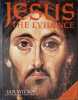
jaquette légèrement frottée aux extrémités
Jesus: The Evidence
MacMillan 1985 186 pages 13x1 4x19 4cm. 1985. Broché. 186 pages.

couverture usagée intérieur en très bon état
Notre Père : Abraham ; Les Racines Juives de la Foi Chrétienne - Editions Emeth Montmeyran (26) 2009
in-8° broché, 336 pages, très bon état, ISBN : 9782912185655
LE RHIN SE JETTE DANS LE TIBRE - LE CONCILE INCONNU
EDITIONS DU CEDRE. 1982. In-8. Broché. Bon état, Couv. convenable, Dos satisfaisant, Papier jauni. 302 pages - Annotations à l'encre sur la page de garde. . . . Classification Dewey : 230-Christianisme. Théologie chrétienne
Traduction de l'américain par Clément Deville (traduction revue et corrigée par l'Auteur) Classification Dewey : 230-Christianisme. Théologie chrétienne
"Jésus-Christ et Satan; Emission : L'attente du Maître."
Rouen, Radio-Normandie, s.d. (ca 1950). 13 x 17, 64 pp., broché, état moyen (papier jauni).
FRERE ALBERT OU LA FACE AUX OUTRAGES
LA COLOMBE. 1953. In-8. Broché. Bon état, Couv. convenable, Dos satisfaisant, Intérieur frais. 293 pages. Quelques photos en noir et blanc, hors texte. protégé par couverture. . . . Classification Dewey : 230-Christianisme. Théologie chrétienne
Classification Dewey : 230-Christianisme. Théologie chrétienne
L ICONE DU CHRIST MISERICORDIEUX
EDITIONS SAINT PAUL. 1973. In-8. Broché. Bon état, Couv. convenable, Dos satisfaisant, Intérieur frais. 279 pages. Tampon sur la page de garde.. . . . Classification Dewey : 230-Christianisme. Théologie chrétienne
Classification Dewey : 230-Christianisme. Théologie chrétienne
L'icône du Christ miséricordieux - Message de Soeur Faustine - 2e édition.
Editions Saint-Paul. 1978. In-12. Broché. Etat d'usage, Coins frottés, Dos plié, Quelques rousseurs. 279 pages - étiquette sur la coiffe en pied - tampon, petite annotation sur la page de faux titre - tampon sur la page de titre.. . . . Classification Dewey : 230-Christianisme. Théologie chrétienne
Classification Dewey : 230-Christianisme. Théologie chrétienne
La Résurrection
Desclée de Brouwer 1956 34 pages 19x13. 1956. Cartonné jaquette. 34 pages.
jaquette abimée. intérieur frais

