 Write to the booksellers
-
Type
Any type (1)
Art print (5)
Autograph (4)
Book (65445)
Drawings (2)
Engraving (5)
Magazine (103)
Manuscript (3)
Music sheets (242)
Old papers (8)
Photographs (1)
Postcards (2)
-
Latest
Last 24h (31)
Last 3 days (14)
Last month (970)
Last week (10)
-
Language
Dutch (31)
English (53)
French (65688)
German (10)
Hebrew (1)
Italian (7)
Latin (21)
Portuguese (2)
Romanian (1)
Spanish (5)
Swedish (2)
-
Century
16th (98)
17th (683)
18th (1428)
19th (7626)
20th (34554)
21st (3710)
-
Countries
Belgium (9884)
Canada (159)
China (9)
Côte d'Ivoire (120)
Denmark (718)
France (52826)
Germany (8)
Greece (27)
Netherlands (224)
Switzerland (1846)
-
Syndicate
ALAC (159)
CLAM (91)
CLAQ (159)
CNE (35)
ILAB (34994)
NVVA (1216)
SLACES (1216)
SLAM (32757)
SNCAO (10)
Creation and salvation in ancient orphism
Chico, Scholars Press 1981 142pp., 23cm., in the series "The American Philological Association: American Classical Studies" vol.8, softcover, few foxing on edges, good condition, R76971
Dieu et moi : Essais sur la mystique la religion et la spiritualité
Le grand livre du mois 1994 in8. 1994. Broché.
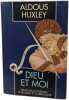
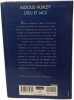
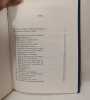
Bon état interieur propres couverture defraichie
la recherche des villes saintes. Actes du colloque franco-neerlandais "Les villes saintes", College de France, 10 et 11 mai 2001,
Turnhout, Brepols, 2004 Paperback, VIII+184 p., 155 x 240 mm. ISBN 9782503515892.
En un temps ou la saintete traditionnellement attribuee a certaines villes continue plus que jamais d'etre alleguee par les guerriers de tout bord, les sciences des religions ne peuvent eluder les questions qu'elle souleve. Le colloque d'ou ce livre est issu se proposait de confronter les analyses de situations particulieres, menees selon les methodes de l'histoire, de la philologie, de l'ethnologie et de l'anthropologie, en elargissant l'examen a d'autres cultures que celles des religions dites du Livre, sans negliger celles-ci. Les auteurs des etudes reunies ici sont a la recherche de concepts operatoires, a distance du discours de la devotion. Ils sont aussi a la recherche des formes infiniment variees de la sanctification des villes a des epoques differentes, sous le regard, proche ou lointain, des habitants et des exiles, sous l'emprise, conquerante ou decue, des pouvoirs qui s'erigent sur la sacralite des lieux et des communautes qui preservent ou s'inventent des identites en perennisant des heritages ou en se les appropriant. Ils offrent des exemples bons a penser au lecteur qui est a la recherche, au moyen de la comparaison, tant des traits communs que des divergences. Un tel voyageur passe sept fois par Jerusalem et percoit les metamorphoses de sa saintete, telle qu'elle est codifiee a l'ere hellenistique (A. van der Kooij) et institutionnalisee en diaspora dans le monde greco-romain (J. Tromp) ; telle qu'elle est menacee de mort au moment de la ruine du temple (S. Mimouni, M.-J. Pierre) ; revee et remodelee, a la fois evanescente et tangible, dans l'exil medieval (J.-C. Attias) ; confortee pour les chretiens du XVIe siecle par ce qui leur parait l'humiliation de la ville, ses blessures devenant les stigmates de sa gloire (M.-C. Gomez-Geraud) ; jumelee avec La Mecque par la reflexion cosmogonique et eschatologique des mystiques musulmans (P. Lory). Le cas de La Mecque et de Medine aide a construire une typologie moderne (G. A. Wiegers) et a penser le rapport entre ville sainte et territoire sacre (H. Benkheira). La veneration pour Axoum dans l'Ethiopie chretienne fait converger motivations religieuses et politiques (G. Lusini). A Rome, l'hagiographie martyriale part a la conquete du bastion polytheiste (P. Boulhol). D'autres rivalites se dessinent dans la mythologie des peuples du Mexique ancien qui ont tire leur prestige de Cholula (M. Graulich). L'Inde, c'est a la fois le tout autre et le meme : la saintete des villes y est placee sous le digne de la fluidite (M.-L. Reiniche). Partout se verifie et s'annihile le lamento paradoxal de Baudelaire : ?« La forme d'une ville change plus vite, helas ! que le coeur d'un mortel ?». Languages: French, English.
Histoire de l'anticlericalisme francais
Mame, 1966. Format 14x22 cm, broche, 496 pages.Bon etat, petites traces d'usage sur un livre d'occasion, dos solarise.
Sur la destruction des jésuites en France.
Paris Bureau de la publication. 1869 190p 1 volume IN16. Reliure d'époque en demi basane rouge. Dos à nerfs titré.Texte précédé d'une introduction et suivi dun épilogue par J.M Cayla. Bibliothèque nationale.
Histoire des membres de l'Académie françoise, Morts depuis 1700 jusqu’en 1771, Pour servir de suite aux Éloges imprimés et lus dans les Séances publiques de cette Compagnie. « On frondait les puissances de Versailles, et on faisait sa cour à celle de l'Encyclopédie. Nous préférions un mot d'éloge de d’Alembert, de Diderot, à la faveur la plus signalée d’un prince » Le Comte de Ségur.
Edition originale collective de l’Histoire des membres de l’Académie française. A Paris, Chez P. Moutard, 1787. 6 volumes in-12 de : I/ (1) f. bl., xxxiv pp., vj pp., 559 pp., (5) pp., (1) f. bl. ; II/ (1) f. bl., (2) ff., xii pp., 437 pp., (1) f. bl. ; III/ (1) f. bl., (2) ff., 523 pp., (1) f. bl. ; IV/ (1) f. bl., (2) ff., 637 pp., (1) f. bl. ; V/ (1) f. bl., (2) ff., 668 pp., (1) f. bl. ; VI/ (1) f. bl., (2) ff., 378 pp. (1) f. bl. Plein veau blond granité, cadre de trois filets dorés autour des plats, dos lisse finement ornés, pièces de titre et de tomaison de maroquin vert et rouge, coupes décorées, tranches jaspées. Reliure de l’époque. 166 x 96 mm.
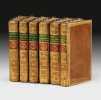
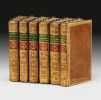
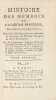
Edition originale collective, les cinq derniers volumes sur 6 paraissant ici pour la première fois. Les Eloges sont des biographies qui étaient lues aux séances de l'Académie. Elles regroupent tous les élus du XVIIIe au nombre de 100. Ces discours sont souvent annotés pour davantage de précisions. Il ne faut pas prendre le terme d'éloge au sens moderne, car il s'agit non seulement ici de biographies et d'études érudites d'une vie mais aussi de critique d'une œuvre et d'un personnage, et toutes ces vies fournissent des renseignements précieux. Jean Le Rond d'Alembert fut élu le 28 novembre 1754 à l'Académie française. Il en devint le secrétaire perpétuel le 9 avril 1772. « Les années 70 à 80 représentent la consolidation de la position de d’Alembert comme maître de l’Académie française et arbitre des questions littéraires. Sa tentative d'imposer à l'Académie des normes pour la poésie fut violemment rejetée par le public. Le but de tout écrit étant d'exprimer clairement des pensées, l'Académie jugera bon un poème lorsqu'il se rapprochera le plus de la prose, déclare-t-il dans ses Réflexions sur la poésie lues à l'Académie en 1760 et publiées en 1767. Fréron s'écrie contre « l'irruption des enfants d’Archimède dans le sanctuaire de la poésie. Elle expire frappée du fatal compas » ; et Diderot conclut : « Qu'il s'en tienne donc aux équations ; c'est son lot. » Par contre ses autres discours publics à l'Académie eurent un grand succès, et il utilisa ces occasions pour prêcher la tolérance et la philosophie. Ses « Eloges » lui acquirent la réputation de continuateur de Fontenelle, son prédécesseur dans le genre, Les Éloges lus dans les séances publiques de l'Académie française furent publiés en 1779, et on publia en 1785 une édition posthume de son Histoire des membres de l'Académie française morts depuis 1700, jusqu'en 1771 en trois volumes (vols. 4 à 6 en 1787). Pendant ses dernières années, d'Alembert remplaça de plus en plus l'aristocratie, qu'il avait toujours combattue, dans le rôle de mécène pour les jeunes littéraires qu'il aidait dans leur carrière. Le plus illustre de ses disciples fut Condorcet, dont il fit avec Watelet son exécuteur testamentaire. Il fut inhumé comme incrédule dans une fosse commune. John Pappas. Fort bel exemplaire relié en veau blond de l’époque, teinte recherchée.

JUIFS ET ARABES 3000 ANS D'HISTOIRE
GRASSET. 1968. In-8. Broché. Etat d'usage, Couv. légèrement passée, Dos plié, Quelques rousseurs. 383 pages - couverture tâchée. . . . Classification Dewey : 290-Religion comparée. Autres religions
Classification Dewey : 290-Religion comparée. Autres religions
DICTIONNAIRE APOLOGETIQUE DE LA FOI CATHOLIQUE Contenant Les preuves De La vérité De La Religion
Paris Gabriel Beauchesne 1929 Fort In-4 Broché Bon 4ème Édiiton
Couverture de papier gris vert ; 1983pp ; quatrième édition, entièrement refondue ; nous ne proposons à la vente que le tome IV Persécutions - Zoroastre. Texte sur 2 colonnes, intérieur assez frais, papier légèrement roussi
EUCHARISTIE
BLOUD ET GAY. 1930. In-12. Broché. Etat du neuf, Couv. défraîchie, Dos satisfaisant, Intérieur frais. 174 pages. Quelques rousseurs sur la couverture et sur les tranches. Etiquette sur le soc et une partie des plats.. . . . Classification Dewey : 200-RELIGION
Bibliothèque catholique des sciences religieuses. Classification Dewey : 200-RELIGION
Latin in Byzantium I. Late Antiquity and Beyond
, Brepols, 2019 Hardback, 564 pages, Size:155 x 245 mm, Illustrations:22 b/w, Languages: English, French, Italian. ISBN 9782503584928.
Summary 'Latin in Byzantium' explores the linguistic competence, cultural identity, and transmission of Latin texts in the 'noua Roma' between the fourth and the ninth centuries. Drawing together texts from a number of fields (e.g., law, grammar, religion, and tactics) and across a range of different forms (e.g., palaeographic, epigraphic, and papyrological), this important project provides scholars for the first time with an in-depth knowledge of both the Latin-speaking milieux in Byzantium, and of the contexts in which Latin was used. Crucially, the ancient sources studied in this volume are also analysed in their broader political and sociological context, providing rich material for study across different disciplines and making this volume an important resource for closing the gaps between literary and non-literary texts, history, and philology. TABLE OF CONTENTS Preface Rhomaika: Una introduzione - Guglielmo Cavallo General Framework Desuetudine longa? subeunt verba latina : The Transition From Late Antique to Medieval Byzantium and the Fall of Latin - Luigi Silvano Latin in Byzantium: Different Forms of Linguistic Contact - Alessandro Garcea Latin in the Empire: Texts and People La pratique du latin dans l'Égypte de l'Antiquité tardive - Jean-Luc Fournet The Use of Latin in the Context of Multilingual Monastic Communities in the East - Claudia Rapp Writing Latin in Late Antique Constantinople - Gabriel Nocchi Macedo The Laws of the Language and the Language of the Laws La lingua degli ??????. Conoscenza e uso del latino nell'Oriente greco di iv secolo attraverso l'opera di Libanio - Andrea Pellizzari Asymmetric Exchange: Latin Speakers Learning Greek and Greek Speakers Learning Latin in Late Antiquity. On the Evidence of Grammars and Bilingual Texts - Juan Signes Codoñer L'insegnamento di Prisciano - Michela Rosellini - Elena Spangenberg Yanes Sur un silence de Jean le Lydien - Marc Baratin Justinianus Latinograecus. Language and Law during the Reign of Justinian - Thomas Ernst van Bochove Latin as a Medium at the Service of the Power Le rituel des acclamations : de Rome à "Byzance" - Frédérique Biville L'univers grec et latin d'un poète africain : Corippe et Byzance - Vincent Zarini Latin Inscriptions in (Early) Byzantium - Andreas Rhoby Latin Texts as Sources La traduction du latin en grec à Byzance : un aperçu général - Bruno Rochette Modelli latini per poemi greci? Sulla possibile influenza di autori latini sulla poesia epica tardoantica - Gianfranco Agosti Latin and the Chronicon Paschale - Christian Gastgeber Sulla conoscenza del latino nell'Oriente romano nel periodo tra Maurizio ed Eraclio (582-641): il caso degli storici-funzionari e di Giovanni di Antiochia - Umberto Roberto Latinismi e cultura letteraria nei frammenti di Pietro Patrizio: per un'indagine sul De cerimoniis e sugli Excerpta Historica Constantiniana - Laura Mecella Latin Literature in Johannes Malalas's Chronicle - Olivier Gengler Appunti per un lessico grecolatino tardoantico: la traduzione latina di Gregorio di Nazianzo trasmessa dal Laur. S. Marco 584 - Alessandro CaponeLatin Vocabulary Transmitted across Space and Time On the Use of Latin Legal Terminology in the Byzantine Legal Treatise De actionibus - José-Domingo Rodríguez Martín Per lo studio dei rapporti tra istituzioni di giustiniano e libri basilici - Massimo Miglietta Latinité cachée à Constantinople (VIe - moitié XIIIe siècles) - Peter Schreiner I latinismi nella lingua greca moderna - Johannes Niehoff-Panagiotidis Index of Names Index of Places
EPISEMASIE OU RELATION D'ALETIN LE MARTYR concernant l'origine, Antiquité, Noblesse et sainteté de la Bretaigne (BRETAGNE) Armorique et particulièrement des villes de Nantes et Rennes
1882 broché (paperback) grand in-octavo carré, dos muet marron (spine - no title), couverture rempliée ornée d'une petite illustration en cul-de-lampe (front cover illuminated with small illustration in tailpiece), long papier (fore-edge - great paper), tirage limité à 300 exemplaires (limited edition - 300 copies were printed), texte à manchette (marginal note), illustrations : orné de (illuminated of) bandeaux (headpiece) + lettrines (dropped initial) et culs-de-lampe (tailpiece), 99 pages, 1882 à Nantes achevé de Réimprimer par Vincent Forest et Emile Grimaud,
réimpression de l'édition ancienne de 1637 à Nantes par Sébastien de Hucqueville Imprimeur et Libraire (reprinting of the old edition of 1637) - bon état (very good condition)
Le Bienheureux Pierre Canisius. ou l’Apotre de l’Allemagne au XVIe siècle. Tableau de sa vie publique et de sa vie intime tracé principalement d’après ses lettres et ses mémoires inédites.
Paris, Charles Douniol, libraire-éditeur, 1865, in-8°, VI + 450 p., ms. au contreplat - Ce livre est du Pensionnat de la Visirtation de Fribourg en Suisse - reliure en d.-cuir, dos orné or + une pièce de papier avec le n° 62.
Image disp.

(SLACES, NVVA)
Phone number : 41 (0)26 3223808
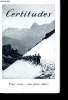
CERTITUDES - POUR VOUS..UNE PISTE SUR !
MAISONS DE LA BIBLE. 1951. In-12. Broché. Bon état, Couv. convenable, Dos satisfaisant, Intérieur frais. 96 pages - lettrines, bandeaux et culs-de-lampe - 1 tampon sur la page de titre - couverture contre-pliée.. . . . Classification Dewey : 200-RELIGION
Classification Dewey : 200-RELIGION
Certitudes Pour vous... une piste sûre!
La maison de la Bible. 1954. In-12. Broché. Bon état, Couv. convenable, Dos satisfaisant, Intérieur frais. 96 pages augmentées de nombreuses lettrines et bandeaux. Couverture contre-pliée.. . . . Classification Dewey : 200-RELIGION
Classification Dewey : 200-RELIGION
DAVID HOMME D'HIER ET D'AUJOURD'HUI.
LA MAISON DE LA BIBLE. 1988. In-12. Broché. Bon état, Couv. convenable, Dos satisfaisant, Intérieur frais. 168 pages. Quelques planches en noir et blanc hors texte.. . . . Classification Dewey : 200-RELIGION
Classification Dewey : 200-RELIGION
SOLUTIONS....
LA MAISON DE LA BIBLE. 1973. In-8. Broché. Etat d'usage, Couv. défraîchie, Dos très frotté, Intérieur acceptable. 112 pages illustrées de nombreuses photos en noir et blanc dans le texte - Nombreux soulignements au crayon a papier dans le texte - 1er plat illustré d'une photo en noir et blanc.. . . . Classification Dewey : 200-RELIGION
Classification Dewey : 200-RELIGION
VERS LA SOCIETE SANS PERES, essai de psychologie sociale
1969 / 354 pages. Broché Editions Gallimard Collection connaissance de l'inconscient
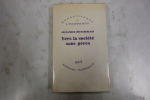
Couverture d'usage, un peu jaunie, dos cassé, intérieur frais sans rousseur. bon état.
Gods in the House. Anthropology of Roman Housing - II
, Brepols, 2023 Paperback, 368 pages, Size:156 x 234 mm, Illustrations:39 b/w, 80 col., 4 tables b/w., Language(s):English, French. ISBN 9782503601694.
Summary The archaeological excavations conducted from one end of the Mediterranean zone to the other have illuminated the place of gods in the ritual practices in the dwellings of the Graeco-Roman era. The discovery of multiple artefacts, dedicated spaces, and figurative paintings support new avenues of historical, anthropological, and social reflection with the aim of better understanding domestic religious practices in the polytheistic contexts of antiquity. This collective volume organizes those reflections around three axes. The first axis centres on identifying the deities that were favoured in domestic sanctuaries. Which gods are represented and which are not? The second axis concerns the interrelationships evident within domestic ritual spaces and sanctuaries. The third axis is dedicated to the anthropology of rituals. Lines of inquiry informed by anthropological, social, and phenomenological approaches are assuming ever-greater importance in scholarship on Antiquity. It is from this perspective that the authors explore the role that domestic ritual spaces play in shaping the lived environment. TABLE OF CONTENTS Gods in the House: An Anthropological Approach to Ancient Divinities and Domestic Cults (Alexandra Dardenay & Laurent Bricault) I. Gods of the House Domestic Aphrodite, Goddess of Desire and Seduction (Heather F. Sharpe) Dédoublements de divinités dans les laraires romains : polymorphie des images et multiplicité des champs d'action (Nicolas Amoroso) Honorer Mithra en contexte résidentiel. Réflexions à partire des exemples de Rome et d'Ostie (Françoise Van Haeperen) Divine Guests: Religious Identities and Groups of Deities in Roman Domestic Shrines (Carla Sfameni) II. Gods in the House Sacraria ou 'chapelles' religieuses à Pompéi : culte domestique ou vénération publique ? (Eric M. Moormann) Morphologies of sacra privata in the Roman House: Architecture, Furnishings, Cults (Maddalena Bassani) Herculaneum's Insula V Domestic Cult Places: Reflections on Typology, Locations and Fields of Action (Alexandra Dardenay) III. Towards an Anthropological Analysis of Spaces and Rituals Domestic Religion and the Anthropology of Space in the Entrance to the Roman House (Marin Mauger) From Routines to Rituals in Pompeian Houses - How Layout and Image-Objects of Household Shrines Shape Religious Knowledge (Anna-Katharina Rieger) Les pratiques cultuelles dans les villas gallo-romaines du Haut-Empire (Emmanuel Pui) Réflexion sur le devenir et la propriété des sacraria en contexte domestique (Aude Durand) Index rerum Index deorum Index locorum
LE BOUDDHISME DU BOUDDHA ET LE MODERNISME BOUDDHISTE.
DU ROCHER. 1993. In-12. Broché. Bon état, Couv. convenable, Dos satisfaisant, Intérieur frais. 245 pages - 1er plat illustré d'une photo couleurs.. . . . Classification Dewey : 294-Religions d'origine hindoue
Classification Dewey : 294-Religions d'origine hindoue
Leor - Pardon hag eizved Sant Serves
KEMPER, Ty ar. de Kerangal - 1870 - In-16 - Broché - 23 pages - Propre
Conformément à nos conditions générales de vente :Les frais de port sont affichés à titre indicatif. Il se peut que nous devions vous contacter pour vous informer du coût de laffranchissement supplémentaire en fonction du poids et du nombre de livres, surtout pour les envois internationaux Cependant vu l'augmentation des tarifs postaux à l'internationale, nous pouvons expédier les ouvrages en point relais MONDIAL RELAY pour les pays suivants : Allemagne, Autriche, Belgique, Espagne, Italie, Luxembourg, Pays-Bas, Pologne, et Portugal. Merci de nous indiquer en retour le point relais choisi ainsi que votre numéro de téléphone mobile & adresse Courriel pour assurer le suivi du colis.N'hésitez pas à nous interroger.In accordance with our general terms and conditions of sale:Shipping costs are displayed for informational purposes only. We may need to contact you to inform you of the additional postage costs depending on the weight and number of books, especially for international shipments.However, given the increase in international postal rates, we can ship books via Mondial Relay to the following countries: Germany, Austria, Belgium, Spain, Italy, Luxembourg, Netherlands, Poland, and Portugal. Please provide us with your chosen Mondial Relay point, as well as your mobile phone number and email address to ensure package tracking.Please feel free to contact us with any questions
Saint Paul a Philippes
1988. EditionsTzivanakis, 1988. Plaquette non paginee, nombreuses photos.Tres bon etat.
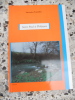
Alexandre Astier, Eric Degas (Illustrations)
Reference : RO20253480
(2008)
ISBN : 2212541945
Les maîtres spirituels de l'hindouisme
EYROLLES PRATIQUE. 2008. In-8. Broché. Bon état, Couv. convenable, Dos satisfaisant, Intérieur frais. 238 pages - Quelques planches en noir/blanc. . . . Classification Dewey : 294-Religions d'origine hindoue
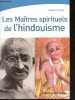
Véritable introduction à l'hindouisme à travers ses maîtres spirituels, ce guide présente chacune des grandes figures à travers sa vie, son enseignement et ses écrits. Des origines à nos jours, ce livre retrace l'histoire de la spiritualité hindoue en proposant pour chaque maître un documentaire vivant, nourri d'anecdotes et de citations. Chacun d'eux fait l'objet d'une illustration et de pistes bibliographiques. Alexandre Astier est spécialiste de l'histoire de l'Inde et des religions indiennes. Il enseigne l'histoire en région parisienne. Il est déjà l'auteur de Comprendre l'hindouisme et de Petite histoire de l'Inde, dans la collection Eyrolles pratique. Classification Dewey : 294-Religions d'origine hindoue
Le Horsain.
PLON. 1988. In-12. Relié toilé. Très bon état, Couv. convenable, Dos satisfaisant, Intérieur frais. 553 pages. Quelques planches de photos en noir et blanc hors-texte. Relié pleine toile noire. Quelques dessins et cartes en noir et blanc dans le texte.. . . . Classification Dewey : 200-RELIGION
"Vivre et survivre en Pays de Caux. Collection ""Terre Humaine"". Classification Dewey : 200-RELIGION"
Etre Mystique.
Non édité. Non daté. In-8. Broché. Bon état, 1er plat abîmé, Coiffe en pied abîmée, Intérieur frais. 122 pages. Nombreux dessins en noir et blanc dans le texte. . . . Classification Dewey : 200-RELIGION
Désarroi dans l'obscurité. Rencontrer Dieu en attendant la rencontre Classification Dewey : 200-RELIGION
La Reine Margot
Agence parisienne de distribution 456 pages in8. Sans date. broché. 456 pages. Le roman historique d'Alexandre Dumas se déroule pendant les guerres de religion en France (1572-1574). Il raconte le mariage politique entre Marguerite de Valois (Margot) et Henri de Navarre destiné à apaiser les tensions entre catholiques et protestants mais qui sert de prélude au massacre de la Saint-Barthélemy. L'histoire suit les intrigues de cour les complots politiques orchestrés par Catherine de Médicis et Charles IX ainsi que la romance entre Margot et le comte de La Mole
Bon état

