 Write to the booksellers
-
Type
Any type (1)
Book (1455)
Disk (1)
Magazine (15)
Music sheets (13)
New book (1)
Photographs (1)
Posters (8)
-
Latest
Last 24h (2)
Last 3 days (1)
Last month (157)
-
Language
English (11)
French (1484)
-
Century
18th (1)
19th (3)
20th (611)
21st (181)
-
Countries
Belgium (250)
Canada (1)
China (1)
Denmark (1)
France (1213)
Netherlands (3)
Switzerland (26)
-
Syndicate
ALAC (1)
CLAM (1)
ILAB (240)
SLAM (236)
Lieutenant Blueberry - La dernière carte.
Hachette, 1983. In-4, cartonnage couleurs. En belle condition.
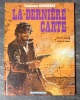
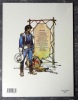
Edition originale (Noté 83.11 au second plat, dernier titre paru "la tribu fantôme").
Lieutenant Blueberry - La tribu fantôme.
Hachette, 1983. In-4, cartonnage couleurs. En belle condition.
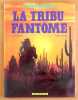
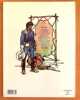
Edition originale française, marquée 82.3 au second plat plat. A noter qu'il existe une réédition avec le même dépôt légal mais marquée 82.10. Numéro 23 au dos, dernier titre au second plat: La tribu fantôme.
Lieutenant Blueberry - Le bout de la piste.
Novedi, 1986. In-4, cartonnage couleurs. En belle condition.
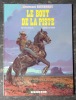
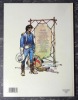
Edition originale (Noté 86.9 au second plat, dernier titre paru "les démons du Missouri").
Nez cassé. Une aventure du lieutenant Blueberry.
Dargaud, 1981. In-4, cartonnage couleurs. En belle condition.
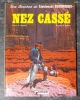
Année suivant l'originale.
Blueberry Tome 17 : Angel Face
1975 Editions Lombard - 1975 - In-4, cartonnage illustré - 46 planches illustrées en couleurs
Bon état malgré frottements au niveau des coins et "coiffes" - un petit accro sur la tranche latérale - un petit depelliculage sur le haut de la quatrième
Lieutenant Blueberry. Tome 15 : Ballade pour un cercueil (Édition originale)
1974 Dargaud - 1974 - In-4, relié, cartonnage illustré - 62 planches en couleurs - Édition originale (DL 1er trimestre 1974. N°4342) - Cahier de texte et photos d'époque de 17 pages en début d'album.


Bon état - Légers frottements sur la couverture - Intérieur très proprer Bon
Une Aventure du Lieutenant Blueberry - Tome 10 : Général "Tête Jaune" (Dédicacé)
1971 Editions Dargaud - 1971 (DL 4e trimestre 1971) - In-4, cartonnage illustré en couleurs - 47 planches illustrées en couleurs - Édition originale française - Contient des envois de Jean-Michel Charlier et Jean Giraud à Pierre Sabbagh (voir photo)
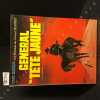
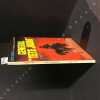
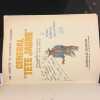
Bon état - Petit départ de fente au niveau la coiffe inférieure - Très bel état intérieur - planches très légèrement jaunies sur les bords (voir photos) bon
Une Aventure du Lieutenant Blueberry - Tome 10 : Général "Tête Jaune" (Édition originale)
1971 Editions Dargaud - 1971 - In-4, cartonnage illustré en couleurs - 47 planches illustrées en couleurs - Édition originale française (DL 4e trimestre 1971)
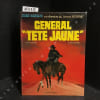
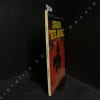
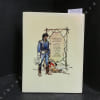
Coins très légèrement enfoncés - Intérieur propre - Papier très légèrement jauni Très bon
Barcelona and Beyond: The Disputation of 1263 and Its Aftermath
University of California Press 1992 268 pages 16 1x23 5x2 1cm. 1992. Cartonné jaquette. 268 pages.
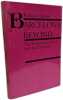
Très bon état avec sa jaquette intérieur propre bonne tenue
Crisis of the Oikoumene / The Three Chapters and the Failed Quest for Unity in the Sixth-Century Mediterranean
, Brepols - Harvey Miller, 2007 Hardcover XII+304 p., 11 b/w ill. + 1 colour ill., 3 b/w line art, 160 x 240 mm, 2007 Languages: English, French, Italian. ISBN 9782503515205.
This book presents ten chapters by an international group of scholars who examine different facets of the Three Chapters Controversy and its profound impact on these regions. The sixth-century theological controversy over the 'Three Chapters', which centred on the nature of Christ, provoked one of the most serious and long-lived religious schisms of the early Middle Ages. The fault lines ran not only between the Byzantine imperial court and the papacy, but between Rome and the churches in the former western empire?s successor states. In Italy, the schism endured into the seventh century, and the repercussions were felt long thereafter. Though rooted in the complexities of christological debate, the tensions reveal the growing political as well as cultural divide between Byzantium, Rome, and the West. Thus the controversy is critical for our understanding of the late-antique and early-medieval Mediterranean world, and of the inheritance of empire in western Europe and North Africa. This book presents ten chapters by an international group of scholars who examine different facets of the Three Chapters Controversy and its profound impact on these regions. Table of Contents Introduction - Robert A. Markus and Claire Sotinel The Three Chapters Controversy and the Council of Chalcedon - Richard M. Price L?Afrique reconquise et les Trois Chapitres - Yves Moderan The Three Chapters and the Transformations of Italy - Claire Sotinel Much Ado About Nothing: Gregory the Great?s Apology to the Istrians - Carole Straw The Three Chapters Controversy and the Biblical Diagrams of Cassiodorus?s Codex Grandior and Institutions - Celia Chazelle Il regno longobardo in Italia e i Tre Capitoli - Claudio Azzara The Franks and Papal Theology, 550?660 - Ian Wood Heresy in Secundus and Paul the Deacon - Walter Pohl Epilogue - Robert A. Markus and Claire Sotinel
The World of Orderic Vitalis
Oxford Univ Pr 1984 264 pages 14 22x2 29x21 84cm. 1984. Cartonné jaquette. 264 pages.
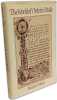
proche du très bon état cependant page 190 abimée + erreur de confection (non massicotée sur son coin inférieur)
John Wayne. Un homme, une légende
Dualpha, 2001. Broché in-8. 253 pages. Nombreuses ilustrations en noir dans texte.
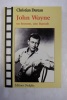
Très bon état


50 Ans de Western
Pac, coll. « Album photos » 1983 In-4 cartonné 30,3 cm sur 22. 312 pages. Couverture et dos légèrement défraîchis, intérieur frais. État correct d’occasion.
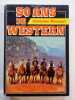
Etat correct d’occasion
Gen ses antiques et m di vales de la foi
, Brepols - Institut d'Etudes Augustiniennes, 2020 Paperback, 452 pages, Size:165 x 250 mm, Language: French. ISBN 9782851213044.
Summary This book collects papers presented at two multi-disciplinary gatherings which sought to examine concepts belonging to the semantic field of religious belief. The collection sets out from the observation that the relevant terms are ambiguous and equivocal, and indeed that this ambiguity persists in the scholarly literature in the humanities. It is therefore important to historicise these terms adequately and to clarify their development and transformation over time. This involves a sustained engagement with key discourses - logic, history of religion, epistemology, political history - of significant intellectual heterogeneity. Platonism fundamentally informs classical and patristic Christian reflections as well as the thought of their medieval heirs. It carries with it a tension between 'opinion' and supra-rational certitude which is exploited by Christian thinkers up to and including scholastic theologians. These thinkers insist above all on the existential dimension of a certitude which seeks to establish a privileged link with the divine. It involves the attempt to harmonise the ritual and social aspects of religious practice with the individual urge towards transcendence, a quest which has been bequeathed to modernity and still largely defines the nature of contemporary Western social engagement with religion. Issu de deux colloques pluridisciplinaires qui se proposaient d' tudier les notions relevant du champ s mantique de la croyance religieuse, ce volume part du constat que ces termes sont le plus souvent quivoques, ce qui p se encore sur les recherches en sciences sociales. Il fallait rendre ces concepts leur historicit , et montrer comment la notion de foi se constitue progressivement au cours d'une histoire qui est faite d'allers et retours entre des champs intellectuels h t rog nes (de la logique la religion, et de l' pist mologie la politique). Le platonisme innerve largement les r flexions du christianisme grec et romain, puis m di val. Il porte une tension entre l'opinion et la certitude supra-rationnelle, qui est exploit e par les penseurs chr tiens, jusqu'aux th ologiens scolastiques, pour insister notamment sur la dimension existentielle d'une certitude qui institue un lien privil gi avec le divin. Il s'agit de concilier la dimension communautaire et rituelle de la pratique religieuse et la tension individuelle vers la transcendance, qui est transmise la modernit et d finit encore largement le rapport au religieux dans nos soci t s. TABLE OF CONTENTS C. Grellard, L. Lavaud : Introduction PREMIERE PARTIE : EMERGENCE ET TRANSFORMATION DE LA PISTIS, DE PLATON AU NEO-PLATONISME Monique Dixsaut : Quelle sorte d' tat de l' me est pour Platon la pistis ? Annick Jaulin : Usages aristot liciens de pistis Fran oise Frazier : Les emplois de pistis chez les m dioplatoiciens J r me Moreau : La pistis d'Abraham chez Philon : vertu presque parfaite de l'union intellectuelle Dieu Luc Brisson : La pistis chez Plotin et Porphyre : philosophie et religion Christian Jambet : La foi de l'intellect ou le contact de la pr sence selon les philosophes n oplatonisants en islam DEUXIEME PARTIE : L'ELABORATION CHRETIENNE DE LA PISTIS DE SAINT PAUL AUX PERES GRECS R gis Burnet : La foi chez saint Paul : un concept dynamique Jean-Daniel Dubois : Pistis dans le cadre de la sot riologie des gnostiques valentiniens Marie-Odile Boulnois : Commencer par croire . La primaut de la foi chez Cl ment d'Alexandrie, Orig ne et leurs successeurs Marco Zambon : Dall'ascolto alla visione : la fede come conoscenza elementare e come compimento in Origene Laurent Lavaud : L' v nementialit de la foi chez Gr goire de Nysse Anca Vasiliu : P richor se de la foi dans le De Fide de Jean Damasc ne. L'hypostase des choses esp r es. TROISIEME PARTIE : LA SUBVERSION CHRETIENNE DE LA FIDES ROMAINE. DE CICERON A SAINT AUGUSTIN. Carlos L vy : De l' loquence la philosophie : l' volution s mantique de fides Sophie van der Meeren-Ferrari : La polys mie de fides dans la d marche apolog tique de Lactance : des valeurs traditionnelles aux valeurs chr tiennes Isabelle Bochet : Les d finitions augustiniennes de la fides : au croisement des traditions philosophiques et de l'ex g se biblique QUATRIEME PARTIE : DE LA CROYANCE INSTITUEE A LA FOI PERSONNELLE. TRANSFORMATIONS MEDIEVALES Dominique Iogna-Prat : Socialiser la foi: esquisse d'un parcours eccl sial Jo l Biard : Produire la confiance, la fides dans la tradition topique m di vale Gilbert Dahan : Le concept de fides la lumi re des commentaires m di vaux de quelques versets de l'Ancien et du Nouveau Testament Camille de Belloy : La v rit premi re. Jalons pour une histoire de la foi de Guillaume d'Auxerre Thomas d'Aquin Olivier Boulnois : Les trois dimensions de la foi. Le concept de foi selon quelques th ologiens m di vaux (XIIe-XIVe si cles) Nicolas Faucher : Pr ter foi avec parcimonie. Le traitement scotiste de la foi acquise et de la foi infuse Pascale Bermon : "Il n'est pas au libre pouvoir de l'homme de croire quand il lui pla t": l'involontarisme doxastique de Robert Holkot Christophe Grellard : Que m'est-il permis d'ignorer ? La foi, l'ignorance et les limites acceptables de l'orthodoxie
Predigen im Karolingerreich. Die homiletischen Sammlungen von Paulus Diaconus, Lantperhtus von Mondsee, Rabanus Maurus und Haymo von Auxerre
, Brepols, 2023 Hardback, 515 pages, Size:156 x 234 mm, Illustrations:24 b/w, 16 tables b/w., 3 maps b/w, Language: German. ISBN 9782503604145.
Summary By supporting the Christianization process within their realm, Carolingian rulers not only served matters of faith, obedience, and healing of the soul; they also intended to unify the conquered tribes, remove their pagan traditions, and strengthen royal power. Carolingian sermon collections provide significant insights into the cultural, political, and social background to the process of Christianization in the Carolingian world. Five sample collections compiled by leading intellectuals are now explored extensively and comparatively for the first time. Die Grundlagen eines christlichen Abendlandes wurden im Mittelalter gelegt. Im Frankenreich waren es im Anschluss an die Reformen unter Bonifatius insbesondere die karolingischen Kaiser und K nige des 8. und 9. Jahrhunderts, die zu den Hauptakteuren in der Verbreitung des Glaubens avancierten. Unter ihrer Leitung und im Verbund mit den Gro en des Reiches wurde im Rahmen der so genannten karolingischen Renaissance auch die Religion vereinheitlicht. Der Nutzen war vielf ltig - gemeinsame, religi s fundierte Vorstellungen von richtig und falsch, von gut und b se versprachen schlie lich Potential f r die Integration eroberter Volksst mme wie f r die Konsolidierung der Herrschaft und waren nicht weniger bedeutsam f r die christlich-moralische Unterweisung des gottbegnadeten Herrschers und des ihm anvertrauten populus Christianus. Eindr ckliches Beispiel f r diese ?innere Mission' sind f nf umfangreiche Predigtsammlungen, verfasst von f hrenden Intellektuellen der Zeit. Sie werden hier erstmals umfassend und vergleichend untersucht und erweisen sich dabei als beraus wertvolle und informative Quellen: In kulturgeschichtlicher Hinsicht etwa illustrieren sie das zeitgen ssische Wissenschaftsverst ndnis, das sich unter dem Einfluss angels chsischer Gelehrsamkeit nachhaltig ver nderte. Auch die kulturrelle Aneignung patristischer Literatur oder die Mechanismen kl sterlicher Literaturproduktion k nnen anhand von Predigten nachverfolgt werden. In politikgeschichtlicher Hinsicht bezeugen sie wie kaum eine andere Quellengattung die sakrale Legitimation des weltlichen Herrschers und verdeutlichen ebenso eindr cklich die Bedeutung des Glaubens f r die Herrschaftspraxis der Karolinger. Da die hier untersuchten Predigten auch repr sentativ f r die praktische Verk ndigung des in Kapitularien formulierten Regierungsprogramms sind, sorgt die Studie auch f r ein besseres Verst ndnis der Kommunikation des herrscherlichen Willens. Nicht minder informativ sind homiletische Quellen in sozial- und alltagsgeschichtlicher Hinsicht, zeichnen sie doch ein lebhaftes Bild u.a. von den divergierenden Aufgaben, Verantwortlichkeiten und Lebenswelten von Gro en und Untertanen, von Klerikern und Laien im Reich der Karolinger des 8. und 9. Jahrhunderts. TABLE OF CONTENTS Abbildungsverzeichnis Vorwort Abk rzungen Einleitung I. Die karolingische Reform des Predigtwesens A. Der Prediger B. Die Predigtziele . C. Die Predigtinhalte D. Die Predigtweise und die Sprache der Predigt E. Orte und Anl sse der Predigt . II. Die karolingischen Predigtsammlungen A. Das Homiliar von Paulus Diaconus B. Die Mondseer Homiliare C. Die beiden Predigtsammlungen des Rabanus Maurus D. Das Homiliar Haymos von Auxerre E. Exkurs: Die Predigtsammlung eines norditalienischen Anonymus F. Datierung und historischer Kontext G. Anlass und Zielgruppen III. Gebrauch, Merkmale und Quellen der Sammlungen A. Charakteristische Merkmale B. Die Quellen IV. Predigen und Predigten in der Karolingerzeit A. Verk ndigung und Verteidigung der ?orthodoxen' Lehre B. Aufruf zu tugendhaftem Lebenswandel C. Bek mpfung von S nden und Lastern D. Gute Werke tun V. Rezeption und Nachwirkung Die handschriftliche berlieferung am Beispiel der beiden Predigtsammlungen des Rabanus Maurus Schlussbetrachtung Appendices I. Das Homiliar des Paulus Diaconus: Die Quellen nach der Edition Jacques Paul Mignes II. Die Quellen der Mondseer Homiliare III. Die Quellen der Predigtsammlungen des Rabanus Maurus IV. Die handschriftliche berlieferung der Predigtsammlungen des Rabanus Maurus Handschriften-, Quellen- und Literaturverzeichnis A. Handschriften B. Gedruckte Quellen C. Sekund rliteratur Indizes Personen- und Ortsnamen Sachen Bibelstellen
Epirus Revisited. New Perceptions of its History and Material Culture. From the Thematic Session "Epirus Revisited" of the 23rd International Congress of Byzantine Studies, Belgrade, 22-27 August 2016
, Brepols, 2020 Paperback, 246 pages, Size:156 x 234 mm, Illustrations:94 b/w, Language: English. ISBN 9782503592619.
Summary The opening of the borders of Albania in the 1990s stimulated an increased interest in its cultural heritage and led to extensive research, as well as archaeological investigations. These, however, have mainly concentrated within Albania's present-day borders and have lacked broader contextualization. Very recent excavations in Greece, which resulted from the construction of the new Ionia Odos highway, have, however brought to light unexpected and interesting material that changes our image of the monumental topography and the settlements in Epirus. New studies concerning Epirus and its broader connections during the early and later Ottoman periods provide a broader impression of the region and its relationships with the large economic centres of the West, as well as with the spiritual-religious and political centres of the Balkans. TABLE OF CONTENTS Brendan Osswald, The State of Epirus as Political Laboratory Christos Stavrakos, The Albanian Family of Spata in Late Byzantine and Post-Byzantine Epirus: The Epigraphic Evidence Katerina Chamilaki, The Excavation of a Late Antique Building Complex, at Drymos, Aetoloakarnania. Ioannis Chouliaras, Excavation of an Early Byzantine Basilica in Drymos of Vonitsa (Akarnania). Halls "A" and "D". Bj rn Fors n and Brikena Shkodra-Rrugia, The Early Christian Landscape of Dyrrachium: The First Miles along the Via Egnatia. Galina Fingarova, The Church of Saint Mary in Apollonia: An Expression of Byzantine Imperial Claims Lorenzo Riccardi, Incomplete and Partly Lost: On the Mosaic and Sculptural Decoration of the Paregoretissa Church in Arta. Katerina Kontopanagou, The Christian Monuments of Epirus in the 17th and 18th c.: Creating the Artistic, Social and Economic Profile Efstratia Sygkellou, A Tour Around the Abrakian Gulf Through the Eyes of the European Travellers (17th - 19th Century) Demetrios Georgakopoulos, The Despots of Ioannina and Albanians According to the Author of the Chronicle of Ioannina (1367-1399)
Cinéma 69 - Rédacteur en chef : Gaston Haustrate, Marcel Martin, Henry Moret
Reference : 42536
Cinéma 69Spécial U.S.A.Points de repère U.S.A. 1960-1968 (Henry Moret) - The Shootings (Max Tessier) - Panoramique sur 10 genres : L'animation (André Martin) ; La comédie (Guy Braucourt) ; Le fantastique (Roland Lacourbe) ; Le film de guerre (Jean-A. Gili) ; Le film noir (Bertrand Tavernier) ; Le western (Roger Tailleur) ; La politique-fiction (Roland Lacourbe) ; Le "musical" (Michel Perez) ; L'underground (Michel Perez) ; Le film historique (Jacques Goimard) - Hollywood et sa "série noire" (Marcel Martin) - La vieillesse des grands (Claude Beylie) - Une nouvelle génération d'acteurs (Jean-A. Gili) - Injustice est faite. Sur quelques films méconnus (Bertrand Tavernier) - The best ten U.S.A. of the sixties - Bibliorama
N° 132 - Janvier 1969 - revue mensuelle illustrée - publié par la fédération française des ciné-clubs - petit in-8 - broché
bon état
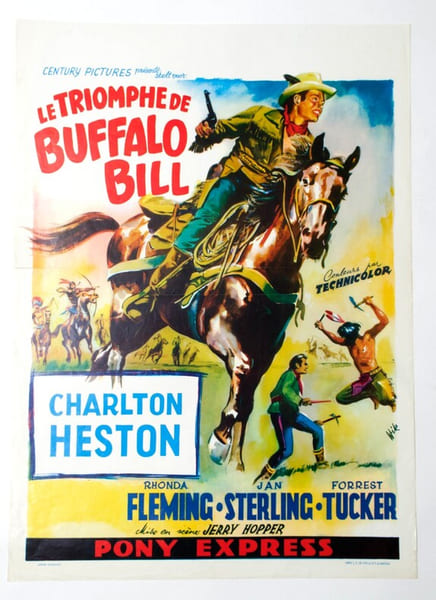
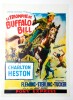
( Cinéma - Affiches - Western ) - Jerry Hopper - Charlton Heston - Rhonda Fleming - Jan Sterling.
Reference : 33007
(1974)
Rare affiche originale belge, d'exploitation en salles, pour le film américain " Le Triomphe de Buffalo Bill - Pony Express ".
Century Pictures 1953. Superbe affiche originale belge, d'exploitation en salle du film américain " Le Triomphe de Buffalo Bill ", réalisé en 1953 par Jerry Hopper. Illustration de Wik. Format 50 x 35,5 cm. On trouve dans les rôles principaux : Charlton Heston, Rhonda Fleming, Jan Sterling, etc. Affiche pliée en son milieu, sinon superbe état de fraicheur. Rare.
Vente exclusivement par correspondance. Le libraire ne reçoit, exceptionnellement que sur rendez-vous. Il est préférable de téléphoner avant tout déplacement.Forfait de port pour un livre 10 € sauf si épaisseur supérieure à 3 cm ou valeur supérieure ou égale à 100 €, dans ce cas expédition obligatoire au tarif Colissimo en vigueur. A partir de 2 livres envoi en colissimo obligatoire. Port à la charge de l'acheteur pour le reste du monde.Les Chèques ne sont plus acceptés.Pour destinations extra-planétaire s'adresser à la NASA.Membre du Syndicat Lusitanien Amateurs Morues
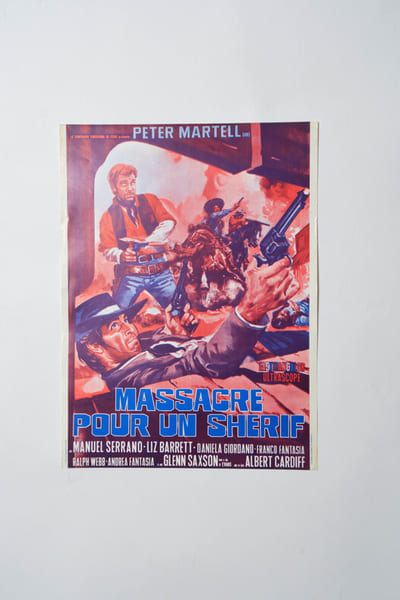
( Cinéma - Affiches Western Spaghetti ) - Alberto Cardone - Renato Casaro.
Reference : 32978
(1971)
Rare affichette originale de film, d'exploitation en salles, pour le western spaghetti italien " Massacre pour un shérif ".
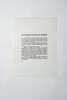
France, La Compagnie Parisienne de Films, Paris, 1968. Superbe affichette originale, illustrée par Renato Casaro, d'exploitation en salles, pour la sortie du film du genre western spaghetti " Massacre pour un shérif ", réalisé en 1968 par Alberto Cardone. Synopsis au verso. Format 32 x 24 cm. On trouve dans les rôles principaux : Pietro Martellanza ( sous le pseudonyme de Peter Martell ), Glenn Saxson, Manuel Serrano, Liz Barret, Daniela Giordano, Franco Fantasia, Ralph Webb, Andrea Fantasia, Gaetano Imbrò, Ugo Adinolfi, etc. Superbe état de fraicheur. Rare.
Vente exclusivement par correspondance. Le libraire ne reçoit, exceptionnellement que sur rendez-vous. Il est préférable de téléphoner avant tout déplacement.Forfait de port pour un livre 10 € sauf si épaisseur supérieure à 3 cm ou valeur supérieure ou égale à 100 €, dans ce cas expédition obligatoire au tarif Colissimo en vigueur. A partir de 2 livres envoi en colissimo obligatoire. Port à la charge de l'acheteur pour le reste du monde.Les Chèques ne sont plus acceptés.Pour destinations extra-planétaire s'adresser à la NASA.Membre du Syndicat Lusitanien Amateurs Morues
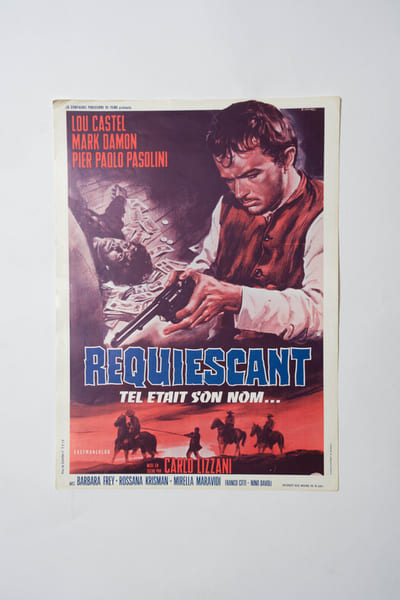
( Cinéma - Affiches Western Spaghetti ) - Carlo Lizzani - Renato Casaro - Pier Paolo Pasolini.
Reference : 32979
(1971)
Rare affichette originale de film, d'exploitation en salles, pour le western spaghetti italien " Requiescant, tel était son nom... ".
France, La Compagnie Parisienne de Films, Paris, 1967. Superbe affichette originale, illustrée par Renato Casaro, d'exploitation en salles, pour la sortie du film du genre western spaghetti " Requiescant, tel était son nom.. ", réalisé en 1967 par Carlo Lizzani. Synopsis au verso. Format 32 x 24 cm. On trouve dans les rôles principaux : Lou Castel, Mark Damon, Pier Paolo Pasolini, Barbara Frey, Rossana Martini ( sous le pseudonyme de Rossana Krisman ), Mirella Maravidi, Franco Citti, Ninetto Davoli, Lorenza Guerrieri, etc. Superbe état de fraicheur. Rare.
Vente exclusivement par correspondance. Le libraire ne reçoit, exceptionnellement que sur rendez-vous. Il est préférable de téléphoner avant tout déplacement.Forfait de port pour un livre 10 € sauf si épaisseur supérieure à 3 cm ou valeur supérieure ou égale à 100 €, dans ce cas expédition obligatoire au tarif Colissimo en vigueur. A partir de 2 livres envoi en colissimo obligatoire. Port à la charge de l'acheteur pour le reste du monde.Les Chèques ne sont plus acceptés.Pour destinations extra-planétaire s'adresser à la NASA.Membre du Syndicat Lusitanien Amateurs Morues
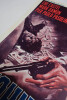
( Cinéma - Affiches Western Spaghetti ) - Demofilo Fidani - Renato Casaro.
Reference : 32976
(1971)
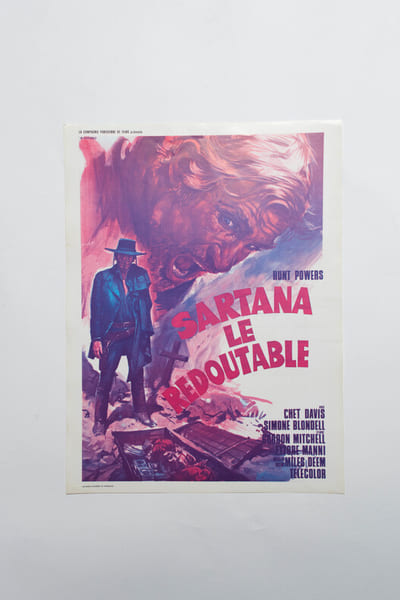
Rare affichette originale de film, d'exploitation en salles, pour le western spaghetti italien " Sartana le redoutable ( Inginocchiati straniero... I cadaveri non fanno ombra ! ) ".
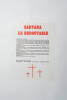
France, La Compagnie Parisienne de Films, Paris, 1971. Superbe affichette originale, illustrée par Renato Casaro, d'exploitation en salles, pour la sortie du film du genre western spaghetti italien " Sartana le redoutable ( Inginocchiati straniero... I cadaveri non fanno ombra ! ) ", réalisé en 1970 par Demofilo Fidani sous le pseudonyme de Miles Deem. Synopsis au verso. Format 32 x 24 cm. On trouve dans les rôles principaux : Jack Betts (sous le pseudonyme de Hunt Powers), Franco Borelli (sous le pseudonyme de Chet Davis), Ettore Manni, Simonetta Vitelli (sous le pseudonyme de Simone Blondell), Benito Pacifico (sous le pseudonyme de Dennis Colt), Gordon Mitchell, Attilio Dottesio (sous le pseudonyme de Dean Reese), Pietro Fumelli, Amerigo Castrighella (sous le pseudonyme de Custer Gail), Mario Cappuccio, Manlio Salvatori, Eugenio Galadini, Giglio Gigli, Mary Ross, etc. Superbe état de fraicheur. Rare.
Vente exclusivement par correspondance. Le libraire ne reçoit, exceptionnellement que sur rendez-vous. Il est préférable de téléphoner avant tout déplacement.Forfait de port pour un livre 10 € sauf si épaisseur supérieure à 3 cm ou valeur supérieure ou égale à 100 €, dans ce cas expédition obligatoire au tarif Colissimo en vigueur. A partir de 2 livres envoi en colissimo obligatoire. Port à la charge de l'acheteur pour le reste du monde.Les Chèques ne sont plus acceptés.Pour destinations extra-planétaire s'adresser à la NASA.Membre du Syndicat Lusitanien Amateurs Morues
( Cinéma - Affiches Western Spaghetti ) - Maurizio Lucidi - Yves Thos - Jack Palance - Bud Spencer.
Reference : 32981
(1971)
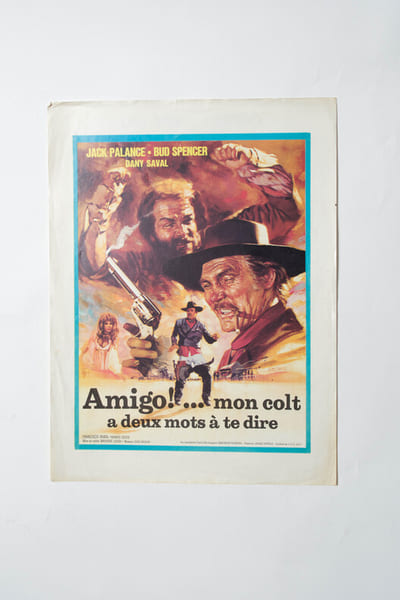
Rare affichette originale de film, d'exploitation en salles, pour le western spaghetti hispano-italien " Amigo !, mon colt a deux mots à te dire ( Si può fare... amigo ) ".
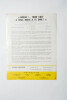
France, Jacques Roitfeld, Paris, 1972. Superbe affichette originale, illustrée par Yves Thos, d'exploitation en salles, pour la sortie du film du genre western spaghetti " Amigo, mon colt a deux mots à te dire ( Si può fare... amigo ) ", réalisé en 1972 par Maurizio Lucidi. Synopsis au verso. Format 32 x 24 cm. On trouve dans les rôles principaux : Bud Spencer, Jack Palance, Renato Cestiè, Francisco Rabal, Dany Saval, etc. Superbe état de fraicheur. Rare.
Vente exclusivement par correspondance. Le libraire ne reçoit, exceptionnellement que sur rendez-vous. Il est préférable de téléphoner avant tout déplacement.Forfait de port pour un livre 10 € sauf si épaisseur supérieure à 3 cm ou valeur supérieure ou égale à 100 €, dans ce cas expédition obligatoire au tarif Colissimo en vigueur. A partir de 2 livres envoi en colissimo obligatoire. Port à la charge de l'acheteur pour le reste du monde.Les Chèques ne sont plus acceptés.Pour destinations extra-planétaire s'adresser à la NASA.Membre du Syndicat Lusitanien Amateurs Morues
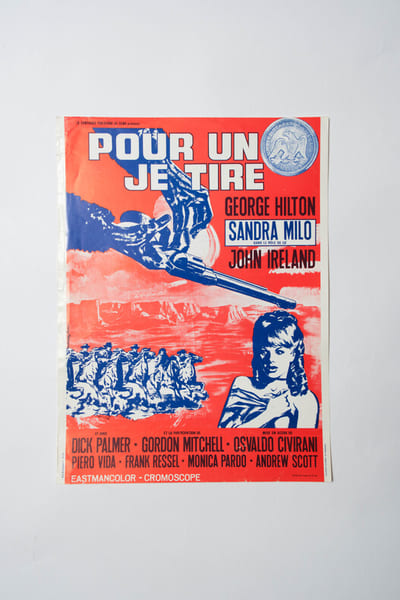
Rare affichette originale de film, d'exploitation en salles, pour le western spaghetti italien " Pour un dollar je tire ( T'ammazzo!... Raccomandati a Dio ) ".
France, La Compagnie Parisienne de Films, Paris, 1968. Superbe affichette originale, d'exploitation en salles, pour la sortie du film du genre western spaghetti " Pour un dollar je tiref ", réalisé en 1968 par Osvaldo Civirani. Synopsis au verso. Format 32 x 24 cm. On trouve dans les rôles principaux : George Hilton, Sandra Milo, John Ireland, Gordon Mitchell, Dick Palmer, etc. Superbe état de fraicheur. Rare.
Vente exclusivement par correspondance. Le libraire ne reçoit, exceptionnellement que sur rendez-vous. Il est préférable de téléphoner avant tout déplacement.Forfait de port pour un livre 10 € sauf si épaisseur supérieure à 3 cm ou valeur supérieure ou égale à 100 €, dans ce cas expédition obligatoire au tarif Colissimo en vigueur. A partir de 2 livres envoi en colissimo obligatoire. Port à la charge de l'acheteur pour le reste du monde.Les Chèques ne sont plus acceptés.Pour destinations extra-planétaire s'adresser à la NASA.Membre du Syndicat Lusitanien Amateurs Morues
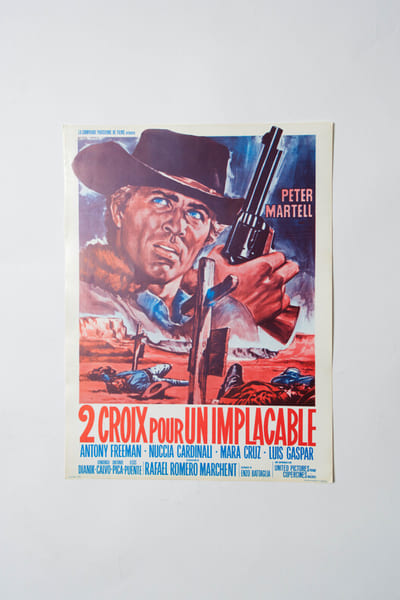
( Cinéma - Affiches Western Spaghetti ) - Rafael Romero Marchent - Renato Casaro.
Reference : 32977
(1971)
Rare affichette originale de film, d'exploitation en salles, pour le western spaghetti hispano-italien " Deux Croix pour un implacable ( Dos cruces en Danger Pass ) ".
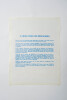
France, La Compagnie Parisienne de Films, Paris, 1967. Superbe affichette originale, illustrée par Renato Casaro, d'exploitation en salles, pour la sortie du film du genre western spaghetti " Deux Croix pour un implacable ( Dos cruces en Danger Pass ) ", réalisé en 1967 par Rafael Romero Marchent. Synopsis au verso. Format 32 x 24 cm. On trouve dans les rôles principaux : Pietro Martellanza ( sous le pseudonyme de Peter Martell ), Mara Cruz, Luis Gaspar, Mario Novelli ( sous le pseudonyme de Anthony Freeman ), Miguel del Castillo, Emilio Rodríguez, Dyanik Zurakowska ( sous le pseudonyme de Danik ), Eduardo Coutelenq, Nuccia Cardinali, Antonio Pica, etc. Superbe état de fraicheur. Rare.
Vente exclusivement par correspondance. Le libraire ne reçoit, exceptionnellement que sur rendez-vous. Il est préférable de téléphoner avant tout déplacement.Forfait de port pour un livre 10 € sauf si épaisseur supérieure à 3 cm ou valeur supérieure ou égale à 100 €, dans ce cas expédition obligatoire au tarif Colissimo en vigueur. A partir de 2 livres envoi en colissimo obligatoire. Port à la charge de l'acheteur pour le reste du monde.Les Chèques ne sont plus acceptés.Pour destinations extra-planétaire s'adresser à la NASA.Membre du Syndicat Lusitanien Amateurs Morues

( Cinéma - Dossier de Presse - Western ) - Henry Hathaway - John Ford - George Marshall - Carroll Baker - Lee J. Cobb - Henry Fonda - Carolyn Jones - Karl Malden - Gregory Peck - George Peppard - Robert Preston - Debbie Reynolds - James Stewart - Eli Wallach - John Wayne - Richard Widmark.
Reference : 33115
(1962)
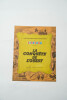
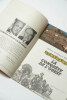
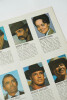
Rare dossier de presse pour le film américain : La Conquête de l'Ouest ( How the West Was Won ).
Metro-Goldwyn-Mayer / Editions Random House 1962. Dossier de presse agrafé de 16 pages au format 27,5 x 21 cm. Couvertures illustrées. Rare dossier de presse pour le film américain : La Conquête de l'Ouest ( How the West Was Won ), réalisé en 1962 par Henry Hathaway, John Ford et George Marshall. Présentation du Cinérama, des producteurs et de tous les acteurs. Synopsis accompagné de la fiche technique et de nombreuses photographies en noir et en couleurs. On trouve dans les rôles principaux : Carroll Baker, Lee J. Cobb, Henry Fonda, Carolyn Jones, Karl Malden, Gregory Peck, George Peppard, Robert Preston, Debbie Reynolds, James Stewart, Eli Wallach, John Wayne, Richard Widmark, etc. Superbe état de fraicheur. Tirage limité réservé aux journalistes, diffuseurs et salles de cinéma. De toute rareté.
Vente exclusivement par correspondance. Le libraire ne reçoit, exceptionnellement que sur rendez-vous. Il est préférable de téléphoner avant tout déplacement.Forfait de port pour un livre 10 € sauf si épaisseur supérieure à 3 cm ou valeur supérieure ou égale à 100 €, dans ce cas expédition obligatoire au tarif Colissimo en vigueur. A partir de 2 livres envoi en colissimo obligatoire. Port à la charge de l'acheteur pour le reste du monde.Les Chèques ne sont plus acceptés.Pour destinations extra-planétaire s'adresser à la NASA.Membre du Syndicat Lusitanien Amateurs Morues

