 Write to the booksellers
-
Type
Any type (4)
Artists book (5)
Autograph (7)
Book (17317)
Drawings (6)
Engraving (101)
Magazine (357)
Manuscript (5)
New book (1)
Old papers (6)
Photographs (183)
Reprint (1)
-
Latest
Last 24h (23)
Last 3 days (3)
Last month (259)
Last week (10)
-
Language
Czech (1)
Dutch (9)
English (34)
French (17901)
German (11)
Italian (12)
Japanese (3)
Portuguese (7)
Russian (2)
Spanish (12)
Swedish (1)
-
Century
16th (3)
17th (5)
18th (53)
19th (773)
20th (5727)
21st (1185)
-
Countries
Belgium (2626)
Brazil (1)
Canada (27)
China (2)
Côte d'Ivoire (120)
France (13407)
Greece (2)
Switzerland (1808)
-
Syndicate
ALAC (27)
CLAM (21)
CLAQ (3)
ILAB (4689)
NVVA (1068)
SLACES (1068)
SLAM (3445)
SNCAO (124)
August von Bonstetten (1796-1879) - De la vie quotidienne d'une peintre suisse / Aus Dem Alltag Eines Schweizer Malers - Avec un essai de Valentina Anker / mit einem Essay de Valentina Anker
Berne, Editions Benteli, 2001, in-4 rel. toile bleue (25 x 28,5), 184 p., texte bilingue français-allemand, nombreuses illustrations (photos, dessins, reproductions en n. et en coul.), jaquette, très bon état.
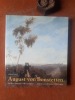
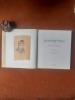
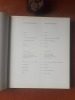
Le premier livre consacré au peintre August von Bonstetten, dont l'œuvre a contribué à faire rayonner l'image d'une Suisse humaniste, cultivée, ouverte sur le monde. Il relate la vie quotidienne au XIX siècle d'une famille patricienne suisse vivant à la campagne près de Berne à travers l'oeuvre du peintre, ses lettres et des critiques de l'époque. Voir le sommaire sur photos jointes.
ROBERT VANDEREYCKEN.
, Concentra hasselt 1992, Bound with dustjacket, 250 + 310mm, 318pp
Good condition, with illustrations and plates in colour.
LE TRAVAIL AU PINCEAU. PEINTURE A L'HUILE.
DESSAIN ET TOLRA. NON DATE. In-8. Broché. Etat d'usage, Couv. légèrement passée, Dos satisfaisant, Intérieur frais. 32 pages. Premier plat illustré en couleurs. Nombreuses illustrations en couleurs et noir et blanc, dans et hors texte.. . . . Classification Dewey : 751-Technique de peinture
Classification Dewey : 751-Technique de peinture

J.M.W. Turner Aquarelles de la City Art Gallery, Manchester
1983 Bordeaux, Musée des Beaux Arts - Calais, Musée des Beaux Arts, 1983, 20 x 21 cm, 58 pp, recouvert de papier cristal, en très bon état,
Catalogue des expositions de Bordeaux (15 octobre-28 novembre 1983) et Calais (3 décembre 1983-16 janvier 1984). Traduction française : Catherine Ferbos, Mélanie Harriss.
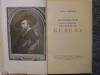
Reconstruction de la maison et de l'atelier de RUBENS.
Buschmann Anvers 1947 In-12 ( 215 X 140 mm ) de 79 pages + 16 planches, broché sous couverture illustrée. Illustration en frontispice, bandeau et lettrines ainsi que 16 planches hors-texte en fin d'ouvrage. Bel exemplaire.
La peste en Ceppaloni - CAYC : Center of art and communication
CAYC | Buenos Aires 1978 | 16.50 x 22 cm | broché
Edition originale illustrée de photographies de ce catalogue de l'exposition s'étant tenue à Buenos Aires en Septembre 1978. Agréable et rare exemplaire. Texte de Jorge Glusberg. - Photographies et détails sur www.Edition-Originale.com -
JEAN VINCENT LHERMITAIS (1700-1758) un peintre vannetais du XVIIIe siècle.
Vannes Imprimerie Galles 1908. In-8 broché 28pp.
(995)
Entretiens avec Closon sur l'art, l' homme et la vie, recueillis par Jacques Billot.
Paris, S.F.P., 1964 ; in-8°,broché, couverture blanche illustrée en couleurs au 1er plat, titre en noir et blanc; 155pp.,2pp.nch.,1f.; nombreuses reproductions des dessins, écrits et peintures de l' artiste en noir à pleine page.
Envoi autographe signé de Jacques Billot à R.L. Dupuy.(CO2)
La querelle des images
Editions Pierre Cailler, Collection "Les problèmes de l'art" - 1960 - In-8, broché, sous papier criçsaonb - 241 p. - Feuillets non coupés
Bon état - Papier cristal légèrement abimé (petite déchirure, tâches) - Intérieur propre
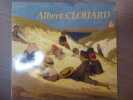
Albert CLOUARD: Les derniers feux du symbolisme en Bretagne.
Bruno Belleil Rennes 1992 In-4 carré oblong "à l'italienne" ( 235 X 160 mm ) de 127 pages, broché sous couverture illustrée. Illustrations dans et hors-texte. Très bel exemplaire.
Apprenez l'acrylique.
Paris, Gründ, 1990 22 x 29, 156 pp., illustrations en couleurs, cartonnage éditeur + jaquette, très bon état
DICTIONNAIRE DES MINIATURISTES SUR EMAIL
Paris Editions Albert Morancé 1924 grand in 8 (23,5x18,5) 1 volume broché, XX et 242 pages [1], avec 12 planches hors-texte, dont une en couleur. Bel exemplaire ( Photographies sur demande / We can send pictures of this book on simple request )
Très bon
Le livre des quatre corbeaux. Textes de A. Poe, Baudelaire, Mallarmé, Pessoa. Peintures de Julio Pomar.
Paris, Editions de la Différence, 1985, in-folio, 147 p. richement ill., brochure originale sous jaquette illustrée.

(SLACES, NVVA)
Phone number : 41 (0)26 3223808
Gleyre. Étude biographique et critique avec le catalogue raisonné de l'œuvre du maître. Deuxième édition, revue et corrigée
Paris, Perrin, 1886 gr. in-8, 544 pp., broché. Rousseurs.
Gleyre, peintre du XIXe siècle d'origine suisse, est surtout connu pour ses compositions orientales. Après de longues années passées en Orient, il reprit la direction de l'atelier de Paul Delaroche, et devint le professeur d'élèves devenus illustres, comme Monet, Renoir ou Sisley. - - VENTE PAR CORRESPONDANCE UNIQUEMENT - LIEN DE PAIEMENT, NOUS CONSULTER.
Gleyre. Étude biographique et critique avec le catalogue raisonné de l'œuvre du Maître
Librairie Académique Didier, Paris (1878)., 1878. Relié pleine peau maroquinée marron, décors de filets noirs et or aux dos et couvertures, titres et tranches dorées, contre plats décorés. Édition originale. 30 photos contrecollées hors texte. Fort ouvrage de 547 pages recensant plus encore d'oeuvres du célèbre peintre (683 numéros décrits), dans un bel état de conservation, grâce à la reliure (d'édition vraisemblablement) et à la dorure, la plupart des volumes étant brochés.
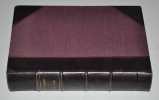
Ce livre a appartenu à la niece du peintre , il faut noter quelques commentaires de la niece au crayon a papier , on joint une lettre de cette meme niece , qui rapelle comment elle envisage la succession de son oncle peintre GLEYRE .......... et une lettre tres ordinaire du peintre lui meme qui raconte "qu'il est invité ce soir ...........ect....ect.......ray BIblio bur
LE MUSÉE ROYAL DE MADRID
Paris Vve Jules Renouard, Libraire 1859 in 12 (18,5x12) 1 fort volume broché, couverture imprimée, VIII et 150 pages. Comte Louis Clément de Ris, attaché à la conservation des musées impériaux. Bel exemplaire ( Photographies sur demande / We can send pictures of this book on simple request )
Très bon Broché
Musée du Louvre. NOTICE DES FAÏENCES FRANÇAISES ( Faïences dites de Henri II. - Faïences de Bernard Palissy. - Faïences diverses )
Paris Charles de Mourgues Frères 1882 in 8 (19x12) 1 volume broché, couverture imprimée, 111 pages [1]. Catalogue de 242 numéros décrits. Musée du Louvre. Conservation de la sculpture et des objet d'art, du moyen-age, de la renaissance et des temps modernes. Série H. Rare. Bel exemplaire ( Photographies sur demande / We can send pictures of this book on simple request )
Très bon
L'Oeuvre artistique.-
Paris. Lapina. s.d. In-8 (138 x 217mm) broché, couverture rempliée, ornée d'un dessin, titre en lettres d'or, 46 pages de textes et 150 reproductions en noir, à pleine page, des peintures et dessins exposés à la Galerie Bernheim. Bel exemplaire numéroté (pas de justification). (6).
Charles de la Fosse 1636-1716. Tome 1 : Le maitre des modernes. Tome II : Catalogue raisonné.
Deux volumes, reliures toile de l'éditeur sous jaquette, réunis dans un étui illustré, 31X23 cm, 2006, 296+349 pages, nombreuses illustrations en noir et en couleurs, éditions Faton. Etui avec de petites marques d'usage, bon exemplaire.
La Curieuse Vie de Marcellin Desboutin - Peintre - Graveur - Poète
Paris. 20 5 cm x 26 5 cm. 1922. Broché. IV+ 291 pages. Paris Éditions Floury 1922. Broché couverture rempliée 20 5 cm x 26 5 cm IV+ 291 pages 41 planches hors-texte dont 5 pointes sèches originales et 4 couleur illustrations noir & blanc in-texte. Texte de Clément-Janin bibliographie catalogue des gravures liste des oeuvres avec leurs dates de création et les noms de leurs propriétaires index des noms cités. Très bon état
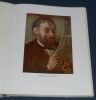
Jules Noël : Peintre breton, assez énigmatique
Pays et Terroirs Dos carré collé 2004 In-4 (19,3 x 28 cm), dos carré collé, 139 pages, iconographie en couleurs et en noir et blanc, ouvrage recherché ; très bon état. Livraison a domicile (La Poste) ou en Mondial Relay sur simple demande.
peinture murale du Haut Moyen Age en Catalogne (IXe-Xe siecle),
Turnhout, Brepols, 2012 Paperback, 702 pages ., 92 b/w ill. + 43 colour ill., 156 x 234 mm. Languages : French. ISBN 9782503545684.
La peinture à l'aquarelle à l'atelier et sur nature - la miniature, la gouache - conseils pratiques.
Bourgeois Ainé. 1912. In-8. Broché. Etat d'usage, Couv. défraîchie, Coiffe en pied abîmée, Intérieur acceptable. 27 pages agrafées - rousseurs sur les plats - déchirures sur le 1er plat - agrafes rouillées - quelques illustrations en noir et blanc dans le texte.. . . . Classification Dewey : 751-Technique de peinture
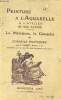
Classification Dewey : 751-Technique de peinture
La peinture à l'huile à l'atelier et sur nature
Bourgeois Ainé 1933 in8. 1933. Broché. Ce livre de C. Morin publié par Bourgeois aîné en 1928 offre des conseils pratiques sur la peinture à l'huile que ce soit en atelier ou en extérieur (sur nature). Il s'agit d'un guide illustré de 32 pages destiné aux artistes amateurs ou confirmés
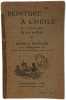
Bon état couverture tachée intérieur propre
Perspective élémentaire et Le dessin d'après nature
BOURGEOIS AINE 1927 in8. 1927. Broché. Ce livre de C. Morin édité par Bourgeois Aîné propose des conseils pratiques sur la perspective élémentaire et le dessin d'après nature. Il s'adresse aux débutants ou amateurs d'art souhaitant apprendre les bases du dessin réaliste
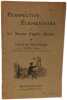
Bon état pages jaunies intérieur propre

