 Write to the booksellers
-
Type
Book (7262)
Disk (45)
Drawings (1)
Engraving (9)
Magazine (89)
Maps (4)
Music sheets (136)
New book (4)
Old papers (1)
Photographs (19)
Posters (1)
-
Latest
Last 24h (2)
Last 3 days (5)
Last month (122)
Last week (9)
-
Language
Czech (1)
Dutch (9)
English (158)
French (7389)
German (4)
Italian (2)
Japanese (1)
Latin (3)
Russian (4)
-
Century
16th (17)
17th (43)
18th (199)
19th (882)
20th (2485)
21st (1574)
-
Countries
Belgium (1156)
Canada (34)
China (56)
Côte d'Ivoire (7)
Denmark (1063)
France (4902)
Germany (1)
Netherlands (181)
Switzerland (155)
United Kingdom (12)
United States of America (4)
-
Syndicate
ALAC (27)
CLAM (25)
CLAQ (2)
ILAB (2251)
NVVA (15)
SLACES (15)
SLAM (1038)
SNCAO (4)
Sur la Relation qui existe entre la forme cristalline et les proportions chimiques. IIe Memoire sur les Arséniates et les Phsophates. (Traduit, par l'Auteur lui-même, des Mèmoires de l'Academie royale des Sciences de Stockholm, pour l'an 1821, tome I.).
Paris, Crochard, 1821. Contemp. full cloth. Gilt lettering to spine. Light wear to top of spine. A stamp to verso of titlepage. In 'Annales de Chimie et de Physique', Volume 19. 448 pp. a. 1 large folded plate. (Entire volume offered). Mitscherlich's paper: pp. 350-419. 1 large folded engraved plates. Some scattered brownspots.
First French edition - in the authors own form and translation - of Mitcherlich's announcment of his discovery of Isomorphism, stating that similar crystalline form reflect analogous chemical formulae, which Berzelius used in fixing the formulas of compounds. Mitcherlich was at this time an assistent to Berzelius, and the first printing of this classical paper appeared the same year in Akad. Handl., Stockholm. The paper was soon afterward printed in French (the paper offered) and English, and Berzelius discussed it in his ""Jahresbericht"", so that the work quickly became known. - Leicester & Klickstein pp. 306-08.""The statement of the law of isomorphism...marks Mitscherlich's most importent contribution to chemistry - indeed, Berzelius considered Mitscherlich's discovery to be the most significant since that of chemical proportions. Berzelius himself found Mitscherlich's work to be of great use"" he was at that time concerned with the determination of the atomic weights of the elements amd the law of isomorphism provided him with a valuable tool....Berzeluius' task was simplified by the application of Mitscherlich's law...""(DSB IX, p. 424).

Onverwerkt verleden. De psychoanalyse van het onvermogen om te rouwen.
, Anthos: Baarn, 1988, Softcover, 142pp., zeer goede staat.
Maroc 1900-1960: Un certain regard
Actes sud 2007 176 pages 22 4x2 2x28 8cm. 2007. Relié. 176 pages.
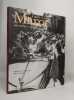
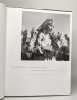
emboitage en bon état très frais
LA DECOUVERTE DES INDIENS (1492-1550)
J'AI LU 1999 128 pages 12 8x0 8x19 4cm. 1999. pocket_book. 128 pages.
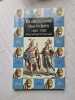
Bon état
florilegio : espacio de encuentro de los autores antiguos y medievales
, Brepols - Harvey Miller, 2011 Hardcover. 259 p., 165 x 240 mm, Languages: Spanish, Including an index. Fine copy. ISBN 9782503535968.
En los florilegios se reunen obras muy diferentes en su planteamiento, genero y epoca formando una obra nueva con un plan y un tratamiento unitario, de manera que los escritores de la literatura latina clasica pueden convivir con los autores cristianos y medievales, contemporaneos en algunos casos al compilador del florilegio. Ademas, en ellos se realiza una lectura particular de los textos originales y una interpretacion acorde con la finalidad buscada por el compilador, de forma que cada obra pierde sus caracteristicas individuales y los rasgos del genero en el que se escribio, al sufrir un proceso de reescritura comun. En este volumen se presentan diversas formas de encuentro y convivencia de los autores antiguos y medievales ofrecidas en los florilegios latinos, prestando especial atencion a los manuscritos conservados en Espana. Las conclusiones alcanzadas bien pueden ser de aplicacion general, puesto que entre los florilegios conservados en bibliotecas espanolas se encuentran testimonios de obras con una amplia tradicion, como el Florilegium Gallicum, al que se dedican dos colaboraciones sobre la presencia de Claudiano y de las epistolas literarias de Horacio; ademas, en otros dos capitulos se analiza la selecciones de Los Fastos de Ovidio y de las Satiras de Persio y Juvenal en el manuscrito 749-II de la Bibliotheque Municipale de Douai. Otras contribuciones analizan diversas formas de compilacion confeccionadas en tierras hispanas.
St. Oswald of Northumbria: Continental Metamorphoses, with an Edition and Translation of Osvalds saga and Van sunte Oswaldo deme konninghe,
Turnhout, Brepols, 2006 Hardback, XIV+209 p., 160 x 240 mm. ISBN 9782503522937.
This study, edition, and translation (by one of the most prestigious medieval Scandinavianists in the world) begins with a 160-page monograph on the development of the vernacular Oswald legend in the Germanic world and ends with an edition and translation of the Icelandic Osvalds saga and of Van sunte Oswaldo deme konnighe, the Low German legend of the saint (which has never been edited before) so that Kalinke can show the relationship between the two. Kalinke demonstrates that the earliest vernacular legend of St. Oswald is a no longer extant Low German legend of which the Icelandic legend is a translation. New.
Associated Regional Chronologies for the Ancient Near East and the Eastern Mediterranean. Jezirah,
Turnhout, Brepols, 2012 Paperback, VIII+442 p., 162 b/w ill., 210 x 295 mm. ISBN 9782503534923.
Introduction (M. Lebeau), Stratigraphy (Ph. Quenet), Pottery (E. Rova), Urbanisation & City Planning (J.-W. Meyer), Architecture (P. Pfalzner), Metal (A. bianchi & K. Franke), Figurines (A. Pruss), Lithics & Stone Industry (J. Thomalsky), Burials & Funerary practices (S. Calentini), Glyptic (A. Mccarthy), Radiocarbon (l. Ristvet), History & Philology (W. Sallaberger), Conclusion (M. Lebeau). New.
annales du haut moyen age
, Brepols - Harvey Miller, 1975 Hardcover. 58 p., 156x234 mm, Languages: French, Fine copy. Including an index. ISBN 9782503360140.
Bible moralis e of Naples / Biblioth que nationale de France, Paris
Barcelona, M. Moleiro Editor,, 2009 Bound in luxurious brown-marron leather with gilt Greek lettering, housed in a slipcase with gold motifs. 384 pages, 204 illuminations with gold-decorated miniatures, either full-page or arranged across the page in multiple pictorial strips. Full-colour facsimile edition. Size: 32 23 cm. ****NUMBERED COPY NO. 588 OF A LIMITED FACSIMILE EDITION OF 987 COPIES, ISSUED WITH A CERTIFICATE OF AUTHENTICITY.**** Includes a full-colour commentary volume, 376 pages, hardcover with dust jacket, text by Marianne Besseyre.
Shelf mark: Fran ais 9561. /Date: c. 1340-1350. Provenance: Naples. Image strips for the Old Testament and full-page miniatures for the New Testament: a pictorial masterpiece with more than 200 golden miniatures, created by the greatest artists of the early Italian Renaissance. +++ added; commentary volume (376 p.) by Marianne Besseyre (Curator at the Centre de recherche sur les manuscrits enlumin s, BnF) and Yves Christe (Honorary Professor, Universit de Gen ve).
RENCONTRE AVEC VERCINGETORIX
DE BOREE 2018 21 6x21 8x0 8cm. 2018. Broché.

Comme neuf - livre issu de destockage - pouvant présenter d'infimes traces de stockage - Expédié soigneusement dans emballage adapté
RENCONTRE AVEC VERCINGETORIX
DE BOREE 2018 21 6x21 8x0 8cm. 2018. Broché.

Comme neuf - livre issu de destockage - pouvant présenter d'infimes traces de stockage - Expédié soigneusement dans emballage adapté

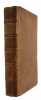
Forsøg til en Islandsk Naturhistorie, med adskillige oekonomiske samt andre Anmærkninger.
Kiøbenhavn (Copenhagen), C.F. Holm, 1786. 8vo. In contemporary full calf with five raised bands and gilt lettering to spine. Double line gilt boarders of boards. Light wear to extremities, scratches to boards and light miscolouring to spine. Light occassional marginal brownspotting. Deaccession-stamp to title page. Overall a nice copy. XVI, 414 pp. + 7 folded engraved plates.
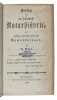
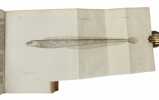
First edition of Mohr’s important work on the economy and natural history of Iceland. “In 1780, the Faeroese naturalist, Nicolai Mohr (1742-90) was sent to Iceland specifically to investigate some of Olavius’ discoveries, such as graphite in Siglufjördur in the North which, it was believed, might be of economic significance. Mohr spent two summers in Iceland and travelled around the northern and eastern parts. He later wrote a book (the present) about his travels. MPhr concentrates on the economy and natural history of Iceland, but his book is written in the form of a travelogue, and his observations on all that he saw helped to build up a picture of conditions in Iceland at the time” (Caseldine, Iceland – Modern Processes and past Environments).
"MOISSAN, HENRI - ONE OF THE MAJOR PROBLEMS IN CHEMISTRY SOLVED - THE ISOLATION OF FLUORINE
Reference : 44236
(1887)
Recherches sur L'Isolement du Flour.
Paris, G. Masson, 1887. 8vo. Contemp. hcalf, raised bands, gilt spine. Light wear along edges. Small stamps on verso of titlepage. In: ""Annales de Chimie et de Physique"", 6e Series - Tome 12. 576 pp. (Entire volume offered). Moissan's paper: pp. 472-537. Many textillustrations of apparatus in woodcut.
First appearance of the paper in which Moissan describes his isolation and observation of the properties of fluorine gas and his succes in producing diamond with his pectacular arc method. Fo these achievements he was the first French to be awarded the Nobel Price in chemistry (1906).The existence of the element fluorine had been well known for many years, but all attempts to isolate it had failed and some experimenters had died in the attempt.""Moissan eventually succeeded in preparing fluorine in 1886 by the electrolysis of a solution of potassium hydrogen difluoride (KHF2) in liquid hydrogen fluoride (HF). The mixture was needed because hydrogen fluoride is a non-conductor. The device was built with platinum/iridium electrodes in a platinum holder and the apparatus was cooled to -50 °C. The result was to completely isolate the hydrogen produced from the negative electrode from the fluorine produced at the positive one.This is essentially still the way fluorine is produced today."" (Wikipedia).Partington IV, p. 912. - Weeks ""Discovery of teh Elements"", p. 272 ff. - Parkinson ""Breakthroughs"" 1885 C.
Description d'un nouveau four électrique.
(Paris, Gauthier-Villars), 1892. 4to. No wrappers. In: ""Comptes Rendus Hebdomadaires des Séances de L'Academie des Sciences"", Tome 115, No 24. Pp. (1029-) 1112. (Entiere issue offered). Moissan's paper: pp. 1031-1033.nA few small tears to frontpage.
First printing of the paper in which Moissan described his famous invention of the Electric Furnace and hereby laying the foundations for high-temperature chemistry. For this invention and his isolation of flourine Moissan received the Nobel Prize in 1906.""Moissan had turned his attention to the production of artificial diamonds and in the process constructed his famous electric furnace, which, although simple in design, proved to be a technological tool of the first order. The original model, which he subsequently improved, was demonstrated to the Academy of Sciences in December 1892 (the paper offered). It consisted of two blocks of lime, one laid on the other, with a hollow space in the center for a crucible, and a longitudinal groove for two carbon electrodes which produced a high-temperature electric arc. In one experiment Moissan heated iron and carbonized sugar in his electric furnace, causing the carbon to dissolve in the molten iron..... Moissan’s electric furnace provided great impetus to the development of high-temperature chemistry. With this apparatus he prepared and studied refractory oxides, silicides, borides, and carbides" he succeeded in volatilizing many metals" and, by reducing metallic oxides with carbon, he obtained such metals as manganese, chromium, uranium, tungsten, vanadium, molybdenum, titanium, and zirconium. The electrochemical and metallurgical applications to industry of Moissan’s work became immediately apparent, for example in the large-scale production of acetylene from calcium carbide.""(DSB).Moissan received the Nobel prize in Chemistry in 1906 ""in recognition of the great services rendered by him in his investigation nd isolation of the element fluorine, and for the adoption in the service of science of the electric furnace called after him"".Parkinson ""Breakthroughs"" 1892 C.This issue also contains another notable paper by PIERRE CURIE in which he describes his invention of a quadrant electrometer that improved upon the one devised by Kelvin by adding an ingenious magnetic damper.
Amphitryon (Petits Classiques)
Editions Larousse 2009 192 pages 12 4x1x17 8cm. 2009. Broché. 192 pages.

Très bon état - L'ouvrage qui n'a jamais été lu peut présenter de légères traces de stockage mais est du reste en très bon état. envoi rapide et soigné dans un emballage adapté depuis France
Amphitryon (Petits Classiques)
Editions Larousse 2009 192 pages 12 4x1x17 8cm. 2009. Broché. 192 pages.
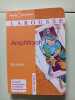
Bon état
Dom Juan Ou Le Festin De Pierre
Editions Hatier 2015 208 pages 12 6x17 4x1 2cm. 2015. Broché. 208 pages.
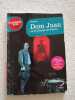
Etat correct
Le Malade imaginaire: suivi du parcours « Spectacle et comédie »
Hatier Litterature generale 2020 260 pages 12 4x17 3x1 4cm. 2020. Broché. 260 pages.
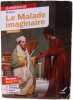
Etat correct
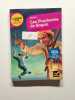
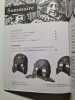
Les Fourberies de Scapin: nouveau programme
Editions Hatier 2014 164 pages 12 6x1x17 4cm. 2014. pocket_book. 164 pages.
Bon état
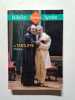
Le Tartuffe: Nouvelle édition avec cahier photos
Editions Belin 2016 224 pages 17x24 2x1 1cm. 2016. Broché. 224 pages.
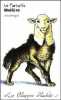
Etat correct
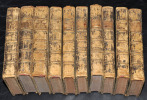
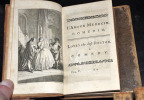
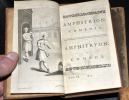
The works of Moliere
1755 French and English London for D. Browne and A. Millar , 1755, 10 volumes in 16, relié cuir , bien complets,
ray armo L4

Le Bourgeois Gentilhomme
Hachette 2008 223 pages 11x1 2x17 2cm. 2008. Broché. 223 pages.
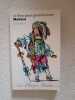
Bon état

