 Write to the booksellers
-
Type
Book (7245)
Disk (44)
Drawings (1)
Engraving (9)
Magazine (89)
Maps (4)
Music sheets (135)
New book (2)
Old papers (1)
Photographs (19)
Posters (1)
-
Latest
Last 3 days (1)
Last month (862)
Last week (110)
-
Language
Czech (1)
Dutch (9)
English (156)
French (7371)
German (4)
Italian (2)
Latin (3)
Russian (4)
-
Century
16th (16)
17th (43)
18th (196)
19th (878)
20th (2477)
21st (1561)
-
Countries
Belgium (1156)
Canada (32)
China (56)
Côte d'Ivoire (7)
Denmark (1063)
France (4886)
Germany (1)
Netherlands (181)
Switzerland (155)
United Kingdom (9)
United States of America (4)
-
Syndicate
ALAC (25)
CLAM (25)
CLAQ (2)
ILAB (2236)
NVVA (15)
SLACES (15)
SLAM (1028)
SNCAO (4)
Three Lives of English Saints
, Brepols - Harvey Miller, 1972 Hardcover. 104 p., 140 x 215 mm, Languages: English, Including an index. Fine copy. ISBN 9780888444509.
Edited by E.L. BENNETT,E.L. With an introduction by A.J.B. WACE & E.B. WACE. Translation and commentary by J. CHADWICK.
Philadelphia, The American Philosophical Soc., 1958.
122 p., ills. Wrs. 30 cm (Cover worn; lower margin rear cover chafed)
VINTAGE AMERICAN & EUROPEAN - BOOK 3 - CHARACTER WRIST WATCH PRICE GUIDE
FIRST EDITIONS. NON DATE. In-8. Broché. Bon état, Couv. convenable, Dos satisfaisant, Intérieur frais. 224 pages illustrées de nombreuses photographies en noir et blanc dans et hors texte - Texte en 2 colonnes. . . . Classification Dewey : 681.1-Horlogerie
Ouvrage EN ANGLAIS - Au SOMMAIRE : Adolph Hitler - Alice in wonderland - Batman - betty boop - Donald duck - Mickey mouse 1978 Bradley - Popeye raid - Supermann - Tarzan -Yogi Bear... Classification Dewey : 681.1-Horlogerie


L'Etat Baroque: Regards Sur La Pensée Politique de La France Du Premier XVIIe Siecle (1610-1652) (Histoire Des Idees Et Des Doctrines)
Vrin 1985 540 pages 24x3 2x15 6cm. 1985. Broché. 540 pages.
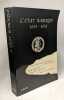
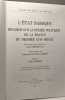
Bon état tranche un peu ternie intérieur propre bonne tenue
Histoire d'un village d'Anjou. La Plaine.
Editions du Choletais, 1993 24 x 16 cm., 197 pp, Broché

- - VENTE PAR CORRESPONDANCE UNIQUEMENT - LIEN DE PAIEMENT, NOUS CONSULTER.
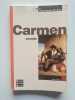
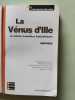
Classiques Bordas - La Venus d'Ille et autres nouvelles fantastiques - Mérimée
Bordas 2004 232 pages 14 86x21 41x1 85cm. 2004. mass_market. 232 pages.

Etat correct
Revue " Métamorphoses " - Revue trimestrielle publiée pour le compte et le plaisir d'Oleg Ibrahimoff et ses amis - Littératures - Poésie - N° 21/22Sommaire : La vie et la mort sur une petite place de J.-L Dino ( suite ) - Espaces mathématiques de P. Jeener - Suppose ( Guillevic ) - " Que l'aurore te frappe " ( Janine Mitaud ) - L'hétéronyme ( Zoe-Zou - " En écoutant Erik Satie " ( Gaston Puel ) - Couverture de Pierre Peyrolles
1821 1 vol in-8 broché - N° 21/22 de 1973 -
Bon état ( ex-tampon de bibliothèque en page de titre )
"MÜLLER, JOHANNES & THEODOR SCHWANN. - THE DISCOVERY OF PEPSIN, THE FIRST KNOWN ANIMAL ENZYME & THE ""FIBRES OF REMAK""
Reference : 45406
(1836)
Versuche über die künstliche Verdauung des geronnenen Eiweisses (Müller & Schwann) (+) Ueber das Wesen des Verdauungsprocesses (Schwann). 2 paers.
Berlin, G. Eichler, 1836. In ""Archiv für Anatomie, Physiologie und Wissenschaftliches Medicin Herausgegeben von Johannes Müller"". Jahrgang 1836. Pp. 66-89 a. pp. 90-139. The entire volume offered in its 6 parts (in 5), all 5 issues uncut with orig. printed warppers. (2),CCXXIV,390 pp. and 15 engraved plates. The 2 first issues with a faint dampstain to lower part of leaves and plates.
First appearance of an importent paper in the history of biology, in which Schwann describes his discovery and isolation of pepsin, the substance in the stomach that aids digestion of eggwhite. It is the FIRST KNOWN ANIMAL ENZYME. The paper appeared at the same time in ""Annalen der Physik und Chemie. Hrsg. von J.C. Poggendorff"".Theodor Schwann (1810-1882) was a great German physiologist, pathologist, and experimenter. One of the founders of the cell doctrine and of the idea of the living nature of yeast. Born at Neuss, near Düsseldorff. A catholic, educated in the Jesuit Gymnasium in Cologne. Intended for the church but took to medicine. He was a pupil of Johannes Müller and a collegueand lifelong friend of J. Henle, the anatomist. In Berlin Schwann was Johannes Müller's assistent for five years, and it was then that he discovered pepsin in 1836 (the paper offered).Parkinson ""Breakthroughs"" 1836 B. - Garrison & Morton no. 991.The first paper offered, written together with Johannes Müller records the preliminary investigaions leading to the discovery of Pepsin. - Garrison & Morton no. 990.The volume also contains another famous paper by ROBERT REMAK ""Vorläufige Mittheilung microscopischer Beobachtungen über den innern Bau der Cerebrospinalnerven und über die Entwicklung ihrer Formenelemente. (Hierzu Tafel IV). Pp. 145-161. This paper contains the first announcement of his DISCOVERY OF ""FIBRES OF REMAK"", the non-medullated nerve-fibres. (Garrison & Morton no. 1260.
Om det islandske Sprogs Vigtighed. Et af det kongelige Selskab for Norges Vel kronet Prisskrift.
København, Sebastian Popp, 1813. Ubeskåret med original marmoreret stift omslag. Lidt tab af papiret øverst på ryg. (14),206,(2) pp. De første bladkanter lidt brunede, ellers ren og frisk, trykt på skrivepapir. ""Historisk=Philosophiske Samlinger. Udgivne af Det Kongelige Selskab for Norges Vel. Fierde Deels første Bind"".
Originaltrykket. - Fiske I, 410.
Stanford's couloured charts for Coastal Navigators
Stanford Maritime Limited. Non daté. In-Plano. En feuillets. Bon état, Couv. convenable, Dos satisfaisant, Intérieur frais. 1 page recto-verso. Une carte dépliante en couleurs- Texte en anglais. Quelques déchirures. Quelques notes au crayon hors texte.. . . . Classification Dewey : 912-Atlas, cartes et plans
Classification Dewey : 912-Atlas, cartes et plans
Almagest, International Journal for the History of Scientific Ideas, 2010-1,
Turnhout, Brepols, 2010 Paperback, 144 p., 160 x 240 mm. ISBN 9782503534787.
Contents : Varia. Konstantinos Chatzis et Georgia Mavrogonatou, Eaux de Paris, eaux d'Athenes, 1830-1930 : histoires croisees d'un reseau urbain. Ivan Tchalakov, Control, more control: Studying Practical Forms of Scientific Rationality in a Bulgarian Holographic Laboratory. Sevtap Kad'o'lu, 'Emigrant scientists in Ankara High Institute of Agriculture. Polyxeni Giannakopoulou, Women and Physics popularizing natural sciences in the 19th c. Greek periodicals'. Eftichis Papadopetrakis and Vaios Argyrakis, The demonstration of the corporeity of air in Heron's Pneumatics: a methodological breakthrough in experimentation Science and religion : Roger Hahn, Laplace's private religious discomfort. Gianna Katsiaboura, Faith or knowledge? Normative relations between religion and science in Byzantine textbooks. George N. Vlahakis, Philosophy is the knowledge of things Divine and Human. Exploring the Divine Logos in the milieu of Greek Science during the 17th-19th century. Languages: English, French. New.
Almagest, International journal for the History of Scientific Ideas, 2010-2 ,
Turnhout, Brepols, 2010 Paperback, 192 p., 160 x 240 mm. ISBN 9782503534794.
I. Science and Technology in the Ottoman Empire and the Balkans. Ekmeleddin 'hsano'lu, (Secretary General of the Islamic Conference, A. Koyre Medal for the history of science), Foreword Salim Ayduz, The Ottoman Royal Cannon Foundry: 'Tohpane-I Amire'. Attila Bir, Mustafa Kacar, Evolution, Functioning and Capacity of the Mediterranean Windmills. Sevtap Kadioglu, 'emseddin Sami's Treatise of Astronomy Gok (Sky): An Effort towards the Formation of Turkish Scientific Language and Popularizing Science. Tuncay Zorlu, Tracing technology through terminology: Ottoman nautical terminology as attested in the 18th century archival sources. Kyriakos Kyriakou, Konstantine Skordoulis, Kostas Tampakis, The Reception of Ernest Haeckel's Ideas in Greece II. Varia Huang Huang, Ying Qin, A new perspective on ancient technique communication of cosmetics between the east and the west, based on the analysis of Chinese cosmetics--'Hu' powder. Catherine Karela, Hilbert on different notions of completeness: a conceptual and historical analysis. Raffaele Pisano, On Principles In Sadi Carnot's Thermodynamics (1824). Epistemological Reflections III. Book Reviews By Djordje Djuric. Aleksandar Petrovic, and Eduard I. Kolchinsky (eds.), A Distant Accord - Russian-Serbian Links in the Fields of Science, Humanities and Education: the 19th - the first half of the 20th century, Kragujevac By Konstantine Tampakis. Yiannis Antoniou, 1900-1940. By Efthymios Nicolaidis. Robert Fox, Bernard Joly (eds), Echanges franco-britanniques entre savants depuis le XVIIe siecle - Franco-British interactions in science since the seventeenth century. Languages: English, French. New.
Almagest, International journal for the History of Scientific Ideas, 2011/1,
Turnhout, Brepols, 2011 Paperback, 128 p., 160 x 240 mm. ISBN 9789609990103.
E. Kolchinsky, 'History of Sciences in Russia in the 20th Century: St. Petersburg as a Case Study' E. Knobloch, 'The Notion of Mathematics - An Historico-epistemological Approach using Kaspar Schott's Encyclopedia of all mathematical sciences' G. Cornelis, 'Against Chronological and Impersonal Accounts of the History of Science. Towards non-linear didactics' J.A. Roberts, 'Louis Agassiz on Scientific Method, Polygenism, and Transmutation: A Reassessment' M. de Rezende Vergara, 'The Popularization of Science and the Idea of Territory in the Brazilian First Republic: the Jose Verissimo Phase of the Revista Brasileira (1895-1900)'. New.
Almagest, International journal for the History of Scientific Ideas, 2011/2 ,
Turnhout, Brepols, 2012 Paperback, 152 p., 160 x 240 mm. ISBN 9789609990110.
Table of Contents. Piedad Yuste, Ancient Geometry: Thinking about how to measure the circle. Vaios Argyrakis, The clepsydra experiment, clepsydra's functioning and the related devices in Heron's Pneumatics. Vincent Jullien, Le Calcul Logique de Roberval. Maria Terdimou, Mathematics, Greek Trade and Technology during the period of the Ottoman Rule: three mutually connected sectors. Kostas Tampakis, The unrecognized mechanism: History of science education in the 19th century. Sevtap Kadioglu & Gaye Sahinbas Erginoz, An Emigrant Scientist in Istanbul University: Richard Martin Edler von Mises (1883-1953). Gianna Katsiampoura, The Byzantine sciences in the first modern Greek history of science textbook: Michael Stephanides, Introduction to the History of Natural Sciences. Languages: English, French, Greek. New.
ANTWERPEN'S OUDHEIDKUNDIGE KRING. XVe JAARBOEK,
Antwerpen, De Vos - Van Kleef, 1939 oorspronkelijk papieromslag en originele titelpagina met vignet, eerste pagina's : advertenties Antwerpse handelaars, 200 x 280mm., 114pp., VIII z/w platen.
Inhoud : Aanplakbrief uit den Spaanschen Burgeroorlog - Het Mausoleum van Galla Placidia te Ravenna voor de ommanteling - Voorgevel der S. Marcobasiliek te Venetie na de ommanteling... In goede staat.
ARCHAEOLOGIA BELGICA 1 - 1985 -1 ARCHAEOLOGIA BELGICA. Nouvelle Serie ? nieuwe reeks. Studies en verslagen van de Nationale Dienst voor Opgravingen te Brussel
, Brussel, Nationale Dienst voor Opgravingen / Service Nationale des Fouilees, 1985, softcover geillustreerde kartonomslag, 205 x 295mm., 160 pag., z/w illustratie.
Dl. I, 1. In goede staat.
ARCHAEOLOGIA BELGICA. 1. 1985 / 2 Nouvelle Serie ? nieuwe reeks. Studies en verslagen van de Nationale Dienst voor Opgravingen te Brussel,
, Brussel, Nationale Dienst voor Opgravingen / Service Nationale des Fouilees, 1985, softcover geillustreerde kartonomslag, 205 x 295mm., 144 pag., z/w illustratie.
Dl. I, 2. In goede staat.
Archives of Asian Art 54/2004,
Turnhout, Brepols, 2004 Paperback, 120 p., 215 x 280 mm.
P. Berry, Rethinking Shunga, The Interpretation of Sexual Imagery of the Edo Period K.Ryor, Regulating the Qi and the Xin: Xu Wei (1521-93) and his Military Patrons A. Patel, Toward alternative Receptions of Ghurid Architecture in North India M.B. Coffman Heston,?Powerful Bodies: "Kerala Style" Bronzes and thinking about a regional Style. New.
AUGUSTE RODIN. THE BURGHERS OF CALAIS,
Athens, Alexandros Soutzos Museum, 1985 Illustrated cardboard cover b/w, 205 x 280mm., 59pp., b/w illustration.
Athens Cultural Capital of Europe 1985. Text in Greek and English. In good condition.
BASILIEK VAN ONZE LIEVE VROUWE TE MAASTRICHT. JUBILEUM 1962.
Maastricht , Vroemen/Crouzen en Zoon, Gebrocheerd, originele uitgeversomslag in kleur, 15x23 cm., 84 pp., geillustreerd in z/w. door Frans Lahaye en Jacques Voets, 2 z/w prentbriefkaarten/Pieta en Anna te Drieen Basiliek van Onze Lieve Vrouwe Maastricht.
Gedenkschrift bij gelegenheid van een dubbel jubileum 1837 - 1912. Een spiegel van verleden en heden. December 1962.
BOUWEN EN LEVEN TE ANTWERPEN IN DE 16DE EEUW.
, Antwerpen, Het Wapenschild, 1980., originele geillustreerde uitgeversomslag, 21x29,5cm, 93pp, geillustreerd z/w.
Tentoonstelling in "Het Wapenschild" te Antwerpen, van 15 maart tot en met 6 april 1980.
Bulletijn van de maatschappij der Antwerpsche bibliophilen. Jaargangen 1 (1877) en 2 (1878).
Antwerpen (L. Beerts) - Gent (Ad. Hoste), , 1882 Halfleder met gemarmerde platten, 2 delen in 1 band, 202+282pp.,15.5x23cm, goede staat
De eerste twee jaargangen 1877-1878, gebonden in een volume, bevatten de wetten en de verslagen van de Maatschappij der Antwerpsche Bibliophilen.
COLLECTORS CLASSICS. THE ART FAIR IN BOOK FORM. THE SELECTION OF WIM REIFF. THE JOY OF ART VOLUME II, 2002,
Maastricht, Collectors Classics Art Forum, 2002 Bound, blue cloth, 175 x 225mm., 421pp., profoundly illustrated in colour. .
A forum for artists, known and less known. Book is in good condition.
CONTOUR 2009. FOURTH BIENNIAL OF MOVING IMAGE. HIDDEN IN REMEMBRANCE IS THE SILENT MEMORY OF OUR FUTURE,
Ghent, KASK, vzw Mark ( A Prior Magazine ), 2009 Cardboard cover, 165 x 235mm., pages are not numbered, colour illustration throughout, advertisements of merchandisers at the back of the book.
Publication made on the occasion of the exhibition in Mechelen, 15 August - 18 October 2009. Book is in very good condition.

