 Write to the booksellers
-
Type
Book (551)
Magazine (3)
-
Latest
Last month (5)
Last week (4)
-
Century
19th (1)
20th (216)
21st (187)
-
Countries
Belgium (92)
Canada (1)
France (457)
Switzerland (4)
-
Syndicate
ALAC (1)
ILAB (8)
NVVA (3)
SLACES (3)
SLAM (4)
Choix d'homélies pour les fêtes
SALVATOR 1982 192 pages 1x20x13cm. 1982. Broché. 192 pages.
Bon état


Guide de la maintenance: Lycées professionnels Lycées techniques formation continue
Nathan 1991 16 8x1 8x23 6cm. 1991. Broché.
Bon état
Comment enseigner en cycle 3 l'histoire et la géographie
Hachette 2009 21 6x1 4x16 4cm. 2009. Broché.
Bon état
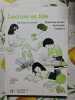
TUSSAH.Trame...bouts - Longueur de la plotte (pelote)... Mètres. Titres.... Deniers.CF & Cie (Filature des Cévennes ?).
s.l., s.n., s.d. (fin 19ème ou début 20ème), 1 1 feuillet cartonné teinté de 17 x 24 cm, illustré de cocons de vers à soie, branches de mutiers, bombyx, et femme japonnaise travaillant sur son métier à faire les pelotes de soie, titre d'en-tête en japonais, encadrement.
Le tussah est une variété de soie, fabrique par le vers à soie du chêne.
Les arts de la soie.
Bruxelles, Musées Royaux d'Art et d'Histoire, 1955. 16 x 24 ,16 pp., 38 planches en N/B, broché, bon état.
essai sur les idoles
EDL 1992 in8. 1992. Broché.
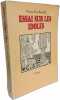
Bon état cependant couverture défraîchie intérieur propre
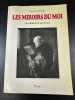
Les Miroir du moi - Les héros et les fous
EDL 1986 16 764x2 286x23 622cm. 1986. Broché.
Bon état
Toiles de Jouy. (En langue française).
Paris, Adam Biro, 1989, in-4to, 183 p. avec 200 illustrations dont 100 en couleurs, reliure en toile originale avec jaquette en couleur. Étui en toile originale orné. Bel exemplaire.
Fine copy of this beautiful book on colour printed tissues. Bound in red cloth with orig. jackett & clothcovered (de Jouy) slipcase. A fine copy.

(SLACES, NVVA)
Phone number : 41 (0)26 3223808
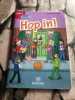
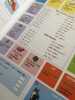
Hop in! Anglais CM2 (2011) - Activity Book: Cycle 3 niveau 3 Activity Book
MAGNARD 2011 64 pages 20 8x29 7x0 7cm. 2011. pocket_book. 64 pages.
Bon état
Le Prix du Salut: Les chrétiens l'argent et l'au-delà en Occident (IIIe-VIIe siècle)
BELIN 2016 328 pages in8. 2016. Broché. 328 pages.
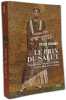
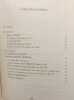
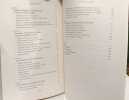
proche du très bon état intérieur propre bonne tenue
L'anglais au quotidien. 2014: 365 leçons pour bien entretenir son anglais (Giorno per giorno)
Assimil Italia 2013 736 pages 13x3 4x15cm. 2013. Broché. 736 pages.
Etat correct
BURGARD Chrystèle, LAVERGNE Laurence, XAVIER Karine & al.
Reference : CHATEAUX6661121
(2008)
ISBN : 9782757201749
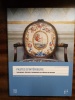
Fastes d'intérieurs. Tapisseries, étoffes et broderies du château de Grignan
Paris, Somogy / Département de la Drôme, conservation du patrimoine, 2008, 22 x 30, 96 pages cousues sous couverture rempliée illustrée. Iconographie noir & blanc et couleurs.
Très bon état.
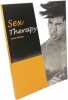
Sex Therapy
TEXTES GAIS 2007 352 pages 15x1x20 4cm. 2007. Broché. 352 pages.
Très Bon Etat proche du neuf
Shamiram. Avec deux hors-texte de Luc Maize.
La Bastide-de-Goudargues (Gard), Guy Chambelland, 1964 ; in8, broché (249 mm), 22, [2] pp., 2 hors-texte de Luc Maize tirés sur papier glacé.
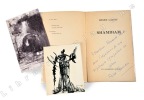
Edition originale, envoi autographe signé “ A Monsieur Fernand Rude, avec l’expression de ma respectueuse sympathie en poésie. Renée Camou” ; on ajoute le dessin original signé de Luc Maize d’un des deux hors-textes, intitulé au dos “Semiramis (Shamiram)” et “Luc Maize, 4, quai Gailleton Lyon 2e Rhône”.Lyonnaise d’origine, Renée Camou a été artiste peintre, décoratrice sur étoffe, poétesse et écrivain ; elle a publié des recueils de poésie dès 1960 (Ordalies ; L’Escorte d’Or avec des dessins de Jean-Luc Maize), puis Les neuf preux d’Anjouy en 1999, toujours à Lyon, et plus récemment “L’initiation des adolescents dans les sociétés antiques” (2001) “Marguerite Yourcenar et “Les sages et les sots””(2010).Luc Maize (1913-2004) de son vrai nom Lucienne Maize, originaire de la Drôme, autodidacte, elle s’installe dans l’atelier d’Alexandre-François Bonnardel au 4 du quai Gailleton à Lyon. Sculptrice et peintre, elle va mener une carrière d’abord lyonnaise puis internationale.

Toute entière (La Trilogie italienne Tome 3)
LGF 2015 288 pages 11x1 6x17 8cm. 2015. pocket_book. 288 pages.
Très bon état - légères marques de lecture et/ou de stockage mais du reste en très bon état- expédié soigneusement depuis la France
Way Ahead
Penguin Books Ltd 1985 160 pages 18 288x1 016x24 13cm. 1985. Broché. 160 pages.
Bon état
Meanings of Water in Early Medieval England
, Brepols, 2021 Hardback, 289 pages, Size:156 x 234 mm, Illustrations:16 b/w, 2 col., Language: English. ISBN 9782503588889.
Summary Water is both a practical and symbolic element. Whether a drop blessed by saintly relics or a river flowing to the sea, water formed part of the natural landscapes, religious lives, cultural expressions, and physical needs of medieval women and men. This volume adopts an interdisciplinary perspective to enlarge our understanding of the overlapping qualities of water in early England (c. 400 - c. 1100). Scholars from the fields of archaeology, history, literature, religion, and art history come together to approach water and its diverse cultural manifestations in the early Middle Ages. Individual essays include investigations of the agency of water and its inhabitants in Old English and Latin literature, divine and demonic waters, littoral landscapes of church archaeology and ritual, visual and aural properties of water, and human passage through water. As a whole, the volume addresses how water in the environment functioned on multiple levels, allowing us to examine the early medieval intersections between the earthly and heavenly, the physical and conceptual, and the material and textual within a single element. TABLE OF CONTENTS List of Figures Abbreviations Acknowledgements Colour Plates Introduction: Worlds of Water Carolyn Twomey and Daniel Anlezark The Sacred Nature of Rivers, Wells, Springs, and Other Wetlands in Anglo-Saxon England Della Hooke Rivers and Rituals: Baptism in the Early English Landscape Carolyn Twomey Swimming in Anglo-Saxon England Simon Trafford Sensing the Sea: Sounds of Sailors in Anglo-Saxon Literature Rebecca Shores The Sailors, the Sea Monster, and the Saviour: Depicting Jonah and the Ketos in Anglo-Saxon England Elizabeth A. Alexander Pearls before Paradise: Considering the Material Associations of Heavenly Water/s, Precious Stones, and Liminality in the Art of the Medieval West Megan Boulton 'Streams of Wholesome Learning': The Waters of Genesis in Early Anglo-Saxon Exegesis John J. Gallagher Aquas ab Aquis: Aqueous Creation in Andreas Michael Bintley Water, Wisdom and Worldliness in the Anglo-Saxon Prose Lives of Guthlac Helen Appleton Drawing Alfredian Waters: The Old English Metrical Epilogue to the Pastoral Care, Boethian Metre 20, and Solomon and Saturn II Daniel Anlezark Modor is monigra m rra wihta: Watering the World Jill Frederick Index
Casas Marie José Castéra Nadine Cortés Céline Delmas Amélie Collectif
Reference : 500261905
(2016)
ISBN : 9782218989322
Animate Espagnol 5e Todo en uno éd. 2016 - Cahier d'activités: Mon cahier "Todo en uno"
HATIER 2016 144 pages 19 5x22 8x1cm. 2016. Broché. 144 pages.
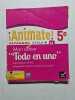
Bon état
Interdisciplinary Approaches to the Colour Blue in Ancient Egypt and Sudan
, Brepols, 2026 Hardback, Pages: 294, Size:216 x 280 mm, Illustrations:18 b/w, 143 col., 8 tables b/w., Language: English. ISBN 9782503620138.
Summary From the earliest days of Pharaonic and Kushite cultures, blue was a highly valued colour. Initially sourced in the mineral world, with stones of various shades being collected and used for personal ornamentation, and later from dye plants - whose blue hues required complex extraction - blue became a symbol of prestige and innovation. Since blue is relatively rare in its raw natural form, synthetic methods of making blue were developed early on, leading to the creation of the colour through crafts like faience, glassmaking, and pigment production. Made and used in different ways, and invested with many meanings, the colour blue became omnipresent in material culture and architecture. This volume is a collaborative anthology exploring the significance of blue in ancient Egypt and Sudan. It brings together experts from diverse fields - art history, archaeology, linguistics, textile and leather studies, conservation, and heritage science - to examine the Nile Valley's material world through a 'blue lens'. The book investigates the cultural, technological, and symbolic dimensions of blue, tracing how people discovered, imitated, dyed, painted, carved, and experienced the colour. Through integrative research that crosses the boundaries of the humanities and natural sciences, the volume offers a groundbreaking perspective on colour studies, revealing how the pursuit of blue drove artistic and technological advancements across time. TABLE OF CONTENTS List of Illustrations Preface Acknowledgements List of Contributors 1. Material and Immaterial Perspectives to the Colour Blue in Ancient Egypt and Sudan Elsa Yvanez and Cecilie Br ns 2. What's so Special about Blue? Some Thoughts on Blue Materials and their Manufacture in Ancient Egypt Paul Nicholson 3. Faience in Kush: First Overview of the Material, its Meanings, and Significance Shadia Abdrhabo 4. Supplying the Mediterranean World with Egyptian Blue: An Archaeometric Perspective Alexandra Rodler and Ariadne Marketou 5. The Colour of the Monkey and the Background: Blue Colours in Old Kingdom Wall Paintings Kaori Takahashi, Ahmed Abdrabou, Yoko Taniguchi, Mostafa Shehata, Akiko Nishisaka, and Hussein Kamal 6. Ornamental and Scriptural Blue in the Ptolemaic Temple of Deir el-Medina Sandrine Vuilleumier 7. Eternity Under a Cyan Sky: Assembling Blue at 25th Dynasty El Kurru, Sudan Rachael J. Dann 8. Material and Non-material Aspects of the Colour Blue in Medieval Nubia Magdalena Wozniak and Dobrochna Zieli?ska 9. Blue Threads along the Middle Nile: Multidisciplinary Approaches to an Ancient Passion for Indigo (Sudan, c. First-Sixth Century CE) Elsa Yvanez, Bart?omiej Witkowski, Tomasz Gierczak, and Magdalena Biesaga 10. Green Is the New Blue: Coloured Leather in Ancient Egypt - An Archaeometric Approach Lucy Skinner and Andr J. Veldmeijer 11. 'Marvels from the land of Tefrore': Lapis lazuli and Dark Blue Minerals in Egyptian Temples Stefan Baumann 12. A Case of the Blues? Blue in the Egyptian Medical Texts Joseph Clayton 13. The Egyptians Didn't Have Blue - Because They Had Two, and You Should Too! Blue as a Witness to Cognitive Evolution on an Issue Dividing Anthropology and Philology at the Cost of Historical Linguistics David A. Warburton 14. Blue Eyes: The Apotropaic Qualities of Blue Karel Innem e 15. Epilogue. A Dyer's View on Blue: The Colour of Transformation Fria Gemynthe Index
Feuilles de route I. Le Formose
Paris Au Sans Pareil 1924 In-12 Broché, couverture illustrée Edition originale
EDITION ORIGINALE. Couverture, titre et 7 illustrations de Tarsila do Amaral, dont cinq hors-texte et une vignette. Tirage à 800 exemplaires numérotés. Un des 750 sur vergé Bulky. Dos à peine jauni, mais bon exemplaire. > Le Formose - titre d'une collection qui ne comptera que ce volume - était le nom du paquebot qui emmena Cendrars au Brésil. Très bon 0
Catalogue des ouvrages sur les cultures tropicales et les productions des colonies.
Paris, Librairie Maritime et Coloniale Augustin Challamel, 1909, 1 br., couverture illustrée. in-8 de 30 pp. ;
Catalogue de la librairie Augustin Challamel.Ouvrages sur le café, le sucre, le cacao, le thé, le caoutchouc, la soie, le tabac, la vanille, etc...

