 Write to the booksellers
-
Type
Any type (1)
Art print (7)
Autograph (1)
Book (32224)
Disk (1)
Drawings (264)
Engraving (11)
Magazine (125)
Old papers (1)
Photographs (15)
Posters (1)
-
Latest
Last 24h (14)
Last 3 days (10)
Last month (318)
Last week (195)
-
Language
Dutch (78)
English (56)
French (32473)
German (6)
Italian (18)
Portuguese (9)
Spanish (11)
-
Century
16th (14)
17th (46)
18th (199)
19th (1524)
20th (9437)
21st (1684)
-
Countries
Belgium (10932)
Brazil (6)
Canada (116)
China (1)
Côte d'Ivoire (139)
Denmark (209)
France (18150)
Germany (1)
Greece (1)
Switzerland (3096)
-
Syndicate
ALAC (107)
CLAM (143)
CLAQ (102)
CNE (3)
ILAB (10476)
NVVA (1145)
SLACES (1145)
SLAM (7872)
SNCAO (10)
L'architecture Usuelle
Dimension extérieur : 31,7 x 24,2 cm. Terrasses et Treilles, à Walmer-Lodge et à Courtlands (Angleterre). M.M Mawson et Mallows, architectes.
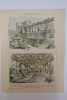
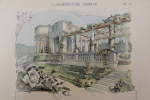
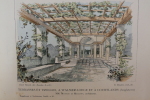
Planche 81, gravure dans son jus, en bon état général.


Brief van Ed. de N ve met boek Ed. de N ve. Schrijver, journalist, verzetsman, 1889-1961
Tilburg, Uitgeverij De Schaduw, 1953-89 Handgeschreven brief met enveloppe + softcover boek, 287 pagina's, 21.5 x 14 cm, Nederlandstalig. Goede staat. ISBN 9789050830096.
Brief van Ed. de N ve aan jazz-pianist Jacques van Poll.
Cinema Changes: Incorporations of Jazz in the Film Soundtrack
, Brepols, 2019 Hardback, xxvi + 334 pages, Size:210 x 260 mm, Illustrations:35 b/w, 26 musical examples, Language: English. ISBN 9782503584478.
Summary Cinema is the form of entertainment that can be, above all, identified with the twentieth century. It gradually replaced theatre as a popular form of performed storytelling, and replaced opera too as the new "multimedia" art form, soon incorporating music as one of cinema's privileged means to co-tell stories. Speaking of music, jazz was as sensational a twentieth-century novelty as cinema was. The two soon teamed up, and jazz, with its various incarnations and styles, has accompanied the moving images and the cinematic narratives throughout the decades. It was inevitable that these two iconic art/entertainment forms, jazz and cinema, should meet, blend, cooperate, and have a reciprocal influence. While the early film music was mostly symphonic and inspired by the late-romantic nineteenth-century idiom, jazz and Afro-American music - in various form and with diverse and changing racial/social connotations - appeared onscreen even before the landmark film The Jazz Singer (1927), which officially launched the sound era. This collection of essays seeks to study the long-standing relationship between jazz and cinema, from the silent era to the contemporary sound cinema, on an international level. TABLE OF CONTENTS Emile Wennekes - Emilio Audissino Prologue: A Reel Jazz Survey Rendition / Reception Emile Wennekes Out of Tune? Jazz, Film and the Diegesis Phillip Johnston Jazzin' the Silents: Jazz and Improvised Music in Contemporary Scores for Silent Film Luca Stoll Cinema: A Privileged Way of Acquiring Intimacy with Jazz Standards Marida Rizzuti Play, My Fiddle, Play! Jazz and Klezmer at the End of the 1930s Randall Cherry Ethel Waters and the Search for Racial Redemption Jazz and National Cinemas Emilio Audissino The Multiform Identity of Jazz in Hollywood: An Assessment through the John Williams Case Study Nicolas Pillai Rhythms of the Everyday: an Alternative History of the British Jazz Film Philippe Gonin Jazz and Cinema: Which Jazz for Which Movies in France from 1945 to the early 1960s? Julio Arce - Celsa Alonso From the Chotis to the Charleston: Jazz in Spanish Films prior to the Civil War Roberto Calabretto Jazz Music in Michelangelo Antonioni's Films Willem Strank When Jazz Meets German Cinema: A Brief Overview Jason R. Hillebrand A Song Helps Us Live: The Narrative Function of Jazz in the Soviet Musical Film Jolly Fellows Case Studies Francesco Finocchiaro - Leo Izzo The Sound of the Nightmares: On the Jazz Music in Fritz Lang's Metropolis Ryan Patrick Jones Dignity in the Twilight of Minstrelsy: Race, Nuance, and Aspiration in Duke Ellington's Symphony in Black: A Rhapsody of Negro Life Adam Biggs The Blues and Dissonance in Michelangelo Antonioni's Blow-Up Armando Ianniello Umiliani, Trovajoli, and Rota: The Jazz Film Score of Boccaccio '70 Marcel Bouvrie Synergetic Jazz Score: The Narrative of the Relation between the Diegetic and Nondiegetic Music in Whiplash Mervyn Cooke 'The Same Goddamn Songs the Same Goddamn Way'? Makin' Whoopee with The Fabulous Baker Boys Abstracts Biographies Index of Names
Jan Fabre : La discipline du chaos, le chaos de la discipline
, Armand Colin, 1994 Couverture souple, 174 pages, 24 x 22 cm, Fran ais. * tat tr s bien. ISBN 9782200214845.
Jan Fabre : La discipline du chaos, le chaos de la discipline Arts chor ographiques : l'auteur dans l'oeuvre.
Carlo Scarpa The Complete Buildings
, Prestel, 2024 Hardback, 324 x 216 mm, 280 Illustrations col., 352 Pages, English ed. ISBN 9783791377148.
Featuring exquisite photographs of every structure the architect designed from scratch or incorporated into a historical building, this elegant volume is as sumptuous and inviting as a Scarpa interior. Although he was not widely known during his lifetime, Carlo Scarpa has in the past-half century become one of the most revered of modern architects.
Pan a franchi le Rubicon. Recherches sur le dieu-bouc romain
, Brepols - Ecole Pratique des Hautes Etudes, 2026 Hardback, Pages: 452, Size:156 x 234 mm, Illustrations:35 b/w, Language: French. ISBN 9782503618487.
Summary ...immense travail d' rudition fourni par . Borron qui pr sente ici une somme impressionnante sur une divinit jusqu'ici trop souvent consid r e comme allant de soi. ( lisabeth Buchet, dans Cahiers d' tudes du Religieux. Recherches Interdisciplinaires, 28, 2026, [en ligne]) labor dans le cadre d'une th se de doctorat, le sujet de cet ouvrage est un tre hybride, mi-homme, mi-bouc, le dieu grec que les Anciens nommaient Pan. Toutefois, on n'adoptera pas le point de vue hell ne sur cette divinit , mais plut t celui de Rome, qui accueillit de bonne heure le dieu parmi les siens. Cette monographie s'attache donc l' tude du dieu-bouc romain, entre le Ve si cle av. notre re, o son iconographie appara t en Italie, et le IIIe si cle de notre re, avant que le discours chr tien ne s'empare du personnage ; tout au long de ces huit si cles, elle questionnera les modalit s selon lesquelles Pan, dieu grec, impose sa pr sence dans le panth on et l'imaginaire romain. Pour mieux appr hender la complexit et les diverses facettes du sujet, c'est un point de vue interdisciplinaire qui pr vaudra, alliant l'apport des textes celui des images, de l'arch ologie et de l'histoire. TABLE OF CONTENTS Introduction Premi re partie : Le dieu-bouc en Italie I. Pan sur les rives italiennes I.1. Entre Arcadie et Grande Gr ce I.2. L'entr e en litt rature II. Pan rencontre les faunes II.1. Faunes : un ph nom ne pluriel II.2. Les modalit s de l'assimilation Deuxi me partie : Sous le signe du Capricorne : Pan parmi les dieux d'Auguste I. Auguste et l' laboration d'un ethos panique I.1. Le Capricorne I.2. La figure panique II. Un jalon id ologique august en II.1. Les Lupercales, ou la port e politique d'un festival II.2. Pan jupit rien, partie prenante du discours mill nariste ? III. La r ponse des lettr s au berger III.1. Faunus-Pan horatien, ou l'espace de la securitas III.2. Ovide : la remise en question d'une id ologie esth tique III.3. Transformations du Pan august en Troisi me partie : Un Pan de ralliement : les manifestations d'un engouement durable I. L'universalisme culturel la mode panique I.1. L'alt rit incluse dans les lettres romaines : uariationes paniques I.2. Faunes : le retour aux bois I.3. Pan, un dieu qui parle tous et en tout lieu II. Sur la piste du Grand Pan II.1. Au-del des fronti res esth tiques : l'espace panique comme lieu d'exp rimentation II.2. Et le bouc se fit homme pour les guider : vers une magnification du personnage Conclusion Annexes
Mir Sculptures : 1928-1982 (Complete Works) : Catalogue Raisonn
, Galerie Lelong, 2010 Hardcover with illustr. dustjacket, 390 pages, ENG. 330 x 260 x 33 mm, Large / Heavy format, illustrated in colour / b/w. ISBN 9782868820747.
Alongside Picasso and Warhol, Joan Mir (1893-1983) is one of the twentieth century's most influential artists. Mir created a pictorial world of intense imaginative power, in which visionary and cosmic elements are inextricably intertwined with the earthly and mundane. The research for this six-volume catalogue raisonn of Mir 's paintings, spanning the years 1908 to 1981, was begun in 1957. The artist himself and later the Mir Estate were largely involved in its preparation--Jacques Dupin, Ariane Lelong-Mainaud and Joan Punyet Mir . The catalogue includes all the artist's oils, acrylics and works in various media--on canvas, cardboard, wood, masonite, copper and other hard supports. In the six volumes--all published only in English--all paintings are reproduced in color, whenever possible, accompanied by their title, date, technique and dimensions, with indication of signature and inscriptions on the back, as well as their collection, provenance, important exhibitions and major publications in which they are reproduced.
Emilio Vedova, Monotypes from the Garnier Tullis workshop
Antwerpen , Galerie Francis Van Hoof, 1992 Softcover, 28 x 22 cm, pages not numbered, English/Nederlands. Fine condition.
Emilio Vedova, Monotypes from the Garnier Tullis workshop
Normans in the Mediterranean
, Brepols, 2021 Hardback, 268 pages, Size:156 x 234 mm, Illustrations:11 b/w, 5 col., Language: English. ISBN 9782503590578.
Summary In both popular memory and in their own histories, the Normans remain almost synonymous with conquest. In their relatively brief history, some of these Normans left a small duchy in northern France to fight with Empires, conquer kingdoms, and form new ruling dynasties. This book examines the explosive Norman encounters with the medieval Mediterranean, c. 1000-1250. It evaluates new evidence for conquest and communities, and offers new perspectives on the Normans' many meetings and adventures in history and memory. The contributions gathered here ask questions of politics, culture, society, and historical writing. How should we characterize the Normans' many personal, local, and interregional interactions in the Mediterranean? How were they remembered in writing in the years and centuries that followed their incursions? The book questions the idea of conquest as replacement, examining instead how human interactions created new nodes and networks that transformed the medieval Mediterranean. Through studies of the Normans and the communities who encountered them - across Iberia, the eastern Roman Empire, Lombard Italy, Islamic Sicily, and the Great Sea - the book explores macro- and micro-histories of conquest, its strategies and technologies, and how medieval people revised, rewrote, and remembered conquest. TABLE OF CONTENTS Illustrations Acknowledgments Introduction: The Normans and Conquest in the Mediterranean - EMILY A. WINKLER AND ANDREW SMALL Part I. Motivations and Strategies Norman Conquests: Nature, Nurture, Normanitas - MATTHEW BENNETT Marriage as a Strategy for Conquering Power: Norman Matrimonial Strategies in Lombard Southern Italy - AUR LIE THOMAS The Changing Priorities in the Norman Incursions into the Iberian Peninsula's Muslim-Christian Frontiers, c. 1018-c. 1191 - LUCAS VILLEGAS-ARISTIZ BAL Part II. The Implications of Conquest in Sicily and Southern Italy Norman Change, Lords and Rural Societies - SANDRO CAROCCI The Nobility of Norman Italy, c. 1085-1127 - GRAHAM A. LOUD Shaping the Urban Landscape: The Normans as New Patrons in Salerno - MADDALENA VACCARO Palermo and the Norman Conquest of Sicily - THERESA J CKH Community and Conquest on Medieval Monte Iato, Sicily - NICOLE M LK Part III. Perceptions and Memories Holy War in the Central Mediterranean: The Case of the Zirids and the Normans - MATT KING Hagiography and the Politics of Memory in the Norman Conquest of the Italian South - KALINA YAMBOLIEV
Hillman Family Collection : Manet to Matisse
, Alex Hillman Family Foundation, 1994 Hardcover, 216 pages, ENG, 310 x 235 x 25 mm, in New condition, no dustjacket, illustrated in colour. ISBN 9780295973876.
"Manet to Matisse: The Hillman Family Collection is a history and catalogue of one of the foremost art collections formed in America in the 1950s and 1960s. The collection is best known for its Impressionist, Post-Impressionist, and early modern masters, among them Bonnard, Braque, Dufy, Gris, Manet, Matisse, Modigliani, Picasso, Pissarro, Renoir, and Rouault. The Hillman Collection also includes works by Americans of the WPA era and postwar European artists." "The introductory essays document the acquisitions made by the Hillmans over three decades and analyze many of the best-known images in an art historical context. The seventy-eight paintings, sculptures, and works on paper are illustrated in color and accompanied by detailed catalogue entries with complete exhibition histories and bibliographic references. An illustrated Appendix listing works formerly in the Hillman Collection is also included."
De taal van de architectuur
Kerkdriek 2007 Librero Nederland Soft cover 1st Edition
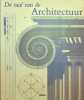
Couverture souple, 24 x 20 cm, 352 pages, néerlandais, Première édition, Illustrations, état : Très bon Histoire concise de l'architecture - de l'Égypte ancienne au début du XIXe siècle - à travers les styles de construction et les détails architecturaux. [Cette description peut avoir été traduite par une IA.]
Scotland's Royal Women and European Literary Culture, 1424-1587
, Brepols, 2024 Hardback, 448 pages, Size:156 x 234 mm, Illustrations:9 b/w, 37 col., Language: English. ISBN 9782503600291.
Summary Scotland's Royal Women and European Literary Culture, 1424-1587 seeks to fill a significant gap in the rich and ever-growing body of scholarly work on royal and aristocratic women's literary culture in the fifteenth and sixteenth centuries. There has, to date, been no book-length study of the literary activities of the female members of any one family across time and little study of Scotland's royal women in comparison to their European and English counterparts. This book adopts the missing diachronic perspective and examines the wives and daughters of Scotland's Stewart dynasty and their many and various associations with contemporary Scottish, English, and European literary culture over a period of just over 150 years. It also adopts a timely cross-border and cross-period perspective by taking a trans-national approach to the study of literary history and examining a range of texts and individuals from across the traditional medieval/early modern divide. In exploring the inter-related lives and letters of the women who married into the Scottish royal family from England and Europe ? and those daughters who married outwith Scotland into Europe's royal families ? the resultant study consistently looks beyond Scotland's land and sea borders. In so doing, it moves Scottish literary culture from the periphery to the centre of Europe and demonstrates the constitutive role that Scotland's royal women played in an essentially shared literary and artistic culture. TABLE OF CONTENTS Select Genealogy / Key Figures Introduction Part 1: The Wife and Daughters of James I of Scotland Chapter 1. Joan Beaufort Chapter 2. Margaret Chapter 3. Isabella Chapter 4. Eleanor Part 2: Queens Consort, James II-V Chapter 5. Mary of Gueldres Chapter 6. Margaret of Denmark Chapter 7.Margaret Tudor Preface to Chapters 8 and 9. The Wives of James V Chapter 8. Madeleine of Valois Chapter 9.Mary of Guise Part 3: Queen Regnant Chapter 10. Mary Queen of Scots Bibliography Index
Italian Renaissance and Cultural Memory
Cambridge, Cambridge University Press, 2012 Hardcover with dustjacket, 238 pages, 26 x 18.5 cm, Fran ais. *As new. ISBN 9781107005266.
Why did Renaissance art come to matter so much, so widely, and for so long? Patricia Emison's answer draws on a recalibrated view of the long Renaissance from 1300 to 1600 synthesizing the considerable evolution in our understanding of the epoch since the foundational nineteenth-century studies of Jacob Burckhardt and Heinrich Woelfflin. Demonstrating that the imitation of nature and of antiquity must no longer define its limits, she exposes the self-consciously modern aspect of Renaissance style. She sets the art against the literary and political interests of time and analyzes works of both very familiar artists Leonardo, Michelangelo, and Raphael and lesser-known figures, such as Cima da Conegliano and Federico Barocci, as well as various printmakers. Succinct yet expansive, this treatment of the period also explores its layered significance for subsequent generations, from the Old Masters to the Post-Modernists. Why did Renaissance art come to matter so much, so widely, and for so long? Patricia Emison's answer depends on a recalibrated view of the long Renaissance from 1300 to 1600 synthesizing the considerable evolution in our understanding of the epoch since the foundational nineteenth-century studies of Burckhardt and Woelfflin. ISBN 10: 1107005264
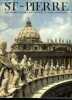
St pierre - edition speciale pour les galeries et musees pontificaux
Edition speciale pour les galeries et musees pontificaux. 1989. In-4. Broché. Bon état, Couv. convenable, Dos satisfaisant, Intérieur frais. 69 pages, nombreuses illustrations couleurs, dans et hors texte. Couverture illustrée.. . . . Classification Dewey : 720-Architecture
Classification Dewey : 720-Architecture
Em lio Rui Vilar / Nigel Morgan / Suzanne Lewis / Aires Nascimento / Michelle P. Brown
Reference : 67928
Apocalypse et la Vie de saint Jean en images / The British Library, Londres / Cote : Add. Ms. 38121 Date : vers 1400 /
Barcelona, M. Moleiro Editor, 2019 Bound in luxurious brown-marron leather with gilt lettering, housed in a slipcase with gold motifs. 100 pages, 94 illuminations with gold richly decorated miniatures, either full-page or arranged across the page in multiple pictorial strips. Full-colour facsimile edition. Size: 32 23 cm. ****NUMBERED COPY NO. 418 OF A LIMITED FACSIMILE EDITION OF 987 COPIES, ISSUED WITH A CERTIFICATE OF AUTHENTICITY.*** Includes a full-colour commentary volume, 276 pages, hardcover with dustjacket, text by Richard K. Emmerson. ISBN 9788488526793.
Origine : sud des Pays-Bas; Illustrated Apocalypse which also features a series of illuminations on the life of Saint John the Evangelist as an introduction and colophon. It was produced around 1400 in the southern Netherlands. Its iconographic cycle is very similar to that of other 13th-century English Apocalypses ? also told in images. The illustrations in the codex are not only abundant, but also appealing in their colour, freshness and dynamism. Moreover, the narrative eloquence is such that it inevitably refers to the iconographic tradition of picture books and their entertaining nature.
Em lio Rui Vilar / Nigel Morgan / Suzanne Lewis / Aires Nascimento / Michelle P. Brown
Reference : 67920
Gulbenkian Apocalypse / Museu Funda o Calouste Gulbenkian, Lisbon. / Shelf mark: MS L.A. 139. / Date: England, c. 1265-70. /
Barcelona, M. Moleiro Editor, 2001 Bound in parchment, housed in a leather slipcase. Size: 29 23 cm. 152 pages, full-colour manuscript on parchment with 153 illuminations. ****NUMBERED COPY NO. 239 OF A LIMITED FACSIMILE EDITION OF 987 COPIES, ISSUED WITH A CERTIFICATE OF AUTHENTICITY.**** Includes a full-colour commentary volume by Em lio Rui Vilar, hardcover with dust jacket, 371 pages, richly illustrated with 299 coloured illustrations. Size: 33.5 22.5 cm.Languages: Spanish and English. ISBN 9788488526793.
More than 150 breathtakingly beautiful, shining gold miniatures for the Holy Father: one of the most beautiful English Apocalypse manuscripts of the early Gothic period, created for Pope Clement IV. The Gulbenkian Apocalypse originated in London between 1265 and 1270. The Gothic Apocalypse manuscript is adorned with high-quality miniatures in golden frames. It is one of the most beautiful manuscripts in the English Apocalypse tradition and is found today in the Gulbenkian Museum in Portugal, after which the codex is named.
European Contexts of Ramism
, Brepols, 2019 Hardback, xii + 353 pages, Size:156 x 234 mm, Illustrations:13 b/w, Language: English. ISBN 9782503574998.
Summary Pierre de la Ram e or Petrus Ramus (1515-1572) has long been a controversial figure in educational reform and innovation, from the moment of his first public academic statements in the 1530s, to his reception among scholars in the twentieth and twenty-first centuries. What is beyond dispute, however, is the vast reach of his influence throughout Europe. Ramus's ideas were disseminated through copious editions and translations of his own textbooks, and in wave after wave of adaptations and re-imaginings of his ideas that swept across the continent. This volume embarks on a European tour of Ramism, using a wide range of previously unpublished or untranslated archival evidence from throughout the continent to examine the dissemination of Ramus's works and his intellectual influence in geographic and in disciplinary terms. The ten chapters explore the spread of Ramism from his home country of France to Protestant strongholds in Germany, Holland, and Britain, and in the Catholic context of the Iberian peninsula. The book also examines Ramism in the less familiar territories (to most Anglophone readers) of Scandinavia and Hungary, and considers the preceding and contemporary Dutch and German educational reform movements from which Ramus borrowed to forge his own distinctive intellectual method. TABLE OF CONTENTS Notes on Contributors List of Illustrations Introduction - SARAH KNIGHT and EMMA ANNETTE WILSON Ramus and Humanist Pedagogy in the Language Arts - JUDITH RICE HENDERSON Ramus and Agricola - MARC VAN DER POEL The International Nature of Britannic Ramism - EMMA ANNETTE WILSON Ramus and the Teaching of Mathematics - ISABELLE PANTIN Teacher, Rival, Martyr: Ramus in French Literature and Thought - SARAH KNIGHT 'Reduced to Order' and 'Just for Show'? Ramus, Print, and Visual Aesthetics - RAPHAEL HALLETT Ramism in the North - GUNNAR HARDARSON The Reception and Influence of Ramism in Spain - ALFONSO MART N-JIM NEZ Hungarian and Transylvanian Ramism - G BOR KECSKEM TI Select Bibliography Index
European Contexts of Ramism
, Brepols, 2019 Hardback, xii + 353 p., 156 x 234 mm, Illustrations:13 b/w, English. *NEW . ISBN 9782503574998.
Pierre de la Ram e or Petrus Ramus (1515-1572) has long been a controversial figure in educational reform and innovation, from the moment of his first public academic statements in the 1530s, to his reception among scholars in the twentieth and twenty-first centuries. What is beyond dispute, however, is the vast reach of his influence throughout Europe. Ramus?s ideas were disseminated through copious editions and translations of his own textbooks, and in wave after wave of adaptations and re-imaginings of his ideas that swept across the continent. This volume embarks on a European tour of Ramism, using a wide range of previously unpublished or untranslated archival evidence from throughout the continent to examine the dissemination of Ramus?s works and his intellectual influence in geographic and in disciplinary terms. The ten chapters explore the spread of Ramism from his home country of France to Protestant strongholds in Germany, Holland, and Britain, and in the Catholic context of the Iberian peninsula. The book also examines Ramism in the less familiar territories (to most Anglophone readers) of Scandinavia and Hungary, and considers the preceding and contemporary Dutch and German educational reform movements from which Ramus borrowed to forge his own distinctive intellectual method.
What is Medieval? Decoding Approaches to the Medieval and Medievalism in the 21st Century
, Brepols, 2024 Hardback, 288 pages, Size:178 x 254 mm, Illustrations:26 b/w, 24 col., Illustrations:26 b/w, 24 col., Language: English. ISBN 9782503600680.
Summary The Middle Ages and Medievalism have been used and abused throughout history-and this continues. This narrative deserves a reassessment. But, what is Medieval? This is the central question that unifies the contributions in this volume. 'Medievalism', or the study of the Middle Ages in its broadest sense, refers to the perception, conceptualisation and movement towards the era post the fifteenth century. Its study is therefore not about the period otherwise referred to as the 'Middle Ages', but rather the myriad ways it has since been conceived. And the field of medievalism is still in its relative infancy which has led to the emergence of various existential questions about its scope, remit, theoretico-methodological and pedagogical underpinnings, interpretation, periodization, and its relationship to established disciplines and more emerging subdisciplines and specialised fields?both within and without the academy. In turn, neomedievalism has allowed insight into and a response to the medieval often dominated by the modern. This has provoked debate over the nature of neomedievalism as a discipline, subdiscipline, genre, field or offshoot in direct or contrasting relation to the more traditional medievalism. Featuring interdisciplinary contributions from academics, educational practitioners as well as museum, digital and heritage professionals, this volume provides a fresh reflection on past methods to emerging pedagogies as well as new avenues of enquiry into the ways we think about the medieval. It is by reconciling these seemingly disparate forms that we can better understand the continual, interconnected, and often politicised, reinvention of the Middle Ages throughout cultures and study.
Catastici dei traslati di propriet dei beni stabili. The land registers of Venetian Candia (1588-1605, 1621-1645)
, Brepols, 2025 Paperback, Pages: 776, Size:170 x 240 mm, Languages: English, Italian. ISBN 9789603710943.
Summary Extensive private and public documentation was produced over the course of Venetian dominion of the island of Candia, part of which is kept at the State Archives in Venice. A number of cadastral documents have also survived. This volume provides a critical analysis and full transcription of two unpublished cadastral registers kept in the Duca di Candia collection: they are the most recent known for Venetian Candia, whose records cover a chronology from 1588 to 1605 and from 1621 to 1645. The examined catastici shed light on the transfers of property, but also on places and people involved: a world populated by officials of the Venetian state, histories of properties, families, towns and villages, descriptions of buildings, urban and rural spaces and their uses. The analysis and transcription of the catastici allowed to identify elements of permanence and discontinuity in the management of urban and rural properties and to investigate the rules and practices regulating a territory as distant as crucial for Venice. At the same time, they offer a valuable snapshot of the urban and rural spatial organisation of a part of the island at the dawn of the Ottoman conquest. TABLE OF CONTENTS Acknowledgements INTRODUCTION 1. The historical context 1.1. The Kingdom of Candia 1.2. Venetian cadastres 2. The "Catastici dei traslati di propriet dei beni stabili" 2.1. Structure and content 2.2. Dossiers and discrepancies 2.3. Conveyancing 2.4. Geographical coverage 2.5. Property types 3. Conclusion 4. Physical description 5. Notes on the edition CATASTICI DEI TRASLATI DI PROPRIET DEI BENI STABILI 1. Transcription mark-up 2. Register 5 - Transcriptions 3. Register 6 - Transcriptions ANNEXES 1. Bibliography - Sitography 2. List of figures and tables INDEXES 1. Index of locations 2. Index of names Abstracts in Italian and Greek
Emmanuel Bain, Rosa Maria Dess , Michel Lauwers, Isabelle Ros , Warren Pez , Alessia Trivellone (eds)
Reference : 70420
H r sie, pouvoirs et soci t s au Moyen ge
, Brepols, 2026 Paperback, Pages: 780, Size:170 x 240 mm, Illustrations:5 b/w, 29 col., 1 tables b/w., 4 tables col., Language(s):French, English. ISBN 9782503624754.
Summary labor dans le cadre du Groupement d'Int r t Scientifique H r sie, Pouvoirs et Soci t s (GIS H PoS), qui a r uni au cours des derni res ann es des historiens et historiennes de cinq universit s, ce volume collectif vient clore un vaste programme de recherche consacr l' tude des h r sies sur le temps long, de la fin de l'Antiquit au d but de l' poque moderne. Les vingt-sept contributions qui le composent t moignent d'un renouvellement des approches historiographiques, fond sur une lecture critique et contextualis e des documents. Croisant p riodes, espaces et m thodes, elles interrogent les usages et les effets de l'accusation d'h r sie dans des contextes politiques, sociaux et intellectuels vari s. Loin de limiter l'h r sie quelques foyers et aux si cles centraux du Moyen ge, l'ouvrage explore une vaste g ographie - de la p ninsule Ib rique l'Asie Mineure, de l'Italie du sud l'Europe centrale - et propose des lectures in dites de dossiers majeurs comme d'affaires d'h r sie moins connues. Dans le prolongement d'Inventer l'h r sie ?, publi il y a pr s de trente ans dans la Collection d' tudes m di vales de Nice , cet ouvrage invite d passer une vision strictement doctrinale de l'h r sie pour en faire un objet d'histoire pleinement int gr aux dynamiques des pouvoirs et des soci t s. Il s'adresse aussi bien aux sp cialistes qu' toute personne int ress e par une compr hension critique et globale de l'h r sie dans le monde m di val. TABLE OF CONTENTS Michel?Yves Perrin - De Walter Bauer (1934) Gottfried Arnold (1699?1700) : quelques jalons pour une g n alogie de l'histoire des h r sies Michel Lauwers - Inventer le catharisme ? Charles Schmidt, du protestantisme la science des religions (1848?1849) Alain Rauwel - La matrice moderniste de l'h r siologie franco?italienne Uwe Brunn - Die Katharer d'Arno Borst, la grande synth se du XXe si cle : tradition historiographique, contexte de r daction, post rit Mark Gregory Pegg - The Heresy Par Excellence; or, A Brief History of Catharism R. I. Moore - Heresy and transformation in twelfth?century Eurasia. Some approaches to an approach Sylvain Piron - Comment naissent les h r sies Robin Whelan - The imperial official as doctrinal troubleshooter between Ephesus (431) and Chalcedon (451) Kamil Choda - Haeresis nova non surgit. L'actualit du p ril h r tique chez Gr goire de Tours Warren Pez - Name and Shame : les noms propres dans les d bats doctrinaux carolingiens Thomas Granier - Le discours sur l'h r sie dans l'historiographie et l'hagiographie de l'Italie m ridionale latine, VIIIe-Xe si cle Florian Mazel - L'affaire B renger de Tours (1049?1088) : l'h r sie, le prince et l'ecclesia au temps du tournant gr gorien Isabelle Ros - Les fabriques de l'h r sie Milan, au temps de la premi re pataria (seconde moiti du XIe si cle) Laurent Guitton - on de l' toile , un h r tique sur la queue d'une com te. Du mythe l'histoire Laurent Guitton - Le b cher des moines rebelles. Une h r sie l'abbaye de V zelay en 1167 Claire Angotti - Pierre Lombard h r tique ? Gen se, chronologie et m moire d'une accusation Nathalie Gorochov - L'h r sie dans les coles parisiennes (fin XIIe-d but XIIIe si cle) Oc ane Rosello?Brechon - Amaury de B ne, d'h r tique h r siarque. Retour aux sources de deux affaires universitaires parisiennes du d but du XIIIe si cle Am lie De Las Heras - La lutte antih r tique comme espace de d finition du canon patristique : Martin de Le n, Lucas de Tuy et Isidore de S ville au tournant des XIIe-XIIIe si cles Jean?Louis Biget - Aux origines de la croisade contre les albigeois : h r sie et politique, un complexe indissociable Markus Krumm - Convincing a Pope of His Own Crusade. Peter of Vaux?de?Cernay's Hystoria Albigensis and Innocent III G bor Barab s - The Kingdom of Hungary and the Question of Heresy in the 1230s: Endeavours of a Royal Prince Alessia Trivellone - La plume et le b cher. Strat gies et objectifs des inquisiteurs Milan au XIIIe si cle Emmanuel Bain - La double construction de l'h r sie ? Autour du manuscrit de Florence, BNC, Conv. Soppr. J. II. 44 (Italie du Nord, XIIIe si cle) Franck Mercier?Dru re - La sorcellerie d moniaque : ultime avatar de l'h r sie m di vale ? Rosa Maria Dess - Un pape, un pr lat et deux monstres : Pie II, Nicolas de Cues, Sigismond d'Autriche et Sigismond Malatesti Marie?H l ne Blanchet - Contours du crime d'h r sie Byzance la fin du Moyen ge
architecture de M sopotamie et du Caucase de la fin du 7e la fin du 5e mill naire
, Brepols, 2021 Paperback, xxviii + 358 pages, Size:216 x 280 mm, Illustrations:115 b/w, 28 col., 157 tables b/w., Language: French. ISBN 9782503593685.
Summary Cet ouvrage invite retracer l'histoire des relations culturelles entre les communaut s de M sopotamie et du Caucase durant le N olithique et le Chalcolithique par une tude des m canismes d'innovation et de transmission des connaissances en architecture. Le premier objectif est de caract riser ces changes techniques pour d terminer si les communaut s du Caucase se sont install es de mani re autonome ou si elles ont profit de l'exp rience de celles de M sopotamie. Le second objectif est de comprendre l' volution de l'architecture "complexe" au Samarra et l'Obeid et de mesurer l'impact social de l'expansion obeidienne. Ces recherches montrent que le milieu du sixi me mill naire marque un tournant dans les changes techniques et les relations culturelles entre ces deux r gions. Auparavant, ces changes apparaissent diffus dans les r gions situ es au nord de la M sopotamie centrale. Ensuite, l'expansion obeidienne entra ne une homog n isation progressive des techniques dans l'ensemble du bassin syro-m sopotamien, laquelle se sont greff s emprunts techniques et adaptations r gionales. TABLE OF CONTENTS Pr face Avant-propos Introduction Partie 1. Le cadre de l' tude Chapitre 1. G ographie actuelle et restitution de l'environnement pass Chapitre 2. Le cadre chronoculturel Chapitre 3. M thodologie et approche conceptuelle Partie 2. Mat riaux de construction, techniques de construction et morphologie architecturale Chapitre 4. Les mat riaux de construction Chapitre 5. Les techniques de construction Chapitre 6. La morphologie architecturale Partie 3. Analyse crois e des donn es Chapitre 7. Les communaut s du Nord : diffusion, convergence et inertie technique Chapitre 8. L' volution de l'architecture complexe du sixi me au cinqui me mill naire Conclusion Catalogue
1925 Quand L'art Deco: Seduit Le Monde.
, Norma editeur, 2017 softcover 288 pages, Texte en Francais, Illustrations en couleurs en noir & blanc nombreuses illustrations dans et hors texte. bon etat. ISBN 9782915542585.
aking the emblematic Exposition des arts d coratifs de Paris of 1925 as its starting point, this catalog traces the development of the Art Deco movement around the globe in every domain - France, Serbia, Brazil, Belgium, to name just a few countries ?Includes a variety of topics such as architecture, jewels, fashion, books The Exposition des arts d coratifs de Paris of 1925, constitutes a milestone in the history of the Art Deco movement, and had a decisive influence on the world. Over the following decade, many French architects and decorators were called upon to work on major international projects. French embassies and ocean liners were their Trojan horse. In 1925, things had to be modern. The development of aviation and the automobile demanded it, and for the first time garages and aerodromes were being built in large numbers. Although Art Deco is often associated with luxury, it also influenced the design of low-cost housing and garden cities, while department stores and shops created their own home decoration lines to meet demand.
L'ARCHITECTE : PORTRAITS et CLICHES
Un ouvrage de 288 pages, format 245 x 295 mm, illustré, relié cartonnage couleurs, publié en 2017, Norma Editions, bon état
Portraits d'architectes, au fil du temps
Phone number : 04 74 33 45 19
Emmanuel Br on, Fran oise Cru ge de Forceville, Am lie Marcilhac, Victorien Georges, Hubert Cavaniol, Etienne Tornier, B n dicte Mayer
Reference : 62332
REN BUTHAUD (1886-1986) : C ramiste art d co FR / ENG
, Norma ditions, 2023 HB, 305 x 230 mm, FR / ENG edition, 192 p, 200 illustraties, NEW / NOUVEAU, . ISBN 9782376660781.
Figure marquante des arts d coratifs de l'entre-deux guerres, Ren Buthaud (1886-1986) s'int resse la c ramique, mais aussi la peinture et la gravure ,d s la fin de ses tudes l' cole des Beaux-Arts de Paris et l' cole nationale sup rieure des Arts D coratifs, avant d' tre mobilis . Tant t figuratifs et peupl s de figures historicisantes ou d'animaux, tant t g om triques ou abstraits, ses vases et sculptures rencontrent un grand succ s d s le salon d'Automne et le Salon des artistes d corateurs de 1920, aux c t s de ses amis Jean Dunand et Alfred Janniot. Excellent technicien, il devient directeur technique de Primavera et de la Fa encerie d'art de Sainte-Radegonde et est notamment connu et appr ci du public pour sa grande ma trise du craquel qu'il fait red couvrir en France. Il est en outre l'auteur d'une trentaine de remar quables fix s sous verre qui t moignent de sa dext rit avec d'autres mat riaux. Diffus par la galerie Rouart et participant la plupart des Salons comme aux grandes expo sitions (Exposition internationale des Arts d coratifs de 1925, Exposition coloniale interna tionale de 1931 et Exposition des arts et techniques de 1937), il conna t galement un vrai succ s outre-Atlantique, gr ce au Prix Florence Blumenthal dont il a t laur at en 1921 ou ses vases sign s Doris.

