 Write to the booksellers
-
Type
Any type (2)
Art print (7)
Book (32224)
Disk (1)
Drawings (7)
Engraving (9)
Magazine (126)
Old papers (1)
Photographs (14)
Posters (4)
-
Latest
Last 24h (12)
Last 3 days (141)
Last month (718)
Last week (12)
-
Language
Dutch (2)
English (75)
French (32271)
German (7)
Italian (18)
Japanese (2)
Portuguese (9)
Spanish (11)
-
Century
16th (16)
17th (52)
18th (212)
19th (1567)
20th (9615)
21st (1772)
-
Countries
Belgium (10257)
Brazil (7)
Canada (108)
China (3)
Côte d'Ivoire (59)
Denmark (213)
France (18622)
Germany (1)
Greece (1)
Switzerland (3124)
-
Syndicate
ALAC (99)
CLAM (84)
CLAQ (94)
CNE (6)
ILAB (10730)
NVVA (1153)
SLACES (1153)
SLAM (8179)
SNCAO (9)
Jos de Guimar es : le nomadisme transculturel.
Paris, Editions de la Diff rence, coll. "Les irr guliers, 2006 petit in-4, broch , couv. illustr e, 223 pp., nombreuses reproductions en couleurs. ISBN 9782729116484.
DE RUIMTELIJKE ORGANISATIES VAN JEAN - MICHEL SANEJOUAND.
, Antwerpen, Internationaal Cultureel Centrum, 1974., Suite, geillustreerde omslag z/w., 19x28cm, 24pp+69pp, geillustreerd, goede staat.
Illustraties; Deel 1: 1967 -1973, 10 realisaties, 8 projecten. Deel 2: Schema van de organisatie van de ruimten in de seine - vallei van Parijs en le Havre. Deel 3: Ruimtelijke organisatie van de binnenplaats en de tuin van het koninklijke paleis te Antwerpen.
Die Baukunst des kurtrierischen Hofarchitekten Johannes Seiz unter besonderer Berücksichtigung der Schlösser und Residenzen
Münster, 1992 130pp. + 216 bl/w illustrations out of text, 21cm., softcover, text in German, Doctoral dissertation (Inaugural-Dissertation zur Erlangung des Doktorgrades der Philosophischen Fakultät der Westfälischen Wilhelms-Universität zu Münster Westf.), text is clean and bright, good condition, S109444
Resurgam. Album sur l'architecture britannique et l'histoire des restaurations depuis les origines jusqu'à la seconde guerre mondiale.
Couverture souple. Broché. 20 x 26 cm à l'italienne.

Livre. Sans mention d'éditeur, Sans date, vers 1944.
Eckart Muthesius 1930: Der Palast Des Maharadschas in Indore/the Maharaja's Palace in Indore : Architektur Und Interieur/Architecture and Interior
Arnoldsche, coll. « International Styles » 1996 Livre en anglais, allemand. In-4 cartonnage éditeur. 29,5 cm sur 23. 176 pages. Nombreuses photographies en couleurs et noir et blanc dont certaines hors texte. Très bon état d’occasion.
Très bon état d’occasion
Harmonie van huis & tuin : Orshof, een oase van groen en rust
, Uitgeverij Lannoo 1999, 1999 Hardcover, 143 pagina's, Nederlands, 255 x 255 mm, mooi boek met mooie foto's, . ISBN 9789020936605.
'In het natuurgebied Solterheide aan de rand van de Opoeterse bossen in Belgisch Limburg ligt Orshof, een prachtige Kempische herenboerderij. Het domein is eigendom van de familie Van Orshoven, die er seminaries en vergaderingen in goede banen leidt. Twintig jaar geleden kochten vader Yvo Van Orshoven en zijn vrouw Ysel de hoeve in bouwvallige staat. Zij besloten de boerderij in oude stijl te laten herstellen en er een enorme tuin rond aan te leggen. Ze riepen hiervoor de hulp in van de bekende antiquair Axel Vervoordt en tuinarchitecte Elisabeth de Lestrieux. Zij cre erden samen een prachtig geheel, dat als type-voorbeeld van de organische architectuur kan dienen. Het ontwerp van de tuinen staat niet los van de inrichting van de kamers van Orshof, een gevoel dat nog versterkt wordt door de vele 'glazen kamers' die de hoeve telt. Het geheel vormt de ideale plek om in evenwicht met jezelf en de natuur tot rust te komen en te genieten van de inspirerende omgeving. Het is precies deze sfeer die in het boek over Orshof weerspiegeld wordt. Het boek biedt praktisch advies, heel veel idee n en inspirerende recepten voor een huis en tuin vol groen, rust en geluk.''
Stil-Handbuch für Raum-Ausbau, Mobiliar und Ornamentik.
Selbstverlag, Photolith. und druck E. Nistler, Nürnberg, (Stempel ‘G. Hedeler Verlag Leipzig’), o.J. (ca. 1910), gr. in-4°, VIII + 500 Tafeln + 16 S. Inhaltsverz. und Quellen, Original-Halbleinenband, Innenscharniere gelöst, jedoch sehr gutes Exemplar.

(SLACES, NVVA)
Phone number : 41 (0)26 3223808
Le constructeur. Principes, formules, tracés, tables et renseignements pour l'établissement des projets de machines à l'usage des ingénieurs, constructeurs, architectes, mécaniciens.
Paris, éd. Librairie F. Savy, 1890, troisième édition entièrement refondue et considérablement augmentée par A. Debize, très fort in-8, demi-chagrin brun foncé, plats pleine percaline bordeaux, fleurons, auteur et titre dorés sur dos à 5 nerfs, reliure de l'époque, IV - 1200 pp., ill. par 1184 gravures in-texte, préface de la troisème édition par Debize, table des matières, L'auteur était enseignant à l'Eole Technique supérieure de Berlin. Il fut le fondateur de la "cinématique théorique moderne". Un ouvrage indispensable pour les constructeurs tels qu'architectes, ingénieurs et mécaniciens. Très belle iconographie ancienne. Pas courant Très bon état de la reliure; très bon état du papier, les tranches sont salies
Grande Nuit de la Chancellerie.
Paris, 1954 ; grand in-8°, broché, couverture rempliée bleu imprimée en bleu clair,dos muet; environ 60 feuillets non chiffés.
Comprend le texte de Michel Reylos " Quelques Palais de Justice, Monuments d'Art " avec des illustrations dans le texte de André Géraud, le programme de la Nuit, et de très nombreuses publicités en noir( parfums, lingerie, boissons,électroménager,etc…) .(CO1)

Micha l Borremans, royal Collection of Belgium Koninklijke Verzameling Belgi = Collection Royale de Belgique = K nigliche Sammlung Belgien.
Amsterdam , Roma , 2013 / Zeno X Gallery, hardcover oblong; 18x12.5cm Nederlands, Frans, Duits, Engels *Condition; NEW. ISBN 9789491843044.
Micha l Borremans royal Collection of Belgium.
Fragments d'architecture neuchâteloise aux 16ème, 17ème et 18ème siècles.
Neuchâtel, Librairie Générale Jules Sandoz, 1879, in-4to, 22 p. + 70 fragments d'architecture, dessinés par L. Reutter, brochure originale, dos fendu.
(SLACES, NVVA)
Phone number : 41 (0)26 3223808
Les enseignes d'auberges du canton de Neuchâtel. Avec notice par A. Bachelin.
Neuchâtel, Impr. Attinger, 1886, in-4to, 23 p. + 16 planches dessinées par L. Reutter, brochure originale légèrement tâchée et dos légèrement décollé et fendu.
(SLACES, NVVA)
Phone number : 41 (0)26 3223808
Fragments d'architecture neuchâteloise. Aux 16e, 17e et 18e siècles
Couverture souple Imprimerie Attinger Frères 1910 Neuchâtel 28x20 cm
Broché, dos carré, couverture souple d'éditeur brune illustrée en couleurs - 19 pp. + 46 planches en noir et en couleurs. IIe série publiée par la Société neuchâteloise d'histoire et d'archéologie. Bel état.
Fragments d'architecture neuchâteloise aux 16ème, 17ème et 18ème siècles. IIIe série.
Neuchâtel, Impr. Attinger frères, 1914, gr. in-8vo, 14 p. + 44 planches, envoi de l'auteur sur garde, brochure illustrée rempliée.
(SLACES, NVVA)
Phone number : 41 (0)26 3223808
LE GESTE SURPRIS. Photographies d'Oeuvres du Louvre.
Paris Musées, Louvre ; 2002, in-4 broché, 175 pp, illustrations. TRES BON ETAT
Palais et Demeures de F s. I : Epoques m rinide et saadienne (XIVe-XVIIe si cles)
Paris, CNRS Editions, 1985 Couverture rigide faux-cuir, 530 pages, 28 x 22 cm, Fran ais. *comme neuf . ISBN 9782222036265.
Palais et Demeures de F s. I : Epoques m rinide et saadienne (XIVe-XVIIe si cles)
Palais et Demeures de Fès. I : Epoques mérinide et saadienne (XIVe-XVIIe siècles)
CNRS Editions 1985 240+Planches pages in-4. 1985. Simili-Cuir illustré. 240+Planches pages. Importante iconographie avec figures et planches essentiellement en noir
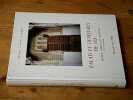
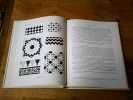
Etat correct malgré la reliure salie (à nettoyer). Intérieur propre
REVAULT Philippe - SANTELLI Serge - WEILL-ROCHANT Catherine (sous la direction de)
Reference : QWA-12816
Maisons de Bethléem
Maisonneuve & Larose / IMA, 1997, in-4 br. (29x22), 127 p., préface de Yasser Abed Rabbo, 177 illustrations (photos et dessins), couverture à rabats, état de neuf.
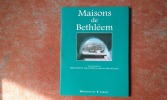
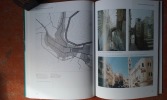
La ville de Bethléem est surtout connue parce qu'elle est le lieu, en Judée, où naquit il y a plus de 2000 ans le Christ. Mais son histoire urbaine et sociale, ancienne et récente, son architecture et ses typologies domestiques, restent paradoxalement méconnues. Les maisons localisées dans le centre ancien de l'agglomération constituent l'essentiel du domaine bâti bethlémitain. Grandes demeures ou maisons ordinaires, construites ou reconstruites pour l'essentiel au XVIIIe et XIXe siècle, elles constituent un patrimoine architectural remarquable. Les études regroupées dans le présent ouvrage abordent la maison bethlémitaine selon un point de vue historique, social et culturel, et selon un angle plus spécifiquement architectural. Les articles sont illustrés de nombreux dessins d'architecture, pour la plupart des relevés de maisons réalisés par des étudiants européens, maghrébins et palestiniens ayant participé au programme d'étude mené sur place en mars 1995 et 1996. Voir le sommaire sur photos jointes.
Maisons de Bethléem
Maisonneuve et Larose 1997 In 8 broché, 127 pp, illustrations en couleurs
Très bon état d’occasion
The Sheration Period - Post-Chippendale Designers, 1760-1820
William Heinemann, English Furniture, IV, London, 1913. In-12, reliure pleine toile éditeur illustrée sur le plat supérieur, 135 pp. Introduction - Chapters : I. Old furniture and modern taste. - II. Post-Chippendale designers chronological. - III. Ince and Mayhew's "Universal System" and Mangwaring's "Chair Maker's Friend". - IV. Hepplewhite and "The Guide". - V. Shearer and "The Book of ...
Avec un frontispice en couleur et 60 planches en noir et blanc en hors texte. --- Plus d'informations sur le site archivesdunord.com
Phone number : 01 42 73 13 41
SIX SEMAINES EN RUSSIE sites, moeurs, beaux-arts, industrie, finances, exposition de Moscou.
Paris et Nancy Berger-Levrault 1893. In-16 broché couverture en couleurs VIII 376pp. Orné de 2 grands tableaux dépliants. Pâles rousseurs par endroits, exemplaire bien complet.
Cognac.
Couverture rigide. Cartonnage de l'éditeur. 100 pages. 21, 5 x 20 cm.
Livre. Editions S.A.E.P. Colmar-Ingersheim, 1973.
EGLISE PRIEURALE ST LEGER DE COGNAC
IMPRIMERIE MOREAU ET FILS. sans date. In-12. Broché. Bon état, Couv. convenable, Dos satisfaisant, Intérieur frais. 8 pages illustrées de quelques photographies en noir et blanc dans le texte. Couverture en couleur.. . . . Classification Dewey : 720-Architecture
Classification Dewey : 720-Architecture
Raymond Reverdin: sculptures, architectures, peintures.
Parcours 2003, 300x215mm, frontispice, 99pages, reliure d'éditeur. Hommage de l’artiste sur la page de garde supérieure. Très bel exemplaire.
planches en couleurs et n/b, Pour un paiement via PayPal, veuillez nous en faire la demande et nous vous enverrons une facture PayPal
La revue des Beaux-Arts : Peinture, Sculpture, Architecture, Gravure, Musique, Renseignements artistiques, Expositions, Concours, n° 133 (3eme série), dimanche 26 décembre 1909
Paris, Impr. G. Jacquart, 1909, – 37 x 28, 4 pp. – Journal de couleur beige
Gazette hebdomadaire de 1909, réunissant des articles sur l'actualité artistique de l'époque : Le Mystère de la Peinture, l'Exposition de St Etienne, Société des artistes algériens et orientalistes(12eme salon 1910), les aquarelles de M. Binet, les amis des arts de Nîmes, le salon de la société internationale, Société artistique de l'Hérault, 4 ème page: publicité d'époque. Quelques rousseurs sans atteinte au texte, Très bon ex.

