 Write to the booksellers
-
Type
Any type (1)
Art print (7)
Autograph (1)
Book (32297)
Disk (1)
Drawings (265)
Engraving (11)
Magazine (125)
Old papers (1)
Photographs (15)
Posters (1)
-
Latest
Last 24h (16)
Last 3 days (8)
Last month (479)
Last week (21)
-
Language
Dutch (79)
English (56)
French (32546)
German (6)
Italian (18)
Portuguese (9)
Spanish (11)
-
Century
16th (14)
17th (46)
18th (200)
19th (1527)
20th (9449)
21st (1730)
-
Countries
Belgium (10934)
Brazil (6)
Canada (116)
China (1)
Côte d'Ivoire (134)
Denmark (209)
France (18229)
Germany (1)
Greece (1)
Switzerland (3094)
-
Syndicate
ALAC (107)
CLAM (144)
CLAQ (102)
CNE (3)
ILAB (10483)
NVVA (1145)
SLACES (1145)
SLAM (7878)
SNCAO (10)
LES EGLISES DE LA FLANDRE FRANCAISE. Au nord de la Lys. 2e édition.
Lille S.I.L.I.C 1943. Fort in-8 broché XVII 317pp. Nombreuses illustrations dans le texte et hors texte.
Bel ouvrage consacré à l'architecture, au mobilier et à la décoration de ces églises. (2464)
LES EGLISES DE LA FLANDRE FRANCAISES Les 2 tomes
2 VOLUMES; LES EGLISES DE L'ANCIENNE CHATELLENIE DE LILLE AU NORD DE LA LYS. 309 +230 Pages. Illustrations n/b. Jauni mais en bon état. Une expédition par Mondial Relay vous sera proposée 1942 1943 I.L.L.I.C Lille
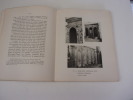
LES EGLISES DE LA FLANDRE FRANCAISE. Territoire de l'ancienne chatellenie de Lille
format moyen couverture souple. 312 pages. Illustrations n/b. Carte en fin d'ouvrage. Bon état.. une expédition par Mondial Relay vous sera proposée 1942 S. I.L.I.C Lille
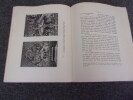
Les églises de la Flandre Française au nord de la Lys.
Deuxième édition, Un des 300 exemplaires sur papier hélio teinté des Papeteries Navarre numérotés de 301 à 600 (n° 444), avec 19 plans et schémas dans le texte, 80 planches hors texte et 2 cartes, 1 vol. grand in-8 carré reliure postérieure demi-chagrin brun, dos à 4 nerfs, Silic, Lille, 1943, XVII-315 pp. et 1 f. n. ch.
Bon exemplaire bien relié (une planche montée à l'envers, très bon état par ailleurs)
LES ANCIENNES MAISONS RURALES DES PAYS DE L'ADOUR.
1981 Pau, Imprimerie Moderne, 1981. In-quarto (215 X 277) reliure éditeur percaline ocre, titre doré en long au dos, jaquette couleurs illustrée ; 117 pages.
ABONDANTE ICONOGRAPHIE en noir et en couleurs. Exemplaire en parfait état. NICE COPY. PICTURES AND MORE DETAILS ON REQUEST.


La maison rurale en Pays Basque - Les cahiers de construction traditionnelle volume n°5.
Créer. 1981. In-8. Broché. Bon état, Couv. convenable, Dos satisfaisant, Intérieur frais. 78 pages - nombreuses photos, nombreux plans et dessins en couleurs et en noir et blanc dans et hors texte - texte sur deux colonnes.. . . . Classification Dewey : 720-Architecture

Les cahiers de construction traditionnelle volume n°5. Classification Dewey : 720-Architecture
Archi troglo
Editions Parenthèses, 1984, in-8 br. (26 x 18), 124 p., 1ère édition, photographies, dessins, schémas, très bon état.
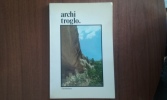
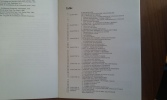
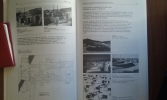
L'analyse de nombreux sites troglodytiques à travers le monde et les civilisations dénote la variété des formes et des combinaisons déployées dans l'aménagement des espaces "en creux". Voir le sommaire sur photos jointes.
Archi Troglo
Parenthèses. 1984. In-8. Broché. Bon état, Couv. partiel. décollorée, Dos satisfaisant, Intérieur frais. 124 pages. Nombreuses photos et illustrations monochromes dans et hors texte.. . . . Classification Dewey : 720-Architecture
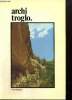
Classification Dewey : 720-Architecture
MAISONS CREUSEES DU FLEUVE JAUNE. L'architecture troglodytique en Chine.
Paris, Editions Creaphis, 1988, broché, couverture illustrée, 20x22 cm, 141 pages, nombreuses illustrations en couleurs et figures, préface de Pierre Clément.
bon état
Wilmotte, l'instinct architecte
Le Passage 2005 Avec ex-dono. In-4 broché 30,5 cm sur 22,5. Couverture souple rempliée. Nombreuses photographies en couleurs et en noir et blanc dont certaines hors texte. Non paginé. Très bon état d’occasion.
Très bon état d’occasion
NOTICE SUR L'EGLISE Paroissiale et Cathédrale Provisoire de Saint Martin à Marseille.
Marseille Boy et Fils 1971. In-12 broché 1 feuillet non chiffré 44pp. Couverture un peu poussiéreuse, quelques pâles et rares rousseurs par endroits. Exemplaire en bon état. Précieux document consacré à cette église désaffectée en raison de son état de dégradation, puis démolie. (PLAQ 25)
LOUCOU J-N. / GLAZE A. / BOCHET G. / GARRARD T.F. / BARBIER J.P. / BRAVMANN R. / VERGER-FEVRE M-N. / HARTER P. / BRUYNINX E. / DELUZ A. / BOYER A-M. / BLACKMUN VISIONA M. / FASEL F. / VOGEL S.
Reference : 66532
ARTS DE LA C TE D'IVOIRE 2 vols.
Suisse, J-P. Barbier Mueller, Collection du Mus e Barbier-Mueller, 1993 Reli avec reliure d' diteur toil e noire, sous jaquette illustr e en couleur, 2 vols. sous emboitage carton toil , in-4, dimensions: 24 x 30.5 cm.+errata, Fran ais. **Comme Neuf! ISBN 2881040276.
Tome 1: 422 pages., 69 ill. n/b, 344 ill. coul., 5 dessins, 4 cartes, 4 tableaux, notes - Tome 2: 232 pages, 324 ill. coul., 1 pl. n/b, 10 cartes, biblio. Cet ouvrage qui a co t 6 ans de travail est tir 1000 exemplaires dont 500 exemplaires en version Fran aise et 500 exemplaires en version Anglaise.
PLANIFICATION URBAINE ET REGIONALE
DUNOD. 1972. In-8. Broché. Bon état, Couv. convenable, Dos satisfaisant, Intérieur frais. 333 pages. Quelques illustrations en noir et blanc hors texte. Couverture rempliée.. . . . Classification Dewey : 720-Architecture
Une approche par l'analyse de systèmes. Préface d'hubert Le Boulanger. Traduit par Elizabeth Janvier. Collection Aspects de l'Urbanisme. Classification Dewey : 720-Architecture
Les hôtels de ville [en Belgique]
, Bruxelles, Ed.du Cercle d'art 1945, 114pp. avec 32pp. d'ills., dans la série "L'art en Belgique", 25cm., B19153
L'église Notre-Dame de Hal (Saint-Martin) (Ars Belgica, VI)
Bruxelles, Nouvelle Société d'Editions 1936 37pp. (texte) + 64 planches hors-texte (avec description), 33x26cm., Edition originale, tirage limité à 550 exemplaires, imprimé sur papier de luxe, belle reliure en demi-cuir bleu, plats décoré, titre doré au dos, feuilles de garde marbrées, brochure originale conservée et reliée, texte et intérieur sont frais, avec ex-libris héraldique, très bon état, poids: 2kg., B115939
De Sint Martenskerk te Halle [Ars Belgica, VI]
Antwerpen, De Sikkel 1936 90pp.tekst + 64 platen buiten tekst (met 152 fotografische afbeeldingen), beperkte en genummerde oplage van 200 exemplaren: dit is nr. 197/200, 33cm., gecart. uitgeversband met linnen rug, goede staat, B87050
De Sint Martenskerk te Halle [Ars Belgica, VI]
Antwerpen, De Sikkel 1936 90pp. tekst + 64 platen buiten tekst (met 152 fotografische afbeeldingen), beperkte en genummerde oplage van 200 exemplaren: dit is nr. 46/200, 33cm., originele omslag, goede staat, B102158
Les Iles KERKENA (Tunisie)
étude d’ethnographie Tunisienne humaine II » les jours » thèse principale pour le doctorat ès-lettre. Imprimerie Bascons & Muscat Tunis 30 Mai 1963. In 4 broché, faux-titre, titre, 446 pages, sur papier couché. Illustrations, graphiques, plans, dans le texte. Publication de l’Institut des Belles Lettres Arabes-Tunis .Bon exemplaire. Peu courant
Onze Vierkante Wereldbol
, Davidsfonds/Leuven 2003, 2003 Paperback, 270 pagina's, Nederlands, 220 x 145 mm, boek in goede staat, . ISBN 9789058262363.
Nieuw Actualiteit Kritische blik op de vermeende Amerikaanse hegemonie Louis Baeck Onze vierkante wereldbol ?Bouw je maatschappij uit zoals wij en word gelukkig!? De mooie zon van het Westen over de hele wereld laten schijnen: dat willen de politiek-economische centrumlanden, met de Verenigde Staten op kop. Maar hoe reilt en zeilt het westerse systeem? En wat is de impact ervan op de rest van de wereld? Baeck doet een schokkende vaststelling. Het is een illusie dat het Westen de hele wereldbol dicteert en onder controle heeft. Met stoere woorden en met de wapens, ja. Maar juist dat maakt de wereld onveiliger, onstabieler, ?vierkanter?. Eigenlijk is het Westen radeloos. Want de pletwals van de mondialisering heeft in veerkrachtige culturen een ongewilde weerbots. De heropleving van de islam in Afghanistan, de eigengereide Congolese staatsvoering, de economische en culturele groeikoorts van Japan, de heropleving van de Braziliaanse identiteit en spiritualiteit? Ook in andere culturen wordt gemoderniseerd, maar dan op een eigen manier. En dat zint het Westen niet? Een basiswerk over de huidige stand van zaken inzake politiek-economische en cultureel-godsdienstige ontwikkeling in de diverse werelddelen. Een kritische blik op de vermeende Amerikaanse hegemonie. Louis Baeck , hoogleraar em. aan de K.U.Leuven, is specialist in wereldeconomie.
Paris : Genèse d'un paysage
Picard, coll. « Villes & Sociétés » 1989 In-8 relié. In-8 24,5 x 24,5 cm. Reliure de l’éditeur pleine toile grise sous jaquette illustrée en couleurs, 313 pp., 154 illustrations en noir et blanc. Exemplaire en très bon état.. Assez bon état d’occasion. Poids sans emballage : 1500 grammes. Analyse des conditions et des modalités de la conquête et de l’organisation de l’espace aujourd’hui occupé par le Paris des vingt arrondissements.
Analyse des conditions et des modalités de la conquête et de l’organisation de l’espace aujourd’hui occupé par le Paris des vingt arrondissements. Très bon état d’occasion
Philippe II à l'Escorial
L'Artisan du Livre 1929 283 pages in8. 1929. broché. 283 pages. Louis Bertrand membre de l'Académie française retrace dans cet ouvrage la construction et la vie du monastère de l'Escorial voulu par Philippe II d'Espagne. Le livre aborde le choix du site la conception la décoration et le rôle du roi dans cette œuvre monumentale symbole de la contre-réforme catholique et lieu de sépulture des Habsbourg
Très bon état
L'Art français moderne n°9Paris L'Art français moderne n°9 octobre 1918. Broché 19 cm x 27 cm 21 pages+ 18 planches photographiques noir & blanc. Texte de Louis Bonnier photos d'immeubles de Per
Paris. 19 cm x 27 cm. 1918. Broché. 39 pages. Paris L'Art français moderne n°9 octobre 1918. Broché 19 cm x 27 cm 21 pages+ 18 planches photographiques noir & blanc. Texte de Louis Bonnier photos d'immeubles de Perret Delmet Deglane ... Bien complet de la planche couleur hors-texte i accroc au dos sinon bon état intérieur
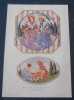
L'âme romane du bas-poitou . deux-sèvres . vendée
Nicolas 1962
Bon état Exemplaire numéroté ( 500 sur 680 ) ouvrage broché sous couverture rempliée, illustré de lithographies pleines pages( n&b) format à l italienne . histoire régio poitou deux sèvres vendée architecture romane - largeur/hauteur : 33x25 cm - poids : 860 g - nombre de pages : 110 p. - langue : Français
Oude gevels van Gent / Les vieux pignons de Gand
Gent, Maatschappij der bouwkundigen van Oost-Vlaanderen, 1914 60 platen 'in lichtdruk' in map, 46.5 x 33 cm, NL/FR. *Goede staat.
Oude gevels van Gent / Les vieux pignons de Gand

