 Write to the booksellers
-
Type
Any type (2)
Art print (7)
Book (32204)
Disk (1)
Drawings (7)
Engraving (9)
Magazine (126)
Old papers (1)
Photographs (13)
Posters (1)
-
Latest
Last 24h (6)
Last 3 days (11)
Last month (737)
Last week (129)
-
Language
Dutch (45)
English (53)
French (32226)
German (6)
Italian (18)
Japanese (2)
Portuguese (9)
Spanish (12)
-
Century
16th (16)
17th (52)
18th (211)
19th (1550)
20th (9385)
21st (1849)
-
Countries
Belgium (10416)
Brazil (7)
Canada (108)
China (3)
Côte d'Ivoire (63)
Denmark (213)
France (18500)
Germany (1)
Greece (1)
Switzerland (3059)
-
Syndicate
ALAC (99)
CLAM (85)
CLAQ (94)
CNE (3)
ILAB (10738)
NVVA (1153)
SLACES (1153)
SLAM (8171)
SNCAO (9)
Land & Dorp. Aanteekeningen en wenken ter overweging bij het bouwen en heropbouwen op het land
Antwerpen, Gust Janssens 1916 40pp.+ 16 illustraties (foto's) buiten tekst, 1 van de 15 genummerde exemplaren op Hollandsch papier; nr.6/15, gesigneerd met opdracht door auteur, gebroch., 24cm., enkele roestplekjes, goede staat, zeldzaam, B88704
Temps, sciences et empire. Cosmographie et navigation dans les monarchies ib riques au XVIe si cle
, Brepols, 2025 Hardback, 276 pages, Size:178 x 254 mm, Illustrations:16 col., 1 tables b/w., Language :French. *new ISBN 9782503613727.
Summary D s la fin du xve si cle, les monarchies portugaise et espagnole se lancent au grand large dans un lan de construction imp riale qui saisit le globe. Une diversit d'acteurs et de savoirs, dont la cosmographie et la navigation, sont porteurs de ce processus. Ce dernier transforme, jamais, l'image et le concept de la Terre comme espace de l'habitat humain, retravaillant les liens entre espace et temps. Pilotes et cosmographes contribuent alors une reconceptualisation des temporalit s et des temps de la Terre. Quels textes ont-ils r dig s et lus, quels instruments ont-ils manipul s cette fin ? En explorant ces dynamiques partir d'une pluralit de mat riaux, le livre embarque le lecteur sur des bateaux naviguant vers les Indes, l'invite dans des Casas et des entrep ts portuaires ou dans des universit s o r sonnent les chos d'une mer transformatrice des connaissances. La cr ation de la chaire de cosmographie la Casa de la contrataci n (S ville, 1552) et la trajectoire de son premier d tenteur, Jer nimo de Chaves (1523-1574), servent de laboratoire privil gi d'o observer ces probl matiques. Le livre largit ainsi la mani re de comprendre la cosmographie au xvie si cle, souvent r duite son rapport la cartographie, l'intersection de plusieurs pratiques et savoirs (histoire naturelle, th ologie, astrologie, astronomie, navigation) et au-del du clivage Anciens-Modernes . En embrassant d'un regard les monarchies ib riques, l'ouvrage ancre dans l'Europe m ridionale la question plus large de la production des techniques et des sciences l' poque moderne, inscrivant l'espace ib rique dans une premi re globalisation. TABLE OF CONTENTS INTRODUCTION : Ib rie kal idoscopique PREMI RE PARTIE Chapitre 1 : Autour de G rard Mercator : construction des savoirs de l'espace et du temps aux royaumes des Habsbourg Chapitre 2 : Lieux de savoir, l'art de naviguer et le temps : pratiques, instruments et livres au go t de mer Chapitre 3 : Le temps des cartes et les temporalit s du temps : entre cultures juridiques et enjeux sociaux DEUXI ME PARTIE Chapitre 4 : Le temps des reportorios Chapitre 5 : Les temps de la sph re Chapitre 6 : Architecture temporelle de l'espace Chapitre 7 : L'astrologue, le m decin et le cosmographe CONCLUSION
Histoire de l'architecture moderne 3. Les conflits et l'après-guerre
Paris, Dunod, Espace et Architecture, 1979, in-4, Broché., 343 pages. Couverture légèrememnt défraîchie. Petits plis. Intérieur frais.
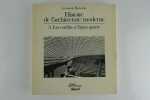
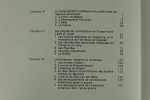
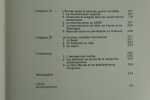
NB. Les questions et commandes sont traitées dans les 48h. Les expéditions se feront à partir du 24 avril. Merci.
HISTOIRE DE L'ARCHITECTURE MODERNE - LES CONFLITS ET L' APRES GUERRE. TOME III.
DUNOD. 1980. In-12. Broché. Etat d'usage, Couv. défraîchie, Dos abîmé, Mouillures. 343pages. Très nombreuses illustrations et photographies en noir et blanc dans le texte et hors texte. . . . Classification Dewey : 720-Architecture
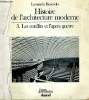
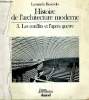
Le nouveau contexte international. L'architecture moderne en Amérique. Classification Dewey : 720-Architecture

New Avenues in Biblical Exegesis in Light of the Septuagint
, Brepols, 2022 Paperback, 346 pages, Size:156 x 234 mm, Illustrations:17 b/w, 19 tables b/w., Language(s):English, Greek, Hebrew. ISBN 9782503598062.
Summary The detailed study of the Septuagint opens new avenues of interpretation of the biblical text and enables new advancements in exegetical studies. The Greek version can be studied through several different approaches and the application of exegetical methods, old and new, contributes to a better understanding of numerous literary, historical and theological aspects of the Bible. The present volume collects the contributions written by renowned scholars who address the issue of the role and impact of Septuagint studies on biblical exegesis and theology. The papers range from more methodological discussions to exegetical studies applying various approaches to the Septuagint text. The wide variety of methods applied reveals numerous aspects of the Septuagint and the biblical text in general, such as their composition, history, textual transmission, literary scope and shape, and theology. The diversity of methods and analyses of the Septuagint represented in this book have, nevertheless, a common denominator: Biblical exegesis would benefit greatly from a deeper knowledge of the Septuagint. TABLE OF CONTENTS Preface (Leonardo Pessoa & Daniela Scialabba) 'Bringing forth from the Treasure New and Old': Septuagint Studies and Exegetical Methods (Siegfried Kreuzer) Non-Israelites and the God of Israel: The Vocabulary of 'Conversion' in the Septuagint and Greek Jewish Literature against its Greek-Hellenistic Background (Daniela Scialabba) The Use of the Septuagint in Critical Commentaries (Emanuel Tov) Elisha's Posthumous Miracle in Textual History (II Kings 13. 20-21): What does This Story Teach Us about the Textual History of the Books of Kings? (Adrian Schenker) The Septuagint's Faculty of Putting Things in Their Right Place: Challenges of a Critical Edition of IV Kingdoms / II Kings 10. 30-31; 13. 14-21 (Julio Trebolle, Pablo Torijano & Andr s Piquer) Can We Understand the Pillars of the First Temple without the LXX? Textual and Iconographic Perspective (Daniel Prokop) Haman through the Looking Glass: The Refraction of Genre in Greek Esther (Cameron Boyd-Taylor) Rhetoric of Solomon's Speech in I Kings 8. 12-13 and III Kingdoms 8. 53a (Peter Dubovsk ) Lost in Translation: LXX-Jeremiah through the Lens of Pragmatics (Benedetta Rossi) Narratological Approaches to the LXX of the Books of Samuel (Leonardo Pessoa da Silva Pinto) Septuagint and New Testament in Papyri and Pandects: Texts, Intertextuality and Criteria of Edition (Martin Karrer) The Litter of Solomon: Textual and Exegetical Problems in Canticles 3. 6-11 (Luciano Bossina) Reading 'According to the Revelation Shown to Moses': A Study of the Influence of the LXX Text on Patristic Biblical Interpretation (Georg G bel) The Importance of the LXX for Biblical Theology: Some Notes on Method (Luca Mazzinghi) Biblical Index
Les fondations (traduit (de l’anglais: Foundation engineering) et adapté par un groupe d’ingénieurs des laboratoires des ponts et chaussées
Paris, Dunod, 1968, gr. in-8vo, XVI + 1106 p. + 1 ff. + carte pliée ‘carte géologique de l’europe’ non relié à l’intérieur du 2ème plat de la reliure, cachet‘Clément + Bongard’ à Fribourg, reliure en toile originale.

(SLACES, NVVA)
Phone number : 41 (0)26 3223808
Die Gottesmutter. Marienbild in Rheinland und Westfalen 2 volum
, Verlag Aurel Bongers 1974, 1974 Hardcover, teile 1 :411 seiten, teile 2 :505 seiten, Deutsche sprache, 250 x 175 mm, im guten zustand,. ISBN 9783764702656.
Hannelore Van Dijck ?een vogel vliegt op
, Posture Editions Nr 41, 2021 PB, 297 x 210 mm, 128 pages, Illustrated. ENG-NL edition. ISBN 9789491262425.
Een vogel vliegt op is a book about Hannelore Van Dijck's recent ink drawings and artist books. This publication crystallizes her search for a fluid way of working, a search for movement, rhythm and leaks. In 2012, Posture published her very first publication So gr n war mein Tal, with images of 11 temporary in situ projects that no longer existed at the time of the publication. The spatial installations (2008-12) almost all consisted of large wall or floor drawings, fantastic trompe l'oeils made in charcoal, of which she will realise many more after the 1st book. Een vogel vliegt op contains, besides 2 recent, spatial realisations in Lyon and Ronse, mainly works on paper in ink and pencil that she made during residencies in New York and Genk. Even in her recent work, Hannelore does not shy away from immersing herself in the repetitive act of drawing, which means that Een vogel vliegt op unmistakably contains Hannelore's signature but also represents a surprising turn in her young oeuvre. Book and presentation in collaboration with FLACC, workplace for visual artists and supported by the Flemish Government. Courtesy of Galerie Zink and Gallery Sofie Van de Velde
Contreprojets / Controprogetti / Counterprojects
Archives D'Architecture Moderne 1980 In-4 broché 26,8 cm sur 20. 58 pages. Petit accroc en tête du premier plat. Bon état d’occasion.
Bon état d’occasion
Leon Lemahieu, Peter Aerts. Concept Ibert Pauwels, Peter Aerts Graphic design Ibert Pauwels. Photography Yannick Milpas
Reference : 67726
Peter Aerts Transit Zone
, , 2025 Hardback, 100 pages, 32 (hoogte) x 23.8 Dutch (NL) ed. ISBN 9789083459318.
Published on the occasion of the exhibition Transit Zone by Peter Aerts, for Ceramic Brussels 2025, 22-25 January 2025 Concept Ibert Pauwels, Peter Aerts Graphic design Ibert Pauwels. Text Leon Lemahieu, Peter Aerts. Also including texts by Daniel Moore, Thom Yorke, Anastasia, Henry Miller. Photography Yannick Milpas
L'ARCHITECTURE DE LA RENAISSANCE
ALCIDE PICARD & KAAN. NON DATE. In-8. Broché. Bon état, Couv. convenable, Dos satisfaisant, Intérieur frais. 352 pages. Nombreuses figures et illustrations en noir et blanc dans le texte.. . . . Classification Dewey : 720-Architecture
Classification Dewey : 720-Architecture
LA RENAISSANCE EN FRANCE. 10ème LIVRAISON. NORMANDIE (SEINE-INFERIEURE, EURE, ORNE, CALVADOS ET MANCHE) ILLUSTRATIONS SOUS LA DIRECTION DE EUGENE SADOUX. TITRE DE L' EAUX-FORTE: PORTE DE St MACLOU A ROUEN.
A. QUANTIN. 1883. In-Folio. Broché. A relier, 1er plat abîmé, Dos abîmé, Intérieur acceptable. Paginé de 246 à 324 . Illustré de 7 gravures dans le texte et 1 eaux-forte hors texte avec serpentes. Dos coupé en plusieurs parties. Quelques mots du texte soulignés au stylo. Déchirure sur le premier plat.. . . . Classification Dewey : 720-Architecture
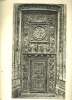
Contient: La table analytique des tomes I et II (Nord). / La table des matières et la table des gravures contenues dans le tome II. Classification Dewey : 720-Architecture
"LA RENAISSANCE EN FRANCE. 2ème LIVRAISON. ILE-DE-FRANCE (OISE). ILLUSTRATIONS SOUS LA DIRECTION DE EUGENE SADOUX. TITRES DES EAUX-FORTES: ""VANTAUX DE LA PORTE MERIDIONALE DE BEAUVAIS"", ""DETAILS DES VENTAUX DE BEAUVAIS"", ""DEBRIS DU CHATEAU DE SARCUS""..."
A. QUANTIN. 1879. In-Folio. Broché. A relier, 1er plat abîmé, Dos abîmé, Intérieur acceptable. Paginé de 52 à 93. Illustré de 10 gravures dans le texte et 4 eaux-fortes hors texte avec serpentes. Quelques mots soulignés au stylo. Dos coupé en trois parties. Manque sur le premier plat.. . . . Classification Dewey : 720-Architecture
"...""Petit château de chantilly"". Classification Dewey : 720-Architecture"
"LA RENAISSANCE EN FRANCE. 3ème LIVRAISON. ÎLE DE FRANCE (AISNE). ILLUSTRATIONS SOUS LA DIRECTION DE EUGENE SADOUX. TITRE DES EAUX-FORTES : 1. ""PONT ET GALERIE DU CHÂTEAU DE FERE EN TARDENOIS"" 2. ""PORTE D'ENTREE DE LA GALERIE DU CHÂTEAU DE FERE..."
A. QUANTIN. 1880. In-Folio. Broché. A relier, 1er plat abîmé, Dos abîmé, Intérieur acceptable. Paginé de 98 à 135. Illustré de 14 gravures dans le texte et 3 eaux-fortes hors texte avec serpentes (la 1ère sur une double page). Dos coupé. Pages en feuillets doubles non reliés.. . . . Classification Dewey : 720-Architecture
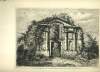
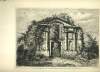
"...en Tardenois"". 3. ""Chapelle du château de Villers Cotterets"". Classification Dewey : 720-Architecture"
LA RENAISSANCE EN FRANCE. 5ème LIVRAISON. ÎLE-DE-FRANCE (SEINE-ET-MARNE) 2ème PARTIE (FONTAINEBLEAU) ILLUSTRATIONS SOUS LA DIRECTION DE EUGENE SADOUX. TITRE DES EAUX-FORTES: 1. FONTAINEBLEAU. COUR DE LA FONTAINE (FACADE ORIENTALE)...
A. QUANTIN. VERS 1880, 1881. In-Folio. Broché. A relier, Couv. défraîchie, Dos abîmé, Intérieur acceptable. Paginé de 174 à 234. Illustré de 11 gravures dans le texte et 3 eaux-fortes hors texte avec serpentes (la 3ème sur double page). Dos coupé en plusieurs parties. Quelques mots du texte soulignés au stylo. Premier plat non d'origine (enprunté à une autre livraison).. . . . Classification Dewey : 720-Architecture
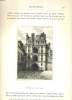
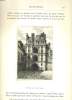
...2. Fontainebleau. La salle de bal. 3. Décoration de la galerie de François 1er à Fontainebleau. Classification Dewey : 720-Architecture
LA RENAISSANCE EN FRANCE. 6ème LIVRAISON. ÎLE-DE-FRANCE (SEINE-ET-OISE). ILLUSTRATIONS SOUS LA DIRECTION DE EUGENE SADOUX. TITRE DES EAUX-FORTES: 1. EGLISE DE VERTHEUIL. 2. EGLISE DE BELLOY. 3. St DENYS. VASE DU COEUR DE FRANCOIS 1er. ...
A. QUANTIN. VERS 1881. In-Folio. Broché. A relier, 1er plat abîmé, Dos abîmé, Mouillures. Paginé de 2 à 64. Illustré de 14 gravures dans le texte et 5 eaux-fortes hors texte avec serpentes. Dos coupé en plusieurs parties. Premier plat non d'origine (emprunté à une autre livraison) partiellement déchiré. Mouillures en bas de page des 3ème et 5ème eaux-forte. Quelques mots du texte soulignés au stylo.. . . . Classification Dewey : 720-Architecture
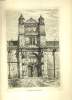
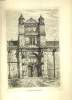
...4. Ecouen. Péristyle de la cour. 5. Ecouen. Façade des terrasses. Classification Dewey : 720-Architecture
LA RENAISSANCE EN FRANCE. 7ème LIVRAISON. ÎLE-DE-FRANCE (AISNE). ILLUSTRATIONS SOUS LA DIRECTION DE EUGENE SADOUX. TITRE DES EAUX FORTES: 1. TOMBEAU DE LOUIS XII. 2. EFFIGIE DE LOUIS XII PAR JEAN JUSTE. 3. EFFIGIE DE FRANCOIS 1er PAR PIERRE BONTEMPS...
A. QUANTIN. VERS 1882. In-Folio. Broché. A relier, Plats abîmés, Dos abîmé, Intérieur acceptable. Paginé de 68 à 120. Illustré de 14 gravures dans le texte et 5 eaux-fortes hors texte avec serpentes. Dos coupé en plusieurs parties. Quelques mots du texte soulignés au stylo. Quelques déchirures en bordure des plats.. . . . Classification Dewey : 720-Architecture
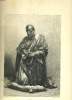
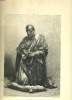
4. Henri II. 5. Catherine de Médicis par Germain Pilon. Classification Dewey : 720-Architecture
LA RENAISSANCE EN FRANCE. 9ème LIVRAISON. NORMANDIE (SEINE-INFERIEIURE ET EURE). ILLUSTRATIONS SOUS LA DIRECTION DE EUGENE SADOUX. 1. EGLISE DE GISORS. 2. EGLISE DE LONGNI (ORNE). 3. CHOEUR DE L'EGLISE St PIERRE A CAEN. ...
A. QUANTIN. 1983. In-Folio. Broché. A relier, Couv. légèrement passée, Dos abîmé, Intérieur frais. Paginé de 190 à 274. Illustré de 11 gravures dans le texte et 5 eaux-fortes hors texte avec serpentes. Dos coupé en plusieurs parties. Quelques mots du texte soulignés au stylo.. . . . Classification Dewey : 720-Architecture
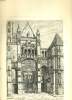

... 4. Intérieur de l'église de St Pierre à Caen. 5. Château de Chanteloup (Manche). Classification Dewey : 720-Architecture
"LA RENAISSANCE EN FRANCE. PREMIERE LIVRAISON. FLANDRE, ARTOIS, PICARDIE. ILLUSTRATIONS SOUS LA DIRECTION DE EUGENE SADOUX. TITRES EAUX-FORTES: ""CLOCHER DE SAINT-AMAND"" ET ""TOMBEAU DE CHARLES DE LALAING""."
A. QUANTIN. 1879. In-Folio. Broché. A relier, Couv. légèrement passée, Dos abîmé, Quelques rousseurs. 48 pages. Illustré de 15 gravures dans le texte et 2 eaux-fortes hors texte avec serpentes. Quelques mots soulignés aux crayons de couleurs. Dos coupé en plusieurs parties.. . . . Classification Dewey : 720-Architecture
Classification Dewey : 720-Architecture
"LA RENAISSANCE EN FRANCE. QUATRIEME LIVRAISON. LIVRAISON. ÎLE-DE-FRANCE (SEINE-ET-MARNE) ILLUSTRATIONS SOUS LA DIRECTION DE EUGENE SADOUX. TITRE DES EAUX FORTES. 1.""EGLISE D'OTHIS"" 2. ""MAISON DITE DE FRANCOIS 1er"" 3. ""ENTREE DU CHÂTEAU DE NANTOUILLET."""
A. QUANTIN. 1881. In-Folio. Broché. A relier, 1er plat abîmé, Dos abîmé, Quelques rousseurs. Paginé de 140 à 169. Illustré de 10 gravures dans le texte et 4 eaux-fortes hors texte avec serpentes. Dos coupé en 4 parties. Quelques mots soulignés au stylo dans le texte. Légères déchirures sur le premier plat.. . . . Classification Dewey : 720-Architecture
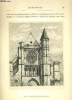
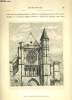
"4. ""Ancien pavillon d'entrée du château de Montceaux"". Classification Dewey : 720-Architecture"
Leon SPILLIAERT De Oorsprong van het Beeld. Tekeningen en prenten in dialoog.
Antwerpen -, Dereede, 2021 softcover, 210 pages, illustrations en noir et blanc et en couleurs. 21x15cm. Text NL/ENG/FR.
L on SPILLIAERT De Oorsprong van het Beeld Tekeningen en prenten in dialoog De tentoonstelling L on Spilliaert. De Oorsprong van het Beeld toont hoe het creatief proces van schets en tekening een ondersteunende rol speelde bij het tot stand komen van originele prenten en gravures in Spilliaerts oeuvre. Als jonge tekenaar bleef Spilliaert stilstaan bij gevoelens zoals liefde en dood, eenzaamheid, verlangen en schaamte en wierp hij een bezielde blik op de relaties tussen de man en de vrouw en tussen de mensen onderling. Daarbij illustreerde hij ook in kleine genuanceerde zelfportretten, eenvoudig met potlood en inkt, als zovele snapshots, de evolutie van zijn eigen zelfbeeld. Deze kritisch momentane en veelal zeer spontane aantekeningen vertegenwoordigen subtiel de diepere intieme ontledingen van zijn innerlijk getormenteerde geest. /// L on SPILLIAERT The Origin of the Image Drawings and prints in dialogue The exhibition L on Spilliaert. The Origin of the Image shows how the creative process of sketching and drawing played a supporting role in the creation of original prints and engravings in Spilliaert's oeuvre. As a young draftsman, Spilliaert dwelled on feelings such as love and death, loneliness, longing and shame, and he took an inspired look at the relationships between man and woman and between people themselves. In addition, he also illustrated the evolution of his own self-image in small nuanced self-portraits, simply with pencil and ink, like so many snapshots. These critically momentary and often very spontaneous notes subtly represent the deeper intimate dissections of his inner tormented mind. For the first time, exceptional works from private collections are (again) brought together here, which for many will mean a rediscovery of the artist's work. Voor het eerst worden hier uitzonderlijke werken uit priv verzamelingen (weer) samen gebracht die voor velen een herontdekking van het werk van de kunstenaar zullen betekenen.
kaart- en goederenboek van de abdij van Zwijveke (1737-1738)
, Oudheidkundige Kring Dendermonde, 2012 hardcover, 456 Pagina's, met prachtige illustraties, in zeer goede staat ! .
De cisterci nzerinnenabdij van Zwijveke - Korte historiek9-16 De organisatie van armen- en ziekenzorg in de 13de eeuw , p. 9 Omvorming van het Sint-Gillishospitaal tot een cisterci nzerinnenabdij (1223) , p. 9 De abdij van Zwijveke op de Zwijvekekouter, buiten de muren van Dendermonde (1228-1667) , pp. 9-11 De abdij van Zwijveke binnen de muren van Dendermonde (1673-1796) , pp. 12-14 De gewezen abdij van Zwijveke na de suppressie (1798-1856) , p. 15 Het kaart- en goederenregister van de abdij van Zwijveke, in het kader van een vernieuwd goederenbeheer, 1737-173817-20 De goederen en heerlijke rechten van de abdij van Zwijveke en het goederenbeheer in de 17de en de 18de eeuw . Onroerende goederen: huizen, molens, landerijen, weiden, meersen en bossen21-50 Oorsprong der onroerende bezittingen , pp. 21-24 Ligging, aard en oppervlakte van de onroerende bezittingen , pp. 24-34 De uitbreidingspolitiek ten opzichte van de abdijbezittingen en de evolutie in het bodemgebruik , pp. 35-36 Verpachting van het onroerend goed , pp. 37-42 Evolutie van de pachtontvangsten , pp. 42-46 De inkomsten van de landpachten volgens de 'Staten van goederen' , pp. 46-48 De goederen en heerlijke rechten van de abdij van Zwijveke en het goederenbeheer in de 17de en de 18de eeuw . Het tiendrecht van de abdij van Zwijveke51-86 Oorsprong van de tienden , pp. 51-52 Ligging, oppervlakte en aard van de tienden , pp. 53-70 Verpachting van de tienden , pp. 71-80 Evolutie van de pachtontvangsten , pp. 80-84 De goederen en heerlijke rechten van de abdij van Zwijveke en het goederenbeheer in de 17de en de 18de eeuw . Andere inkomsten, gunsten en voorrechten87-92 De heerlijkheid Appels , pp. 87-88 De heerlijkheid Baardegem , pp. 88-89 Cijns- en leenboek in Opwijk , pp. 89-90 Cijns- en leenboek in Sint-Gillis , p. 90 'Pitanties' en renten in Dendermonde en elders , pp. 90-91 Patronaatrecht , p. 91 Analytische studie van het kaart- en goederenboek van 1737-1738, met aanvullende nota's uit de andere 18de-eeuwse boekhoudkundige bronnen . Compatibiliteit van het bronnenmateriaal93-96 Het kaart- en goederenboek, 1737-1738, als basis voor verder onderzoek , p. 95 Onderzoek naar de verpachting van het onroerend goed , pp. 95-96 Onderzoek naar de verpachting der tienden , p. 96 Analytische studie van het kaart- en goederenboek van 1737-1738, met aanvullende nota's uit de andere 18de-eeuwse boekhoudkundige bronnen . De onroerende goederen uit het kaart- en goederenboek: hofsteden, landerijen, weiden, meersen en bossen97-214 Opwijk - Lebbeke , pp. 98-110 Baardegem - Moorsel - Lebbeke , pp. 111-112 Buggenhout - Lebbeke , pp. 113-133 Massemen , p. 134 Mespelaere , pp. 135-139 Denderbelle , p. 140 Sint-Gillis-bij-Dendermonde , pp. 141-170 Oudegem , pp. 171-177 Sint-Onolfsbroek (Dendermonde) , pp. 178-184 Appels , pp. 185-207 Het Vrije van Dendermonde , pp. 208-214 Analytische studie van het kaart- en goederenboek van 1737-1738, met aanvullende nota's uit de andere 18de-eeuwse boekhoudkundige bronnen . De tienden uit het kaart- en goederenboek215-268 De tienden te Denderbelle , pp. 216-219 De tienden te Opwijk , pp. 220-221 De tienden te Hamme , pp. 222-223 De tienden te Sint-Gillis , pp. 224-244 De tienden te Berlare , pp. 245-255 De tienden te Appels , pp. 256-259 De tienden te Meulebeke , pp. 260-268 Anastatische reproductie van het kaart- en goederenboek van de abdij van Zwijveke (1737-1738)289-366 Het grondbezit , pp. 289-337 De tienden , pp. 339-366
Leopold III Fotograaf
, Lannoo 2007, 2007 Hardcover, 271 pagina's, Nederlands, 295 x 260 mm, veel foto's in kleur en z/w, boek in goede staat, . ISBN 9789020967982.
Prinses Esmeralda van Belgi maakte een selectie uit de duizenden foto's die haar vader (koning) Leopold III maakte op zijn talrijke reizen. De selectie wordt gepresenteerd als een denkbeeldige wandeling waarin alle interesses en passies van Leopold III aan bod komen. Meestal worden daarbij twee beelden met elkaar geconfronteerd, bv. een verre oever uit Maleisi tegenover een uit Congo, een jonge vrouw tegenover een hoogbejaarde. Met nog een aantal familiefoto's zit er niet echt een duidelijke eenheid in het boek, maar de kwaliteit van de foto's is hoogstaand. De eenvoudige zwart-wit- en kleurenfoto's getuigen van professionele toewijding en respect voor de gefotografeerde mensen. Dat respect, en zelfs bewondering, voor niet-westerse volkeren blijkt ook uit de enkele teksten van Leopold III die werden opgenomen. Elke foto wordt kort geannoteerd, soms is er iets meer uitleg. Je krijgt de indruk dat sommige foto's kunstmatig verscherpt zijn en dat de kleuren wat opgepept werden, maar dat stoort niet.
NOTICE SUR NOTRE DAME DE PIBEQUE
EAUZE, IMPR. LABORDE. 1932. In-8. Broché. Etat d'usage, Couv. partiel. décollorée, Dos satisfaisant, Intérieur frais. 40 pages. Premier plat illustré en noir. Une photo en noir et blanc dans le texte.. . . . Classification Dewey : 720-Architecture
Classification Dewey : 720-Architecture
miniature en Europe, Aux 16e, 17e et 19e si cles. Vol. I, II, III & IV (Textes + Planches A-Z)
Graz, Akademische Druck U. Verlagsanstalt, 1964 Four volumes, Linen binding, no dustjacket, 1090 pages + 641 plates, 27.5 x 19 cm, FR. *good condition but water damage to corner of both books with plates
La miniature en Europe, Aux 16e, 17e et 19e si cles. Vol. I, II, III & IV (Textes + Planches A-Z)

