Write to the booksellers
-
Type
Any type (1)
Art print (7)
Autograph (1)
Book (31935)
Disk (1)
Drawings (265)
Engraving (10)
Magazine (125)
Old papers (1)
Photographs (15)
Posters (1)
-
Latest
Last 24h (26)
Last 3 days (18)
Last month (347)
Last week (133)
-
Language
Dutch (78)
English (56)
French (32184)
German (6)
Italian (18)
Portuguese (9)
Spanish (11)
-
Century
16th (14)
17th (47)
18th (198)
19th (1518)
20th (9489)
21st (1644)
-
Countries
Belgium (10865)
Brazil (6)
Canada (115)
China (1)
Côte d'Ivoire (139)
Denmark (207)
France (17911)
Germany (1)
Greece (1)
Switzerland (3116)
-
Syndicate
ALAC (106)
CLAM (145)
CLAQ (101)
CNE (3)
ILAB (10578)
NVVA (1145)
SLACES (1145)
SLAM (7970)
SNCAO (10)
Belgian Architects Today : Hedendaagse Belgische Architecten/ Les Architectes belges contemporains
, Lannoo, 2024 Hardcover, 304 pag. NL / FR., 300 x 220 mm, Nieuw / Nouveau, stofomslag / jaquette, afb. / images in kleur / z/w. ISBN 9789401491068.
De beste hedendaagse toparchitecten van Belgi In deze bijzondere gebonden hardcover introduceert architectuurschrijver Agata Toromanoff de meest invloedrijke, hedendaagse architecten van Belgi en een selectie van hun meest gevierde gebouwen in full colour fotografie. Belgische architecten gooien al jaren hoge ogen en kennen internationale allure. Met de bekendste Belgische architect-designers, zoals Vincent Van Duysen en EPRICUM, tot opkomende architecten, zoals Oyo Architects. Aan elke architect zijn meerdere pagina's gewijd, waarin hun invloeden en idee n worden geschetst en de glorieuze ontwerpen worden getoond die hen bekendheid hebben gegeven. Met dit geweldige naslagwerk ontdekt u de ware omvang van de creatieve prestaties die binnen de carri res van deze architectonische reuzen liggen. Boeiende biografie n naast adembenemende foto's. Een boek dat zowel verhelderend als mooi is.
Sculpting Light: 500 Lamps
, teNeues , 2023 Hardcover, 408 pages, very richly illustrated with coloured illustrations, 23.5 x 4.45 x 30.48 cm, English text, *NEW. ISBN 9783961714445.
Sculpting Light gathers the finest of modern lamp design in one volume. Whether chandeliers, pendants, or table lamps, whether sculptural or minimalist in design, they are exclusive decorative elements during the day and conjure up a very special atmosphere in the dark. Iconic examples are represented in the book as well as examples of bold experiments with forms and materials. Three types of light sources are presented: Ambient, Spotlight and Outdoor. Legendary designers reveal their sources of inspiration and personal favourites, and well-known manufacturers are presented in portraits.
Histoire de l'architecture en Belgique - TOME PREMIER
Ajamar | Bruxelles 1852 in12. 1852. Relié. iconographie en noir et blanc
étiquette sur le dos couverture frottée bords frottés tranche ternie
L'habitation moderne livraison n°1 5e année 30 mai 1922 - Annexe du château de la Tuyolle à Taverny (Seine et Oise) - ferme Saint-Crépin à Soissons (Aisne) - ferme de fontenille à Wissignicourt (Aisne) - maisons économiques à Paris etc.
H.Vial. 1922. In-4. En feuillets. Etat d'usage, Plats abîmés, Dos abîmé, Quelques rousseurs. Paginé de 145 à 238 - quelques planches en couleurs - nombreux dessins, illustrations, plans en monochrome dans et hors texte - déchirures sur les plats - 6 photos disponibles.. . . . Classification Dewey : 720-Architecture
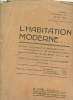
Sommaire : Annexe du château de la Tuyolle à Taverny (Seine et Oise) - ferme Saint-Crépin à Soissons (Aisne) - ferme de fontenille à Wissignicourt (Aisne) - maisons économiques à Paris - ferme de moyenne culture dans le jura - logements ouvriers type gauthier deux logements - projet d'agrandissement de l'oeuvre pour l'enfance et la famille par l'aide sociale - propriété de M.L.M. à Anizy le Chateau (Aisne) - agrandissement du Manoir de Blosseville - un monument aux morts pour la ville de Marles - le pavillon du représentant à Addis-Abbeba - propriété de M.Mondaine à Anizy le château - habitation du ferme propriété de M.X. etc. Classification Dewey : 720-Architecture


Guide de l'architecture des années 25 à Bruxelles.
Commission Française de la Culture de l'Agglomération de Bruxelles, 1983. 19 x 21, 63 pp., quelques croquis, 1 carte volante, broché, bon état.
L'ABBAYE DE FONTEVRAUD ET LES ORIGINES DE LA VILLE
IMPRIMERIE NORMANDE. NON DATE. In-8. Broché. Etat d'usage, Couv. partiel. décollorée, Dos satisfaisant, Intérieur frais. 48 pages. Quelques photos en noir et blanc dans et hors texte.. . . . Classification Dewey : 720-Architecture
Classification Dewey : 720-Architecture
"Ecole navale, 2eme année d'étude année scolaire 1871-1872; architecture navale, 1ere partie du cours : architecture navale; 2eme partie du cours, construction en fer; 2eme année d'étude année scolaire 1872-1873, architecture navale : Table des matières."
Brest, Imprimerie et Lithographie, Roger Père, 1871-1973. 23 x 26, 286 + 66 + 267 pages, reliure dos cuir, état moyen (reliure usagée mais solide).
Impression en cursive.
L'architettura aragonese-catalana in Siracusa
Direzione Collezione Meridionale 1942 Livre en italien. In-4 relié 30 cm sur 22. 72 pages. 72 illustrations de qualité en noir et blanc. Reliure légèrement tachée, angles encornés, mors interne fenduRilegatura leggermente macchiata, angoli leggermente danneggiati. 72 illustrazioni di buona qualità in bianco e nero. Bon état d’occasion.
Bon état d’occasion
L’architettura Sveva in Sicilia
Collezione Meridionale Editrice 1935 Livre en italien. Première édition .In-4 relié 29,5 cm sur 23. 493 pages. 325 illustrations de bonne qualité dans le texte et en noir et blanc. Texte en très bon état. Reliure tachée, insolée et avec rousseurs, mors fendillés, coins légèrements encornés. Etiquettes ex-libris sur contreplat. Rilegatura macchiata, insolata e con rossori, dorso con piccoli strappi, angoli leggermente piegati. Etichetta ex-libris su contropiatto. 325 illustrazioni nel testo di buona qualità e in bianco e nero. Testo in ottimo stato. État correct d’occasion.
Etat correct d’occasion
Rodin and Vienna
, HIRMER VERLAG, 2010 Hardcover, 240 pages, ENG. edition, 285 x 235 x 20 mm, condition : New, illustrated in colour / b/w. ISBN 9783777433110.
A corresponding member of the Vienna Secession, French sculptor Auguste Rodin submitted works for its exhibitions beginning in 1898. The ninth Secession exhibition marked the high point of his involvement, with many of his major works prominently displayed, including Eve, The Age of Iron, The Burghers of Calais, and Rodin?s monument to the great French writer Honor de Balzac?now considered among his greatest works though met at the time with considerable disapproval. Rodin and Vienna examines the sculptor?s influence on Austrian art and traces the history of the annual Secession shows and Rodin?s many contributions. Part of the Belvedere Gallery?s collection ever since, these masterpieces are here joined by later additions and selected works on loan in order to illustrate the way Rodin wrestled with form. Individual chapters by selected Rodin experts place works into their rightful contexts and demonstrate how the artist made use of his contacts in bourgeois society and intellectual circles to fulfill his ambitions and further his career.
Mustang Archives. Analysis of Handwritten Documents via the Study of Papermaking Traditions in Nepal
, Brepols, 2022 Paperback, 338 pages, Size:210 x 297 mm, Illustrations:178 col., 4 tables b/w., 5 maps b/w, Language: English. ISBN 9782503585345.
Summary The Mustang Archives explores locally produced documents from Mustang, Nepal, mostly dated to the year within the last two centuries. The archives are from five communities: Geling, Lubrak, Jharkot, Upper Tshognam and Lower Tshognam. The documents - some from private households, others the communal property of villages - were preserved in wooden or metal boxes, baskets or bags as a loose assemblage of folded sheets of paper. They are of several different kinds, including contracts, petitions, edicts, letters, dispute resolutions, tax records and community regulations. Besides being an important source of information for the reconstruction of Mustang's social history, are an extremely valuable source of knowledge about local paper- and book-production. It is not only their content but their material that provides information essential to tracing their past history, clarifying, among other things, the economic factors that shaped their production. TABLE OF CONTENTS Introduction Chapter 1. Methods: A cross-disciplinary approach Chapter 2. A brief history of Mustang and its religious environment. Chapter 3. Local archives under study: histories and geographical locations. Chapter 4. Archival documents as a part of the tangible Cultural Heritage of Mustang. Chapter 5. Codicological study of the documents. Chapter 6. Tibetan papermaking traditions in Nepal: A transfer of technological knowledge in Central Asian history. Chapter 7. Paper of Mustang: A history from scratch. Appendix 1. Template for the descriptions of documents. Appendix 2. Document content summaries with basic codicological descriptions. Appendix 3. Summaries of interviews with papermakers, craftsmen and traders. (web lines with interviews itself)
Entre vitement et alliance. Formes mineures du divin
, Brepols, 2024 Hardback, 172 pages, Size:156 x 234 mm, Illustrations:3 b/w, Language: French. ISBN 9782503612966.
Summary Selon le mot de P trone, notre pays est si plein de divinit s que tu peux plus facilement y rencontrer un dieu qu'un homme. La Rome antique est bien loin d' tre la seule soci t conna tre pareille surpopulation divine. Par-del la diff rence entre d'un c t ce que les sciences religieuses ont l'habitude de consid rer comme des religions traditionnelles d sign es par les termes de f tichisme, animisme, chamanisme et, de l'autre, des monoth ismes et des polyth ismes, la quasi-totalit des religions du monde r serve une place de choix d'innombrables divinit s mineures ou entit s invisibles. Esprits, g nies, tres fantastiques, revenants, anc tres ou saints font l'objet de relations int ress es, parfois aussi assez inqui tantes pour que l'on cherche les viter. La plupart de ces entit s ambigu s ne donnent pas lieu des cultes r guliers. Leur pr sence se manifeste le plus souvent dans des rencontres fortuites qui appellent un traitement rituel visant normaliser les relations que les hommes ont avec elles. Cr dit es de pouvoirs qui se cantonnent des champs d'intervention limit s, elles sont li es des lieux, des moments, des pratiques telles la chasse, l'agriculture, la guerre ou encore des pisodes biographiques saillants - naissance, maladies, conflits, etc. Cet ouvrage r unit les contributions d'anthropologues, historiens et philosophes qui, chacun sa mani re, se sont essay s mieux comprendre le sens de cette prolif ration d'entit s mineures et questionner sur cette base la notion m me de religion comme impliquant - ou non - celle de dieux. TABLE OF CONTENTS J.-P. Albert (EHESS LISST-CAS) et A. Kedzierska Manzon (EPHE IMAf), Introduction Francesca Prescendi (EPHE ANHIMA) Les petits dieux des Romains : d finitions et agentivit Perig Pitrou (CNRS, Maison Fran aise d'Oxford, Coll ge de France-Universit PSL) Rapetisser, grandir, mettre l' chelle. Perspectives sur la collaboration rituelle en M soam rique Anne Fournier (MNHN PALOC) Les g nies de brousse chez les S m du Burkina Faso. Puissances mineures ou grands organisateurs ? Vincent Goossaert (EPHE GSRL) Petits dieux chinois Gr goire Schlemmer (IRD URMIS) De l'universalit des dieux et de la religion, vu d'une soci t himalayenne Oscar Calavia Saez (EPHE GSRL) Possibilit d'un petit dieu Christophe Grellard (EPHE LEM) Des petits dieux sont-ils possibles en r gime chr tien ? Consid rations partir du christianisme m di val Jean-Pierre Albert (EHESS LISST-CAS) Des dieux dans la cuisine. Surnaturel diffus du quotidien et superstition
Renzo Piano. Edition française : Anne Bresson-Lucas. Traduit de l’italien par Christine Piot. Collection architectes, dirigée par Giovanni Leoni.
Arles, Actes Sud 2009, 265x200mm, 117pages, reliure d'éditeur. Très bel exemplaire.
photos couleurs et n/b in et hors texte, Pour un paiement via PayPal, veuillez nous en faire la demande et nous vous enverrons une facture PayPal
Ir n e entre Asie et Occident. Actes de la journ e du 30 juin 2014 Lyon
, Brepols - Institut d'Etuges Augustiniennes, 2021 Paperback, 324 pages, Size:165 x 250 mm, Language(s):French, English, Italian. ISBN 9782851213143.
Summary This volume brings together contributions concerning the figure of Irenaeus (ca 130-ca 200), a Christian author from Asia minor, Greek by language and culture, who spent the second part of his life "among the Celts", "in the neighbouring regions of the Rh ne", to use his own words. It seems quite probable that Irenaeus' route from East to West passed through Rome and that he stayed there for some time. Therefore the papers in this volume, by researchers of various origins, are grouped into three parts corresponding to these three geographical areas - Asia, Rome, Gaul - and their respective cultural contexts. Most of the papers adopt a general historical approach in exploring various dimensions of Irenaeus' context: cultural and literary life in Asia, especially in Smyrna; multilingualism in the Roman Empire; the attraction of Rome for scholars, philosophers and rhetoricians of Greek origin; the expansion of Lyon in the second century and the flourishing of its economic and cultural life. Other contributions focus on the contemporary presence of various religious components, in particular on Jewish traditions and on the vicissitudes and organization of the first Christian communities, with attention to Gnostic groups. The papers are preceded by an original biographical account of Irenaeus, newly proposed on the basis of indications provided by his own work. Ce volume rassemble des contributions autour de la figure d'Ir n e de Lyon (vers 130-vers 200), auteur chr tien originaire d'Asie mineure, de langue et de culture grecques, qui a pass la seconde partie de sa vie chez le Celtes , dans les r gions voisines du Rh ne , pour reprendre ses propres expressions. Il est probable que la route d'Ir n e de l'Orient vers l'Occident se soit trouv e coup e par une tape Rome ; c'est pourquoi les tudes de ce volume sont regroup es en trois parties correspondant ces trois zones g ographiques - l'Asie, Rome, la Gaule - et leurs contextes culturels respectifs. La perspective principale de ces travaux, dus des chercheurs de diverses origines, est celle d'une approche historique g n rale, abordant divers aspects : la vie culturelle et litt raire en Asie, en particulier en Smyrne ; le plurilinguisme dans l'empire romain ; l'attrait de Rome pour les savants, philosophes et rh teurs d'origine grecque ; l'expansion de Lyon au IIe si cle et l' panouissement de sa vie conomique et culturelle. D'autres contributions s'int ressent la pr sence contemporaine de diverses composantes religieuses, en particulier aux traditions juives ainsi qu'aux vicissitudes et l'organisation des premi res communaut s chr tiennes, avec une place faite aux groupements gnostiques. Les tudes sont pr c d es par une proposition de biographie d'Ir n e, r alis e nouveaux frais sur la base d'indications fournies par son oeuvre. TABLE OF CONTENTS Pr sentation (Agn s Bastit) Pr ambule Ir n e de Smyrne (vers 130-vers 200) (Agn s Bastit) Smyrne et le contexte asiate Smyrne l' poque d'Ir n e d'apr s le t moignage d'Aelius Aristide (Jean-Luc Vix) Les sophistes Smyrne (Ier-IIe si cles ap. J.-C.) (Anne-Marie Favreau-Linder) Le nom d'Ir n e, dans la province d'Asie et ailleurs (Michel S ve) Autour de Polycarpe, Ir n e et Pionios : les r seaux smyrniotes aux IIe-IIIe si cles (Marie-Fran oise Baslez) Quelques aper us d'Ir n e sur les traditions juives (Olivier Munnich) Rome Irenaeus at Rome: The Greek Context of Christian Intellectual Life in the Second Century (Jared Secord) Un apocryphe iconographique : la tradition ir n enne du Portrait du Christ fait par Pilate (Contre les h r sies 1, 25) (Anne-Catherine Baudoin) Pierre et Paul dans les traditions litt raires avant Ir n e (Enrico Cattaneo S.J.) Vienne-Lyon Le multilinguisme dans l'Empire romain l' poque d'Ir n e de Lyon (Bruno Rochette) Le Lyon d'Ir n e (Fran ois Richard) Il retroterra delle persecuzioni nell'opera di Ireneo e la testimonianza di Eusebio (Anna Carfora) pilogue. Vers la th ologie La tradition de la v rit (Adu. haer. III, 4, 1) (Ysabel de Andia) Indices Index des auteurs anciens Index des personnages cit s Index des noms de lieux
Otto Vaenius Otto Van Veen, Physic et Theologic Conclusiones (1621) Conclusions de Physique et de Th ologie
, Brepols, 2018 Paperback, 108 p., 216 x 280 mm, Illustrations:44 b/w, Latin, French. *NEW . ISBN 9782503569666.
Le peintre Otto Vaenius (Leyde 1556 ? Bruxelles 1629) n?a longtemps t connu que comme le ma tre de Rubens. Depuis quelques d cennies, le regain des tudes embl matiques a remis l?honneur ses recueils succ s : Emblemata Horatiana, Amorum Emblemata et Amoris Divini Emblemata. Mais certains de ses ouvrages plus confidentiels restent encore largement m connus. Tel est le cas des Physicae et theologicae conclusiones (1621), un petit opuscule d?une vingtaine de pages publi dans des circonstances myst rieuses, qui se propose rien moins que de r soudre par des notes et des figures le probl me de la pr destination et du libre arbitre ? un sujet alors br lant, qui a d?ailleurs valu l?auteur des probl mes avec l?Inquisition. Mais l?int r t de l?opuscule va bien au-del de l?enjeu th ologique : par l?invention d?un langage visuel in dit et d routant ( mi-chemin entre le g om trique et le figuratif, entre le diagramme et l?embl me), ainsi que par plusieurs chapitres explicitement consacr s aux pouvoirs des images et de l?imagination, l?ouvrage offre une tonnante cl de lecture l?ensemble de l??uvre de Vaenius, et constitue en m me temps un t moignage frappant de la cr ativit d?une poque en pleine mutation pist mologique. La pr sente dition propose une reproduction en fac-simil de cet opuscule rarissime ainsi que, pour la premi re fois, une traduction int grale en langue fran aise. Le texte est pr c d d?une introduction nourrie, fruit d?une collaboration entre cinq chercheurs croisant des approches historiques, litt raires, artistiques et s miotiques. Les Conclusiones sont ainsi remises dans le contexte de leur poque, au c?ur des querelles th ologiques mais aussi au croisement de deux courants de pens e majeurs qui ont impr gn la r flexion de Vaenius, le n o-sto cisme de Juste Lipse et l?alchimie de Paracelse ; dans un second temps, elles sont tudi es en profondeur dans leur rapport particulier aux images, qui apparaissent la fois comme le moyen et l?objet de la d monstration propos e. Enfin, l?ouvrage se cl ture par une s rie d?outils facilitant la consultation de l?ensemble : trois index (des noms propres, des passages bibliques, des notions fran aises et latines) ainsi qu?une abondante bibliographie.
Ordres et d sordres dans les cha nes ex g tiques grecques Order and Disorder in Greek Exegetical Catenae
, Brepols - Harvey Miller, 2025 Hardback,Pages: 671 p., Size:156 x 234 mm, Illustrations:40 col., 31 tables b/w.; Language(s):French, English, German *new. ISBN 9782503616896.
Amoncellement de fragments ? catalogue d?extraits ? tapisserie ex g tique ? Les cha nes ont pour premier principe d?organisation le texte biblique qu?elles commentent en le suivant pas pas. Mais comment les diff rentes scholies sont-elles class es entre elles, si elles le sont ? Jusqu? pr sent, la question de l?organisation interne des cha nes a fait l?objet de remarques rapides en marge de l? tude de telle ou telle collection, mais rarement d?un examen approfondi. C?est pourtant un aspect essentiel pour comprendre ce genre, en pr ciser les diff rentes formes et saisir l?enjeu de ces entreprises byzantines : conserver un maximum de textes, favoriser la consultation, la m morisation ou la confrontation de diff rentes ex g ses, composer un commentaire continu, etc. Cet ouvrage collectif rassemble des enqu tes originales portant aussi bien sur les cha nes de l?Ancien que du Nouveau Testament. Sont explor s diff rents ph nom nes structurants relatifs la connexion entre texte biblique et commentaire, au classement des sources, l?encha nement des contenus ex g tiques, la disposition des scholies sur la page. On met au jour la m thode de travail d?un cat niste ou les tapes de l? laboration d?une compilation ; une place est accord e au d sordre et ses causes, notamment en lien avec les ph nom nes de transformation et de combinaison de diff rentes collections. Premier tour d?horizon, permettant d j de d couvrir des situations tr s diverses, ce volume ouvre la voie une approche comparative des cha nes, n cessaire pour mieux comprendre cette pratique de compilation byzantine. TABLE OF CONTENTS Avant-propos Introduction Agn s Lorrain (CNRS, Aix-en-Provence) et Jean-Marie Auwers (UCLouvain), Questions d?ordre et de d sordre : Premier cha non d?une tude comparative des cha nes ex g tiques I - Procope le Sophiste chr tien, entre cha ne ex g tique et commentaire continu Karin Metzler (Freie Universit t Berlin), Ein Wust von Exegesen? Eine zeitgen ssische Kritik an der Gattung Katene II - Des sources la collection d?extraits : organiser le mat riel s lectionn Leontien Vanderschelden (Sint-Jan-Berchmanscollege, Brussels), How Does the Complex Composition of the Type III Catena on the Psalms Reflect on its Internal Structure? Matthieu Cassin (CNRS, Paris), Ordonner des textes disparates : pi ces rapport es dans la cha ne sur les Psaumes du Vaticanus gr. 754 Peter Van Deun (KU Leuven), Un compilateur m thodique. Le cas des quatres cha nes du Vaticanus gr. 349 Emanuele Scieri (University of Glasgow), Disordered Layout and Multiple Layers in the Catena on Acts in Parisinus gr. 237 Meredith Danezan (KU Leuven), Les cha nes autographes du Collegio Greco 16 : instantan s d?un cat niste du XIVe si cle saisi sur le m tier Laurence Vian s (Universit Grenoble Alpes), Affinit s entre le Codex Zacynthius et les cha nes du pseudo-Droungarios III - Des extraits la cha ne : produire un discours coh rent ? Tiphaine Lorieux (KU Leuven), Un ordre impos par le rythme d?un commentaire suivi : la cha ne II sur Os e Jean-Marie Auwers (UCLouvain), Ordre et d sordre des scholies dans l? pitom sur le Cantique des cantiques de Procope Agn s Lorrain (CNRS, Aix-en-Provence), Nouvel ordre pour un auteur de second ordre ? Les scholies attribu es Photius dans la cha ne du Vaticanus gr. 762 sur l? p tre aux Romains Mathilde Aussedat (Lyc e Henri IV, B ziers), Enqu te sur l?ordre des extraits cit s dans la cha ne auteurs multiples sur le livre de J r mie : quelles logiques d?organisation ? Agn s Lorrain (CNRS, Aix-en-Provence), Observations compl mentaires sur l?agencement des scholies dans la cha ne auteurs multiples sur J r mie Reinhart Ceulemans (KU Leuven), The Structure of the Popular Catena on Genesis Index des manuscrits Index des cha nes cit es Index des citations bibliques Index des auteurs anciens Index des auteurs modernes Pr sentation des contributeurs
Figures exemplaires de pouvoir sous l?Empire dans la litt rature gr co-latine
, Brepols, 2023 Hardback, 345 pages, Size:156 x 234 mm, Language(s):French, Italian, English. ISBN 9782503595719.
Summary The exemplum held immense power in antiquity, especially in the political field. What role did historical or legendary figures from the Greco-Roman past play during the Empire in speeches intended to build, legitimise or question power? How were they selected? How did they work? These are the questions that the eighteen contributions in this volume seek to answer. This multifaceted approach crosses several literary genres, including poetry, historiography, and political or philosophical discourse, which are examined over six centuries. It considers different types of power or authority (imperial power, but also the authority of the magistrate in the Greek city during Roman domination, and the power of bishops). This highlights the plasticity of exempla that, depending on the context, could justify or question a vast diversity of ideologies and practices of power. La force que les Anciens attribuaient l'exemplum tait immense, notamment dans le domaine politique. Quel r le jouaient, sous l'Empire, certains personnages historiques ou l gendaires du pass gr co-romain dans les discours destin s construire, l gitimer ou interroger le pouvoir ou l'autorit ? Comment taient-ils s lectionn s ? Quel tait leur mode de fonctionnement ? Telles sont les questions auxquelles cherchent r pondre les dix-huit contributions rassembl es dans ce volume. L'approche est plurielle, croisant plusieurs genres litt raires (po sie, historiographie, discours politiques ou philosophiques) examin s sur six si cles et diff rents types de pouvoir ou d'autorit (l'empereur, mais aussi le magistrat dans la cit grecque au temps de la domination romaine, ou encore l' v que). Ainsi est mise en lumi re la plasticit d'exempla susceptibles, selon les contextes, de justifier ou remettre en question les id ologies et les pratiques de pouvoir les plus diverses. TABLE OF CONTENTS Avant-propos Premi re partie : les princes au miroir de figures traditionnelles de pouvoir Le portrait d'une g n ration (De oratore 3.3.9-119). Une id alisation sans post rit ? Maria Teresa SCHETTINO La figure d'Alexandre et ses contrepoints chez Tite-Live Mathilde SIMON Les figures secondaires du pouvoir chez Quinte-Curce : l'exemple d'Abdalonyme, roi jardinier Igor YAKOUBOVITCH Auguste et les figures arch typales de l'apoth ose dans les Odes d'Horace : la construction de l'exemplarit du prince Maryse SCHILLING Sardanapalo come contro-modello del sovrano in Dione di Prusa Elisabetta BERARDI Visions du pouvoir chez Lucien de Samosate : de la royaut dans un monde imaginaire la vie quotidienne d'un citoyen de l'Empire Francesca MESTRE Caton l'Ancien et la m moire de la grauitas r publicaine dans l'Antiquit tardive Ida Gilda MASTROROSA Deuxi me partie : La construction des empereurs romains en exemples ou contre-exemples Le prince comme figure exemplaire dans le trait De clementia de S n que Thomas BAIER La figure de Galba et les notions de bonus/optimus/capax princeps Anne GANGLOFF La Vie d'Agricola : exaltation d'une figure exemplaire ou plaidoyer pro domo ? Agn s MOLINIER ARBO et Olivier SZERWINIACK Le Pan gyrique de Trajan par Pline le Jeune : un mod le pour un bon prince ? Antonio GONZALES L' laboration d'une figure d'empereur id al chez Ammien Marcellin (XVI, 1, 4) Val rie PAGEAU Troisi me partie : Figures alternatives de pouvoir L'exemplarit m dicale dans la Rome de la fin de la R publique et des d buts de l'Empire - sur la base des Logistorici de Varron Aude LEHMANN et Yves LEHMANN L'utilisation rh torique de la figure d'Aspasie de Milet comme exemple et contre-exemple C cilia LANDAU Les figures d'orateurs dans les Pr ceptes politiques de Plutarque Anne-Marie FAVREAU Le lierre et l'arbre : l'apprenti politique et son mentor chez Plutarque Sophie GOTTELAND et Estelle OUDOT Le Grand Pr tre et l'Ap tre, figure de l' v que chez Cyprien de Carthage Laetitia CICCOLINI Amalasuintha : ?portrait of a Gothic Empress? Massimiliano VITIELLO
Saint Augustin et l' criture polyphonique. Citations classiques et gen se de la pens e dans la Cit de Dieu
, Brepols - Institut d'Etudes Augustiniennes, 2023 Paperback, 464 pages, Size:165 x 245 mm, Language: French. *new ISBN 9782851213280.
Summary Using the tools of contemporary linguistics, the present book studies the Classical quotes found in Augustine's City of God - mainly from Cicero, Sallust, Varro, and Virgil - and tries to show how they fully contribute to the development of his thought. This study is divided in three stages, so many as there are connections to Augustine and his work. It first tries to show how exactly the quotes appear in the text - a notion defined as 'the copresence of two statements'. The second part examines the polyphony created in the work by these secondary voices, which are analysed in close relation with the book's context of reception. It finally seems that, far from encouraging digression, this 'poetics of otherness' contributes to the development of a discourse whose order acts as a guarantee of truth, and is therefore at the heart of the book's apolegetic intention. Thus, being nurtured by an internalised and theatralised dialogue, Augustine's text makes fruitful use of these sources as a means to draw - at least in part - the conclusion that pagan philosophy is an aporia. This study includes an appendix and a transcription of the Classical quotes found in the City of God, along with their contexts and philological annotations. L'ouvrage tudie gr ce aux outils de la linguistique contemporaine les citations classiques pr sentes dans la Cit de Dieu, principalement celles de Cic ron, Salluste, Varron et Virgile, et entend montrer qu'elles participent activement l' laboration de la pens e. Divis e en trois temps, comme autant de rapports d'Augustin ces textes, l' tude s'attache d'abord aux modalit s d'apparition des citations, notion d finie comme copr sence de deux nonc s . La seconde partie examine la polyphonie cr e dans l'?uvre par ces voix secondes, analys es en relation troite avec leur contexte d'accueil et de r ception. Il appara t enfin que cette po tique de l'alt rit , loin de favoriser la digression, contribue l' laboration d'un discours dont l'ordre garantit la v rit , et se trouve donc au c?ur du dessein apolog tique de l'?uvre. Ainsi nourri d'un dialogue int rioris et th tralis , le texte augustinien tire profit des ambig it s de ces textes pour conclure, partiellement du moins, l'aporie de la philosophie pa enne. L' tude comporte en annexe un relev des citations classiques dans la Cit de Dieu, ins r es dans leur contexte et pourvues d'annotations philologiques. TABLE OF CONTENTS Introduction Premi re partie : Les textes classiques dans la Cit de Dieu Chapitre I. Formes et fonctions des emprunts classiques dans la Cit de Dieu Chapitre II. Augustin lecteur Deuxi me partie : La Cit de Dieu, un discours polyphonique Chapitre III. Augustin en dialogue avec ses contemporains Chapitre IV. La citation dans la Cit de Dieu : une po tique de l'alt rit Troisi me partie : Les textes classiques et l'ordre du discours Chapitre V. L'ordre mis l' preuve de la polyphonie Chapitre VI. Disputatio de re publica, la R publique en question aux livres II et XIX de la Cit de Dieu Conclusion Annexes Indices Bibliographie Index augustinien Index des citations classiques Index des notions
O rosa bella. Aux origines de la messe sur chanson
, Brepols, 2024 Paperback, 276 pages, Size:178 x 254 mm, Illustrations:15 col., 14 tables b/w., Language: French. ISBN 9782503610498.
Summary Ce livre s'int resse au corpus des premi res messes sur chanson du XVe si cle proposant en particulier une tude sur la chanson O rosa bella et sur les trois messes anonymes bas es sur ce mod le. O rosa bella a suscit , dans le pass comme dans le temps pr sent, un tr s grand int r t : attribu e John Bedyngham, compositeur anglais de la premi re moiti du si cle, cette pi ce est la source de nombreuses adaptations et de diverses mulations. Les diff rentes compositions d riv es de ce mod le se trouvent au c?ur de l'histoire des origines de la messe cyclique continentale sur chanson de la Renaissance. Dans sa premi re partie, le pr sent ouvrage offre un recensement du corpus connu partir des messes les plus anciennes allant du d but du XVe si cle jusqu' l' poque de Josquin. Il s'agira ainsi de contextualiser la production anonyme et d'en illustrer quelques exemples parmi les plus notables. La deuxi me partie se propose ensuite d'analyser la chanson O rosa bella et trois pi ces anonymes compos es sur le m me texte. Une derni re partie s'int resse enfin aux trois messes anonymes bas es sur ce mod le, deux 3 voix et une 4 voix. L'analyse est accompagn e d'une nouvelle dition des deux messes 3 voix, la Missa O rosa bella I du ms. Trento 88 et la Missa O rosa bella II du ms. Trento 90. Quant au chapitre consacr la Missa O rosa bella III 4 voix, il pr sente des remarques d'ordre philologique sur la transmission complexe de cette composition. TABLE OF CONTENTS Introduction 1. Les messes sur chanson et leurs mod les au XVe si cle - Les messes sur chanson et leurs mod les : un recensement comment - Probl matiques d'analyse du r pertoire - Le traitement du mat riau pr existant dans les premi res messes sur chanson 2. La fortune de O rosa bella - La forme de O rosa bella - Authenticit du texte 3. A propos d'une approche m thodologique pour l'analyse m lodique : la division de l'octave modale 4. Analyse de O rosa bella et de trois pi ces d riv es - Analyse de O rosa bella - La version Bd:1 - O rosa bella, Tr90 ff. 362v-363 - La version Bd:2 - O rosa bella, Tr90 f. 369v - La version C - O rosa bella, Strahov ff. 226v-227r 5. La Missa O rosa bella I (3 voix, Tr88) - La Missa O rosa bella I - Aspects d'analyse descriptive - Quelques remarques sur le contratenor de la Missa O rosa bella I 6. La Missa O rosa bella II (3 voix, Tr90) - La Missa O rosa bella II - Aspects d'analyse descriptive 7. La Missa O rosa bella III (4 voix, Tr89) - Probl mes de transmission dans les deux contratenores - Probl mes de transmission dans le Sanctus - Probl mes de transmission dans l'Agnus Dei - Le motet O Pater eterne/O rosa bella - L'Agnus Dei de Mod ne ?.M.1.13 8. Excursus - Le serviteur de Dufay est-il de Dufay ? EDITIONS 1 - John Bedyngham, O rosa bella 2 - Anonyme, O rosa bella - Tr90 ff. 362v-363 (Catalogue Fallows Bd :1) 3 - Anonyme, O rosa bella - Tr90 f. 369v (Catalogue Fallows Bd :2) 4 - Anonyme, [O] rosa bella - Stahov ff. 226v-227 (Catalogue Fallows C) 5 - Missa O rosa bella I - Tr88 - Apparat critique - Analyse descriptive - Edition critique 6 - Missa O rosa bella II - Tr90 - Apparat critique - Analyse descriptive - Edition critique
La Patriarcale Basilica Vaticana illustrata per cura di La Patriarcale Basilica Vaticana illustrata per cura di Agostino Valentini -- Volume II - complet des 2 parties(La Basilique Vaticane illustrée avec soin par Augustin Valentini )
1855 ROME, A. Valentini - 1855 - In-plano - Reliure Editeur illustrée, mors cassé - Première partie, 86 pages de texte, 79 gravures - Seconde partie, 44 pages & 41 gravures - Bel exemplaire - Envoi rapide et soigné
Conformément à nos conditions générales de vente :Les frais de port sont affichés à titre indicatif. Il se peut que nous devions vous contacter pour vous informer du coût de laffranchissement supplémentaire en fonction du poids et du nombre de livres, surtout pour les envois internationaux Cependant vu l'augmentation des tarifs postaux à l'internationale, nous pouvons expédier les ouvrages en point relais MONDIAL RELAY pour les pays suivants : Allemagne, Autriche, Belgique, Espagne, Italie, Luxembourg, Pays-Bas, Pologne, et Portugal. Merci de nous indiquer en retour le point relais choisi ainsi que votre numéro de téléphone mobile & adresse Courriel pour assurer le suivi du colis.N'hésitez pas à nous interroger.In accordance with our general terms and conditions of sale:Shipping costs are displayed for informational purposes only. We may need to contact you to inform you of the additional postage costs depending on the weight and number of books, especially for international shipments.However, given the increase in international postal rates, we can ship books via Mondial Relay to the following countries: Germany, Austria, Belgium, Spain, Italy, Luxembourg, Netherlands, Poland, and Portugal. Please provide us with your chosen Mondial Relay point, as well as your mobile phone number and email address to ensure package tracking.Please feel free to contact us with any questions
INSTRUCTION POUR LES JARDINS FRUITIERS ET POTAGERS, AVEC UN TRAITE DES ORANGERS, ET DES REFLEXIONS SUR L'AGRICULTURE, par M. de La Quintinye, Directeur des Jardins Fruitiers & Potagers du Roy. Nouvelle édition revue, corrigée, et augmentée d'une Instruction pour la Culture des Fleurs.
Paris la Compagnie des libraires 1756 in-4 plein-veau deux volumes, reliure plein veau havane raçiné in-quarto (binding full calfskin)(20,5 x 26,2 cm), reliure d'époque, dos à nerfs (spine with raised bands), dos décoré or (gilt and blind stamping decoration) et à froid, titre frappé or, pièce de titre sur fond bordeaux avec filets or et filet perlé or en encadrement, Tomaison frappée or avec filets or et filet perlé or en encadrement, entre-nerfs à fleurons or dans un encadrement à filet or et filet perlé or avec rinceaux aux angles, filet à froid de part et d'autre des nerfs, anciennes restaurations aux coiffes propres, toutes tranches lisses rouges, Etiquette ex-libris : Georges Durivault ( Directeur du Jardin des Plantes de la Ville de Nantes) en noir sur fond blanc signée Bernard ROY, orné de 12 planches hors-texte gravées sur bois en noir dont deux dépliantes + 15 gravures in-texte gravées sur bois en noir + 12 Bandeaux têtes de Chapitre "Historiés"gravés sur bois en noir + lettrines et culs-de-lampes gravés sur bois en noir, [ (3 feuillets non chiffrés d'Epître au Roy + 16 pages (dont un poème de Perrault en hommage à La Qintinye) + pagination de XVII à XLVIII de p. de Préface + 4 feuillets non chiffrés de Table des chapitres + 591 pages + 1 p. de privilège) + (5 feuillets non chiffrés de Chapitres + 587 pages + 29 p. de Table générale)] pages, 1756 à Paris : la Compagnie des libraires Editeur,
Jean-Baptiste de la Quintinye (1626-1688 ) qui après sa profession d' avocat opta pour l' agriculture et la création de jardins (Il fut notamment le Jardinier de Fouquet à Vaux le Vicomte et du Roi Louis XIV qui le chargea de créer son potager et son jardin fruitier) demeura un auteur agronomique de référence durant tout le XVIIIe siècle. Son ouvrage fut rapidement réédité et beaucoup feront par la suite son éloge, notamment Le Berryais avec son Nouveau La Quintinye publié en 1775........TRES RARE.......en trés bon état malgré les défauts signalés (very good condition in spite of the small defects indicated). bon état
Art Nouveau um 1900, Jugendstil aus Frankreich und Belgien
, Hirmer verlag, 2024 HB, 280 x 240 mm, 192 pages , 150 Color illustrations, German edition. ISBN 9783777443362.
Jugendstil aus Frankreich und Belgien Paris im Jahr 1900 ? Millionen Besucher str men in eine der erfolgreichsten Weltausstellungen berhaupt. ber 75.000 Aussteller pr sentieren Neuerrungenschaften, mittendrin eine umfangreiche Schau zum Design einer neuen Zeit. Dynamisch geschwungene Linien, symbolistische Motive und eine ausschweifende Lust am Dekor: Der franz sische Jugendstil, genannt Art Nouveau, ist geboren. Er begeisterte um 1900 eine ganze Generation und eroberte Europa: der Art Nouveau ? die neue Kunst. Befreit von herk mmlichen Regeln fanden junge K nstler*innen Inspiration in der Natur und in au ereurop ischen Gestaltungsformen. Der Band pr sentiert prachtvolle Bilder mit Meisterwerken aus Design und bildender Kunst ? von Meistern wie Hector Guimard, dem Sch pfer der bis heute verzaubernden Pariser M tro-Eing nge, oder Emile Gall , dem Virtuosen der Glaskunst. Eine Fundgrube f r alle, die sich mit Design befassen und Inspiration suchen. Und die franz sische Kulturgeschichte leichtf ig vorgestellt lieben. K NSTLER:INNEN Edmond Aman-Jean | Charlotte-Gabrielle Besnard-Dubray | Maurice Biais | Pierre Bonnard | Lucien Bonvallet | Fran ois-Rupert Carabin | Edward Colonna | Auguste Delaherche | Maurice Dufr ne | Georges de Feure | Agnes de Frumerie | Eug ne Gaillard | mile Gall | Eug ne Grasset | Jacques Gruber | Hector Guimard | Edmond Lachenal | Raoul Fran ois Larche | Lucien L vy-Dhurmer | Louis Majorelle | Henri Martin | Edgard Maxence | George Minne | Camille Moreau-N laton | Alfons Mucha | Emmanuel Orazi | Privat Livemont | Genevi ve Rault | Henri Rivi re | Eug ne Rousseau | Henri de Toulouse-Lautrec | Henry van de Velde u. a.
Der Sachsenhain bei Verden - Ahnenerbe - 1935 errichtetes Naturdenkmal für 4500 durch Karl den Großen getötete Sachsen
Munin Verlag Cartonné 2001 In-8 cartonné ( 23,6 * 16,8 cm), 143 pages, quelques cahiers de documents reproduit en noir et blanc, épuisé ; une bande de scotch au pied du premier plat, sinon très bon état. Livraison a domicile (La Poste) ou en Mondial Relay sur simple demande.
VIEILLES MAISONS FRANCAISES N°132 - Le mobilier haute époque, par Laurence FügnyGlossaireConservatoire du littoral, par Jean-Philippe Lacoste Villas vénitiennes, par Pierre de LagardeRaconte-moi la Manche, par Pierre Aguiton
VIEILLES MAISONS FRANCAISES. AVR 1990. In-12. Broché. Bon état, Couv. convenable, Dos satisfaisant, Intérieur frais. 119 pages. Nombreuses photos en couleur et noir et blanc dans et hors texte.. . . . Classification Dewey : 720-Architecture
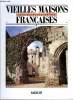
Sommaire : Le mobilier haute époque, par Laurence FügnyGlossaireConservatoire du littoral, par Jean-Philippe Lacoste Villas vénitiennes, par Pierre de LagardeRaconte-moi la Manche, par Pierre AguitonUne presqu’île, par Edmond ThinParcs et jardins, entre tradition et exotisme, par Marie-Hélène SinceÉpopée, légende et châteaux forts, par Bernard BeckLe manoir, le château et le Cotentin, par Hervé PelvillainMaisons aux couleurs du sol, par André HamelDans les villes, par Yves NédélecIls y ont vécu, par Pierre LeberruyerMerveilles d’art chrétien, par Lucien MussetDeux mille retables et un trésor, par Jean-Baptiste LechatArtisanat et tradition, par Pierre Leberruyer et Jean MatillonExemples à suivre, par Mathieu Cottenceau, Michel Levard, Raymond Seyve, Marcel Lelégard et Pierre-André LablaudeC’est ouvert CarteLa Manche pratiqueLa chasse aux taupes est ouverte, par Vincent LaloyExpositionsPatrimoinePatrimoine internationalLe choix d’Eric Ollivier Sélection V.M.F.Friends of V.M.F.V.M.F. Jeunes V.M.F. en bref Assemblée générale V.M.F. Délégués V.M.F.Activités départementales Carnet - Petites annoncesManifestations culturelles (pp. I à XII)Pêche, revenus fonciers, immobilier Classification Dewey : 720-Architecture
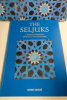
The Seljuks. A Journey through Anatolian Architecture
Bound, with cartonnage, 219 pages, published in 1991 by Ertug, book in almost new condition.