, Hamley Books, 14/03/2024 Paperback, 377 pages, 145 mm x 210 mm, EN. *NEW. ISBN 9789464945027.
Noé has been preparing for this her whole life; finding her Soulmate, the person that carries the other half of her soul, the only part that will make her complete. The only reason for her existence. Or rather, that is what they have always told her. Now, she?s not so sure anymore. An unknown feeling has crept up inside of her and taken over her whole existence. Love. She starts questioning everything she has ever known and quickly learns she has no one to trust but herself. Surviving in this world full of hate appears more difficult than she anticipated and achieving her goal becomes more and more distant. And yet? If her Soulmate is out there somewhere, why is it so impossible to stop thinking about Arthur? Why does he make her feel angry and annoyed, though beautiful and cherished at the same time? Why does she feel like nothing matters anymore, except for him? And why is everyone trying to tear them apart?
, Hamley Books, 2025 Paperback, 310 pagina's, 22 x 14 cm, NL. *NIEUW. ISBN 9789464945737.
In een wereld geregeerd door het Lot was het nooit de bedoeling dat ze zou kiezen. Maar liefde volgt geen regels. Noé droomde altijd al van een leven geleid door vrijheid en liefde, een leven dat haar te vroeg werd ontnomen. Nadat ze werd verenigd met haar Zielsverwant en verdween in een oneindig niets, keert ze nu onverklaarbaar terug. Noé wordt geconfronteerd met een duisternis die dieper gaat dan alles wat ze ooit heeft gekend, terwijl Arthur alles riskeert om zijn belofte aan haar te behouden. Alles wat ze geloofde?over de wereld, over haar verleden, over zichzelf?wordt in twijfel getrokken. De enige manier om haar toekomst te beschermen is door haar verleden, dat ze nooit had mogen kennen, te confronteren. In dit meeslepende vervolg op Zielsveel vermengen liefde en verlies zich met elkaar en vervaagt de grens tussen vriend en vijand gevaarlijk snel.
, Uitgeverij Storyland, 2021 Paperback, 372 pagina's, 15 x 32 cm, NL. *NIEUW. ISBN 978191398020703.
Als je weet dat jouw Zielsverwant ergens op jou wacht, zou je dan bij je huidige liefde blijven? Noé is eindelijk oud genoeg om uit het Huis te vertrekken waar ze samen met honderden andere meisjes opgevoed is ter voorbereiding van de Zoektocht. Nu ze twintig jaar oud is, kan haar leven eindelijk beginnen. Haar Wederhelft wacht namelijk op haar, ergens op deze wereld, zodat ze samen terug één ziel kunnen vormen en gelukkig kunnen zijn. Buiten het Huis leert ze de vele geheimen en hindernissen van de natuur kennen, hoe moeilijk overleven is, wat honger en koude betekenen, maar ook wat vrijheid is. Wat ze niet had verwacht, was het ontmoeten van Arthur, een aantrekkelijke maar mysterieuze jongen met een geheimzinnig verleden. Noé weet niet meer waar ze in moet geloven; als een Wederhelft bestaat voor haar, wie is Arthur dan? Zielsveel is een post-apocalyptisch verhaal over een dystopische samenleving waarin kinderen worden opgevoed met slechts één doel voor ogen: hun Wederhelft terugvinden. LAURA DIRKX Laura Dirkx is geboren te Genk, Limburg. Geïntrigeerd door het menselijke lichaam, is ze biomedische wetenschappen gaan studeren aan de Universiteit Antwerpen. Hier heeft ze haar master in tropische en infectieuze ziektes behaald en werkt ze momenteel aan een doctoraat. Laura is altijd creatief geweest en naast fervent boekenlezer begon ze al snel zelf als schrijfster haar fantasie op papier te zetten. Ze verstaat de kunst om, als geen ander, de gevoelens van haar personages op zo?n breekbare manier te verwoorden dat je als lezer meteen met hen connecteert; je betrokken voelt en als het ware gaat sympathiseren of verafschuwen.
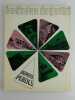
Laura Gutman et Pierre Curie. Avec contributions de Tutta Palin, Ville Lukkarinen, Tuija Wahlroos, Anne Pelin, Salla Tiainen, Lotta Nylund
Reference : 58515
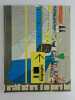
, mercaterfonds - fondsmercator, 2022 HB, 280 x 240 mm, 192 p, 101 illustrations, FR edition. ISBN 9789462302877.
En 2022, le musée Jacquemart-André met à l'honneur l'oeuvre du peintre finlandais Akseli Gallen-Kallela (1865-1931). A travers près de soixante-dix oeuvres issues de collections publiques et privées, comptant notamment des prêts exceptionnels du Musée Gallen-Kallela d'Espoo, ce catalogue d'exposition monographique se focalise sur un aspect dominant de son oeuvre et traversant l'ensemble de sa carrière : la question du paysage finlandais. Des nuages se reflètent, tantôt mats tantôt brillants, selon que la glace a fondu ou laisse une fine trace sur l'eau. Une neige cotonneuse invente des formes nouvelles. Soudain, un arbre transgresse l'horizontalité du paysage et souligne l'intense solitude qui règne dans cette contrée nordique. Gallen-Kallela a su dire la Finlande mieux que personne. Tournant le dos à la modernité urbaine, il a ancré son oeuvre dans une nature sauvage d'une beauté à couper le souffle, puisant son inspiration dans les saisons, les forêts et les innombrables lacs finlandais. Symphoniques, ses paysages vibrent de toute la puissance des éléments naturels. Symbolistes, ils semblent habités de forces ancestrales, mythologiques et sacrées. Si des oeuvres de Gallen-Kalella avaient déjà été présentées lors d'expositions thématiques, centrées sur l'art finlandais ou l'art nordique, c'est la grande rétrospective que lui a consacrée le musée d'Orsay en 2012 qui a permis au public parisien de découvrir l'ensemble de sa carrière. Longtemps célébré pour ses peintures du mythe du Kalevala ou interprété à l'aune d'un discours national, son oeuvre est depuis exploré dans sa grande diversité, intégrant ses voyages en Afrique et au Nouveau Mexique. Apportant sa contribution à la diffusion de l'art finlandais hors de ses frontières, l'exposition et son catalogue au musée Jacquemart-André sont plus circonscrite mais s'attachent de manière plus approfondie à la question de la relation de l'homme à la nature, qui évolue au cours sa carrière. Ethnographique à ses débuts, elle se nourrit de la pensée ésotérique dans les années 1895 pour se montrer d'une amplitude inégalée au tournant du XXe siècle. Cette évolution s'accompagne d'un changement de style, du naturalisme au symbolisme. La construction de sa maison atelier Kalela en 1894, loin des villes et de la modernité, occupe une place centrale dans la définition artistique et conceptuelle du rôle de l'artiste dans la nature. Au sein de ce microcosme tourné tant vers l'extérieur que l'intérieur, Gallen-Kallela a réalisé son utopie artistique dont la portée s'exprime fortement dans son oeuvre. Une évocation de Kalela constitue donc le pivot autour duquel s'articule le parcours thématique de cet ouvrage, entre naturalisme et symbolisme. La première partie est consacrée à une nature habitée par la paysannerie finlandaise avec des toiles imprégnées d'influences naturalistes et de l'enseignement qu'il reçoit à Paris dans les années 1880. Ensuite, l'attention est donnée à sa maison-atelier, qu'il conçoit lui-même et fait construire au coeur de la nature finlandaise, présente la diversité de media qu'explore l'artiste, des arts graphiques aux arts décoratifs. Une importante section est ensuite consacrée aux figures mythologiques du Kalevala. L'ouvrage enfin se penche sur des paysages sauvages évoquant une émotion sacrée, une nature habitée par une présence spirituelle. A travers certains motifs, le vocabulaire de reflets, de bruissements et de silence que développe Gallen-Kallela constitue l'identité du paysage finlandais depuis la fin du XIXe siècle.
, Brepols, 2021 Paperback, 372 pages, Size:156 x 234 mm, Illustrations:16 b/w, 34 col., 2 maps b/w, Language: English. ISBN 9782503594965.
Summary This book is a conversation starter. The author is re-imagining the theological landscape of historical practices of dance in order to open up a space where further explorations can be made. This is done in a two step manner. First, the book uncovers the restrictions of earlier research on the topic of dance in and around churches. In the second step, Hellsten suggests a practice for how historical sources can be imagined in a new frame. Opening up a new field of previously neglected and much needed historical studies on Dance in the Christian churches of the Latin West this study aims at questioning old paradigms and opening new vistas rather than reinterpreting concrete liturgical manuscripts or scrutinizing all the details of the historical sources presented. The Donner Institute for Research in Religion and Culture in Turku, Finland has awarded its Nordic Research Prize 2021 to Dr. theol. Laura Hellsten for her creative research widening our understanding of sacral dance in general and of the role of dance in the Christian church in particular.
, Middelheimmuseum & Motto, 2018, 2018 204 pagina's, illustraties in kleur & z/w, 250 x 205 x 14 mm, paperback, Engels/Nederlands. ISBN 9782940524792.
Experience Traps takes you for a walk through the baroque garden. During the seventeenth century, gardens were designed to surprise and delight with their spectacle. They were places for social encounters but also forums for education and political discussion. The baroque garden was conceived to overwhelm its visitors? senses, to impress, persuade and subtly manipulate. The path through the garden of the Middelheim Museum leads us along the work of sixteen contemporary artists who, via their own particular approaches, give personal and critical readings of baroque landscape architecture. Along the way, we pass different elements characteristic of the baroque: from the maze and the fountain, to the grotto and the trompe-l?oeil. Inspired by the exhibition, the Experience Traps book portrays, through dynamic means, a turbulent world full of contradictions, eclecticism and theatricality, designed to move both visitor and reader. Published for the exhibition Experience Traps at Middelheim Museum Antwerp, 1th June until 23rd September 2018, co-published by Motto Books. William Forsythe (USA) is a contributing artist and co-curator. Other artists include Mike Bouchet (US), Monster Chetwynd (UK), Jeremy Deller (UK), Spencer Finch (US), Gelatin (A), Ryoji Ikeda (JP), Bertrand Lavier (FRA), Louise Lawler (US), Bruce Nauman (US), Recetas Urbanas (ESP), Monika Sosnowska (PL), Adrien Tirtiaux(BE), Dennis Tyfus (BE), Andra Ursuta (RO) and Ulla von Brandenburg (D).
, Brepols - Harvey Miller, 2020 Hardback, xxi + 295 pages, Size:220 x 280 mm, Illustrations:138 col., Language: English. ISBN 9781912554447.
Summary Mario Bevilacqua was one of the greatest collectors of the second half of the sixteenth century in the territories of the Republic of Venice. He was a true lover of literature and the arts, expressing a deep appreciation for music and an instinctive attraction to antiquities. In the family palace on today's Corso Cavour in Verona renovated in the mid-sixteenth century by the architect Michele Sanmicheli, Bevilacqua set up what early sources describe as a "museum" open to the public. Here it was possible to admire paintings, sculptures, drawings and prints, coins and medals, manuscripts, printed books and musical instruments - all objects collected over the course of approximately twenty-five years, to which Mario dedicated much of his time and resources. The library, also referred to as "studio", was considered one of the richest in the city, while the "galleria" contained masterpieces such as Tintoretto's Paradise now at the Louvre, as well as antique statues and busts of Roman emperors. The famous "ridotto", in which salaried musicians and singers performed regularly, was frequented by citizens and foreigners and enjoyed international renown.
, Posture Editions Nr 29, 2018 PB, 297 x 210 mm, 96 pages, NL edition, Illustrated. ISBN 9789491262302.
Posture Editions and Laura Van worked on SEX WITH PAINT, a publication with recent still lifes by Van. The works, for which the artist uses only oils, are without photographic point of departure: they are the result of an inflection of what the artist observes on the table in his living and working space. They are therefore anecdotal-autobiographical in nature?a nature that is emphatically determined by the motorial and psychological intentions of the moment. Each still life is an accumulation of language, anecdotal elements, coffee, pages, stains, dots and modulations of tonal depths and shades of grey. Laura van?s art is an eruption of thoughts about painting, channelled in oils that evoke the illusion of piles of books and grubby tables. The grey, drab paintings are outside time. We notice traces of French painters such as Corot, Vuillard, Soutine, Cézanne or the German Corinth, though that may be a mistake, a paintwise trompe l?oeil. On the opposite page, facing the paintings, a voice-over text has been printed: Laura as it were comments on the paintings, while he also seems to shuffle the piled-up books. Laura (b. 1957) was almost 30 years the artistic director of croxhapox, based in Ghent, Belgium.
, Flammarion, 2018 Couverture reliee sous jaquette, 160 pages, Texte en Francais, Illustrations en couleurs en noir & blanc nombreuses illustrations dans et hors texte * NEUF. ISBN 9782081416284.
On ne naît pas artiste mais on le devient. Du plus loin qu'on s'en souvienne, l'histoire de l'art a été pensée, écrite, publiée, transmise par des hommes. Et quand on est née femme, être artiste, le prouver, y avoir accès, produire, montrer, continuer à le demeurer est un combat permanent, dangereux, épuisant physiquement, intellectuellement et psychiquement. Le temps semble aujourd'hui propice pour revisiter et regarder autrement les créations de celles qui ont eu le courage de défier les règles pour assouvir leur vocation". Laure Adler.
, Snoeck Publishers , 2023 HB, 300 x 240 mm, 464 pages , 450 illustrations in colour / b/w, ENG. edition.*new ISBN 9789461618276.
The extraordinary abundance of French sculptures in the United States reveals a specific taste for this area of French art, but also the close proximity of Franco-American historical and artistic relations. The United States is the country outside of France with the largest number of French sculptures and the latter represent by far the majority of foreign sculptures. Once collected, combined, connected, they weave the story of a taste. Their study makes it possible to detect trends and periods, to identify the personalities of dealers, collectors and curators, and to understand the supply channels of this transatlantic trade, from the place of production to the place of consumption, from the place of creation to place of appreciation. The purpose of this book is to give life and meaning to these works by placing them in their American context. The first part emphasizes the eminently political and official role, tool of political message when it comes to celebrating the heroes of the American independence, or commercial and industrial propaganda when France shows up at universal exhibitions. From its birth, French sculptors have been associated with the development of the American nation and its society. The second part is devoted to the role played by French sculptors in American urban decor, as well as in the art of parks and gardens. They largely contributed to the introduction of the Art Deco style in ornamental sculpture. The third part celebrates sculpture as a collector's item, sought no longer for the character it represents, nor for its role as a complement to architecture, but truly as an object whose formal beauty is the primary asset. The fourth and last part is dedicated to the sculptor Auguste Rodin. Rodin was all at once: he represented the art of today, that of the Salon to which he regularly sent his works, sometimes the art of yesterday in his few creations in the style of the 18th century, and above all, he was gradually recognized as the path to the art of tomorrow. In conclusion, an assessment is made of the taste for French sculpture since the 1950s, which saw a change in the relative importance of the various actors, dealers, collectors, academics and curators.
, Snoeck Publishers, 2023 HB, 300 x 240 mm, 512 pages, 450 illustrations, FR edition. ISBN 9789461618269.
L'extraordinaire abondance de sculptures françaises aux Etats-Unis est révélatrice d'un goût spécifique pour ce domaine de l'art français, mais aussi de la grande proximité des relations historiques et artistiques franco-américaines. Les Etats-Unis sont le pays en-dehors de la France qui compte le plus grand nombre de sculptures françaises et ces dernières y représentent de très loin l'essentiel des sculptures étrangères. Une fois rassemblées, combinées, reliées, elles tissent l'histoire d'un goût. Leur étude permet de déceler des tendances et des périodes, d'identifier des personnalités de marchands, collectionneurs et conservateurs, et de comprendre les canaux d'approvisionnement de ce commerce transatlantique, du lieu de production au lieu de consommation, du lieu de création au lieu d'appréciation. Le propos de cet ouvrage est de donner vie et signification à ces oeuvres en les replaçant dans leur contexte américain.Une première partie souligne le rôle éminemment politique et officiel, outil de message politique lorsqu'il s'agit de célébrer les héros de l'Indépendance américaine, ou de propagande commerciale et industrielle lorsque la France se montre dans le cadre des expositions universelles. Dès sa naissance, les sculpteurs français ont été associés au développement de la nation américaine et de sa société. La deuxième partie est consacrée à la part que prirent les sculpteurs français dans le décor urbain américain, ainsi que dans l'art des parcs et jardins. Ils contribuèrent largement à l'introduction du style Art déco en sculpture ornementale. La troisième partie célèbre la sculpture comme objet de collection, recherchée non plus pour le personnage qu'elle représente, ni pour son rôle de complément de l'architecture, mais véritablement comme objet dont la beauté formelle est l'atout premier. La quatrième et dernière partie est consacrée au sculpteur Auguste Rodin. Rodin était tout à la fois : il représentait l'art d'aujourd'hui, celui du Salon auquel il envoyait régulièrement ses oeuvres, parfois l'art d'hier dans ses quelques créations dans le goût du XVIIIe siècle, et surtout, il fut peu à peu reconnu comme le chemin vers l'art de demain. En conclusion, un bilan est dressé du goût pour la sculpture française depuis les années 1950, qui ont vu un changement dans l'importance relative des différents acteurs, marchands, collectionneurs, universitaires et conservateurs.
, Academy Editions 1982, 1982 Paperback, 176 pages, ENG, 305 x 235 mm, bon etat, illustrations / images in colour and b/w, . ISBN 9780856706707.
, Brepols, 2023 Paperback, 614 pages, Size:220 x 280 mm, Illustrations:14 b/w, 210 col., 35 tables b/w., 1 maps color, Language: French. ISBN 9782503584010.
Summary Ce livre a pour ambition de mieux comprendre l'origine des collections musicales de la Bibliothèque nationale de France en reconstituant les grands ensembles réunis par un personnage ou par une institution, ou formés par la production d'un artiste, lesquels sont parvenus à la Bibliothèque par des voies diverses tels que dons, dépôts, legs, achats en ventes aux enchères, confiscations révolutionnaires, réunions d'institutions. La genèse de ces sources musicales et le chemin qu'elles ont parcouru depuis leur conception jusqu'à leur lieu de conservation ultime éclaireront le chercheur et le musicien et leur permettront d'en expliquer les particularités et les variantes. Ces articles concernent non seulement les collections de la Bibliothèque Royale, puis Nationale (Impériale), la constitution de la Bibliothèque du Conservatoire, mais aussi le fonds ancien de la Bibliothèque-Musée de l'Opéra ainsi que celui de la Bibliothèque de l'Arsenal.
, Brepols, 2021 Paperback, 376 pages, Size:148 x 210 mm, Illustrations:3 b/w, Language(s):French, Greek, Latin. ISBN 9782503596174.
Summary Troisième de la sous-série « Cahiers de BIBLINDEX », ce volume est issu du séminaire de recherche qui se réunit chaque mois à l'Institut des Sources Chrétiennes (Lyon) et accompagne le développement du projet BIBLINDEX, dont l'objectif est la constitution d'un index exhaustif, en ligne, des citations et allusions bibliques présentes dans les textes chrétiens, occidentaux et orientaux, de l'Antiquité tardive et de ses prolongements médiévaux. On y trouvera des enquêtes menées, à travers un large corpus patristique, sur des lieux bibliques particuliers : les jumeaux de la Genèse, l'identité du second disciple d'Emmaüs et, dans l'exégèse arménienne, les lectures chistologiques de Jn 20, 24-29. Certains articles se concentrent sur un auteur ou un ensemble d'auteurs, chez qui les recours à des textes bibliques précis sont envisagés : récits évangéliques de guérison chez Irénée de Lyon, Jn 8, 51 chez Bardesane, le Cantique dans la controverse donatiste. D'autres examinent un texte patristique pour en analyser les usages bibliques : l'Oraison funèbre de Satyrus par Ambroise de Milan, la Lettre 127 à Principia de Jérôme, l'Alethia de Victorius. D'autres enfin s'intéressent principalement aux variantes du texte biblique utilisé par les Pères, en l'occurrence Cyprien de Carthage et Théodoret de Cyr. L'ensemble de ces travaux donne donc à voir tout autant les richesses de l'exégèse patristique, s'abreuvant au « puits des eaux vives » (Ct 4, 15), que la diversité des méthodes employées pour les mettre au jour. TABLE OF CONTENTS In memoriam : Pierre Maraval Avant-propos Abréviations Les jumeaux de la Genèse et leur interprétation par les Pères par Sébastien Garde L'identité du deuxième disciple d'Emmaüs dans la littérature chrétienne ancienne par Anne-Catherine Baudoin La voix et la main : quelques actions de Jésus lues par Irénée de Lyon au livre V (12-17) de l'Adversus Haereses par Agnès Bastit La mort du corps et la résurrection de l'âme selon Bardesane : lecture théologique de Jn 8, 51 par Izabela Jurasz Des citations bibliques négligées ? Révisions et interpolations dans les oeuvres de Cyprien de Carthage par Laetitia Ciccolini Les citations bibliques dans la première oraison funèbre d'Ambroise de Milan sur la mort de son frère par Aline Canellis Les références scripturaires dans la Lettre 127 de Jérôme : de l'éloge de Marcella à l'apologie du chris-tianisme par Aline Canellis Le Cantique des cantiques dans la controverse donatiste par Nicolas Potteau Les sources bibliques de l'Alethia de Claudius Marius Victorius, entre héritage patristique et judaïsme par Esther Falcon La Septante et les autres traductions de la Bible hébraïque dans les commentaires de Théodoret de Cyr par Jean-Noël Guinot La péricope de Jean 20, 24-29, argument christologique dans l'Église arménienne par Maxime Yévadian Index scripturaire Index des personnages cités Index des textes et des auteurs anciens Index des auteurs modernes Table des matières
Routledge 1996 158 pages 15 494x1 27x23 114cm. 1996. Broché. 158 pages.
Très bon état couverture légèrement salie intérieur trés bon
, Brepols, 2021 Paperback, 164 pages, Size:210 x 297 mm, Illustrations:124 col., Language: French. ISBN 9782503591414.
Summary L'intensité des mouvements des artistes, des oeuvres et des objets durant le Moyen Âge, son rôle dans la diffusion des formes et des iconographies à travers le monde occidental et l'impact des échanges avec la sphère byzantine sont bien connus et ont été précisés à de nombreuses reprises dans des études stimulantes. En revanche, les modalités de ces mobilités artistiques n'ont pas encore trouvé de définition convaincante. En ancrant la réflexion dans le domaine des transferts artistiques au moment de la genèse de l'art gothique, cet ouvrage tente de mesurer l'impact sur une région donnée du déplacement des artistes. Quels itinéraires ceux-ci suivaient-ils ; quelles distances parcouraient-ils, quels étaient les réseaux de diffusion ? Durant combien de temps un modèle était-il imité ? Quels effets exerçait la mobilité des hommes ou des oeuvres sur la production d'une région donnée ? En outre, alors que l'importance accordée aux carnets de modèles en tant que vecteurs de transmission a maintes fois été soulignée par les chercheurs, leur rôle effectif n'a jamais été évalué ni remis en question. Ces problématiques sont traitées par des cas d'études bien distincts. Un aperçu des réseaux de circulation connus est dressé et leur étendue est envisagée en considérant à la fois les critères stylistiques et iconographiques. La question de la mobilité est abordée à travers des personnalités connues par leur signature sur leurs oeuvres permettant de retracer quelques itinéraires artistiques précis. Le chantier de la façade occidentale de la cathédrale de Chartres, noeud d'un réseau de circulation de sculpteurs, est utilisé pour tenter de cerner la dynamique des centres artistiques dans la diffusion d'innovations techniques et formelles. Un intérêt particulier est en outre porté aux dits carnets de modèles. Les dessins médiévaux conservés, leur utilisation et leur possible circulation sont examinés à la lumière de leur rôle supposé dans la transmission des formes artistiques. Pour certains d'entre eux, de nouvelles hypothèses sont proposées sur l'agencement originel des feuillets, sur la cohérence de leurs représentations ou encore sur leur fonction initiale. TABLE OF CONTENTS Introduction Chapitre 1. Ampleur des transferts artistiques Chapitre 2. Itinéraires d'artistes à travers les oeuvres signées Chapitre 3. Mobilités et innovations : l'exemple de la cathédrale de Chartres Chapitre 4. Les carnets de modèles Conclusion Bibliographie Index
Paris, Roger et Chernoviz, 1891 in-8, 56 pp., frontispice, broché. Couverture usée. Ex-libris Yves-Louis Mongrolle.
- - VENTE PAR CORRESPONDANCE UNIQUEMENT - LIEN DE PAIEMENT, NOUS CONSULTER.
BE-, Pandora , 2014 Paperback, 240x240mm, 144p, neuf !! French edition .OUT OF PRINT ISBN 9789053253717.
Expo: 22/03/2014 - 13/07/2014, BAM, Mons. Cet ouvrage invite a la decouverte de l'abstraction geometrique en Belgique, a travers ses multiples manifestations apres 1945. L'interdisciplinarite qui caracterise le mouvement y est mise en exergue, rassemblant des peintures mais aussi des sculptures, du mobilier, de la joaillerie, des textiles et des projets d'oeuvres realisees dans l'espace public. De plus de quarante artistes aussi varies que Jo Delahaut, Pol Bury, Dan van Severen, Marc Mendelson, Marthe Wery ou Walter Leblanc, les oeuvres selectionnees proviennent des collections de la Ville de Mons et de nombreuses collections institutionelles et privees. La trame thematique attribuee a ce livre revele les differentes specificites de l'un des courants majeurs de l'art belge a l'activite toujours foisonnante, aujourd'hui encore trop souvent meconnu.
Editions de la Martinière 2015 1 vol. broché in-4, broché, couverture illustrée, 239 pp., nombreuses croquis en couleurs et photographies par Jacques Delacroix. En excellente condition.
, davaco, 1991 Cloth bound with dustjacket, (31 x 26 cm) 125 pp. with 105 ills. (70 in color). ISBN 9789070288730.
Aart Schouman can be aptly described as one of the most neglected and underestimated painters of the eighteenth century. The explanation for this can undoubtedly be found in the fact that a great part of his oeuvre - painted wall-hangings and chimney- and doorpieces - were nailed firmly in place in the rooms and halls for which they were made, unintentionally relegated to obscurity. In the field of painted wall-hangings Aart Schouman had a predecessor in his fellow townsman Abraham Busschop, who was in his turn, inspired by Melchior d'Hondecoeter. After a short period in which he painted religious and mythological subjects, Schouman proceeded to make his most important contribution in this field: the many colored bird-piece, with indigenous and exotic birds and mammals. Many of these wall-hangings were removed from their original 'homes' and subsequently sold to collectors abroad or lost. Only one set was preserved for the Netherlands, acquiring a place in the Royal Palace 'Huis ten Bosch'. Schouman's two main channels of expression were painting and drawing. Of the large number of oil paintings he made, only a few have been handed down to us. Examples of his draughtmanship however, have been been preserved in superabundance. There are numerous depictions in Indian ink, watercolor, and gouache of animals (especially birds) and plants, as well as topographical views. In this last category Schouman may be called one of the first modern Dutch aquarellists.
, Davaco, 1989 Cloth bound with dustjacket, 4to. 153 pages. with 134 ills. (28 in color). 31x25cm. fine condition!! ISBN 9070288540.
1. Orientation as to Place and Time: Winter Landscapes; 2. Summer Landscapes: The Shop of Paintings as cultural center in Middelburg; 3. Allegorical-historical Paintings; 4. Historical Subjects: Royal Visit to Village and Town; 5. Water and Ships: A land that is endowed with waters on all sides; 6. Van de Venne as Portraitist; 7. Grisaille Paintings; 8. Adriaen van de Venne as Illustrator (Middelburg and Hague period). General Index
, Klinkhardt & Biermann, 1982 Hardcover, 388 seiten, Deutsche sprache, 325 x 250 x 30 mm, blaues Tuch mit goldfarbenem Aufdruck im Sehr guten zustand !, ISBN 9783781402034.
Landschaften und Stilleben. Stilleben: erste Halfte des 17. Jahrhunderts. Landschaften: um 1600 bis um 1700. Stilleben: zweite Halfte des 17. Jahrhunderts.
Laurent Brassart, Corinne Marache, Juan Pan-Montojo, Leen Van Molle (eds)
Reference : 64891
, Brepols, 2022 Paperback, 332 pages, Size:156 x 234 mm, Illustrations:2 tables b/w., 8 maps b/w, 2 maps color, Language: English. ISBN 9782503595061.
Summary This book offers a fresh look at the so-called 'politicisation' of the European countryside, from the late eighteenth century to the 1930s, in the context of waning monarchies, rising and staggering parliamentary nation states, and fascist and communist dictatorships. The concept 'politicisation', however, is misleading. The book argues that Europe's rural societies were far from immobile spaces, set in routines, that had to be politised from outside and against the grain. The thirteen articles in the volume demonstrate that, instead of politicisation from scratch, political thinking and acting of country dwellers - from Scandinavia to Spain, from Moravia to France - evolved in a constant, dialectical relationship with their urban, regional and national surroundings: they reacted to wars, revolutions and shifting borders, their political loyalties changed, so did their political agendas, their repertoires of collective action and their role in the establishment, successes and failures of political parties, separate agrarian parties included. TABLE OF CONTENTS Editorial introduction, Corinne Marache (Univ. Bordeaux Montaigne) Part 1. The shock of wars and revolutions, c. 1780-1850 Introduction, Laurent Brassart (Univ. Lille) 1. Jean-Pierre Jessenne (Univ. Lille), ?Consensus or conflicts? Politics in towns and villages between the Seine and the North Sea, c. 1780-1830? 2. Laurent Brassart and Maxime Kaci (Univ. Lille), ?From rural homelands to national bordered lands? Nation building and politicization in border villages, 1789-1815? 3. Niels Grüne (Univ. Innsbruck), ?Social inequality and the dynamics of political translocalisation: rural communities in nineteenth-century Germany? 4. Jesper Lundsby Skov (Univ. Southern Denmark), ?Peasant politicians and democracy. How Peasants contributed to the democratization of Denmark, 1788-1849? Part 2. Shifting repertoires of collective action, c. 1850-1920 Introduction, Juan Pan Montojo (Univ. autonoma Madrid) 5. Alexandre Dupont (Univ. Strasbourg), ?A war within the war: peasant' attacks against the forests during the Franco-Prussian war, 1870-1871? 6. Oscar Bascuñan Añover (Univ. Complutense Madrid), ?Punishment metet out by the community. Politics and popular justice in rural Spain, 1895-1923? 7. Nadine Vivier (Univ. Le Mans), ?Electoral practices in French villages at the time of male universal suffrage. From rural collective action to individualism? 8. Edouard Lynch (Univ. Lyon II), ?Collective peasant struggles under the Third Republic in France: an opportunity to learn and deploy new protest tactics? Part 3. Political parties in the countryside, c. 1850-1940 Introduction, Leen Van Molle (Univ. Leuven) 9. Milan Repa (Univ. Brno), ?Between the nation and self-interest: the Czech Peasantry in Moravia at the Daybreak of Civil Society, 1848-1914? 10. Erik Bengtsonn and Josefin Hägglund (Univ. Lund), ?Agrarian Politics in Sweden, c. 1850-1950? 11. Florencia Peyrou (Univ. autonoma Madrid), ?Spanish republican discourses on the countryside, 1840-1894? 12. Jordi Planas and Raimon Soler-Becerro (Univ. Barcelona), ?Agricultural associations and political parties in the transition to mass politics in Catalonia, 1890-1936? 13. Miguel Cabo (Univ. Santiago de Compostela), ?Agrarian parties in Europe prior to 1945 and beyond?