Write to the booksellers
-
Type
Any type (2)
Art print (7)
Autograph (1)
Book (32679)
Disk (1)
Drawings (265)
Engraving (10)
Magazine (126)
Old papers (1)
Photographs (15)
Posters (1)
-
Latest
Last 24h (178)
Last 3 days (9)
Last month (494)
Last week (28)
-
Language
Dutch (78)
English (54)
French (32932)
German (6)
Italian (18)
Portuguese (9)
Spanish (11)
-
Century
16th (14)
17th (46)
18th (196)
19th (1540)
20th (9805)
21st (1715)
-
Countries
Belgium (10889)
Brazil (6)
Canada (111)
China (1)
Côte d'Ivoire (138)
Denmark (209)
France (18643)
Germany (1)
Greece (1)
Switzerland (3109)
-
Syndicate
ALAC (102)
CLAM (142)
CLAQ (97)
CNE (3)
ILAB (10574)
NVVA (1145)
SLACES (1145)
SLAM (7966)
SNCAO (10)
Proceedings of the XVI International Numismatic Congress, 11-16.09.2022, Warsaw: Vol. III: Medieval Numismatics
, Brepols, 2025 Paperback, Pages: 373, Size:216 x 280 mm, Illustrations:265 b/w, 13 col., 5 tables b/w., Languages: English, French, German. ISBN 9782503616742.
Summary The XVI International Numismatic Congress, held in Warsaw, Poland, in September 2022, was a landmark event, drawing the largest number of participants in its history. With over 550 papers presented during thematic sessions and round tables, this congress showcased the latest advancements and research in the field of numismatics from leading experts and scholars in their field. A curated selection of papers from the conference have now been drawn together into peer-reviewed conference proceedings, representing a comprehensive spectrum of numismatic studies from antiquity to modern times. Each paper is meticulously illustrated with high-quality images, often of unique specimens, along with detailed diagrams, maps, and die/typological chains. Topics covered include coins and coin finds, medals, tokens, banknotes, the history of collections and collecting, and cutting-edge chemical analyses and technologies used in coin examination. This book, the third in four thematic volumes, explores medieval coinage. Research presented in forty-two different chapters ranges from the early Byzantine period through to the late Middle Ages, including Asiatique and Islamic coinages, and medieval tokens. TABLE OF CONTENTS List of Illustrations Introduction Jaros?aw Bodzek, Aleksander Bursche, Anna Zapolska 1. Publishing Catalogues and Hoards in Medieval Numismatics: the Medieval European Coinage project Elina Screen 2. Income Sources and Effects of Medieval Emergency Debasements Roger Svensson 3. When Small Change Was not a Big Problem Roger Svensson, Andreas Westermark 4. The Silver Coinage of Constans II Revisited Nikolaus Aue 5. A Small Byzantine Hoard from the Desert of Aswan Elena Baldi, Maria Carmela Gatto, Antonio Curci 6. Silk Road Imitations of Byzantine and Sasanian Coins: Evidence from Shoroon Bumbagar in Mongolia Anran Mao, Chi Xu 7. Coin Types in Georgia and the Byzantine World Leri Tavadze 8. Distribution of Coins in Late Antiquity and the Early Middle Ages in Southern Italy (325-725 AD): a Comparison Between Border and Inland Area Domenico Luciano Moretti, Giuseppe Sarcinelli 9. The Use of Coins in Tombs in Veneto During Late Antiquity and the Middle Ages No Conejo 10. Vorstellung des abgeschlossenen Promotionsprojekts: Fr nkische Bildpolitik auf M nzen und Siegeln im Kulturvergleich Daniel Seelbach 11. Les oboles m rovingiennes unifaces et leurs techniques de frappe Philippe Schiesser 12. Modeling the Lifetime in Circulation of Visigothic Gold Coins David Yoon 13. North Sea Gold Economy in the Age of 'Gift Exchange', c.450-c.760 Kevin Hoffman 14. Kings, Bishops and Vikings: Coinage in 9th-century Northumbria Lucy Moore 15. The Coinage of the Kingdom of Italy from Louis II to Berengar II (855-961): a Reappraisal Luca Gianazza 16. Biskupiec - The First Hoard of Carolingian Coins from Poland. A Preliminary Report Mateusz Bogucki 17. Rome and Coinage in the Tenth Century: Possible Reasons for the Closure of the Mint Mariele Valci 18. An Early Medieval Silver Hoard from an Unknown Locality in the Ossolineum Collection Barbara Butent-Stefaniak 19. Monetization in Medieval Bohemia Roman Zaoral 20. Sicily and al-Andalus: Trade Relationships and Monetary Circulation in the Eleventh Century Carolina Dom nech-Belda 21. Pourquoi, sur ses deniers, Boleslas le Vaillant se designa-t-il comme DVX INCLITVS? Stanis?aw Suchodolski 22. The Circulation of the Coinage of Lucca in Emilia-Romagna (Italy) in the Eleventh and Twelfth Centuries Mattia Francesco Antonio Cantatore, Domenico Luciano Moretti 23. The Discovery of the Second Medieval Hoard from S?uszk w Adam K?dzierski, Micha? Zawadzki 24. The Medieval Hoard from G?og w - an Unsolved Mystery of Polish Coinage from the End of the 12th Century Krystian Ksi??ek 25. Origins of the Recoinage in Poland in the Light of New Research Grzegorz ?nie?ko 26.'Latin' Imitations of Hyperpyra of John III Vatatz s of Nicaea - A Coinage of Geoffrey II of Villehardouin, Prince of Achaea Robert D. Leonard Jr. 27. Monetization as a Process rather than an Outcome: Coin Use in Denmark, AD 1074-1241 Thomas Guntzelnick Poulsen 28. Who Used Silver Money and in Which Markets? Some Reflections on Hybrid Economic Forms in Twelfth and Early Thirteenth Century Piast Poland Dariusz Adamczyk 29. Returning Again to Early Minting in Riga, Livonia Ivar Leimus 30. M nzwesen von P?emysl Otakar II. (Przemysl Ottokar II.) in den sterreichischen L ndern in der 2. H lfte des 13. Jahrhunderts Dagmar Grossmannov , Tom ? Krej? k 31. The First 100 Years of the Gold Florin of Florence (1252-1351): Analysis and New Research Perspectives Massimo De Benetti 32. New Research on the Gold Florin of Florence and its Imitations (1252-1351): the Case of the Zalewo and ?roda ?l?ska Hoards (Poland) Massimo De Benetti 33. Une Renaissance en Haute M sopotamie aux douzi me et treizi me si cles? Quelques remarques propos des monnayages zangides et artuqides Nicolas Consiglio 34. How to Catalogue the Gros Au Lis Marcus Phillips 35. Silver Payment Ingots in Eastern Europe: Genesis and Dating Ilya Shtalenkov 36. An Archaeological Study of the Places of Hoard Finds in Belarus Luda Tolkacheva, Raman Krytsuk 37. From Local Authority to Papal Authority: The Mint of Ancona During the Expansion of the Papal States, 14th-15th Centuries William R. Day, Jr 38. The Early Coinage of Mircea the Elder Cristiana T?taru 39. Beyond the Catalogue of Georgian Numismatics - New Coin Finds from Georgia Evgeni Chanishvili 40. Numismatic Evidence for a Brief Restoration of Royal Power in Armenia in the Fifteenth Century: Coins by King Smbat Sefedinian-Arcruni and Hakkari Kurds Aram Vardanyan 41. Once more into the Broach: The Mamluk Silver Dirhams from Codrington's 'The Broach Hoard' in JRASBB, 1881-1882 Warren C. Schultz, 42. Finding the 'Missing Pieces': Coin Weights and the Circulation of Gold Coin in England and Wales, 1300-1600 Murray Andrews
Proceedings of the XVI International Numismatic Congress, 11-16.09.2022, Warsaw: Vol. IV: Medals, Modern and General Numismatics
, Brepols, 2025 Paperback, Pages: 506, Size:216 x 280 mm, Illustrations:407 b/w, 35 col., 17 tables b/w., Languages: English, German, Italian. ISBN 9782503616247.
Summary The XVI International Numismatic Congress, held in Warsaw, Poland, in September 2022, was a landmark event, drawing the largest number of participants in its history. With over 550 papers presented during thematic sessions and round tables, this congress showcased the latest advancements and research in the field of numismatics from leading experts and scholars in their field. A curated selection of papers from the conference have now been drawn together into peer-reviewed conference proceedings, representing a comprehensive spectrum of numismatic studies from antiquity to modern times. Each paper is meticulously illustrated with high-quality images, often of unique specimens, along with detailed diagrams, maps, and die/typological chains. Topics covered include coins and coin finds, medals, tokens, banknotes, the history of collections and collecting, and cutting-edge chemical analyses and technologies used in coin examination. This volume, the last in four thematic volumes, comprises fifty-five chapters that explore modern numismatics, as well as medal making and tokens. It also includes discussions that touch more broadly on the general field of numismatics, among them digital numismatics, counterfeit coins, coin finds, and the history of coin collecting. TABLE OF CONTENTS List of Illustrations Introduction Jaros?aw Bodzek, Aleksander Bursche, and Anna Zapolska Part I. MODERN 1. Barcelona, centro de manufactura de cajas de balanzas monetarias (siglos XVIII-XIX). A prop sito del taller Farriols Albert Estrada-Rius 2. Dalle Fiandre a Milano. Un gruzzolo di monete d'oro e d'argento da una fossa comune della prima met del XVI secolo Alessandro Bona 3. Early-Modern Coins Under Threat in Sicily: An Italian Prisoner Prosecuted by the Allied Government and the Presumed 'Palermo AMGOT Hoard 1943' Antonino Cris 4. Les outils mon taires d'Augustin Dupr pour le Franc Philippe Theret, Xaveer Bourbon, Laurent Schmitt 5. Real Fake. Research on Emergency Coinage in the Netherlands Jan Pelsdonk 6. Swiss Coins in Circulation at the Imperial Court in Prague in the Early Seventeenth-Century Petr Vorel 7. Kupfer als M nzmetall in der Fr hen Neuzeit: der besondere Beitrag Westfalens Stefan K tz 8. Counterfeiters' Molds for Casting Polish Coins of 1923-1924 from Lviv Region Andrii Boiko-Haharin 9. Illegitimate 'Dutch' Gold Ducats in the Russian Empire Ivan Sintchouk 10. A Desire for Monetary Sovereignty: The Circulation of Foreign Coinage in the United States in the 18th and 19th Centuries Jesse Kraft 11. Liberty and the Nineteenth Amendment Mary N. Lannin 12. Image and Republican Sovereignty: Negotiating the Numismatic Iconography of the Early American Republic Douglas Mudd 13. Graffiti on Chinese Currency Duoduo Zhang 14. Money Plurality in the Early Modern Colonial Context: The Case of the Mascarene Islands Juliere Francois Part II. MEDALS AND TOKENS 15. Holding, Handling, Flipping: Remarks on the Perception of Medals (Fifteenth to Seventeenth Centuries) Agnieszka Smo?ucha-S?adkowska 16. The Majorcan Ecclesiastical Lead Tokens: a System to Control Clergymen's Presence at Mass Jaume Boada-Salom 17. Les m dailles de la reine Anne, 1702-1714. Repr senter une reine en temps de guerre la Tour de Londres Thomas Cocano 18. Plagues, Epidemic Diseases, and Natural Disasters Through Papal Medals: Some Examples Eleonora Giampiccolo 19. Money of the Poor: An overview of seventeenth-century trade tokens Laura Burnett 20. The Life of Maria Klementyna Sobieska-Stuart Written in Medals Commemorating the Most Important Moments in her Life Francesca Ceci, Jaros?aw Pietrzak 21. Medaillen f r den sterreichischen Kaiser Ferdinand I. (reg. 1835-1848). Konzeption, Stellenwert und Funktion Andrea Mayr 22. Prize Medals from the Reign of Stanislaus Augustus (1764-1795). An Overview with a Short Description of Medals in the Numismatic Cabinet of the Royal Castle in Warsaw Juliusz W. Zacher Part III. GENERAL NUMISMATICS 23. IKMK - The M nzkabinett's Online Catalogue(s) 2015-2022 Bernhard Weisser, Karsten Dahmen, J rgen Freundel, Klaus Vondrovec, Johannes Wienand, Katharina Martin, Susanne B rner, Benedikt Z ch 24. How to transform a private monetary database into a collaborative tool on the web? Eneko Hiriart, Katherine Gruel, S bastien Durost, Guillaume Reich, Agn s Tricoche, Yadh Riahi 25. Online Celtic Coinage: A Virtual Union Catalogue for the Coinage of Pre-Roman Iron Age Europe David Wigg-Wolf, Mirko Brand, Chrisowalandis Deligio, Kerstin P. Hofmann, Markus M ller, Caroline von Nicolai, Katja R sler, Julia Tietz, Karsten Tolle 26. Coin Issues in Georgia. General Survey - A Presentation of an Online English-Georgian Catalogue of Georgian Numismatics Tedo Dundua 27. Linked Open Data for Coin Finds: Antike Fundm nzen in Europa (AFE) David Wigg-Wolf, Karsten Tolle 28. A New Database on Carthaginian Coin Finds Iv n Fumad Ortega 29. Numista: Building a Collaborative Universal Numismatic Database Xavier Rog 30. Digital Numismatics from the User Perspective Lily Grozdanova, Hristina Ivanova-Anaplioti 31. Using modern technologies for the 3D vizualization of the Roman Imperial coins Klara Burianova 32. Re-Imagining Through Re-Imaging: RTI Helping Us See Museum Collections in a New Light Elizabeth Benge 33. Proyecto WONDERCOINS. Digitalizaci n de hallazgos numism ticos de la Antig edad en el sur de Hispania (Baetica, Lusitania y Mauretania) desde una perspectiva arqueol gica Elena Moreno Pulido, Felipe Bergua, Alicia Ar valo Gonz lez, Bartolom Mora Serrano 34. Digital Numismatics and Data Visualization for Ancient Antioch Kristina Neumann, Peggy Lindner, Liz Rodwell, 35. The 'Rares-Bares' Project. A Digital Fingerprint for Central German Coin Finds Anika Tauschensky, Ulf Dr ger, Veit Dresely, Erik Trostmann 36. Valentina Grigorova-Gencheva, Ancient Coins Counterfeits Dilyana Boteva, Ilya Prokopov, Jan K ster, Jonas Emmanuel Flueck, Valentina Grigorova-Gentcheva 37. Worrying the Coins of Antioch; How Dorothy Waag Saved the 1932-1939 Antioch Expedition's Numismatic Record Kirstin Ohrt 38. I reperti numismatici dagli scavi di Dibsi Faraj, Siria settentrionale (1971-1974) Massimiliano Munzi 39. Los Siglos VI al X en las Colecciones del Gabinet Numism tic de Catalunya (Barcelona, Espa a) Maria Clua Mercadal 40. A Gold 'Vota Publica' Token from the Collection of Charles III de Cro (1560-1612) Cristian Mondello 41. History of Collecting: Parallel Lives - Samuel Pozzi and Fenerly Bey Mary N. Lannin 42. Lo (stra)ordinario caso della Collezione Zane nella Venezia del XVII e XVIII secolo Michele Asolati 43. The Numismatic Activity of Apostolo Zeno. An Analysis of the Manuscripts Roberto Tomassoni 44. Francesco Gnecchi and the Sulphur Casts of the Vatican Medallions Daniela Williams 45. La collezione numismatica di Francesco Capranesi: le monete degli insorti italici durante la Guerra Sociale Cappellacci Simone 46. Barocke Pracht - Die Rekonstruktion einer f rstlichen Medaillensammlung Simone Vogt 47. The First 'Vienna School' of Numismatics. A New Research Project on the Study of Ancient Coinage in Enlightenment Austria Bernhard E. Woytek 48. Zur Sammlung Zeno im Stift St. Florian im 18. Jahrhundert, auf Grundlage des Briefwechsels zwischen Joseph Khell SJ und Georg Pfisterer CanReg Patrick Fiska 49. Centuries of Coin Collecting in Lower Austria. The Canonry of Klosterneuburg 1700-1970 Specht Edith 50. Numismatische Sammlungen in Nieder sterreich - B) Das Stift Klosterneuburg 1970-2024 Wolfgang Szaivert 51. The Collection of Silver Oriental Coins Stored in the Odesa Archaeological Museum Dmytro Yanov 52. Alicia Ar valo-Gonz lez, Progress in the study of the numismatic collection at the Archaeological Museum of T touan (Morocco). The NUMAROC (Numismatics and Archaeology in Morocco) Project Elena Moreno-Pulido and Alicia Ar valo-Gonz lez 53. Polish Coins and Medals at the American Numismatic Society David Hill 54. Curating Yale's New Gallery of Numismatics Benjamin D.R. Hellings 55. Yaki-naoshi (????): How a Nineteenth-century Craze for East Asian Arts Propelled Imitation Tokugawa Coinage into Numismatic Collections Worldwide Emily Pearce
Palais de Varsovie
Interpress. Non daté. In-4. Relié. Bon état, Couv. convenable, Dos satisfaisant, Intérieur frais. 166 pages. Nombreuses photos en noir et blanc dans et hors texte. Jaquette en bon état. Avec Jaquette. . . Classification Dewey : 720-Architecture
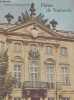
Photos Edmund Kupiercki Classification Dewey : 720-Architecture


Synagogues. Une architecture de l'identité juive
2001 Editions Adam Biro - 2001 - 1 vol in-4 - Cartonnage éditeur + jaquette illustrée - Illustrations en noir & blanc et en couleurs en et hors texte - 285 pages
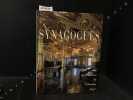
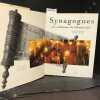
Bon état Bon
Notice sur un bas-relief appartenant à M. Chevrier (Edmond), à Bourg.
Bourg-en-Bresse, Milliet-Bottier, 1850 ; in-8, broché ; 19 pp., lithographie hors-texte dépliante de Peingeon, couverture jaune ornée.
Petites rousseurs.Il s'agit d'un rétable qui devait orner la chapelle de l'ancien château de Bourg au XVe siècle.
L' Ancien hôtel de ville d'Orléans.
Orléans, Paul Pigelet, 1919 in-8, 35 pp., frontispice, 1 planche, un plan in-t., broché.
Bulletins de la Société archéologique et historique de l'Orléanais, T. XVIII. - - VENTE PAR CORRESPONDANCE UNIQUEMENT - LIEN DE PAIEMENT, NOUS CONSULTER.
L' Eglise Sainte-Marie-Madeleine de Montargis.
Orléans, Houzé, 1931 in-8, 22 pp., ill. in-t., broché.
- - VENTE PAR CORRESPONDANCE UNIQUEMENT - LIEN DE PAIEMENT, NOUS CONSULTER.
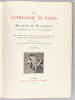
La Guirlande de Paris ou Maisons de Plaisance des Environs, au XVIIe et Au XVIIIe Siècle
F. Contet, éditeur d’Art 1928 In-folio, portfolio à lacets de l’éditeur, cartonné jaspé orange-vert, dos percaline orange, titre doré, 2 ff. + 12 pp. + 36 planches en noir et blanc. Portefolio abîmé, avec restaurations maladroites Ouvrage original et peu courant.
Voyage autour de Paris en visitant les Châteaux, Folies et Plaisirs de la banlieue : Berny, Bourg-la-Reine, Cachan, Chatenay, Chatillon, Choisy-le-Roi, Gentily, Ivry, L’Haÿ-les-Roses, Sceaux, Thiais, Vitry. Bon état d’occasion
La Guirlande de Paris ou Maisons de Plaisance des Environs, au XVIIe et au XVIIIe siècle (2 Volumes - Complet) Tome I : Berny, Bourg-la-Reine, Cachan, Chatenay, Chatillon, Choisy-le-Roi, Gentilly, Ivry, L'Haÿ-les-Roses, Sceaux, Thiais, Vitry ; Tome II : Chambourcy, Chatillon, Fontenay-aux-Roses, La Celle-Saint-Cloud, Meudon, Savigny sur Orge, Versailles, Viroflay
Notes et relations d'un Vyage autour de la Capitale à quatre lieues à la ronde, 2 vol. in-folio en feuillet sous chemise à lacet demi-toile orange, Chez F. Contet, Editeur d'Art, Paris, 1928-1931, 12 pp. et 36 planches hors texte ; 12 pp. et 36 planches hors texte. Rappel du titre complet : La Guirlande de Paris ou Maisons de Plaisance des Environs, au XVIIe et au XVIIIe siècle (2 Volumes - Complet) Tome I : Berny, Bourg-la-Reine, Cachan, Chatenay, Chatillon, Choisy-le-Roi, Gentilly, Ivry, L'Haÿ-les-Roses, Sceaux, Thiais, Vitry ; Tome II : Chambourcy, Chatillon, Fontenay-aux-Roses, La Celle-Saint-Cloud, Meudon, Savigny sur Orge, Versailles, Viroflay
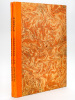
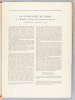
Bon exemplaire, rare ainsi bien complet des deux volumes (sans les lacets du second volumes, rares rouss., très bon état par ailleurs).
Les Vieux Hôtels de Paris : La Nouvelle-France ou le Faubourg Poissonnière : architectures et décorations intérieures. Notices historiques et descriptives
Paris, F. Contet, impr. Protat frères, à Mâcon, Paris, 1930 0 Un volume in-folio (450 x 330 mm), (4) pp. (faux-titre, titre) 12 pp. (texte, illustrations et plans), 40 ff. (planches). En feuillets, sous portefeuille demi-toile verte à lacet, titre doré au dos (reliure éditeur). (rares rousseurs marginales à quelques planches). 40 planches tirées en héliogravure. Hôtels Chéret, de Botterel-Quintin-d Aumont, Marmont, Titon, de Bourienne.
Vieilles Demeures Parisiennes.
PLON. Non daté. In-12. Broché. Etat d'usage, Couv. légèrement passée, Dos satisfaisant, Intérieur acceptable. 178 pages. Quelques planches de photos en noir et blanc.. . . . Classification Dewey : 720-Architecture
"Collection ""Les Maitres de l'Histoire"". Classification Dewey : 720-Architecture"
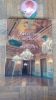
La Préfecture des Bouches-du-Rhône
Marseille, Jeanne Laffitte, 1996, in-4 rel. cart. (19,5 x 28), 160 p.,préface de Hubert Blanc, avant-propos de Constans Vautravers, 156 illustrations (photographies de Richard Mas, plan, gravures), jaquette, état de neuf.

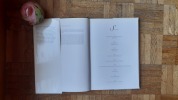
Voir le sommaire sur photos jointes.
Political Thought and Eleventh-Century Populism. The Meek, the Many, and the Meritorious during the Age of the Gregorian Reform
, Brepols, 2026 Hardback, Pages: 336, Size:156 x 234 mm, Language(s):English, Latin. ISBN 9782503614304.
Summary The populist movements of the eleventh century (the Peace of God, Gregorian Reform, and the First Crusade) did not simply mark an important pivot in the greater history of the West. Taken together, they also represent a fascinating phenomenon unto themselves. R. I. Moore characterized them as the products of a 'bizarre but temporarily effective' alliance of the clergy and people, while Richard Landes and Thomas Head claimed that they heralded the 'emergence of the crowd on the stage of European affairs.' This book is the first comprehensive study to consider the textual records of that alliance/emergence from an intellectual perspective. Through an in-depth analysis of ten eleventh-century writers, the author Jason Macleod argues that a distinctive strand of political thought entwines its way through the textual legacy of these movements. From relatively obscure monastic hagiographers such as Letaldus of Micy to Pope Gregory VII to 'best-selling' crusade chroniclers like Robert the Monk, eleventh-century clergymen framed the populist fervour of their age in discernible patterns for contemporary consumption, while leaving a textual legacy rich with political implications for the future. While optimistic reformers romanticized the empowerment of the Meek and the Many in shades of vox populi, vox Dei, more sceptical observers pragmatically recast such activity as dangerous exemplars of God's wrath employed to correct elites' behaviour. Ultimately, this book contends that the body of political thought considered herein represents the earliest textual legitimization of political power for those inherently disempowered by lack of noble birth, wealth, or education in the medieval West. TABLE OF CONTENTS Introduction Part I. The Peace of God Literature c. 975-1050 Chapter 1. Letaldus of Micy Chapter 2. Ademar of Chabannes Chapter 3. Rodulfus Glaber Chapter 4. Andrew of Fleury Part II. The Gregorian Reform Literature c. 1050-1095 Chapter 5. Humbert of Silva Candida Chapter 6. Gregory VII Chapter 7. Andrew of Strumi Part III. The First Crusade Literature c. 1095-1125 Chapter 8. Raymond of Aguilers Chapter 9. Robert the Monk Chapter 10. Guibert de Nogent *** Conclusion Bibliography Index
deSingel: 1980-2020
Antwerpen , Borgerhoff & Lamberigts, 2022 Oorspronkelijk uitgevers omslag, 272 pagina's, 1.22 x 2.3 x 27.8 cm. ISBN 9789463937252.
4 november 2020, deSingel mag veertig kaarsen uitblazen. Wat begon als een overmoedig conservatoriumgebouw, werd in nog geen halve eeuw tijd h t verzamelpunt voor toonaangevende muziek-, dans- en theatervoorstellingen. Een huis waar de allergrootsten op bezoek kwamen. Waar Anne Teresa De Keersmaeker haar eerste danspassen zette, waar Ivo Van Hove de kneepjes van het toneelvak leerde en waar de aanzienlijkste muziekensembles van ons land op de planken stonden. Cultuurjournalist en musicoloog Jasper Croonen dook ter ere van het jubileum in de archieven van de kunstsite, sprak met de protagonisten uit de afgelopen veertig jaar en pende de geschiedenis van deSingel neer. Het verhaal van een handvol culturele baanbrekers die het kunstenveld in Vlaanderen grondig omwoelden, van een kunstinstelling met wereldfaam.
blokboeken en incunabelen in Haarlems Libry
, De Vrieseborch, 1988 Gebonden, Hardcover met stofomslag compleet. 311 pages, ill. ISBN 9060762940.
De blokboeken en incunabelen in Haarlems Libry
Les Châteaux Viticoles du Pays de Vaud.
Lausanne, Editions 24Heures 1991, 285x240mm, 383pages, reliure d'éditeur sous jaquette. Bel exemplaire.
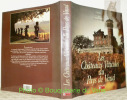
photos couleurs et n/b, Pour un paiement via PayPal, veuillez nous en faire la demande et nous vous enverrons une facture PayPal
La région de Bruxelles-capitale. Histoire et patrimoine des communes de Belgique.
Bruxelles, Editions Racine, 2008. 21 x 29, 624 pp., très nombreuses illustrations et cartes en couleurs et en N/B, reliure d'édition pleine toile + jaquette, très bon état.
Photographies de Patrick Van Nieuwlandt.
Jaume Camprodon / Rosa Ferrer / Josefa Arnall / Milada Studnickov / Yarza Luaces / Gabriel Roura
Reference : 67921
Martirologio de usuardo. Martyrology of Usuard / Museu Dioces , Gerona. / Date: c. 1400. / Prague (Czech Republic)
Barcelona, M. Moleiro Editor, 1997 Facsimile Edition. Bound in deep red leather, richly embossed in gold, housed in a matching slipcase with gold motifs. Folio (49 35 cm). 252 pages, with 705 miniatures illuminated in gold, in full colour. **** NUMBERED COPY NO. 707 OF A LIMITED FACSIMILE EDITION OF 987 COPIES, ISSUED WITH A CERTIFICATE OF AUTHENTICITY.**** Accompanied by a commentary volume, hardcover with dust jacket, 407 pages, profusely illustrated in colour (170 illustrations). Size: 38 27 cm. Language: Spanish. Condition: Fine. ISBN 9788488526359.
The Martyrology of Usuard is a copy of the work completed by Usuard in 860, later updated to include additional saints. Usuard himself was a monk at Saint-Germain-des-Pr s in Paris between 841 and 847, and his journey through Spain in 858 was decisive for the inclusion of many Spanish saints in his text. This remarkable manuscript holds a key place in the history of Central-European painting. Its illuminations reveal strong links with major artistic centres across Europe at the turn of the 14th and 15th centuries, placing it firmly within the sphere of international courtly art while remaining rooted in the Bohemian tradition of book illumination a true high point in that tradition's long evolution. Before reaching the city of Gerona, the Martyrology had an eventful journey. Originating in Prague, at the court of King Wenceslas IV of Bohemia, it later travelled through Austria, Hungary, and Moravia. It was subsequently found in Rome and Naples, and may even have been housed for a time in Stockholm and Madrid. In 1673, it arrived at the monastery of Poblet in Catalonia, and later was taken to Gerona, where it was first safeguarded in the monastery of Cadins and is now preserved in the Museu Dioces , where it remains to this day. A masterpiece of the International Gothic from the famous Wenceslas workshop in Prague: the agonizing martyrdoms of the saints in incredible 700 beautiful miniature medallions.
Escalier d'honneur
Dimension extérieur 69,5 x 50 cm Très beau dessin d'architecture réalisé par J.Auproux en 1916. Il était probablement étudiant dans ce domaine à cette époque. Dessin aquarellé, en très bon état général.
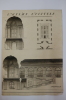
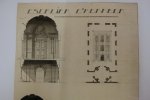
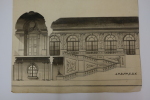
Nous possédons également un autre dessin de cet artiste que vous pouvez trouver à cette référence : DES14T8.
Paseos por la ciudad - Hondarribia
Relié, 221 pages, paru en 2006 chez Hondarribiko Udala, très bon état général.
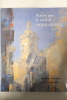

Anecdota rustica. Textus minores ad aedificationem pertinentes prout in codicibus saec. VIII-X asseruati sunt
, Brepols, 2022 Hardback, xxiv + 285 pages, Size:155 x 245 mm, Language: Latin. ISBN 9782503599120.
Summary How did the least educated rows of the clergy get in touch with basic and more subtle religious teachings? Access to literacy was not the rule in the Early Middle Ages, but rather the exception. However, even the lowest rows of the Church were expected to be able to take care of their parishes. Therefore, the clergy was expected to be provided a certain knowledge. Oral transmission might have played the most important role in the formation of the lowest clergy. Still, several compositions have survived which might have also served this aim. These are rather simple, hardly original texts with friendly displays and oversimplified approaches to central matters of the Christian faith. Most of such compositions do not reach the highest standards of the time - nor do they attempt to do so. Yet, they are not mere personal notes for private use. They were surely meant to be circulated and to last - as they apparently did. This volume collects some of these texts, which appear to be related with one another in different ways. The collection, however, is not and could not be intended to be complete.
Le château de La Force en Périgord
1 vol. in-8 br., La Force, 1982, 38 pp.
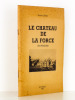
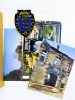
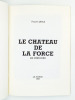
Etat très satisfaisant (lég. rouss. en bords de plat sup., très bon état par ailleurs). On joint 5 cartes postale de La Force ainsi qu'un petit écusson en toile aux armes de La Force.
Titian's hidden double portrait unveiled after 500 years
, Hannibal Books , 2023 Hardcover HB, 284 x 225 mm, 160 pages, ENG edition Illustrated. ISBN 9789463887007.
Even in his own time, the status of Venetian painter Titian (1488- 1576) was legendary. He worked on the border between Renaissance and Baroque and was revered on par with the greats of the world. His pictorial style, extraordinary use of colour and virtuoso technique were and still are an inexhaustible source of inspiration for generations of artists. Rubens and Van Dyck, among others, greatly admired Titian's work and studied it extensively. Portrait of a lady and her daughter is perhaps one of Titian's most fascinating works. He began the miraculous painting in the mid-16th century, but died before he could finish it. This depiction of the relationship between a mother and her child is unparalleled. Despite the monumentality of the painting, the look with which the daughter looks at her mother is perhaps one of the most tender in all of art history. The identity of those portrayed is uncertain, but some art historians claim Titian painted a portrait of his mistress, Milia, and their illegitimate daughter, Emilia. The painting experienced a prodigious history from its inception. Its wanderings began in Venice, after which the work passed by the Russian tsars and then, via Paris, ended up in London, where it miraculously survived the bombings of World War II. Today, it has been fully restored after a 20-year restoration. Translated with DeepL.com (free version)
Apocalyptic Cultures in Medieval and Renaissance Europe. Politics and Prophecy
, Brepols, 2024 Hardback, 301 pages, Size:156 x 234 mm, Illustrations:13 b/w, 25 col., 5 tables b/w., Language: English. ISBN 9782503606699.
Summary The essays in this collection were presented at the 2020 Symposium on Apocalypticism, sponsored by the Marco Institute for Medieval and Renaissance Studies at the University of Tennessee. The authors offer new readings of medieval and Renaissance Apocalypticism in quotidian terms, not as 'counterculture' but as the pragmatic expression of spiritualities that informed both debate and practice, on subjects as mundane and diverse as warfare, pilgrimage, gender, cartography, environmentalism, and governance. Topics include the origins of imperial eschatology; reflections on cosmology and the fate of the earth; the fusion of history, prophecy, and genealogy; Joachite readings of the political landscape of Italy; the influence of the Great Schism on Burgundian art; eschatology and gender in pilgrimage literature; the late medieval interpretation of the Revelationes of Pseudo-Methodius; and the appropriation of apocalyptic tropes in the propaganda and policies of the German emperor Maximilian I. The essays that open and close this collection offer meditations on the enduring legacy of Apocalypticism by focusing on the events ? pandemic, political unrest, and the proliferation of conspiracy theories manifest in both ? that mark the historical era in which this symposium took place. TABLE OF CONTENTS Introduction: Apocalypse and Politics, in the Middle Ages and Today JAY RUBENSTEIN Constantine and the Birth of Medieval Apocalypticism: Imperial Eschatology in Eusebius, Lactantius, Ephrem, Aphrahat, and the Tiburtine Sybil STEPHEN SHOEMAKER The Apocalypse and the Medieval Cosmos BRETT EDWARD WHALEN Apocalypse Unfurled: Origins and End Times in the Genealogical Roll JENNIFER JAHNER Prophetic Geography: Italy, the School of Joachim of Fiore, and the New Philistines THOMAS MAURER The Apocalypse of the Duc de Berry and the Apocalyptic Great Schism RICHARD K. EMMERSON The Eschatology of Pilgrimage Literature and the Gender of the Apocalypse in Late Medieval Europe KATHRYNE BEEBE Reading the End in Late Medieval Augsburg: Wolfgang Aytinger's Commentary on the Revelationes of Pseudo-Methodius LAURA ACKERMAN SMOLLER Prophecy and Policy: Maximilian I as Last World Emperor in Theory and Practice ROBERT BAST The Apocalyptic 'Other': Nostos, Gog and Magog, and Revelation in the Time of Covid COLIN MCALLISTER Index
Vignole centesimal, ou les regles des cinq ordres d'architecture de J. Barozzio de Vignole, etablies sur une division du module en harmonie avec le systeme actuel des mesures, suivi du Trace des moulures et de la maniere de mettres tres promptement en ordre, en proportion, dans une espace donne quelconque sans le secours du module, a l'aide des divisions memes du metre par F-A. Renard, architecte
Paris, Ladrange, 1842. Format 18x28 cm, broche, 38 pages + 34 planches hors-texte. Une dechirure sans manque au dos, des rousseurs eparses dans le papier. Etat acceptable.