 Write to the booksellers
-
Type
Any type (2)
Art print (7)
Autograph (1)
Book (32241)
Disk (1)
Drawings (265)
Engraving (11)
Magazine (125)
Old papers (1)
Photographs (15)
Posters (1)
-
Latest
Last 24h (8)
Last 3 days (4)
Last month (577)
Last week (44)
-
Language
Dutch (78)
English (56)
French (32492)
German (6)
Italian (18)
Portuguese (9)
Spanish (11)
-
Century
16th (14)
17th (46)
18th (196)
19th (1524)
20th (9529)
21st (1725)
-
Countries
Belgium (10860)
Brazil (6)
Canada (116)
China (1)
Côte d'Ivoire (139)
Denmark (209)
France (18235)
Germany (1)
Greece (1)
Switzerland (3102)
-
Syndicate
ALAC (107)
CLAM (143)
CLAQ (102)
CNE (3)
ILAB (10585)
NVVA (1145)
SLACES (1145)
SLAM (7978)
SNCAO (10)
Christian de Portzamparc
Electa Moniteur. 1984. In-8. Broché. Bon état, Couv. légèrement passée, Dos satisfaisant, Intérieur frais. 165 pages. Nombreuses illustrations, photos, plans, en noir et blanc et en couleurs in et hors texte. Papier légèrement jauni.. . . . Classification Dewey : 720-Architecture
Classification Dewey : 720-Architecture


Henri Gaudin
Electa Moniteur. 1984. In-8. Broché. Bon état, Couv. légèrement passée, Dos satisfaisant, Intérieur acceptable. 141 pages. Nombreuses illustrations, photos, plans, en noir et blanc et en couleurs in et hors texte. Papier légèrement jauni. Coins frottés.. . . . Classification Dewey : 720-Architecture
Classification Dewey : 720-Architecture
L'usine et la ville - 150 ans d'urbanisme 1836 - 1986 --- numéro hors série culture technique
CRCT 1986 in4. 1986. Broché. illustré en noir et blanc
Bon état cependant couverture défraîchie frottements intérieur propre
Places et monuments
Mardaga 1984 190 pages Liège. In-8 carré. 1984. broché. 190 pages. Nombreuses illustrations essentiellement en noir

Bon état
Vittel 1854-1936. Création d'une ville thermale
Editions du Moniteur 1982 In-8 broché 23,4 cm sur 21,5. 237 pages. Couverture très légèrement passée, sinon, très bon état. Bon exemplaire. Bon état d’occasion.
Bon état d’occasion
Vittel : Création d'une ville thermale 1854-1936
Moniteur, 1982, 238 pp., broché, riche iconographie, légères traces d'usage, état très correct.
Institut français d'architecture - Archives d'architecture du XXe siècle
Reference : 71
Colonnes n°11, janvier 1998, Jean Dubuisson - 1998
Paris, Institut français d'architecture, janvier 1998, 1 brochure 21 x 29.7 cm à couverture souple, 39 p., comportant des textes d'analyse et de présentation de l'oeuvre de Dubuisson (p. 2-15), une frise chronologique illustrée (1950-1982) dépliante 4 volets de ses réalisations et projets, le répertoire de ses archives conservées à l'IFA (p. 16-37) ainsi qu'un index (p. 38-39). Nombreuses illustrations en noir et blanc (plans, projets, maquettes, photographies). Jean Dubuisson (1914-2011) : architecte et urbaniste français actif principalement durant la période des Trente glorieuses 1945-1975 en France, et acteur majeur de la construction des grands ensembles collectifs d'habitat. Premier Grand prix de Rome en 1945.

Opuscule agrafé, complet. Feuillets et couverture souple en parfait état. Panorama historique de cette oeuvre entre ingénierie, design et architecture rationaliste dont les enjeux sociaux feront parler durant les décennies suivantes. ISSN 1151-1621.
[Culture Technique] - Institut Français d'Architecture ; Culture technique (revue)
Reference : 42043
(1986)
L'usine et la ville , 1836 - 1986 , 150 ans d'urbanisme ( Culture technique, numéro hors-série, à l'occasion de l'exposition tenue du 24 juin au 18 octobre 1986 )
1 vol. in-4 br., Culture technique, ill. noir et blanc, 1986, 264 pp.
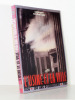
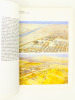
Bon état. Peu courant. Poids de 1 Kg
Institut Français d'Architecture (Département Archives et Histoire), Archives de Paris (Jean-Baptiste Minnaert), Bureau de la Recherche Architecturale
Reference : 70
Colonnes n°6, septembre 1994, Exposition Henri Sauvage (1873 - 1932), Projets et Architectures à Paris - 1994
Paris, Institut français d'architecture, Feuille trimestrielle de liaison et d'information du réseau des archives d'architecture du XXe siècle, septembre 1994, 1 fascicule 21 x 29,7 cm, 20 p., entièrement consacré à l'Exposition Henri Sauvage (1873 - 1932), projets et architectures à Paris, organisée aux Archives de Paris du 13 octobre au 31 décembre 1994. Nombreuses reproductions en noir et blanc de plans, photographies de réalisations ou propositions pour des concours d'architecture accompagnées de textes d'analyse et de pédagogie. Henri Sauvage (1873 - 1932) : architecte et décorateur français actif durant le premier tiers du XXème siècle. Son travail s'inscrit d'abord dans le mouvement Art nouveau (Villa Majorelle à Nancy notamment), puis dans celui de l'Art déco, évoluant vers la conception rationaliste et préfabriquée d'habitats collectifs et sociaux tels les immeubles HBM ou à gradins à Paris. Son sens de l'esthétique architecturale associé à la rigueur constructive font de ses constructions des édifices remarquables dont les qualités sont reconnues de façon intemporelle. Henri Sauvage tient place de précurseur de l'architecture moderne qui sera incarnée par Le Corbusier, Mallet Stevens ou encore Wright.
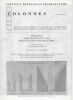
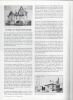
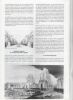
Fascicule agrafé, complet. feuillets en parfait état. Rédigé par Jean-Baptiste Minnaert, le spécialiste d'Henri Sauvage, cet opuscule éclaire son oeuvre au travers de ses archives, en révêlant ses apports au sein des mutations de l'architecture du XXème siècle.
Institut Français d'Architecture - Grenier Lise
Reference : RO80212587
(1984)
ISBN : 2904448071
Ville d'Eaux en France -
Fernand Hazan - Institut Français d'Architecture. 1984. In-4. Broché. Bon état, Couv. convenable, Dos satisfaisant, Intérieur frais. 400 pages. Nombreuses photographies plans et gravures en noir et blanc dans et hors texte.. . . . Classification Dewey : 720-Architecture
Classification Dewey : 720-Architecture
Ocio en la biblioteca nacional
, Instituto Nacional de Libro Espa ol, 1985 Paperback, 133 paginas, Spanish, Illustraciones,. ISBN 9788485635344.
Recreation -- Exhibitions. Recreation -- Bibliography. Biblioteca Nacional (Spain) -- Catalogs.
Jean Millier ingénieur des Ponts et Chaussées - Un hussard de l'architecture -
Ante Prima/AAM éditions, 2008 - in-8 sous couverture rempliée illustrée en couleurs, 152pp. abondamment illustré de photos en noir et en couleurs - très bon état -
Tous nos livres sont visibles sur notre site : https://www.livrepoesie.com/
Deuxi me liaison des rives de l'Escaut Anvers
, Intercommunale Vereniging voor de Autoweg E-3 [Antwerpen], 1967 Brochure, 15 pagina's, 27.5 x 20.5 cm, NL. *goede staat.
Deuxi me liaison des rives de l'Escaut Anvers
Croquis d'Architecture, Publication Mensuelle, 4e dition, Mars 1866 - Avril 1867 ? 1re ann e,
Paris, Siege de la Societe,, 1866-67 reliure l'epoque, 37x32cm folio, Volume complet, Mars - Avril (12) Illustrated. Bon etat.
Croquis d'Architecture ? Intime-Club Publication Mensuelle, 4e dition, Mars 1866 ? 1re ann e, (12) Fondation de la Soci t : 13 Janvier 1866.
Croquis d'Architecture, publication mensuelle, Janvier 1872, 6e ann e, 6e volume.
Paris, Siege de la Societe,, 1872 reliure l'epoque, 37x32cm folio, Volume complet, janvier-d cembre, Illustrated. Bon etat.
Croquis d'Architecture, plus pr cis ment le 6e volume, janvier 1872. Intime-Club. publication mensuelle, Janvier 1872, 6e ann e, 6e volume
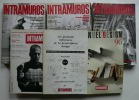
Intramuros Design International. Du numéro 33, nov.-déc. 1990 au numéro 64, avril-mai 1996, soit 32 numéros. Accompagnés de 3 numéros Annuel Design : édition de 93, 94 et 96
Paris, in-folio, agrafé, Ensemble en bon état. Le numéro 33 est accompagné du Fascicule n°2 et le numéro 38 du supplément "Le mobilier dans l'entreprise".



Inventaire général / BONNET Claire / DUCOURET Bernard / MIGUEL Sandra
Reference : SPN-61
(2007)
Châlons-en-Champagne. Marne, Champagne-Ardenne.
Langres : Éditions Dominique Guéniot, 2007. 128 p.ill.coul., photos Jacques Philippot, index, carte de localisation des œuvres illustrées en début d'ouvrage, dans la couverture rempliée. Inventaire général du patrimoine culturel/ADAGP/Images du Patrimoine N°246.

Patrimoine en images : édifices religieux, architecture militaire et eau, édifices publics, écoles, architecture du spectacle, monuments, jardins publics, demeures, Reconstruction.
Inventaire général des monuments et des richesses artistiques de la France
Reference : ARCH1268M
(1972)
Inventaire Général Des Monuments Et Des Richesses Artistiques De La France Principes D'analyse Scientifique - Architecture - Méthode Et Vocabulaire
Relié, on y retrouve de nombreses illustrations ( photos, plans, .), très bon état : le dos se déchire sinon parfait état, vol in-4, reliure skaï vertex bordeaux
Notata, seu Tractatus qui erat fons Libri III Operis Bessarionis In Calumniatorem Platonis adversus Georgium Trapezuntium
, Brepols, 2021 Hardback, lxiv + 185 pages, Size:155 x 245 mm, Illustrations:1 b/w, 2 tables b/w., Language(s):Latin, Greek, English. ISBN 9782503593623.
Summary Cardinal Bessarion's great defense of Plato, the In Calumniatorem Platonis, written in response to George of Trebizond's Comparatio Philosophorum Platonis et Aristotelis and first published in 1469, was the first substantial statement of Platonism in the Plato-Aristotle Controversy of the Renaissance. Bessarion, however, had first written the In Calumniatorem a decade earlier, in 1459, without the massive Book III of the 1469 edition proving that medieval scholasticism supported Bessarion's interpretation of Plato and Aristotle. With the discovery of the treatise Notata by the Dominican theologian Giovanni Gatti, we now know the source of Bessarion's new found erudition in medieval scholasticism. Bessarion initially attempted to incorporate Gatti's Notata whole cloth into the In Calumniatorem Platonis, but in the end he exploited it as a storehouse of the scholastic references, quotations, and arguments, especially from Thomas Aquinas' writings, that made up the new Book III of the 1469 In Calumniatorem Platonis. Thus, Giovanni Gatti's treatise played a major, though anonymous role in the Plato-Aristotle controversy for the rest of the Renaissance as Bessarion's work became in its turn a much used authority and source of information.
Palmyr niens en Dacie
, Brepols, 2026 Paperback, Pages: 272, Size:216 x 280 mm, Illustrations:168 b/w, 7 tables b/w., Languages: French, Latin. ISBN 9782503622408.
Summary Il peut sembler trange que la Dacie romaine contribue une meilleure connaissance de la soci t palmyr nienne. Cela est d aux circonstances dans lesquelles cette province et son limes ont t cr s. Tout d'abord, on y a install , selon Eutrope, des habitants ex toto orbe Romano. Ensuite, afin de d fendre la fronti re ouest, Hadrien y a envoy un important contingent de Palmyreni sagittarii, r partis en trois vexillations. Au d but du r gne de Marc Aur le et de Lucius Verus, les vexillations ont t r organis es en numeri. Ces numeri Palmyrenorum taient stationn s dans les camps de Tibiscum, Porolissum et O(---), une localit difficile identifier. Des communaut s palmyr niennes ont pris naissance pr s des camps et dans plusieurs autres localit s. De nouveaux l ments venus de Palmyre s'y sont ajout s. Dans un milieu romain pr pond rant, ces communaut s ont pr serv non seulement leurs traditions guerri res, mais aussi leur religion, leurs noms et leur langue. Parmi la centaine d'inscriptions de Dacie en rapport avec les Palmyr niens, six sont r dig es en aram en. La dualit religieuse propre Palmyre est devenue en Dacie une dualit entre B l, le deus Palmyrenus, et Malakb l, devenu un Sol inuictus. Les Palmyr niens, anciens militaires ou descendants de ceux-ci, se sont int gr s aux structures romaines, acc dant au d curionat, au pontificat et au duumvirat dans les villes, ce qui signifie qu'ils taient parfaitement romanis s du point de vue politique. TABLE OF CONTENTS Prooemium Sigles et abr viations Catalogue d'inscriptions Les militaires La religion L'architecture L'int gration Abr viations et bibliographie Indices
La Maison Dieu : Une histoire monumentale de l'Eglise au Moyen Age (v.800-v.1200)
SEUIL 2006 688 pages 15 7x23 9x4 5cm. 2006. Broché. 688 pages. Cet ouvrage de Dominique Iogna-Prat propose une histoire monumentale de l'Église entre les années 800 et 1200 analysant comment l'institution ecclésiale s'est matérialisée dans l'espace à travers la construction d'édifices sacrés. Il explore la transition de l'Église comme assemblée (Ecclesia) vers l'église comme bâtiment accueillant la présence divine et examine comment cette « Maison Dieu » a structuré la société médiévale chrétienne
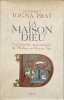
Bon état tranches supérieurs legerement tachées jaquette inférieur frottée intérieur propre
Carmina iambica
, Brepols, 2023 Hardback, lviii + 211 pages, Size:155 x 245 mm, Language(s):Greek, English. ISBN 9782503604473.
Summary The book includes the critical edition of 236 iambic poems by John Geometres, one of the most creative and interesting Byzantine poets. The poems deal with a variety of subjects (e.g., Byzantine emperors, historical figures and events, saints, relics, iconographic types, theological and philosophical matters, ancient authors) and reflect the cultural and historical developments of tenth-century Byzantium. TABLE OF CONTENTS INTRODUCTION 1. Ioannes Geometres: Life and Works 2. Iambic Poems: Content and Function 3. Metrical Analysis 4. The Manuscript tradition 5. Previous Editions 6. Principles of the Edition TEXTVS INDICES Index locorum Sacrae Scripturae Index fontium et locorum parallelorum Index nominum Index uerborum notabilium
Accountability in Late Medieval Europe. Households, Communities, and Institutions
, Brepols, 2025 Hardback, x + 264 pages, Size:156 x 234 mm, Illustrations:16 b/w, 4 tables b/w., Language: English.*new ISBN 9782503616704.
Summary This volume brings together studies of late medieval accountability in both the domestic and the public realms. It traces practices of accountability across the social spectrum, from households to small businesses to communal and regnal administrations, highlighting the intersections between competing conceptions of personal and institutional responsibility. Focusing on France and Italy from the thirteenth to the early sixteenth centuries, the case studies follow territorial officers, consular agents, and town notables co-opted into local governance from Avignon and Marseille to Tuscany and the Venetian and Genoese overseas territories. The studies explore both personal and institutional accounting registers, as well as records of a textual nature, such as rulebooks and inquests, in an effort to reflect the range of records and procedures relied on to achieve a measure of accountability in late medieval Europe. TABLE OF CONTENTS Current Perspectives on Personal and Institutional Accountability in Late Medieval Europe IONU? EPURESCU-PASCOVICI Accountability or Culpability? Territorial Officers Facing the French Monarchy, Thirteenth and Fourteenth Centuries MARIE DEJOUX Private Accounting in Curial Avignon: The Ledgers of Pierre Boyer, Papal Servant under Urban V, Gregory XI, and Clement VII ARMAND JAMME A Book of One's Own: Private Records and Accountability through a Gendered Perspective in Late Medieval Florence SERENA GALASSO Accounting and Corruption in the Fifteenth-Century Kingdom of Sicily ALESSANDRO SILVESTRI The Municipal Accountability of Fourteenth-Century Marseille FRAN OIS OTCHAKOVSKY-LAURENS The Venetian Counts of Late Medieval Dalmatia: Institutional Responsibilities and Accountability Mechanisms DANA-SILVIA CACIUR-ANDREESCU The Venetian and Genoese Black Sea Agents: Accountability and Institutional Dialogue with the Metropolis (Fourteenth and Fifteenth Centuries) ALESSANDRO FLAVIO DUMITRA?CU Reddere Rationem: Financial Management in the Mendicant Orders (Thirteenth and Fourteenth Centuries) EMANUELE CARLETTI Indirect Taxation, Liability, and 'Semi-Public' Records: The Accounting Practices of the Gabellers of the Commune of Bologna (Thirteenth and Fourteenth Centuries) MARCO CONTI Urban Measurements and Accountability in Late Medieval Florence ANNA POMIERNY-W?SI?SKA Artisans and Small Merchants as Accountants of Tuscan Institutions (Fourteenth to Sixteenth Centuries) PAOLA PINELLI Contributors
Accounts and Accountability in Late Medieval Europe. Records, Procedures, and Socio-Political Impact
, Brepols, 2020 Hardback, vii + 303 pages, Size:156 x 234 mm, Illustrations:5 b/w, 14 tables b/w., 3 maps b/w, Language: English. ISBN 9782503588537.
Summary Accounts and Accountability in Late Medieval Europe traces the momentous transformation of institutions and administration under the impact of accounting records and procedures, c. 1250-1500. The volume's focus on the materiality and organising logic of a range of accounts is complemented by close attention to the socio-political contexts in which they functioned and the agency of central and local officials. The volume is divided into three parts: the role of financial accountability in the political designs of late medieval states, the uses of accounts auditing and information management as tools for governance, and their impact on the everyday life of local communities. Covering both the centre and the periphery of medieval Europe, from England and the Papal curia to Savoy and Transylvania, the case studies evince the difficult passage from the early experiments with financial accounts towards an accountability of office. TABLE OF CONTENTS Acknowledgements From the Auditing of Accounts to Institutional Accountability in Late Medieval Europe - IONUT EPURESCU-PASCOVICI Part One: Financial Accountability and Late Medieval Politics The English Exchequer, the King, and the Counties from Reform to Civil War, 1258-1264 - RICHARD CASSIDY Military Recruitment and Funding in Savoy: Piedmont and Chablais, Late-Thirteenth to Mid-Fourteenth Century - ROBERTO BIOLZI Accountability in Building Projects in Piedmont under Philip of Savoy-Achaea: Administrative Experimentation and Political Consolidation - VITTORIA BUFANIO Part Two: The Tools of Governance: Auditing, Information Management, and Budgeting Auditing of Accounts as an Instrument of Royal Power in Catalonia (1318-1419) - ESTHER TELLO HERN NDEZ From Auditing to Budgeting in Late Medieval Sicily: Institutions, Administrators, and Information Management - ALESSANDRO SILVESTRI From Administrative Control to Fighting Corruption? The Procedural Steps of Accounts Auditing in the Papal State (Thirteenth to Sixteenth Century) - ARMAND JAMME A Codicological Approach to the Auditing Process: the Duke of Burgundy's Household Accounts during the Swiss Campaign (1476) - EKATERINA NOSOVA The Rolls, the Prince, and their Depositories: The Archiving of Late Medieval Financial Accounts Reconsidered (Savoy, Mid-Fourteenth to Mid-Fifteenth Century) - GUIDO CASTELNUOVO Part Three: Financial Accounts and Local Communities Local Communities and Fiscal Reform in Late Medieval Savoy: Lords, Peasants, and Subsidies - NICOLAS CARRIER A Century of Insults, Adultery, and Fight: Justice and its Administration in the Accounting Records of the Castellany of Pont-de-Vaux (Savoyard Bresse, 1274-1375) - AUDE WIRTH-JAILLARD From Chirograph to Roll: The Records of Thirteenth-Century Anglo-Jewish Moneylending - DEAN A. IRWIN Churchwardens and their Accounts in Transylvania, Fourteenth to Sixteenth Centuries: A Preliminary Assessment - ADINEL C. DINC List of Contributors

