 Write to the booksellers
-
Type
Any type (2)
Art print (7)
Book (31889)
Disk (1)
Drawings (7)
Engraving (9)
Magazine (126)
Old papers (1)
Photographs (15)
Posters (7)
-
Latest
Last 24h (13)
Last 3 days (139)
Last month (704)
Last week (12)
-
Language
Dutch (1)
English (55)
French (31963)
German (6)
Italian (17)
Japanese (2)
Portuguese (9)
Spanish (11)
-
Century
16th (16)
17th (52)
18th (212)
19th (1544)
20th (9323)
21st (1690)
-
Countries
Belgium (10216)
Brazil (7)
Canada (108)
China (3)
Côte d'Ivoire (59)
Denmark (213)
France (18412)
Germany (1)
Greece (1)
Switzerland (3044)
-
Syndicate
ALAC (99)
CLAM (43)
CLAQ (94)
CNE (6)
ILAB (10693)
NVVA (1153)
SLACES (1153)
SLAM (8183)
SNCAO (9)
Garden Transmissions. Word, Image, Experience, Future
, Brepols, 2023 Hardback, 260 pages, Size:216 x 280 mm, Illustrations:40 b/w, 150 col., 3 tables b/w., 7 maps b/w, Language: English. ISBN 9782503605852.
Summary GARDEN TRANSMISSIONS: WORD, IMAGE, EXPERIENCE, FUTURE examines the ways in which the exchange of garden forms, designs, technologies, and styles created a global garden culture at the intersection of nature and cultural expression from the early modern age to the present. Europe, at the center of this global exchange, drew inspiration from Islamic and Chinese garden traditions and benefitted from the traffic of botanical novelties from the Americas. In turn, European models were successfully exported to other parts of the world and adapted to other landscapes, environments, and climates. The appropriation of new design ideas, methods, and trends resulted in new garden types and invigorated earlier approaches to horticulture. These garden transmissions?effected through the exchange of writing and images as well as direct contact between cultures?provided the tools for fruitful cross-pollination of knowledge and skills as a mode of mediation between humans and nature. TABLE OF CONTENTS Preface Didier Wirth Introduction: Cristina Castel-Branco Key note speaker Marc Treib, University of California, Berkeley, Transmissions: Word, Image, Experience TRANSMISSIONS FROM GARDEN TO GARDEN The Western Culture Ana Ku?an, University of Ljubljana, In the Looking Glass: compositional principles of major styles at a margins of the Habsburg Monarchy Nathalie de Harlez, Haute cole Charlemagne, The influence of the Grand Tour and travels on the programs of the first English gardens in the Low Countries Emmanuel Ducamp, Association Paris-Saint-Peterbourg, From Western Europe to Imperial Russia: a fair and fruitful transmission in garden design Ada Segre, Technion - Israel Institute of Technology, Vehicles of Transmission for Garden Model Plans: an Overview (fifteenth-seventeenth centuries) From East to Europe David Jacques, University of London, Did the Chinese give Europe the English garden? Cristina Castel-Branco, University of Lisbon, Garden Transmissions from India to Portugal. Adopting and Adapting Anatole Tchikine, Dumbarton Oaks, Migrating forms: Italian fountains in Spain and Portugal From Europe to the West Therese O'Malley, National Gallery of Art, A Vast and Howling Wilderness? (Deuteronomy 32:10): Wilderness gardens and early American environmentalism Marco Martella, Jardins, The Italian garden revival at the beginning of twentieth century through the eyes of American and English writers Monica Luengo, ICOMOS-IFLA, Nature in the city. Hispanic Alamedas: El Paseo del Prado in Madrid TRANSMISSIONS FROM GARDEN TO LANDSCAPE Education Transmissions Teresa Andresen and Ana Catarina Antunes, University of Porto, Transmissions through landscape architecture education from Germany to Portugal Iris Lauterbach, Zentralinstitut f r Kunstgeschichte, Transmission of Knowledge in the Early Modern Period: On the Traces of travelling German Court Gardeners Luigi Latini, IUAV, The International Carlo Scarpa Garden Prize, 1990-2020: thirty years of research of an Italian centre for landscape studies Design Transmissions Fernando Caruncho, Caruncho Garden & Architecture, Garden and Truth Thorbj rn Andersson, Sweco Architects, From Linnaeus to Greta Jo o Nunes, PROAP, Cultural Transmissions in Landscape Architecture Future Transmissions Dirk Sijmons, H+N+S Landscape architects, The Anthropocene: gardening the critical zone
How the Secularization of Religious Houses Transformed the Libraries of Europe, 16th-19th Centuries
, Brepols, 2022 Hardback, 720 pages, Size:216 x 280 mm, Illustrations:16 b/w, 9 col., Language(s):English, French, Italian. ISBN 9782503593920.
Summary The closure of religious houses, in varying circumstances, affected all of Europe at some point between the sixteenth and nineteenth century. At different times and in different countries the consequences were widely varied, in some cases preserving medieval and early modern collections intact, in others abandoning books to their fate, or transferring them piecemeal into new ownership to serve different cultural purposes. Integral preservation or dispersal may each be viewed in positive or negative terms. For religious and political history there are many, and bigger, factors involved, and the effects of secularization worked on many things beside libraries and books. None the less, by focusing on books and libraries through these changes a particular narrative emerges of great cultural importance. It is the most important book-historical story for the survival and accessibility of Europe's heritage of the written word, one that interacts with major historical themes and still connects with future issues for the continuing role of books and libraries in the European heritage. A conference held in Oxford in 2012 brought together thirty experts in different aspects of this process or with knowledge of its impact in different countries and at different periods. The result was to bring together and share for the first time the similar and different experiences of different European countries, from Portugal and Spain in the west to Poland and Ukraine in the east, from Finland and Sweden in the north to Naples in the south, with ramifications stretching to North and South America. While reading this volume of collected essays, the reader may notice a disparity in the evidence that each author has been able to bring to bear upon their subject. Provenance research is well advanced in some territories, less so in others. In the decade since the conference and this publication, there have been some attempts to bridge certain gaps. But in general, there has been little new work in the years since the conference took place. The editors anticipate that this publication will stimulate further research, bridging some of the gaps visible in the evidence presented in this volume. Multiple avenues for further investigation open up, indeed, in historical and cultural studies, such as the impact of the secularization on nonreligious libraries, and the change in attitude with respect to certain disciplines and even to erudition itself. TABLE OF CONTENTS Introduction Chronology Part 1: The territorial and temporal map of the dissolved collections Fiorenzo Landi (University of Bologna) - The dissolution of monasteries and convents in Europe. An overview of the economic implications Richard Sharpe (? University of Oxford) - Dissolution and dispersion in sixteenth-century England: understanding the remains Rudolf Gamper (Vadianischen Sammlung St. Gallen) - Klosteraufhebungen und das Schicksal ihrer Bibliotheken in der Deutschschweiz Jeffrey Garrett (formerly Northwestern University) - The expropriation of monastic libraries in German-speaking Europe, 1773-1817 Javier Ant n Pelayo (Universidad Aut noma de Barcelona) - The Secularization of Spanish religious libraries (1767-1836): The Catalan case Lu s Cabral (formerly Biblioteca P blica Municipal do Porto) - Case study 1: Portugal, Porto - State policy concerning the dissolution of monastic book collections in Portugal, especially during the nineteenth century Mar a Luisa Lopez Vidriero (formerly Royal Library of Madrid) - Case study 2: Spain, Seville and Madrid - The formation of new libraries Pedro Rueda Ram rez (University of Barcelona) - The secularization of religious houses in Latin America from independence to the new republics: the continuity and fragmentation of library collections Part 2: State policy toward book collections Dorit Raines (University of Venice) - The dissolution of the Venetian religious houses and the keeper of the library of St Mark, Jacopo Morelli, under Venetian, French, and Austrian governments (1768-1819) Vincenzo Trombetta (University of Salerno) - La politica delle soppressioni e le nuove biblioteche a Napoli tra illuminismo regalista e restaurazione (1767-1815) Marie-Pierre Laffitte (formerly Biblioth que nationale de France) - Napol on et les confiscations de livres dans les monast res italiens Part 3: Sequestration, redistribution, or contribution to the foundation of public libraries Jos A. A. M. Biemans (formerly University of Amsterdam) - The foundation of the city library of Amsterdam (1578) and the confiscation of manuscripts and printed books from ecclesiastical and monastic libraries. Fact or fiction? Emmanuelle Chapron (Universit Aix-Marseille) - Biblioth ques et suppressions eccl siastiques en Toscane de Pierre-L opold Napol on Andreina Rita (Vatican Library) - La Biblioteca Vaticana e la dispersione delle biblioteche dei religiosi romani nella prima Repubblica Romana e nell'et napoleonica Marina Venier (formerly National Central Library of Rome) - The dispersal of monastic libraries in Rome. The laws of suppression during the Roman Republic of 1849 and after the annexation of the city as the capital of the Kingdom of Italy in 1873 Marek Derwich (formerly Wroclaw University) - The dissolution of monasteries in Silesia and Poland Oleh Dukh (National University of Lviv, Ukraine) - The dissolution of Roman-Catholic and Uniate monasteries in the western guberniyas of the Russian Empire and the fate of their libraries Part 4: Impact on book trade and the emergence of private collections Dominique Varry (formerly University of Lyon) - Le commerce du livre d'antiquariat en France apr s la R volution Marino Zorzi (formerly National Marciana Library of Venice) - The book market in nineteenth-century Venice Bettina Wagner (Bamberg Staatsbibliothek) - ?Duplum Bibliothecae regiae Monacensis?: the Munich court library and its book auctions in the nineteenth century Richard A. Linenthal (London antiquarian bookseller) - Monastic collections and the nineteenth-century English book trade: the new interest in printed fragments Part 5: Migration of books, access to new publics Bart op de Beeck (Royal Library of Belgium) - Jesuit libraries in the Southern Netherlands and their dispersal after 1773 Antonella Barzazi (University of Padua) - Before Napoleon. Change and continuity in Italian religious book collections William P. Stoneman (formerly Houghton Library at Harvard University) - North American collection-building: gathering monastic books from long ago and far away Part 6: Destruction of books, spoils of war, and clandestine exportation Tuomas Heikkil (University of Helsinki) - The fate of medieval religious book collections in the Swedish realm during the Reformation Martin Germann (formerly Burgerbibliothek Bern) - Zurich and the books of the monasteries: from the Reformation to the 19th Century Part 7. Tools for Research James Willoughby (New College, Oxford) - Medieval libraries of Great Britain: MLGB3 Cristina Dondi - Material Evidence in Incunabula (MEI) and other tools for searching the provenance of early printed books Giovanna Granata (University of Cagliari) - The RICI Database. A tool for the history of religious libraries in Italy at the end of the sixteenth century Cristina Dondi (University of Oxford), Lavinia Prosdocimi (formerly University Library of Padua), Dorit Raines (University of Venice) - The incunabula collection of the Benedictine library of S. Giorgio Maggiore in Venice. Formation, use and dispersal according to documentary and material evidence (from MEI) Index of Names Index of Places
Female Printmakers, Printsellers, and Print Publishers in the Eighteenth Century The Imprint of Women, c. 1700?1830
, Cambridge University Press, 2024 Hardcover,273 pages, . ISBN 9781108844772.
A ground-breaking contribution that broadens our understanding of the history of prints, this edited volume assembles international senior and rising scholars and showcases an array of exciting new research that reassesses the history of women in the graphic arts c. 1700 to 1830. Sixteen essays present archival findings and insightful analyses that tell compelling stories about women across social classes and nations who persevered against the obstacles of their gender to make vital contributions as creative and skilled graphic artists, astute entrepreneurs and savvy negotiators of copyright law in Britain, France, Germany, Holland, Italy and the United States. The book is a valuable resource for both students and instructors, offers important new perspectives for print scholars and aims to provide impetus for further research. This title is part of the Flip it Open Programme and may also be available Open Access. Check our website Cambridge Core for details.
Aus dem erbgut der Bulgarischen Baukunst. Sechster Band. Das Rila-Kloster. Die Geschichte das Bauwerk Wandmalerei und Holzschnitzerei.
Sofia, Verlag der Bulgarischen Akademie des Wissenschaften 1957, 345x245mm, 316Seiten, Verlegereinband mit Umschlag.
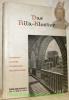
80 S/W Photographien, Pour un paiement via PayPal, veuillez nous en faire la demande et nous vous enverrons une facture PayPal
Les H.L.M.. Cadre administratif et juridique des organismes. Activité immobilière des organismes. Location et accession à la propriété. Immeubles collectifs et pavillons
Éditions de l'Actualité juridique 1965 In-8 reliure éditeur pleine toile. 24,5 cm sur 16,4. 743 pages. Bon état d’occasion.
2e édition entièrement refondue et augmentée Bon état d’occasion
Dubrovnik - Ragusa
Wien, Verlag von Anton Schroll & Co., coll. « Bau und Kunstdenkmale in Dalmatien, V » 1927 In-folio 41 x 31 cm. En feuillets, sous chemise carton à rabats, dos toile beige, titre en rouge sur le premier plat, 11 ff., 41 planches. Chemise ternie, intérieur frais, bien complet des planches.
Texte en allemand. Bon état d’occasion
Sibenik - Sibenico
Wien, Verlag von Anton Schroll & Co., coll. « Bau und Kunstdenkmale in Dalmatien, II » 1927 In-folio 41 x 31 cm. En feuillets, sous chemise carton à rabats, dos toile beige, titre en rouge sur le premier plat, 11 ff., 42 sur 43 planches [manque pl. 13]. Chemise ternie, intérieur frais.
Texte en allemand. Bon état d’occasion
Zara
Wien, Verlag von Anton Schroll & Co., coll. « Bau und Kunstdenkmale in Dalmatien, I » 1927 In-folio 41 x 31 cm. En feuillets, sous chemise carton à rabats, dos toile beige, titre en rouge sur le premier plat, 17 ff., 67 sur 69 planches [manque pl. 50 & 55]. Chemise ternie, intérieur frais.
Texte en allemand. Bon état d’occasion
DICTIONNAIRE DU PATRIMOINE BRETON.
2000 . DICTIONNAIRE DU PATRIMOINE BRETON. Apogée, 2000, in4° relié, jaquette illustrée, 1103 pp. Abondantes illustrations. Bien complet du CD joint.
Notice sur les travaux publics en Hollande. Atlas seul.
Paris Dunod 1874 Un volume in-folio demi basane verte, XXVIII planches dépliantes. Manques aux coiffes, intérieur frais.
La librairie est ouverte du mardi au samedi de 9h30 à 12h30 et de 13h30 à 19h00. Commandes par courriel ou téléphone. Envoi rapide, emballage soigné.


Compagnie d'Ostende : un exemple d' nergie nationale
, Bruxelles : G. Van Oest et Cie , 1919, cartonnage illustre de l'editeur, 104 pages, 12x19cm bon etat.
Oostende Compagnie
Uniek en meervoudig : Johan van Loon, Piet Stockmans, Jan van der Vaart = Unique and multiple : Johan van Loon, Piet Stockmans, Jan van der Vaart
, Stedelijk Museum / Museum voor Moderne Kunst , 1991 Oorspronkelijk uitgevers omslag, 24 pag. text NL/ENG. ISBN 9050060609.
Tentoonstellingscatalogus Uniek en meervoudig : Johan van Loon, Piet Stockmans, Jan van der Vaart = Unique and multiple : Johan van Loon, Piet Stockmans, Jan van der Vaart
Stedelijk Museum Amsterdam: Peter Blake
Amsterdam, Stedelijk Museum Amsterdam, 1973 Original wrappers, illustrations in colour and b/w, pages not numbered. NL. *Fine condition.
Stedelijk Museum Amsterdam: Peter Blake
Almanach voor heden en morgen ende daer op vermaekelyke uyt-leggingen met geestelyke bemerkingen: voor een nieuw-jaer vereert aen een ider
Antwerpen :, Joannes Godefridus J. de Roveroy, 1664 ? origineel lederen band destijds met blindrukmotieven. 305 pagina's, .
Almanach voor heden en morgen [...] met geestelyke bemerkingen: voor een nieuw-jaer / Petrus Croon. - Antwerpen, 1644?
L'ART ITALIEN. De la Renaissance à 1905.
Citadelles & Mazenod Paris 1998 Fort in-4 carré ( 320 X 255 mm ) de 616 pages, pleine toile sous jaquette illustrée en couleurs et étui maroquiné taupe. Superbe et abondante iconographie en couleurs et en noir dans et hors-texte. Très bel exemplaire en parfait état.
Citadelles d'azur - Quatre siècles d'architecture militaire varoise
Edisud 1998 159 pages Petit In-4. 1998. cartonné. 159 pages. Illustrations en noir et en couleurs
Très bon état
L'Abbaye royale de Saint-Denis.
Paris Paul Hartmann 1953 1 vol. relié in-4, cartonnage éditeur crème, jaquette illustrée, 191 pp., 25 fig. in-texte et 130 photographies à pleine page de Pierre Devinoy. Exemplaire provenant de la bibliothèque de Georges Bataille avec tampon à l'encre noire sur le premier feuillet "Bibliothèque de Georges Bataille". Manques de papier à la jaquette.
ICONOGRAPHIE CHRETIENNE ou étude des sculptures, peintures, etc., qu'on rencontre sur les monuments religieux du Moyen-Age.
Alfred Mame Et Fils Paris 1876 In-8 ( 220 X 140 mm ) de XII-420 pages, broché sous couverture imprimée. Couverture tâchée, rousseurs sans gravité, bon exemplaire non coupé.
La Société des Arts et ses collections. Avant-propos de M. L. de Candolle, président de la Société.
Genève, "Nos Anciens et leurs Oeuvres", 1910, in-4 (270 x 355 mm), VIII-303 pp., (1) f. blc., nombreuses ill. n/b in-texte, 31 planches n/b et 2 planches supplémentaires non répertoriées dans l'index, broché sous couvertures illustrées, dos avec plis, haut de la charnière : recollée, première de couverture avec traces d'usage, première et deuxième de couverture brunies, 2 inscriptions à l'encre sur premier feuillet blanc, intérieur frais.
L'Egypte d'un architecte : Ambroise Baudry 1838-1906
Somogy 1998 In-4 relié 27,5 cm. Très bon état d’occasion.
Très bon état d’occasion
L'Egypte d'un architecte. Ambroise Baudry 1838 - 1906
Somogy Somogy, 1999. In-4 carré broché, couverture illustrée rempliée de 167 Pages illustrées. Bon état
Toutes les expéditions sont faites en suivi au-dessus de 25 euros. Expédition quotidienne pour les envois simples, suivis, recommandés ou Colissimo.
Victor Laloux - L'architecte de la gare d'Orsay
Editions de la Réunion des musées nationaux, Paris, 1987. In-4, broché sous couverture illustrée en couleur, 92 pp. Introduction - Les années d'apprentissage - L'architecture religieuse : Saint-Martin de Tours - L'architecture ferroviaire - Les hôtels de ville - L'architecture bancaire : l'achèvement du Siège central du Crédit lyonnais - Monuments et tombeaux - L'architecture privée - Victor ...
Nombreuses illustrations en noir et blanc in texte. --- Plus d'informations sur le site archivesdunord.com
Phone number : 01 42 73 13 41
Les cent plus beaux hôtels particuliers de France
Pélican / Vilo 2002 un volume in-4°, 199 pp. Reliure éditeur à la Bradel, jaquette illustrée. (plats légèrement salis). Nombreuses photographies en couleurs.
Les Belles églises du Québec : Montréal
Ville Saint-Laurent Trécarré 1996
in-4 bien illustré couleurs, 222p. Cartonnage de l'éditeur, jaquette illustrée couleurs. :: Bon état.
Les Îles du Saint-Laurent
sans lieu Henri Rivard éditeur 1995 In-4 illustré de planches en noir et en couleurs (18 reproductions contrecollées), 264p. Cartonnage de l’éditeur avec une estampe dans une cuvette sur le plat supérieur.
:: Édition de luxe réservée au Club Rorary de Laval. Tirage à 3000 exemplaires numérotés (no 2893). Préface de Gilles Pelletier. Bel exemplaire dans son coffret de présentation. AVEC l'affiche promotionnelle.

