 Write to the booksellers
-
Type
Any type (2)
Art print (7)
Book (32443)
Disk (1)
Drawings (7)
Engraving (9)
Magazine (126)
Old papers (1)
Photographs (14)
Posters (4)
-
Latest
Last 24h (14)
Last 3 days (245)
Last month (578)
Last week (152)
-
Language
Dutch (1)
English (55)
French (32513)
German (6)
Italian (17)
Japanese (2)
Portuguese (9)
Spanish (11)
-
Century
16th (16)
17th (52)
18th (212)
19th (1573)
20th (9491)
21st (1727)
-
Countries
Belgium (10114)
Brazil (7)
Canada (108)
China (3)
Côte d'Ivoire (131)
Denmark (213)
France (18952)
Germany (1)
Greece (1)
Italy (36)
Switzerland (3048)
-
Syndicate
ALAC (99)
CLAM (43)
CLAQ (94)
CNE (3)
ILAB (10685)
NVVA (1153)
SLACES (1153)
SLAM (8173)
SNCAO (9)
PANORAMIQUES : 5 CHEFS D'OEUVRE DE L'ARCHITECTURE MONDIALE
FRANCE LOISIRS / SOLAR. VERS 1997. In-4. Relié. Bon état, Couv. convenable, Dos satisfaisant, Intérieur frais. 79 pages. Nombreuses photos, illustrations et quelques dessins en couleurs et noir et blanc, dans le texte.. . . . Classification Dewey : 720-Architecture
Classification Dewey : 720-Architecture

[Ecole Nationale des Ponts et Chaussées] - COQUAND, M. ( COQUAND, Roger, 1906-2001 ) ; Ecole Nationale des Ponts et Chaussées
Reference : 47824
(1955)
Cours de Routes ( 1955-1956 )
1 vol. petit in-folio rel. demi-percaline verte, ill. noir et blanc, Ecole Nationale des Ponts et Chaussées, 1955, 238 pp.
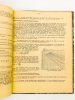
Bon état (ex libris ms., très bon état par ailleurs). Poids de 1,1 Kg.
Les capitales de cité des provinces de Belgique et de Germanie. Etude urbanistique
Louvain-la-Neuve, UCL Presse Universitaires 2011 366pp., avec qqs. illustrations dans le texte, 30cm., br.orig., dans la série "Publications d'histoire de l'art et d'archéologie de l'Université Catholique de Louvain" volume CIII, très bon état, B93328
Album des objets mobiliers artistiques classés de Seine-et-Oise.. D'après les photographies de MM. Martin-Sabon, P. Coquelle, le baron Burthe d'Annelet et Bourdier. Précédé d'une introduction par M. Alf. Paisant et d'un texte explicatif
Paris, Picard et Fils, 1910 in-8, VIII-23 pp., 96 planches, broché. Dos fendillé.
- - VENTE PAR CORRESPONDANCE UNIQUEMENT - LIEN DE PAIEMENT, NOUS CONSULTER.
Commission des antiquités et des arts de Seine-et-Oise. Monographie de l'église de Maule.
Versailles, Imprimeries Cerf, 1905 in-8, 35 pp., avec un plan dans le texte, et deux clichés photographiques d'époque insérés (la nef ; la crypte), broché. Dos renforcé.
- - VENTE PAR CORRESPONDANCE UNIQUEMENT - LIEN DE PAIEMENT, NOUS CONSULTER.
La boutique et la ville. Commerces, commerçants, espaces et clientèles. XVIème - XXème siècle. Actes du colloque des 2, 3 et 4 décembre 1999 organisé par l'université François Rabelais, Tours.
2000 Editions CEHVI (Centre d'Histoire de la ville moderne et contemporaine), Publication de l'université François Rabelais, tours, en collaboration avec l'IDHE, la Chambre de commerce et d'industrie d'Indre-et-Loire, avec le soutien du Conseil général d'Indre-et-Loire - 2000 - In-8, broché, couverture illustrée en couleurs - 505 p. - Quelques illustrations en N&B in et hors-texte
Bon état - Couverture légèrement insolée - Coins très légèrement émoussés Bon
Concours Rougevin : Un plafond pour une salle d'opéra. Planche extraite de la publication mensuelle Croquis d'architecture, Intime-club.
- Planche autographiée. 35 x 55 cm.
Vieux papier. Croquis d'architecture, Juillet 1866.
Les édifices religieux du Haut Moyen Age à l'abbaye de Ligugé. Ve et Vie siècles 690 et 1003 [ Avec : ] Les édifices religieux du Haut Moyen Age à l'abbaye de Ligugé. Planches. Extrait de la Revue Mabillon avril-mai-juin 1955 [ Avec : ] L'intérêt des fouilles de Ligugé
3 vol. in-8 br., Abbaye Saint Martin de Ligugé, 80 pp. et 2 pl. ; Imprimerie AUbin, 19 planches ; Société des Amis du Vieux Ligugé, 16 pp. Titre complet : Les édifices religieux du Haut Moyen Age à l'abbaye de Ligugé. Ve et Vie siècles 690 et 1003 [ Avec : ] Les édifices religieux du Haut Moyen Age à l'abbaye de Ligugé. Planches. Extrait de la Revue Mabillon avril-mai-juin 1955 [ Avec : ] L'intérêt des fouilles de Ligugé
![Les édifices religieux du Haut Moyen Age à l'abbaye de Ligugé. Ve et Vie siècles 690 et 1003 [ Avec : ] Les édifices religieux du Haut Moyen Age à ...](https://static.livre-rare-book.com/pictures/CDL/61061_thumb.jpg)
![Les édifices religieux du Haut Moyen Age à l'abbaye de Ligugé. Ve et Vie siècles 690 et 1003 [ Avec : ] Les édifices religieux du Haut Moyen Age à ...](https://static.livre-rare-book.com/pictures/CDL/61061_2_thumb.jpg)
![Les édifices religieux du Haut Moyen Age à l'abbaye de Ligugé. Ve et Vie siècles 690 et 1003 [ Avec : ] Les édifices religieux du Haut Moyen Age à ...](https://static.livre-rare-book.com/pictures/CDL/61061_3_thumb.jpg)
Bon ensemble.
L'INTERET DES FOUILLES DE LIGUGE
Société des Amis du Vieux Ligugé. 1978. In-8. Broché. Bon état, Couv. légèrement passée, Dos satisfaisant, Intérieur frais. Plaquette de 20 pages, illustrée de nombreux plans et photos en noir et blanc hors texte, dont 1 planche dépliable. Quelques rousseurs sur la couverture.. . . . Classification Dewey : 720-Architecture
Edition revue. Classification Dewey : 720-Architecture
Les edifices Religieux du Haut-Moyen-Age à l'abbaye de Ligugé - V & VI siècles - 690 & 1003 - l' Ere PréromaneDécouvertes Archéologiques à l'Abbaye de ligugé - un "Martyrium" Martinien?Les edifices Religieux du Haut-Moyen-Age à l'abbaye de Ligugé - Planches - Soit 3 fascicules
Abbaye ST-MARTIN-DE-LIGUGE, 1955 - In-8 Broché - 83 pages - 2 planches HT - PropreAbbaye ST-MARTIN-DE-LIGUGE, 1954 - In-8 Broché - 83 pages - 7 planches HT - PropreLIGUGE, imp. Aubin - Sans date - XIX Planches, czrtaines épliantes - Bel ensemble - Envoi rapide et soigné
Conformément à nos conditions générales de vente :Les frais de port sont affichés à titre indicatif. Il se peut que nous devions vous contacter pour vous informer du coût de laffranchissement supplémentaire en fonction du poids et du nombre de livres, surtout pour les envois internationaux Cependant vu l'augmentation des tarifs postaux à l'internationale, nous pouvons expédier les ouvrages en point relais MONDIAL RELAY pour les pays suivants : Allemagne, Autriche, Belgique, Espagne, Italie, Luxembourg, Pays-Bas, Pologne, et Portugal. Merci de nous indiquer en retour le point relais choisi ainsi que votre numéro de téléphone mobile & adresse Courriel pour assurer le suivi du colis.N'hésitez pas à nous interroger.In accordance with our general terms and conditions of sale:Shipping costs are displayed for informational purposes only. We may need to contact you to inform you of the additional postage costs depending on the weight and number of books, especially for international shipments.However, given the increase in international postal rates, we can ship books via Mondial Relay to the following countries: Germany, Austria, Belgium, Spain, Italy, Luxembourg, Netherlands, Poland, and Portugal. Please provide us with your chosen Mondial Relay point, as well as your mobile phone number and email address to ensure package tracking.Please feel free to contact us with any questions
Les edifices Religieux du Haut-Moyen-Age à l'abbaye de Ligugé - V & VI siècles - 690 & 1003 - l' Ere Préromane
Abbaye ST-MARTIN-DE-LIGUGE, 1955 - In-8 Broché - 83 pages - 2 planches HT - Propre
Conformément à nos conditions générales de vente :Les frais de port sont affichés à titre indicatif. Il se peut que nous devions vous contacter pour vous informer du coût de laffranchissement supplémentaire en fonction du poids et du nombre de livres, surtout pour les envois internationaux Cependant vu l'augmentation des tarifs postaux à l'internationale, nous pouvons expédier les ouvrages en point relais MONDIAL RELAY pour les pays suivants : Allemagne, Autriche, Belgique, Espagne, Italie, Luxembourg, Pays-Bas, Pologne, et Portugal. Merci de nous indiquer en retour le point relais choisi ainsi que votre numéro de téléphone mobile & adresse Courriel pour assurer le suivi du colis.N'hésitez pas à nous interroger.In accordance with our general terms and conditions of sale:Shipping costs are displayed for informational purposes only. We may need to contact you to inform you of the additional postage costs depending on the weight and number of books, especially for international shipments.However, given the increase in international postal rates, we can ship books via Mondial Relay to the following countries: Germany, Austria, Belgium, Spain, Italy, Luxembourg, Netherlands, Poland, and Portugal. Please provide us with your chosen Mondial Relay point, as well as your mobile phone number and email address to ensure package tracking.Please feel free to contact us with any questions
Petite Histoire Du bois de Boulogne
Albin Michel In-4°, broché, belle couverture sobre brique, 280 pages, bel exemplaire, abondamment enrichi de photographies à pleine page.L'Ensemble est en très bonne condition et la pagination, fanée, n'est pas épidermée.
Histoire générale du bois jusqu"en 1852, le Château Royal de Madrid, le Ranelagh, les duels au Bois de Boulogne, les Attractions... Bon Etat Franco de port France jusqu'à 29 euros iclus. PAYPAL immédiat. MONDIAL RELAY pour : FRANCE, Portugal, Pologne, Espagne, Allemagne, Autriche, Pays Bas, Luxembourg, Italie, Belgique. Toutes les étapes sont accompagnées. Achat, estimations et listages (Papiers, Archives, monographies, arts et métiers, sciences humaines et bibliophilie) France / Suisse (sur rdv).
Trente années de photogrammétrie architecturale au Ministère des Travaux Publics (1955-1985).
Bruxelles, Ministère des Travaux Publics, Service Topographie et Photogrammétrie, 1988. 30 x 21, 247 pp., nombreuses figures et croquis, broché, très bon état (1 cachet d'ex-propriétaire).
ANTON CORBIJN. IKONEN
, Hannibal Books, 2022 HB, 340 x 240 mm, 144 pages, ENG - NL edition. Fine. ISBN 9789464366815.
In IKONEN presenteert topfotograaf en regisseur/filmmaker Anton Corbijn bijzonder beeldmateriaal over iconen en hoe die worden herdacht. De monografie bevat onder andere Corbijns serie Cemeteries, een intrigerende reeks foto's van grafstenen, en a.somebody, een verzameling zelfportretten naar overleden grootheden uit de muziekwereld gefotografeerd in Corbijns geboortedorp Strijen. Daarnaast toont IKONEN een nog niet eerder gepubli ceerde serie over Lenins visuele aanwezigheid in de USSR uit de vroege jaren '80. Herdenking, beeltenissen en iconische figuren vormen de centrale spil van Corbijns nieuwste uitgave. Publicatie bij de gelijknamige tentoonstelling van 30 september 2022 tot 26 februari 2023 in Landgoed Het Hof in Bergen, Nederland. ***** Previously unpublished work on commemoration, effigies and iconic figures by master photographer Anton Corbijn Master photographer and director/filmmaker Anton Corbijn presents in his latest publication a series of striking images focusing on icons and how they are commemorated. IKONEN contains three series: Cemeteries, a.somebody and Lenin, USSR. Cemeteries is an intriguing collection of black-and-white photos of gravestones. In a.somebody, we can see dozens of self-portraits after past legends from the world of music, photographed in Strijen, the village of Corbijn?s birth ? outdoors and in his studio. The book also shows previously unpublished series on Lenin?s visual presence in the former USSR from the early 1980s. Publication to accompany the eponymous exhibition, from 30 September 2022 to 26 February 2023 in Landgoed Het Hof in Bergen, The Netherlands. With a preface by Anton Corbijn and a text contribution by art writer Dominic Eichler.
Corbijn, Anton Fotografie
, hannibal books, 2025 hardcover, 34 x 25,5 cm 560 pagina's + boekje van 40 pagina's met NL captions en teksten + poster Linnen hardcover met stofwikkel, Quadrichromie, Nederlandstalige editie . ISBN 9789493416024.
*** Elke editie wordt geleverd met een gratis, exclusieve POSTER - dubbelzijdig en vormgegeven door M/M (Paris) Ultiem overzichtswerk van fotograaf en filmmaker Anton Corbijn met beelden van de jaren zeventig tot nu Anton Corbijn (1955) is een van de belangrijkste hedendaagse fotografen en regisseurs. Hij is niet alleen bekend om zijn iconische portretten van muzikanten, acteurs en kunstenaars, maar ook om zijn opmerkelijke muziekvideo?s, albumcovers en films. Dit monumentale fotoboek is een eerbetoon aan Corbijns oeuvre en een ode aan zijn liefde voor de kunst, die resulteerde in vriendschappen met Bono, Nick Cave, Tom Waits, Michael Stipe, Dave Gahan en vele anderen. Corbijn, Anton blikt terug op zijn vijftigjarige carri re en bevat honderden verrassende en onconventionele foto?s die Corbijn grotendeels kon maken dankzij zijn vertrouwensrelatie met de geportretteerden. Met teksten van Adam Clayton, Anton Corbijn, Marlene Dumas, Johan Faes, Samantha Morton en Tom Waits. In het Engelstalige boek zitten een poster en een apart boekje met alle Nederlandse vertalingen. Deze publicatie verschijnt naar aanleiding van een retrospectieve tentoonstelling in Fotografiska Stockholm van 13 juni 2025 tot 12 oktober 2025. De expo reist daarna naar Fotografiska Berlin, Tallinn en Shanghai.
Corbijn, Anton Photographie
, hannibal books, 2025 30 x 24,3 cm/ 560 pages + booklet with captions (8 pages) + poster / Hardcover with jacket Quadrichromy / English edition. new . ISBN 9789464941609.
*** Each copy includes a free, exclusive POSTER - double-sided and designed by M/M (Paris) The ultimate showcase of photographer and filmmaker Anton Corbijn?s iconic work, spanning from the 1970s to today ?He?s been behind the camera forever. A friend of the light. Does he have a pact with the heavens? Do they tell him secrets? The language of light? He somehow travels on the same frequency. Respectfully engaging with the source.? ? Samantha Morton ?Most portraitists kill their subjects. He keeps them alive. He doesn?t want to freeze you in time. He?s made portraiture sexy again, but not stupid. Vulnerable but never weak.? ? Marlene Dumas Anton Corbijn (b. 1955) is one of the most important photographers and directors working today, renowned for his iconic portraits of musicians, actors, and artists, as well as his distinctive visual work in music videos and album covers. This gloriously illustrated, oversized book pays homage to Corbijn?s love for the arts ? an interest that has led to lifelong friendships with Bono, Nick Cave, Tom Waits, Michael Stipe, Dave Gahan, and other iconic musicians. Looking back over five decades, it features hundreds of creative, offbeat images that Corbijn was able to capture largely as a result of his close relationships with his subjects. Corbijn, Anton highlights and rediscovers iconic images, celebrating his legacy and lasting influence on visual art and pop culture to this day. With text contributions by Adam Clayton (U2), Anton Corbijn, Marlene Dumas, Johan Faes, Samantha Morton and Tom Waits. This publication accompanies a grand retrospective exhibition at Fotografiska Stockholm, from 13 June until 12 October 2025. The exhibition will be traveling to Fotografiska Berlin, Tallinn and Shanghai.
Corbijn, Anton photographie
, hannibal books, 2025 30 x 24,3 cm/ 560 pages + livret avec l gendes (8 pages) + affiche / Couverture rigide avec jaquette Quadrichromie / dition fran aise. Neuf . ISBN 9789493416345.
*** Chaque exemplaire comprend un POSTER gratuit et exclusif, recto-verso, con u par M/M (Paris). La vitrine ultime du travail embl matique du photographe et cin aste Anton Corbijn, des ann es 1970 aujourd'hui. Il est derri re l'objectif depuis toujours. Un ami de la lumi re. A-t-il conclu un pacte avec les cieux ? Lui r v lent-ils leurs secrets ? Le langage de la lumi re ? D'une mani re ou d'une autre, il voyage sur la m me fr quence. Il interagit respectueusement avec la source. ? Samantha Morton La plupart des portraitistes tuent leurs sujets. Lui, il les maintient en vie. Il ne veut pas vous figer dans le temps. Il a rendu le portrait sexy nouveau, mais pas stupide. Vuln rable, mais jamais faible. Marlene Dumas Anton Corbijn (n en 1955) est l'un des photographes et r alisateurs les plus importants d'aujourd'hui, r put pour ses portraits embl matiques de musiciens, d'acteurs et d'artistes, ainsi que pour son travail visuel distinctif dans les clips musicaux et les pochettes d'albums. Ce livre grand format magnifiquement illustr rend hommage l'amour de Corbijn pour les arts, un int r t qui l'a conduit nouer des amiti s durables avec Bono, Nick Cave, Tom Waits, Michael Stipe, Dave Gahan et d'autres musiciens embl matiques. Retra ant cinq d cennies, il pr sente des centaines d'images cr atives et d cal es que Corbijn a pu capturer en grande partie gr ce ses relations troites avec ses sujets. Corbijn, Anton met en lumi re et red couvre des images embl matiques, c l brant son h ritage et son influence durable sur les arts visuels et la culture pop jusqu' aujourd'hui.
HAUT MOYEN AGE. ARCHITECTURE UNIVERSELLE
OFFICE DU LIVRE. 1970. In-8. 192 pages augmentées de nombreuses photos en noir et blanc dans et hors texte.
Livre en tres bon etat, interieur frais et complet. Un excellent exemplaire quasi neuf
HAUT MOYEN AGE. ARCHITECTURE UNIVERSELLE
OFFICE DU LIVRE. 1970. In-8. Relié. Etat du neuf, Couv. remarquable, Dos impeccable, Intérieur frais. 192 pages augmentées de nombreuses photos en noir et blanc dans et hors texte.. . . . Classification Dewey : 720-Architecture
Classification Dewey : 720-Architecture
Frühes Mittelalter. ‘Architektur der Welt’.
Fribourg, Office du Livre, 1971, in-8vo, 192 S., reich illustriert mit Fotogr. Abb. in Kupfertiefdruck (Fotogr. vom Autor) und Zeichnungen, HLdr (weiss), Original ill. Pappe. (Erstausgabe).

(SLACES, NVVA)
Phone number : 41 (0)26 3223808
Haut Moyen age
Office du livre. 1970. In-8. Cartonné. Bon état, Couv. convenable, Dos satisfaisant, Intérieur frais. 192 pages. Nombreux schémas et clichés en noir et blanc, in et hors texte.. . . A l'italienne. Classification Dewey : 720-Architecture
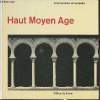
"Collection ""Architecture universelle"". Photos par l'auteur. Classification Dewey : 720-Architecture"
HAUT MOYEN AGE
Fribourg Office du Livre 1970 in 8 carré (21x21) 1 volume broché, couverture illustrée en couleurs, 192 pages, avec de nombreuses illustrations en noir et blanc, dont plans, coupes et élévations. Collection "Architecture Universelle". Bel exemplaire ( Photographies sur demande / We can send pictures of this book on simple request )
Très bon
Haut Moyen Age.
Coll. "Architecture Universelle", Fribourg, Office du Livre, 1970, pt. in-4 carré, br., couv. photo coul. éd., 192 pp., texte sur deux colonnes, très nb. dessins, plans et photos en noir, Tableau chronologique, Bibliographie, Table des matières, Remarquable étude sur l'architecture religieux du Haut Moyen Age en France et en Europe. Très bon état
"Haut Moyen Age - ""Architecture universelle"""
Office du Livre. 1970. In-8. Broché. Bon état, Couv. convenable, Dos satisfaisant, Intérieur frais. 192 pages - nombreuses photos et illustrations en noir et blanc dans et hors texte.. . . . Classification Dewey : 720-Architecture
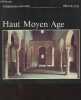
Classification Dewey : 720-Architecture
Haut Moyen Age. ‘Architecture universelle’.
Fribourg, Office du Livre, 1970, gr. in-8vo, 192 p., richement ill., avec des photogr. tirées en héliogravures, cartonnage original blanc ill., dos en cuir blanc.
(SLACES, NVVA)
Phone number : 41 (0)26 3223808

