 Write to the booksellers
-
Type
Any type (1)
Art print (7)
Autograph (1)
Book (32231)
Disk (1)
Drawings (264)
Engraving (11)
Magazine (125)
Old papers (1)
Photographs (15)
Posters (1)
-
Latest
Last 24h (2)
Last 3 days (17)
Last month (480)
Last week (12)
-
Language
Dutch (78)
English (56)
French (32480)
German (6)
Italian (18)
Portuguese (9)
Spanish (11)
-
Century
16th (14)
17th (46)
18th (199)
19th (1527)
20th (9441)
21st (1684)
-
Countries
Belgium (10932)
Brazil (6)
Canada (116)
China (1)
Côte d'Ivoire (139)
Denmark (209)
France (18157)
Germany (1)
Greece (1)
Switzerland (3096)
-
Syndicate
ALAC (107)
CLAM (143)
CLAQ (102)
CNE (3)
ILAB (10476)
NVVA (1145)
SLACES (1145)
SLAM (7872)
SNCAO (10)
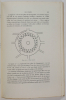
Précis d'urbanisme moderne
Paris, Dunod, 1934. 615 g In-8 broché, [2] ff., 239 pp., 149 figures in-texte.. Peu courant. . (Catégories : Architecture, Urbanisme, )
Raymond Loewy Design industriel.
, Chene / Hachette, 1979 Couverture reliee sous jaquette,250 pages, 28x28cm. Texte en Francais, avec 700 Illustrations en couleurs en noir & blanc nombreuses illustrations dans et hors texte - Bon etat. ISBN 9782851082565.
S'il est un designer dont le nom est synonyme de design industriel, c'est bien Raymond Loewy (1893-1986). Ce que Charles et Ray Eames sont pour le design mobilier, Raymond Loewy l'est pour le design industriel - le ma tre moderne. Parmi les milliers de formes et de dessins connus de Raymond Loewy figurent la bouteille de Coca-Cola, la Studebaker, le logo de la poste am ricaine, les trains et les paquebots a rodynamiques, les logos de Shell et d'Exxon, et l'emballage de Lucky Strike. Dans Industrial Design, le demi-si cle pionnier de la carri re de Loewy est pr sent dans une tonnante pr sentation visuelle de ses r alisations les plus c l bres, ainsi que dans son r cit personnel d'une vie consacr e au design. l'heure o le design moderne du milieu du si cle conna t une r surgence incroyable, ce livre est une r f rence cl pour ce look.
Raymond Lucotte-Henri Louis Duhamel du Monceau, Fourcroy & Gallon-Fougeroux de Bondaroy-Jars-
Reference : 441
Descriptions des arts et métiers faites ou approuvées par messieurs de l'Académie Royale des Sciences. -L'Art de la maçonnerie -L'Art du tuilier et du briquetier. -Art de tirer des carrières la pierre d'ardoise, de la fendre et de la tailler -Art du couvreur -
Recueil de 4 volumes: Raymond Lucotte L'Art de la maçonnerie Paris, Moutard, 1783 38 pages de texte + 18 planches Habitations anciennes, moderne, outils, engins ... Mouillure marginale sur les feuillets de texte. 2. Henri Louis Duhamel, Fourcroy & Gallon L'Art du tuilier et du briquetier. Paris, L.F. Delatour, 1768 67 pages de textes , 9 planches + 11 pages sur l' art de fabriquer la brique et la tuile en Hollande, et de les faire cuire avec la tourbe par M. Jars 3. M.Fougeroux de Bondaroy Art de tirer des carrières la pierre d'ardoise, de la fendre et de la tailler. Sans lieux, ni nom d'éditeur, ni date (1762 ?) iv +65 pages de textes + 4 planches 4. Henri Louis Duhamel du Monceau Art du couvreur Paris, 1766, L.F.Delatour 56 pages + 4 planches 1 volume, in folio (44x29,5 cm). Plein veau marbré, dos lisse richement orné, trois tranches marbrées Ex libris manuscrits Rousseurs sur une page du titre. Feuillets brunis Coins frottés, épidermures et petits manques de cuir sur les plats
Plus de photos sur :www.ebay.fr/itm/327221940710
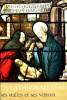
LA CATHEDRALE D'AUCH. SES STALLES ET SES VITRAUX
RAYMOND MONTANE. 4 AOUT 1975. In-12. Broché. Bon état, Couv. convenable, Agraffes rouillées, Intérieur frais. 83 pages. Nombreuses photos en noir et blanc et en couleurs hors texte.. . . . Classification Dewey : 720-Architecture
Classification Dewey : 720-Architecture
BOURGOGNE ROMANE
1722 Reliure éditeur avec jaquette sous emboitage - 17 x 22 - 252 pp - année 1974 - Collection La Nuit des Temps n° 1 - 6 ème éditions - Editions Zodiaque - illustrations
ANTHROLOGIE HISTOIR PHILOSOPHIE LITTERATURE PARADES
FLORAISON DE LA SCULPTURE ROMANE I ( tome 1 ) Les grandes découvertes
1973 Zodiaque, La Pierre qui vire, 1973. Tome 1. Collection "Introduction à La Nuit des temps" N°7. 1° édition. 416p. f.pt.in-4 (177mm x 224mm) 972g. Très nombreuses photos en noir et blanc et couleurs, dessins, plans, cartes. Intérieur comme neuf. Reliure rigide toile, dos lisse avec titrage gaufré et jaquette illustrée en couleurs,
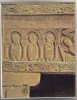
L'ouvrage dresse un panorama très complet de la sculpture romane en Bourgogne. "Deux volumes [étaient] nécessaires pour réaliser un tel dessein ; deux volumes, mais surtout le talent d'un homme qui n'est pas seulement un "spécialiste" en art et en histoire, mais qui a plus encore cette connivence secrète et essentielle avec l'art roman et l'époque romane qui lui permet de dépasser les froides données de l'analyse et de tenter l'indispensable et toujours périlleuse synthèse, ici plus nécessaire que jamais" Remise de 20% pour toutes commandes supérieures à 200 €
Haut-Poitou Roman
Editions ZODIAQUE - La Nuit des Temps N° 42 - 1975 - Petit in-4 - Cartonnage éditeur, sous jaquette illustrée en couleurs(flétrie) - Nombreuses photographies - 437pages - Ex-libris manuscrit - Très frais intérieurement Bon exemplaire
Cnformément à nos conditions générales de vente :Les frais de port sont affichés à titre indicatif. Il se peut que nous devions vous contacter pour vous informer du coût de laffranchissement supplémentaire en fonction du poids et du nombre de livres, surtout pour les envois internationaux Cependant vu l'augmentation des tarifs postaux à l'internationale, nous pouvons expédier les ouvrages en point relais MONDIAL RELAY pour les pays suivants : Allemagne, Autriche, Belgique, Espagne, Italie, Luxembourg, Pays-Bas, Pologne, et Portugal. Merci de nous indiquer en retour le point relais choisi ainsi que votre numéro de téléphone mobile & adresse Courriel pour assurer le suivi du colis.N'hésitez pas à nous interroger.In accordance with our general terms and conditions of sale:Shipping costs are displayed for informational purposes only. We may need to contact you to inform you of the additional postage costs depending on the weight and number of books, especially for international shipments.However, given the increase in international postal rates, we can ship books via Mondial Relay to the following countries: Germany, Austria, Belgium, Spain, Italy, Luxembourg, Netherlands, Poland, and Portugal. Please provide us with your chosen Mondial Relay point, as well as your mobile phone number and email address to ensure package tracking.Please feel free to contact us with any questions
INVENTION DE L'ARCHITECTURE ROMANE
ZODIAQUE . COLLECTION INTRODUCTION LA NUIT DES TEMPS N°6 .1970 .
BON ETAT . AVEC SA JAQUETTE ILLUSTREE .
INVENTION DE L'ARCHITECTURE ROMANE.
1970 / 461 pages. Relié sans jaquette. Editions Zodiaque.
Sans jaquette. Bon état. A VOIR NOS AUTRES REFERENCES : REGIONALISME / Editions Zodiaque
ITINERAIRES ROMANS EN BOURGOGNE
reliure éditeur - 22x26 - 102pp - 3 éme édition ZODIAQUE- 1988.
ANTHROLOGIE HISTOIR PHILOSOPHIE LITTERATURE PARADES
Religieuze thematiek in de belgische kunst 1875-1985
, Gemeentekrediet, 1986 Softcover, 240 pagina's, 21 x 21 cm, NL. *Goede staat.
16 januari - 23 maart 1986, Galerij ASLK
Gens de Luxembourg
, Reuter, 2017 cartonnage illustre de l'editeur; 200 pages, Texte en Francais - Luxembourgeois - Anglais. Format fini : 225x310 mm, Poids 1209 grammes. ISBN 9782959993237.
People of Luxembourg? (actual French title Gens du Luxembourg ) is a book by photographer Raymond Reuter and author Claude Frisoni that tells in images the everyday life of ordinary people in all its simplicity.
L'architecture militaire du Moyen-Age
1974. Paris Éditions Fayard 1974 - Cartonné bien complet de la jaquette 16 cm x 20 cm 204 pages photos noir & blanc in-texte- Texte de Raymond Ritter bibliographie ex-libris manuscrit - Jaquette en état moyen sinon très bon état
Sint-Pauluskerk Antwerpen. Historische gids.
Antwerpen, Raymond Sirjacobs, 1999 Softcover, 206 pagina's, 24 x 16 cm. Met foto's in kleur.
Peintres du XXe si cle.
Gen ve, Skira, 1947 Couverture souple broch , en feuille,folio, 38 pages, 53 planches en couleurs contrecoll es, 39x28cm, *Bel exemplaire.
L'illustration de la couverture a t ex cut e par Andr Beaudin.
Raynaud : archetypes
Arbook International 1985 In-4 reliure éditeur sous jaquette, 125 pp. Illustrations noir & couleurs
Texte en français et anglais Très bon état d’occasion
Subjects from History: The Decius Mus Series, 2 volumes, Corpus Rubenianum 13.2
, Harvey Miller/ brepols, 2019 Hardcover with dusjackets 2 vols; 778 pages ., 161 b/w ill. + 99 colour ill., 180 x 265 mm, Languages: English. fine condition ISBN 9781912554232.
Rubens Decius Mus Cycle is in many ways a first. It provides the earliest example of work for the medium of tapestry, and so illustrates the artist's approach to the challenges presented by a narrative sequence of images. The woven versions, like the corresponding set of six paintings preserved in the collection of the Prince of Liechtenstein since 1692, represent the heroic death of the Roman Consul Decius Mus, following Livy?s account of how he sacrificed himself to the gods to procure victory for Rome. Rubens stages the episodes of this dramatic story with characteristic ingenuity, producing images with a powerful visual impact and narrative force. To recreate Livy's story with Roman authenticity, Rubens drew on a wide range of sources, including not only classical texts but the growing antiquarian literature of his age, as well as archaeological evidence that he had studied in person while in Italy. The Decius Mus Cycle thus forms Rubens?s first large-scale manifestation of the reception of antiquity. At the same time it reveals the inspiration of Italian Renaissance traditions. Begun in 1617, the Decius Mus Cycle belongs to a particularly intense and productive phase of Rubens's career. Many altarpieces and other large-scale compositions were also realised in this period, which made the participation of an extensive workshop essential. Together with the preparatory modelli, the paintings of the Decius Mus Cycle testify to the interaction of master and assistants, providing clearer documentation than was previously available of Rubens?s creative process. Technical examination undertaken specifically for the present volume ? including full-surface analysis using X-ray and infrared reflectography ? has resolved many puzzles and will provide future researchers with a wealth of new information. Review What remains beyond doubt or debate is the enormous value of this two-volume addition to the Corpus Rubenianum and to future Rubens scholarship. It is as heroic as the story and cycle it treats so magisterially: Rubens-worthy! (Charles Scribner III, in Historians of Netherlandish Art, July 2020)
L'Architecture de Djenné Mali la pérennité d'un patrioine mondial.
Snoeck/Gand. 2003. In-4. Relié. Bon état, Couv. convenable, Dos satisfaisant, Intérieur frais. 188 pages - nombreuses photos et nombreux plans en noir et blanc dans et hors texte.. . . . Classification Dewey : 720-Architecture
Classification Dewey : 720-Architecture
Glassammlung des Bayerischen Nationalmuseums M nchen.
M nchen, Hirmer, 1982 Leinen, 2 banden, 372 Seiten, 37 x 26 cm, Deutsch. *Fine. ISBN 9783777434001.
Erste Ausgabe dieser umfassenden Publikation ber die Glassammlung des Bayerischen Nationalmuseums in M nchen mit Best nden vom 13. bis 19. Jahrhundert.
Stadsgezichten, Diest, Halle, Kortrijk, Veurne . Facetten van het bouwkundig erfgoed 1
, Snoeck-Ducaju en Zoon, 1978 Gebonden, Hardcover met stofomslag compleet. 327 pagina's met afbeeldingen.
Reader's Digest" Complete Watercolour Course
, Reader's Digest Association 2002, 2002 Hardcover, 256 pages, English, 290 x 225 mm, fine copy, lots of illustrations, . ISBN 9780276427411.
Learn how to paint trouble-free watercolours with The Complete Watercolour Course. From choosing which materials you should use, and different brushstrokes, to washes and painting skies and water, and introducing gouache and mixed media, The Complete Watercolour Course offers practical lessons on each aspect of this medium, allowing you to build on your skills as you go through the book. The book contains 35 straightforward projects including landscapes, still lifes and figure drawing. Step-by-step illustrations make each project easy to follow, allowing you to build up your skills as you work your way through each project. Expert advice throughout the book helps you to avoid pitfalls, improve your technique and experiment with new effects, while handy trouble-shooter panels will show you how to quickly remedy mistakes. Fully illustrated with colour and black and white illustrations throughout, this is a fantastic course for beginners and slightly more experienced artists alike.
Venise. Collection : Espaces de rêve.
Paris, Gründ, 1996. 25 x 30, 136 pp., très nombreuses illustrations en couleurs, reliure d'édition carton imprimé + jaquette, très bon état.
crepuscule : chefs-d'oeuvre des dernieres dynasties egyptiennes
, Fonds Mercator 2012, 2012 Hardcover, 256 poages, Texte en Francais, 290 x 250 mm, Tres belle exemplaire, beaucoup illustrations et photo's. ISBN 9789061534600.
Publi l'occasion de l'exposition Le Cr puscule des Pharaons. Chefs-d'oeuvre des derni res dynasties gyptiennes, ce catalogue met en lumi re la richesse et la diversit de l'art gyptien au cours du dernier mill naire de l'histoire pharaonique (1069-30 avant notre re). Il r unit plus de cent pi ces exceptionnelles provenant des plus grandes collections internationales d'antiquit s gyptiennes, dont l'Aegyptisches Museum de Berlin, le British Museum, le mus e du Louvre et le Metropolitan Museum of Art. Au cours de ces dix si cles rythm s par des crises politiques et des invasions, l'art gyptien, nourri d'une longue tradition pharaonique, conserve tout son prestige et toute sa force. Servie par une ma trise prouv e de la technique et un go t prononc pour la puret des lignes, la production artistique de cette p riode, qui m le l gance des proportions, d licatesse des formes et sobri t des d tails, se distingue par des r alisations d'une perfection in gal e, tout particuli rement dans le domaine de la statuaire.
Basiliques et sanctuaires d'Italie
Nathan,1950. In-8. Broché. Jaquette illustrée. 195 pages. Riche iconographie hors texte. Jaquette restaurée (invisible). Dos un peu jauni.
Histoire du vandalisme. Les monuments détruits de l'art français. - Tome I : Du Haut Moyen-Age au XIXe siècle. - Tome II : XIXe et XXe siècles.
1959 Paris, Hachette (Bibliothèque des Guides Bleus), 1959, 2 volumes in 4° reliés pleine toile de l'éditeur, 420 et 342 pages ; très importante iconographie.
...................... Photos sur demande ...................


Phone number : 04 77 32 63 69

