 Write to the booksellers
-
Type
Book (493)
Magazine (12)
-
Latest
Last month (1)
Last week (1)
-
Century
18th (5)
19th (30)
20th (296)
21st (37)
-
Countries
Belgium (46)
China (1)
France (451)
Switzerland (7)
-
Syndicate
ILAB (336)
NVVA (5)
SLACES (5)
SLAM (331)
SNCAO (2)
L'EPOPEE CATHARE 1198-1212 : L'INVASION
PRIVAT. 1970. In-4. Relié. Très bon état, Couv. convenable, Dos satisfaisant, Intérieur frais. 595 pages - Rhodoïde - + 2 coupures de presse - Quelques planches en noir et blanc - 2 PHOTOS DISPONIBLES. . . . Classification Dewey : 280-Confessions et sectes chrétiennes
Illustration photographique Christian Soula Classification Dewey : 280-Confessions et sectes chrétiennes

L'épopée cathare : 1198-1212 : L'invasion + 1213-1216 : Muret ou la dépossession
Privat. 1977-78. In-8. Relié. Etat d'usage, Couv. convenable, Dos satisfaisant, Quelques rousseurs. 487 + 595 pages - nombreuses planches photos en noir et blanc hors texte. Jaquettes légèrement déchirées.. Avec Jaquette. . . Classification Dewey : 280-Confessions et sectes chrétiennes
Classification Dewey : 280-Confessions et sectes chrétiennes
L'épopée cathare - 1213-1216 : Muret ou la dépossession
Privat. 1977. In-8. Relié. Bon état, Couv. convenable, Dos satisfaisant, Intérieur frais. 487 pages - nombreuses planches photos en noir et blanc hors texte. Jaquette légèrement déchirée en coiffe de tête.. Avec Jaquette. . . Classification Dewey : 280-Confessions et sectes chrétiennes
Classification Dewey : 280-Confessions et sectes chrétiennes
CITADELLES DU VERTIGE
PRIVAT. 1972. In-4. Broché. Bon état, Couv. convenable, Dos satisfaisant, Intérieur frais. 184 pages - Nombreuses photographies en noir et blanc hors-texte - Nombreuses illustrations en noir et blanc dans le texte - +1 coupure de presse. Avec Jaquette. . . Classification Dewey : 280-Confessions et sectes chrétiennes
10e mille Classification Dewey : 280-Confessions et sectes chrétiennes
"Le manichéisme médiéval - ""Le regard de l'histoire"""
Payot. 1972. In-8. Broché. Etat d'usage, Couv. légèrement passée, Dos plié, Papier jauni. 206 pages. Plats contrepliés en un rabat. Quelques passages soulignés au crayon de papier dans le texte.. . . . Classification Dewey : 280-Confessions et sectes chrétiennes
Classification Dewey : 280-Confessions et sectes chrétiennes
CREATION
TOUR DE GARDE, SOCIETE DE BIBLES ET DE TRACTS. NON DATE. In-12. Cartonné. Etat d'usage, Couv. défraîchie, Dos satisfaisant, Intérieur frais. 362 pages.Nombreuses illustrations en couleur - Legeres salissures sur les contre-plats. Plats et dos defraichis.. . . . Classification Dewey : 280-Confessions et sectes chrétiennes
COPYRIGHT 1927 / OUVRAGE AN ANGLAIS. Classification Dewey : 280-Confessions et sectes chrétiennes
CREATION - LA PREUVE SCRIPTURALE DE LA CREATION DES CHOSES VISIBLES ET INVISIBLES, MONTRANT LE DEVELOPPEMENT DU PLAN DIVIN DEPUIS LE LOGOS JUSQU'A L'ACHEVEMENT DE LA FAMILLE ROYALE DU CIEL ET DE LA REGENERATION DE L'HOMME.
TOUR DE GARDE. NON DATE. In-12. Relié. Bon état, Couv. convenable, Dos satisfaisant, Intérieur frais. 378 pages - nombreuses illustrations en noir et blanc et en couleurs dans et hors texte.. . . . Classification Dewey : 280-Confessions et sectes chrétiennes
TEMOINS DE JEHOVAH. Classification Dewey : 280-Confessions et sectes chrétiennes
LIVE
INTERNATIONAL BIBLE STUDENTS ASSOCIATION - WATCH TOWER BIBLE AND TRACT SOCIETY. NON DATE. In-12. Cartonné. Etat d'usage, Couv. défraîchie, Dos fané, Intérieur frais. 358 pages. Frontispice en noir et blanc - Quelques illustrations en couleur - Legeres salissures sur les contre-plats. Plats et dos defraichis.. . . . Classification Dewey : 280-Confessions et sectes chrétiennes
OUVRAGE EN ANGLAIS. Classification Dewey : 280-Confessions et sectes chrétiennes
VIE
TOUR DE GARDE, SOCIETE DE BIBLES ET DE TRACTS. NON DATE. In-12. Cartonné. Etat d'usage, Couv. défraîchie, Dos fané, Intérieur frais. 349 pages. Frontispice en noir et blanc et couleur - Legeres salissures sur les contre-plats. Plats et dos defraichis.. . . . Classification Dewey : 280-Confessions et sectes chrétiennes
COPYRIGHT 1949 Classification Dewey : 280-Confessions et sectes chrétiennes
Prabhupada : La Vie et l'oeuvre du Fondateur du Mouvement Hare Krishna - Editions Bhaktivedanta Paris 1986
in°8 pleine reliure toile bleue avec jaquette illustrée par la photo du Fondateur, très bon état, 452 pages, ISBN : 2903384126
Heretics, Schismatics, or Catholics? Latin Attitudes to the Greeks in the Long Twelfth Century
, Brepols, 2019 Hardback, xvi + 291 pages, Size:152 x 229 mm, Language: English. ISBN 9780888442161.
Summary The political division of the Roman world into Western and Eastern Roman Empires at the end of the fourth century spurred the divergence of the Latinised Western and the Hellenised Eastern halves. According to a pervasive and deeply ingrained belief in modern academic, educational and popular literature, the ensuing antagonism on religious and cultural grounds between the two parts of medieval Christendom eventually led to the "schism of 1054." Less than fifty years after the schism, Greeks and Latins came into closer contact as a result of the crusades and the encounter was catastrophic, leading to the capture and sack of Constantinople in 1204 by the armies of the Fourth Crusade. This study, the first to deal exclusively with Latin perceptions of and attitudes toward the Greeks in terms of religion, aims to revisit and challenge the view that the so-called schism between the Latin and Greek Churches led to the isolation of the Byzantine Empire by the Latin states and eventually to the events of 1204. Heretics, Schismatics, or Catholics? investigates a wide range of often neglected historiographical, theological, and literary sources as well as letters, and covers the period from the last quarter of the eleventh century, when Pope Gregory VII (1073-1085) first conceived the idea of the union of Christendom under papal leadership for the liberation of Eastern Christians, to the decades that followed 1204, when the crusading enterprise went out of papal control and ended up destroying the very empire which it had initially set out to defend. It brings rigorous analysis and a fresh perspective to bear on these antagonisms and divergences: it demonstrates persuasively the persistence of a paradigm of shared unity between Latins and Greeks and their polities within an integral Christendom over the course of the long twelfth century. TABLE OF CONTENTS Abbreviations ? x A Note on Transliteration, Capitalisation, and Translation ? xiii Preface ? xiv Introduction Chapter One: From Pope Gregory VII to the Eve of the Second Crusade Chapter Two: From the Second Crusade to the End of Manuel's Reign Chapter Three: The Last Two Decades of the Twelfth Century (1180-1198) Chapter Four: From the Preaching of the Fourth Crusade to the Latin Conquest of Constantinople (1198-1204) Chapter Five: Reaction to 1204 and Attitudes toward the Conquered Greeks: The Official Latin Church Chapter Six: Reaction to 1204 and Attitudes toward the Conquered Greeks: Evidence from Latin Writers Conclusions and Epilogue Appendix Bibliography Index
Ueber den Separatismus. Ein Versuch von Karl Wilh. Schultz Pfarrer zu Weilmünster. Weilburg, Druck und Verlag von L. E. Lanz. 1835. IV + 112 S.Zusammengebunden mit:(SCHWEIZER, Johan Jacob): Die heutigen Separatisten genannt Stündeler, und ihr fortwährendes Treiben. Der Tagesgeschichte enthoben... 1836, Burgdorf, bei E. Langlois, 22 S.Vorgebunden:CURTAT, L.U. (Pfarrer zu Lausanne): Ueber die Conventikel welche im Canton Waadt errichtet werden. Eine Uebersetzung im Auszüge der neulich erschienenen Schrift des Hrn L. U. Curtat.
Bern, Jenni, Buchhändler, 1821, in-8vo, XII + 97 S. (verso weiss), grauer Pappband der Zeit.
3 Werke zusammengebunden in 1 Band. Stündeler sind christliche Sekten Mitglieder allerart und wurden etwas abwertend ‘Stündeler’ genannt.

(SLACES, NVVA)
Phone number : 41 (0)26 3223808
Taizé - Lieu de communion.
du Seuil. non daté. In-8. Broché. Etat d'usage, Couv. légèrement pliée, Dos satisfaisant, Intérieur frais. 43 pages, nombreuses photos en noir et blanc dans et hors texte - coins frottés, nombreuses pages désolidarisées.. . . . Classification Dewey : 280-Confessions et sectes chrétiennes
Classification Dewey : 280-Confessions et sectes chrétiennes
CAPITAL DE LA PRIERE - LOURDES.
DESCLEE DE BROUWER. 1934. In-8. Broché. Bon état, Couv. convenable, Dos satisfaisant, Intérieur frais. 267 pages. Photographie en noir et blanc de Bernadette Soubirous en frontispice.. . . . Classification Dewey : 280-Confessions et sectes chrétiennes
2° édition. Classification Dewey : 280-Confessions et sectes chrétiennes
Cities, Saints, and Communities in Early Medieval Europe. Essays in Honour of Alan Thacker
, Brepols, 2020 Hardback, 408 pages, Size:156 x 234 mm, Illustrations:8 b/w, 9 tables b/w., 1 maps b/w, Language: English. ISBN 9782503565040.
Summary This book honours the scholarship of English historian Dr. Alan Thacker by exploring the insular, the European and, more broadly, the Mediterranean connections and contexts of the history and culture of Anglo-Saxon England in the age of Bede, and beyond. It brings together original contributions by leading European and North American scholars of Late Antiquity and the early Middle Ages working across a range of disciplines: history, theology, epigraphy, and art history. Moving from the Irish Sea to the Bosporus, this collection presents a linked world in which saints, scholars, and the city of Rome all played powerful connective roles, creating communities, generating relationships, linking east to west, north to south, and present to past. As in Thacker's own work, Bede's life and thought is a central presence. Bede's attitudes to historical and contemporaneous conceptions of heresy, to the Irish church, and the evidence for his often complex relationships with his Northumbrian contemporaries all come under scrutiny, together with groundbreaking studies of his exegesis, christology, and historical method. Many of the contributions offer original insights into figures and phenomena that have been the focus of Dr. Thacker's highly influential scholarship. TABLE OF CONTENTS List of Illustrations, Acknowledgements Introduction: Alan T. Thacker, an Appreciation Paul Kershaw A Bibliography of the Publications of Alan T. Thacker, 1979-2019 Paul Kershaw Gildebertus rex fr[ancorum]: The Least-Famous Epitaph of a Merovingian King and the Cult of a Spanish Martyr in Sixth-Century Paris Mark A. Handley The 'Political' Use of the Cult of Saints in Early Medieval Ravenna Tom Brown The Impact of the Lateran Council of 649 in Francia: The Martyrdom of Pope Martin and the Life of St Eligius Catherine Cubitt Bede and Monotheletism Jennifer O'Reilly Rectores at Risk: Erudition and Heresy in Bede's Commentary on Proverbs Faith Wallis Heresy and Authority in Bede's Letter to Plegwine Peter Darby Bede and Bishop Acca Clare Stancliffe King Ceadwalla and Bishop Wilfrid Richard Sharpe Bede's Preferential Treatment of the Irish Barbara Yorke Bede's Midlife Crisis: The Commentary on First Samuel Scott DeGregorio Bede's perfecti, the Vision of God, and the Foretaste of Heaven Arthur Holder Bede's Wise and Foolish Virgins: Strean shalch and Coldingham Julia Barrow Risano Revisited: A Step Too Far for Charlemagne? Paul Fouracre Hincmar of Reims meets Bede Jinty Nelson The English Presence in Rome in the Later Anglo-Saxon Period: Change or Continuity? Francesca Tinti A Renaissance Synthesis of Ancient Christian Themes: Architecture, Altarpieces, and Imagined Spaces in San Giovanni Crisostomo, Venice, 1495-1520 amonn Carrag in Index
Dans le secret des sectes : enquete sur des organisations redoutables.
Paris, France loisirs, 1993 ; in-8, 212 pp., cartonnage d'éditeur avec jaquette.
.
LES SECTES.
sans lieu sans nom sans date (vers 1920) In-4 (23 X 34 cm) toile écrue, pièce de titre de basane rouge au dos. 78 pp non chiffrées.
Ouvrage composé de diverses coupures de presse des années vingt, collées sur papier fort, et consacrées exclusivement aux sectes. Elles sont extraites d'articles de journeaux : "La vie protestante de Genève", "Christianisme au Xxe siècle", "Le lien protestant", "Le messager des Cévennes". Il est question du darbysme, des adventistes du septième jour, le scientisme, les témoins de Jéhovah, l'anthroposophie, les mennonites… Quelques coupures, non collées, sont rassemblées en fin de volume. (Auréole à un angle du deuxième plat).
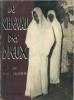
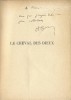
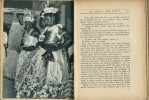
Le Cheval des Dieux, illustré de 8 photographies par l'auteur. ( Exemplaire du service de presse, avec dédicace de Henri-Georges Clouzot, nom du destinataire effacé )
Editions René Julliard 1951. In-8 broché de 239 pages au format 14 x 19 cm. Couvertures à rabats, illustrées d'une photographie de l'auteur. Dos carré, avec petit manque au bas. Plats avec petits frottis et tassements aux coins. Intérieur frais. Courte biographie, avec photo, et présentation du livre sur les rabats. Exemplaire du service de presse, perforé " S.P " au 4ème plat. H.-G Clouzot vient d'épouser Véra, rencontrée sur le tournage du film " Quai des Orfèvres ". Ils veulent profiter de leur voyage de noces au Brésil, pays natal de Véra, pour réaliser un documentaire. Mais excepté quelques images d'introduction tournées à Paris et conservées à la Cinémathèque, le projet du film " Brasil " n'aboutira jamais et le périple brésilien se transforme en livre " Le Cheval des Dieux ", qui a pour sujet essentiel les rites religieux pratiqués sur tout le territoire brésilien par certaines sectes fétichistes et qui entraine le lecteur dans les bas-fonds de Bahia, parmi les magiciens et les envouteurs. Livre orné de 8 photographies prises par l'auteur, pendant son séjour, et tirées en héliogravure. Mais cette épisode exotique marque profondément le cinéaste et servira à son prochain long métrage, le mythique film d'aventures " Le Salaire de la Peur " , d’après le roman de Georges Arnaud, et qui se déroule dans les décors d'une contrée d'Amérique du Sud ( réinventée en Camargue ). Bel état général. Très rare édition originale. Précieux exemplaire enrichi d'une belle dédicace, autographe, signée de Henri-Georges Clouzot. Le nom du destinataire à été effacé, mais il s'agissait certainement d'un acteur. Les dédicaces de Henri-Georges Clouzot, sont rarissimes.
Vente exclusivement par correspondance. Le libraire ne reçoit, exceptionnellement que sur rendez-vous. Il est préférable de téléphoner avant tout déplacement.Forfait de port pour un livre 10 € sauf si épaisseur supérieure à 3 cm ou valeur supérieure ou égale à 100 €, dans ce cas expédition obligatoire au tarif Colissimo en vigueur. A partir de 2 livres envoi en colissimo obligatoire. Port à la charge de l'acheteur pour le reste du monde.Les Chèques ne sont plus acceptés.Pour destinations extra-planétaire s'adresser à la NASA.Membre du Syndicat Lusitanien Amateurs Morues
Le grand décervelage enquete pour combattre les sectes.
Paris, Plon, 1993 ; in-8, 466 pp., br.
.
Parmi les sectes et les rites : les Religions nouvelles de Paris
Paris, émile-Paul frères 1939 In-12 18 x 12 cm. Broché, couverture ivoire, titre en noir et rouge sur le dos et le premier plat, 185 pp., table des matières. Exemplaire en bon état, infimes rousseurs sur la couverture, pages non coupées.
Contient : l’église apostolique, les Pentecôtistes, la Théophanie, l’église christique primitive, l’église laïque de Paris, la Nnouvelle église gnostique universelle, etc. Bon état d’occasion
SCIENTOLOGY ICH KLAGE AN!
, Pattloch verlag, 1994 ; in-8, 288 pp., br. Broché en très bon état.
Broché en très bon état.
Les mouvements religieux des peuples opprimés
1962 Paris François Maspéro 1962 Un volume in°8, broché 399 pages LR5
![Les mouvements religieux des peuples opprimés . [Sectes] - LANTERNARI Vittorio](https://static.livre-rare-book.com/pictures/RLI/1165_1_thumb.jpg)
tâche sur la couv - couv jaunie N'hésitez pas à nous mettre dans vos favoris. Vous serez ainsi tenu au courant de nos nouveautés
Ils m'ont dit de me taire.
Paris, Michel Lafon - document, 1998 ; in-8, 140 pp., broché, couverture illustr -( ptes usures). Bon état.
Bon état.
L'enfer des sectes - vous faites peut etre partie d une secte sans le savoir.
Paris, Le carrousel fn , 1984 ; in-8, 356 pp., broché, couverture illustr. Très bon état.
Très bon état.
Aleijadinho, le chemin de Croix de Congonhas do Campo.
Chêne & F.M. Ricci, 1979. Grand in-8° carré, broché, reproductions.
TBE. [14931]

