 Write to the booksellers
-
Type
Book (30237)
Disk (1)
Engraving (1)
Magazine (1072)
Old papers (2)
Photographs (2)
Reprint (4)
-
Latest
Last 24h (157)
Last 3 days (226)
Last month (146)
Last week (4)
-
Language
Chinese (1)
Dutch (82)
English (53)
French (31144)
German (15)
Italian (16)
Latin (4)
Portuguese (1)
Spanish (3)
-
Century
16th (3)
17th (14)
18th (56)
19th (1676)
20th (11920)
21st (1317)
-
Countries
Belgium (4073)
Brazil (2)
Canada (6)
China (14)
Côte d'Ivoire (203)
Denmark (483)
France (22361)
Greece (7)
Netherlands (1715)
Switzerland (2455)
-
Syndicate
ALAC (6)
CLAM (107)
ILAB (11436)
NVVA (1063)
SLACES (1063)
SLAM (9750)
SNCAO (71)
Les parures préhistoriques et antiques en grains d'enfilage et colliers talismans celto-armoricains. Précédé d'un apercu sur les temps préhistoriques.
P., Ernest Leroux, 1897. In-8 br., 176 pp., 22 planches dont 2 en couleurs.
Rare étude intéressant aussi bien l'archéologie des bijoux que l'ethnographie bretonne. Dos légèrement frotté mais solide, rares rousseurs en marge, bonne condition. - Frais de port : -France 7,15 € -U.E. 9 € -Monde (z B : 14 €) (z C : 24 €)


Morbihan. La Région de La Roche-Bernard aux époques préromaine, gallo-romaine et mérovingienne, inventaire descriptif des monuments et découvertes des cantons de La Roche-Bernard et de Muzillac, par Aveneau de La Grancière,
Saint-Brieuc R. Prud'homme 1904 -in-8 broché une plaquette, brochée vert grand in-octavo Editeur (paperback in-8 Editor) (25,2 x 16,3 cm), dos muet, 1ère de couverture imprimée en noir, toutes tranches non-rognées, orné d'une Planche hors-texte double pages ornée de 9 figures en noir in-fine, 49 pages, 1904 Saint-Brieuc : R. Prud'homme Editeur,
Note : Extrait du "Bulletin archéologique de l'Association bretonne", Congrès de La Roche-Bernard (Morbihan), 1903...Sujet : La Roche-Bernard (Morbihan).......Bel Exemplaire...............RARE.............en bon état (good condition). bon état
Les français de mon temps
,Paris, Plon 1905, 352 pp., 1 vol. in 12 relié demi-chagrin, dos à nerfs, couv. cons., envoi de l'auteur signé.
Anacharsis Cloots l'orateur du genre humain
,Paris, Librairie Internationale A. Lacroix, Verboeckhoven & Cie, éditeurs 1865, IV-414+480 pp., 2 vol. in 8 reliés demi-percaline, dos lisse (reliure modeste mais solide), quelques rousseurs. Edition originale.
The Lines of Nazca.
Philadelphia, The American Philosophical Society, 1990. In-4, rel. ed. pleine-toile marron sous jaquette ill. en coul., X-343 pp., très nb. filg., cartes, croquis, dessins et ill. photogr. en n/b. in-t., texte sur 2 colonnes en anglais, 8 contributeurs, appendices, index.
Etude de ces géoglyphes réalisés par le peuple Nazca, un peuple pré-inca au Pérou. Très bel ex. - Frais de port : -France 8,4 € -U.E. 10 € -Monde (z B : 15 €) (z C : 33 €)
Mémoires de la Société des Lettres, Sciences et Arts de l'Aveyron. Tome IX. 1859 - 1867
Rouergue Rodez, Imprimerie de N Ratery, 1867. Tome 9. In-8 broché de 538 pages. Non coupé. Contient, entre autres communications : Anciennes abbayes de l'ordre de Citeaux dans le Rouergue. Des premières origines de la Flore aveyronnaise . Etudes météorologiques. Mémoire sur l'aqueduc romain qui conduit les eaux de Vors à Rodez . L'église abbatiale de Conques. Mémoire sur les états du Rouergue. Le couteau de chasse de Mandrin du Musée de Rodez etc. Exemplaire au tampon monogramme de Robert Garric. Bon état.
Toutes les expéditions sont faites en suivi au-dessus de 25 euros. Expédition quotidienne pour les envois simples, suivis, recommandés ou Colissimo.
Mémoires de la Société des Lettres, Sciences et Arts de l'Aveyron. Tome XXIV.
Rodez 1940, Tome 24 Rodez 1940, Tome 24, In-8 broché de 739 pages non coupées+ planches. Temple P "Inventaire de l'archéologie préhistoriquee du département de l'Aveyron" - Bonnefis A "La co-seigneurie d'Auriac le Chateau et de Saint Rome de Tarn" - Carrière A. "Monographie de la commune de Saint Léons, patrie de Jean Henri Fabre".Dos bruni, corps de l'ouvrage en très bon état.
Toutes les expéditions sont faites en suivi au-dessus de 25 euros. Expédition quotidienne pour les envois simples, suivis, recommandés ou Colissimo.
Mémoires de la Société des Lettres, Sciences et Arts de l'Aveyron. Tome XXVI
Rodez Rodez, 1946. In-8 broché, 315 pages non coupées. Tome 26. Complet de la carte dépliante. L. BALSAN : Spéléologie du département de l'Aveyron. Essai d'inventaire géographique, descriptif et bibliographique- P. Lacombe "Cimetière barbare de Navas. Etude anthropologique" - Bousquet H "Les murs de La Couvertoirade et de sainte Eulalie du Larzac" - Combes de Patris B "Inventaire de l'argenterie des Eglises du Rouergue en 1690". Bon état
Toutes les expéditions sont faites en suivi au-dessus de 25 euros. Expédition quotidienne pour les envois simples, suivis, recommandés ou Colissimo.
Mémoires de la Société des Lettres, Sciences et Arts de l'Aveyron. Tome IX. 1859 - 1867.
Rouergue Rodez 1867, Tome 9, In-8 broché de 538 pages. Non coupé. Contient, entre autres communications : Anciennes abbayes de l'ordre de Citeaux dans le Rouergue. Des premiéres origines de la Flore aveyronnaise . Etudes météorologiques . Méoire sur l'aqueduc romain qui conduit les eaux de Vors à Rodez . L' église abbatiale de Conques . Mémoire sur les états du Rouergue . Le couteau de chasse de Mandrin du Musée de Rodez etc...Bon état.
Toutes les expéditions sont faites en suivi au-dessus de 25 euros. Expédition quotidienne pour les envois simples, suivis, recommandés ou Colissimo.
Mémoires de la Société des Lettres, Sciences et Arts de l'Aveyron. Tome XII. 1879 - 1880
Rouergue Rodez 1881, Tome 12, In-8 broché de 453 pages. Contient, entre autres communications : Histoire de l'Abbaye de Saint Antonin en Rouergue - Essai sur l'histoire du sous dialecte du Rouergue par M. Constans (important étude) - Les pierres tombales de la chartreuse de Villefranche de Rouergue - Siège de Saint sever en 1628 - Famille de Linas ou de Goudon - Rapport sur les fouilles faites à Montolieu - Pages non coupées. Bon état
Toutes les expéditions sont faites en suivi au-dessus de 25 euros. Expédition quotidienne pour les envois simples, suivis, recommandés ou Colissimo.
Congrès Archéologique de France
76è session tenue à AVIGNON. 1/2 parchemin, titre manuscrit au dos. Rel. Seigneur Très bon Paris, Caen Picard , Delesques 1910 2 volumes in-8°.
édition originale
Congrès Archéologique de France
121è session: Avignon et Comtat-Venaissin 1/2 parchemin à petits coins, titre manuscrit au dos. Rel. Seigneur Très bon Paris Société Française d'Archéologie 1963 1 volume in-8°
édition originale
Chronique des archives municipales de Bordeaux (1987-1988)
Revue archéologique de Bordeaux. 1988. In-4. Broché. Bon état, Couv. convenable, Dos satisfaisant, Intérieur frais. 1 pp.. . . . Classification Dewey : 930.1-Archéologie
Tiré à part du Tome LXXIX - année 1988. Classification Dewey : 930.1-Archéologie
cernes de croissance des arbres (la dendrochronologie)
, Brepols - Harvey Miller, 1988 Hardcover. 56 p., 160 x 240 mm, Languages: French, Fine copy. Including an index. ISBN 9782503360539.
Le but de ce fascicule est d'introduire le medieviste a une methode qu'il peut etre amene a solliciter sans en pratiquer necessairement lui-meme les techniques. Il abordera outre les principes generaux et les fondements biologiques, les contraintes techniques, les problemes critiques avant de fournir des exemples d'exploitation historique de la methode. Dans le dialogue entre dendrochronologue et historien, celui-ci sera ainsi mieux a meme de definir les problemes susceptibles d'etre resolus, de reconnaitre le materiel utilisable et acquerir la souplesse necessaire pour interpreter des resultats bruts parfois presentes comme definitifs et non equivoques.
GOLDHELM, SCHWERT UND SILBERSCHATZE.
, Frankfurt am Main, Schirn Kunsthalle, 1994., softcover Brosschiert, Original - Umschlag illustriert koloriert, 21x30cm, 257pp, illustriert koloriert und s/w. ISBN 3882703253.
Reichtumer aus 6000 jahren rumanischer vergangenheit.
Histria. Les résultats des fouilles. VIII LES TIMBRES AMPHORIQUES. 1. Thasos.
Bucarest, Editura enciclopedia, 1996. In-4, cartonnage de l'éd. titré en doré au dos, 176 pp., XLIV pl. en noir, index.
Bonne condition. - Frais de port : -France 7,15 € -U.E. 9 € -Monde (z B : 14 €) (z C : 24 €)
ASSOCIATION PRO AVENTICO. Bulletin No XVI. Avec 22 planches hors texte.
1954 Avenches, 1954, 210x140mm, 120 pagesillustré, plan depliant, broché. Réfection de lAmphithéâtre, les Thermes de Perruet. Bel exemplaire.
bon état
Cluzeaux et souterrains du Périgord - 1.
Serge Avrilleau, B. Delluc, Cluzeaux et souterrains du Périgord, Archéologie 24, 1975, cartes, dessins, croquis et photos en noir in et hors texte, 193 pages, bon exemplaire.
Photos sur demande.
Temples Anciens et Modernes, ou Observations historiques et critiques sur les plus célèbres Monumens d'Architecture Grecque et Gothique.
Londres, Musier, 1774 2 parties en 1 vol. in-8 de 2 ff. XVI-196 pages, 1 ff. 197 à 347, 1 ff., demi toile postérieure
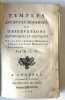
Edition originale de cet ouvrage consacré à l'architecture religieuse. Dédié à Guys, cet ouvrage décrit les plus grands monuments du paganisme : le Panthéon, l'Eglise Saint Paul de Rome, Sainte Sophie de Constantinople, Saint Paul de Londres, Saint Pierre de Rome, le Colysée. Il est illustré de 7 planches dépliantes gravées.
Nederland in den romeinschen tijd - Eerste Deel + Tweede Deel
E. J. Brill 1945 in8. 1945. Cartonné. 2 volume(s). iconographie en noir et blanc
couvertures ternies qques rousseurs intérieurs propres jaunis
Institute of classical studies - Corinthian Komos vases - bulletin supplement n°27 1971 - university of London
University of London 1971 in4. 1971. Broché. iconographie en noir et blanc
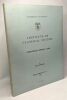
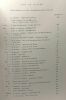
Bon Etat couverture un peu défraîchie intérieur propre bonne tenue
Lyon, les bateaux de Saint-Georges : une histoire sauvée des eaux
Lyon, Editions Lyonnaises d'Art de d'Histoire, 2009, 21 x 27, 128 pages cousues sous couverture rempliée illustrée. Iconographie couleurs.
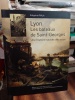
Très bon état.
Lyon. Les Bateaux de Saint-Georges. Une histoire sauvée des eaux.
2009 Editions Lyonnaises d'Art et d'Histoire - Institut National de Recherches Archéologiques préventives - 2009 - In-8, broché - 127 pages - avec un DVD réalisé avec l'aval de l'auteur
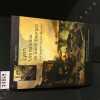
Bon état - Menus frottements sur la couverture Bon
The temple of Derr --- Les temples immergés de la Nubie - service des antiquités de l'Egypte
Karl W. Hiersemann 1913 in4. 1913. Relié. iconographie en noir et blanc
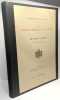
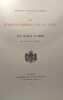
Très bon état de conservation bonne tenue premier plat d'origine contre-collé sur le premier plat relié intérieur propre uniformément jauni
The temple of Dendûr - Les temples immergés de la Nubie / service des antiquités de l'Egypte
Karl W. Hiersemann / Leipzig 1911 in folio. 1911. Broché. 52 planches en noir et blanc
dos entièrement recollé bords frottés marques de plis tranche ternie un peu fanée intérieur propre partie texte non-coupées

