 Write to the booksellers
-
Type
Book (32563)
Disk (1)
Engraving (1)
Magazine (1071)
Old papers (2)
Photographs (2)
Reprint (4)
-
Latest
Last 24h (1)
Last 3 days (12)
Last month (246)
Last week (20)
-
Language
Chinese (1)
Dutch (82)
English (52)
French (33470)
German (16)
Italian (15)
Latin (4)
Portuguese (1)
Spanish (3)
-
Century
16th (3)
17th (13)
18th (58)
19th (1713)
20th (14179)
21st (1512)
-
Countries
Belgium (4074)
Brazil (1)
Canada (6)
China (14)
Côte d'Ivoire (202)
Denmark (483)
France (24687)
Greece (7)
Netherlands (1715)
Switzerland (2455)
-
Syndicate
ALAC (6)
CLAM (107)
ILAB (11495)
NVVA (1063)
SLACES (1063)
SLAM (9809)
SNCAO (71)
L'épave "C" de la chrétienne - premier supplément aux Cahiers d'archéologie subaquatique
Louis-Jean (imp.) 1975 in4. 1975. Cartonné. iconographie en noir et blanc
Bon Etat couverture un peu défraîchie intérieur propre
Naufrages En Provence Ou Le Livre Des Epaves
Gap Cahiers D'archéologie Subaquatique ( Imprimerie Louis-Jean ) 1986 In-8 ( 7 Fascicules ) Fascicules 1 à 8 ( il manque le 7 ) d'environ 60 pages chaque
Bons Brochés
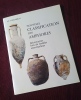
Nouvelle classification des amphores découvertes lors de fouilles sous-marines , JONCHERAY Jean-Pierre , 1976 , Archéologie , Grèce et Rome antique
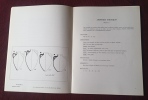
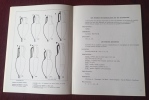
Dessins de Patrick Vanderpijl. seconde édition, Agrafé, couverture illustrée, état proche du neuf, 51 p. -LR43-R-R19- Depuis 1968, lorsque fut écrite la première" Classification ", pas mal d'acquisitions nouvelles en ce qui concerne la typologie amphorique, ont donné lieu à publication. Leur nombre est tel que la première édition de cet ouvrage date considérablement et renferme quelques erreurs. Nous avons voulu réaliser un fascicule pratique avant tout, d'une utilisation aisée. La diffusion de la première ".Classification ", (7000 exemplaires, ce qui est plus qu'honorable pour un travail aussi spécialisé), a prouvé que ce but était atteint. Il a cependant paru nécessaire de le refondre entièrement, mais toujours avec simplicité. La grande nouveauté viendra du choix de l'origine des vases pris en exemple : le nombre de dessins d'amphores provenant de recherches personnelles passe d'environ 10 % à environ 90 %. Les éléments de référence, auparavant choisis dans une bibliographie éparse, sont maintenant puisés dans le matériel provenant de nos recherches et de nos fouilles. L'archéologie sous-marine est trop souvent considérée comme l'archéologie de l'amphore. Qualitativement, cette définition est exagérée : il faut aussi penser aux poteries diverses, pelves, dolia, vaisselle fine ou commune, tuiles, jas d'ancre, pièces de gréement, outils divers. Cependant, quantitativement, la majorité des pièces archéologiques retirées de la mer consiste en amphores de toutes époques. Doit être considérée comme amphore de la présente classification toute poterie possédant deux anses, et dont la base, le plus souvent constituée par une pointe ou un bouton, ne permet pas, ou très mal, le maintien vertical. La classification dépendra de plusieurs critères. L'époque, critère le plus sûr, mais relativement imprécis (un demi-siècle près), et insuffisant, certains types différents étant contemporains. L'origine, pratique pour les époques anciennes, plus délicate à déterminer vers l'empire romain, où les centres de production sont très nombreux. Le contenu, souvent difficile à vérifier par l'observation directe. Un même récipient pouvait resservir avec des contenus différents, et l'histoire et l'archéologie nous ont appris que des amphores ont pu contenir : des aromates (sauge, à La Tradelière); de la céruse (Tradelière); de la chaux (Agay); des conserves de gibier (sanglier à La Tour fondue); de l'eau; des fruits (dattes et figues au Dramont D); du goudron; du miel; des olives (Dramont E); de la résine (Dramont F); de la saumure (coquillages, crustacés, à La Chrétienne, poissons); du vin (Chrétienne C). Les particularités de forme seront employées lorsque tous les autres critères auront été épuisés; ces particularités ont l'avantage d'être nettes et indiscutables, mais elles ne correspondent pas toujours à un contexte historique ou géographique: ainsi, les amphores de tradition orientale à anses bifides ont été fabriquées dans tout l'empire, et en particulier en Espagne. La composition des pâtes est d'un grand intérêt, en particulier pour les amphores massaliotes et léétaniennes. Il faut cependant se méfier, au sein d'une même production, des modifications de pâte dues à la cuisson et surtout aux altérations physico-chimiques ayant suivi le naufrage et le séjour sous le sédiment et sous l'eau.
Franco de port en en Mondial Relay ou Shop2shop, remise en conséquence si vous désirez un autre mode de livraison et pour l'international
L'ARCHEOLOGIE SOUS MARINE.
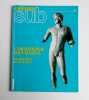
L'ARCHEOLOGIE SOUS MARINE.Océans-Sub, sd, in4° broché ,132pp.Abondantes illustrations.
Autour de l’autopsie d’une momie. Le scribe royal Boutehamon. Préface de Jean Capart.
Bruxelles, Fondation Egyptologique Reine Elisabeth 1942, 240x180mm, 137pages,
photos n/b, Pour un paiement via PayPal, veuillez nous en faire la demande et nous vous enverrons une facture PayPal
Antiquities of the Southern Indians particularly of the Georgia Tribes.
N.Y., Appleton and Compagny, 1873. Royal8vo. Orig. full pictorial cloth, gilt. 1 cm of top of spine gone, bottom of spine frayed. Corners a little bumped. Uncut. Verso of titlepage with a stamp. XVI,532 pp., 30 plates. A few pages with a small stamp in upper right corner of margin. Internally clean and fine.
First edition.
Model boats from the tomb of Tut'Ankhamun.
Oxford, Griffith Institute, 1990 In-4, rel. pleine percaline marine, titre doré sur le plat sup., dos muet, sous jaquette ill. de l'éd., XII-65 pp., XXXVIII planches en noir in fine, glossaire. Texte en anglais.
Etat de neuf. - Frais de port : -France 6,8 € -U.E. 9 € -Monde (z B : 14 €) (z C : 24 €)
Quantifying Diversity in Archaeology
Cambridge University Press New Directions in Archaeology Cartonné 1989 In-4, (22x28.5 cm), cartonné, texte en anglais, 160 pages, schémas en noir et blanc, bibliographie, index ; plats légèrement défraîchis, gomette au dos, tampons sur les 1re pages, bon état. Livraison a domicile (La Poste) ou en Mondial Relay sur simple demande.
Un récit anglais de l'Escalade publié en 1603. Réimprimé avec une introduction.
Imprimerie Albert Kundig, 1930. Plaquette in-8 brochée de 31 pages, couverture imprimée en noir. Plis transversaux, l'un courant sur plusieurs feuillets, petites déchirures sans manques.
Illustré de deux figures. Suite à un accident immobilisant votre libraire pour quelques semaines, le traitement des commandes est bien assuré, mais momentanément ralenti. Merci de votre patience et de votre compréhension.
ETHNOGRAPHY OF THE FOX INDIANS
Smithsonian institution, bureau of american ethnology , 1939, in8 br , 156 pp , 24 planches hors texte , 7 figures., 210 musiques notées . Bulletin n° 125 Cachet ex bibliothèque . Langue: Français
Trends in Archive Archaeology. Current Research on Archival Material from Fieldwork and its Implications for Archaeological Practice
, Brepols, 2024 Paperback, xii + 166 pages, Size:216 x 280 mm, Illustrations:71 b/w, 35 col., 2 maps b/w, 2 maps color, Language: English. ISBN 9782503611747.
Summary Archive archaeology has, in recent years, become increasingly acknowledged as an important component of archaeological research. However, the vast amounts of empirical data contained in such archives - among them fieldwork diaries, working notebooks, finds sheets, and photographs - together with a sense that the field is often skewed towards 'one's own data', have made it difficult to develop a clear methodological approach that fits all eventualities. The result is that archive archaeology is still not always recognized for what it can bring to the discipline of archaeology, as a field of study that focuses on the contexts within which humanity developed. This volume draws together contributions from scholars who work with archives in a variety of capacities: as fieldwork directors of decades-long excavations; as archivists interested in the history of collections; as specialists focusing on certain object groups or regions; and as researchers broadly interested in what archival material brings to the table in terms of new knowledge about archaeological situations. In showcasing contributions of work in progress, the chapters published here bring to the fore knowledge about archives that has long been overlooked, and examine how archival archaeology should be shaped in the future so that it can become more firmly integrated within archaeological practice. TABLE OF CONTENTS Trends in Archive Archaeology: An Introduction Jon M. Frey and Rubina Raja What's In a Name? The Role of Digital Gazetteers for Post-Colonial Legacy Archaeology Anne Hunnell Chen Digitization as Interpretation: Cautions for Archival Archaeology from Artifact Photography Elizabeth Knott Archives and Curatorial Work at the Davis Museum Nicole Berlin Photocorinthia: The Contingency of Archaeological Photography in the Corinth Excavation Archives Peter Anthony Thompson Archive Archaeology and Critical Disciplinary Histories: A Case Study on the Origins of the University of Cincinnati Expedition to the Troad (1932-1938) Jacob M. Engstrom Old Digs, Unfinished Business, Digitization, and New Data. The Committee for the Investigation of Antioch-on-the-Orontes (CIAO) Andrea De Giorgi, Stephen Batiuk, A. Asa Eger, Julia Gearhart, Kirstin Ohrt, and Alan Stahl The Archival Archaeology of Archaeologists: The West Cemetery at Isthmia, 1967-1990 Ulrike Krotscheck and Jon M. Frey Futures for Archive Archaeology: Struggles, Successes, and Methodologies Emilia Oddo
Opgravingen op de Hoge Woerd bij De Meern. (1957, 1960).
Groningen, J.B. Wolters, 1963.
100 p.; illustrations, 3 folding tables, 22 plates. Stiff wrappers. 24 cm (Archaeologica Traiectina 5)
The twelve labours of Hercules on roman sarcophagi.
Roma, "L'Erma" di Bretschneider, 1992. In-8, rel. éd. pleine-toile bordeaux, titre blanc en long, jaquette ill., 155 pp., 88 reprd. photogr. en n/b. in-t., texte en anglais, index.
Collection : Studia Archaeologica - 59. Comme neuf. - Frais de port : -France 6,8 € -U.E. 9 € -Monde (z B : 14 €) (z C : 24 €)
The twelve labours of Hercules on Roman sarcophagi.
Roma, L'Erma di Bretschneider, 1992.
157 p., ills. Cloth 25 cm (Studia Archaeologica 59; including dustjacket)
1. Préhistoire de la région cantabrique. - 2. Notas de pintura rupestre solutrense.
1956-1957. 4 fasc. grand in-8 agrafés, ensemble [55] pp.
Extraits de : Dip. Provincial de Asturis, Servicio de Investigaciones arqueologicas ; Zephyris ; Speleon. Bonne condition. - Frais de port : -France 4,9 € -U.E. 7 € -Monde (z B : 11 €) (z C : 21 €)
L'habitat traditionnel du Sud de la Jordanie. Les villages de 'Aima, Dana et Khirbet Nawafleh. .......... On joint : Contribution française à l'archéologie jordanienne.
1993 Amman, Ambassade de France et Ministère du Tourisme Jordanien, 1993, plaquette in 4° brochée, texte français de 37 pages + la traduction arabe ; 65 figures ; couverture illustrée. .......... Et : Beyrouth, Institut Français d'Archéologie, 1984, plaquette in 4° brochée, 47 pages de texte français + traduction arabe ; 46 figures.
Fermeture du 1er au 23 Août


Phone number : 04 77 32 63 69
ANALYSE MINERALOGIQUE ET CHIMIQUE DE LA CERAMIQUE ROMAINE SUISSE A ENDUIT BRILLANT (THESE)
Non précisé. 1982. In-8. Broché. Bon état, Couv. convenable, Dos satisfaisant, Intérieur frais. 266 pages. Illustré de nombreux graphiques en noir. Etiquette de code sur le dos. Tampons et annotation de bibliothèque sur le 1er plat et en page de titre.. . . . Classification Dewey : 930.1-Archéologie
Institut de Minéralogie et pétrographie de l'Univ. de Fribourg (Suisse). Thèse prés. à la Faculté des Sciences de l'Université de Fribourg. Classification Dewey : 930.1-Archéologie
L'U.R.S.S. la terre et les hommes
,Paris, S.E.F.I. 1946, 403 pp., 1 vol. in 8 br. illustrations et cartes hors-texte
art pr colombien
Paris, Mazenod, 1978 toile blanche illustr e, jaquette illustr e rempli e, 613 pages, 32 x 25.5 cm.
De la collection "L'art et les grandes civilisations" cr e et dirig e par Lucien Mazenod. Ouvrage abondamment illustr de photographies en noir et en couleurs, la majorit de Jean Mazenod, de plans et de dessins in et hors-texte.
Harvey Miller. Mosaics and Wallpaintings in Roman Churches,
Turnhout, Brepols, 2000 Hardback, 384 p., incl. 264 ills. with 152 in colour, 22 x 28,5. ISBN 9781872501628.
This collection of drawings and watercolours of the mosaics and wallpaintings of early medieval churches in Rome forms an important part of the Paper Museum, since it sheds much light on the nature and scope of antiquarianism in Italy at the time of the Counter-Reformation. This collection of drawings and watercolours of the mosaics and wallpaintings of early medieval churches in Rome forms an important part of the paper Museum, since it sheds much light on the nature and scope of antiquarianism in Italy at the time of the Counter-Reformation. The drawings and watercolours catalogued and illustrated here are all in the Royal Collection, Windsor Castle, and are mostly by the artist Antonio Eclissi. The reproductions are generally in full colour, and frequently accompanied by illustrations showing the actual decoration in situ. The introductory essays outline the important phases of Cassiano dal Pozzo's career, discuss the history and significance of the 'Paper Museum', and explore the Christian tradition in seventeeth-century Rome. The Catalogue Raisonnee analyses each drawing in the greatest detail. This volume, the first to appear in the series, will be of special interest to archaeologists and medievalists engaged in the study of Rome's Early Christian churches, since many of the buildings, mosaics and paintings are now no longer extant. Languages : English.
Harvey Miller. Other Mosaics, Paintings, Sarcophagi and Small Objects,
Turnhout, Brepols, 1998 Hardback, 336 p., incl. 281 ills., with 106 in colour, 22 x 28,5. ISBN 9781872501673.
Catalogued here is a diverse and fascinating range of antiquities, mainly collected in the later seventeeth century: reliefs, inscriptions, sarcophagi, sculpture, manuscript illuminations, gold-glass, gems, ivories, lamps, metalwork and 'instruments of martyrdom'. This volume completes Part II of Series A of the Paper Museum. Together with the first volume, it reflects an unusual aspect of Cassiano's interests, but a particularly relevant one for modern scholars: the material remains of post-classical culture in Rome and the psychical inheritance from the earliest centuries of Christianity. Catalogued here is a diverse and fascinating range of antiquities: reliefs, inscriptions, sarcophagi, sculpture, manuscript illuminations, gold-glass, gems, ivories, lamps, metalwork and 'instruments of martyrdom'. The drawings were mainly collected by Carlo Antonio dal Pozzo, Cassiano's brother, in the later seventeeth century and include some of the finest examples of archaeological draughtsmanship of the period. Languages : English.
Christophe Colomb
,Paris, Tolra s.d., vers 1890, 350 pp., 1 vol. in 8 relié cartonnage éditeur illustré d'un décor naval doré, tranches dorées, gravures sur bois in et hors-texte
Inscriptiones pannoniae superioris in slovacia transdanubiana asservatae
Universitas Purkyniana Brunensis 1967 in8. 1967. Broché. iconographie en noir et blanc
Bon état couverture ternie bords frottés intérieur propre
Griechisches kunsthandwerk
Florian Kupferberg Verlag - Mainsz 1951 in12. 1951. Cartonné. illustrations en noir et blanc
Etat correct pages un peu collantes bonne tenue intérieur propre
Ephesos ein führer durch die ruinenstätte und ihre geschichte / österreichisches archäologisches institut
Wien 1964 in12. 1964. Broché. iconographie en noir et blanc 2 cartes dépliantes in-fine
Bon Etat de conservation cependant couverture défraîchie ternie bords frottés intérieur propre

