 Write to the booksellers
-
Type
Book (30348)
Disk (1)
Engraving (1)
Magazine (1069)
Old papers (2)
Photographs (2)
Reprint (4)
-
Latest
Last 24h (3)
Last 3 days (10)
Last month (614)
Last week (14)
-
Language
Chinese (1)
Dutch (82)
English (52)
French (31252)
German (15)
Italian (16)
Latin (5)
Portuguese (1)
Spanish (3)
-
Century
16th (3)
17th (14)
18th (60)
19th (1700)
20th (12211)
21st (1382)
-
Countries
Belgium (4076)
Brazil (2)
Canada (6)
China (14)
Côte d'Ivoire (192)
Denmark (483)
France (22493)
Greece (7)
Netherlands (1711)
Switzerland (2443)
-
Syndicate
ALAC (6)
CLAM (107)
ILAB (11437)
NVVA (1063)
SLACES (1063)
SLAM (9751)
SNCAO (71)
Les tombes gallo-romaines et mérovingiennes de la Basilique de Saint-Denis (fouiles de janvier-février 1957). ‘Extrait des Mémoires de l’Académie, Tome XLIV’.
Paris, Imprimerie Nationale, 1958, in-4to, 86 p., + XXVII planches n./b., brochure originale.

(SLACES, NVVA)
Phone number : 41 (0)26 3223808
Les tombes gallo-romaines et mérovinginennes de la basilique de Saint-Denis (fouilles de janvier-février 1957).
Paris, Imprimerie Nationale, 1958. Broché. in-4, faux-titre, titre, 95 pages non coupées, + 27 planches dont 2 en couleurs et 1 dépliante.
Extrait des "Mémoires" de l'Académie des Inscriptions et Belles Lettres.
MANUEL DES FOUILLES ARCHEOLOGIQUES - I -LES FOUILLES DE SEPULTURES DU Ve AU VIIIe SIECLE
PRESSES UNIVERSITAIRES DE FRANCE. 1945. In-12. Broché. Bon état, Couv. convenable, Dos satisfaisant, Intérieur frais. 84 pages - quelques photos et figures noir et blanc dans et hors texte. . . . Classification Dewey : 930.1-Archéologie
Classification Dewey : 930.1-Archéologie

MANUEL DES FOUILLES ARCHEOLOGIQUES : TOME 1 : ES FOUILLES DES SEPULTURES DU Ve au VIIIe SIECLE
PRESSES UNIVERSITAIRES DE FRANCE. 1945. In-12. Broché. Bon état, Couv. convenable, Dos satisfaisant, Intérieur frais. 84 pages augmentées de quelques planches en noir et blanc.. . . . Classification Dewey : 930.1-Archéologie
Classification Dewey : 930.1-Archéologie
La Civilisation mérovingienne, d'après les sépultures, les textes et le laboratoire.
Picard et Cie, 1950-1959, 4 vol. gr. in-8°, 531, 417, 311 et 579 pp, 57 planches de photos hors texte, 897 figures, 3 cartes, 16 tableaux, biblio, index, brochés, bon état. Edition originale (1950, 1952, 1957 et 1959), envoi a.s. au tome 3
"Le grand ouvrage de synthèse qu'Édouard Salin a consacré à la civilisation mérovingienne, où il a renouvelé notre connaissance de la période par l'application de méthodes empruntées à l'archéologie préhistorique pour la fouille des nécropoles, et aux sciences physico-chimiques pour l'étude des objets en laboratoire." (Revue de l'histoire des religions, 1962) — Première partie : Les idées et les faits (une introduction sur les grandes invasions, les Francs au pouvoir ; les échanges et les grands courants de circulation, voies maritimes et continentales ; le peuplement d'après les sépultures, l'anthropologie, la toponymie ; l'habitat ; etc., 13 planches, 3 cartes, 436 figures) – 2e partie : Les sépultures (10 planches, 160 figures) – 3e partie : Les techniques (fers et aciers ; umbo de bouclier ; framées et lances ; francisques et haches ; le scramasax ; l'épée longue chez les Celtes, les Romains, les Sarmates, les Huns, les Rus (Russie méridionale), les Orientaux et les Germains, 21 planches, 103 figures) – 4e partie : Les croyances. Conclusions. Index général (13 planches,198 figures). Désormais les frais d'envoi sont de 6 € seulement pour les livres jusqu'à 1 kg (colissimo suivi), pour la France métropolitaine.
La Civilisation mérovingienne, d'après les sépultures, les textes et le laboratoire. Tome 2 : Les sépultures.
Picard, 1952, gr. in-8°, 417 pp, 10 planches hors texte, 160 figures dans le texte, 3 tableaux, broché, bon état
Deuxième partie seule (sur 4) — "La première partie du monumental ouvrage que M. É. Salin consacre à la civilisation mérovingienne avait paru en 1950. L'auteur y avait esquissé le cadre historique de la période des invasions et de l'époque de la monarchie franque, de Clovis à Charlemagne. Il y avait étudié les grandes voies de communication et la diffusion des idées et des denrées d'Orient en Occident et de la Méditerranée à la Scandinavie. Il avait essayé, enfin, de déterminer, en se basant sur les sépultures, l'anthropologie et la toponymie, le peuplement de la Gaule à l'époque mérovingienne. Dans ce second tome, l'auteur étudie les sépultures mérovingiennes sous tous leurs aspects. Après avoir examiné les survivances du rite de l'incinération à l'époque mérovingienne, M. S. décrit soigneusement les lieux de sépultures, tant dans les campagnes que dans les églises et autour d'elles. Il passe en revue les marques extérieures des tombes (haies, murettes, stèles, épitaphes, etc.), puis il s'attaque au problème des sépultures mêmes : mode d'ensevelissement, sarcophages (signalons ici un chapitre de grande valeur consacré à l'étude des sarcophages mérovingiens et à leur décor), cercueils, caissons en pierres sèches, listres, linceuls, etc. Passant de la tombe au cimetière, l'auteur décrit longuement les différents aspects des cimetières... Un long chapitre est consacré à la question de la datation des sépultures mérovingiennes. On y trouvera un excellent résumé sur les éléments datables du mobilier funéraire et sur leur : fibules, plaques de ceinture, armes. Enfin, l'auteur étudie les lésions et les déformations osseuses rencontrées sur les squelettes mérovingiens, les blessures, les traces de sacrifices humains et d'anthropophagie rituelle, les mutilations rituelles, l'enclouage des cadavres. En annexe, on trouvera rassemblés une série de textes du plus haut intérêt. Voici un ouvrage de toute première importance tant pour les archéologues que pour les historiens." (S. J. De Laet, L'Antiquité Classique, 1953) Désormais les frais d'envoi sont de 6 € seulement pour les livres jusqu'à 1 kg (colissimo suivi), pour la France métropolitaine.
La Civilisation mérovingienne, d'après les sépultures, les textes et le laboratoire. Tome 4 : Les croyances.
Picard, 1959, gr. in-8°, 579 pp, 13 planches hors texte, 198 figures dans le texte, 13 tableaux, index général, broché, bon état
Quatrième partie seule (sur 4) : Les croyances. Conclusions. Index général. — "Ce volume est le dernier du grand ouvrage de synthèse qu'E. Salin a consacré à la civilisation mérovingienne et où il a renouvelé notre connaissance de la période par l'application de méthodes empruntées à l'archéologie préhistorique pour la fouille des nécropoles, et aux sciences physico-chimiques pour l'étude des objets en laboratoire. Ici l'historien exploite, en s'appuyant sur les textes, les données fournies dans les volumes précédents sur « les sépultures » et « les techniques ». L'auteur se propose d'étudier les croyances des populations mérovingiennes à partir des éléments observés dans les nécropoles : dispositions spéciales des tombes, débris organiques ou objets divers recueillis dans les sépultures, figurations symboliques décorant les pièces de l'habillement ou du mobilier du mort, etc. En pratique, K. Salin, alerté par les auteurs chrétiens qui stigmatisent les superstitions des Germains jusqu'en pleine période carolingienne, est tenté de reconnaître une signification à tout ce que l'on peut trouver à côté du squelette. (...) L'œuvre magistrale de M. Salin est un ouvrage technique. Mais les non-spécialistes peuvent l'aborder commodément, puisque l'auteur a pris la précaution de signaler typographiquement les étapes de sa démonstration et ses conclusions essentielles." (Noël Duval, Revue de l'histoire des religions, 1962) Désormais les frais d'envoi sont de 6 € seulement pour les livres jusqu'à 1 kg (colissimo suivi), pour la France métropolitaine.
Le Cimetière barbare de Lezéville. Mobilier funéraire et art décoratif francs d'après les fouilles exécutées par M. Edouard Salin. Avec 8 planches en couleurs, 8 planches en noir et 29 figures dans le texte
Nancy-Paris-Strasbourg, Berger-Levrault, 1922 in-4 carré, VI pp., 143 pp., avec 16 planches hors texte (dont un plan et 15 reproductions d'objets), broché. Dos défraîchi. Envoi découpé.
Sur les fouilles du lieu dit"Camp romain", sis au nord du village de Lezéville (Haute-Marne) sur un monticule couvert de bois et dans lequel ont été trouvés des cercueils de pierre renfermant des ossements, des armures, des vases en terre, datant de l'époque des Francs. C'est aussi la première publication archéologique d'Edouard Salin (1889-1970), à l'époque encore simple ingénieur civil des mines, et qui avait fait des fouilles son premier centre d'intérêt. - - VENTE PAR CORRESPONDANCE UNIQUEMENT - LIEN DE PAIEMENT, NOUS CONSULTER.
Manuel des fouilles archéologiques. I. Les fouilles des sépultures du Ve au VIIIe siècle.
PUF, 1946, in-12, 85 pp, 5 planches hors texte (dont une double), 4 figures, broché, bon état
"Édouard Salin avait dirigé ses explorations de cimetières avec une méthode rigoureuse. Constatant que maintes fois des fouilleurs inexpérimentés avaient saccagé un site archéologique, il publia en 1946 un Manuel des Fouilles archéologiques." (Paul Deschamps, Comptes rendus des séances de l'Académie des Inscriptions et Belles-Lettres, 1972) — "Je voudrais dire tout le bien que je pense de ce manuel. Nul n'était plus qualifié que l'auteur pour servir de guide à ses confrères en archéologie. Le lecteur profitera des trésors d'une expérience déjà longue et que couronnent des très remarquables réussites dans l'exploration des cimetières mérovingiens de la Gaule orientale. Après avoir rappelé les principes auxquels tout fouilleur doit obéir, et aussi les responsabilités qu'il encourt, du fait même de ses recherches, devant la collectivité nationale et la science, M. Salin, sous la rubrique Technique des fouilles, expose les conditions qui doivent présider à la prospection, à la reconnaissance préalable, aux sondages, aux travaux préparatoires et finalement à la fouille proprement dite. Il y ajoute dé très utiles précisions sur la façon d'emballer et d'étiqueter les objets, la tenue de l'indispensable journal et le lever du plan. Avant toute exploration d'un cimetière antique, le fouilleur fera bien de s'imprégner du contenu des pages 66 à 82, dans lesquelles l'auteur a réuni, d'une manière particulièrement objective, les points sur lesquels doit porter plus spécialement l'attention de l'archéologue : caractères généraux du site, situation géographique, lieu-dit, tracé des chemins antiques, des voies d'eau, proximité de ruines romaines, d'un oratoire chrétien, disposition et orientation des sépultures, ordonnance des mobiliers funéraires, rites et croyances, âge des sépultures, indications relatives au peuplement. On souhaite la plus large diffusion possible à cet excellent petit manuel, dont les prescriptions valent pour la fouille de toute sépulture, à quelque époque qu'elle appartienne." (R. Lantier, Revue Archéologique, 1951) Désormais les frais d'envoi sont de 6 € seulement pour les livres jusqu'à 1 kg (colissimo suivi), pour la France métropolitaine.
Die Kunst der Griechen. 3. unveränd. Aufl.
Lpz., Hirzel, 1923.
X,303 p.; 52 pls. H.calf 25 cm (Back rubbed; head & tail of spine rubbed)
Die Kunst des Altertums.
Bln., Athenaion, n.d.
4to. 128 p.; ills. & 5 pls. H.cl. (Die 6 Bücher der Kunst, I)
Les 900 jours - Le siège de Léningrad
,Paris, Albin Michel 1970, 653 pp., 1 vol. in 8 br. illustrations hors-texte
Un américain en Russie
,Paris, Presses de la Cité 1955, 308 pp., 1 vol. in 8 relié cartonnage éditeur, jaquette, illustrations hors texte
Sallaberger Walther Volk Konrad Zgoll Annette
Reference : 523152
(2003)
ISBN : 9783447046596
Literatur Politik und Recht in Mesopotamien: Festschrift für Claus Wilcke (Orientalia biblica et christiana 14)
Harrassowitz O 2003 386 pages in-8. 2003. Relié. 386 pages.
Bon état légere usure de la couverture intérieur très bon
The town of Nebo (Khirbet El-Mekhayyat) with a brief survey of other christian monuments in Transjordan
Jerusalem, Franciscan Press 1949 302pp. + frontispiece + figures in text + 54 plates out of text and some folding maps, in the series "Publications of the Studium Biblicum Franciscanum" vol.7, original softcover (ends of spine bit repaired), 2 ex-libris stamps, text is clean and bright, good condition, weight: 1kg., R118525
FAILAKA: fouilles françaises. Années 1983 et 1984-1985.
Lyon, GIS - Maison d'Orient, 1984-1986 2 vol. in-4 brochés, 190pp, 74 fig.; 333pp, 140 fig. (Travaux de la Maison d'Orient n° 9 et 12)
Très bonne condition. -
L'Arabie et ses mers bordières. I - Itinéraires et voisinages.
Lyon, Maison de l'Orient, 1988. In-4, broché, 199 pp., qqs. cartes, fig. et ill. photogr. en noir in-t.
Bonne condition. - Frais de port : -France 6,8 € -U.E. 9 € -Monde (z B : 14 €) (z C : 24 €)
Koweit.
Larousse Nathan International, 1989, in-4°, 278 pp, 290 photos dans le texte et à pleine page, la plupart en couleurs, 19 cartes et croquis, qqs tableaux, index, reliure toile noire de l'éditeur, jaquette illustrée, bon état
"Des « émirats-mirages » ou « des mirages au miracle », on a déjà beaucoup dit et écrit sur ces pays lointains et désertiques, tant à cause de leur richesse soudaine et parfois provocante,que du fait de l'attachement profond de leurs populations aux traditions ancestrales, difficilement accessibles à qui ne les connaît pas." — "On rappellera qu'aux XVIIIe et XIXe siècles, la petite ville de Grane-Koweit comptait quelques milliers de pêcheurs et marchands habitant dans un milieu totalement aride, qui consommaient les produits vivriers cultivés dans l'oasis de Jahra, à plus de trente kilomètres au nord de Koweït, et allaient chercher l'eau là où il y en avait, c'est- à-dire jusque dans l'île de Failaka, parfois, et, à la fin du XIXe, jusqu'à Basra grâce à un va-et-vient régulier de dhows spécialisés dans le transport de l'eau." — Par Jean-François Salles, directeur de recherches honoraire au CRNS, IFPO (Amman), ancien directeur de la mission archéologique de Failaka à Koweit (Chap. 1. A la découverte de Koweit. – Chap. 2. Un passé riche d'histoire), et Olivier Salles, diplômé de l'Institut de Sciences politiques (Chap. 3. Le Koweit d'aujourd'hui et de demain). Désormais les frais d'envoi sont de 6 € seulement pour les livres jusqu'à 1 kg (colissimo suivi), pour la France métropolitaine.
Les sorcières, fiancées de Satan.
Découvertes Gallimard, 1989. In-12 broché, couverture couleurs. 187 pages, abondamment illustrées.

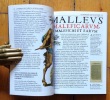
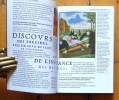
"Vers le milieu du XVe siècle, l'Occident s'embrase. Un incendie monstrueux, en forme d'épidémie. On brûle des femmes et des hommes, mais surtout des femmes. Les sorcières sont les fiancées du Diable. La rumeur le dit, les juges civils et religieux le prouvent. Elles vont au sabbat, jettent des sorts, sèment la maladie et la mort. Pendant deux siècles, des milliers de sorcières sont traquées, dénoncées, mises à la question, avant d'être livrées aux flammes. Il faudra attendre l'extrême fin du XVIIe siècle pour que des voix se fassent entendre qui crient raison et que peu à peu s'éteignent les derniers bûchers."
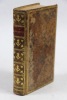
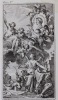
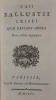
Caii Sallustii Crispi quae Exstant Opera.
Typis H. Barbou, Paris 1801 In-16, plein veau fauve marbré de l'époque, dos lisse orné de fleurons dorés, pièce de titre de cuir rouge, triple filet doré d'encadrement sur les plats, roulette dorée intérieure, tranches dorées, titre, XL- 352 pp. Frontispice gravé, 3 figures par Fessard d'après Cochin, et trois bandeaux de Papillon et de La Fosse. Quelques épidermures, quelques mouillures marginales. Bon exemplaire.
La seconde guerre mondiale au jour le jour. 2194 jours de guerre
,Paris, Presses de la Cité 1988, 784 pp., 1 vol. in 4 relié cartonnage éditeur illustré, texte imprimé sur 3 colonnes, nombreuses illustrations in et hors-texte, index.
MORIMOND : Les moines blancs du Bassigny.
Langres : Société Historique et Archéologique, 1972. Plaquette agrafée 24X15,50cm, 61 pages illustrées en noir (plans, cartes, documents, photos). [BE, très infime mouillure en haut de couverture. Cf.photo]
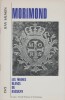
Des ruines vous parlent / Les pierres, témoins du passé / Les premiers cisterciens dans le Bassigny / Les premières fondations / 70 arpents d'eau / St Bernard intervient / Un prince allemand se fait moine / Un comte gardien de porcs / Morimond et son Empire / Le domaine de l'abbaye / Le chemin des convers / Les moines blancs et le monde féodal / Les moines de Morimond / L'abbaye saccagée / L'abbaye restaurée / Le dernier abbé / Ce qu'on pouvait voir à l'abbaye en 1789 / Ce qu'on pouvait voir à l'abbaye en 1790 / Le départ des religieux / L'abbaye est mise en vente / Un procès qui fit du bruit / En exil / Sur l'emplacement de l'abbaye / Restes et souvenirs.
Dictionnaire archéologique du département de l'Yonne, époque celtique.
1878 Imp. de Geroges Rouille, Auxerre, 1878, 182 p., broché, couverture en mauvais état (dos manquant), une déchirure dans la marge d'une mage et sur la page de garde, quelques annotations au crayon à papier dans les marges.
Merci de nous contacter à l'avance si vous souhaitez consulter une référence au sein de notre librairie.
L' Yonne préhistorique.
Paris, Imprimerie Chaix, 1889 ; brochure grand in-8°, couverture beige imprimée en noir; 47pp., et 1 grande carte dépliante avec symboles des monuments imprimés en couleurs.Petites déchirures en bordure de la couverture ( petits manques au dos en pied au 2èmeplat), traces brunes d'adhésif au dos et le long des plats.
Communication faite à Oran le 30 mars 1888, au Congrès de l' Association pour l'Avancement des Sciences. ( GrBO)
Artibus Asiae. Institute of fine arts. New York University. Vol. X / 3. Published under the patronage of the China-Institute, Berne. Content: CHEWON, Kim: Two Old Silla Tombs. / COEDES, Georges: Fouilles en Cochinchine. / VOGEL, J. Ph.: Portrait Painting in Kangra and Chamba. / McCALL, John E.: Early Jesuit Art in the Far East. / ÖZGÜC, Nimet: Two Hittie Seals. / FOWLER, Murray: A. K. Coomaraswamy.
Ascona, Artibus Asiae, 1947, gr. in-4to, 81 p., illustrated, original wrappers.
(SLACES, NVVA)
Phone number : 41 (0)26 3223808

