Write to the booksellers
-
Type
Book (30383)
Disk (1)
Engraving (1)
Magazine (1069)
Old papers (2)
Photographs (2)
Reprint (4)
-
Latest
Last 24h (1)
Last 3 days (3)
Last month (417)
Last week (22)
-
Language
Chinese (1)
Dutch (82)
English (52)
French (31281)
German (15)
Italian (19)
Latin (8)
Portuguese (1)
Spanish (3)
-
Century
16th (3)
17th (15)
18th (62)
19th (1708)
20th (12223)
21st (1384)
-
Countries
Belgium (4076)
Brazil (2)
Canada (6)
China (14)
Côte d'Ivoire (203)
Denmark (483)
France (22517)
Greece (7)
Netherlands (1711)
Switzerland (2443)
-
Syndicate
ALAC (6)
CLAM (107)
ILAB (11436)
NVVA (1063)
SLACES (1063)
SLAM (9750)
SNCAO (71)
Inheritance, Social Networks, Adaptation. Bronze and Early Iron Age Societies North of the Western Carpathians
, Brepols, 2025 Hardback, 820 pages, Size:210 x 297 mm, Illustrations:124 b/w, 277 col., 46 tables b/w., 2 tables col., Language: English. *new ISBN 9782503616773.
Summary How did societies change between the Early Bronze Age and the Early Iron Age? And what was the impetus that led to these changes - social contacts and innovation, intergenerational contacts, or perhaps simply adaptation? Taking these questions as its starting point, this richly detailed volume explores four different regions of southern Poland to compare and contrast the mechanisms that drove socio-cultural change in the region between the second and the first half of the first millennium BC. Drawing on standardized sets of archaeological data, the chapters gathered here examine the interplay of different factors influencing cultural change across five key parameters: environment; settlement patterns; settlement organization; economy; and material culture. The result is a beautifully illustrated volume that offers important insights into Central and Eastern European prehistory, made accessible for an English-speaking audience. TABLE OF CONTENTS Introduction, Marcin S. Przybyla, Karol Dziegielewski Part 1. Analysis of Source Data 1.1. Geographical Location of the Study Region and Test Areas, Karol Dziegielewski, Marta Korczynska-Cappenberg 1.2. Timeline 1.2.1. Bronze and Early Iron Ages Around the Western Carpathians: Civilizational Transformations in Central Europe in the 2nd and 1st Millennia BC, Jan Chochorowski, Karol Dziegielewski, Marcin S. Przybyla 1.2.2. Periodisation of the Bronze and Early Iron Ages on the Upper Vistula River, Karol Dziegielewski 1.2.3. Periodisation of the Bronze and Early Iron Ages in the Dunajec Valley, Marta Korczynska-Cappenberg, Marcin S. Przybyla 1.3. Transformations of Natural Environment 1.3.1. Environmental Changes in the Bronze and Early Iron Ages in Loess Areas of the Upper Vistula Basin (Test Area 1), Michal Wasilewski, Anna Gawlik 1.3.2. Environmental Changes in the Bronze and Early Iron Ages in the Upper Vistula Valley near Kraków (Test Area 2), Karol Dziegielewski, Dorota Nalepka, Maria Litynska-Zajac 1.3.3. Environmental Changes in the Bronze and Early Iron Ages in the Middle Dunajec Basin (Test Area 3), Marta Korczynska-Cappenberg, Katarzyna Korzen, Magdalena Moskal-del Hoyo, Maria Litynska-Zajac 1.3.4. Environmental Changes in the Bronze and Early Iron Ages in the Mountain Section of the Dunajec Valley (Test Area 4), Marcin S. Przybyla, Katarzyna Korzen, Magdalena Moskal-del Hoyo 1.4. Settlement Network 1.4.1. Methodology of Fuzzy Logic Mapping, Geostatistical Analyses and Cartographical issues, Marta Korczynska-Cappenberg, Klaus Cappenberg 1.4.2. Settlement Network in the Bronze and Early Iron Ages in Loess Areas of the Upper Vistula Basin (Test Area 1), Anna Gawlik 1.4.3. Settlement Network in the Bronze and Early Iron Ages in the Upper Vistula Valley near Kraków (Test Area 2), Michal Mazur, Karol Dziegielewski 1.4.4. Settlement Network in the Bronze and Early Iron Ages in the Middle Dunajec Basin (Test Area 3), Marta Korczynska-Cappenberg 1.4.5. Settlement Network in the Bronze and Early Iron Ages in the Mountain Section of the Dunajec Valley (Test Area 4), Marcin S. Przybyla, Joanna A. Markiewicz 1.5. Settlement Structure and Organisation 1.5.1. Organisation of Intra-settlement Space in Bronze and Early Iron Age Settlements from the Upper Vistula Basin (Test Areas 1 and 2), Karol Dziegielewski, Anna Gawlik, Michal Mazur 1.5.2. Organisation of Intra-settlement Space in Bronze and Early Iron Age Settlements from the Middle Dunajec Basin (Test Area 3), Marta Korczynska-Cappenberg, Tobias L. Kienlin 1.5.3. Organisation of Intra-settlement Space in Bronze and Early Iron Age Settlements from the Mountain Section of the Dunajec Valley (Test Area 4), Marcin S. Przybyla 1.6. Subsistence Economy 1.6.1. Late Bronze Age and Early Iron Age Farming and Animal Husbandry in the Loess Areas of the Upper Vistula Basin (Test Area 1), Krystyna Wasylikowa, Magdalena Moskal-del Hoyo, Dalia Pokutta, Anna Gawlik 1.6.2. Bronze Age and Early Iron Age Farming and Animal Husbandry in the Upper Vistula Valley near Kraków (Test Area 2), Karol Dziegielewski, Maria Litynska-Zajac, Ulana Gocman, Michal Mazur 1.6.3. Bronze Age and Early Iron Age Farming in the Middle Dunajec Basin (Test Area 3), Marta Korczynska-Cappenberg, Maria Litynska-Zajac, Magdalena Moskal-del Hoyo, Katarzyna Cywa 1.6.4. Bronze Age and Early Iron Age Farming and Animal Husbandry in the Mountain Section of the Dunajec Valley (Test Area 4), Marcin S. Przybyla, Ulana Gocman, Aldona Mueller-Bieniek 1.7. Pottery Manufacture 1.7.1. Notes on the Method of Classification of Ornaments and Morphological Features of Ceramic Vessels, Marcin S. Przybyla, Karol Dziegielewski, Anna Gawlik, Marta Korczynska-Cappenberg, Michal Mazur 1.7.2. Continuation and Change in Pottery Manufacture in the Upper Vistula Basin (Test Areas 1 and 2), Karol Dziegielewski, Michal Mazur 1.7.3. Continuation and Change in Pottery Manufacture in the Middle Dunajec Basin (Test Area 3), Marta Korczynska-Cappenberg 1.7.4. Continuation and Change in Pottery Manufacture in the Mountain Section of the Dunajec Valley (Test Area 4), Marcin S. Przybyla Part 2. Comparative Analyses 2.1. Interconnectivity: Geographic and Social Space, Marcin S. Przybyla, Marta Korczynska-Cappenberg, Klaus Cappenberg, Joanna A. Markiewicz, Karol Dziegielewski 2.2. Economy: Trends of Diachronic Changes and Local Specificity, Marta Korczynska-Cappenberg, Marcin S. Przybyla, Karol Dziegielewski, Klaus Cappenberg 2.3. Thoughts on Wealth and Social Differentiation, Consumption of Bronze, and Craft Specialisation, Karol Dziegielewski, Marcin S. Przybyla, Marta Korczynska-Cappenberg Part 3. Concluding Remarks 3.1. From Pots and Farmsteads to Demography: Exploring the Interplay of Cultural Transmission Patterns, Marcin S. Przybyla, Karol Dziegielewski Part 4. Specialist Analyses 4.1. Micromorphology and Physico-chemical Properties of Soils and Sediments from Maszkowice and Janowice Sites, Magdalena Makiel, Wojciech Szymanski, Mateusz Stolarczyk 4.2. Analysis of Animal Bone Remains from Trench 9 on Site 6 at Janowice (AZP 106-65/61), Plesna Commune, Ulana Gocman References Appendices: Lists of Bronze Age and Early Iron Age Sites Included in the Project List of Radiocarbon Dates used in the Chronometric Analysis for the Upper Vistula Area (Chapter 1.2.2)
Le Matriarcat. Pendant 20 000 ans, la Femme a dominé l'Homme
Paris, Editions Best-seller 1980 1 in -8 Broché couverture Illustrée 212[p.p]
Excellent Disponibilité sous réserve de vente en boutique, prix valable, frais de port en plus, La Poste ou Mondial Relay
Abécédaire ou rudiment d'archéologie : architectures civile et militaire, F. Le Blanc-Hardel, Librairie-éditeur - Caen, 1859
14 cm X 22,2 cm, 700 pp, reliure demi-cuir, dos à 5 nerfs, grand nombre d'illustrations dont 1 portrait de M. A. de Caumont en frontispice (sous serpente). Signet.
Des rousseurs, principalement sur les tranches et plus légèrement sur les pages de garde et plusieurs pages. Coins frottés. Plats un peu salis. Très bon état par ailleurs. Intérieur frais.
Identity, Diversity & Contact. from the Southern Balkans to Xinjiang, from the Upper Palaeolithic to Alexander
, Brepols, 2021 Paperback, xvi + 360 pages, Size:216 x 280 mm, Illustrations:130 b/w, 18 col., 8 tables b/w., 17 maps b/w, 3 maps color, Language: English. ISBN 9782503589497.
Summary This volume presents peer-reviewed contributions based on papers first presented at the biennial International Congress 'The East' (ICE). Dedicated to the archaeology and history of a region that spans from the Southern Balkans and the Eastern Mediterranean, via the Near and Middle East, the Persian Gulf, and the Caucasus, across to Central Asia, Pakistan, and Xinjiang, the ICE series encourages the publication of research that cuts across not just geographical and chronological boundaries, but also the borders that exist between disciplines. The first ICE Conference chose as its theme 'Identity, Diversity, and Contact', and the papers drawn together in this volume comprise several sub-topics, including evolution and resilience, movement, mobility, and migration, long distance and the longue durée, and cultural and economic contacts. TABLE OF CONTENTS The East Collection and the International Congress ICE 1 - The East: An Introduction - MARC LEBEAU A Closer Look at the Anatolian Prehistoric Arts - MARCEL OTTE The Dispersal of Pressure Débitage Technology to Central and Southwest Asia - YOSHIHIRO NISHIAKI Bronze Age Oases in the Tarim Basin (Xinjiang, China): Identities, Early Contacts and Interaction Networks (3rd-2nd mill. BC) - CORINNE DEBAINE-FRANCFORT The Neolithisation of Central Asia: Emergence of Cultural Identities and Long-Distance Networks - FRÉDÉRIQUE BRUNET Pazyryk in its Landscape Setting: The Materials and Materiality of Cultural Contact - KAREN S. RUBINSON & KATHERYN M. LINDUFF When East and West First Met: The Nature of Cultural and Technological Transmissions at the Dawn of the Silk Roads - ALISON BETTS, PETER JIA, MICHAEL SPATE, QI MENG & MUMTAZ YATOO Made in Indus, Made in Oman, and Made in Susiana: Meluhha and Makkan at Kish, Telloh, and Susa as seen from Weights and Ingots - ENRICO ASCALONE Migrations, Transfers, Exchanges, Convergences? Assessing Similarities and Differences among the Earliest Farmers between the Daulatabad and Kachi Plains (southern Iran and Pakistan) - BENJAMIN MUTIN & OMRAN GARAZHIAN The Human Remains from the Collective Iron-Age Burial ff Hatsarat (Armenia) - FRANCESCA BERTOLDI, RUZAN MKRTCHYAN, ASHOT PILIPOSYAN, PIERA ALLEGRA RASIA, ROBERTO CAMERIERE & HASMIK SIMONYAN The Crown of Death: Diadems with Repoussé Decoration in the Early Bronze Age - VITTORIA DALL'ARMELLINA Fortified Kura-Araxes Settlements in the Highlands of Eastern Anatolia: Lake Van Basin and Mt A?r? -AYNUR ÖZFIRAT In the Pre-Urartian Period, Were the Societies of the Eastern Anatolian Highlands Egalitarian? A General Review - MEHMET I?IKLI Road Connections of the Second Millennium BC that Connect the Coastal Region of Giresun to Lycus Basin - SALIH KAYMAKÇI Figurines with Coffee-bean-eyes from the Khabur and Beyond: Significance of an Iconographic Detail - ALEXANDER PRUß A Ceramic Tale of Three 'oikumenai' from the Qara Dag Area (Iraqi Kurdistan) - JOHNNY SAMUELE BALDI & MELANIA ZINGARELLO Provincial Identity via Middle Assyrian Mortuary Material - PETRA M. CREAMER Is the Luwian Language an Ethnic or a Cultural Marker in Iron Age Syria? - GUY BUNNENS Oluz Höyük: Persian (Achaemenid) Settlement in North-central Anatolia - ?EVKET DÖNMEZ & MONA SABA The Role of Syria in Inter-Regional Exchanges in the Second Half of the Third Millennium BC: Some Remarks - MARIA GIOVANNA BIGA On the Origin of Near Eastern Cylinder Seals in the Early Bronze Age Aegean: New Evidence from the Northern and Central Levantine Coast - HERMANN GENZ Emerging Complexity: The East Aegean/Western Anatolia and Crete in the Middle Bronze Age (c. 2000-1700 BCE) - OURANIA KOUKA Hittites and Neo-Hittites in Northern Syria: New Perspectives for their Interrelations - WINFRIED ORTHMANN
Selinunte: Le metope dell'Heraion (Italian Edition)
Modena, Franco Cosimo Panini, 1994 Cloth bound with dustjacket, 355 pages, illustr. 31 x 25.5 cm. ITAL TEXT * very fine condition ISBN 9788876864544.
Selinunte: Le metope dell'Heraion (Italian Edition)
TEMPLE DECORATION AND CULTURAL IDENTITY IN THE ARCHAIC GREEK WORLD: The Metopes of Selinus
Cambridge, Cambridge University Press, 2007 Hardcover with dustjacket, 352 pages, 130 illustrations, 26 x 15.5 cm. ENG text fine! ISBN 9780521857970.
In this book, Clemente Marconi provides a new interpretation for the use of figural decoration in Greek temples of the archaic period, through a study of the archaic metopes of Selinus. The study of figural decoration on Greek temples has traditionally been identified with the broader study of architectural sculpture. At the same time, the original, articulated appearance of archaic temples has been fragmented into a discussion of individual types. Marconi argues against both the typological approach and the tendency to investigate style and iconography as two aspects unrelated to the cultural and social background within which temple decoration operated. He explores the relation between style and function and examines the function of figures on temples within the cultural and social context of the communities for which these images were created. Critical to this exploration are the reintegration of the figures into the fabric of buildings, the space of archaic sanctuaries and cities, and the ritual dimension that represented the context for the reception of the figural decoration of Greek temples.
AGRIGENTO ARCAICA. Il santuario delle divinita chtonie e il tempio detto di vulcano. Con disegni dell'Arch Prof. Luigi LEPORINI.
A cura della "Societa Magna Grecia", Roma, 1933 Grand in-4, reliure d'édition, dos lisse, 1e plat titré, 144pp, 82 fig. en N/B in texte, XX planches, édition originale, (Collezione Méridionale, série III: Il Mezzogiorno Artistico)
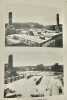
Petite tache sur le bord inf. du 1er plat, intérieur très propre, par ailleurs en bonne condition. -


"Album du Musée de sculpture comparée, Palais du Trocadéro (5 volumes); première série : Epoque gallo-romaine - XIIe siècle; deuxième série : XIIIe siècle; troisième série : XIVe siècle - XVe siècle; quatrième série : XVIe siècle; cinquième série : XVIIe, XVIIIe et XIXe siècles."
Paris, Ch. Massin/Bruxelles, A. Louis de Meuleneere, s.d. (ca 1900). "33 x 46 (in-folio), 76 + 85 + 56 + 86 + 54 planches en N/B, sous étui carton d'édition illustré, dos toilé, fermé par 3 lacets , bon état (toutes les planches sont en très bon état; étui défraîchi; tous les lacets sauf 1, sont présents et en bon état)."
"Série complète en 5 volumes, chacun bien complet de toutes ses planches (ouvrage entièrement collationné par nos soins); en raison du poids important de cet exemplaire, des frais de port supplémentaires peuvent être demandés, selon la destination."
"Matière et beauté, la faïencerie de Nimy; de la Révolution à Louis-Philippe 1er (1789-1848)."
Mons, Faculté Polytechnique de Mons, 2006. 18 x 24, 129 pp., très nombreuses figures en couleurs et en N/B, broché, très bon état.
Catedrala romano-catolica "Sfantul Mihail" si Palatul episcopal din Alba Iulia. Cercetari arheologice (2000-2002)
Alba Iulia, ALTIP, 2008. Fort in-4°, cart. éditeur ill., 710 pp., texte sur 2 col., très nbr. ill. en noir et en couleurs.
Catalogue d'exposition avec un résumé en anglais de 72 pp. A l'état de quasi neuf. - Frais de port : -France 9,65 € -U.E. 11 € -Monde (z B : 17 €) (z C : 42 €)
Eeuwige Steen van Nijl tot Rijn - groeven en prefabricatie
Gemmentekrediet 1990 in4. 1990. Broché. iconographie en noir et blanc et en couleurs



Très Bon Etat de conservation intérieur frais bonne tenue
Quelques inscriptions libyques de Tunisie.
P., Larose, 1938. In-4 br., 77 pp., 3 pl de fig.
Pâle mouillure aux pages, sans gêne pour la lecture du texte. - Frais de port : -France 5,7 € -U.E. 8 € -Monde (z B : 12 €) (z C : 22 €)
Hippone la Royale
in 8 broché,faux-titre,titre,120 pages sur papier glacé, figures et plans imprimerie officielle Alger 1954,très bon état
HIPPONE LA ROYALE, ANTIQUE HIPPO REGIUS
Non précisé. 1954. In-8. Broché. Etat passable, Tâchée, Dos abîmé, Intérieur acceptable. 114 pages. Photo en noir et blanc en frontispice. Illustré de nombreux plans et photos en noir et blanc dans et hors texte. Etiquette de code sur le dos. Tampons et annotation de bibliothèque sur le 1er plat et en page de titre. Annotations en page de garde et quelques unes dans le texte. Feuillet 59-60 découpé avec illustration manquante.. . . . Classification Dewey : 930.1-Archéologie
Les grandes étapes de son histoire... Classification Dewey : 930.1-Archéologie
HIPPONE LA ROYALE. ANTIQUE HIPPO REGIUS.
CHEZ L AUTEUR.. 1954. In-8. Broché. Bon état, Couv. légèrement passée, Dos satisfaisant, Intérieur frais. 114 pages. Nombreuses illustrations en noir et blanc dans le texte et hors texte.. . . . Classification Dewey : 930.1-Archéologie
Classification Dewey : 930.1-Archéologie
Hippone la Royale - Antique Hippo Regius
Direction de l'Intérieur et des Beaux-Arts Plaquette 1950 Plaquette brochée in-8, 114 pages, titre reporté sur le dos au bic, nombreuses photographies et plans ; rousseurs sur la couverture, bon état. Livraison a domicile (La Poste) ou en Mondial Relay sur simple demande.
Monuments Chrétiens d'Hippone, ville Episcopale de Saint Augustin.
Paris, Arts et métiers graphiques, 1954. In-4 broché. 260 pp. Bien complet de l'addenda et errata. Illustré de nombreuses reproductions photographiques en noir in texte ainsi que de schémas et plan + 1 planche en couleurs et une plan du site en fin de volume. Dos insolé sinon bel état.


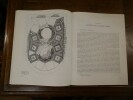
"Lorsque en 1924, jeune officier de marine, le hasard d'une affectation l'obligea à un séjour à Bône Erwan Marec décida que le site de l’antique cité d'Hippone méritait des fouilles systématiques, mais ce fut à sa retraite qu'il découvrit finalement le site de l'antique cité d'Hippone qui fut une escale phénicienne, puis la capitale des rois numides Syphax et Massinissa, puis la seconde ville de l'Afrique Proconsulaire mais surtout le siège épiscopal de Saint-Augustin."
Monuments chrétiens d’Hippone ville àpiscopale de Saint Augustin. Ministère de l’Algérie sous-direction des Beaux-Arts.
Paris, Arts et Métiers Graphiques 1958, 273x205mm, 260pages, demi-percaline. Titre aud dos doré, couverture conservée, étiquette de cotation au bas du dos.

nombreuses illustrations, quelques planches en couleurs, Cachet de bibliothèque. Pour un paiement via PayPal, veuillez nous en faire la demande et nous vous enverrons une facture PayPal
Monuments chrétiens d'Hippone, ville épiscopale de saint Augustin
Paris, Arts et Métiers graphiques 1958 260pp. avec figures dans le texte et planches hors texte et un plan dépliant, 27cm., br.orig., un des 2000 exemplaires numérotés (no.1663), bon état, R102136
Monuments chrétiens d'Hippone, ville épiscopale de Saint Augustin.
Arts et Métiers Graphiques Arts et Métiers Graphiques, Ministère de l'Algérie, 1958, 260 p., broché, environ 21x21cm. Couverture insolée et coins des plats légèrement cornés. Bon état pour le reste et intérieur bien propre.
Merci de nous contacter à l'avance si vous souhaitez consulter une référence au sein de notre librairie.
Monuments chrétiens d'Hippone ville épiscopale de Saint Augustin
Arts et Métiers Graphiques 1958, in-4 (27 x 21 cm) broché, 260 p. (très bon état) Tirage limité à 3500 exemplaires, 1 des 2000 numérotés réservés au Ministère de l'Algérie. Nombreuses figures in-texte et planches HT, plan dépliant. Importante étude d'archéologie chrétienne, par le directeur des fouilles d'Hippone.
Monuments chrétiens d'Hippone, ville épiscopale de saint Augustin, par Erwan Marec,... [Préface de Jean Lassus.]
Paris, Arts et Métiers Graphiques 1958 In-4 26,5 x 21 cm. Broché, couverture bleu-gris, titre en bleu-marine sur le dos et le premier plat, 260 pp., notes en bas de page, 39 figures, 66 planches, index général, table des figures, table des planches, table des matières. Dos passé, intérieur en bon état.
Bon état d’occasion
Monuments chrétiens d'Hippone ville épiscopale de Saint Augustin.
Ministère de l'Algérie sous-direction des beaux-arts, Paris, Arts et métiers graphiques, (1958). In-4 broché, 260 pp., nombreuses figures in et hors texte dont illustrations photographiques, tirage limité à 3500 ex., un des 2000 numérotés.
Couverture lég. insolé, dos insolé. Bel ex. par ailleurs. - Frais de port : -France 7,15 € -U.E. 9 € -Monde (z B : 14 €) (z C : 24 €)
Monuments chrétiens d'Hippone ville épiscopale de Saint Augustin.
Paris: Arts et métiers graphiques, 1958 in-4 [21 x 27 cm], 262 pages, 38 figures, plan général se dépliant, 67 planches dont certaines en couleurs. Index général. Broché, couv. lég. défr. et dos un peu passé, autrement très bon exemplaire.
Monuments chrétiens d'Hippone ville épiscopale de Saint Augustin. (Paris: Arts et métiers graphiques, 1958). [M.C.: Algérie, archéologie chrétienne]
Véritable vie privée du Maréchal de Richelieu contenant ses amours et intrigues, et tout ce qui a rapport aux divers rôles qu'a joués cet homme célébre pendant plus de quatre-vingts ans
,Paris, Le club du meilleur livre 1954, XXIX-540 pp., 1 vol. in 8 relié pleine basane crème simulant un dossier scellé d'un cachet rouge dos lisse titré noir avec quelques griffures (reliure éditeur), 16 illustrations hors-texte, index onomastique et tableau chronologique in fine, exemplaire numéroté sur vélin, fac-similé volant d'une lettre de Richelieu.