 Write to the booksellers
-
Type
Book (32622)
Disk (1)
Engraving (1)
Magazine (1069)
Old papers (2)
Photographs (2)
Reprint (4)
-
Latest
Last 24h (9)
Last 3 days (20)
Last month (814)
Last week (5)
-
Language
Chinese (1)
Dutch (82)
English (52)
French (33526)
German (15)
Italian (16)
Latin (5)
Portuguese (1)
Spanish (3)
-
Century
16th (3)
17th (14)
18th (60)
19th (1743)
20th (14069)
21st (1477)
-
Countries
Belgium (4087)
Brazil (2)
Canada (6)
China (14)
Côte d'Ivoire (192)
Denmark (483)
France (24756)
Greece (7)
Netherlands (1711)
Switzerland (2443)
-
Syndicate
ALAC (6)
CLAM (107)
ILAB (11437)
NVVA (1063)
SLACES (1063)
SLAM (9751)
SNCAO (71)
LA VOIX DES MONUMENTS NOTES ET ETUDES D'ARCHEOLOGIE CHRETIENNE.
LES EDITIONS VAN OEST. 1930. In-4. Broché. Etat d'usage, Couv. légèrement passée, Dos satisfaisant, Quelques rousseurs. 330 pages + LXIII planches en noir et blanc - illustration en noir et blanc en frontispice - ouvrage recouvert d'un plastique transparent - quelques rousseurs sans réelle conséquence sur la lecture.. . . . Classification Dewey : 930.1-Archéologie
Sommaire : la voix des monuments archéologie et histoire de l'art - le développement iconographique de l'art chrétien - une ancienne reine de l'adriatique ravenne - le chapiteau théodosien - que doit être manuel d'épigraphie chrétienne ? etc. Classification Dewey : 930.1-Archéologie


Catalogue of Sculpture in the Archaeological Museum of Thessaloniki I
Thessaloniki, national bank cultural foundation, 1997 Linnen binding with dustjacket, 408 pages, 30 x 22 cm, illustrated. *fine condition. ISBN 9602501383.
Catalogue of Sculpture in the Archaeological Museum of Thessaloniki I
Carte Archéologique de la Gaule. Fréjus, 83/3.
P., Académie des Inscriptions et Belles-Lettres, 2012. In-4° br., 513 pp. sur 2 col., 754 fig., ill. photogr. en noir et en couleurs in-t., 1 plan hors-texte in-fine, bibliographie, index.
Très bonne condition. - Frais de port : -France 8,4 € -U.E. 10 € -Monde (z B : 15 €) (z C : 33 €)
FREJUS antique.
Editions du patrimoine, Imprimerie Nationale éditions, Guides archéologiques de la France, 1998, couverture cartonnée à rabats illustrée, 15x21 cm., 95 pages. Illustrations noir et blanc et couleurs, carte, plans.
Bon état.
Les jardins de l'Histoire
,Paris, Bloud & Cie 1910, 292 pp., 1 vol. in 12 relié demi-percaline 'Bradel', pièce de titre
Souvenirs d'un vieil Athénien
Paris, Bloud et Cie 1911 x + 300pp., 19cm., 2e éd., br.orig., 2 cachets, bon état, G72929
Souvenirs d'un vieil Athénien
Paris, Bloud et Cie 1911 x + 300pp., 19cm., 1e éd., brochure originale, bon état, G120845
Der Trachtschmuck der älteren römischen Kaiserzeit im Gebiet zwischen unterer Elbe und Oder und auf den westlichen dänischen Inseln Brandenburg, Mecklenburg, Fünen, Langeland, Lolland.
Neumünster, 1976. 4to. 256 pp. With 171 illustrations. Signed by author.
Göttinger Schriften zur Vor- und Frühgeschichte, 18.
De la chasse au troupeau en Méditerranée occidentale. Les débuts de l'élevage dans le bassin de l'Aude.
P., EHESS, 1980. In-4 broché, 145 pp., 51 fig. et plans en noir dans le texte, importante bibliographie. (Archives d'écologie préhistorique, 5).
Bonne condition. - Frais de port : -France 5,7 € -U.E. 8 € -Monde (z B : 12 €) (z C : 22 €)
De la chasse au troupeau en Méditerranée occidentale. Les débuts de l'élevage dans le bassin de l'Aude.
P., EHESS, 1980. In-4 broché, 145 pp., 51 fig. et plans en noir dans le texte, importante bibliographie. (Archives d'écologie préhistorique, 5).
Bonne condition. - Frais de port : -France 5,7 € -U.E. 8 € -Monde (z B : 12 €) (z C : 22 €)
Clémenceau suivi d'une étude de Louis Lumet, avec citations de G. Clémenceau sur les Etats-Unis d'Amérique . Texte français et anglais.
,Paris, Crès 1919, 237 pp., 1 vol. in 12 br. illustrations hors-texte
RAPPORTS SUR LES ETUDES HISTORIQUES
Imprimerie Impériale, Paris. 1867. In-4. Relié demi-cuir. Etat d'usage, Couv. convenable, Dos satisfaisant, Mouillures. 154 pages. Titre, date, roulettes et filets dorés sur le dos. Etiquette de code sur la couverture. Quelques tampons de bibliothèque. Quelques rousseurs.. . . . Classification Dewey : 930.1-Archéologie
Recueil de Rapports sur les Progrès des Lettres et des Sciences en France. Les études de langue et littérature grecques en France. Les études relatives à l'histoire du Moyen Age. Les progrès de la philologie celtique en France... Classification Dewey : 930.1-Archéologie
DIE PHONIZIER IM ZEITALTER HOMERS.
, Mainz, Verlag Philipp Von Zabern, 1990., Gebunden, original kartoniert illustriert koloriert, 21x23,5cm, 260pp, illustriert koloriert und s/w.
DIE PHONIZIER IM ZEITALTER HOMER,
, Mainz, Philipp von Zabern, 1990, Gebunden, kartonniert, 210 x 235mm., 260S., illustriert. ISBN 3 8053 1173 7. ISBN 3805311737.
Feine Goldschmiedearbeiten und Elfenbeinschnitzereien, von den in ihrem EinfluSbereich lebenden Fursten der archaischen Zeit sehr begehrt und schlieSlich in deren Grabern als Beigaben hinzugelegt, dokumentieren die hohe Kultur dieses Kauffahrervolkes. Guter Zustand.
Bibliographie raisonnée de l'histoire de Genève des origines à 1798.
Genève, Jullien, 1966. Fort volume in-8 broché (633 pages, tout de même), couverture imprimée sous jaquette illustrée. Index des auteurs en fin de volume.
Mémoires et documents publiés par la Société d'Histoire et d'Archéologie de Genève, tome XLIII.
La vie quotidienne au temps de l'Escalade.
Genève, Labor et Fides, 1952. Grand in-8 broché, couverture décorée. Illustré de hors-texte en noir.
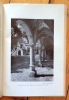
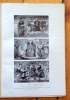
Exemplaire numéroté (43), sans mention de tirage.
Westerhus : Medieval Population and Church in the Light of Skeletal Remains
Lund, 1960 146pp. + 39 plates & 24 tables out of text, 31cm., text in English, Doctoral Dissertation (University of Lund), softcover, stamp at verso of title page, text is clean and bright, weight: 1.1kg., G112416
Vues des ruines de Pompéi, d'après l'ouvrage publié à Londres en 1819 par Sir William Gell et J.-P. Gandy, architecte, sous le titre De Pompeiana.
Paris, de l'Imprimerie de Firmin-Didot, Imprimeur du Roi, 1827. In-folio (344 x 262 mm), 142-(2) pp., page de titre illustrée d'une vignette n/b, les pages de texte sont illustrés de 16 (15 + 1 du titre) vignettes sur papier de Chine montées (bandeaux et culs de lampe), 107 (ou 103 dont 4 double planches) planches dont le frontispice et XVIII planches de peintures dont 6 en couleurs. Cette édition française est augmentée de 52 pl. de vues et de 8 pl. de peintures par rapport à l'édition anglaise. Reliure d'époque demi-veau, dos lisse orné de roulettes et filets dorés, plats, mors coupes, coiffes et coins frottés, 2 coins ouverts, page de titre empoussiéré, quelques rousseurs, essentiellement dans les marges des feuillets de texte, quelques pl. brunies ou avec rousseurs, ex-libris collé au contreplat (Docteur Jean Mornet), inscription manuscrite sur la garde blanche, 1 pl. déreliée, exemplaire complet des vignettes sur Chine montées et des planches.
Werke der Antike im Kunsthaus Zürich.
Zürich, Kunsthaus Zürich, 1976.
135 p., ills. Stiff wrs. 21x19 cm (Mainly sculpture)
BULLETIN MONUMENTAL TOME 142 N°3 - L'ARCHITECTURE PRE-ROMANE ET ROMANE EN ANGLETERRE - PROBLEMES D'ORIGINE ET DE CHRONOLOGIE PAR RICHARD GEM
SOCIETE FRANCAISE D'ARCHEOLOGIE. 1984. In-12. Broché. Bon état, 1er plat abîmé, Dos satisfaisant, Intérieur frais. Paginé de 233 à 272. Nombreuses photos en noir et blanc dans le texte. Renfort adhésif sur le premier plat. . . . Classification Dewey : 930.1-Archéologie
Publication trimestrielle. Classification Dewey : 930.1-Archéologie
BULLETIN MONUMENTAL TOME 142 N°3 - TABLE DES MATIÈRESL’architecture pré-romane et romane en Angleterre. Problèmes d’origine et de chronologie, par Richard Gem.Essai sur l’iconographie des statues-colonnes de quelques portails du premier art gothique
SOCIETE FRANCAISE D'ARCHEOLOGIE. 1984. In-12. Broché. Bon état, Couv. convenable, Dos satisfaisant, Intérieur frais. Paginé de 233 à 355. Nombreuses photos et plans en noir et blanc dans le texte.. . . . Classification Dewey : 930.1-Archéologie
Publication trimestrielle. TABLE DES MATIÈRES : L’architecture pré-romane et romane en Angleterre. Problèmes d’origine et de chronologie, par Richard Gem.Essai sur l’iconographie des statues-colonnes de quelques portails du premier art gothique, par Michèle BeaulieuMélanges : Les maîtres-mosaïstes de l’Antiquité au xvme siècle. A propos d’un livre récent, par Henri LavagneActualité. — Calvados. Dives, une série de vitraux du XIVe siècle retrouvés (Françoise Perrot).—Essonne. Ëtampes : buste de Houdon par Elias Robert (Henri-Paul Eydoux). —Puy de Dôme. Découverte d’un chapiteau roman dans l’ancienne abbatiale Saint-Pierre de Mozac (Anne Courtillé). — Seine. Paris : fouilles archéologiques du Grand Louvre, cour Napoléon (Pierre-Jean Trombetta). — Seine-Saint-Denis. VMemorable, cimetière mérovingien, médiéval et post-médiéval (Gilbert-Robert Delahaye). — Vienne. Découverte à Poitiers d’un oratoire du haut Moyen Age (Brigitte Camus et Nelly Le Masne). — Proche-Orient. La présence des croisés sur le site de l’antique Ebba (Henri-Paul Eydoux) Chronique, par Françoise Boudon, Herveline Delhumeau et Jacques ThiébautBibliographie. — Palast und Hütte, Beiträge zum Bauen und Wohnen in Altertum, ed. par D. Papenfus et V. M. Strocka (Noël Duval). — Ernö Marosi, Die Anfänge der Gothik in Ungarn. Esztergom in der Kunst des 12-13. Jahrhunderts (Claudia Rabel-Jullien).—Anne-Marie Legras, Les commanderies des templiers et des hospitaliers de Saint-Jean de Jérusalem en Saintonge et en Aunis (Henri-Paul Eydoux). — Jacques Le Maho, La motte seigneuriale de Mireille (XIe-XIIe siècles). Recherches historiques et archéologiques (Jean Mesqui). — Jacques Harmand, Pierrefonds. La forteresse d’Orléans : réalités (Jean Mesqui). — Olivier Meyer, Laurent Bourgeau, David John Coxall, Nicole Meyer, Caroline Relier et Michael Wyss, Ville de Saint-Denis. Recherches archéologiques urbaines, rapport 1982 (Pierre-Jean Trombetta). — Conrad André Beerli, Rues basses et Molard. Genève du XIIIe au XXe siècle. Les gens, leurs quartiers, leurs maisons (Geneviève Douillard). -— Bernhard Laule, Schloss Madrid. Studien zur Planungsmethode und zur Ikonographie eines Profanhaus des 16. Jahrhunderts in Frankreich (Jean Guillaume). — Anthony Blunt, Art et architecture en France. 1500-1700 (Jean Guillaume). — E. Nesle, Voyage d’un touriste dans l’arrondissement de Châtillon-sur-Seine (Jean-Bernard de Vaivre). — André Guillaume, La Côte-d’Or. Guide du touriste, de l’archéologue et du naturaliste (Jean-Bernard de Vaivre). — Roma anno 1300, ed. A. M. Romanini (Luiz C. Marques F°). — Mosaïque. Recueil d’hommages à Henri Stem (Jean-Pierre Aniel). — Alain Erlande-Brandenburg, La tenture de la vie de saint Remi (Véronique Notin). —-Colin Campbell, Medieval Flags (Jean-Bernard de Vaivre). — Faustino Menendez Pidal de Navascues, Heraldica medieval española (Jean-Bernard de Vaivre). — Marti de Ri-quer, Heraldica catalana desde Vany 1150 al 1550 (Jean-Bernard de Vaivre). — Jean-Pierre Adam, Dégradation et restauration de Varchitecture pompéienne (Pierre-Jean Trombetta) Résumés analytiquesEnglish Summaries (traduction par Patricia Stirnemann).Deutsche Zusammenfassungen (traduction par Marianne Barrucand)..Éditions du Centre national de la Recherche scientifique. Classification Dewey : 930.1-Archéologie
"Annales de la Fédération Archéologique et historique de Belgique (2 tomes en 1 volume); tome 1 : Compte rendu des travaux du Congrès tenu à Anvers les 28-30 septembre 1885, sous la direction de l'Académie d'archéologie de Belgique par Génard P.; tome 2 : Compte rendu des travaux du congès tenu à Namur, les 17-19 août 1886, sous la direction de la Société Archéologique de Namur par H. de Radiguès de Chennevière."
Anvers, Etablissement Typographique J. Plasey, 1886/Namur, Typographie Lambert-de-Roisin, 1887. 17 x 25, 2 tomes en 1 volume, 251 + 407 pp., 10 planches dans le tome 2, reliure dos/coins toilés, bon état (1 étiquette ancienne ex-bibliothèque).
Genava. Bulletin du Musee d'Art et d'Histoire de Geneve du Musee Ariana
Reference : 17122
Genava. Bulletin du Musee d'Art et d'Histoire de Geneve du Musee Ariana et de la Societe auxiliaire du Musee la Bibliotheque publique et universitaire. XXIII, 1945.
Geneve, Albert Kundig, 1945,IN4 broche,339p.,22 planches ht et illustrations in texte,
bon etat,legeres rousseurs tranches, Remise de 20% pour toutes commandes supérieures à 200 €
La toponymie des voies romaines et médiévales. Les mots des routes anciennes
éditions errance 2006 In-8 broché 24 cm sur 16. 196 pages. Bon état d’occasion.
Bon état d’occasion

