 Write to the booksellers
-
Type
Book (75)
Magazine (6)
Music sheets (7)
-
Century
16th (1)
18th (2)
19th (10)
20th (23)
21st (3)
-
Countries
Belgium (3)
Denmark (1)
France (83)
Italy (1)
-
Syndicate
ILAB (12)
SLAM (11)
Loi relative à la peine de mort, et au mode d’exécution qui sera suivi à l’avenir. Donnée à paris, le 25 mars 1792. - [AUTHORIZING THE GUILLOTINE AS FRANCE'S STANDARD METHOD OF EXECUTION]
(Paris, L'Imprimerie Royale, 1792). 4to. Stitched in later marbled wrappers, with printed book label ""Collection Quarré-Reyboyrbon, Lille"" to inside of front wrapper. Contemporary handwritten inscription above head-piece ""Bon pour imprimeur chez M. Descamps Douay le 12 avril 1792."" (presumably in the hand of Quarré-Reybourbon). A bit of brownspotting and soiling, but overall very nice. 4pp.

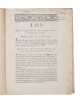
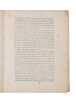
Scarce first printing of the legal document that led to the guillotine becoming France's standard method of judicial execution. This groundbreaking decree of the National Assembly, given 20 March 1792, suspended all pendig death punishments and authorized the use of necessary expenses to achieve a more humane method of execution throughout the kingdom. The methods for achieving this humane form of execution is explained in the the annexed text signed by Antoine Louis (see below), the permanent secretary of the Academy of Surgery. The decree is as follows: “The National Assembly, considering that the uncertainty regarding the method of execution of Article III of Title 1 of the Penal Code, suspends the punishment of several criminals who are sentenced to death" that it is urgent to put an end to inconveniences which could have unfortunate consequences" that humanity requires that the death penalty be as painless as possible in its execution, decrees that there is an emergency.” The Penal Code of 1791, title 1, article 3 (Tout condamné aura la tête tranchée, “Every condemned person will have their head cut off”) should be executed “according to the manner indicated and the method adopted by the consultation signed by the Permanent Secretary of the Academy of Surgery, which remains annexed to this decree” and the National Assembly “consequently authorizes the Executive Power to incur the necessary expenses to achieve this method of execution, so that it may be uniform throughout the Kingdom.” (p. 1) Prior to 1791, under the Ancien Régime, there existed a variety of means of capital punishment in France, depending on the crime and the status of the condemned person. In 1791, there was a campaign towards the abolition of the death penalty, but later that year, The National Assembly refused to pass such a law. However, torture was abolished and a single method of execution was declared, that of beheading, which had previously only been applied to nobles. In 1791-92, the development of a mechanical beheading device was set in force by a committee in order to make the death penalty ""as painless as possible in its execution"" and ""uniform throughout the kingdom”. Note that before the use of a mechanical beheading device, manual beheading and a variety of other methods of execution had been in force in France. Ironically, what is now known as the guillotine was developed with the help from Louis XVI – who was a skilled amateur locksmith – with regards to the shape of the blade. This change towards a more painless method was ignited by physician Joseph-Ignace Guillotin in October 1789 at the National Assembly. Later, a committee was formed under Antoine Louis, the inventor of the guillotine, and physician to the King and Secretary to the Academy of Surgery. This committee included Guillotin, and although he did not invent the guillotine and opposed the death penalty, his name became an eponym for it. After its adoption, the device remained France's standard method of judicial execution until the abolition of capital punishment in 1981. The last execution with a guillotine in France took place in 1977.

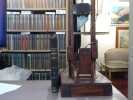
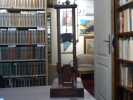
Réplique en miniature de GUILLOTINE vraisemblablement du Bagne de Cayenne.
S.N. S.L. (Guyane) XXe siècle Très rare réplique en miniature de GUILLOTINE H: 60 cm - Long.: 31 cm - Larg.: 19 cm. Vraisemblablement du Bagne de Cayenne réalisée dans la première partie du XXe siècle en effet, certains détails représentés ici sont présents sur la guillotine de Cayenne et absents de la représentation d'autres "bois de justice". Fabrication très soignée en bois et métal très représentative du travail de certains forçats au bagne de Cayenne. Quelques vis et la corde ont été changés, objet très décoratif en bel état.
VOIR IMAGE POUR LA TABLE DES MATIERES
BROCHE 21 x30 - éditions SALSA - 43PP - REVUE TRIMESTRIELLE N°27 ( JUILLET - SEPTEMBRE 1997 )
ANTHROLOGIE HISTOIR PHILOSOPHIE LITTERATURE PARADES
HISTORIA - N° 897 - Septembre 2021
Revue de 98 pages, format 200 x 265 mm, illustrée, brochée couverture couleurs, bon état
Dossier : "La grande saga des Francs, du royaume chrétien au premier empire européen". Articles : Germaine Leloy, la dernière femme guillotinée, etc.
Phone number : 04 74 33 45 19
Les Femmes des Tuileries.Les dernières années de Marie Antoinette
Fort volume in 4 broché,couverture rempliée,faux-titre, portrait de la Reine en frontispice,titre,715 pages, illustrations hors-texte,E.Dentu 1889.Rousseurs éparses, plus fortes en début et fin de volume,ainsi qu’à certaines pages,dos renforcé,avec de petits manques restauré. Exemplaire très solide et très correct
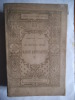
FOUQUIER TINVILLE ( le pourvoyeur de l'échafaud )
1320 broché - 13 x 20,5 - 247 pp - année 1937 - Librairie Hachette -
ANTHROLOGIE HISTOIR PHILOSOPHIE LITTERATURE PARADES
Jean Ray avec une postface de Henri Vernes ( traduit du néerlandais par Francis Goidts)
Reference : 22242
(1993)
Harry Dickson : La Guillotine ensorcelée précédé de Le mystérieux retardataire
1993 in-8 broché - 1993 - 138p - illustrations de Jean-Michel Nicollet - Ed. Claude Lefrancq - coll. Attitudes Mystère
bon état - ancienne étiquette de prix sur la couverture
1793. Lyon contre la Convention. Les Francs-maçons sur l'échafaud.
1987 Elie Bellier, Editeur - 1987 - In-8, broché, couverture illustrée - 206 p.
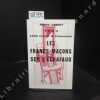
Bon état - Un coin très légèrement émoussé
BARÈRE DE VIEUZAC. L'Anacréon de la guillotine
Paris Librairie Jules Tallandier 1929 in 8 (20,5x13,5) 1 volume broché, couverture illustrée, portrait de Barère de Vieuzac en frontispice, 354 pages [1], non coupé, avec des illustrations hors-texte. Collection bibliothèque '' Historia ''. Bertrand Barère ou Barère de Vieuzac, Tarbes 1755-1841, homme politique, juriste, et orateur révolutionnaire français, surnommé: Le troubadour de la guillotine, par l'écrivain François-René de Chateaubriand. Edition originale. Très bel exemplaire
Très bon Broché
BARÈRE DE VIEUZAC. L'Anacréon de la guillotine.
Paris, Jules Tallandier, 1929. Plaquette in-8, broché, planches hors-texte.
ENVOI de l'auteur. Quelques pages mal coupées. [6843]

Barère de Vieuzac l'anacréon de la guillotine
1929 éditios Jules Tallandier 1929 In8 broché 350 pages ilustrations dans le texte
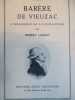
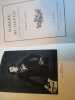
très bon état
Bourreaux de père en fils. Les SANSON 1688-1847.
Albin Michel Paris 1989 In-8 ( 225 X 145 mm ) de 298 pages, broché sous couverture illustrée. Edition originale. Bon exemplaire.

LA GUILLOTINE ET LES EXECUTEURS DES ARRETS CRIMINELS PENDANT LA REVOLUTION.
, Paris, Perrin et Cie, 1914., Relie, demi - toile rouge, plats marbre rouge, piece de titre dore, 12,5x19,5cm, 378pp.
D' apres des documents inedits tires des Archives de l' Etat.
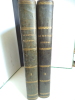
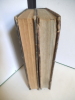
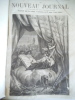
Le nouveau journal. Les mémoires de SANSON. Par le publiciste d’OLBREUSE d’après les documents d’époque.
Le nouveau journal. Les mémoires de SANSON. Par le publiciste d’OLBREUSE d’après les documents d’époque. Nouvelle diffusion de l’édition de 1862-1863 du 6 février 1864 a janvier 1866. Dans le Nouveau journal en deux volumes in 4 demi-cuir vert, titre, filets roulette, tomaison dorés. Parution tous les samedis en livraisons de 16 pages, texte sur 3 colonnes, nombreuses illustrations gravées sur bois, dans le texte ; les lecteurs rendus captifs par la forme de feuilleton découvrent au fil des mois une histoire à multiples rebondissements. Les nombreuses illustrations participent à la dramaturgie des scènes. Exécutions célèbres de CARTOUCHE, DAMIEN , Louis XVI, Charlotte CORDAY, La DU BARRY, DANTON, Camille DESMOULINS, ROBESPIERRE, CADOUDAL, LACENAIRE etc. Supplices : de la question, de la roue, de la pendaison, du fer, de la guillotine etc. Rare complet en deux volumes. Cette revue disparaît. L’éditeur annonce qu’ayant crée ce journal pour la publication des mémoires de Sanson et ayant fini sa tache arrête sa publication.
LINGUET Simon-Nicolas-Henri (Reims 1736 - guillotiné à Paris 27 juin 1794).-
Reference : ORD-14542
Histoire du siècle d'Alexandre. Seconde édition, corrigée & augmentée.-
Amsterdam et se trouve à Paris chez Cellot. 1769. In-12 (97 x 174mm) pleine basane scarifiée, dos à 5 nerfs caissons or, pièce de titre maroquin rouge, gardes peignées, tranches rouges, VIII, 466, (3) pages (errata et catalogue). Sceau imprimé sur le titre, texte difficile à lire entourant un cavalier en armure qui pourrait être un templier ou un croisé. Coins lgt amortis sinon bel exemplaire en reliure de l'époque.
LA VEUVE ou l'histoire des châtiments
352 PAGES-IN 8-JAQUETTE ILLUSTREE D'UNE PHOTO DE GUILLOTINE-ICONOGRAPHIE SUR 8P-(4C)
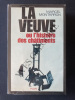
PLON COUVERTURE RIGIDE ETAT TRES BON
Almanach de la Révolution française. Tome I: Des Etats Généraux au Neuf-Thermidor. Tome II: Du Neuf-Thermidor à Waterloo. (2 volumes)
1965 Editions Le Club Français du Livre - 1965 - Deux volumes in-8, format à l'italienne, cartonnages toilés avec illustration contrecollée sur les 1er plat, sous emboîtage illustré de l'éditeur - 351 p. & 369 p. - Riche iconographie in et hors texte en N&B + complet de sa carte dépliante
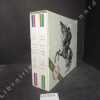

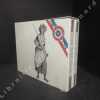
Bon état - Renforts de scotch en bas de l'emboîtage
MAURICE B. - DE BAST A. - FOURNIER E. - DE LA MONTAGNE L. - MOREL J. - ASSE E. - PROTH M. - BABOU H. - DUPRAY DE LA MAHERIE P. - DE LESCURE M. - BOSCOWITZ A.
Reference : QWA-11033
Le Livre rouge - Histoire de l'Echafaud en France
Librairie Parisienne, 1865, in-folio rel. 1/2 chagrin (35,5 x 28,5), V-358 p., orné de 50 portraits dessinés et gravés par Boulay, Bailly, Vernier, Bocourt, Fath, Allard-Cambray, Hotelin, Hildibrand, Gusmand, Chapon, Trouvé, Barband…., bonne reliure mais frottée aux angles, dos à 5 faux-nerf, bon exemplaire.
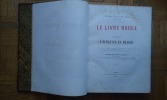
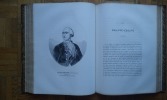
Une galerie de portraits de victimes plus ou moins célèbres de l'échafaud. Voir le sommaire sur photos jointes
de la Vendée.... au Mont TerribleLES BOUCHOYEURS DE LA REVOLUTION LA REVOLTE ET LA TERREUR
broché - 15X21- 283 pp- éditions JACQUES et DEMONTROD
ANTHROLOGIE HISTOIR PHILOSOPHIE LITTERATURE PARADES
Paroles de bourreau. Témoignage unique d'un exécuteur des arrêts criminels.
Broché, 23X14 cm, 2002, 319 pages, illustrations en noir, éditions imago. Bon exemplaire.

Charlotte CORDAY étude historique avec documents inédits
in 12 broché,faux-titre,titre,157 pages non coupé, Sartorius F H herluison 1862 édition originale
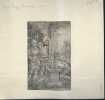
Titus Manlius
Scène représentant la décapitation du fils de Titus Manlius. Rare. En feuille. Coupé à la cuvette. Bon Avant 1550 25,5 x 37 cm
édition originale
Point de vue Couverture : Marcel Cerdan ira en AmériqueParis, la guerre des affiches - Trieste : la guerre des partisans - Ces six généraux commandent... l'armée la plus pacifique du monde : 106 hommes - Suzanne Renaud (la pin-up girl) - M. de Paris, bourreau, a guillotiné son 100e "client" : le Dr. Petiot. Prison de la Santé, 25 mai à l'aube... - La France va-t-elle devenir le pays le plus sportif d'Europe ?
N° 63 - 30 mai 1946 - revue illustrée - in-4 broché - 12 pages
bon état
Histoire de la Révolution Française.
In 8 demi chagrin rouge à nerfs, titre, caissons dorés, plats percaline chagrinée rouge, filets à froid encadrant les plats. Faux-titre, frontispice gravé, sous serpente Portrait de Louis XVI, titre, 663 pages, tranches dorées, gravures sur acier, hors texte sous serpente. Tours A.MAME & Cie imprimeurs-libraires 1860. Marge extérieure,plus courte du début de volume à la page 28. Sinon bon exemplaire.
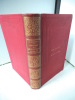
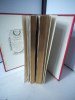
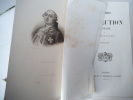
PROCES CRIMINELS. CASTAING Edme Samuel (Alençon 1796 - Guillotiné en 1823).-
Reference : ORD-17301
Accusé d'avoir empoisonné Hyppolyte Ballet, d'avoir soustrait et détruit un testament, et d'avoir enfin empoisonné Auguste Ballet.-
Paris. Tiger. Sans date, ca 1830 - 1850. Petit in-12 (94 x 146mm) broché, sans couverture, 107 pages. Frontispice gravé qui semble n'avoir aucun rapport avec le sujet du livre. Exemplaire en état moyen, rare.

