 Write to the booksellers
-
Type
Book (330)
Magazine (39)
-
Language
Dutch (1)
French (367)
Portuguese (1)
-
Century
18th (3)
19th (25)
20th (198)
21st (36)
-
Countries
Belgium (51)
Brazil (2)
China (1)
Denmark (3)
France (311)
Switzerland (1)
-
Syndicate
CLAM (18)
ILAB (131)
SLAM (109)
Histoire de la Franc-Maçonnerie Universelle, son rituel, son symbolisme. Tome III.
Paris, Editions Demarge, 1966 ; in-8 carré ; cartonnage de l'éditeur illustré en rose, bleu, noir ; 536 pp., 200 illustrations, gravures, documents, photographies.
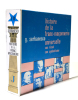
Edition originale. De la Seconde Restauration au coup d'état du 2 décembre 1851 par le futur Napoléon III ; La Franc-Maçonnerie roumaine ; La Franc-Maçonnerie italienne.


La FRANC-MACONNERIE EGYPTIENNE de MEMPHIS-MISRAÏM
Un ouvrage de 371 pages, format 160 x 240 mm, illustré, broché couverture couleurs, publié en 2003, Editions Dervy, bon état
2e édition, revue, corrigée et augmentée. Préface de Robert Amadou
Phone number : 04 74 33 45 19
Les FRANCS-MACONS
Un ouvrage de 189 pages, format 120 x 180 mm, illustré, broché couverture couleurs, publié en 1960, Editions du Seuil, collection "Le Temps qui Court", bon état
Phone number : 04 74 33 45 19
L'énigme des Templiers et le Saint-Suaire.
Bruxelles, Editions J.-M. Collet, 1988. 15 x 22, 168 pp., photos en N/B, broché, bon état.
RECHERCHES sur DIDEROT et sur l'ENCYCLOPEDIE : n° 4 - Avril 1988
Publication semestrielle de 200 pages, format 160 x 240 mm, brochée, publiée en 1988, Société Diderot, bon état (avec inscription manuscrite sur la couverture)
Au sommaire : Diderot, Langres et la religion ; La candidature de Diderot à la Société Royale de Londres ; Diderot et Nicolas-Antoine Boulanger ; Rétablissement du déséquilibre et nouvelle temporalité : à propos de quelques métaphores de "Neveu de Rameau" ; Diderot entre les Jésuites et les Francs-maçons ; La réception des œuvres et des idées de Diderot en Hongrie ; Le prospectus d'une nouvelle édition de l'Encyclopédie (Monaco, 1771) ; L'idée de roman dans l'Encyclopédie
Phone number : 04 74 33 45 19
SOUVENIR NAPOLEONIEN - N° 330 - Juillet 1983
Revue de 40 pages, format 210 x 270 mm, illustrée, brochée couverture couleurs, Souvenir Napoléonien, bon état
Dossier : La Franc-Maçonnerie sous le Premier Empire
Phone number : 04 74 33 45 19
Contemporains (Les). Silhouette politique et morale.
Paris, Pillet - Delaunay, 1818, in-8, broché, 138 pages.
![Contemporains (Les). Silhouette politique et morale.. [Swedenborg] Desquiron de St Agnan, A.T. :](https://static.livre-rare-book.com/pictures/CLA/1129_1_thumb.jpg)
La cinquième méditation (p. 80 à 88) est une présentation de Swedenborg, célèbre mystique suédois qui créa un système maçonnique qui existe encore dans plusieurs pays d’Europe.Les deux plats de couverture sont collés sur les gardes de l’ouvrage.
The Freemason's Magazine or General and Complete Library. Vol. 1 - 11. - [“THE ARCHTYPE OF LATER MASONIC PERIODICALS”]
London, Scatcherd & Whitaker Parsons Cawthorn, 1793 - 1798. 8vo. Bound in 11 volumes. Volume 2 - 11 uniformly bound in contemporary half calfs. Volume 1 in half calf with later marbled paper covered boards. Bindings with wear and stains. Leather on spines cracked. Volume 1 with reinforced hinges a dampstain to first leaves. A few volumes with dampstain to first leaves but, internally, generally a nice and clean set. 616, (4) pp. + 2 frontispiece and 7 engraved plates (4), 480 pp. + 7 plates (Wolstieg only calling for 5) (4), 450, (4) pp. + 7 engraved plates (4), 426, (6), 8 pp. + 7 engraved plates (Wolstieg only calling for 3) (2), 436 pp. + 6 engraved plates (Wolstieg only calling for 2) (2), 452, (4) pp. + 6 engraved plates (Wolstieg only calling for 4) (6), 438, (4) pp. + 8 engraved plates (Wolstieg only calling for 6) (4), 464, (4) pp. + 8 engraved plates (Wolstieg only calling for 4) (6), 506 pp. + 9 engraved plates (Wolstieg only calling for 4) (2), 430 pp. + 6 engraved plates (Wolstieg only calling for 1) (2), IV, 338, (8) pp. + 9 engraved plates (Wolstieg only calling for 2). This set has a total of 79 engraved plates, Wolfstieg only calls for 47 plates.
![The Freemason's Magazine or General and Complete Library. Vol. 1 - 11. - [“THE ARCHTYPE OF LATER MASONIC PERIODICALS”]. THE FREEMASONS MAGAZINE -](https://static.livre-rare-book.com/pictures/LLX/63098_1_thumb.jpg)
![The Freemason's Magazine or General and Complete Library. Vol. 1 - 11. - [“THE ARCHTYPE OF LATER MASONIC PERIODICALS”]. THE FREEMASONS MAGAZINE -](https://static.livre-rare-book.com/pictures/LLX/63098_2_thumb.jpg)
![The Freemason's Magazine or General and Complete Library. Vol. 1 - 11. - [“THE ARCHTYPE OF LATER MASONIC PERIODICALS”]. THE FREEMASONS MAGAZINE -](https://static.livre-rare-book.com/pictures/LLX/63098_3_thumb.jpg)
Rare complete run of the first English periodical dedicated to freemasonry, “the archetype of later Masonic periodicals” (Önnerfors, The Freemasons’ Magazine 1793–1798) published at a crucial time in the history of European Freemasonry in the immediate aftermath of the French Revolution. It represents one of the first efforts by the fraternity to define, consolidate and disseminate its intellectual and moral identity in public. Its contents - lodge proceedings, philosophical essays, antiquarian inquiries, biographical notices, poetry and finely executed symbolic engravings - reflect the full breadth of late Enlightenment Masonry. The importance of the work lies in its function as a precursor since it anticipates the Masonic journals in the 19th century and marks the transition of Freemasonry into a self-conscious, print-based intellectual culture. ”The Freemasons’ Magazine represent a forceful statement of British Freemasonry concerning its vigour, loyalty, and societal engagement. During 1794 the journal for the first time served as a platform to refute anti-Masonic writings that circulated in the public. Important apologies such as Defence of masonry (1730) or Cousto’s spiced account of his treatment by the Portuguese inquisition were republished. Parts of Ramsay’s ‘Oration’ were republished not just once but twice. We can also witness how the Knights Templar (called the ‘sublime degree of masonry’) entered the world of British Masonic imagination, long after the continental development. Nevertheless at the very same time Freemasonry in Britain was also celebrating technological progress in industry, agriculture, and science, which makes its relationship to modernity complex. The Freemasons’ Magazine managed to attract correspondents in different parts of the empire and even the USA. A particularly strong link throughout the first seven volumes was Edinburgh. In the last four volumes we find more material inserted from Ireland, at exactly the time when political tensions there erupted into a full-scale rebellion. The political tense years of 1797 and 1798 offer an intriguing insight into the British psyche at the time. Under constant (real and imagined) threat of French invasion, internally shaken by the Irish rebellion, uprisings, and repeated mutinies, public opinion was fuelled with anti-Masonic ideas, not at least by Robison’s book Proofs of a conspiracy. The Freemasons’ Magazine unfortunately did not survive 1798. Most importantly perhaps it can be regarded as the archetype of later Masonic periodicals, developing into a archtype Masonic press by the middle of the nineteenth century with titles such as he Freemasons’ Quarterly Magazine and Review (1834–53), The Masonic observer (1856–9), he Freemason’s Magazine and Masonic mirror (1856–71), the Freemason (1869–1951), some of them surviving well into the twentieth century. Whereas Masonic periodicals during the first century of their existence tied into the ongoing debates and controversies surrounding Freemasonry in culture and society, they developed more and more into purely internal membership magazines with little connection to the outside world.” (Önnerfors, The Freemasons’ Magazine 1793–1798). Wolfsteig 516
Protestations. Union Wallonne des écrivains et des artistes
Belgique, Editions J. Bonivert, 1987. 15 x 21, 67 pp., broché, très bon état.
Préface de Joseph Hanse.
Le nouveau livre du Rose-Croix
1958 Ubaldo Triaca/ Imprimerie A. Montourcy - 1958 - In-8, broché - 410 pages - Contient 2 bois et 3 planches en N&B hors texte
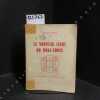
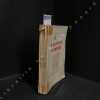

Assez bon - Couverture frottée - Déchirures sur le dos et marques de restaurations au ruban adhésif - Un tampon sur la première de couverture et sur la page de titre - Intérieur très propre propre Assez bon
Les sociétés secrètes : francs-maçons, templiers, rosicruciens, druides, cathares, compagnons, alchimiste, Graal.
Paris, De Vecchi Poche, 1987. 11 x 17, 277 pp., quelques illustrations en N/B, broché, très bon état.
préface de Serge Hutin.
Dictature de la Franc-Maçonnerie.
Paris, Grasset, 1934, in-12, br., 302 pp.
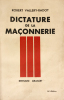
Edition originale en 2e tirage. Originaire de la région d’Avallon, Robert Valléry-Radot (1885-1970) était l’arrière petit-fils d’Eugène Sue. Profondément catholique, sa carrière débuta aux côtés de Claudel, Francis James, Mauriac, Psichari, Maritain, etc... puis il noua une grande amitié avec Bernanos aux côtés duquel il sera chef de la rédaction du Figaro. En 1941, il rejoint Vichy où il va assumer la rédaction des Documents maçonniques avec Marquès-Rivière et Bernard Faÿ.
Les francs-maçons.
Anvers, Hadewijch, 1990. 15 x 23, 135 pp., broché, très bon état.
"envoi présumé de l'auteur; traduit du Néerlandais par Laure Manceaux."
Mon itinéraire maçonnique.
Presses Universitaires de France, 1983. 13 x 21, 206 pp., broché, très bon état.
Esquisse sommaire de l'Enseignement de Bô Yin Râ. Conférence donnée à l'Institut Pranothérapique de Paris, le 10 juillet 1929.
Paris, Maisonneuve (Gembloux, Belgique, Imprimerie J. Duculot) ; in-8, broché ; 36 pp., couverture crème.
EDITION ORIGINALE ; sa "connaissance" prise dans toutes les "doctrines" les concepts et les symboles qui correspondent à ce qu'il "sait - de science certaine" être la Vérité et, avec ces "matériaux", il construit son enseignement qui est "l'Enseignement de la Réalité cosmique intégrale". Petites rousseurs dans le texte.
Franc-Maçonnerie (La) rendue intelligible à ses adeptes. Sa philosophie, son objet, sa méthode, ses moyens. 3e partie : "Le Maitre".
Sans lieu, Le Symbolisme, 1973 ; in-8, broché ; 271 pp., frontispice, lettrines, culs-de-lampe et nombreuses figures in-texte.
Exemplaire en bon état, le dos est légèrement passé et quelques passages ont été soulignés au stylo bille.
La Franc-Maçonnerie Rendue Intelligible à Ses Adeptes, Son Objet, Sa Philosophie, Sa Méthode, Ses Moyens Tomes 1, 2, 3
Paris "Le Symbolisme" 1970 In-8 230 + 222 + 271 pp, tome premier l'apprenti, tome second, le compagnon, tome troisième le Maître, les deux derniers volumes ont des pages surlignés au STABILO
Correct Brochés
Symbolisme (Le) Occulte de la Franc-Maçonnerie. Analyse interprétative du frontispice de la "Maçonnerie Occulte" de J.M. Ragon (réimpression de 1926).
Paris, Le Symbolisme (Collection du Symbolisme), 1928 ; in-8, broché ; (4), II, 51 pp., (1) f. de table, (1) f. blanc, frontispice sur feuillet libre, illustration in-texte, couveture grise.

Edition originale plutôt rare. Sens général ; le Delta lumineux ; le Zodiaque ; les deux Colonnes ; le Pentagramme Planétaire ; les Outils ; la Pierre des Sages ; Crâne et Acacia ; Pavé Mosaïque ; la Chaine d'Union. Petite trace de rousseur au second plat, bon exemplaire. Le frontispice a été dessiné par Oswald Wirth lui-même.
Histoire illustrée des Sociétés secrètes politiques et religieuses depuis les temps les plus éloignés jusqu’à nos jours.
3 forts volumes in 4 brochés,couverture mauve imprimée.544;664;533 pages.230 illustrations gravées sur bois dans le texte. A.Fayard 1879.édition populaire ensemble peu courant,dos fragiles.L’inquisition,les jésuites,les Francs-juges,les Francs-Maçons,les Templiers,les assassins,les Fénians(secte Irlandaise)les illuminés,la camorra,les communistes,les étrangleurs,les empoisonneurs,Les Khouans,les moulayes Tayeub

