 Write to the booksellers
-
Type
Book (3416)
Drawings (1)
Engraving (242)
Magazine (39)
Object book (1)
Postcards (1)
-
Latest
Last 24h (1)
Last 3 days (4)
Last month (32)
Last week (4)
-
Language
Dutch (5)
English (5)
French (3685)
German (1)
Italian (2)
Spanish (2)
-
Century
16th (3)
17th (78)
18th (146)
19th (478)
20th (978)
21st (127)
-
Countries
Belgium (203)
Canada (7)
China (6)
Côte d'Ivoire (10)
France (3074)
Switzerland (400)
-
Syndicate
ALAC (7)
CLAM (6)
CNE (2)
ILAB (1675)
NVVA (318)
SLACES (318)
SLAM (1328)
SNCAO (1)
Voyages autour du Monde et dans les contrées les plus curieuses du Globe.
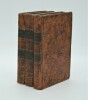
Depuis Christophe Colomb jusqu’à nos jours par les plus célèbres navigateurs, mis en ordre par WILLIAM SMITH.11 tomes sur 12 en 11 volumes sur 12. In 8 demi cuir vert à nerfs,titre,filets dorés,tranches jaspées,nombreuses gravures sur acier sous serpentes 9 cartes dépliantes. Au bureau de la publication sans date Tome I.363 pages.Introduction.Notice sur la vie de George Anson.Voyage autour du monde par Anson.Voyage autour du monde par le Commodore Byron.Voyage autour du monde par Bougainville.Frontispice,titre illustré et gravé,8 planches.Tome II.393 pages.Notice sur la vie du Capitaine Cook.Voyages du Capitaine Cook.9 Planches.Tome III.403 pages.Suite des Voyages du Capitaine Cook.Voyage au Pôle Austral et autour du monde.8 planches.2 cartes dépliantes Tome IV.396 pages.Suite des Voyages du Capitaine Cook. Troisième Voyage.8 planches plus 2 planches signalées dans le tome V par **.Tome V.396 pages.Suite des Voyages du Capitaine Cook.9 planches. Tome VI.388 pages.Notice sur la vie de La Pérouse.Voyage autour du monde par La Pérouse. Voyage de découvertes aux Terres Australes exécuté par le Capitaine Baudin. Voyage autour du monde de la Corvette L’uranie,commandé par M. Louis de Freycinet.Voyage autour du monde de la Corvette La Coquille commandé par M. Duperrey. Voyage de la Corvette Lastrolabe commandée par M. Dumont d’Urville. Expédition de Lastrolabe et de La Zélée par M. Dumont d’Urville.8 planches.(Il manque 1 planche en regard de la page 27).Tome VIII.441 pages.Précis historique.Voyages en Afrique par F.Le Vaillant.Second voyage de Le Vaillant en Afrique.8 planches.Tome IX.438 pages.Voyage dans l’intérieur de l’Afrique par Mungo-Park. Second voyage de Mungo-Park dans l’intérieur de l’Afrique. Voyage à Temboctou et à Jenné dans l’Afrique Centrale par René Caillé.Voyage en Afrique effectué dans le but d’explorer le cours et l’embouchure du Niger par Richard et John Lander.8 planches.Tome X.439 pages Voyage en Perse par Chardin.Voyage aux Indes Orientales d’après Miss Graham, Heber Skinner,etc.8 Planches.Tome XI.412 pages.Voyage en Chine et en Tartarie par Lord Macartney,Ambassadeur du Roi d’Angleterre.Voyage au Mont Caucase par Klaproth.Voyage en Egypte et en Arabie par Niéburth suivi dune description de l’Arabie d’après les voyages modernes de Burckardt,Rupell et Léon de Laborde.Voyage de Saint Peters Bourg Tauris par Kotzbue.8 planches.Et 2 cartes dépliantes Tome XII.400 pages. Notice sur la vie de Christophe Colomb.Voyages de Christophe Colomb.Conquête du Mexique par Fernand Cortez. Conquête du Pérou par Pizzare.Voyage aux Etats-Unis de l’Amérique Septentrionale d’après Basil-Hall,Levasseur et Georges De Beaumont.Voyage dans l’Amérique Septentrionale et particulièrement dans les territoires de la Floride,du Ouisconsin et au Canada par le Comte de Castelnau.Voyage au Pôle Nord et aux Régions Artiques par le Capitaine Ross. Voyage en Grèce et à Constantinople par F.C.H.Pouqueville. 8 planches.2 cartes dépliantes.Rousseurs éparses habituelles Assez bon état d’ensemble
[Leloir maurice, Dépreaux albert] - Société de l'Histoire du Costume.
Reference : 9284
(1912)
Costumes et uniformes. Revue historique documentaire...
1912 Paris, Leroy, 1912-1914; 10 fascicules in-4° brochés, couverture ocre imprimée en bleu nuit; 88 pages de texte ( pagination continue aux 10 fascicules) et 55 planches hors texte en noir et en couleurs.
Histoire du costume du XVIIème au XIX ème siècle. Exemplaire complet des 10 livraisons et de leurs couvertures, auquel il manque 2 planches (sur 57) les planches n°13 et n°23. (GrG)


L'Ethnographie. Numéro du centenaire. Nouvelle série. N° 53. Années 1958-1959
Paris, Librairie orientaliste Paul Geuthner 1959 In-4 28 x 19 cm. Broché, couverture beige, titre en noir sur le dos et le premier plat, 148 pp., notes en bas de page, 16 planches hors texte contenant 24 photographies, bibliographies, sommaire. Couverture poussiéreuse. Exemplaire en bon état.
Contient : Histoire ethnique, ethnographie, ethnologie, tecnologie. Bon état d’occasion
Fêtes enfantines, décors et accessoires
Didier Carpentier. 1995. In-4. Relié. Etat d'usage, Coins frottés, Dos satisfaisant, Intérieur frais. 48 pages - pages - nombreuses photos et illustrations en couleurs dans et hors texte. Patrons conservés.. . . . Classification Dewey : 390-Coutumes, savoir-vivre, folklore
Classification Dewey : 390-Coutumes, savoir-vivre, folklore
Pologne : Chroniques d'une Société Clandestine
Spartacus 1990 320 pages 15x1 8x20 8cm. 1990. Broché. 320 pages.
Très bon état bonne tenue intérieur propre
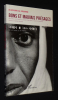
Bons et mauvais présages : Croyances, coutumes et superstitions dans la société Touarègue
L'Harmattan Dos carré collé 1999 in-8 (13,5 x 21,5 cm), dos carré collé, 159 pages, photos en noir et blanc ; mors un peu frottés, quelques marques d'usage sur les plats, bon état. Livraison a domicile (La Poste) ou en Mondial Relay sur simple demande.
Voyage aux Indes orientales et à la Chine depuis 1774 jusqu'en 1781 : Dans Lequel on Traite Des Moeurs, de la Religion, Des Sciences & Des Arts Des Indiens, Des Chinois, Des Pégouins, & Des Madégasses ; Suivi D'Observations Sur le Cap de Bonne-Espérance, Les Isles de France & de Bourbon, Les Maldives, Ceylan, Malacca, Les Philippines & Les Moluques, & de Recherches Sur L'Histoire Naturelle de ces Pays
1782 , A Paris , Chez l'auteur & Froulé & Nyon, In-8 (150x225mm), xxij, 340pp. et (6) 376pp. et (6) 362pp.,illustré de 7 planches dépliantes gravées par Poison d’après l’auteur, relié plein veau marbré époque , dos lisse avec pièces de titre et tomaison vertes, tranches mouchetées rouges, filets sur les plats , dos frottés , coiffes et coins usés , petites rousseurs.
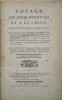
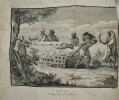
Dans cet ouvrage, réputé pour son exactitude, le naturaliste Pierre Sonnerat (1745-1814) offre la relation de son second voyage en Asie, divisée en cinq livres. Les trois premiers livres sont exclusivement consacrés à l'Inde, et notamment à Pondichéry, Surate et aux côtes de Coromandel et de Malabar, ainsi qu'aux mœurs, religions, sciences et arts des Indiens. Le quatrième livre fait état de voyages en Chine, en Birmanie, à Madagascar, à l'Île Maurice et à La Réunion, au Cap de Bonne-Espérance, aux Maldives, à Ceylan, à Malacca, aux Philippines et aux Moluques.
Voyage aux Indes orientales et à la Chine depuis 1774 jusqu'en 1781 : Dans Lequel on Traite Des Moeurs, de la Religion, Des Sciences & Des Arts Des Indiens, Des Chinois, Des Pégouins, & Des Madégasses ; Suivi D'Observations Sur le Cap de Bonne-Espérance, Les Isles de France & de Bourbon, Les Maldives, Ceylan, Malacca, Les Philippines & Les Moluques, & de Recherches Sur L'Histoire Naturelle de ces Pays
A Paris, Chez l'auteur & Froulé & Nyon, 1782, 2 volumes (sur 3) In-8 (150x215mm), xxij, 340pp. et (6) 376pp., Illustré de 2 planches (sur 9) dépliantes gravées par Poison d’après l’auteur, relié plein veau marbré époque, dos à nerfs avec pièces de titre et tomaison, dos frottés, coiffes et coins usés, plats détachés au tome 2 et fragiles au tome 1, manque page 375/376 au tome 2, manque au titre, exemplaire de travail.
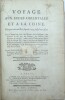
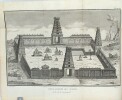
Dans cet ouvrage, réputé pour son exactitude, le naturaliste Pierre Sonnerat (1745-1814) offre la relation de son second voyage en Asie, divisée en cinq livres. Les trois premiers livres sont exclusivement consacrés à l'Inde, et notamment à Pondichéry, Surate et aux côtes de Coromandel et de Malabar, ainsi qu'aux mœurs, religions, sciences et arts des Indiens. Le quatrième livre fait état de voyages en Chine, en Birmanie, à Madagascar, à l'Île Maurice et à La Réunion, au Cap de Bonne-Espérance, aux Maldives, à Ceylan, à Malacca, aux Philippines et aux Moluques. M-13C
Voyage aux Indes orientales et à la Chine, fait par ordre du Roi, depuis 1774 jusqu'en 1781 : Dans lequel on traite des Mœurs, de la Religion, des Sciences & des Arts des Indiens, des Chinois, des Pégouins & de Madégasses ; suivi d’Observations sur le Cap de Bonne-Espérance, les Isles de France & de Bourbon, les Maldives, Ceylan, Malacca, les Philippines, & les Moluques & de Recherches sur l’Histoire Naturelle de ces Pays. TOME 1 seul
Paris, Chez l’auteur, rue Saint André-des-Arts, Froulé, Nyon, Barrois, 1782, 1 volume in-4 (25x20cm), demi basane (19ème) dos lisse orné avec auteur, titre et tomaison en pied, XV-4ff.-317pp., 64 planches (80), frottements, début de fentes en pieds, coins et coupes usés, 4 planches déchirées, manque pages 87 à 90, 2 planches incomplètes, qlqs planches mal pliées, manque les 2 cartes, mouillure par intermittence, qlqs salissures.
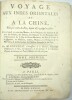
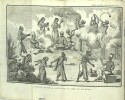
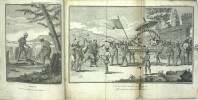
TOME 1, seul, du magnifique ouvrage de Pierre Sonnerat, en 1771, il voyage au Cap de Bonne-Espérance où il rencontre Joseph Banks, puis explore la mer de Chine, la Malaisie, les Philippines et les Moluques. Il en rapporte de riches collections naturalistes et publie son « Voyage à la Nouvelle-Guinée » (1776). Soutenu par Pierre Poivre, il rentre en France pour faire reconnaître ses travaux et intégrer l’Académie des sciences. Depuis l’Île de France, centre des expéditions françaises, il observe et critique sévèrement l’esclavage, tant sur le plan moral qu’économique. M3-Et1
Voyage aux Indes orientales et à la Chine, fait par ordre du Roi, depuis 1774 jusqu'en 1781 : Dans lequel on traite des M urs, de la Religion, des Sciences des Arts des Indiens, des Chinois... suivi d'Observations sur le Cap de Bonne-Espérance, les Isles de France de Bourbon... des Recherches sur l'Histoire Naturelle de ces Pays.
A Paris, chez l'Auteur, Froulé, Nyon, Barrois, 1782.- 2 volumes in-4 (26x20,5cm) de XV, (8), 317, (1) pp., 80 pl. h.t. pour le tome 1 ; VIII, 298 pp., 60 pl. h.t. pour le tome 2 ; basane époque, dos lisse orné avec pièces de titre et tomaison vertes, frises aux plats. Frottements et épidermures, début de fentes (3cm) tome 2, coins et coupes usés, vieille mouillure claire, rousseurs et brunissures, 2 feuillets détachés, page 145 déchirée sans manque.
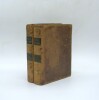
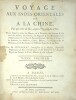
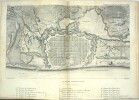
Édition originale de cet important et célèbre voyage. On trouve également 140 belles planches montrant des costumes, scènes de cérémonies et d'artisanat, ainsi que de botanique et d'histoire naturelle gravées par Poisson d’après les dessins de l’auteur. Pierre Sonnerat (1748-1814) était le fils de l'intendant français à Maurice et neveu du botaniste Pierre Poivre (1719-1786). Il fit plusieurs voyages en Asie du Sud-Est, visitant les Philippines et les Moluques entre 1769 et 1772, et l'Inde et la Chine de 1774 à 1781. Il a voyagé à Ceylan, Malacca, les Philippines, la Birmanie et les Maldives, examinant des oiseaux et des plantes et à la recherche de fruits et d'épices. Sonnerat a été la première personne à donner une description scientifique du litchi d'arbre fruitier du sud de la Chine Brunet V, 442 : "Pour la beauté des épreuves, cette édition est préférable à celle de 1806". Ch-3D
Voyage aux Indes Orientales et à la Chine, fait par ordre de Louis XVI, depuis 1774 jusqu'en 1781 ; dans lequel on traite des mœurs, de la religion, des sciences et des arts des Indiens, des Chinois, des Pégouins et des Madégasses, .... Nouvelle édition augmentée
Paris, Dentu, 1806. 5 Volumes, 4 volumes de texte in-8 et 1 atlas in-4. Texte : 4 vol. in-8 (20x13cm), demi reliure et coins époque, dos lisse orné avec pièces de titre rouges et de tomaison vertes, frottements, coiffes usées ou arasées. Atlas : 1 vol. in-4 (29,5x22cm), titre, liste des planches et 140 gravures, demi reliure aubergine, dos à nerfs avec titre et tomaison, quelques frottements, coins usés.
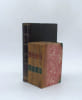
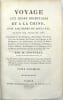
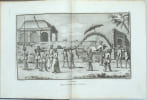
Nouvelle édition considérablement augmentée de cet important ouvrage de Pierre Sonnerat, grand classique de la littérature de voyage et de l'histoire naturelle de l'Asie, avec la contribution de Charles-Nicolas-Sigisbert Sonnini de Manoncourt (1751-1812). Après de premiers voyages avec Pierre Poivre et le naturaliste Commerson, notamment à l'île de France, à Madagascar et aux Philippines, Pierre Sonnerat (1749-1814) fut nommé sous-commissaire de marine. Envoyé en Inde, il parcourut les côtes de Coromandel et de Malabar, le golfe de Cambaye, Ceylan, la péninsule de Malacca et la Chine. Il regagna l'Europe en 1781, après avoir notamment assisté au siège de Pondichéry en 1778. Il y décrit les mœurs, les sciences et les arts des peuples rencontrés, particulièrement ceux de l'Inde, et rassemble de nombreuses observations sur l'histoire naturelle des régions visitées. Ses travaux ornithologiques comprennent notamment la description d'espèces alors peu connues en Europe. Il accorde également une place considérable à la religion hindoue, dont il étudie la mythologie, les divinités et les rites. Les gravures exécutées d'après ses dessins constituent un remarquable ensemble iconographique, notamment consacré au panthéon indien. M-11C
Mode & Tissus : High-Tech
Paris, Editions Falbalas, 2012, in-8, Relié, 288 pages. Bel exemplaire. Edition bilingue français-anglais. Envoi de l'auteur.
Les loix de la galanterie (1644) [Publié par Ludovic Lalanne].
Paris, Aubry, 1855. In-16, demi percaline verte, couverture et dos conservés, non rogné.
Tirage à 250 exemplaires. Titre en rouge et noir, (Le Trésor des pièces rares ou inédites). Excellent état.
Costumes, Textiles & Fabric Swatch Books (Sotheby's London, Thursday 24 September 1998, auction sale LN8596 "Paisley")
London, Sotheby's 1998 68pp., 27cm., illustrated softcover, very good condition, [auction catalogue containing 254 lots, with some illustrations in colour & in bl/w], S97369
Costumes, Textiles, Louis Vuitton Luggage & Fabric Swatch Books (Sotheby's London, Thursday 9 October 1997, auction sale LN7608 "Sara")
London, Sotheby's 1997 52pp., 27cm., illustrated softcover, some handwritten annotations of which some prices in pencil, else in good condition, [auction catalogue containing 308 lots, with illustrations in bl/w and in colour], S97389
Fabric Swatch Books, Quilts, Costumes and Textiles (Sotheby's London, Wednesday 27 March 1996, auction sale LN6163 "Blanc")
London, Sotheby's 1996 68pp., 27cm., illustrated softcover, good condition, [auction catalogue containing 481 lots, with some illustrations in bl/w and in colour, with list of auction results], S97372
Important Costume and Textiles (Sotheby's London, Thursday 2 November 1995, auction sale LN5556 "James II")
London, Sotheby's 1995 52pp., 27cm., illustrated softcover, good condition, [auction catalogue containing 334 lots, with illustrations in bl/w and in colour], S97391
Important Costumes, Textiles and Fabric Swatch Books (Sotheby's London, 4-5 March 1998, auction sale LN8125 "Calico")
London, Sotheby's 1998 96pp., 27cm., illustrated softcover, good condition, [auction catalogue containing 468 lots, with illustrations in bl/w and in colour, with list of auction results], S97367
Important European and Oriental Costumes, Textiles and Fabric Swatch Books (Sotheby's London, 7-8 November 1996, auction sale LN6673 "Thangka")
London, Sotheby's 1996 96pp., 27cm., illustrated softcover, good condition, [auction catalogue containing 690 lots, with some illustrations in bl/w and in colour, with list of auction results], S97373
Important European and Oriental Costume, Textiles and Fabric Swatch Books, including the Madder Market Collection of Period Costumes (Sotheby's London, Thursday 13 March 1997, auction sale LN 7169 "Anne")
London, Sotheby's 1997 66pp., 27cm., illustrated softcover, good condition, [auction catalogue containing 441 lots, with bl/w illustrations, with list of auction results], S97366
Oriental and Islamic Costume and Textiles (Sotheby's South Kensington, Tuesday 24 October 1995, auction sale "Tex 7012")
London, Sotheby's 1995 76pp., 27cm., illustrated softcover, very good condition, [auction catalogue containing 538 lots, with illustrations in bl/w and in colour], S97392
Passion for Fashion, and Gentlemen's Accessories and Amusements (Sotheby's London, Wednesday 25 November 1998, auction sale LN8620 "Medusa")
London, Sotheby's 1998 96pp., 27cm., illustrated softcover, good condition, [auction catalogue containing 471 lots, with illustrations in bl/w and few in colour], S97371
Passion for Fashion. Textiles and Gentlemen's Accessories (Sotheby's London, Wednesday 24 November 1999, auction sale L09430 "Pucci")
London, Sotheby's 1999 128pp., 27cm., illustrated softcover, good condition, [auction catalogue containing 567 lots, with illustrations in bl/w and few in colour], S97370
Costumes et mise en scène.
Librairie Fischbacher Paris 1910 Plaquette grand in-8 ( 270 X 180 mm ) de 12 pages, demi-chagrin vieux-rouge à coins, dos lisse orné de fleurons et filets perlés dorés, tête dorée. 1 planche hors-texte. Minime manque sur le premier plat, très bel exemplaire joliment relié.
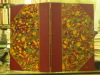
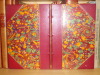
COUTUMES DE LA VILLE, GARDIAGE ET VIGUERIE DE TOULOUSE, en latin et en français, avec des observations sur les changements et interprétations que ces coutumes ont reçus, tant par les nouvelles Ordonnances, que par la Jurisprudence du Parlement de Toulouse et le Droit commun du Royaume pour toutes des Matières qui y sont traitées.Les édits et déclarations du Roi, qui ont confirmé les Privilèges et exemptions dont jouissent les habitants de cette ville, et les Ordonnances et autres Règlements qui concernent la Police et la Voirie, qui s'exercent dans la dite Ville.
1770 un fort volume, reliure plein veau havane raciné in-quarto (binding full calfskin in-quarto) (20,5 x 25,6 cm), dos 5 nerfs (spine with 5 raised bands) - entre-nerfs à encadrements à double filets or avec fleuron au fer plein or et rinceaux aux angles avec des petits fers en remplissage (between the raised bands double gilt lines - floweret with hollowed out blocking stamp - with foliages executed in the curved lines in angles - with small blocking stamp in filling) - pièce de titre comportant le titre abrégé de l'ouvrage sur fond beige avec double filets or (garnet label of the title with the title abbreviated by the work with gilt line), rinceaux en tête et en pied (top and at the foot of spine with foliages carried out with the curved line), double filets sur les coupes (double gilt line on the cuts), toutes tranches jaspées bleues (all blue marbled edges), sans illustrations excepté des fronts de chapitre gravés sur bois en noir, des lettrines et culs-de-lampes gravées sur bois en noir et une vignette aux armes royales gravée sur bois en noir au bas de la page de titre, légers trous de ver sur 1/4 de cm dans la marge sans conséquence pour la compréhension du texte des trois dernières pages de table, XXII (2 ff) 403 et 268 pp et( 1 ff.) avec Approbation & Privilège du Roi, 1770 A Toulouse, chez Dupleix et Laporte, libraires Editeurs,
Trés Bel Exemplaire....en Bon Etat (good condition).

