 Write to the booksellers
-
Type
Any type (1)
Autograph (1)
Book (27603)
Disk (1)
Drawings (1)
Engraving (2)
Magazine (56)
Manuscript (16)
Old papers (19)
Photographs (1)
Postcards (1)
Posters (2)
-
Latest
Last 24h (4)
Last 3 days (7)
Last month (436)
Last week (13)
-
Language
Dutch (8)
English (7)
French (27616)
German (9)
Italian (2)
Latin (59)
Portuguese (1)
Spanish (2)
-
Century
16th (74)
17th (367)
18th (1394)
19th (3481)
20th (7197)
21st (1850)
-
Countries
Belgium (1992)
Brazil (4)
Canada (101)
China (12)
Côte d'Ivoire (39)
Denmark (968)
France (22107)
Germany (3)
Greece (10)
Italy (1)
Netherlands (117)
Switzerland (2350)
-
Syndicate
ALAC (100)
CLAM (44)
CLAQ (91)
CNE (5)
ILAB (16911)
NVVA (1355)
SLACES (1285)
SLAM (14466)
SNCAO (66)
Matérialisme historique et économie marxiste
V. Giard E. Figuière | Paris 1901 | 12 x 19 cm | broché
Edition originale de la traduction française établie par A. Bonnet. Ex-dono à la plume sur la page de faux-titre. Agréable exemplaire. - Photographies et détails sur www.Edition-Originale.com -
La Police extérieure du Culte. Etude de Jurisprudence sur les droits de police des Maires depuis la loi du 9 Décembre 1905 sur la Séparation des Eglises et de l'Etat [ Livre dédicacé par l'auteur ]
1 vol. in-8 br., Typ. Gabelle, Carcassonne, s.d. (circa 1912), 148 pp.
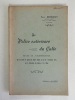
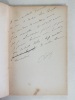
Bel envoi de l'auteur.
Declaration of the Establishment of the State of Israel [in Hebrew]. In: Iton Rishmi [in Hebrew],Official Gazette of Israel. - [THE BIRTH OF ISRAEL]
Tel Aviv, 14 May 1948. Folio. (4) pp. Unbound as issued. In near perfect condition.
![Declaration of the Establishment of the State of Israel [in Hebrew]. In: Iton Rishmi [in Hebrew],Official Gazette of Israel. - [THE BIRTH OF ISRAEL]. ...](https://static.livre-rare-book.com/pictures/LLX/60258_1_thumb.jpg)
Scarce first printing of the Israeli Declaration of Independence, the seminal historical document that establishes the first Jewish state in 2.000 years. Contained in the first issue of the Official Gazette of the Israeli provisional government, this landmark publication was printed on the first day of the birth of Israel. A bound set of ""Iton Rishmi"" reprinting this historic publication was issued later the same year. Formally entitled the Declaration of the Establishment of the State of Israel, the Israeli Declaration of Independence was proclaimed on May 14 1948, by David Ben-Gurion, the executive head of the World Zionist Organization, chairman of the Jewish Agency for Palestine, and, shortly after, the first Prime minister of Israel. It declared the establishment of a Jewish state in Eretz-Israel, to be known as the State of Israel. ""The Land of Israel was the birthplace of the Jewish people. Here, their spiritual, religious, and national identity was formed. Here, they achieved independence and created a culture of national and universal significance. Here, they wrote and gave the Bible to the world.Exiled from Palestine, the Jewish people remained faithful to it in all the countries of their dispersion, never ceasing to pray and hope for their return and the restoration of their national freedom."" Thus begins the seminal historical document that constitutes one of the most important political ones of recent times. Immediately following the British army withdrawal earlier on May 14, war broke out between Jews and Arabs. Egypt launched an air assault against Israel that same evening. Despite a blackout in Tel Aviv-and the expected Arab invasion-Jews celebrated the birth of their new nation, especially after word was received that the United States had recognized the Jewish state. At midnight, the State of Israel officially came into being upon termination of the British mandate in Palestine. ""Using the American Declaration of Independence and the U.S. Constitution as philosophical frameworks, a small group of attorneys and politicians pieced together Israel's Declaration of Independence. Other important political decisions pertaining to Jewish statehood were left until the last minute: the location of the State's capital, its final name, and how to bring together several Jewish military organizations under one command. Military operations, particularly those around the Jewish settlement at Kfar Etzion, south of Jerusalem, diverted attention from final decisions about these matters. Also pressing on David Ben-Gurion, the head of the Jewish Agency and future first Prime Minister of Israel,was the request by President Truman's White House asking for a formal written request for recognition.On Friday, May 14, following some debate, the National Council, established to oversee the political needs of the Jewish community in Palestine, voted to accept the final text of the Declaration. That afternoon at 4 pm, David Ben-Gurion, head of the National Council, read the Declaration at the Tel Aviv Museum. Without electricity in Jerusalem, few there heard Ben-Gurion's words or the singing and playing of 'Hatikvah,' Israel's national anthem. That morning, Ben-Gurion, uncertain about the coming war with Arab states, had his secretary secure a safety deposit box at a local bank so that the Declaration could be immediately placed there for safekeeping. The Declaration was a synopsis of Jewish history to 1948 and a statement of Israel's intent toward its inhabitants, neighbors, and the international community. It was divided into four parts: 1) a biblical, historical, and international legal case for the existence of a Jewish state in the Land of Israel" 2) the self-evident right of the Jewish people to claim statehood 3) the actual declaration of statehood" and 4) statements about how the state would operate, including an enumeration of citizen rights. In keeping with the UN Resolution that provided international legitimacy for Jewish and Arab states in Palestine, the requirement to have a constitution was stated. Israel's objective to institute a constitution was postponed indefinitely in June 1950. Noteworthy similarities and differences exist between the American and Israeli Declarations of Independence. Both declarations assert independence and the right of their populations to control their own destinies, free from legislative impositions and despotic abuses. In the Israeli case, however, immediate past history was included, and it reflected earlier Jewish catastrophes and the prospects of potential physical annihilation. Both declarations sought self- determination, liberty, and freedom derived their claims based on human and natural rights, promised safeguards for the individual, and proclaimed an interest in commerce or economic growth. The Israeli Declaration of Independence contained a list of historical claims to the land of Israel. The Declaration cited benchmark historical events when the international community sanctioned the Jewish state's legitimacy, particularly the acknowledgement to build a national home given by the League of Nations (1922) and by the United Nations (1947) to establish a Jewish state. While there were skirmishes going on between Americans and the British when the American Declaration of Independence was signed in 1776, when Israel declared its independence it was in the midst of a full-fledged war for survival with the local Arab population and surrounding Arab states. The on-going war notwithstanding, the Israeli Declaration of Independence includes a declaratory statement offering ""peace and amity"" to its neighbors and the request ""to return to the ways of peace."" Both declarations made reference to a higher authority: the Israeli Declaration of Independence does not mention religion, but it closes with the phrase ""with trust in the Rock of Israel [Tzur Yisrael].""1 The choice of this phrase was Ben-Gurion's verbal compromise, made to balance strong secular and religious pressures. Any precise mention of religion might have required mention of religious practice, which could have created enormous social fragmentation in the early fragile years of the state. By contrast, the American Declaration of Independence appealed to the ""Supreme Judge, protection of the Divine."" (Ken Stein, 2008, from: israeled.org).
Opinion sur le rapport du comité de constitution. qui a pour objet l'établissement des bases de la représentation personnelle, & l'organisation des assemblées administratives & des nouvelles municipalités ; lue à la séance du jeudi 5 novembre 1789 ; et imprimée sur la demande de l'Assemblée nationale
Paris, Baudouin, s.d. (1789) in-8, 38 pp., dérelié.
Il ne faut pas confondre Charles-Austrégésile de Bengy (1778-1836) avec son père Philippe-Jacques (1743-1823), qui fut également député à l'Assemblée nationale. Le père et le fils votèrent avec la droite en faveur du maintien de l'Ancien régime. - - VENTE PAR CORRESPONDANCE UNIQUEMENT - LIEN DE PAIEMENT, NOUS CONSULTER.
Opinion sur le rapport du comité de constitution. qui a pour objet l'établissement des bases de la représentation personnelle, & l'organisation des assemblées administratives & des nouvelles municipalités ; lue à la séance du jeudi 5 novembre 1789 ; et imprimée sur la demande de l'Assemblée nationale
Paris, Baudouin, s.d. (1789) in-8, 38 pp., sous ficelle.
Il ne faut pas confondre Charles-Austrégésile de Bengy (1778-1836) avec son père Philippe-Jacques (1743-1823), qui fut également député à l'Assemblée nationale. Le père et le fils votèrent avec la droite en faveur du maintien de l'Ancien régime. - - VENTE PAR CORRESPONDANCE UNIQUEMENT - LIEN DE PAIEMENT, NOUS CONSULTER.
LES RELATIONS COLLECTIVES DANS LA SIDÉRURGIE AMÉRICAINE, Cahier de la fondation nationale des sciences politiques n°150
, Paris, Armand Colin 1966, in-8, br., très bon état, ENVOI DE L’AUTEUR À PIERRE LAROQUE, 410p.


Phone number : 01 43 29 46 77
"Les juges - ""Dominos"" n°112"
Flammarion. 1996. In-12. Broché. Bon état, Couv. convenable, Dos satisfaisant, Intérieur frais. 127 pages - quelques illustrations, cartes et graphiques en couleurs dans le texte.. . . . Classification Dewey : 340-Droit

Classification Dewey : 340-Droit
LA VALEUR DOUANE, Avant-propos de Layachi Yaker, Préface de Cyrille David
, Paris, Éd.Cujas 1975, br., (couv. légt fanée), 329p.

Phone number : 01 43 29 46 77
PRINCIPES DE POLITIQUE, APPLICABLES À TOUS LES GOUVERNEMENTS REPRÉSENTATIFS, ET PARTICULIÈREMENT À LA CONSTITUTION ACTUELLE DE LA FRANCE
Chez Alexis Eymery, Paris, mai 1815. Édition originale. "Sans conteste le plus important des écrits politiques de Constant"(A. Roulin, p. 1593). "Les principes ramassent dans un développement unifié les principaux thèmes de réflexions de Constant sur les vrais principes de la liberté (…). Le premier classique de la pensée libérale dans son état proprement contemporain; celui créé par l'évènement fondateur de la modernité politique: la Révolution française" (M. Gauchet, Dictionnaire des oeuvres politiques)
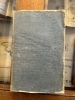
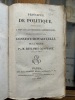
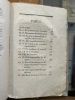
In-8, broché, couverture de papier de l'époque, étiquette de titre imprimée. Petits défauts au dos. (26)
LA COUR D ASSISES- SES POMPES ET SES OEUVRES- LE LIVRE DE DEMAIN N°67
FAYARD ET CIE. vers 1930. In-8. Broché. Bon état, Couv. convenable, Dos satisfaisant, Intérieur frais. 126 pages- bandeaux et culs-de-lampes illustrés en noir et blanc- frontispice en noir et blanc. . . . Classification Dewey : 340-Droit
d'après les bois originaux de ROGER GRILLON Classification Dewey : 340-Droit
Valentine - ou La folie democratique
Artheme Fayard, 1926. In-8* broche de 283 pages. Bon etat.
Les justices de paix ou les vingt façons de juger dans Paris.
Couverture souple. Broché. 19 x 24 cm. 142 pages.
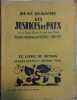
Livre. 38 bois originaux de Georges Bruyer. Editions Arthème Fayard et Cie (Collection : Le livre de demain N° 14), Vers 1935.
Les justices de paix ou les vingt façons de juger dans Paris.
Couverture souple. Broché. 19 x 24 cm. 142 pages. Quelques rousseurs.
Livre. 38 bois originaux de Georges Bruyer. Editions Arthème Fayard et Cie (Collection : Le livre de demain N° 14), Sans date. Vers 1925.
Fonds suisse romand en faveur des soldats aveugles en France
Lib. Fischbacher | Paris 1916 | 14.50 x 23 cm | broché
Edition originale. Articles et rapport par Benjamin Vallotton. Lettres, documents et noms des souscripteurs. Premier plat illustré comportant de petites taches marginales, sinon agréable exemplaire. Rare. - Photographies et détails sur www.Edition-Originale.com -
LE CONSENTEMENT À L’INGÉRENCE MILITAIRE DANS LES CONFLITS INTERNES, Préface de Charles Chaumont, Bibl. de droit intern., t.LXXVI
, Paris, L.G.D.J. 1974, in-8, br., bon état, IX-236p.
Phone number : 01 43 29 46 77
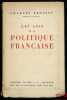
LES LOIS DE LA POLITIQUE FRANÇAISE
, Paris, Arthème Fayard et Cie 1928, in-8, br., non massicoté, (couv. fanée, papier jauni), intérieur très frais, 320p.
Phone number : 01 43 29 46 77
Le Président Bérenger. (de la Drôme). Discours prononcé à l'ouverture des conférences des avocats stagiaires
Grenoble, Allier Père et Fils, 1866 in-8, 44 pp., broché.
- - VENTE PAR CORRESPONDANCE UNIQUEMENT - LIEN DE PAIEMENT, NOUS CONSULTER.
La crise financière de Turquie
Amyot | Paris 1874 | 14.50 x 22.50 cm | broché
Edition originale. Dos très légèrement gauchi comportant deux petits manques, une mouillure en tête de tous les feuillets.. Rare mais en l'état. Envoi autographe signé de Benoit Brunswick à un comte dont le nom a été estompé par la mouillure. - Photographies et détails sur www.Edition-Originale.com -
La banqueroute turque
Ernest Leroux | Paris 1875 | 13.50 x 22 cm | broché
Edition originale. Deux mouillures en têtes et en pieds de tous les feuillets sans atteinte au texte. Rare. - Photographies et détails sur www.Edition-Originale.com -
TRAITÉ DE LA DOT, ou Développement des principes exposés au chapitreIII du livreIII du Code Civil, t.II [seul]
, Grenoble- Paris, Prudhomme- Charles Béchet 1829, in-8, demi-veau fauve, tit. & tom. dorés sur pc. grenat, dos lisse ornés de fleurons et triples filets dorés, tr. jaunes, (qq. rousseurs), bon état, IV- 504 p.
Phone number : 01 43 29 46 77
Traité du retrait successoral.
Grenoble, et P., Prudhomme, 1838, in 8° relié demi-basanedos lisse orné de doubles filets dorés, VII-434 pages et 16 pages de "Catalogue" de la Librairie Prudhomme ; qq. rares rousseurs ; menus frottis, dos passé.
...................... Photos sur demande ...................
Phone number : 04 77 32 63 69
De Synodo dioecesana. libri tredecim, in duos tomos distributi
Ferrare, J. Manfrè, 1775 2 vol. in-4, XXVIII-540 et 509 pp., index, demi-basane, dos lisses cloisonnés et fleuronnés, coins en vélin, tranches mouchetées de bleu (reliure de l'époque). Dos et coupes frottés, manquent les pièces de titre et de tomaison du vol. II.
Une des nombreuses éditions du XVIIIe siècle. Avec le "De Servorum Dei beatificatione et beatorum canonizatione", c'est là l'ouvrage canonique majeur de Prosper Lambertini, archevêque de Bologne et futur pape Benoît XIV en 1740. - - VENTE PAR CORRESPONDANCE UNIQUEMENT - LIEN DE PAIEMENT, NOUS CONSULTER.
HISTOIRE DU BARREAU FRANÇAIS. Rapport lu à la conférence du stage, en 1883
Bordeaux J. Durand 1883 in 8 (23x14) 1 volume broché, 101 pages. Conférence des avocats stagiaires de Bordeaux. Rapport lu à la conférence du stage, en 1883. Envoi autographe signé de l'auteur à l'Académie des Sciences, Arts et Belles-Lettres de Bordeaux. Bon exemplaire
Bon Signé par l'auteur
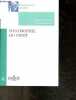
Philosophie Du Droit - 3e edition- connaissance du droit
DALLOZ. 2022. In-12. Broché. Etat d'usage, Couv. convenable, Coiffe en tête abîmée, Intérieur frais. 139 pages. . . . Classification Dewey : 340-Droit
Classification Dewey : 340-Droit
[Apud J. Leroux et Jouby Editores] - BENSA, Antonio Marie ; [ GALVANO, Dominico ]
Reference : 38100
(1855)
Juris Naturalis universi Summa ad errores hodiernos revincendos accomodata (2 Tomes -Complet)
Illustrissimo et reverendissimo patri ac domino Dominico Galvano, 2 vol. in-8 reliure demi-basane marron, Apud J. Leroux et Jouby Editores, Paris, 1855, X-564 ; 740 pp.
![Juris Naturalis universi Summa ad errores hodiernos revincendos accomodata (2 Tomes -Complet). BENSA, Antonio Marie ; [ GALVANO, Dominico ]](https://static.livre-rare-book.com/pictures/CDL/38100_thumb.jpg)
![Juris Naturalis universi Summa ad errores hodiernos revincendos accomodata (2 Tomes -Complet). BENSA, Antonio Marie ; [ GALVANO, Dominico ]](https://static.livre-rare-book.com/pictures/CDL/38100_2_thumb.jpg)
![Juris Naturalis universi Summa ad errores hodiernos revincendos accomodata (2 Tomes -Complet). BENSA, Antonio Marie ; [ GALVANO, Dominico ]](https://static.livre-rare-book.com/pictures/CDL/38100_3_thumb.jpg)
Complet. Etat satisfaisant (anciens cachets d'institution religieuse, étiquette de cote en garde et mors, des rouss.)

