 Write to the booksellers
-
Type
Book (516)
Magazine (1)
-
Century
16th (1)
17th (7)
18th (11)
19th (9)
20th (24)
21st (12)
-
Countries
Belgium (92)
Canada (3)
France (419)
Switzerland (3)
-
Syndicate
ALAC (3)
ILAB (145)
NVVA (3)
SLACES (3)
SLAM (139)
Reference : 41979
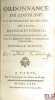
ORDONNANCE DE LOUIS XIV, ROI DE FRANCE ET DE NAVARRE, SUR LE FAIT DES EAUX ET FORÊSTS, donnée à S. Germain-en-Laye au mois d’Août 1669. Avec les Réglemens rendus en interprétation jusqu’à présent. Nouvelle édition plus correcte que les précédentes
, Paris, Compagnie des libraires associés 1764, in-12, plein veau fauve marbré, tit. doré sur pc. brune, dos à 5 nerfs orné de fleurons, frises et filets encadrants dorés, tr. rouges, filet sur les coupes, Ex-Libris manuscrit, (coiffes abîmées, plats lég. frottés avec de rares épidermures, coins lég. émoussés avec qq. petits mq.,mors tr. lég. fendus), intérieur assez frais, [3ff.]-604p.



Phone number : 01 43 29 46 77
Ordonnance du Roi concernant les Messageries. 12 août 1775
, Paris, Impr. Royale, 1775. 4 pp. In-4, vignette en-tête Des diligences légères remplaceront les voitures publiques - Conducteurs, horaires, salaires, chevaux…
Ordonnance du Roi concernant l'uniforme que sa Majesté a jugé à propos de régler pour les Visiteurs généraux, visiteurs ordinaires, sous-visiteurs, Maîtres de Poste et Postillons. 17 août 1786
, Paris, Impr. Royale, 1786. 4 pp. In-4 8 articles concernant l'uniforme. Le Maître de Poste : surtout à la française le drap bleu-de-roi, collet écarlate, parements bleus… Postillons : drap bleu, doublure écarlate, sur le bras gauche l'écusson aux armes royales
Ordonnance du Roi, en faveur des Maîtres de Poste aux chevaux, et de la Ferme des Messageries, contre les entreprises des loueurs de chevaux. Du 26 août 1779
, Paris, Impr. Royale, 1779. 3 pp. Interdiction aux particuliers ou aux loueurs de chevaux de former des convois ou équipages postaux, ou de ramener des chevaux sur les routes où les postes sont établies, privilège réservé aux maîtres de postes. Ces derniers pourront confisquer les chevaux, harnais et équipages et infliger des amendes aux contrevenants
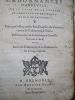
ordonnances d'Abbeville sur le faict de la justice et abreviation des procez au païs de Dauphine faites par le Roy nostre sire, Dauphin de Viennois comtes de Valentinois et Diois, publiées en la cour de parlement à Grenoble le IX jour d'avril MDXL reveues de nouveau et collationnées sur le vrai original
1599 A Grenoble par Antoine Blanc 1599 avec permission In8 relié plein velin 126 pages

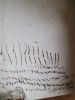
l'humidité a rongée le bas droit des feuillets sans entamer le texte (voir photo) exemplaire complet - état d usageTrès rare : rien dans les bibliographie de Maignien sur l'imprimerie à Grenoble, pas dans la "Bibliothèque Dauphinoise", un exemplaire au CCFR Grenoble.
Ordonnances De Louis XV Concernant Les Donations, Les Insinuations, Les Testamens, Les Substitutions, &c
Paris Chez les Associés Choisis Par Ordre De Sa majesté 1759 In-16 8 ff - ,560 pp, manques de cuir au dos et sur les plats, dorure élimées, un coin émoussé, pas de pièce de titre
Très usé PouR LA RELIURE Plein Veau
Reference : 6385
ORDONNANCES DE LOUIS XV. ROY DE FRANCE ET DE NAVARRE. Concernant les donations, les insinuations et les testamens
Sl 1736 in 16 1 volume reliure pleine basane foncée, dos à nerfs, paginé de 3 à 108, 13 à 33 sans manque, 16 et 29 pages. Relié à la suite: ordonnances de louis XV concernant le faux principal, le faux incident, la reconnaissance des ecritures et signatures en matière criminelle (Avignon 1738)
Bon Couverture rigide
Reference : M5212
Ordonnances du Roy Henry III de ce nom, Roy de France et de Pologne, fur les plaintes & doleances faites par les deputez des Eftats de Fon Royaume conuquez & affemblez en la ville de Bloys. Avec l ' Arreft de la Court de Parlement de Rouen, donné les Cham
Rouen , Martin le Mefgifsier , 1586 , in12 plein parchemin muet, 138pp. 353 ordonnances . Reliure grossière .Petit manque de papier et mouillure claire sur les marges des premières pages, travail de ver sur la dernière page.
Reference : 103755
Ordonnances, Reglemens et Statuts des Arts et Metiers de la Cité Royale de BESANCON.
A Besançon, chés Louis Rigoine, Imprimeur du Roy, du Parlement & de la Cité, 1789, 1 volume in-4 de 250x180 mm environ, 2 ff. blancs, 146 pages, 1 f. (Extrait des Registres du Parlement) 1f. blanc, pleine basane brune, dos à nerfs portant titres et ornements dorés (en partie effacés), gardes marbrées de couleurs. Manque la partie mobile des gardes de couleurs, la table est manuscrite sur les premières gardes blanches, des rousseurs mouillures et traces d'humidité, des notes et passages soulignés par endroits, reliure restaurée.



Merci de nous contacter à l'avance si vous souhaitez consulter une référence au sein de notre librairie.
Proclamation du Roi, sur les Décrets de l'Assemblée Nationale, relatifs aux Postes et Messageries. 29 août 1790
, Lyon, De La Roche, 1790. 8 pp. Bandeau en-tête. In-4
Proclamation du Roi, sur un Décret de l'Assemblée Nationale, concernant l'Administration des Postes. 8 Août 1790
, Lyon, De La Roche, 1790. 2 pp.Très beau bois en-tête. In-4
Reference : 90727
Recueil des édits, lettres-patentes, manifestes et ordonnances publiés dans le duché de Savoie dès le 10 7.bre 1814 à tout le 18 février 1815 ; où sont insérés les règlemens, instructions et circulaires concernant le service du roi et l'administration de la justice. Premier volume.
Chambéry, V.t Bianco, tome premier seul, 1817, 545 p., broché sous papier d'époque, environ 21x13cm, des mouillures, des manques de papier en bordure de quelques pages car mal coupées.



Volume 1/2 Merci de nous contacter à l'avance si vous souhaitez consulter une référence au sein de notre librairie.
Reference : 115083
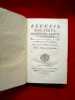
Recueil des édits, manifestes, arrêts, et ordonnances Pour le Service du Roi, & l'Administration de la Justice, Imprimées & publiées en Savoye, depuis 1770 à 1779 inclus. (2 volumes)
gorrin 1780 1792 2 Chambery, Chez M. F. Gorrin, Imprimeur du Roi, 1780-1786-1792, 3 tomes reliés en 2 volumes in-8 de 130x195 mm environ, 326 et 215, 156 pages, 2 planches dépliantes in-fine du Tome II. Demi-basane mouchetées à coins, dos lisse portants titres et tomaisons dorés, tranches mouchetées, gardes blanches. Plats frottés, deux coins légèrement enfoncés, rares rousseurs, bon état général.


Merci de nous contacter à l'avance si vous souhaitez consulter une référence au sein de notre librairie.
Résultat du Conseil d'Etat du Roi, parlequel sa Majesté commet Denys Bergaut pour la régie et administration des Diligences et Messageries par tout le Royaume. 7 août 1775
, Paris, Impr. Royale, 1775. 4 pp. In-4, grandes armes en-tête
Anne Bulkeley and her Book, Fashioning Female Piety in Early Tudor England
, Brepols - Harvey Miller, 2009 Hardcover. XII 276 p., 6 b/w ill. 4 colour ill., 160 x 240 mm, Languages: English, Latin, Middle English, Including an index. Fine copy. ISBN 9782503520711.
This study is focused on BL MS Harley 494, a small manuscript book which can be dated between 1532 and 1535 and which has many of the features of a preces privatae volume, or private prayer book. It contains prayers in English and Latin but also a number of brief devotional treatises in English. MS Harley 494 possesses two more features of interest: it belonged to a Hampshire widow, Anne Bulkeley (and possibly later to her daughter Anne, a nun at Amesbury Priory); and it emerged from a Birgittine textual community. Barratt edits and annotates the complete manuscript to provide an accessible and informative edition of this little known manuscript. However, Anne Bulkeley and her Book is not a conventional edition of a late Middle English text. Rather, Barratt carefully contextualizes the manuscript within its historical background just before the Dissolution of the Monasteries, and meticulously investigates the varied, and often unusual, sources of many of the individual items in the book. In addition, the discussion encompasses several related manuscripts (principally Lambeth Palace MS 3600 and the so-called Burnet Psalter (Aberdeen University Library MS 25)). This broad focus enables the volume to examine not only the evolution of the manuscript as a whole, but also to answer wider questions of its owner?s identity, her family connections, and her (and her book?s) place in literary, cultural, and religious history.
A Primer of Probability Logic: Volume 68 (Lecture Notes Band 68)
Center for the Study of Language and Inf 1996 392 pages 15 27x2 34x22 89cm. 1996. Broché. 392 pages.
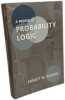

proche du très bon état intérieur propre bonne tenue
regles monastiques anciennes (400-700)
, Brepols - Harvey Miller, 1985 Hardcover. 62 p., 160 x 240 mm, Languages: French, Fine copy. Including an index. ISBN 9782503360461.
Dans leur ensemble et en tant que genre, les regles monastiques anciennes ont ete tres peu etudiees. D'ou la necessite de suppleer a une bibliographie squelettique par une presentation initiale un peu etoffee.<br>La Typologie se doit de commencer par un "Apercu du genre" qui le circonscrive de facon un peu precise et donne une vue au moins schematique des ecrits qui le constituent.<br>On trouvera dans ce premier chapitre un graphique indiquant les principales relations de dependance qui unissent nos regles.<br>Pour faciliter l'acces aux textes, l'auteur a ajoute a cette etude une liste alphabetique des regles, avec le signalement sommaire de chacune d'elles. dans cet Appendice, place a la fin de l'ouvrage, on trouvera les premieres donnees indispensables pour consulter utilement les regles monastiques anciennes.
Ordonnances de Louis XV. Roy de France et de Navarre, concernant les Donations & les Testamens. (Avec COMMENTAIRES MANUSCRITS DE l'EPOQUE).
2 textes en un volume in-12, pleine basane de l'époque, dos à nerfs orné de compartiments dorés, tranches mouchetées, 28 et 36 p., feuillets de commentaires interfoliés. Lille, C.M. Cramé, 1736.
Edition lilloise de ces ordonnances historiques qui contient : 1- Ordonnance de Louis XV, pour fixer la Jurisprudence sur la nature, la forme, les charges ou les conditions des Donations. Donnée à Versailles au mois de Février 1731.2- Ordonnance de Louis XV, concernant les Testamens. Donnée à Versailles au mois d'Août 1735."L'ordonnance sur les testaments constitue la deuxième réalisation du chancelier d'Aguesseau, dans le cadre de son projet d'unification du droit civil français. Elle est postérieure de quatre ans à l'ordonnance sur les donations (...). Les rédacteurs du Code civil s'en sont inspirés" (Expo. Bicentenaire du Code Civil).Exemplaire contenant des feuillets blancs interfoliés, certains contenant d'abondant commentaires et observations de l'époque, face au texte imprimé.Qqs accrocs aux coiffes.Bon exemplaire, frais, bien relié.
Communaut s maritimes et insulaires du premier Moyen ge
, Brepols, 2020 Paperback, 222 pages, Size:156 x 234 mm, Illustrations:2 b/w, 16 col., 3 tables b/w., 13 maps b/w, 5 maps color, Languages: French, English. ISBN 9782503585512.
Summary Comment les hommes et les femmes du premier Moyen ge formaient-ils des communaut s lorsqu'ils se trouvaient vivre pr s de l'eau - sur les littoraux, dans les zones humides ou le long des fleuves, mais aussi dans les les ? La familiarit entretenue avec le milieu aquatique, objet de crainte ou source d'opportunit s, signifie que les groupes humains faisaient communaut autrement, mais aussi que l'historien appr hende ces ph nom nes d'une mani re diff rente. Cela est vrai de toutes les communaut s qui, dans la pratique des interactions quotidiennes, se formaient pr s de l'eau, gr ce elle ou face elle : communaut s d'habitants, communaut s cl ricales ou monastiques, communaut s fond es sur une activit commune comme le commerce ou la p che. Les douze contributions que compte ce livre constituent les actes d'un colloque tenu Boulogne-sur-Mer en mars 2017. Leurs auteurs s'attachent croiser les sources crites et arch ologiques pour offrir un regard quilibr sur des espaces et une p riode qui semblent premi re vue moins bien document s que d'autres. La question de la construction et de l'existence des communaut s du bord de l'eau y est trait e travers toute l'Europe latine, du VIIe au XIe si cle, sur ses versants adriatique ( travers les lagunes de Venise et de Comacchio), atlantique (du littoral ib rique l'Angleterre en passant par l' le de Noirmoutier) et septentrional (des Fens d'Est-Anglie la mer Baltique et dans les emporia des mers du Nord), ainsi que dans la vall e de la Sa ne (de Lyon Tournus). TABLE OF CONTENTS Alban Gautier avec la collaboration de Christer Westerdahl, Faire communaut par l'eau ou malgr l'eau. Communaut s maritimes et insulaires du premier Moyen ge St phane Lebecq, En milieu littoral, sur l'eau et outre-mer. Regards sur les communaut s et solidarit s maritimes dans le bassin des mers du Nord du VIIe au XIe si cle Lucie Malbos, Femme de marchand ou marchande ? Pr sence, r le et statut des femmes dans les emporia d'Europe du Nord-Ouest (IXe-Xe si cles) Stefano Gasparri, Une communaut la fois maritime et territoriale. Venise jusqu' l'an 1000 Chiara Provesi, La terre et la mer. La construction de la m moire de Venise dans l'Istoria Veneticorum de Jean Diacre Sauro Gelichi, Communaut s lagunaires dans l'Adriatique pendant le haut Moyen ge. Venise et Comacchio compar es Andr Evangelista Marques, An Emerging Periphery. Maritime Activities and Communities in Northern Iberia (850-1100) S ren M. Sindb k, Communities on the Edge. Retracing the Northern Emporia Isabelle Cartron, De l' le au continent. La transition entre deux formes de monachisme dans la communaut de Saint-Philibert au IXe si cle Charlotte Gaillard, La communaut monastique de l' le-Barbe, exemple d'une fondation insulaire fluviale Arnaud Lestremau, Piscium quem vos haked nuncupatis. Communaut s monastiques et imaginaire maritime dans l'Angleterre anglo-saxonne Pierre Bauduin, Conclusions. Connaissance, pratiques et identit s des communaut s maritimes et insulaires du premier Moyen ge English abstracts Liste des auteurs Index des noms de personnes Index des noms de lieux et de peuples
Pursuit of Salvation. Community, Space, and Discipline in Early Medieval Monasticism - with a critical edition and translation of the Regula cuiusdam ad uirgines
, Brepols, 2021 Paperback, 687 pages, Size:210 x 270 mm, Illustrations:1 col., 3 tables b/w., Language(s):English, Latin. ISBN 9782503589602.
Summary The seventh-century Regula cuiusdam ad uirgines (Someone's Rule for Virgins), which was most likely written by Jonas of Bobbio, the hagiographer of the Irish monk Columbanus, forms an ideal point of departure for writing a new history of the emergence of Western monasticism understood as a history of the individual and collective attempt to pursue eternal salvation. The book provides a critical edition and translation of the Regula cuiusdam ad uirgines and a roadmap for such a new history revolving around various aspects of monastic discipline, such as the agency of the community, the role of enclosure, authority and obedience, space and boundaries, confession and penance, sleep and silence, excommunication and expulsion. TABLE OF CONTENTS Summary The book consists of two sections. The first is a critical edition and translation of the Regula cuiusdam ad uirgines, a seventh-century Frankish monastic rule for nuns, along with the short treatise De accedendo ad Deum, which most likely formed a part of the Regula cuiusdam ad uirgines. The second section is a study on the transformations and diversification of monastic theology, concepts of communal life and monastic discipline in the early medieval period. It revolves around the Regula cuisudam ad uirgines in its historical and intertextual context. The study is divided four parts that are related to the four key words of the title of the book (Community, Space, Discipline, and Salvation). Each part consists of a chapter that makes an argument about the place of the Regula cuiusdam ad uirgines in intertextual contexts and a chapter that applies these arguments in a historical inquiry. Introduction Section I: Edition and Translation of the Regua cuiusdam ad uirgines Section II: Study Part I: Community revolves around the question to what extent the monastic community can serve as an agent of the collective and individual pursuit of salvation Chapter 1: Quidam pater - quaedam mater? The Regula cuiusdam ad uirgines and its author provides a survey of the monastic milieu in which the Regula cuiusdam ad uirgines was written, discusses potential authors and stakeholders in the monastic foundation that may have been addressed by the Rule and shows on the basis of semantic and stylistic similarities and shared content and ideas that Jonas of Bobbio, the author of the Vita Columbani, is to be considered the author of the Regula cuiusdam ad uirgines as well. Chapter 2: The dying nuns of Faremoutiers: the regula in action argues that Jonas of Bobbio's description of the deaths of the nuns of Faremoutiers, which is a part of Book 2 of his Vita Columbani, and the Regula cuiusdam ad uirgines represent the same monastic program, once presented as a "narrated rule", once as a normative text. The Faremoutiers episodes are closely modelled after Book 4 of the Dialogi of Gregory the Great and can be read as a critical response to Gregory's eschatology and his notion of pursuing salvation by living a virtuous life. After having fleshed out the parallels and differences between the Dialogi and the Faremoutiers miracles, the chapter analyzes each episode of the Faremoutiers miracles, showing that Jonas wrote his monastic program in a highly sophisticated manner into stories describing the deaths occurring in the founding generation of nuns in Faremoutiers - deaths that were most likely still remembered by the primary audience of the Vita Columbani. Part II: Space discusses the role of space and boundaries for the monastic pursuit of salvation and explores the origins of the medieval cloister Chapter 3 The Regula cuiusdam ad uirgines, a supplement to Caesarius' Rule for Nuns? compares the provisions of Caesarius of Arles' Rule for Nuns with the Regula cuisudam ad uirgines and argues that Jonas wrote his Rule as an expansion and revision of Caesarius work: an "early medieval" update of a "late antique" monastic program, as it were. Chapter 4: Enclosure re-opened: Caesarius, Jonas, and the invention of sacred space discusses the evolution of Caesarius of Arles' notion of enclosure as salvific instrument and then shows how Jonas of Bobbio tried to face the aporias of Caeasarius' theology of enclosure by expanding it towards a system of total control of all physical, social and corporeal boundaries and the implementation of various enclosures. Part III: Discipline provides a historical survey of the evolution of various aspects of monastic discipline in early medieval monastic rules leading to the Regula cuiusdam ad uirgines. Chapter 5: The Regula Benedicti in seventh-century Francia explores the role of the Regula Benedicti in Frankish monasticism in the aftermath of Columbanus and shows how Jonas used and revised the Regula Benedicti and refuted some of his main theological premises. Chapter 6: The Regula cuiusdam ad uirgines and its context describes the history of the topics addressed in each chapter of the Regula cuiusdam ad uirgines and provides a detailed commentary to the Rule itself, showing how Jonas rewrote the Regula Benedicti. I discuss every chapter of the Rule but put a special emphasis on the following topics: abbatial authority, hierarchy, boundaries, love, confession, silence, work, sleep, excommunication, and family ties. Part IV: Salvation focusses on the short treatise De accedendo ad Deum which provides a unique theological rationale why monastic discipline enables monks and nuns to pray effectively and to attain eternal salvation. Chapter 7: De accedendo ad Deum - a lost chapter of the Regula cuiusdam ad uirgines? shows that De accedendo was most likely a lost chapter of the Regula cuiusdam ad uirgines and thus written by Jonas of Bobbio as well. Chapter 8: Prompto corde orandum: the theological program of De accedendo analyzes the theological argument that monastic discipline enable a nun or monk to approach God through prayer, which forms one of the most sophisticated early medieval responses to the challenge of the doctrine of prevenient grace and the "semi-Pelagian" debate. De accedendo essentially explains how the monastic pursuit of salvation works. Conclusion Three appendices provide textual evidence for ascribing the Regula cuiusdam ad uirgines to Jonas of Bobbio and to document the reception of the Regula cuiusdam ad uirgines in the eighth-century Life of Bertila. Bibliography of manuscripts, sources, and literature Index uerborum
Medieval Monastery of Saint Elijah: A History in Paint and Stone
, Brepols, 2021 Hardback, 432 pages, Size:225 x 280 mm, Illustrations:10 b/w, 150 col., 2 tables b/w., 1 maps b/w, Language: English. ISBN 9782503589435.
Summary Blending innovative art historical analysis with archaeology, epigraphy, history, liturgy, theology, and landscape and memory studies, The Medieval Monastery of Saint Elijah: A History in Paint and Stone is the first comprehensive interdisciplinary study of a deeply intelligent yet understudied male Benedictine convent near Rome. The only monastery known to have been dedicated to the prophet Elijah in the Latin West, it was rebuilt c.1122-26 with papal patronage. Today, the monastery is represented by its church of Sant'Elia, a stone basilica endowed with its original Cosmati marble pavement and liturgical furnishings, early and high medieval sculptures and inscriptions, and vibrant wall paintings that include unique depictions of the prophet Elijah and the twelve tribes of Israel as warriors, an apse program with a distinctly elite Roman origin, and an important narrative cycle of the Apocalypse. An outlying chapel marks the site of a theophany that sanctified the landscape and gave the monastery its raison d' tre. The Medieval Monastery of Saint Elijah makes significant contributions to current art historical debates concerning communal identity and the construction of social memory, artistic creativity and processes, the multisensory and exegetical capacities of works of visual art, intersections of topography and sanctity, and the effects of medievalism on our understanding of the Middle Ages. TABLE OF CONTENTS Introduction: 1769/2019 Chapter One: Recovering the Romanesque Monastery The Monastery Today Reversing Time's Arrow at the Church of Sant'Elia The Twelfth-Century Corpus Conclusion Chapter Two: vetustum monasterium Sancti Heliae A Sacred Landscape Remembering Abbots Past From Temple to Church, or, Building Like Benedict Conclusion Chapter Three: The Materiality of Memory Representation versus Materiality The Crypt as locus antiquior Promoting Cult, Protecting Community Conclusion Chapter Four: The Monk as the New Elijah In the Name of Elijah In the Image of Elijah Prophets as Models At the Altar of Elijah Conclusion Chapter Five: Seeing Apocalypse at Sant'Elia Painting the Apocalypse John the Revelator Conclusion Chapter Six: Why the Apocalypse? Exegetical Images The Politics of Apocalypse Conclusion Chapter Seven: A Papal Church in Lazio A Basilica Reformed The Images around the Altar Establishing the Papal Perimeter Conclusion Conclusion: Bovo famulus tuus
Matthieu d'Aquasparta. Portrait d'un ma tre en th ologie franciscain au miroir de ses Quodlibets
, Brepols, 2024 Paperback, 433 pages, Size:156 x 234 mm, Language: French. ISBN 9782503609294.
Summary Franciscain d'origine ombrienne, Matthieu d'Aquasparta (v. 1240-1302) est ma tre en th ologie l'universit de Paris au moment de la censure de 1277. Il rejoint ensuite la Curie pontificale en 1279. Dot de talents politiques certains, il est bri vement ministre g n ral de l'ordre franciscain avant d' tre cr cardinal par Nicolas IV en 1288. Il obtient la charge de grand p nitencier et devient un soutien fid le de Boniface VIII. Depuis le d but du XXe si cle, la pens e du th ologien avait surtout fait l'objet d' tudes construites partir de l' dition progressive de ses Questions disput es. Cet ouvrage propose une biographie compl te de Matthieu d'Aquasparta au prisme de ses textes universitaires gr ce l'analyse de sa biblioth que personnelle, de ses manuscrits de travail, l gu s aux couvent d'Assise et de Todi et de ses Quodlibets, encore in dits. TABLE OF CONTENTS INTRODUCTION CHAPITRE PREMIER. LES ORIGINES ITALIENNES CHAPITRE II. LE CURSUS TUDIANT EN THEOLOGIE CHAPITRE III. LA BIBLIOTHEQUE DU FRANCISCAIN CHAPITRE IV. MAITRE EN THEOLOGIE A PARIS EN 1277 CHAPITRE V. MATTHIEU D'AQUASPARTA FACE AUX DISSENSIONS DOCTRINALES CHAPITRE VI. L'ENSEIGNEMENT LA CURIE PONTIFICALE CHAPITRE VII. UN FRANCISCAIN AU SERVICE DE LA PAPAUTE CHAPITRE VIII. TRANSMISSION DES TEXTES ET HERITAGE CONCLUSION ANNEXES SOURCES BIBLIOGRAPHIE INDEX
Henricus Bitterfeld, De formatione et reformatione Ordinis Fratrum Praedicatorum
, Corpus Christianorum Continuatio Mediaevalis, vol. 328, 2026 Hardback, Pages: lvi + 117 p. Size:155 x 245 mm Language(s):Latin *new. ISBN 9782503620961.
Summary Henry Bitterfeld?s De formatione et reformatione Ordinis Fratrum Praedicatorum was the first work of its kind written in support of the Observant Reform of the Dominican Order, which took off in the late fourteenth century. It was probably composed around 1388-1389 at the request of the Order?s Master General, Raymond of Capua, who formally launched the reform in 1390. The treatise is organized into three parts: first, the principles of religious life in general; second, the causes of the crisis within the Order of Preachers; and third, the remedies by which it might be resolved. It concludes with a commentary on the prologue to the Dominican Constitutions. Bitterfeld?s work survives in four manuscript copies, along with three distinct medieval abridgements. Taken together, these testify not only to the reception of the text itself but also to the spread of Observant Reform ideals both within and beyond the Dominican Order. TABLE OF CONTENTS Acknowledgements Introduction Henry Bitterfeld and his work The De formatione et reformatione and the observant reform of the Dominican order Ratio edendi Editorial principles Bibliography Primary sources Secondary literature Textus Conspectus siglorum et abbreviationum Prologus I. De religionum racionabili institucione II. De defectu regularis obseruancie III. De reformacione in generali IV. Cause speciales circa materiam professionis Indices Index locorum Sacrae Scripturae Index fontium
Infirmeries monastiques et hospices. Lieux de soin du Moyen ge l' poque moderne
, Brepols, 2026 Paperback, Pages: 460, Size:210 x 270 mm, Illustrations:94 b/w, 40 col., 5 tables b/w., 2 tables col., Languages: French, English. ISBN 9782503619248.
Summary How were healthcare spaces set up in medieval and early modern Europe, who worked in them, and who were the patients? These questions were considered by archaeologists and historians during a conference at the abbey of Cluny in 2022. The contributions in this collection display a wide variety of approaches: some chapters focus on specific places, while others address the historical conditions of places of care in specific regions, countries, or religious orders. The first part of the volume is dedicated to Cluny, with seven articles covering the period from the tenth to the sixteenth century. They explore different phases of the monastic infirmary-drawing on manuscripts and material remains, particularly those brought to light by the archaeological excavations carried out between 2015 and 2019-as well as the town's hospices. The second part broadens the perspective to western Europe, with nine contributions. Reflecting a diversity of approaches, these studies combine specificity with synthesis, greatly enhancing our understanding of places of care in premodern Europe. Comment les espaces de soins taient-ils am nag s, et quels individus y travaillaient ou y taient soign s en Europe, du Moyen ge la fin de l' poque moderne ? Arch ologues et historiens se sont pench s sur ces questions l'occasion d'un colloque organis Cluny en 2022. Les contributions r unies dans cet ouvrage offrent une grande diversit d'approches : certaines se concentrent sur un lieu pr cis, tandis que d'autres abordent des r alit s r gionales, nationales ou li es des ordres religieux sp cifiques. La premi re partie de l'ouvrage est consacr e Cluny, avec sept articles couvrant la p riode du Xe au XVIe si cle. Ils explorent les diff rentes phases de l'infirmerie monastique - travers les sources manuscrites et les vestiges mat riels, notamment mis en lumi re par les fouilles arch ologiques r alis es entre 2015 et 2019 - ainsi que les hospices de la ville. La seconde partie largit la perspective l' chelle europ enne, avec neuf contributions. Par la diversit de leurs angles d'approche, ces tudes offrent un regard la fois pr cis et panoramique, renouvelant en profondeur la compr hension des lieux de soin dans l'Europe pr moderne. TABLE OF CONTENTS Eleonora Destefanis, Introduction Premi re Partie. Cluny (Abbaye et ville), du Moyen ge central jusqu'au XVIIe si cle Anne Baud et Anne Flammin, L'infirmerie monastique de Cluny du Xe au XVIIIe si cle Isabelle Cochelin, Infirmerie et infirmier Cluny au prisme des coutumiers Frederick S. Paxton, End-of-Life Care at Cluny, and Today Arlette Maquet, Infirmeries, malades et difices : la vision normative des statuts clunisiens depuis Pierre le V n rable Beno t Clavel et Philippe Pauthier, Les paradoxes de la table monastique : une enqu te arch ozoologique l'infirmerie de Cluny Elma Brenner, Rem des et soins autour de l'abbaye de Cluny au XVe-XVIe si cle : Londres, Wellcome Collection, MS. 626 Clarisse Couderc, tablissements d'accueil et de soins dans l'espace urbain et p ri-urbain de la ville de Cluny Deuxi me Partie. Ailleurs en Europe, du Moyen ge central jusqu'au XVIIe si cle Diane Carron, Au pied du mur : l'ordonnancement des tablissements d'accueil et de soin de la ville d'Orl ans (VIIe-XIIIe si cles) Alfons Zettler, The Medical Facilities and domus infirmorum on the Plan of Saint Gall Gaby Lindenmann-Merz, Cella - domus - ecclesia. Remarks on the Architectural Evolution of Cistercian Infirmaries Adam J. Davis, La nature des soins hospitaliers en milieu urbain aux XIIe et XIIIe si cles Arnaud Delerce, Les infirmeries de l'abbaye cistercienne de Beaulieu (Hampshire), d'apr s ses comptes (1269-1270) Caroline Bolle et Michel Dubuisson, Infirmeries et soins de sant dans les abbayes de Wallonie (13e-18e si cle) Bert Roest, Capuchin Medical Care: Traditions, Context, and Literary Offspring Laurent D'Agostino, Entre Mal des ardents et d membr s . Le grand h pital de l'abbaye de Saint-Antoine (Is re), d'apr s les donn es historiques et les tudes arch ologiques Emma Bouvard-Mor et Cyrille Ducourthial, La population malade de l'H tel-Dieu de Lyon (1529-1629). Archives versus arch othanatologie Daniel-Odon Hurel avec la collaboration de Pascale Chevalier, Conclusions

