 Write to the booksellers
-
Latest
Last 24h (96)
Last 3 days (72)
Last month (1284)
Last week (90)
-
Century
15th (1)
16th (242)
17th (985)
18th (4146)
19th (24225)
20th (91550)
21st (10941)
lrb.search.century.FOURTEEN (1)
-
Countries
Belgium (28640)
Brazil (1)
Canada (518)
China (11)
Côte d'Ivoire (739)
Denmark (1977)
France (170417)
Germany (619)
Greece (68)
Italy (7)
Netherlands (1607)
Switzerland (16255)
-
Syndicate
ALAC (514)
CLAM (314)
CLAQ (462)
CNE (35)
ILAB (91377)
NVVA (5605)
SLACES (5428)
SLAM (81812)
SNCAO (27)
RECUEIL DE PLUSIEURS PIECES D'ÉLOQUENCE ET DE POÉSIE PRESENTÉES A L'ACADÉMIE DES JEUX FLORAUX Pour les prix de l'année M.DCC.XXVII
Toulouse Chez Claude-Gilles Lecamus 1727 in 12 (16,5x10,5) 1 volume reliure pleine basane fauve, dos à nerfs orné de caissons dorés, tranches teintées rouge, 3 feuillets non chiffrés, et 145 pages et un feuillet non chiffré de privilège. Rare. Bon exemplaire ( Photographies sur demande / We can send pictures of this book on simple request )
Bon Broché
Les membres et les correspondants de l'académie royale des sciences 1666-1793
Au palais de l'institut 1931 in12. 1931. Broché.
bon état de conservation dos insolé tranches fânées intérieur propre bonne tenue
ARRAS À LA VEILLE DE LA RÉVOLUTION
Arras : Académie des sciences, lettres et arts d'Arras, 1990. In-8 (24 cm), couverture souple illustrée, illustrations en noir et en coul., 208 pages, 505 gr.
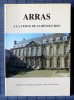
Très bon état
Ordonnances des Rois de France - Règne de François Ier - TOME HUITIEME - TROISIEME PARTIE - Juin - Décembre 1537
Imprimerie Nationale 1969 353 à 500 pages in4. 1969. Broché. 353 à 500 pages.
Bon état sous papier de soie couverture défraîchie pages non coupées intérieur propre présence de tampons "académie royale de Belgique"
Académie de Villefranche et du Beaujolais - Préface de Louis de Longevialle
Reference : 120875
(2007)
Villefranche-sur-Saône, 1853-2005. 150 ans de vie caladoise.
2007 Edité par l'Académie de Villefranche et du Beaujolais - 2007 - Fort in-4, broché, couverture illustrée - 296 p. - Riche iconographie in texte en couleurs et en N&B
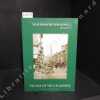
Bon état - Coins très légèrement émoussés Bon
L'Eté Peiresc: Fioretti II : nouveaux mélanges Numeroté 77/1000
Aubanel 1988 334 pages 24x15x4cm. 1988. Broché couverture rempliée. 334 pages. Ouvrage collectif de l'Académie du Var consacré à Nicolas-Claude Fabri de Peiresc érudit et scientifique provençal du XVIIe siècle rassemblant des études et contributions variées sur sa vie son œuvre et son influence
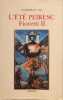
Bon état intérieur trés bon
Gloire de la France par les quarante membres de l'académie française
Perrin 1964 in4. 1964. Relié. abondante iconographie en noir et blanc
Bon Etat de conservation annotation sur le faux titre
L'Académie Goncourt en dix couverts (avec 16 illustrations).
1943 Avignon, Aubanel, 1943, in 12, broché, 292 pages
Fermeture du 1er au 23 Août


Phone number : 04 77 32 63 69
L'Académie Goncourt en dix couverts (avec 16 illustrations).
Avignon, Aubanel, 1943, in 12 relié demi-percaline grise à la bradel, couverture conservée, 299 pages.
PHOTOS sur DEMANDE. Fermeture du 1er au 23 Août
Phone number : 04 77 32 63 69
( Académie Impériale des Sciences, Inscriptions et Belles-Lettres de Toulouse )
Reference : 22213
MÉMOIRE DE L'ACADÉMIE IMPÉRIALE DES SCIENCES, INSCRIPTIONS ET BELLES-LETTRES DE TOULOUSE. Cinquième série, Tome IV seul
Toulouse Imprimerie Douladoure Frères 1860 in 8 (22x14,5) 1 volume broché, couverture imprimée, XII et 587 pages, avec 2 planches lithographiées hors-texte. Cinquième série, Tome IV seul. Bel exemplaire ( Photographies sur demande / We can send pictures of this book on simple request )
Très bon Broché
[, Imp. de Vaugirard B. de Malherbe] - Académie Nationale de Musique ; GERVEX, H.
Reference : 57860
(1896)
Soirée de Gala donnée à l'Académie Nationale de Musique le Mardi 6 Octobre 1896 en l'honneur de Leurs Majestés Impériales de Russie. Programme : Hymne Russe. Marche Héroïque par Camille Saint-Saëns. Deuxième acte de Sigurd. Danse Mlle Hirzsch. Thaïs par Massenet. Divertissement de La Korrigane, Ballet de M. F. Coppée. Orchestre des Concerts de l'Opéra, sous la direction de Georges Marty. Marche solennelle de Gounod.
1 programme gravé sur beau vélin BFK, Imp. de Vaugirard B. de Malherbe Paris, 1896, 2 ff.
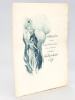
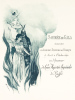
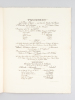
Le programme est illustré en titre par Henri Gervex. Bon état (pliure, bon exemplaire par ailleurs)
Actes du Colloque Franqui, organisé par la Classe des Lettres les 28 et 29 novembre 1980 à l'occasion du 150e anniversaire de l'indépendance de la Belgique (Philosophie, histoire, philologie, archéologie).
Bruxelles, Académie Royale de Belgique, 1983. 17 x 25, 266 pp., broché, bon état.
"Personnages décédés depuis 1830; liste provisoire à l'usage des collaborateurs (lettre D), en vue de la publication du supplément/Overleden personages vanaf 1830; voorlopige lijst ten gebruike; van de medewerkkers (letter D), met het oog op de pubicatie van het supplement. Académie Royale des Sciences, des Lettres et des Beaux-Arts de Belgique/Koningklijke Academie voor Wetenschappen, Letteren en Schone Kunsten van Belgïe."
Bruxelles, Palais des Académies, 1962. 16 x 24, 135 pp., broché, bon état.
"Personnages décédés depuis 1830; liste provisoire à l'usage des collaborateurs (lettre E, F, G), en vue de la publication du supplément/Overleden personages vanaf 1830; voorlopige lijst ten gebruike; van de medewerkkers (letter D), met het oog op de pubicatie van het supplement. Académie Royale des Sciences, des Lettres et des Beaux-Arts de Belgique/Koningklijke Academie voor Wetenschappen, Letteren en Schone Kunsten van Belgïe."
Bruxelles, Palais des Académies, 1964. 16 x 24, 110 pp., broché, non coupé, bon état.
"Personnages décédés depuis 1830; liste provisoire à l'usage des collaborateurs (lettre H), en vue de la publication du supplément/Overleden personages vanaf 1830; voorlopige lijst ten gebruike; van de medewerkkers (letter D), met het oog op de pubicatie van het supplement. Académie Royale des Sciences, des Lettres et des Beaux-Arts de Belgique/Koningklijke Academie voor Wetenschappen, Letteren en Schone Kunsten van Belgïe."
Bruxelles, Palais des Académies, 1967. 16 x 24, 90 pp., broché, bon état.
"Répertoire biographique de la Belgique, depuis 1830; liste provisoire des notices envisagées (lettre B). Académie Royale des Sciences, des Lettres et des Beaux-Arts de Belgique/Biografisch Repertorium van Belgïe van af 1830; voorlopige lijst der te beschouwen notities (letter B). Koningklijke Academie voor Wetenschappen, Letteren en Schone Kunsten van Belgïe."
Bruxelles, Palais des Académies, 1956. 16 x 24, 166 pp., broché, bon état.
Académie Royale Des Sciences D'outre-mer / Koninklijke Academie Voor Overzeese Wetenschappen
Reference : 100069880
(1965)
Expansion belge 1831-1865 belgische expansie - l'expansion belge sous léopold Ier (1831-1865)
Ministère de l'éducation 1965 in8. 1965. Broché. textes en français néerlandais et passages en anglais
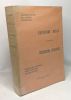
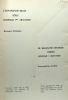
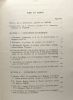
Bon état sous papier de oie intérieur frais qq rousseurs sur tranche de tête tranche un peu ternie
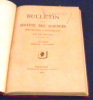
Documents sur les Troubles de Bastia (1er, 2 et 3 juin 1791)
Bastia, Bulletin de La Société des Sciences Historiques & Naturelles de la Corse , Imprimerie et Librairie Ollagnier, 1894. Reliure rouge, pièces de titre dorées, demi-basane, couverture conservée, 16,5 cm x 25 cm, 117 pages. Textes publiés par A. Cagnani ; la table des matières est en français mais les documents publiés (procès-verbaux, délibérations, mémoires, lettres, …) sont dans leur très grande majorité en corse. Très bon état
Hommage Jacques Rozenberg: sa pensee
, Caillet-Rozenberg Andree, 2008 Paperback, 160 pages, Texte en Francais / Tres belle exemplaire, illustr. en couleur, 270 x 205 mm. ISBN 9789090192413.
Corpus Christianorum. Hieronymus. Altercatio Luciferiani et Orthodoxi,
Turnhout, Brepols, 2000 Hardback, CXXXVII+104 p., 155 x 245 mm. ISBN 9782503007953.
Languages: Latin.
Une exécution en Place de Grève (Juillet 1661), pièce manuscrite de la même époque publiée par A. Carayon
C. Taranne | Paris 1874 | 14 x 22.50 cm | broché
Edition originale imprimée à petit nombre. Rare et bel exemplaire. - Photographies et détails sur www.Edition-Originale.com -
Corpus Christianorum. Hildegardis Bingensis Liber vite meritorum,
Turnhout, Brepols, original edition: 1995, reprint:2006 Hardback, LXVI+426 p., 155 x 245 mm. ISBN 9782503039015.
Der Liber vitae meritorum ist zwischen 1158-63 entstanden. Neben Hildegard haben der Magister Volmar und eine nicht namentlich bekannte Nonne als Redaktoren mitgearbeit. Aufbau und Inhalt des Liber vitae meritorum weisen diensen als wichtiges Bindeglied zwischen ihrem theologischen Erstlingswerk Scivias und dem dritten Hauptwerk, Liber divinorum operum, aus. Der Kampf des Menschen um sein ewiges Heil wird hier sowohl am Anfang des Gesamtwerkes wie auch zu Beginn der einzelnen partes von einer kosmischen Vision eingeleitet, die bereits auf den Charakter ihres dritten Werkes hinweist. Der Liber vitae meritorum fuhrt damit den grossen heilsgeschichtlichen Ansatz des Scivias hinuber in die kosmologischen Schau des Liber divinorum operum, in der Welt und Mensch, Makrokosmos und Mikrokosmos in ihren vielfaltigen Korrelation und Interdependenzen sichtbar werden. Languages: Latin.
Panorama sociologique du Brésil
Presses Universitaires de France 1952 152 pages in8. 1952. broché. 152 pages. Ouvrage de sociologie publié en 1953 par A. Carneiro Leão présentant un panorama de la sociologie brésilienne. Il critique la sociologie d'Auguste Comte et explore les transformations sociologiques au Brésil
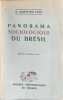
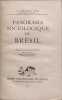
Bon état
Fra Mauro's Mappa mundi and Fifteenth-Century Venice ,
Turnhout, Brepols, 2011 Hardback, 470 p., 3 b/w ill. 16 colour ill., 210 x 270 mm. ISBN 9782503523781.
Fra Mauro's mappamundi, drawn around 1450 in the monastery of San Michele on Murano in the lagoon of Venice, is among the most relevant compendia of knowledge of the Earth and the Cosmos of the fifteenth century. By examining literary, visual, textual and archival evidences, some long considered lost, this book places the map within the larger context of Venetian culture in the fifteenth century. It provides a detailed analysis of both its main sources (auctores veteres such as Pliny, Solinus, Ptolemy, and novi, like Albert the Great, Thomas Aquinas, Marco Polo and Niccolo de' Conti) as well as of the composite networks of contemporary knowledge (scholasticism, humanism, monastic culture, as well as more technical skills such as marine cartography and mercantile practices), investigating the way they combine in the epistemological unity of the imago mundi. More a work on intellectual history than cartography, the book constructs a complex set of frameworks within which to situate Fra Mauro's monumental effort. These range from the cultural history of the reception of the world map from the fifteenth to the nineteenth centuries to the analysis of the material conditions under which map-makers such as Fra Mauro worked; from the history of ideas, especially of natural philosophy to the links between world representations and travel literature. It also addresses the Venetian reception of Ptolemy's Geography, the interactions between Venetian art, theology and cosmography and the complexities of the Venetian vernacular. The books develops a multi-tiered approach, in which different elements of the rich cultural context in which this world map was created, interact with each other, each casting a new light on the encyclopaedic work being analyzed. Terrarum Orbis (TO 8). New
Fra Mauro's Mappa mundi and Fifteenth-Century Venice
, Brepols - Harvey Miller, 2011 Hardcover. 470 p., 3 b/w ill. 16 colour ill., 210 x 270 mm, Languages: English, Including an index. Fine copy. ISBN 9782503523781.
Fra Mauro?s mappamundi, drawn around 1450 in the monastery of San Michele on Murano in the lagoon of Venice, is among the most relevant compendia of knowledge of the Earth and the Cosmos of the fifteenth century. By examining literary, visual, textual and archival evidences, some long considered lost, this book places the map within the larger context of Venetian culture in the fifteenth century. It provides a detailed analysis of both its main sources (auctores veteres such as Pliny, Solinus, Ptolemy, and novi, like Albert the Great, Thomas Aquinas, Marco Polo and Niccolo de? Conti) as well as of the composite networks of contemporary knowledge (scholasticism, humanism, monastic culture, as well as more technical skills such as marine cartography and mercantile practices), investigating the way they combine in the epistemological unity of the imago mundi. More a work on intellectual history than cartography, the book constructs a complex set of frameworks within which to situate Fra Mauro?s monumental effort. These range from the cultural history of the reception of the world map from the fifteenth to the nineteenth centuries to the analysis of the material conditions under which map-makers such as Fra Mauro worked; from the history of ideas, especially of natural philosophy to the links between world representations and travel literature. It also addresses the Venetian reception of Ptolemy?s Geography, the interactions between Venetian art, theology and cosmography and the complexities of the Venetian vernacular. The books develops a multi-tiered approach, in which different elements of the rich cultural context in which this world map was created, interact with each other, each casting a new light on the encyclopaedic work being analyzed. Angelo Cattaneo, who holds a Ph.D. in History from the European University Institute in Florence, is a researcher at the Centro de Historia de Alem-Mar of the Universidade Nova de Lisboa (Center for Overseas History of the New University of Lisbon). Currently he is studying the global circulation of knowledge, technology and material culture from the fifteenth to the seventeenth centuries, particularly cosmography, cartography and travel literature. He is the author of Mappa mundi 1457 (Rome, 2008). He also co-edited the volumes The Making of European Cartography (Florence, 2003) and, with Nathalie Bouloux and Patrick Gautier Dalche, Humanisme et decouvertes geographiques (Medievales 58, 2010).

