 Write to the booksellers
-
Latest
Last 24h (74)
Last 3 days (84)
Last month (3975)
Last week (176)
-
Century
14th (1)
16th (251)
17th (1005)
18th (4233)
19th (23753)
20th (83168)
21st (9932)
-
Countries
Belgium (28693)
Brazil (1)
Canada (517)
China (11)
Côte d'Ivoire (693)
Denmark (1977)
France (160458)
Germany (619)
Greece (68)
Italy (7)
Netherlands (1610)
Switzerland (16214)
-
Syndicate
ALAC (513)
CLAM (322)
CLAQ (462)
CNE (35)
ILAB (90782)
NVVA (5605)
SLACES (5428)
SLAM (81214)
SNCAO (27)
Mes Derniers cahiers [Première - Sixième série ; 24 numéros dont un double ; complet]
Publications FB, 1991 1998 23 fasc. un double in-12, broché ou agrafé. Très bon exemplaire.
Très bon état d’occasion
Mes derniers cahiers. Troisième série, n° 2."Mon" Affaire Dreyfus.
FB Paris 1993 Cahier in-12 broché ( 210x135 mm ) de 71 pages."Mon" Affaire Dreyfus. Ses causes, ses conséquences.
Mes derniers cahiers. Troisième Série, n° 4.A Fresnes au temps de Robert Brasillach.
FB Paris 1994 Cahier in-12 broché ( 210x135 mm ) de 71 pages.La nuit du 16 octobre 1944.Cellule 348. Première Division.
Pour saluer Mgr Lefèbvre.
Paris, Publications F. B. (Mes Derniers Cahiers Première Série n°1), 1991, in 8° broché, 60 pages.
...................... Photos sur demande ...................


Phone number : 04 77 32 63 69
Quand les armes se sont tues. Rencontres et entretiens avec...
Paris, Publications F.B., 1992. Un vol. br. de 283 pages. Bon état.
Des droits temporels du pape. Considérations sur la question romaine
Paris, Auguste Vaton 1860 32pp., brochure originale, 25cm., bon état, avec quelques cachets "timbre imépérial", [traite sur la papauté et la question italienne-romaine], R96050
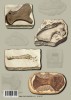
The collecting of Triassic vertebrate remains during the eighteenth century.
72 pp., richement illustré avec 43 figures en couleur (plusieurs pleine page), couverture souple, broché, papier glacé. ISBN 978-2-9565479-4-5 état: neuf - Book about the early discoveries of fossil vertebrates from the Triassic of Germany and France (bony fishes, sharks, marine reptiles). Lavishly illustrated. Stiff wrappers. Condition: New.
ANNABREVET 2000, HISTOIRE GEOGRAPHIE, EDUCATION CIVIQUE, SUJETS
Hatier. 1999. In-8. Broché. Bon état, Couv. légèrement pliée, Dos satisfaisant, Intérieur acceptable. 191 pages. Illustré de graphiques, cartes et photos en noir et blanc dans le texte.. . . . Classification Dewey : 372.89-Livre scolaire : histoire / géographie
50 sujet inédits. Des conseils... Classification Dewey : 372.89-Livre scolaire : histoire / géographie
ANNABREVET HATIER, 2001, HISTOIRE-GEOGRAPHIE, EDUCATION CIVIQUE, SUJETS
Hatier. 2000. In-8. Broché. Bon état, Couv. convenable, Dos satisfaisant, Intérieur frais. 273 pages.. . . . Classification Dewey : 372.89-Livre scolaire : histoire / géographie
Nouveau brevet. Plus de 70 sujets du brevet 2000. Un classement thématique... Classification Dewey : 372.89-Livre scolaire : histoire / géographie
HISTOIRE GEOGRAPHIE - CLASSE DE 5° - MISE A JOUR 1982.
HATIER. 1983. In-4. Relié. Bon état, Couv. convenable, Dos satisfaisant, Intérieur frais. 255 pages. Nombreuses photos et cartes en couleurs dans le texte.. . . . Classification Dewey : 372.89-Livre scolaire : histoire / géographie
Classification Dewey : 372.89-Livre scolaire : histoire / géographie
"Histoire-géographie éducation civique - Sujets ""Annabrevet"" 97 - n°2"
Hatier. 1996. In-8. Broché. Bon état, Couv. convenable, Dos satisfaisant, Intérieur frais. 239 pages - nombreuses cartes en noir et blanc dans et hors texte.. . . . Classification Dewey : 372.89-Livre scolaire : histoire / géographie
Classification Dewey : 372.89-Livre scolaire : histoire / géographie
Brignon Jean, Chaudron Eric, Wiel Philippe
Reference : R200113450
(1995)
ISBN : 2218042452
Histoire geographie, initiation economique, classique de 3e
Hatier. 1995. In-4. Relié. Etat d'usage, Couv. défraîchie, Dos abîmé, Quelques rousseurs. 351 pages. Couverture illustrée en couleur. Illustré de nombreuses photos en couleur. Ruban adhésif entre certaines pages et au dos.. . . . Classification Dewey : 372.89-Livre scolaire : histoire / géographie
Sous la direction de Jean Brignon, et Robert Pouliquen. Classification Dewey : 372.89-Livre scolaire : histoire / géographie
LA VENDEE DES ORIGINES A NOS JOURS
1982 Jaquette Couverture rigide 1982 Saint Jean d'Angély, Edition Bordessoules, 1982, in8° relié sous jaquette ill., nombreuses ill. en noir et blanc, 471pp . Jaquettelégèrement défraichie . Langue: Français
Histoire, géographie. Classe de 5e. Livre pour le professeur. Sous la direction de Jean Brignon.
Couverture souple. Broché. 128 pages.
Livre. Editions Hatier, 1983.
Brignon Jean, Pouliquen Robert(sous la direction)
Reference : RO30322404
(1993)
ISBN : 2218056526
Histoire/Géographie 3e- Initiation économique+ extraits du guide pédagogique- Specimen
Hatier. 1993. In-4. Cartonné. Bon état, Couv. convenable, Dos satisfaisant, Intérieur frais. 351 pages. Nombreuses illustrations et photos en couleurs et noir et blanc, dans le texte. Specimen.. . . . Classification Dewey : 372.89-Livre scolaire : histoire / géographie
Classification Dewey : 372.89-Livre scolaire : histoire / géographie
Le mur de Berlin. Petites et grandes histoires.
Alphée, Jean-Paul Bertrand, 2009, in-8vo, 263 p., + 12 planches, brochure originale.
(SLACES, NVVA)
Phone number : 41 (0)26 3223808
"L'extrême droite en France. Les ""fachos"""
Fayolle 1977 232 p. "in-8 br., coll. ""Intervalle"", très bon état"
FAIRE DE LA MUSIQUE. L'amateur actif et ses problèmes
Paris Les Editions Ouvrières 1960 in 8 (19x14) 1 volume broché, couverture illustrée, 187 pages [2]. Bel exemplaire ( Photographies sur demande / We can send pictures of this book on simple request )
Très bon
Vallesia Christiana, seu diocesis Sedunensis historia sacra Vallensium episcoporum, serie observata, addito in fine eorumdem syllabo.
Seduni (Sion), per Michaelem Mayer, 1744, pt. in-8vo, 216 p., (incl. page de titre avec vignette gravé sur bois) légèrement bruni, reliure en d.-parchemin d’époque, tranches jaspées rouges.
Première édition de cet ouvrage du chanoine de Sion, chancelier de l'évêché. “Der Verfasser ist gar geneigt zu glauben, der Apostel Petrus selbst, habe den christlichen Glauben im Wallis gepflanzt ...” (Haller). DHBS II/300, nr. 1; Barth 22319; Haller III/1075; Baulacre dans «Journal Helvetique» 1746, mars 193-222, avril 289-308. Image disp.
(SLACES, NVVA)
Phone number : 41 (0)26 3223808
RETOUR PAR L'U.R.S.S. Récits d'évasions
Paris Calmann-Lévy 1945 un volume in-12°, couverture illustrée, 217 pp. (dos et couverture brunis). 5 planches.
Edition originale
L'impossible Québec, Essai d'une sociologie de la culture
Montréal Jour 1968
in-8, 210p. et 3 f. Couverture blanche imprimé. :: Edition originale, du tirage de tête, un des 100 exemplaires numérotés sur papier Prestige, no 51. :: Essai, ou réflexion, par l'auteur japonisant également connu sous le pseudonyme Jabry (Le jardin de nuit, Kyoto, 1960). Broché. HOMMAGES de l'auteur à son imprimeur. :: Broché, couveture supérieure tachée, sinon bon état.
L'ART CHRETIEN EN FRANCE AU XXE SIECLE SES TENDANCES NOUVELLES.
LIBRAIRIE BLOUD ET GAY. NON DATE. In-8. Broché. Etat d'usage, Couv. légèrement passée, Dos satisfaisant, Quelques rousseurs. 375 pages + 72 planches en noir et blanc - papier jauni - tâches brunes sur les plats.. . . . Classification Dewey : 709-Histoire des arts
Classification Dewey : 709-Histoire des arts
Les secrétaires athéniens
Paris, Honoré Champion 1911 xxi + 148pp., dans la série "Bibliothèque de l'Ecole des Hautes-Etudes. Sciences historiques et philologiques" fasc. 191, 26cm., reliure cart., plats marbrés, dos en toile brun, ex.bibl. (3 cachets au recto et verso de la première page de titre, et 1 cachet sur la couv.), bon état, texte frais et en très bon état, G92988
Problèmes De La Danse
Paris Armand Colin 1953 In-16 224 pp, coupures sans manque au niveau des mors, légers manques sur 4ème de couverture
Correct Broché à raba
Quelques sacristains de la chapelle laïque.
1926 Paris, Spès, 1926, in 12, broché, 217 pages
...................... Photos sur demande ...................
Phone number : 04 77 32 63 69

