 Write to the booksellers
-
Latest
Last 24h (54)
Last 3 days (24)
Last month (3986)
Last week (194)
-
Century
14th (1)
16th (251)
17th (1004)
18th (4234)
19th (23755)
20th (83114)
21st (9929)
-
Countries
Belgium (28637)
Brazil (1)
Canada (516)
China (11)
Côte d'Ivoire (693)
Denmark (1977)
France (160466)
Germany (619)
Greece (68)
Italy (7)
Netherlands (1610)
Switzerland (16214)
-
Syndicate
ALAC (512)
CLAM (322)
CLAQ (461)
CNE (35)
ILAB (90775)
NVVA (5605)
SLACES (5428)
SLAM (81208)
SNCAO (27)
TRAITE INSTITUANT LA COMMUNAUTE ECONOMIQUE EUROPEENNE ET DOCUMENTS ANNEXES - Traité instituant la communauté économique européenne / Convention relative à certaines institutions communes aux communautés européennes / Acte final de la conférence ETC.
NON PRECISE. NON DATE. In-12. Broché. Etat d'usage, Coins frottés, Coiffe en tête abîmée, Intérieur acceptable. 345 pages. Tampon sur les pages de titre et le premier plat.. . . . Classification Dewey : 940-Histoire générale de l'Europe
Classification Dewey : 940-Histoire générale de l'Europe

Colectif -Abbé A. ANGOT - Abbé A. LEDRU - M. MOULARD - Abbé G. ESNAULT - Cte de BEAUCHESNE - A. JOUBERT - V. ALOUIS - H. CHARDON - S. de La BOUILLERIE
Reference : 26113
Revue historique et archéologique du Maine - T. XVI complet( Brée (fin) - Une émeute dans le Maine en 1675 - Souday - Notices sur le Maine - G. Le clerc, sieur de Crannes, capitaine de Laval - Seigneurie de La Garaudière - Les Coesmes, Seigneurs de Lucé & de Pruillé - Vie de Tahureau, documents inédits sur sa famille, son mariage et l'Admirée - La répression & le blasphème dans l'ancienne législation - Damiens dans le Maine)
MAMERS, . Fleury & A. Dangin/Le MANS, Pellechat - 1884 - T. XVI - complet des 3 livraisons - In-8 - Broché - Illustyrations Ht - 400 pages - Bon exemplaire - Envoi rapide et soigné
Cnformément à nos conditions générales de vente :Les frais de port sont affichés à titre indicatif. Il se peut que nous devions vous contacter pour vous informer du coût de laffranchissement supplémentaire en fonction du poids et du nombre de livres, surtout pour les envois internationaux Cependant vu l'augmentation des tarifs postaux à l'internationale, nous pouvons expédier les ouvrages en point relais MONDIAL RELAY pour les pays suivants : Allemagne, Autriche, Belgique, Espagne, Italie, Luxembourg, Pays-Bas, Pologne, et Portugal. Merci de nous indiquer en retour le point relais choisi ainsi que votre numéro de téléphone mobile & adresse Courriel pour assurer le suivi du colis.N'hésitez pas à nous interroger.In accordance with our general terms and conditions of sale:Shipping costs are displayed for informational purposes only. We may need to contact you to inform you of the additional postage costs depending on the weight and number of books, especially for international shipments.However, given the increase in international postal rates, we can ship books via Mondial Relay to the following countries: Germany, Austria, Belgium, Spain, Italy, Luxembourg, Netherlands, Poland, and Portugal. Please provide us with your chosen Mondial Relay point, as well as your mobile phone number and email address to ensure package tracking.Please feel free to contact us with any questions
Euskal Margolariak. Pintores Vascos. Aurreski Kutxen Bildumetan. En las colecciones de las Cajas de Ahorros. 8 tomos
Bilbao. 1993. Bilbao Bizkaia Kutxa - Gipuzkoa Donostia Kutxa - Vital Kutxa. 4º mayor. Unas 140 pgs de promedio cada tomo. Profusión de reproducciones artísticas color. Rústica editorial. Muy buen estado.


Homenaje a J, Ignacio Tellechea Idígoras ; 2 tomos completos,
Eusk-101, Grupo dr, camino de historia donostiarra, San Sebastian-Donostia 1983
Assez bon
Les Apaches Chiricahuas. De La Guerre a La Réserve, 1846-1876
Monaco Rocher 1993 In-8 235 pp, adapté de l'américain par Karin et Frédéric Bodson, cahier central d'illustrations en noir, couvertures couleurs.
Presque Neuf Broché à raba
Alfred Blondel Sculpturen NL
Brussel, Poot, 1992 softcover, 47 pages illustre couleur. tekst in het Nederlands
Alfred Blondel Sculptures,
Brussel, Poot, 1992 cartonnage illustre de l'editeur, softcover, 47 pages illustre couleur. Texte en Francais.
THE INTELLIGENT MAN'S REVIEW OF EUROPE TODAY
Victor Gollancz Ltd. 1933. In-8. Relié. Etat d'usage, Couv. légèrement passée, Dos frotté, Intérieur bon état. 864 pages. Carte dépliable en noir et blanc en fin d'ouvrage. Ouvrage de bibliothèque avec tampons en pages de garde et de titre, fichettes annotées au dos du 1er plat et en 1re page de garde, et quelques annotations au dos de la page de titre.. . . . Classification Dewey : 940-Histoire générale de l'Europe
Historical Outline. The Countries of Europe. Economic conditions in Europe. European political systems... Classification Dewey : 940-Histoire générale de l'Europe
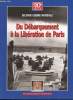
20e siècle - HIstoire des grands conflits
Trésor du patrimoine. 2004. In-4. Broché. Bon état, Couv. convenable, Dos satisfaisant, Intérieur frais. 100 pages. Nombreuses photographies et illustrations en couleurs et/ou en noir et blanc dans et hors texte.. . . . Classification Dewey : 944-Histoire de France varia
Classification Dewey : 944-Histoire de France varia
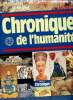
Chronique de l'humanité
Editions chronique. 1998. In-4. Relié. Etat d'usage, Couv. convenable, Dos satisfaisant, Intérieur acceptable. 1279 pages - nombreuses photos, illustrations et cartes en couleur et noir et blanc dans et hors texte - jaquette en état d'usage. Avec Jaquette. . . Classification Dewey : 900-GEOGRAPHIE, HISTOIRE, SCIENCES AUXILIAIRES DE L'HISTOIRE
Classification Dewey : 900-GEOGRAPHIE, HISTOIRE, SCIENCES AUXILIAIRES DE L'HISTOIRE
L'ABBAYE NOTRE-DAME DE FONTGOMBAULT - INDRE / BROCHURE.
ABBAYE NOTRE-DAME DE FONTGOMBAULT. NON DATE. In-8. Broché. Bon état, Couv. convenable, Dos satisfaisant, Intérieur frais. 40 pages - nombreuses illustrations en noir et blanc dans et hors texte - . . . . Classification Dewey : 270-Histoire et géographie de l'Eglise
Classification Dewey : 270-Histoire et géographie de l'Eglise
Scènes de la vie indienne en Amérique du Nord, Edward S. Curtis
Albin Michel. 1977. In-4. Broché. Etat d'usage, Couv. légèrement passée, Dos satisfaisant, Intérieur frais. XVI + 176 pages - nombreuses photos monochromes hors texte.. . . A l'italienne. Classification Dewey : 970-Histoire générale de l'Amérique du Nord
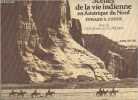
Classification Dewey : 970-Histoire générale de l'Amérique du Nord
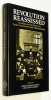
Revolution reassessed : Revisions in the History of Tudor Government and Administration
Clarendon Press Cartonné avec jaquette 1986 In-8 (14,5 x 22,2 cm), cartonné avec jaquette, 219 pages, texte en anglais ; quelques légères marques de frottement sur les plats de la jaquette, bel état. Livraison a domicile (La Poste) ou en Mondial Relay sur simple demande.
LE PROCÈS DU Sr. EDOUARD COLEMAN Gentilhomme, pour Avoir Conspiré la Mort du Roy de Grand Bretagne, La ruine de la Religion Prostestante, Celle du Gouvernement d'Angleterre, Lequel Fut convaincu de crime de Leze Majesté, Reçut la Sentence de Mort...
Hambourg sur la copie originaire de Londre, chez Robert Paulet 1866 in 16 (13,5x7,5) 1 volume reliure plein maroquin rouge à longs grains, dos à nerfs orné de fleurons dorés, tranches dorées, triple filet doré d'encadrement sur les plats, belle roulette dorée intérieure, filet doré sur les coupes, 240 pages. Très fine reliure de la fin du XIXéme siècle . Ex-libris Rob. de Billy. Très bel exemplaire, très frais ( Photographies sur demande / We can send pictures of this book on simple request )
Parfait Reliure
Ancient and Medieval Memories: Studies in the Reconstruction of the Past
Cambridge University Press 1992 668 pages 23x4 8x15 4cm. 1992. Cartonné jaquette. 668 pages.
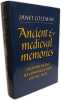
Très bon état avec sa jaquette intérieur propre
Je visite Amboise.
Couverture souple. Broché. 48 pages. Un plan dépliant.
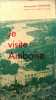
Livre. Editions Arrault et Cie, Tours, 1933.
La belle Christiane, dragon du roi. D'après ses mémoires, adaptés de l'anglais par Marguerite Coleman.
Couverture souple. Broché. 255 pages. Légèrement défraîchi. Rousseurs.
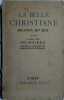
Livre. Librairie Plon, 1944.
La belle Christiane, dragon du Roy. D'après ses mémoires adaptés de l'anglais par Marguerite Coleman.
Couverture souple. Broché. 254 pages.
Livre. Editions Plon, 1934.
Recponceptualizing Nature, Science, and Aesthetics. Contribution à une nouvelle approche des Lumières helvétiques. ‘Travaux sur la Suisse des Lumières Vol. I’.
Genève, Slatkine, 1998, lg. in-8vo, 271 p., + env. 15 planches n./b., cartonnage original.

(SLACES, NVVA)
Phone number : 41 (0)26 3223808
The First Apostolic Delegation in Rio De Janeiro and its Influence in Spanish America. A Study in Papal Policy 1830-1840
Washington D.C., The Catholic University of America Press 1950 xii + 468pp., 22cm., softcover, text in English, Doctoral Dissertation (A Dissertation submitted to the Faculty of the Graduate School of Arts and Sciences of the Catholic University of America in partial fulfillment of the requirements for the degree of Doctor of Philosophy), stamp at verso of title page, text is clean and bright, R109897
La lutte contre les Turcs
Flammarion Paris, Flammarion 1969. In-8 broché de 216 pages. Nombreuses photos en noir et en couleurs. Bon état

Toutes les expéditions sont faites en suivi au-dessus de 25 euros. Expédition quotidienne pour les envois simples, suivis, recommandés ou Colissimo.
La lutte contre les Turcs. Traduit de l'anglais.
Paris, Flammarion, Histoire illustrée de l'Europe, 1969. In-8, broché, 216 pp.
Illustrations en noir et en couleur, dans et hors-texte. Photos sur demande.
ENFANCES CÉLÈBRES. Illustrées de 57 gravures sur bois par FOULQUIER.
Librairie Hachette Et Cie Paris 1887 In-12 ( 180 X 115 mm ) de 368 pages, demi-chagrin rouge, dos à nerfs orné de caissons et fleurons dorés, plats de percaline chagrinée de la même teinte avec filets d'encadrement à froid, important fer doré frappé au centre du premier plat: - Congrégation de Notre-Dame - Monastère dit "Des Oiseaux" - , toutes tranches dorées ( Reliures de l'époque ). Belle étiquette gravée de remise de prix collée au premier contreplat: Pensionnat de la Congrégation de Notre-Dame - Monastère dit "Des Oiseaux". 57 gravures sur bois par FOULQUIER. Quelques rousseurs, bel exemplaire bien relié.
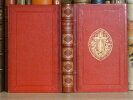
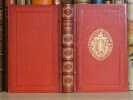
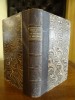
La Jeunesse de Mirabeau.
Paris, Dentu, 1874. In-12 en demi-chagrin au dos à faux nerfs. 1 f. bl., 2 ff, iv, 308 pp, 1 f. bl. Mouillures claires à l'angle de la marge supérieure sur 45 pp. Frottements aux coiffes.
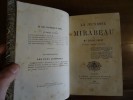
"Mirabeau tout entier , avec ses grandeurs et ses déchéances, s'explique par sa jeunesse douloureuse, implacablement calomniée et torturée par un père exécrable... Jaloux du génie de ce fils, comme s'il eût pressenti que ce génie précipiterait l'écroulement de tous les préjugés et de tous les despotismes qui étayaient ses propres tyrannies, il eût voulu en étouffer l'éclosion,fût-ce par la mort de son enfant."
NOTRE GEOGRAPHIE CM
CLASSIQUE HACHETTE. 1982. In-4. Relié. Etat d'usage, Couv. convenable, Dos satisfaisant, Intérieur frais. 159 pages augmentées de nombreuses illustrations en couleur dans et hors texte -. . . . Classification Dewey : 372.89-Livre scolaire : histoire / géographie
Classification Dewey : 372.89-Livre scolaire : histoire / géographie

