 Write to the booksellers
-
Type
Book (1161)
Magazine (4)
-
Latest
Last month (26)
Last week (12)
-
Language
English (2)
French (1158)
Greek (2)
Italian (1)
Latin (1)
Russian (1)
-
Century
16th (10)
17th (6)
18th (13)
19th (61)
20th (566)
21st (79)
-
Countries
Belgium (427)
Canada (4)
Côte d'Ivoire (1)
Denmark (6)
France (496)
Germany (2)
Greece (3)
Netherlands (162)
Switzerland (63)
United States of America (1)
-
Syndicate
ALAC (4)
CLAM (2)
ILAB (217)
NVVA (4)
SLACES (4)
SLAM (196)
Aristoteles Latinus, VII-2: Physica (translatio vaticana) [ALPE VII-2]
Bruges-Paris, Desclée de Brouwer 1957 XVI + 43pp., in the series "Union Académique Internationale. Corpus philosophorum medii aevii academiarum consociatarum auspiciis et consilio editums. Aristoteles Latinus", text in Latin, 26cm., softcover, 3 small reference numbers, text is clean and bright, good condition, F35120
Chronologie en redactie van Aristoteles' Politica.
Assen, Van Gorcum, 1962.
(XI),167 p. Stiff wrappers. 24 cm (Dissertation, University Leiden)
Chronologie en redactie van Aristoteles' Politica.
Assen, Van Gorcum, 1962.
(XI),167 p. Stiff wrappers. 24 cm (Dissertation, University Leiden)
Chronologie en redactie van Aristoteles' Politica.
Assen, v.Gorcum, 1962.
(XI),167 p. Wrs. 24 cm (Diss.)
Aristotle's theory of practical principles.
Athens, Cleisiounis Press, 1961.
VII,115 p. Wrs. 25 cm
Aristotle's theory of practical principles.
Athens, Cleisiounis Press, 1961.
VII,115 p. Wrs. 25 cm
Das Fragment VIII 1. Text und Interpretation.
Bln., 1971.
32 p. Wrappers (Offprint Peripatoi I: Untersuchungen zur Eudemischen Ethik)
Aristotle on life. (Papers presented at the Aristotle on Life Conference, Aug. 7, 2007. Anchorage, Alaska)
Kelowna, Academic Printing and Publishing, (2008).
X,197 p. Paperback 23 cm (7 essays)
Aristotle's political theory. An introduction for students of political theory.
Oxf., Clarendon Press, 1977.
VII,156 p. Hardbound 21 cm
Aristotle.
Ldn., Benn, 1932.
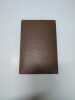
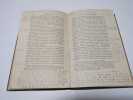
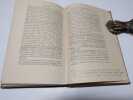
VII,282 p. Cloth. (Many scholarly pencil & ink annotations, also many underlinings. Spine and back cover a bit wrinkled by moist)
The politics of passion. Aristotle on the preliminaries of morality.
Nijmegen, Uitg. KUN, 1998.
167 p. Stiff wrappers. 24 cm (Dissertation, Nijmegen)
Het godsbegrip bij Aristoteles.
Nijmegen, Utrecht, Dekker & v.d. Vegt, 1940.
(VI),199 p. Wrs. (Diss.; trade ed.; summ. in Latin) (Name on title; worn; sl. foxed)
Het godsbegrip bij Aristoteles.
Nijmegen, Utrecht, Dekker & v.d. Vegt, 1940.
(VI),199 p. Wrappers 24 cm (Diss.; trade edition; summary in Latin)(Some pencil)
Aristotle's De motu animalium. Text with translation, commentary and interpretive essays
Princeton, Princeton University Press 1978 xxix + 430pp., 1st edition, 22cm., publisher's hardcover in cream cloth, dustwrapper with few signs of wear and spine bit sunfaded, text and interior cleana and bright, good condition, F105460
Ontwikkelingsmomenten in de zielkunde van Aristoteles.
Nijmegen, Utrecht, Dekker & v.d. Vegt, 1939.
XI,346 p. Wrappers. 24 cm (Dissertation) (Cover slightly worn. Margins of the first 50 pages foxed. Two pages browned due to an inlaid offprint).
Ein Mensch zeugt einen Menschen. Über den Missbrauch der Sprachanalyse in der Aristotelesforschung.
Frankfurt, Klostermann, 1963.
65 p. Wrappers 20 cm
Ein Mensch zeugt einen Menschen. Über den Missbrauch der Sprachanalyse in der Aristotelesforschung.
Frankfurt, Klostermann, (1963).
65 p. Wrs. (Name on title)
An index to Aristotle in English translation.
N.Y., Gordian Press, 1966.
181 p. Cloth 23 cm
ARISTOTELIS POLITICORUM LIBRO OCTO AD RECENSIONEM IMMANUELIS BEKKERI RECOGNITI
Carolus Focke, Lipsiae. 1849. In-4. Relié. Etat d'usage, Tâchée, Dos abîmé, Mouillures. 226 pages. Texte en grec ancien et en allemand en regard (sur 2 colonnes). Quelques rousseurs.. . . . Classification Dewey : 480-Langues helléniques. Grec
Criticis Editorum Priorum Subsidiis Collectis auctisque Apparatu Critico Plenissimo Instruxit Interpretatione Germanica Explanavit atque Indice Nominum Propriorum Ornavit Adolfus Stahr, Dr. Classification Dewey : 480-Langues helléniques. Grec


historia animalium. Translatio Guillelmi de Morbeka, Pars altera: lib. VI-X
, Brepols, 2021 Hardback, xlii + 364 pages, Size:178 x 254 mm, Language(s):Latin, English. ISBN 9782503586656.
Summary This book forms the complement to the first volume published in 2000. The preface contains some remarks about the transmission of the text as a supplement to the first volume. Then follow the critical edition of books 6-10, and the indices for the whole text. The complete edition gives access to the longest and most important work from Aristotle's zoology, De historia animalium, in the Latin translation by William of Moerbeke. This version was part of the standard university curriculum in the late-medieval West. The bilingual indices give access to the richness of the translator's vocabulary and provide an indispensable tool for the study of his translation method. Except for De partibus animalium, all of Moerbeke's translations from the Aristotelian zoological corpus are now available in critical editions.
Aristoteles' Skrift om Sjælen (De anima) oversat med Indledning og Noter.
Kjøbenhavn, Nyt Nordisk Forlag Arnold Busck, 1949. 8vo. Ubeskåret i de originale omslag. Exlibris på indersiden af foromslag. Ren og pæn indvendig.
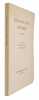
Science and philosophy in Aristotle's biological works.
Hildesheim, Olms, 1975.
9,404 p. Cl. 25 cm

