 Write to the booksellers
-
Type
Autograph (1)
Book (53434)
Magazine (288)
Manuscript (2)
Maps (1)
New book (1)
Old papers (1)
Photographs (1)
-
Latest
Last 24h (17)
Last 3 days (41)
Last month (837)
Last week (86)
-
Language
Dutch (2)
English (32)
Finnish (1)
French (53618)
German (16)
Greek (5)
Italian (19)
Japanese (2)
Latin (21)
Polish (1)
Portuguese (2)
Spanish (8)
Swedish (2)
-
Century
16th (64)
17th (200)
18th (1288)
19th (3665)
20th (22780)
21st (3903)
-
Countries
Belgium (6750)
Brazil (28)
Canada (6)
China (2)
Côte d'Ivoire (31)
Denmark (1017)
France (41111)
Germany (4)
Greece (3)
Netherlands (281)
Switzerland (4496)
-
Syndicate
ALAC (6)
CLAM (5)
CNE (6)
ILAB (21843)
NVVA (1010)
SLACES (918)
SLAM (19551)
SNCAO (41)
LES PARADOXES DE ZENON (MEMOIRE)
Chez l'auteur. Non daté. In-4. Broché. Bon état, Couv. convenable, Dos satisfaisant, Intérieur frais. Plaquette de 25 pages manuscrites.. . . . Classification Dewey : 100-PHILOSOPHIE ET DISCIPLINES CONNEXES
Les apories de Zénon. Zénon infini et Mathématiques. Zénon, indivisibilité et Sciences expérimentales... Classification Dewey : 100-PHILOSOPHIE ET DISCIPLINES CONNEXES


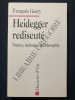
HEIDEGGER REDISCUTE Nature, technique et philosophie
IN 8 BROCHE-158 PAGES-(10A)
DESCARTES COUVERTURE SOUPLE ETAT NEUF
LA VERTU DE JUSTICE
COLLECTION INITIATION PHILOSOPHIQUE N°41-100 PAGES-12 CM X 19 CM-NON COUPE A PARTIR DE LA PAGE 17-PETITE TRACE DE RUBAN ADHESIF EN MARGE INF G DU PREMIER PLAT-(7A)

PRESSES UNIVERSITAIRES DE FRANCE COUVERTURE SOUPLE ETAT BON
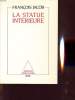
LA STATUE INTERIEUR
SEUIL. 1987. In-8. Broché. Bon état, Couv. convenable, Dos satisfaisant, Intérieur frais. 356 pages.. . . . Classification Dewey : 100-PHILOSOPHIE ET DISCIPLINES CONNEXES
Classification Dewey : 100-PHILOSOPHIE ET DISCIPLINES CONNEXES
DIALOGUE SUR LA MORALE
LIVRE DE POCHE 4259. 1995. In-12. Broché. Bon état, Couv. convenable, Dos satisfaisant, Intérieur frais. 179 pages.. . . . Classification Dewey : 100-PHILOSOPHIE ET DISCIPLINES CONNEXES
Classification Dewey : 100-PHILOSOPHIE ET DISCIPLINES CONNEXES
FIGURES DE L IMMANENCE : POUR UNE LECTURE PHILOSOPHIQUE DE YI KING
GRASSET. 1993. In-8. Broché. Bon état, Couv. convenable, Dos satisfaisant, Intérieur frais. 284 pages.. . . . Classification Dewey : 100-PHILOSOPHIE ET DISCIPLINES CONNEXES

Classification Dewey : 100-PHILOSOPHIE ET DISCIPLINES CONNEXES
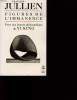
FIGURES DE L IMMANENCE Pour une lecture philosophique du YI KING
LE LIVRE DE POCHE. 1993. In-12. Broché. Bon état, Couv. convenable, Dos satisfaisant, Intérieur frais. 317 pages.. . . . Classification Dewey : 100-PHILOSOPHIE ET DISCIPLINES CONNEXES
Classification Dewey : 100-PHILOSOPHIE ET DISCIPLINES CONNEXES
TRAITE DE L EFFICACITE
GRASSET. 1996. In-8. Broché. Bon état, Couv. convenable, Dos satisfaisant, Intérieur frais. 234 pages, couverture rempliée.. . . . Classification Dewey : 100-PHILOSOPHIE ET DISCIPLINES CONNEXES
Classification Dewey : 100-PHILOSOPHIE ET DISCIPLINES CONNEXES
UN SAGE EST SANS IDEE OU L AUTRE DE LA PHILOSOPHIE
SEUIL. 1998. In-8. Broché. Bon état, Couv. convenable, Dos satisfaisant, Intérieur frais. 236 pages.. . . . Classification Dewey : 100-PHILOSOPHIE ET DISCIPLINES CONNEXES
Classification Dewey : 100-PHILOSOPHIE ET DISCIPLINES CONNEXES
VIVRE EN EXISTANT Une nouvelle Ethique
BIBLIOTHEQUE DES IDEES-284 PAGES-IN 8-(E1125)

GALLIMARD-NRF COUVERTURE SOUPLE ETAT NEUF
PSYCHOSOCIOLOGIE D'AUJOURD'HUI - BORDAS ETUDES 134 - SCIENCES HUMAINES
BORDAS. 1975. In-8. Broché. Bon état, Couv. convenable, Dos satisfaisant, Intérieur frais. 140 pages.. . . . Classification Dewey : 100-PHILOSOPHIE ET DISCIPLINES CONNEXES
Classification Dewey : 100-PHILOSOPHIE ET DISCIPLINES CONNEXES
Espèces et Variétés dintelligences éléments de Noologie
Editions Bossard Paris 1920
Bon état Ouvrage broché, couverture complète mais usagée et tachée, texte en trés bon état, 291 pages, format: 23 x 14.5 cm - largeur/hauteur : x cm - poids : g - nombre de pages : p. - langue :
LA CHAUSSEE D'ANTIN TOME 2
EDITIONS 10/18 N° 1275. 1978. In-12. Broché. Bon état, Couv. convenable, Dos satisfaisant, Intérieur frais. 372 pages. Articles et séminaires de psychanalyse. Edition établie avec le concours de GUY PETITDEMANGE et JACQUES SEDAT. Couverture de PIERRE BERNARD. Peinture de GILLES AILLAUD.. . . . Classification Dewey : 190-Philosophie occidentale moderne
Passionnément, follement même, discipline de Freud, comme il fut élève de Lacan avant de s'en éloigner, ce n'est pas leurs textes que commente FRANCOIS PERRIER, leurs doctrines qu'il exploite, leurs mots qu'il emploie, ou si peu. Classification Dewey : 190-Philosophie occidentale moderne
Les affinités électives de Goethe.
Paris, Ed. Félix Alcan, 1910. In-8 broché, VII-275 pp., bibliographie, annotations au crayon. Rare.
Thèse en vue du diplôme d'études supérieures de l'Ecole Normale discutée à la Sorbonne en juin 1909. Couv. un peu défraichie, intérieur frais. - Frais de port : -France 4,95 € -U.E. 9 € -Monde (z B : 15 €) (z C : 25 €)
WITTGENSTEIN
COLLECTION FIGURES DU SAVOIR-178 PAGES-11 CM X 18 CM-COUVERTURE ILLUSTREE D'UNE PHOTOGRAPHIE DE WITTGENSTEIN-(18F)
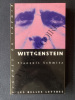
LES BELLES LETTRES COUVERTURE SOUPLE ETAT NEUF
LA NOUVELLE THEORIE DE LA SUGGESTION - Destinée a expliquer l'Hypnotisme.
TEQUI. 1892. In-12. Broché. Etat d'usage, Plats abîmés, Dos satisfaisant, Intérieur frais. VII + 132 pages - Tampon sur la page de titre - Plats de substitution - 1 etiquette collée en coiffe en pied.. . . . Classification Dewey : 100-PHILOSOPHIE ET DISCIPLINES CONNEXES
EXAMEN CRITIQUE TRADUIT DEE L'ITALIEN PAR AUG. ONCLAIR, PRETRE. Classification Dewey : 100-PHILOSOPHIE ET DISCIPLINES CONNEXES
Naissance du monde moderne
Flammarion 1958 332 pages in8. 1958. broché. 332 pages.
Très bon état exemplaire non coupé
La pensée scientifique - Essai suivi de textes choisis
Bruxelles, Editions Labor 1974 202pp., br., 2e édition revue et augmentée
La Négation à l'oeuvre : La philosophie symboliste de l'art (1860-1905)
Presses universitaires de Rennes Aesthetica Dos carré collé 2005 In-8 (17 x 21 cm), dos carré collé, 371 pages ; très bon état général. Livraison a domicile (La Poste) ou en Mondial Relay sur simple demande.
Création et procréation (Métaphysique, théologie et mystique du couple humain)
De Minuit. 1951. In-8. Broché. Etat d'usage, Couv. légèrement passée, Dos plié, Papier jauni. 272 pages. Quelques cahiers non-coupés. Traces de mouillure sur le dos. Mors légèrement fendus en coiffes. 2e plat très légèrement déchiré.. . . . Classification Dewey : 100-PHILOSOPHIE ET DISCIPLINES CONNEXES
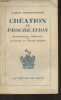
Classification Dewey : 100-PHILOSOPHIE ET DISCIPLINES CONNEXES
Frankel Hans Hermann Hadas M. Willis J
Reference : 100135659
(1980)
ISBN : 0631154507
Early Greek Poetry and Philosophy
Blackwell Publishers 1980 568 pages 15x3x23cm. 1980. Broché. 568 pages.
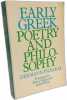
Bon état couverture un peu jaunie intérieur propre bonne tenue
FRANKEL PAUL Ellen, MILLER Fred D. jr. & PAUL Jeffrey (eds.)
Reference : F58011
(1990)
Foundations of moral and political philosophy
Oxford, Blackwell 1990 xiv + 189pp., softcover, 23cm., VG
FRANKEL PAUL Ellen, MILLER Fred D.jr. & PAUL Jeffrey (eds.)
Reference : F57951
(1993)
Money: Two Philosophies - Conflict of Trust and Authority
Blackwell Publishers 1977 163 pages 14 2x2x21 8cm. 1977. Cartonné jaquette. 163 pages.
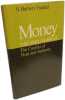
Très Bon Etat de conservation intérieur propre bonne tenue avec sa jaquette
Plato und die sogenannten Pythagoreer. Ein Kapitel aus der Geschichte des griechischen Geistes
Darmstadt, Wissenschaftliche Buchgesellschaft 1962 xii + 400pp., 2nd edition, 23cm., publisher's hardcover in orange cloth, good condition, F105237

